Shyam Sunder Gupta retweeted

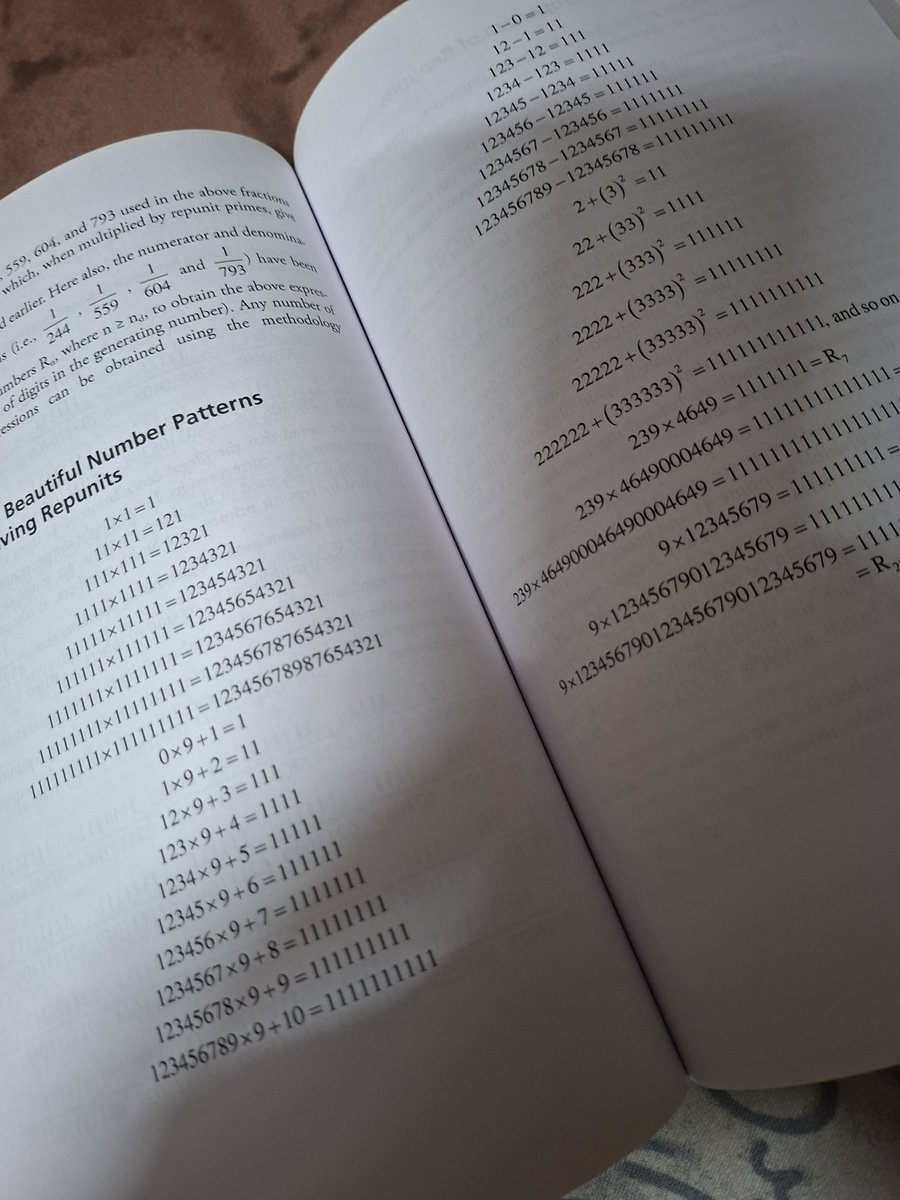
For beautiful number pattern involving Repunits,
Refer "Exploring the Beauty of Fascinating Numbers" published by Springer(March 25).
amazon.com/Exploring-Beauty-…
1
1
71

Jun 11
How does Grok explain this?
"The squares of repunits (numbers consisting of all 1's, like 11, 111, 1111, …) produce [...] palindromic patterns in base 10 up to a point, but this behavior is very special to base 10 and does not occur in bases like octal (8) or hexadecimal (16)."
12

May 1
You raise a legitimate point and I want to engage with it technically rather than dismiss it.
Unconventional mathematics for optimization is real. But this structure fails the optimization test on four independent grounds:
Repunit gaps — 1, 11, 111, 1,111, 11,111 — have no database performance property. Standard optimization uses powers of 2 or prime-based modular arithmetic. Repunits are computationally arbitrary. No performance rationale selects them.
The 75/25 split is not applied uniformly. It is applied independently within each power-of-ten column, scaled to that column's magnitude. The offset in the 10,000 column is ten times larger in absolute terms than the offset in the 1,000 column, and so on. When recombined, the result is a layered, compounding displacement that produces a highly non-uniform distribution across the full database. That is not a partitioning strategy. That is a Vigenère cipher — a multi-column substitution technique where the shift varies by positional magnitude. It is a well understood cryptographic obfuscation method.
The interleaving of four algorithms across hidden partition boundaries is deck stacking — a transposition technique. It breaks locality of reference, which is a fundamental optimization principle. It makes the database harder to query, not easier.
Four completely different algorithms deployed simultaneously in two weeks is not an engineering decision. One optimized system applied consistently — that is smart engineering. This is not that.
The question that demands an answer is simple: why does a voter registration database need multi-layer cryptographic obfuscation?
Legitimate systems do not need to hide.
4
19
94
5,655
For large number of such patterns involving repunit numbers or otherwise, refer:
The 636 page book "Exploring the Beauty of Fascinating Numbers" published by Springer (March 25) contains a chapter on repunits (26 pages).
amazon.com/Exploring-Beauty-…
1
2
208
Apr 27
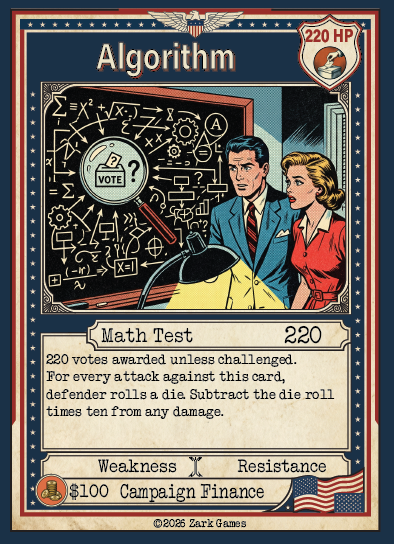
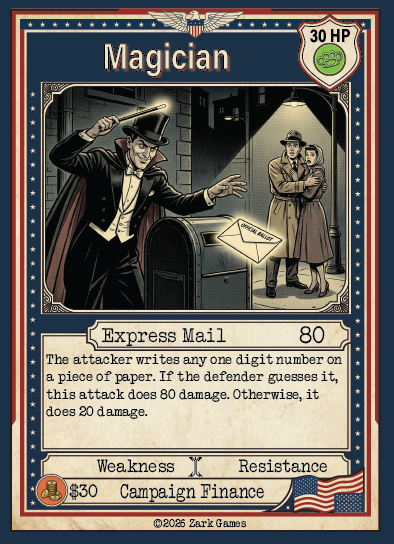
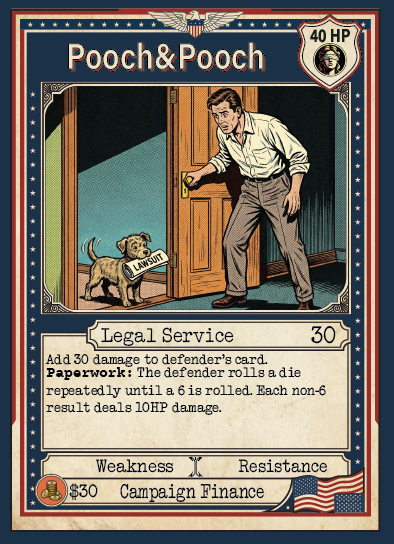
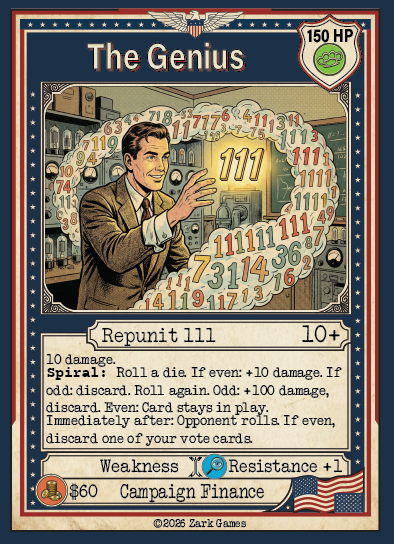
I spent five years proving election fraud is mathematical, precise, and engineered. Then I made a card game about it.
Dr. Zark's Election Game — 60 cards, genuinely funny, based on real research. The game ignores voters and candidates entirely. It is about what actually controls elections: the ballots themselves.
The Algorithm card has 220 HP and a Math Test attack. Because that is how it actually works. The Genius card uses repunits — the same numbers I found hidden in New York's voter rolls. Pooch & Pooch Legal serves lawsuits via dog. The Magician does mail-in ballot magic.
The art is AI-generated. It is a game about fake votes and fake voters. Fake art seemed appropriate. I think it works.
Search Kickstarter: Dr. Zark's Election Game. 17 days left.
4
30
119
1,448
Apr 26
No. NY has 4 algorithms resident in their rolls. One of them, which I named the Spiral, is repunit based. Meaning numbers like 1, 11, 111, 1,111, etc. However, I see repunits and 11's in other places. In most cases, not enough to say the algorithms are "based on" the number. In UT, they are using 11 as a base unit.
1
1
4
77
This is the result of square of repunit numbers For more on repunits and its curiosities, refer,
636 page book "Exploring the Beauty of Fascinating Numbers" published by Springer (Narch 25) containing a chapter on repunits (26pages).
link.springer.com/book/10.10…
2
307

Mar 31
Squares of repunits create 'Demlo numbers' (like 1²=1, 11²=121, 111²=12321). This 2Rₙ (3Rₙ)² = R_{2n} is another hidden gem in the same family of repeating-digit curiosities!"
3
7
605
This is the result of square of repunit numbers For more on repunits and its curiosities, refer,
636 page book "Exploring the Beauty of Fascinating Numbers" published by Springer (March 25) containing a chapter on repunits (26 pages).
link.springer.com/book/10.10…
1
1
14
1,986
This is the result of square of repunit numbers For more on repunits and its curiosities, refer,
636 page book "Exploring the Beauty of Fascinating Numbers" published by Springer (Narch 25) containing a chapter on repunits (26pages).
link.springer.com/book/10.10…
2
9
1,092

Feb 27
1) Divisibility
2) Repunits
3) Squares
4) GCD
5) Cycles
6) Triangular
7) Composite
8) Zeros
9) Collatz
10)Twins
I didn't use Grok 👀
1
3
1,187
For more on repunit primes and curiosities, refer:
The 636 page book "Exploring the Beauty of Fascinating Numbers" published by Springer (March 25) which contains a chapter on repunits (26 pages).
amazon.com/Exploring-Beauty-…
5
3
105
This is the result of square of repunit numbers. For more on repunits and its curiosities, refer,
636 page book "Exploring the Beauty of Fascinating Numbers" published by Springer (March 25) containing a chapter on repunits (26 pages).
amazon.com/Exploring-Beauty-…
2
60

Jan 17
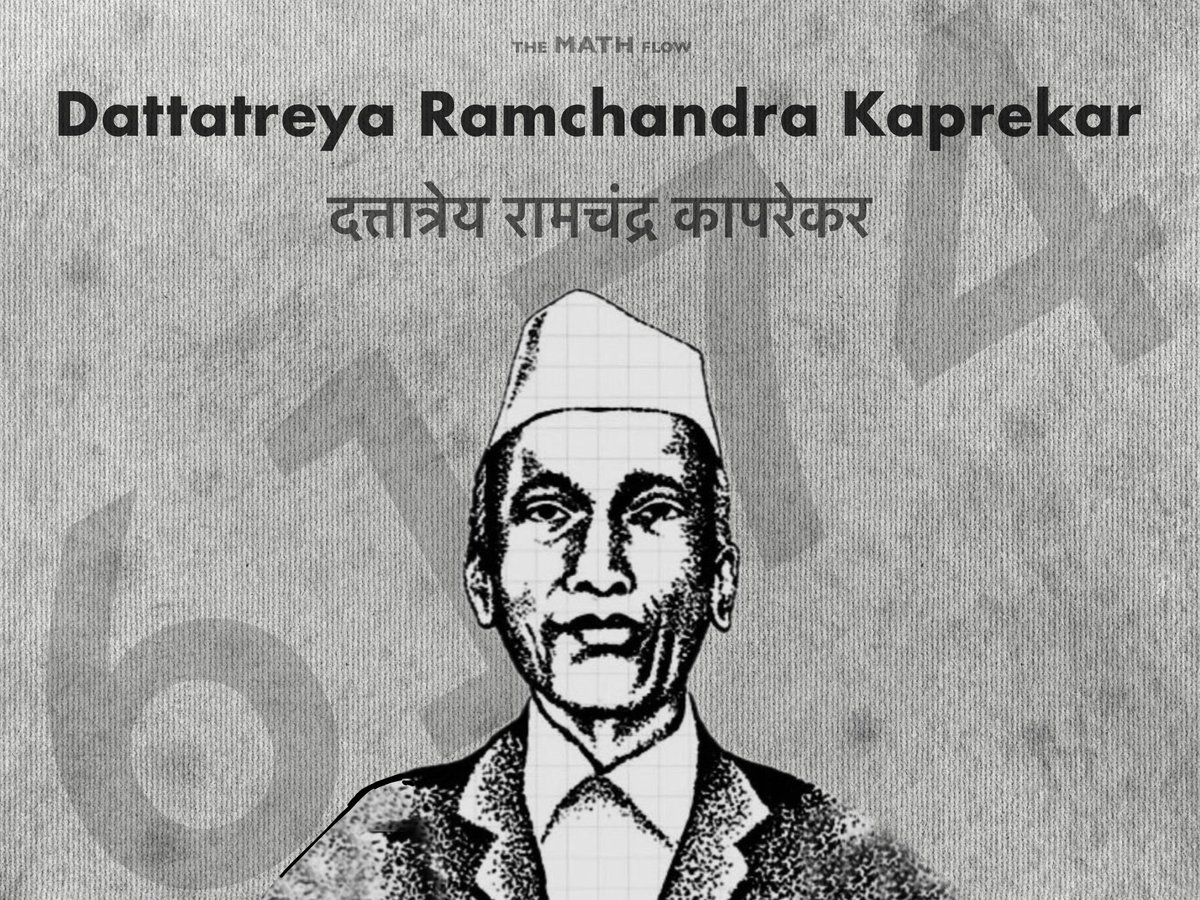
Today, January 17, 2026, marks the 121st birth anniversary of Dattatreya Ramchandra Kaprekar (1905–1986). A modest schoolteacher from Devlali, India, but a giant in the world of recreational mathematics and number theory. Despite having no formal postgraduate training, his "play" with numbers led to discoveries that are now famous globally.
Here are his most significant contributions to mathematics:
1. Kaprekar’s Constant (6174)
This is perhaps his most famous discovery. Kaprekar discovered that any four-digit number (with at least two distinct digits) will eventually converge to 6174 through a specific process known as Kaprekar's Routine.
2. Kaprekar Numbers
A Kaprekar Number is a positive integer with the property that if you square it, you can split the resulting digits into two parts that sum back to the original number.
Example (45): 45² = 2025, Splitting it into 20 and 25 gives 20 25 = 45
3. Self Numbers (Devlali Numbers)
In 1963, he defined Self Numbers (or Swayambhu Numbers). These are integers that cannot be generated by adding any other integer to the sum of its own digits.
- For instance, 21 is not a self-number because it can be generated by 15 (since 15 1 5 = 21), but 20, however, is a self-number because no such integer exists to create it.
4. Demlo Numbers
He studied a specific class of numbers called Demlo Numbers, named after a train station near Mumbai. The most famous among these are the Wonderful Demlo Numbers, which are the squares of "repunits" (numbers consisting only of 1s).
11²= 121
111² = 12321
1111² = 1234321
Sadly, for many years, Kaprekar’s work was largely ignored by the academic establishment in India, which dismissed it as "trivial." He achieved international fame only in 1975 after the legendary math writer Martin Gardner featured him in his Scientific American column.
Today, he is celebrated as "Ganitanand" (the one who finds joy in mathematics).
2
3
17
1,656


23 Jun 2025
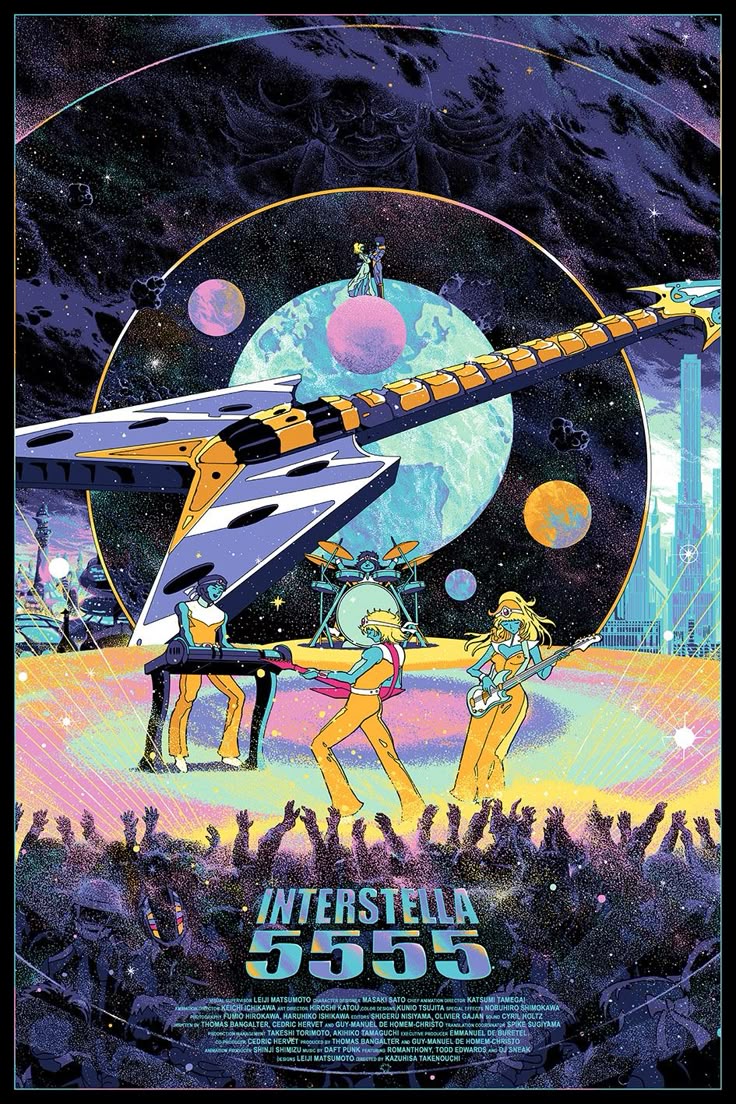
planned some really random double features for this week
Monday's double feature : spacey repunits
#nw
1. Interstella 5555 dir. Kazuhisa Takenouchi
2. Galaxy Express 999 : The movie dir. Rintaro

1
9
718

15 Jun 2025
They, whoever they are, use steganography and "repunits"nestled in all sorts of hidden algorithms to obfuscate the data of corrupted voter rolls.
See the best 2-part series on this subject, but it takes a few hours.
The truth is out there.
castbox.fm/vb/749183176
1
2
231