
AIニュースピックアップ | 2026/6/18
---
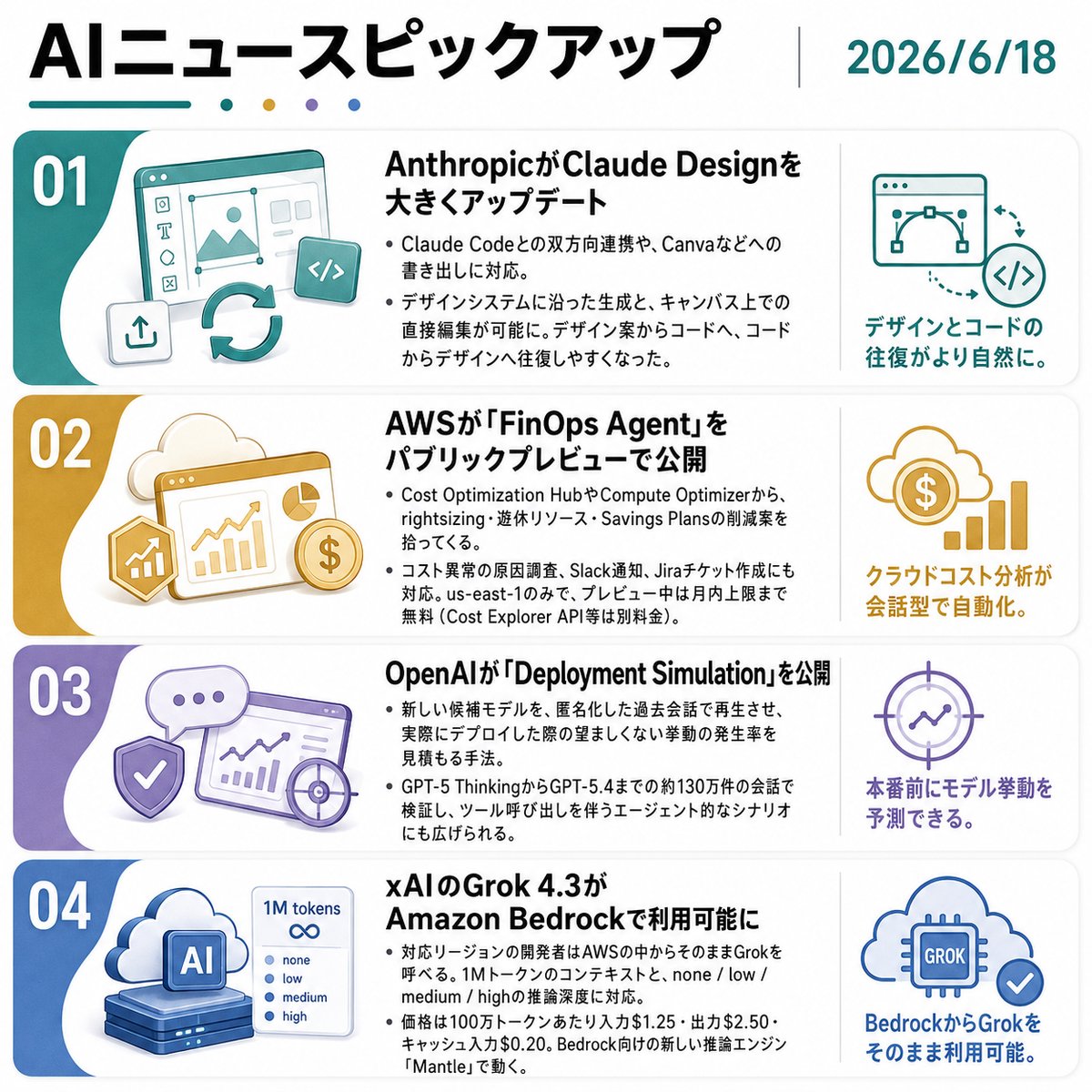
AnthropicがClaude Designを大きくアップデートし、Claude Codeとの双方向連携やCanvaなどへの書き出しに対応した。
4月から研究プレビューで出ていたデザイン機能の続きで、今回はデザインシステムに沿った生成・キャンバス上での直接編集ができるようになった。
作った画面をCanvaに送ってそのまま整える、といった行き来もできる。Claude Codeと繋がるので、デザイン案からコードへ、コードからデザインへと往復しやすくなった。
---
AWSが、クラウドのコストを調べてくれる「FinOps Agent」をパブリックプレビューで公開した。
「このコストはなぜ増えた?」みたいな質問に答え、Cost Optimization HubやCompute Optimizerからrightsizing・遊休リソース・Savings Plansの削減案を拾ってくる。
コスト異常を検知すると原因を自動で調べてSlackに投げたり、提案をもとにJiraチケットを立てたりもできる。
今はus-east-1のみ・プレビュー中は月内の上限まで無料(内部で叩くCost Explorer API等の通常料金は別途)。
---
OpenAIが、新しいモデルを出す前に「実際にデプロイしたらどう振る舞うか」を予測する手法「Deployment Simulation」を公開した。
過去の会話を匿名化した状態で新しい候補モデルに再生させ、望ましくない挙動の発生率を見積もってから本番に出す、という仕組み。
GPT-5 ThinkingからGPT-5.4までの約130万件の会話で検証し、ツール呼び出しを伴うエージェント的なシナリオにも広げられるとしている。
---
xAIのGrok 4.3がAmazon Bedrockで使えるようになった。
対応リージョンの開発者なら、AWSの中からそのままGrokを呼べる。
1Mトークンのコンテキストに対応し、推論の深さをnone/low/medium/highで切り替えられる。価格はオンデマンドで100万トークンあたり入力$1.25・出力$2.50、キャッシュ入力は$0.20。
Bedrock向けの新しい推論エンジン「Mantle」で動く。
1
144
🇺🇸 DigitalWarrior on BlueSky retweeted

We sure have to do something bold, I agree. I've favored rightsizing SCOTUS to one justice/district (13) & making Puerto Rico (with their approval) and d.c. states.
1/
2
1
4
40
Waldemar Pera (@WaldemarPera@vmst.io) retweeted

New Blog: Rightsizing and Reclamation Exclusions using vSphere Tags in VCF Operations 9.1!
brockpeterson.com/post/right…
2
3
75

$CNC
This drawdown from $66-->$61 on news that Centene is laying people off is a gift for investors to add 1-2 weeks before Wakeley data comes and the grind up to $80 share price continues.
I am continuing to add at these levels - bought another decent sized parcel of $CNC at ~$61 share price today.
It seems a very first order reaction - "Centene is laying people off, therefore their business is going very poorly and they are losing way more ACA members than they thought. They must also be seeing some bad Wakeley data."
Realistically - $CNC already guided to severance costs in 1Q and we know that ACA is a more intensive SG&A part of the business which always needed rightsizing. This may in fact be positive as they can take out even more cost than previously expected.
Recall that Centene sold off from $48-->$32 earlier in the year based on a comment at a conference saying there was some potential cost pressure in one of the ACA plan tiers. I added aggressively during that sell-off.
154

اگر یہی حالات رہے پنجاب کو اپنا پیٹ کاٹ کر وفاق کو پیسہ دینا پڑا تو دو سال بعد حکومت بجٹ میں لکھے گی
سرکاری ملازمین داتا دربار جائیں۔ اپنا کھا آئیں حکومت کے لئے مانگ لائیں ۔
سر مانا قربانی آپ کی ذیادہ ہوگی۔ پر ذندہ انسانوں کا پیٹ ایک جیسا ہوتا ۔ جیسے آپ کا کھا کر بھرتا ہمارا بھی کھا کر ہی بھرتا۔ کج ساڈے واسطے وی چھڈ دیا کرو۔ تھوڑی بہت Rightsizing تسی وی کرو۔
یہ جو آؤٹ آف سکول بچوں کا بم پھٹ رہا یہ ساری فوج لگا کر بھی قابو نہیں ہونا۔ اگر ان بچوں کو پڑھا دین تو ہو سکتا کوئی ایک ایسی کمپنی بنائے جو ساری فوج کا بجٹ اٹھا لے۔ سوچو تے کج رحم فرماؤ ۔
باقی چاچو تو اتنا کر سکتا تھا صوبوں سے بجٹ لے کر ساتھ ہی آپ کی تعریف کرکے بتا دیا کہ پیسے آپ کو دئیے۔دوسرا ہر پاکستانی کی جیب کاٹنے والا ادارہ این ایچ اے سب سے ذیادہ خسارے میں ۔ اس کی ڈوان سائزنگ کریں
12
34
124
2,833

To achieve true fiscal stability, Pakistan must move from survival mode to structural reform. A 4-point roadmap:
1️⃣ 100% SOE Privatization: Exit commercial sectors immediately. Stop hemorrhaging public funds and save Rs. 3 Trillion annually in bleeding losses.
2️⃣ Aggressive Rightsizing: Restructure and downsize bloated government departments. Eliminate redundant administrative layers.
3️⃣ 100% Digital Payments: Mandate digital-only government collections and disbursements to eradicate leakages, maximize tax revenues, and formalize the economy.
Stop subsidizing inefficiency. Document, downsize, and digitize to rebuild economic sovereignty! 🇵🇰📉 #PakistanEconomy #EconomicReform #DigitalPakistan @CMShehbaz @ShazaFK @Financegovpk @kschehzad @AmjadHafeez19 @1AdnanPasha1 @pmln_org @PakPMO @MaryamNSharif @PrivComPakistan
19

We have been told AI will bring prosperity, I believe this to be true. However, the working class dudes like me have seen mass layoffs in Games and VFX and the birth of the phrase “corporate rightsizing”. Meanwhile Corporations reap the rewards. Water needs to find its level.
18


Larry Fink is embracing a quieter, continual cycle of rightsizing, as the world’s largest asset manager embarks on its latest round of job cuts bloomberg.com/news/articles/…
11
14
22
17,232

وفاقی حکومت نے کفایت شعاری مہم کے تحت سرکاری اخراجات میں کمی اور رائٹ سائزنگ پالیسی پر عمل تیز کرنے کا فیصلہ کیا ہے۔ ذرائع کے مطابق متعدد وزارتوں کے انضمام، غیر ضروری وزارتوں کے خاتمے اور کابینہ کے حجم میں کمی سے متعلق اہم فیصلے متوقع ہیں۔
#AusterityDrive #Rightsizing #FederalCabinet

21


Pump walls. Go off grid with solar & EV2k.
But I missed the size. Anything >60m2 isn’t ’Rightsizing’ (wasting money & energy in the operation) unless it’s being done to avail of the grants that increase the equity / value then sell on / pass on to kids.
3
224


Jun 16
Rightsizing LLMs: the pathway to more sustainable AI - Capgemini UK capgemini.com/gb-en/insights… #LLMs
9

Jun 16
@BlackRock Inc. has initiated a new round of hashtag#layoffs eliminating approximately 200 employees, which accounts for just under 1% of its global workforce. This announcement, made on June 15, 2026, represents a hashtag#strategic pivot by CEO Larry Fink toward an ongoing, "continuous" approach to staffing and hashtag#workforce hashtag#rightsizing rather than executing massive, one-off cuts.
Key Details of the June 2026 Layoffs
Impacted Sectors: The workforce reductions span multiple divisions, including investment, technology, operations, and the firm's private credit/financing business.
Acquisition Integration: The cuts within the private financing arm follow BlackRock's integration of HPS Investment Partners, LLC, a major private credit specialist acquired for $12 hashtag#billion.
Corporate Vibe Shift: A company spokesperson noted that the hashtag#layoffs are part of the "ordinary discipline of a continuously evolving organization" rather than a response to sudden financial panic.
Broader Context and Ongoing Strategy
This latest move marks hashtag#BlackRock’s hashtag#fourth distinct round of hashtag#layoffs over the past 18 months. The company earlier cut around 250 jobs (also about 1% of staff) in January 2026 to streamline operations and fund high-growth areas like hashtag#artificial hashtag#intelligence, data platforms, and alternative assets.
hashtag#WallStreet analysts view these routine, lower-profile stafftrims as part of a long-term cost optimization strategy to combat fee compression in passive funds while simultaneously funding aggressive expansions into infrastructure and private markets. Despite the staff reductions, market sentiment around hashtag#BlackRock remains highly favorable, with analysts maintaining an optimistic long-term outlook on the asset manager's stock.
49


Jun 16
I have been reading @alapshah1 articles about
The Global Intelligence Crisis. Here is my takeaway from Part Three.
We are actively watching a structural shift in the market that is moving faster than most realize. We’re officially entering what’s being called the "Intelligence Transition"—the rapid shift of cognitive labour from humans to AI.
I’ve been analyzing the latest signals from the ground, and here is where the ball is really going, who is poised to win, and who is structurally at risk.
The Signal AI is no longer just an efficiency tool; it’s a direct replacement for non-routine cognitive work. Major tech players are already executing massive workforce reductions, explicitly citing AI as the driver, not just post-COVID rightsizing. The most glaring leading indicator? Unemployment for recent college graduates is currently spiking well above the national average. The bottom rung of the knowledge-work ladder—pure execution and entry-level analysis—is being automated away.
The Macro Risk: A Short on the Consumer. There is a massive mismatch brewing. Every time a company replaces human labour with AI, margins expand for shareholders, but household income vanishes from the consumer economy. If you are operating a business that relies heavily on middle-class consumer spending, you need to be hyper-aware of this aggregate demand risk. We are facing a potential environment where wage compression hits the white-collar sector hard, eventually rippling down to the broader economy.
The Winners
The "10x" Judgment Workers: AI allows top performers to multiply their output. The premium on human judgment, taste, and deep domain expertise has never been higher, while the value of simple execution is trending to zero. The top 10-15% of talent will become vastly more valuable.
Infrastructure and Energy: The true bottleneck to AI isn't compute anymore; it's power. Energy generation, grid infrastructure, and physical data centers are massive growth vectors.
The "Human" Economy: As cognitive and eventually physical labour are automated, capital and demand will flow heavily into sectors where human presence is the product: healthcare, human services, and the leisure/experience economy (hospitality, live entertainment, wellness).
Where We Need to Pivot. If the entry-level execution layer disappears, we need to fundamentally rethink how we build future leaders and acquire talent. We have to ruthlessly automate our own execution layers to protect our margins, but reinvest aggressively in our top-tier talent whose judgment cannot be replicated.
The companies that survive this transition will be those that insulate their revenue against consumer demand shocks, lean heavily into AI-driven margin expansion, and build their moats entirely around elite human expertise and irreplaceable physical or experiential assets.
24