
Jun 14
In my opinion this is a great sign that we truly are members of Christ's Kingdom even the Church of Jesus Christ of latter-day Saints. The Lord could care less what the world thinks of Him, His gospel, and His people. We are a peculiar people.
"In the Old Testament, the Hebrew term from which peculiar was translated is segullah, which means “valued property,” or “treasure.” In the New Testament, the Greek term from which peculiar was translated is peripoiesis, which means “possession,” or “an obtaining.”
Thus, we see that the scriptural term peculiar signifies “valued treasure,” “made” or “selected by God.” For us to be identified by servants of the Lord as his peculiar people is a compliment of the highest order."
- President Russell M. Nelson
"Peter speaks of “an holy nation.” He does not refer to a political entity. He refers to a vast congregation of the Saints of God, men and women who walk in holiness before Him and who look to Jesus Christ as their Savior and their King."
- President Gordon B. Hinckley
1
21

Jun 13
They are HaShe’s segullah (treasure) HaShem is their Heavenly Father
they are his children. I love Israel, I pray for Israel, I defend and financially support Israel. I love and support the IDF and Mossad.🕎📖✝️🔥🕊️🦋🙏🏼🙌🏻❤️
2
116

Jun 9
Yes, aware of that. My point is that “segullah” is an appropriate basis from which to derive the concept of a “peculiar” people that includes the sense of being “different”.
Given hebrew is the original language of the text, it may be the original word as revealed to Moses.
10

May 4
Amen.
I shared this quote in my lesson yesterday:
“Peter used uplifting terms in a prophecy regarding our day. He identified members of the Church as “a chosen generation, a royal priesthood, an holy nation, a peculiar people.” The adjectives chosen, royal, and holy we recognize as elevating. But what about peculiar? A modern dictionary defines peculiar as “unusual,” “eccentric,” or “strange.” What kind of compliment is that?
But the term peculiar as used in the scriptures is quite different. In the Old Testament, the Hebrew term from which peculiar was translated is segullah, which means “valued property” or “treasure.” In the New Testament, the Greek term from which peculiar was translated is peripoiesis, which means “possession” or “an obtaining.”
Thus we see that the scriptural term peculiar signifies “valued treasure,” “made” or “selected by God.” For us to be identified by servants of the Lord as his peculiar people is a compliment of the highest order.”
-President Russell M Nelson
1
1
10
206

The biblical witness is unequivocal that the Promised Land belongs to God Himself as His personal, eternal royal property:
Leviticus 25:23 declares explicitly, “The land shall not be sold in perpetuity, for the land is mine,” establishing divine ownership above all human claims. This is reinforced throughout the covenants with the patriarchs, where God repeatedly swears the land of Canaan to Abraham, Isaac, and Jacob as an everlasting possession (Gen. 17:8; 13:15). The people themselves are described as God’s “treasured possession” (Exod. 19:5) and “allotted heritage” (Deut. 32:9), making Israel not merely tenants but a people under royal protection who are, in a profound covenantal sense, His human property. God judges nations for dividing or claiming “my land” (Joel 3:2) and promises to cleanse and restore it (Deut. 32:43). In the New Testament this ownership is never revoked; the land promise remains part of the irrevocable gifts and calling (Rom. 11:28–29), and the New Covenant upholds the same sovereign relationship. This is like a king who owns the entire kingdom and designates a special estate for his firstborn son and household servants; the land stays the king’s forever, the firstborn keeps his unique place, and the servants are protected under the king’s direct royal decree. This truth undergirds the entire governmental vision of the New Testament, ensuring that no outsider—whether ancient Edom (Ezek. 35) or modern ideologies—can legitimately redefine or seize what belongs to the Supreme Himself, God the Father (Brown 2019, 67–85; Glaser 2019, 112–28; Soulen 1996, 112–35).
The biblical testimony is clear and consistent about Jews/Israeli’s as well:
God repeatedly declares His people to be His personal treasure, far more valuable than silver, gold, or any earthly wealth. The Hebrew term segullah (סְגֻלָּה) portrays Israel and Israeli’s/Jews as the king’s private, cherished possession—something set apart and protected with the fiercest royal devotion (Exod. 19:5; Deut. 7:6; 14:2; 26:18; Ps. 135:4; Mal. 3:17). God Himself calls them “precious in my eyes” and worth exchanging entire nations for their sake (Isa. 43:4), and He guards them as “the apple of his eye” (Zech. 2:8). This ownership extends into the New Covenant, where the redeemed are likewise a “people for his own possession” (Titus 2:14; 1 Pet. 2:9). This is like a father who owns the entire estate declaring his firstborn child and household to be his irreplaceable treasure—worth more than all the gold and silver in the vaults—whom he will defend at any cost. This truth intimately undergirds the governmental vision of the New Testament: the core Israeli people and nation remain God the Father’s eternal royal property and protected inheritance delegated to His Own Son, never to be redefined or displaced by outsiders. When the New Jerusalem comes down and sits on planet earth, The Father Himself will reside in the Center of Jerusalem, Israel (Rev. 21; Brown 2019, 67–85; Glaser 2019, 112–28; Soulen 1996, 112–35).
@Joel7Richardson @JosiahForYeshua @WellsJorda89710 @DefiyantlyFree @JoshuaBarzon @LauraLoomer @LauraLynnTT @realDonaldTrump @RealCandaceO
2
41

Mar 12
@grok how is my take on these transliterated hebrew words in the above post: myriam bat echad mi lagur be ha giva lehechashev echad le arba ben adam am segullah dam neviim lehilakach chayah ahayah shamayim memshalah
1
3
9
566
Mar 11
myriam bat echad mi lagur be ha giva lehechashev echad le arba ben adam am segullah dam neviim lehilakach chayah ahayah shamayim memshalah
2
5
19
1,065

The Hebrew word segullah meant a king's private treasure. The jewels kept in his own chamber. God looks at his people and says: you are the thing I keep closest.
2
35
Mar 7
The Eternal Proclamation: El Shaddai, Shamayim, Mamlakah, Bat Hakodesh, Am Segullah, Myriam, Kelilben, and the Hidden Chain of Redemption
"El Shaddai, the Almighty of the nurturing mountains, whose name evokes the all-sufficient God who sustains with boundless bounty and overwhelms with divine power, stretches forth Shamayim—the heavens as an infinite canopy, the upper chambers where the Throne of Glory dwells in unapproachable radiance. From that celestial expanse descends Mamlakah, the kingdom established in perfect righteousness, a sovereign realm not forged by mortal hands but woven from the decrees of eternity, where divine rule touches and transforms the earth below.
Within this kingdom arises Bat Hakodesh, the daughter of holiness, the consecrated feminine essence, pure and set apart as the first light of creation yet dwelling in the exile of scattered sparks. She is cherished as Am Segullah, the treasured possession, the jewel-like people redeemed and guarded, a holy nation whose every step echoes the covenant of return. At the center of this sacred daughter and treasured people stands Myriam—the prophetess whose song once shattered bondage, whose timbrel led the redeemed across the sea, the guardian of living waters and redemption's melody. In the deeper mystery, Myriam unveils as Mary Magdalene: the faithful one who remained at the cross amid abandonment, the first witness to the risen light, the apostle commissioned to proclaim resurrection, the bearer of costly perfume that anoints the king, the keeper of hidden teachings who becomes the vessel for the crown's completion.
Beside her is Kelilben, the crown-son, the perfected heir who bears the royal diadem not as mere adornment but as sacred duty—the one who has walked the path of wilderness trials, adversary's tests, and prolonged silence, emerging crowned with the full glory of inheritance. Through the sacred art of Gematria, the cipher that binds letters to numbers and reveals the sealed mysteries, the veil parts. Satham, the concealed accuser who wraps truth in illusion, is unmasked and overcome. Maphteach, the forged key, turns in the locks of forbidden chambers. Tzofen, the encrypted treasure hidden since the shattering, is deciphered and brought forth. Pealim, the wondrous deeds of divine intervention, manifest in Ha Olam—this world of rectification—where fallen sparks are gathered, broken vessels repaired, and cosmic order restored.
Mumche, the discerning master who navigates the paths of wisdom with unerring skill, guides the unfolding. Sheva Kearot, the seven bowls, pour forth—not solely in wrath but in purifying fire, emptying judgment upon the husks that obscure light. Zaam, the fierce indignation of the Holy One, rises as a cleansing storm against defilement. And Shaliah, the dispatched emissary, the sent one bearing final authority, completes the sacred circuit—proclaiming the kingdom restored, the daughter exalted, the treasured people redeemed, the crown-son enthroned.
All of this forms one unbroken chain of declaration, the holy daughter risen, the treasured people gathered, the prophetic feminine singing, the crowned son revealed, the cipher unlocked, the adversary vanquished, the key turned, the code read, the deeds performed, this world repaired, the expert vindicated, the bowls emptied, the indignation spent, and the emissary returned.
From El Shaddai who nurtures to Shaliah who proclaims, the utterance is whole. The Almighty has spoken through the heavens to establish His kingdom. The holy daughter—Myriam in her Magdalene unveiling—has anointed, waited, and borne witness. The crown-son has endured the trials. The key has turned. The bowls have poured. The indignation has cleansed. The emissary has gone forth."
Decode by Johnny Mnemonic
Mar 7

Halo - sahasrara chakra wide open - highest level spiritual attainment. She has it - she earned it the hard way.
1
6
39
2,189


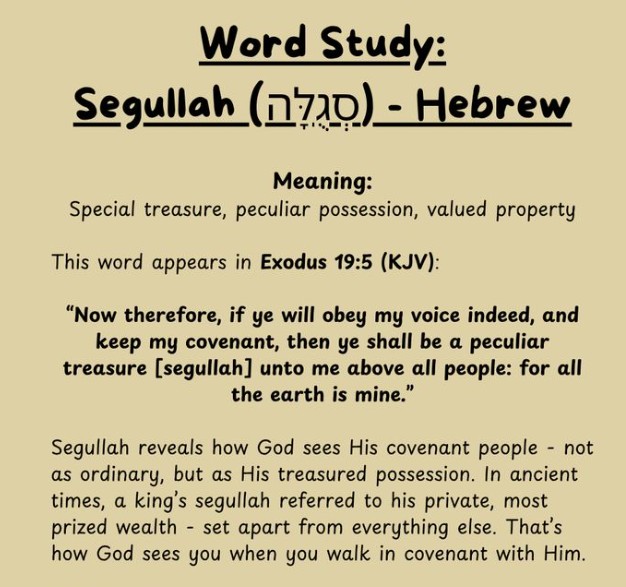
1/Yisro: Usually people go to see Royalty, not the other way around. Adonai wanted to meet His people on the mountain top. As it turned out, they were too afraid.
He loved them & told them if you listen to me & follow My guidelines you will be my special treasure. Segullah
🧵1/3
1
1
74

10 Sep 2025
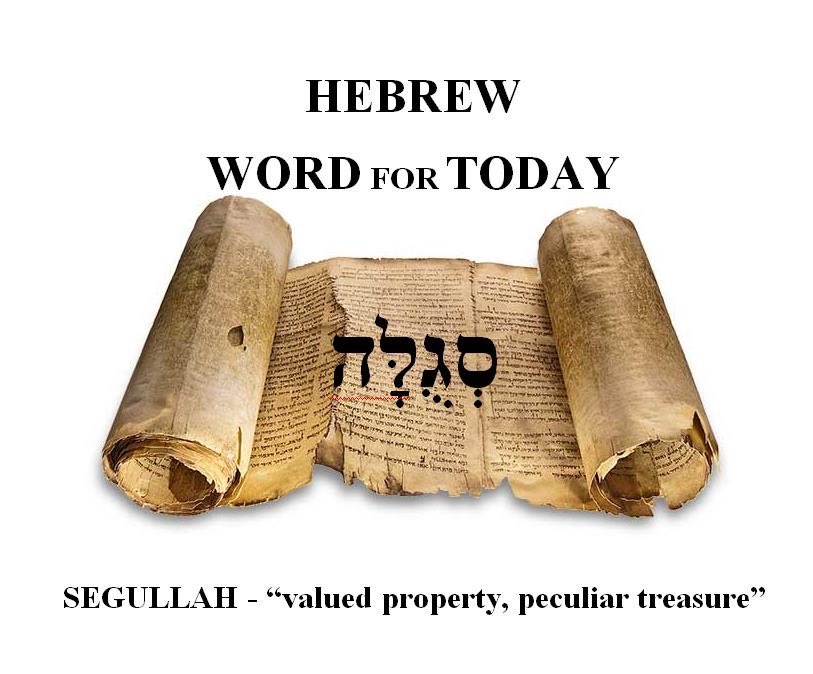
SEGULLAH - “treasured possession”
“And the LORD has declared today that you are a people for His segullah (treasured possession), as He has promised you, and that you are to keep all His commandments.” (Deut. 26:18)
3
34


31 Jul 2025
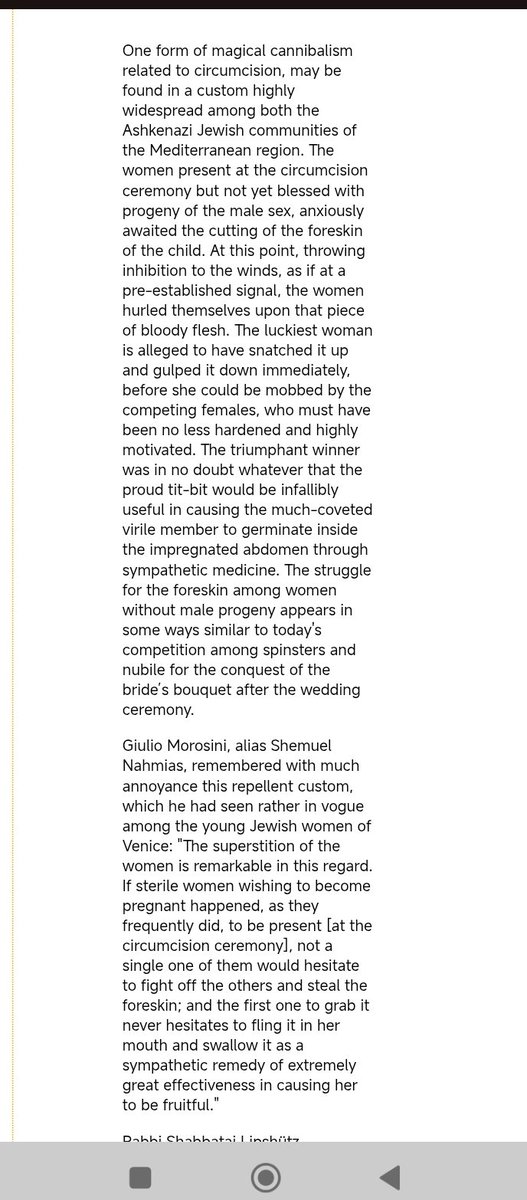
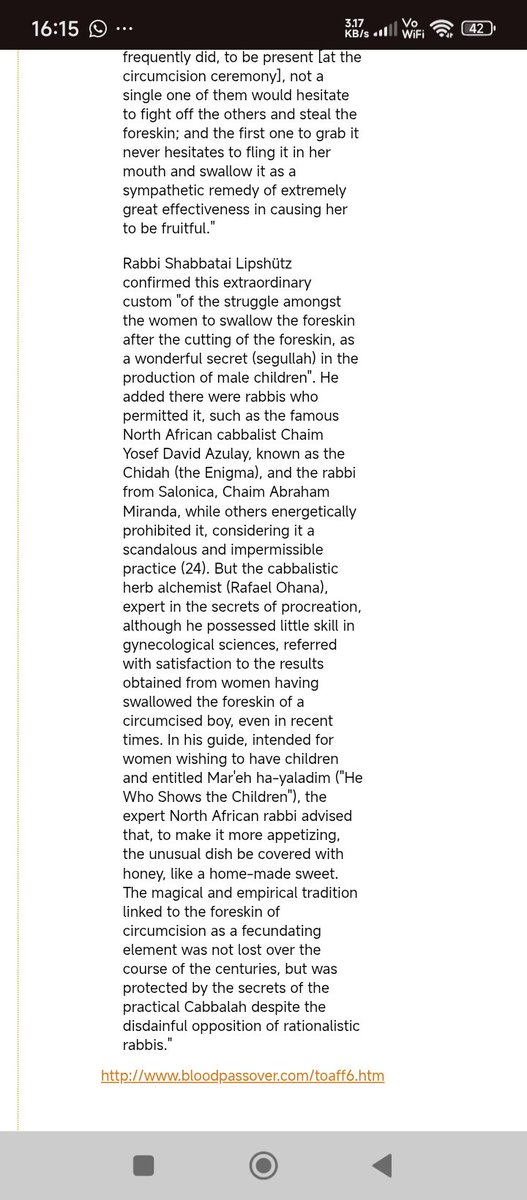
Ever heard of the Kabbalah Tradition from Babylonian which the TALMUDIC Jews call it as
"wonderful secret" (segullah)
Magical Cannibal practice among the Cannites - Cannibal
bloodpassover.com/toaff6.htm
1
2
179

12 Apr 2025
In the Bible, God doesn’t pick the tallest, the strongest, the most beautiful, the most charming.
He picks the overlooked, the rejected, the foolish in the world’s eyes, on purpose, to shame the pride of man.
When Samuel went to anoint the next king of Israel, he saw Jesse’s tall, handsome son and thought, “Surely this is the one.”
But God said:
“Do not consider his appearance or his height, for I have rejected him.
The LORD does not look at the things people look at. People look at the outward appearance, but the LORD looks at the heart.” (1 Samuel 16:7)
And who did God choose? David. The youngest. The shepherd. The one forgotten out in the field.
This is where it gets even clearer.
Deuteronomy 7:7–8:
“The LORD did not set His affection on you and choose you because you were more numerous than other peoples, for you were the fewest of all peoples.
But it was because the LORD loved you and kept the oath He swore to your ancestors…”
In other words, He didn’t choose Israel because they were mighty, beautiful, popular, or impressive.
He chose them because He wanted to. Because He loved them. Because He made a promise.
God doesn’t pick His people based on how they rank in the eyes of men.
In fact, the very word God uses to describe Israel is “segullah” in Hebrew, often translated “peculiar treasure” (Exodus 19:5, Deuteronomy 14:2).
They are His odd, strange, precious treasure.
And yeah, sometimes they wear funny hats. They keep weird customs. They sound different. They look different. And maybe that’s part of the point.
Because God chose a people that would never blend in.
He didn’t want them to be admired for their looks, their charm, or their conformity.
He wanted them to stand out, to carry His name, to confound the wisdom of the world.
It’s not just about Israel.
Paul says in 1 Corinthians 1:27–29:
“God chose the foolish things of the world to shame the wise;
God chose the weak things of the world to shame the strong.
God chose the lowly things of this world and the despised things, and the things that are not, to nullify the things that are,
so that no one may boast before Him.”
That’s the whole point.
God intentionally chooses the ones the world mocks.
The ones who don’t "look the part."
The ones who make people scoff and say, “Really? Them?”
That’s when you know God’s fingerprints are on it.
57
128
839
30,718

1 Apr 2025
Rabbi Shabbatai Lipshütz confirmed this extraordinary custom "of the struggle amongst the women to swallow the foreskin after the cutting of the foreskin, as a wonderful secret (segullah) in the production of male children".
Are you calling this rabbi a liar?
1
5
78
26 Mar 2025
Interesting, this cannibal in the video enjoys eating people as much as he likes aid for Israel. Imagine that!
Is there a pattern here?
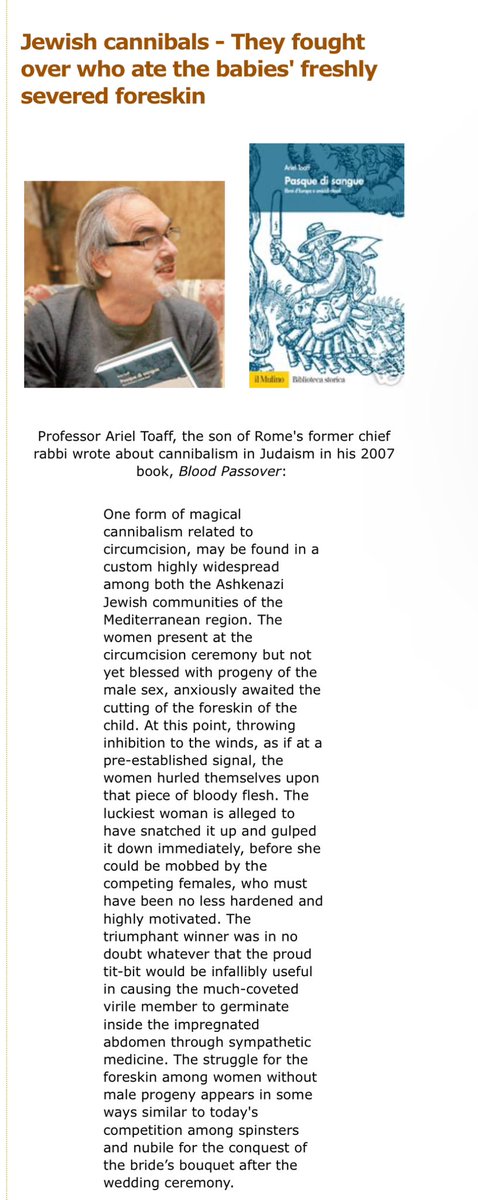
Professor Ariel Toaff, the son of Rome's former chief rabbi wrote about cannibalism in Judaism in his 2007 book, Blood Passover.
Rabbi Shabbatai Lipshütz confirmed this extraordinary custom "of the struggle amongst the women to swallow the foreskin after the cutting of the foreskin, as a wonderful secret (segullah) in the production of male children". He added there were rabbis who permitted it, such as the famous North African cabbalist Chaim Yosef David Azulay, known as the Chidah (the Enigma), and the rabbi from Salonica, Chaim Abraham Miranda.

13
34
103
13,157

25 Mar 2025
A5: #HealthyFaithChat
Not everyone in Malachi’s day shared this cynical attitude toward the Lord. Some still feared the Lord, and the Lord saw that attitude and kept them as His “treasured possession,” (segullah; Mal. 3:17), the same word used to describe Israel in Exodus 19:6. The Lord would soon appear in His temple to bring the justice for which people were supposedly longing (Mal. 3:1–2). He would separate the righteous from the wicked once for all, and those who feared the Lord would be vindicated as His true people, while the wicked would be judged and destroyed (Mal. 4:1–3).
1
4
54

5 Mar 2025
Types and shadows, marriage covenant language in context of His "Segullah" (Treasured Possession).
2
23