
28 Dec 2025
Lecture 12 of STRIKE DSA
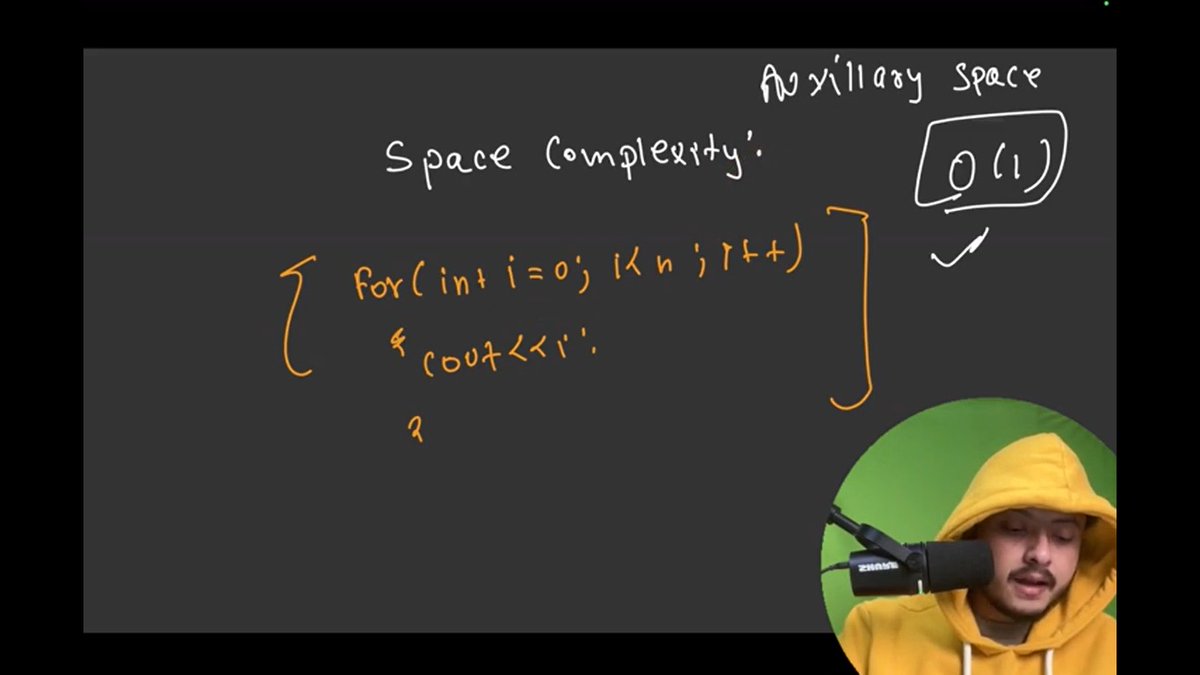
Covered space complexity and sorting algorithms:
• Extra space matters as much as time
• Selection Sort: simple approach, fixed numbers of comparison
Instructor - @rohit_negi9 sir
#DSA #Sorting #SelectionSort #SpaceComplexity #ComputerScience
1
5
116

12 Dec 2025
Selection Sort works by repeatedly finding the smallest element and placing it at the correct position.
Simple, visual, and perfect for beginners! 🚀
Follow @codecraftzone for more clean DSA explanations!
#selectionsort #sortingalgorithm #dsa #datastructures #coding
2
2
19

13 Nov 2025
Selection Sort
Selection Sort is a simple, in-place, comparison-based sorting algorithm used in data structures to arrange the elements of a list or array in a specific order, either ascending or descending.
#selectionsort #SortingAlgorithm #DataStructures #Programming #Coding
2
1
11
51
16 Oct 2025
Selection Sort | Sorting Algorithm
Selection Sort is a simple, in-place, comparison-based sorting algorithm used in data structures to arrange the elements of a list or array in a specific order, either ascending or descending.
#SelectionSort #SortingAlgorithm#DataStructures
2
1
10
46

23 Sep 2025
Day 9/100 DSA
Today’s focus: Selection Sort
It works by repeatedly finding the minimum element and placing it at the correct position, simple but effective for learning sorting fundamentals.
Big thanks to @w3schools for being a handy reference
#100DaysOfCode #SelectionSort
1
3
48

17 Sep 2025
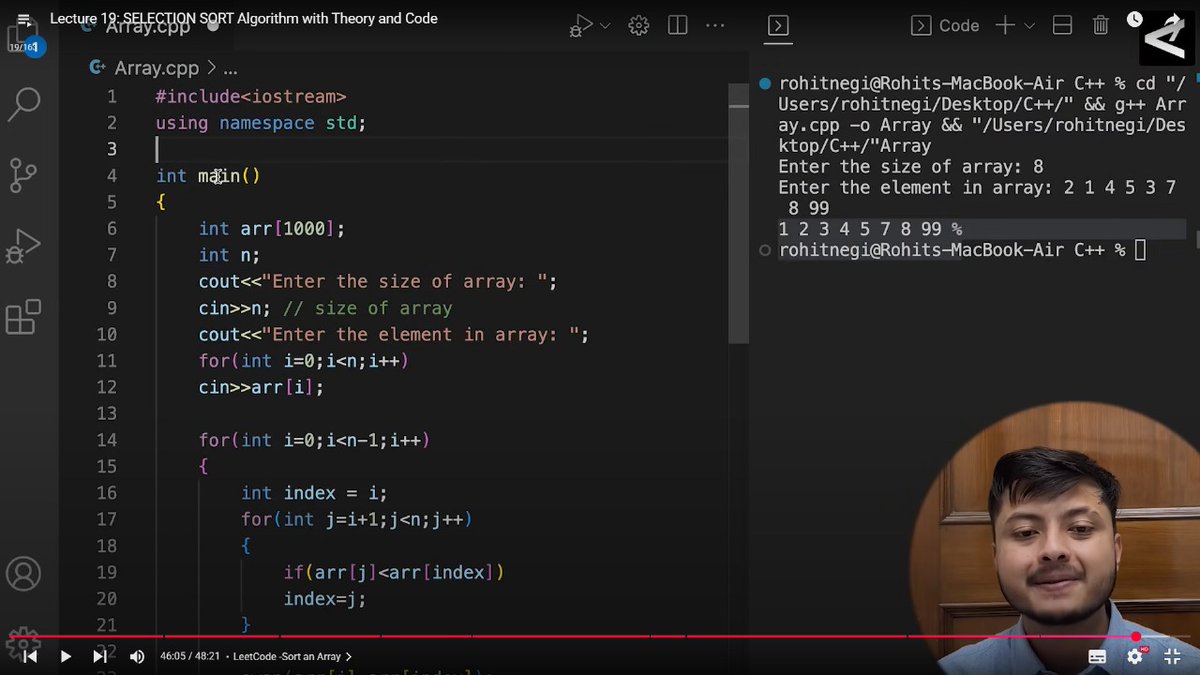
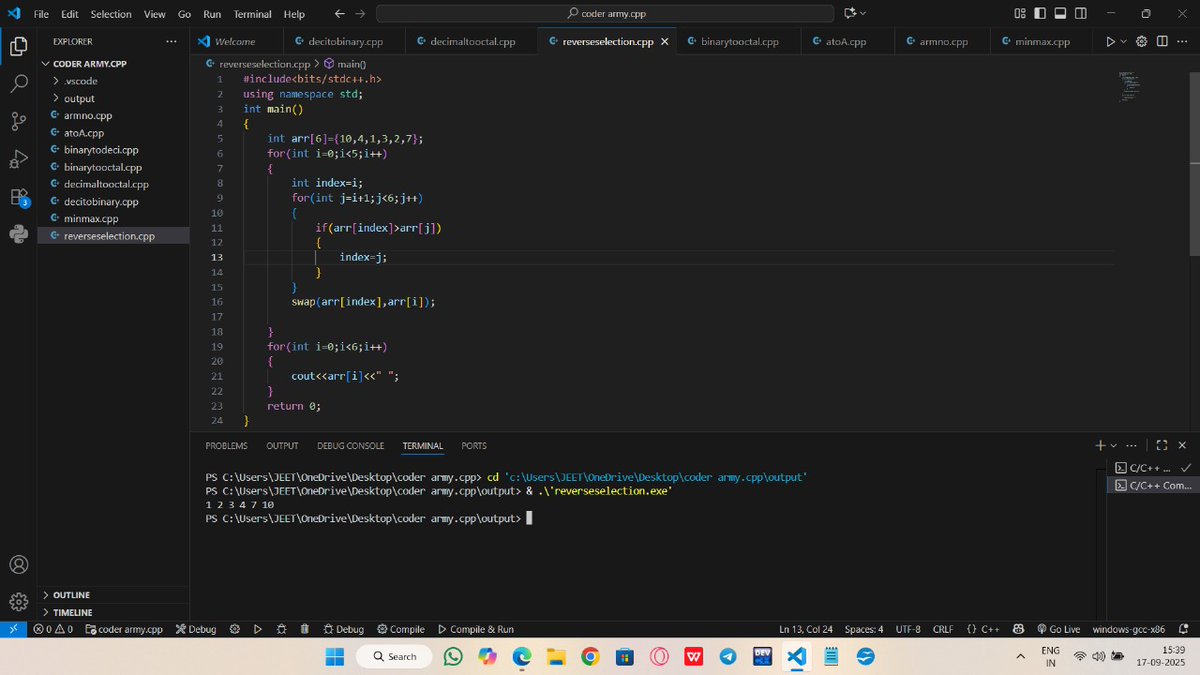
Just nailed the Selection Sort Algorithm thanks to the best mentor, Rohit Negi bhaiya, from Coder Army's YouTube channel! 🧠💻 Homework smashed too! Concepts pura chamak gaiya bhaiya! ✨ #CodingJourney #SelectionSort #CoderArmy #DSA #Consistency
1
13
380

5 Sep 2025
In this video, I've explained the Selection Sort algorithm step-by-step, showing how it finds the minimum element and sorts the data. Perfect for beginners!
#SelectionSort #DataStructures #Algorithms #Coding #Programming #LearnToCode
7
84

8 Aug 2025
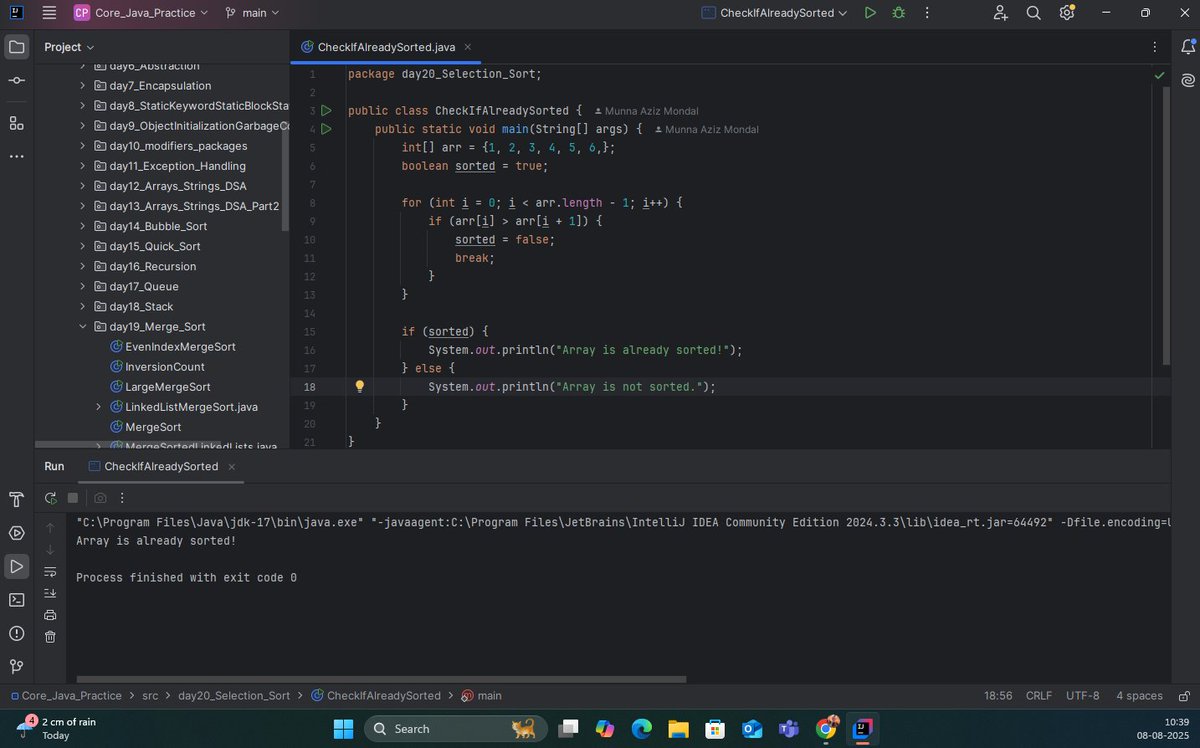
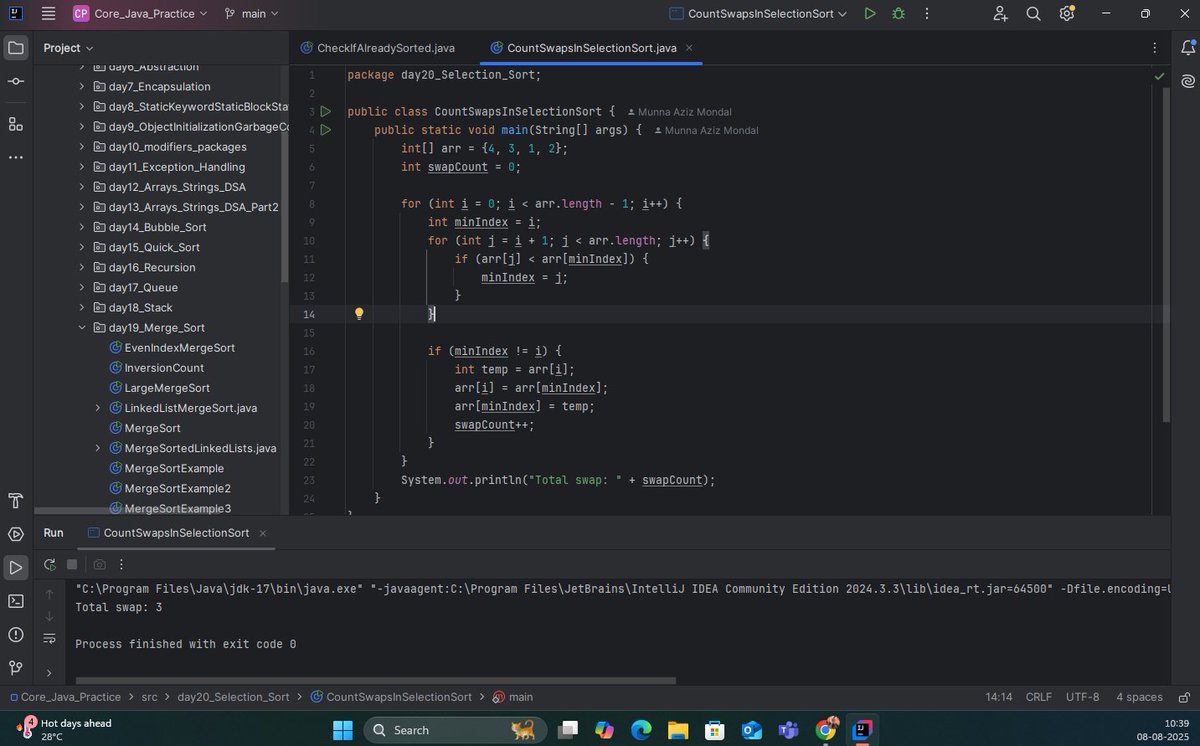
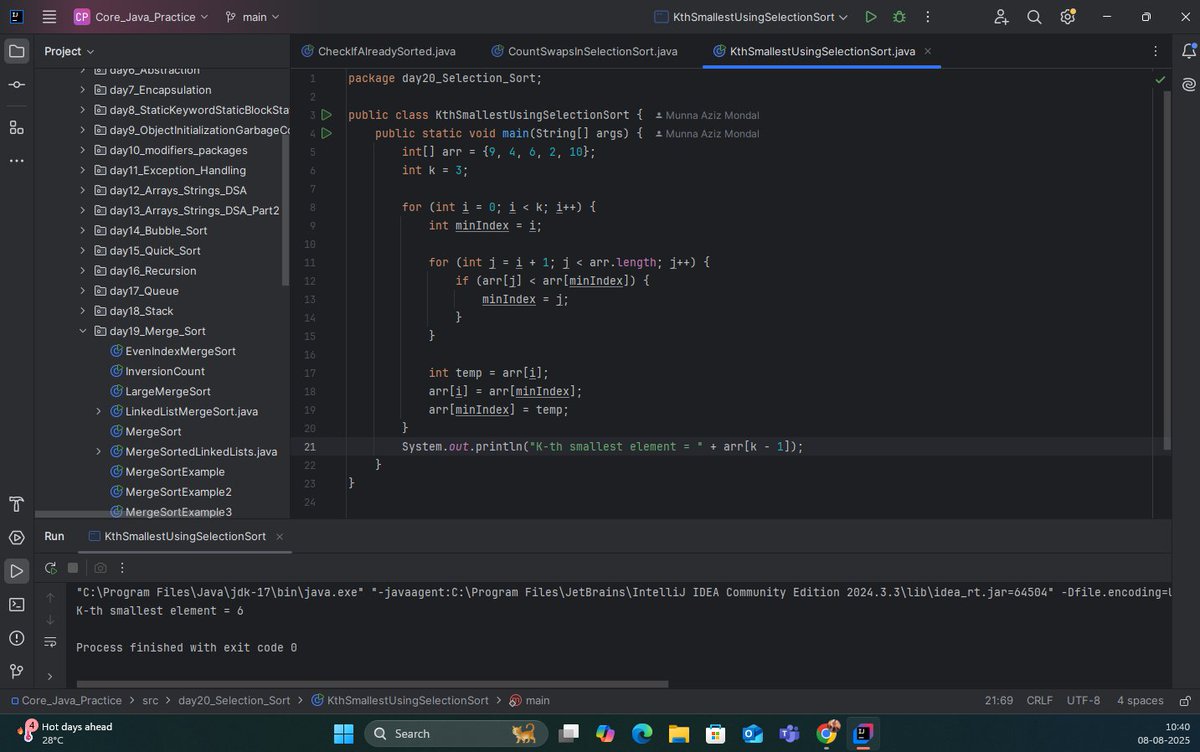
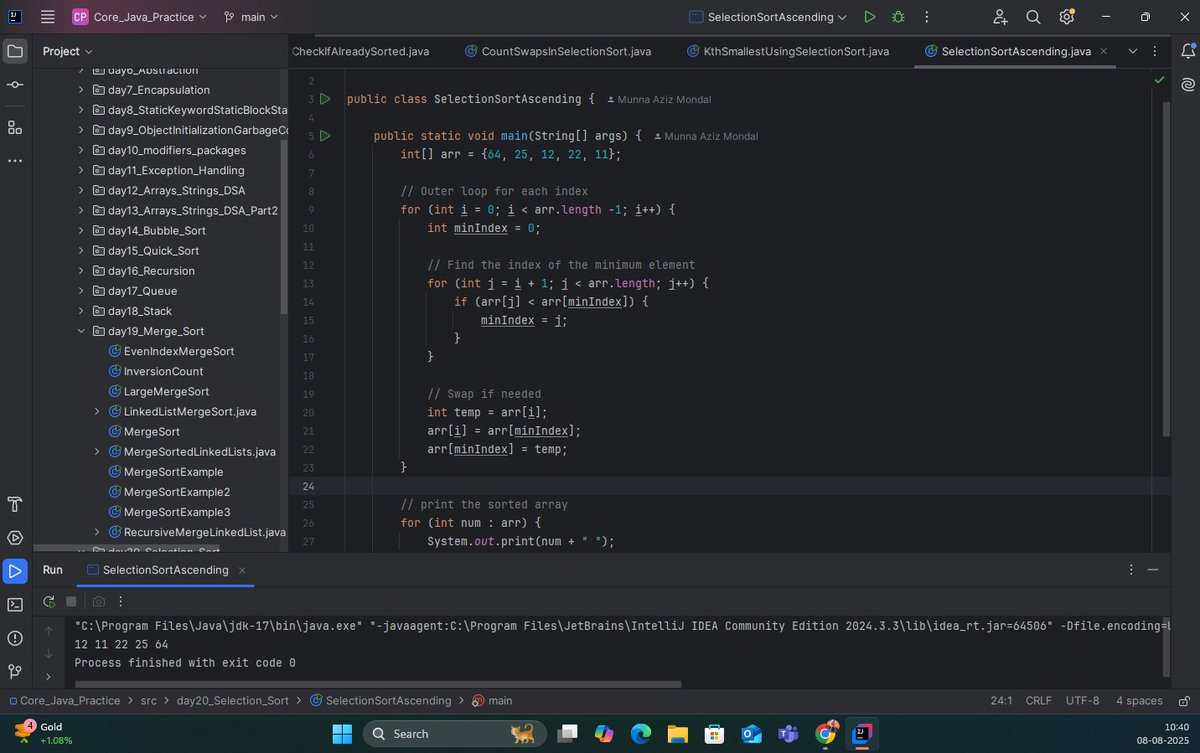
📘 Java Learning – #Day 24
🔸 Topic: Selection Sort
✅ Find min → Swap → Repeat
✅ Time: O(n²) | Space: O(1)
💡 Simple, in-place sorting for small datasets
Next → Sorting practice & optimizations 💻
#Java #DSA #SelectionSort #100DaysOfCode #Sorting #CodingJourney
3
33

6 Aug 2025
🌀 Day 4 of DSA Journey: Sorting It Out – Bubble, Selection & Insertion Sort
Welcome to Day 4 of our DSA adventure!
You’ve learned how to search — now it’s time to sort.
Sorting is one of the most common interview topics and also a core building block for many algorithms (including Binary Search 👀).
📦 What Is Sorting?
Sorting means arranging data in a specific order, usually ascending or descending.
Example:
Unsorted: [5, 1, 4, 2, 8]
Sorted: [1, 2, 4, 5, 8]
1. 🫧 Bubble Sort
Compare adjacent elements and swap if they're in the wrong order.
Repeat until the array is sorted.
void bubbleSort(int arr[], int n) {
for(int i = 0; i < n-1; i )
for(int j = 0; j < n-i-1; j )
if(arr[j] > arr[j 1])
swap(arr[j], arr[j 1]);
}
Time: O(n²)
Space: O(1)
✅ Easy to understand
❌ Not efficient for large arrays
2. 🟨 Selection Sort
Find the minimum element and place it at the beginning.
void selectionSort(int arr[], int n) {
for(int i = 0; i < n-1; i ) {
int minIdx = i;
for(int j = i 1; j < n; j )
if(arr[j] < arr[minIdx])
minIdx = j;
swap(arr[i], arr[minIdx]);
}
}
Time: O(n²)
Space: O(1)
✅ Good when memory writes are costly
❌ Still slow for big inputs
3. 🖋️ Insertion Sort
Pick an element and insert it into its correct position in the sorted part.
void insertionSort(int arr[], int n) {
for(int i = 1; i < n; i ) {
int key = arr[i];
int j = i - 1;
while(j >= 0 && arr[j] > key) {
arr[j 1] = arr[j];
j--;
}
arr[j 1] = key;
}
}
Time: O(n²) but O(n) for nearly sorted
Space: O(1)
✅ Great for small or partially sorted arrays
🧩 Challenge of the Day:
> ✍️ Write all 3 sorting algorithms from scratch and sort this array:
[64, 25, 12, 22, 11]
Tomorrow, we’ll explore the efficient sorts — Merge Sort & Quick Sort — and understand why they're used in real-life systems.
Keep coding,
Smit 👨💻
4
350

30 Jul 2025
Day 15 of #DSA
Today, I learned **Selection Sort.
->Understood the logic
-> Practiced the code
-> Solved problems
#DSA #Coding #SelectionSort
11
291
14 Jul 2025
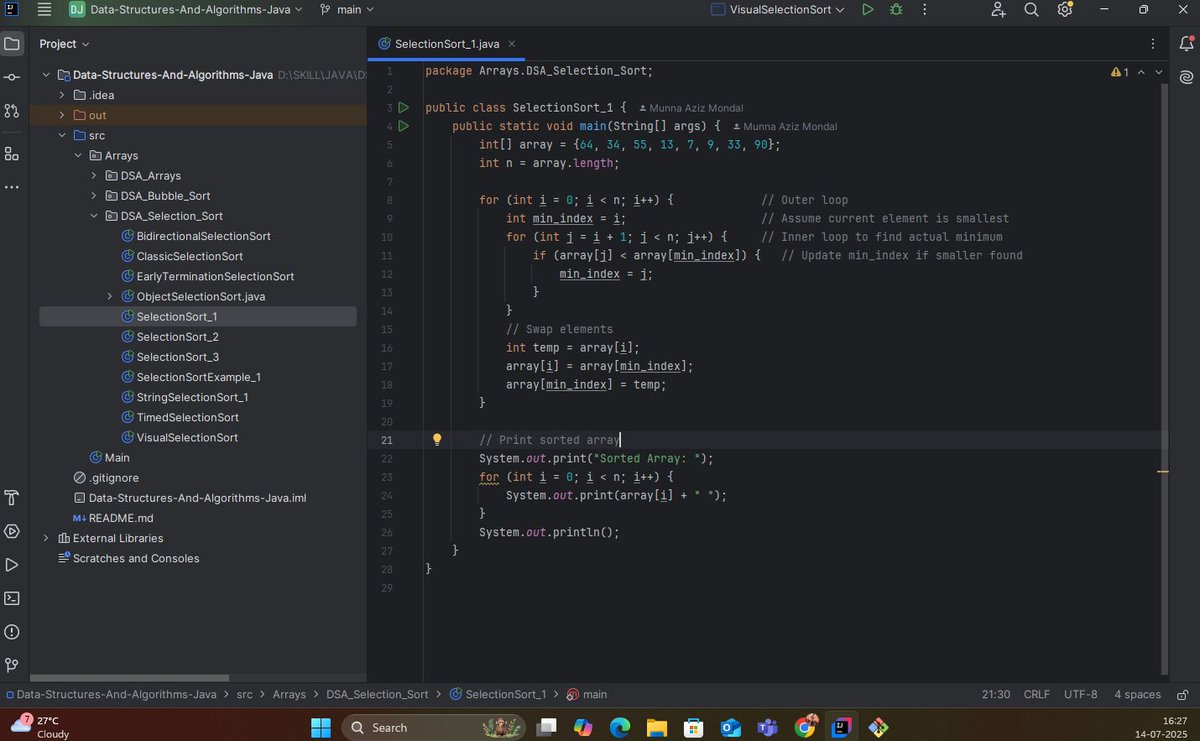
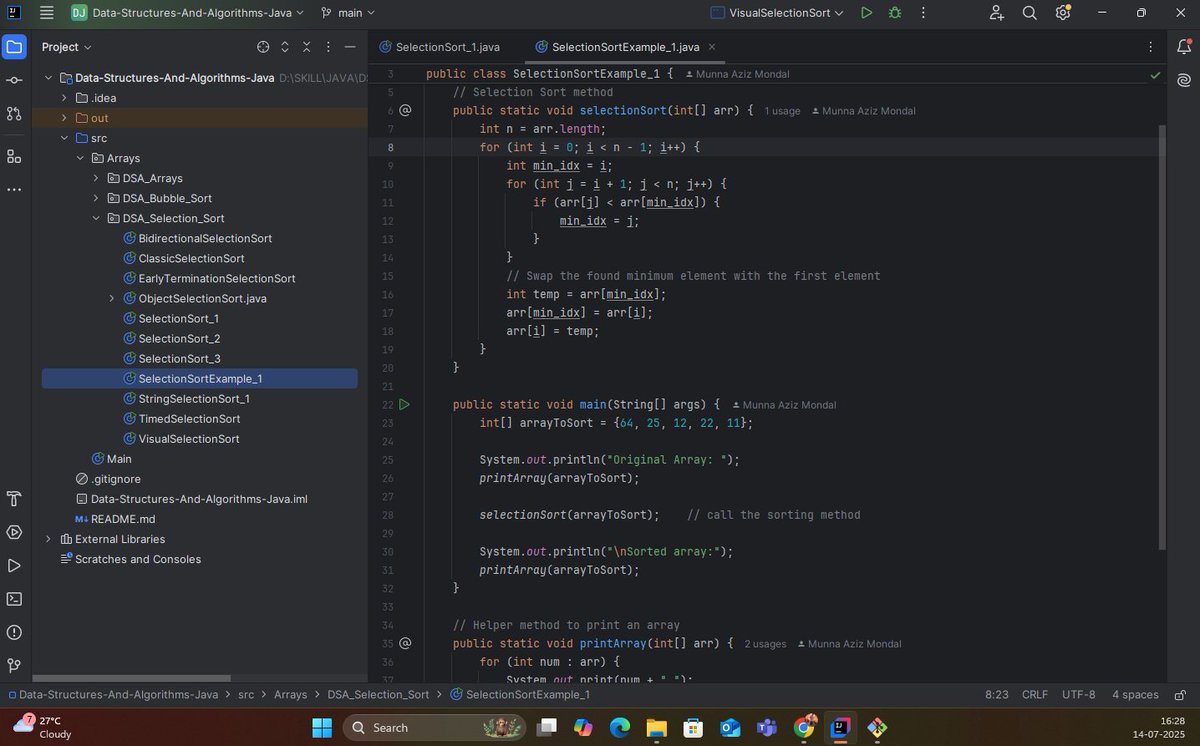
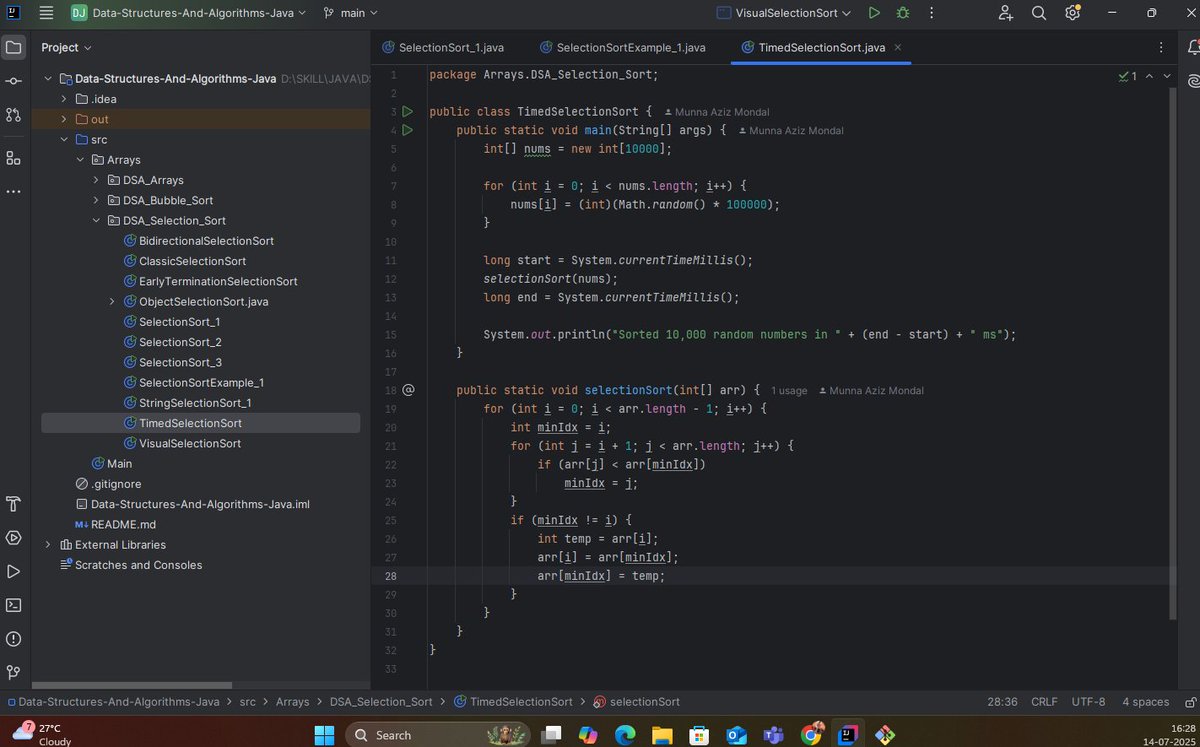
DSA Day 5 ✅
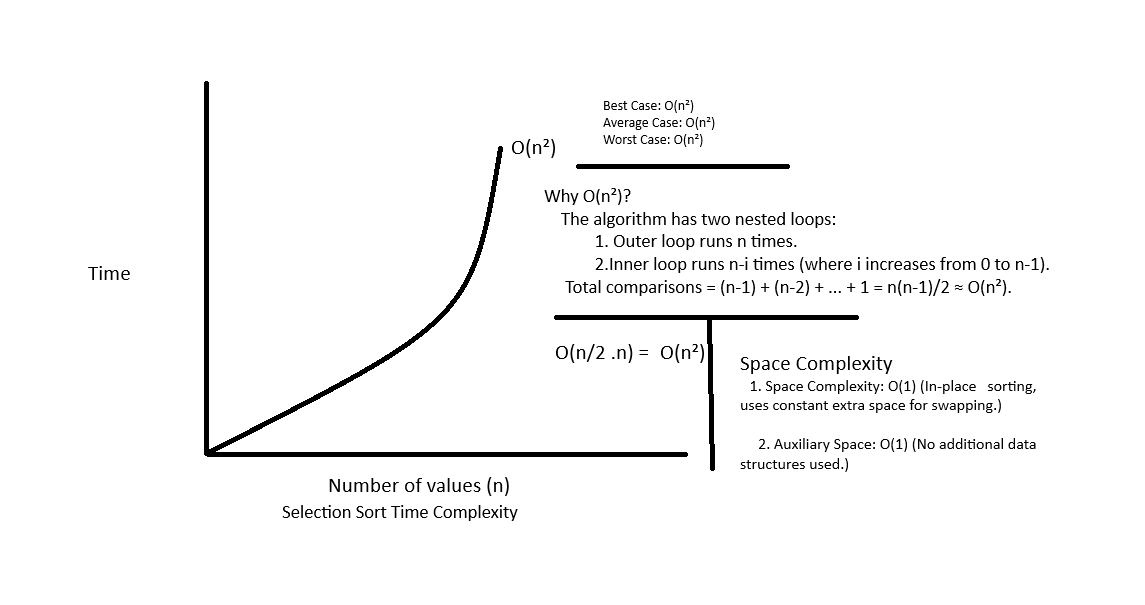
Learned & implemented Selection Sort 🔍
🔹 Finds the minimum & moves it to the front
🔹 Uses nested loops
🔹 Not stable (can reorder equal elements)
🔹 Time: O(n²)
🔹 Space: O(1) – In-place
#DSA #Java #100DaysOfCode #Sorting #SelectionSort #LearnInPublic
3
57

11 Jul 2025
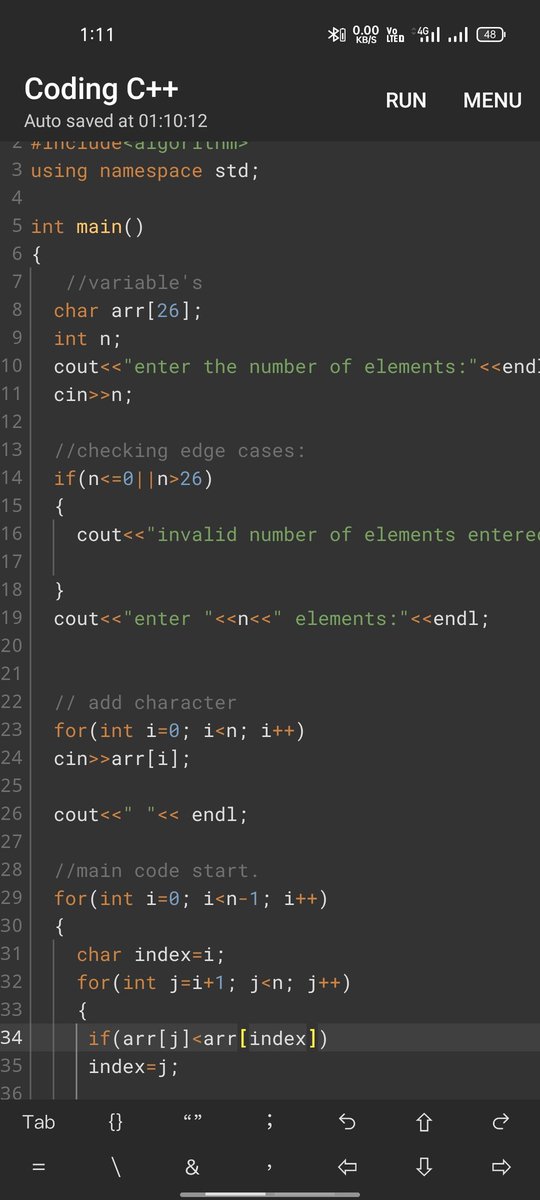
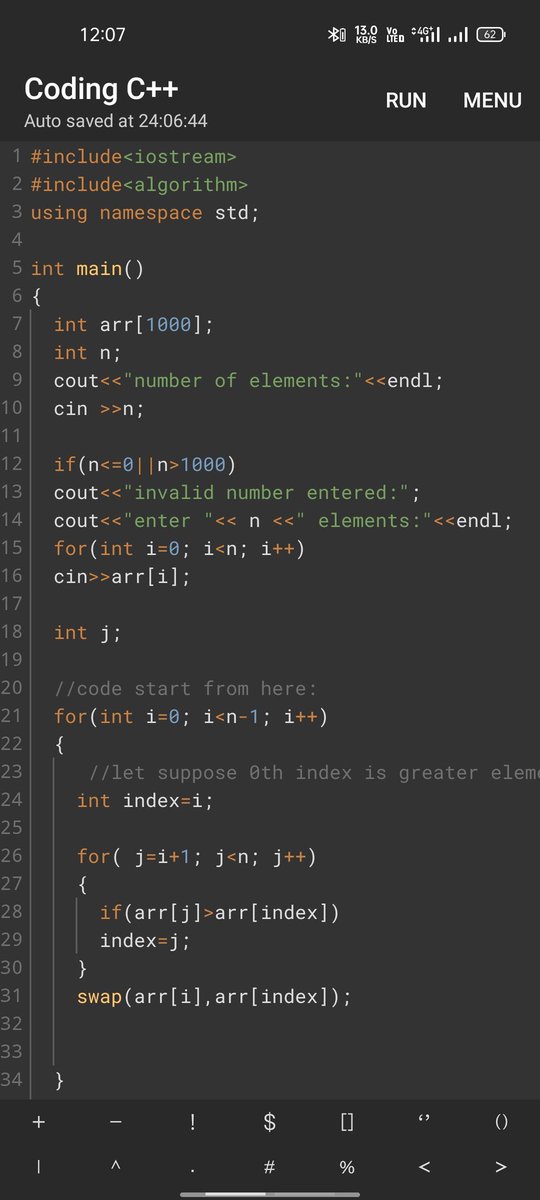
#180daysofcode #DSA
#coding #selectionsort #sorting
Today i am done selection sort's lin decreasing and character, and what handling edge cases 😉increasing form.also find another approach to solve it. Btw this was awesome 😎
3
84

8 Jul 2025
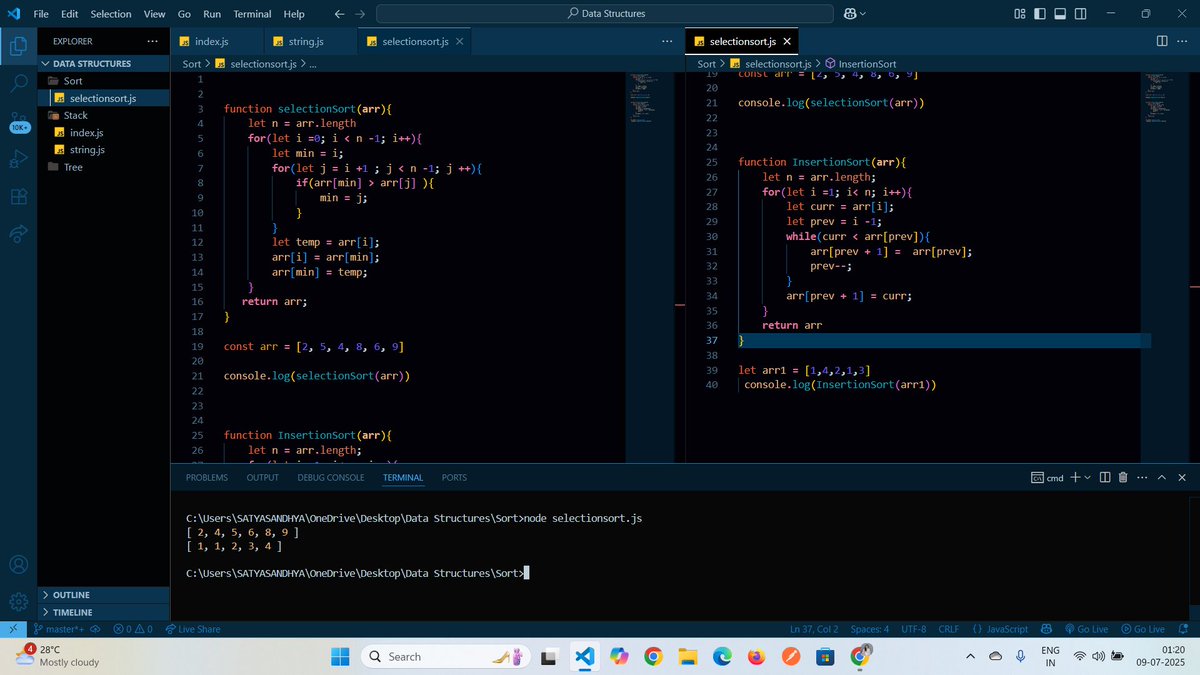
✅ Today I solved Selection Sort and Insertion Sort problems.
Great practice to understand how basic sorting algorithms work step by step!
#DSA #SortingAlgorithms #SelectionSort #InsertionSort #100DaysOfCode @ChaiCodeHQ
@PrateekJain027
1
6
84

28 Jun 2025
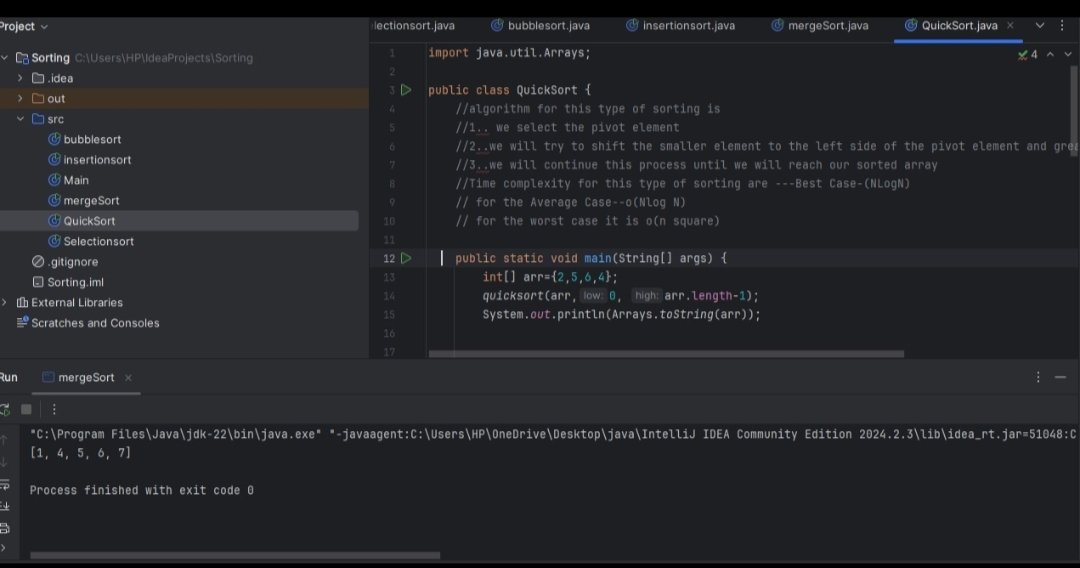
Done with Sorting !!
#Dsa
QuickSort..
Selectionsort!!
Insertionsort!!
Merge sort
Bubblesort
Github-("github.com/riya106/Sorting")
5
264

14 Jun 2025
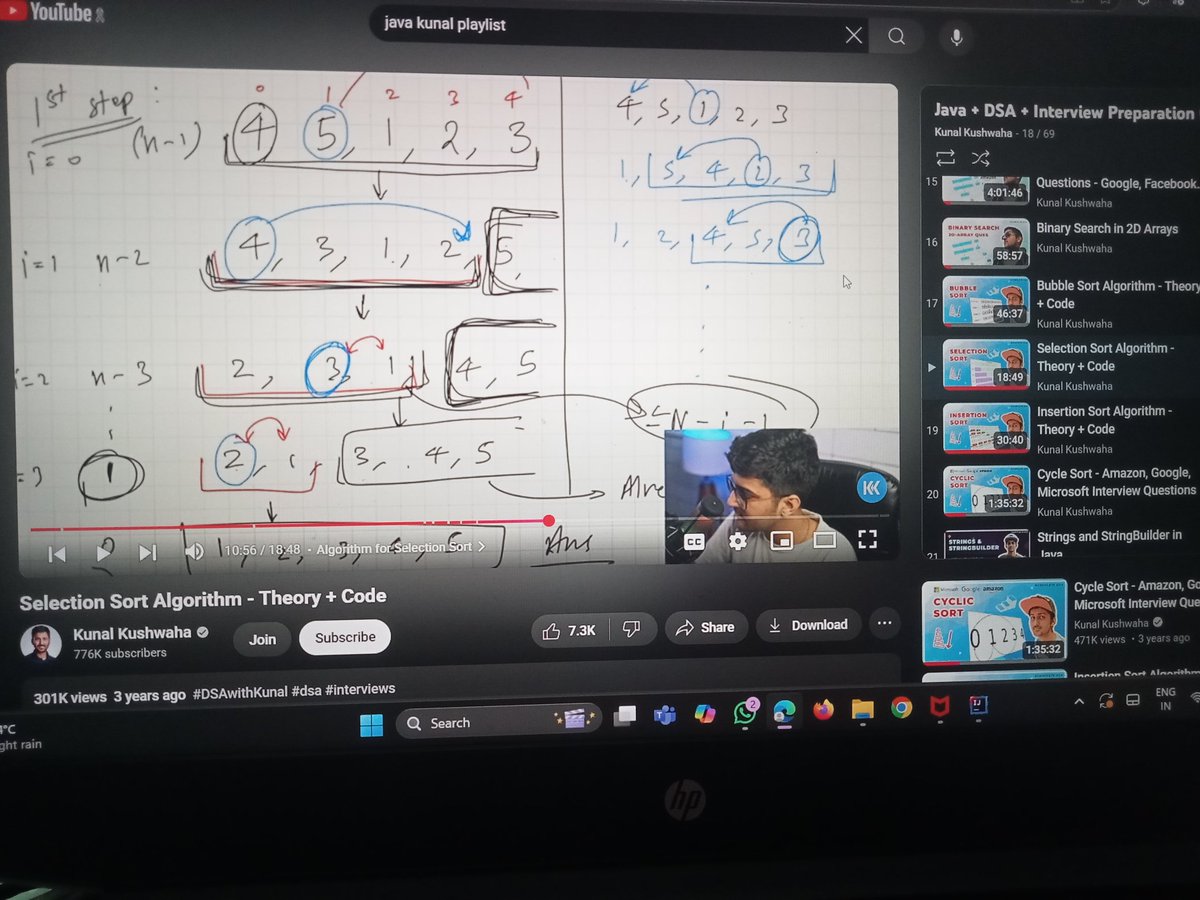
Day 129 ⚡
⏰ Woke up at 6:00 AM
💻 Watched Lecture 18–Selection Sort*
📌 Learned:
🔹 SelectionSort
#CodingJourney #KeepLearning #Java #DevLife #DSAWithKunal
4
35
13 Jun 2025
Day 128 ⚡
⏰ Woke up at 6:00 AM
💻 Watched Lecture 16–Selection Sort*
📌 Learned:
🔹 SelectionSort
#CodingJourney #KeepLearning #Java #DevLife #DSAWithKunal
4
31

20 May 2025
🚀 New module added to my DSA GitHub repo: 🔁 Sorting Techniques
✅ First up: Selection Sort in C
🧠 Includes problem stmt, dry run, & full code
📂 GitHub: github.com/VarunMendre/A2Z_D…
#DSA #Cplusplus #100DaysOfCode #Coding #GitHub #SelectionSort
5
21

27 Mar 2025
Day 33:
> SelectionSort and BubbleSort Algorithms.
> Progressed in react native app and backend.
> Resolved some navigation and data fetching issues.

4
140

21 Feb 2025
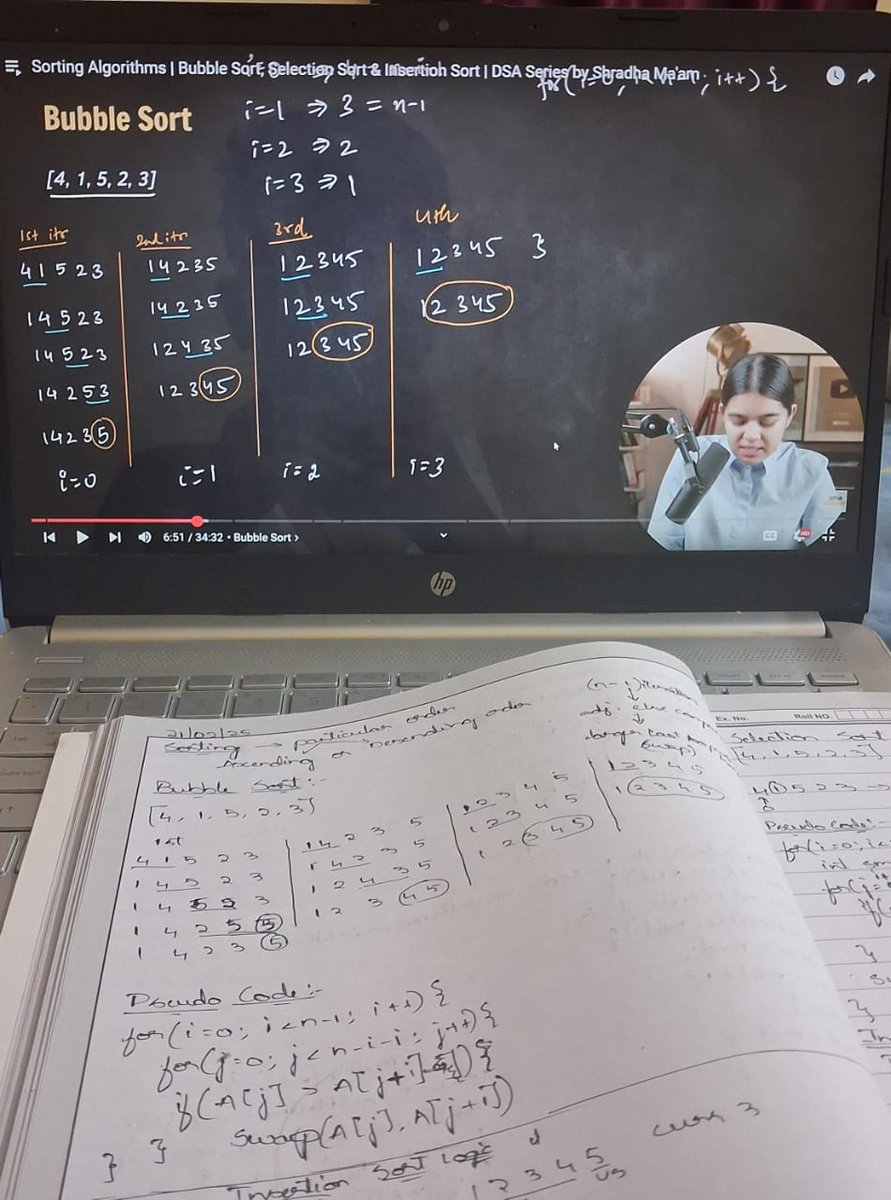
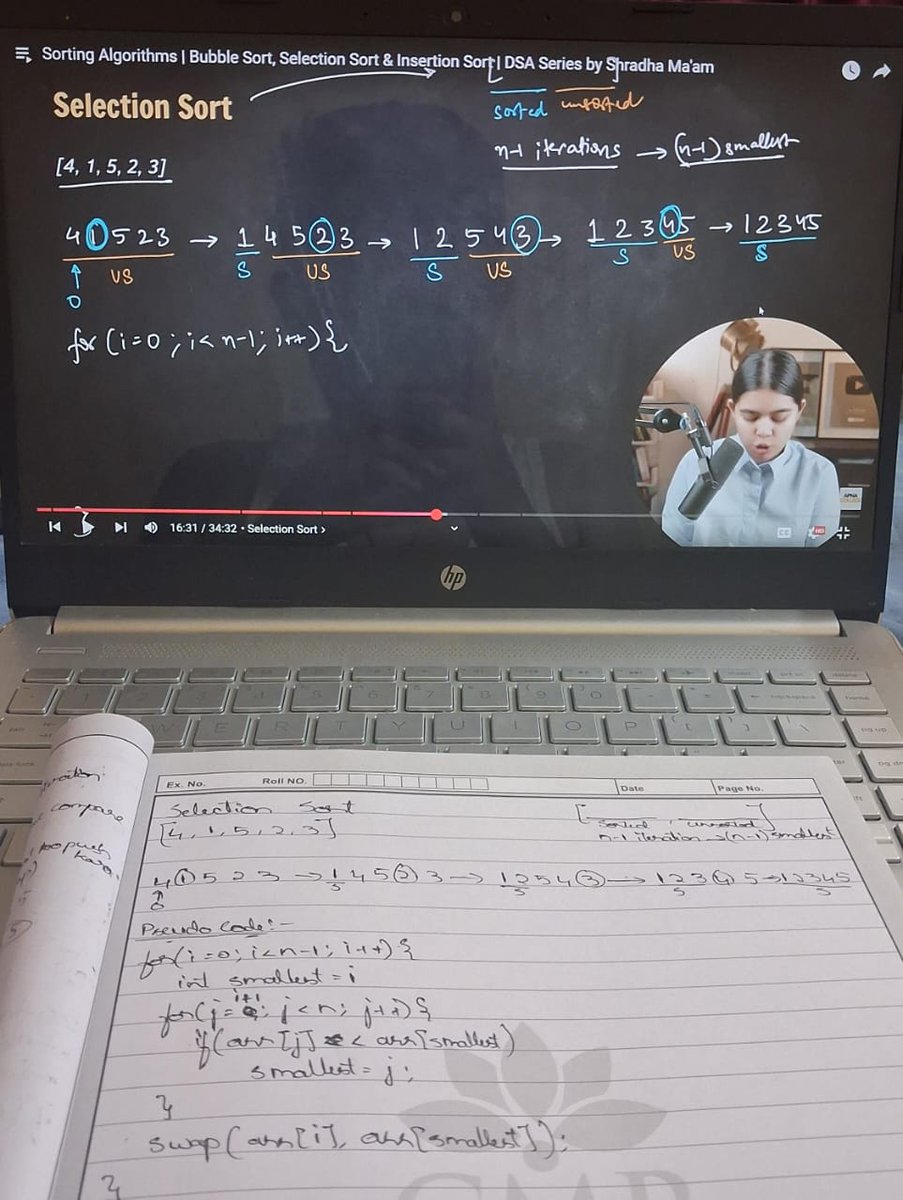
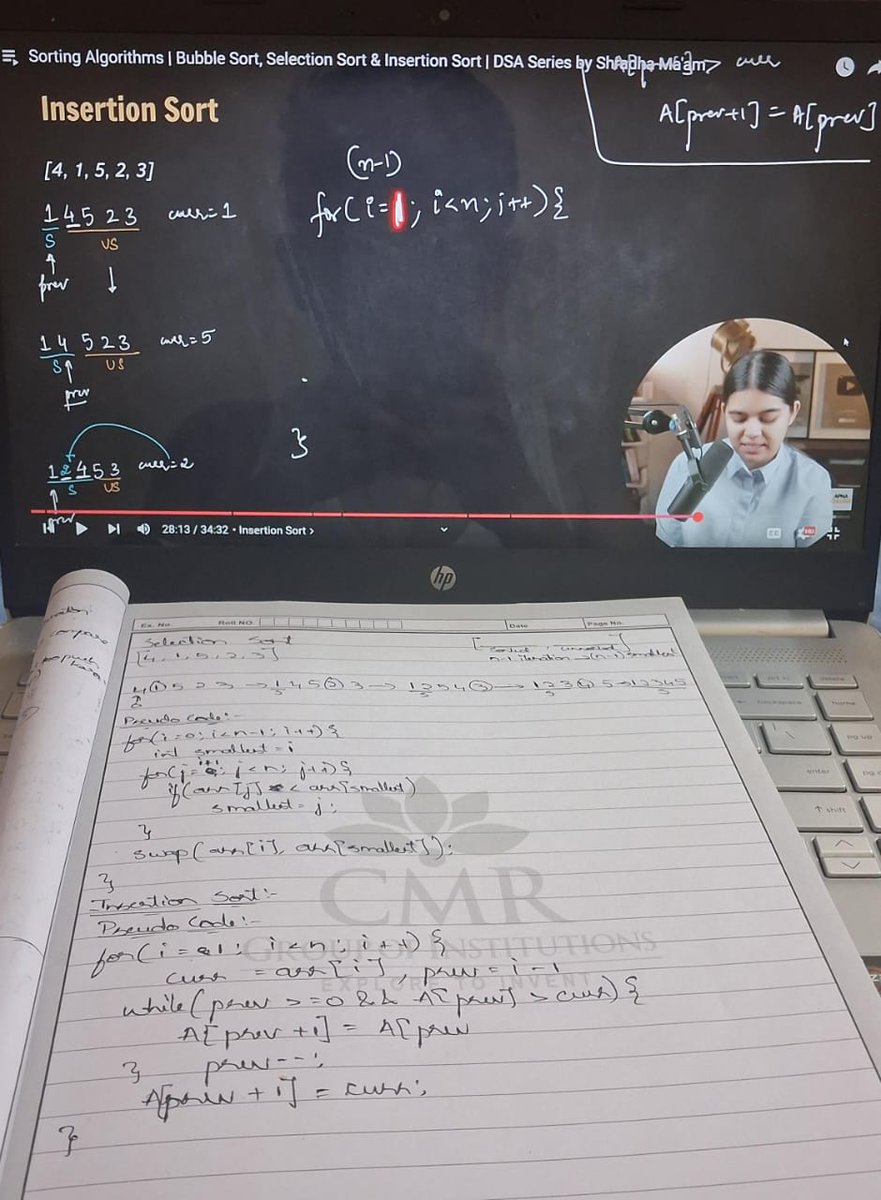
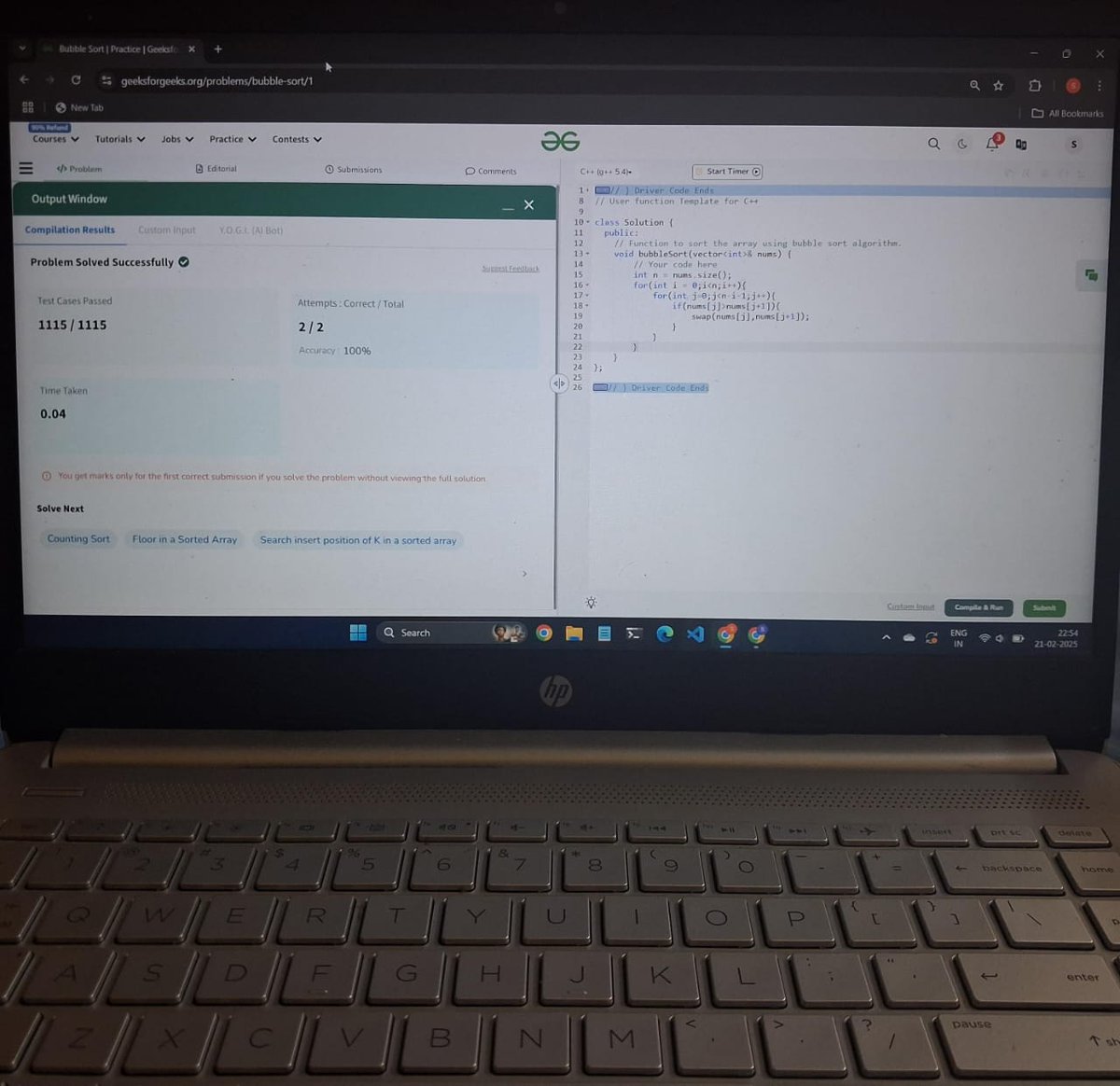
🚀 #Day9 of DSA Journey 🚀
Explored Sorting Algorithms today!
Bubble Sort – Simple but slow! O(n²)
Selection Sort – Finds the min & swaps. O(n²)
Insertion Sort – Great for nearly sorted arrays! O(n²)
@ShradhaKhapra_
#DSA #Sorting #BubbleSort #SelectionSort #InsertionSort
5
45

28 Dec 2024
Selection Sort explained simply! 🤓 This short video uses a diagram to show you how this sorting algorithm works.
#selectionsort #algorithms #easyexplanation #js #javascript #reactjs #WebDev #webdeveloper
8
305