
May 22
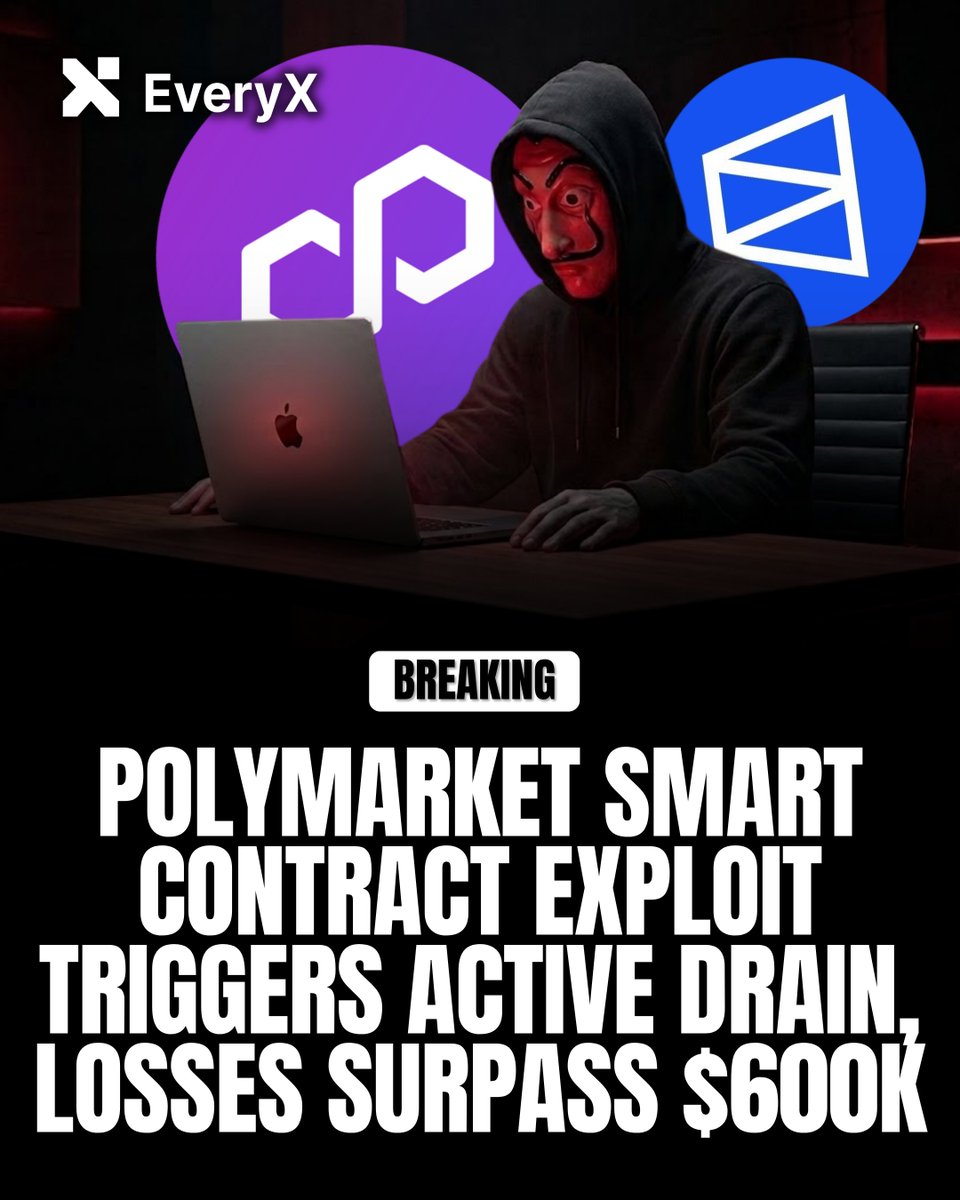
The decentralized prediction platform Polymarket is currently facing a severe smart contract exploit, with attackers actively draining approximately 5,000 $POL every 30 seconds.
Total losses have already surged past $600,000, with funds continuously being siphoned in real time as the exploit remains ongoing.
Security observers warn that the situation is rapidly escalating, and users are strongly advised to avoid interacting with the platform until further notice as containment efforts are still underway.
🔗 READ MORE: instagram.com/everyx.io/p/DY…
#Polymarket #SmartContractExploit #BlockchainSecurity #CryptoNews #DeFi #Web3 #OnChain #CryptoAlert #EveryX #EveryXNews
2
77

May 22
🔴 Polymarket ถูกแฮกบน Polygon สูญเงินกว่า $520,000
siamblockchain.com/2026/05/2…
#Polygon #Polymarket #smartcontractexploit #Crypto #คริปโต
3
787

Apr 29
Forensic alert: Another textbook case of fixed-point arithmetic gone wrong on SUI.
ifixed::less_than_eq treating u256 values as signed allowed massive negative fees, creating free collateral credits that the attacker drained via create_integrator_info.
Invariant missing: fees must be non-negative.
Result: ~$1.14M exploit and protocol paused.
This highlights why semantic correctness in Move is just as critical as logical checks.
Users: revoke approvals immediately. Monitor your wallets.
Telemetry only. NFA. #SUI #DeFiSecurity #MoveLang #SmartContractExploit
Apr 29

.@AftermathFi on #SUI was reported being attacked several hours ago, with direct losses of about $1.14M. According to the team, only Aftermath Perps was affected, while the exploit was caused by the protocol incorrectly allowing negative builder fees.
Based on our analysis of the on-chain disassembled Move bytecode, the underlying implementation issue was a semantic mismatch: builder fees were expected to be user-approved, non-negative values, but were validated through a signed fixed-point comparison over a u256 interface. In the disassembled calculate_taker_fees path, the critical check was:
// Builder fee is only checked against an upper bound.
// Missing invariant: fee must also be non-negative.
assert!(
ifixed::less_than_eq(
v5.taker_fee,
account::get_integrator_max_taker_fee(
account::get_integrator_config(arg1, v5.integrator_address)
)
),
errors::invalid_integrator_taker_fee()
);
Semantically, both values were expected to represent non-negative fee rates. However, ifixed::less_than_eq() performs a signed comparison. This means that once the attacker set max_taker_fee = 0, they could pass a value such as 2^256 - 10^16, which is interpreted under signed semantics as a negative fee, i.e. -10^16. Since -10^16 <= 0 holds, the check passed.
public fun create_integrator_info(arg0: address, arg1: u256): Option<IntegratorInfo> {
let v0 = IntegratorInfo {
integrator_address : arg0,
taker_fee : arg1,
};
option::some<IntegratorInfo>(v0)
}
The exploit path was further exposed because create_integrator_info() was publicly callable and did not enforce any permission or fee-bound validation on the supplied taker_fee.
let (v7, v8, v9) = calculate_taker_fees(...);
// v6 = taker PnL
// v7 = normal taker fee
// v8 = builder fee
//
// Intended effect:
// collateral = pnl - taker_fee - builder_fee
//
// If v8 is negative, subtracting it turns it into a positive credit.
position::add_to_collateral_usd(
arg0,
ifixed::sub(v6, ifixed::add(v7, v8)),
arg2
);
As a result, the negative builder fee was not merely accepted; it was transformed into a direct positive collateral credit during taker settlement. The attacker then deallocated that inflated free collateral back into the account balance and withdrew real USDC from the protocol.
Some thoughts:
1) This was not just a fee bypass: the negative builder fee was converted into positive collateral during settlement.
2) The exploit was permissionless: the attacker could self-configure the taker-side cap and inject the negative fee through a public path.
3) The actual loss was realized through the normal deallocate-and-withdraw flow, meaning the inflated collateral became real withdrawable USDC from the vault.
2
3
93
Apr 29
🔴 ZetaChain ยอมรับเพิกเฉยรายงาน bug ก่อนถูกแฮกสูญ $333,000
siamblockchain.com/2026/04/2…
#bugbounty #GatewayEVM #smartcontractexploit #Crypto #คริปโต
2
400

23 Sep 2025
#2 ⚠️ CRYPTO THEFT: UXLINK $50M phishing blowback
On September 22, 2025, a crypto heist turned ironic when a hacker targeting UXLINK lost over $50 million worth of tokens after falling into a phishing trap himself. The attacker had earlier breached UXLINK — a Web3 social platform — by exploiting its smart contract through a delegateCall function. That gave them admin control and they drained around 542 million UXLINK tokens. But almost immediately after, another bad actor used a phishing scheme (via Inferno Drainer) to trick that attacker and stole the bulk of those stolen tokens. UXLINK’s team responded by working with firms like PeckShield to freeze affected wallet addresses. The story shows how even perpetrators can become victims in crypto’s wild environment. Beginners should know: smart contract bugs like delegateCall are powerful; always double-check URL authenticity (phishing sites are everywhere); store tokens in trusted platforms; and don’t chase revenge hacks or shady exploits yourself.
#Crypto #UXLINK #Phishing #SmartContractExploit

20 Sep 2025

⚠️CRYPTO THEFT: London Phone Crypto Heist $40K
On September 21, 2025, London was shaken by a clever crypto heist where thieves stole smartphones to access victims’ digital wallets, resulting in at least £40,000 in cryptocurrency losses. The attackers often observed their targets in advance and bypassed two-factor authentication, hitting both individuals and small charities. One notable case involved Christian d’Ippolito, who lost thousands before platforms like Coinbase reimbursed part of the stolen funds. While blockchain transactions are traceable, the stolen crypto was quickly moved through multiple wallets and exchanges, making recovery difficult. This incident highlights the risks tied to mobile devices and the importance of strong app security, cautious storage of crypto, and awareness of phishing attempts. Always use hardware wallets for large amounts, enable multi-factor authentication, and avoid keeping significant funds on phones.
#Crypto #Bitcoin #Blockchain #CryptoHeist #MobileSecurity #CryptoSafety

1
5
352

22 Feb 2025
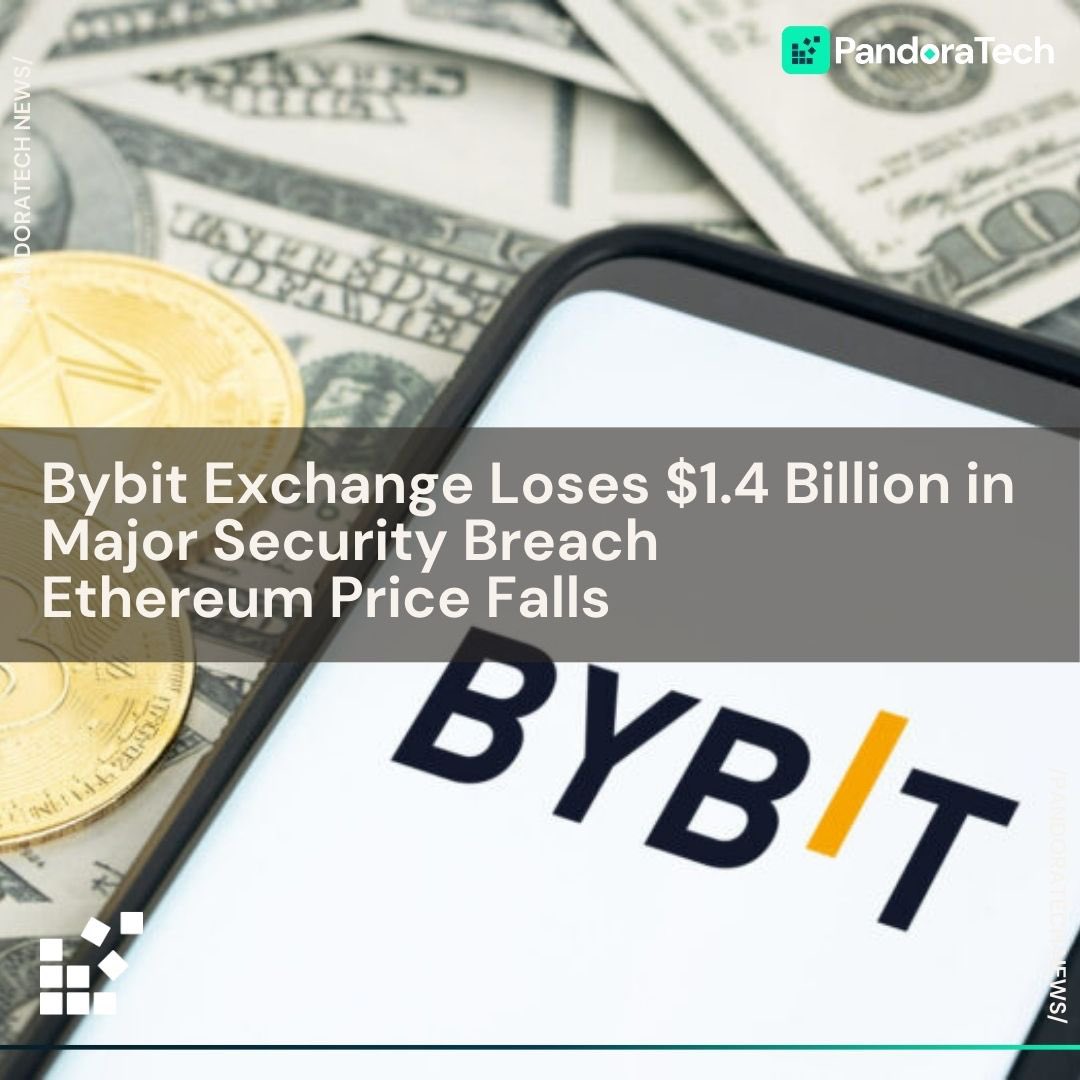
According to PandoraTech News, Bybit exchange experienced a significant security breach resulting in a $1.4 billion loss due to a sophisticated attack on its Ethereum (ETH) cold wallet. While the exchange remains solvent, the incident caused a temporary drop in Ethereum’s price. The attack involved manipulating a routine wallet transfer by altering the smart contract logic, allowing the attacker to withdraw funds.
The Hack: Attackers exploited a planned transfer between Bybit’s ETH cold and warm wallets by manipulating the smart contract logic, gaining control of the cold wallet and transferring its contents.
Bybit’s Response: CEO Ben Zhou confirmed the hack and stated Bybit would use bridge loans rather than immediately purchasing ETH to cover the losses. He assured users that other cold wallets are secure and withdrawals are functioning normally.
Community Reaction: Binance founder CZ suggested Bybit temporarily halt withdrawals as a precaution. Safe Wallet paused certain functionalities for investigation. Ethena Labs reassured users that their USDe stablecoin remains fully collateralized.
Investigation: Blockchain security firm SlowMist noted similarities to a previous hack attributed to North Korean hackers. Security researcher ZachXBT tracked the stolen funds being distributed across multiple addresses.
Financial Impact: Despite the large loss, Bybit maintains financial stability. The exchange is experiencing unusually high transaction volumes, leading to processing delays.
Wider Context: This breach is one of several security incidents in the crypto sector during February 2025, including a $9.5 million exploit of ZkLend.
Stolen Assets: The stolen assets included liquid-staked Ether (stETH), Mantle Staked ETH (mETH), and various other ERC-20 tokens.
🔮 Stay updated on the crypto market with PandoraTech! Download the app on #AppStore and #GooglePlay:download.pandoratech.com/en.…
PandoraTech - Unlocking the Pandora Box of Blockchain
#Bybit
#BybitHack
#CryptoSecurity
#EthereumBreach
#BlockchainAttack
#CryptoExchangeHack
#Web3Security
#DeFiRisk
#StolenCrypto
#SmartContractExploit
#PandoraTechNews
2
3
117

They make use of #smartcontractExploit that are automated prior to the terms required to execute them.
All this means, you can make payment of a digital currency to Mr B at so day and so time and it's recorded there and can't be tempered with.
1
2
44

10 Sep 2024
HackIndia Hackathon -24
WEB3 enabled Smart Home Automation System
@HackIndiaXYZ
#hackindia2024 @codewithsimon
#hackindia
#hackathonw #iot
#Web3 #smartcontractExploit
2
5
105

10 Sep 2024
In smart contract development, complexity introduces risks. The more you add, the more potential vulnerabilities exist.
This is written in humor, but it serves as an important reminder: less is more in smart contracts.
#DeFi #smartcontractExploit #Crypto #Blockchain
3
70

13 Aug 2024
IGNIS
foxly.icu/IGNISai
☝️☝️☝️☝️☝️☝️☝️☝️
foxly.icu/IGNISai
Smartphone
foxly.icu/IGNISai
Facebook
AI
Business Opportunity #
@urlswebworld #BusinessStrategy #Business
#AI #Smartphone #Facebook #IGNIS #smartcontractExploit
Did Trump Vs Kamala 🙊💰Biden 🤔Nuclear ?
5
5
412
13 Aug 2024
IGNIS
foxly.icu/IGNISai
☝️☝️☝️☝️☝️☝️☝️☝️
foxly.icu/IGNISai
Smartphone
foxly.icu/IGNISai
Facebook
AI
Business Opportunity #
@urlswebworld #BusinessStrategy #Business
#AI #Smartphone #Facebook #IGNIS #smartcontractExploit
Did Trump Vs Kamala 🙊💰🤔 Nuclear ?
4
4
500
13 Aug 2024
IGNIS
foxly.link/IgnisSmartphoneAI
☝️☝️☝️☝️☝️☝️☝️☝️
foxly.link/IgnisSmartphoneAI
Smartphone
Facebook
AI
Business Opportunity
@urlswebworld
#AI #Smartphone #Facebook #IGNIS #smartcontractExploit
Did Trump Vs Kamala 🙊💰🤔
2
3
490

9 Aug 2024
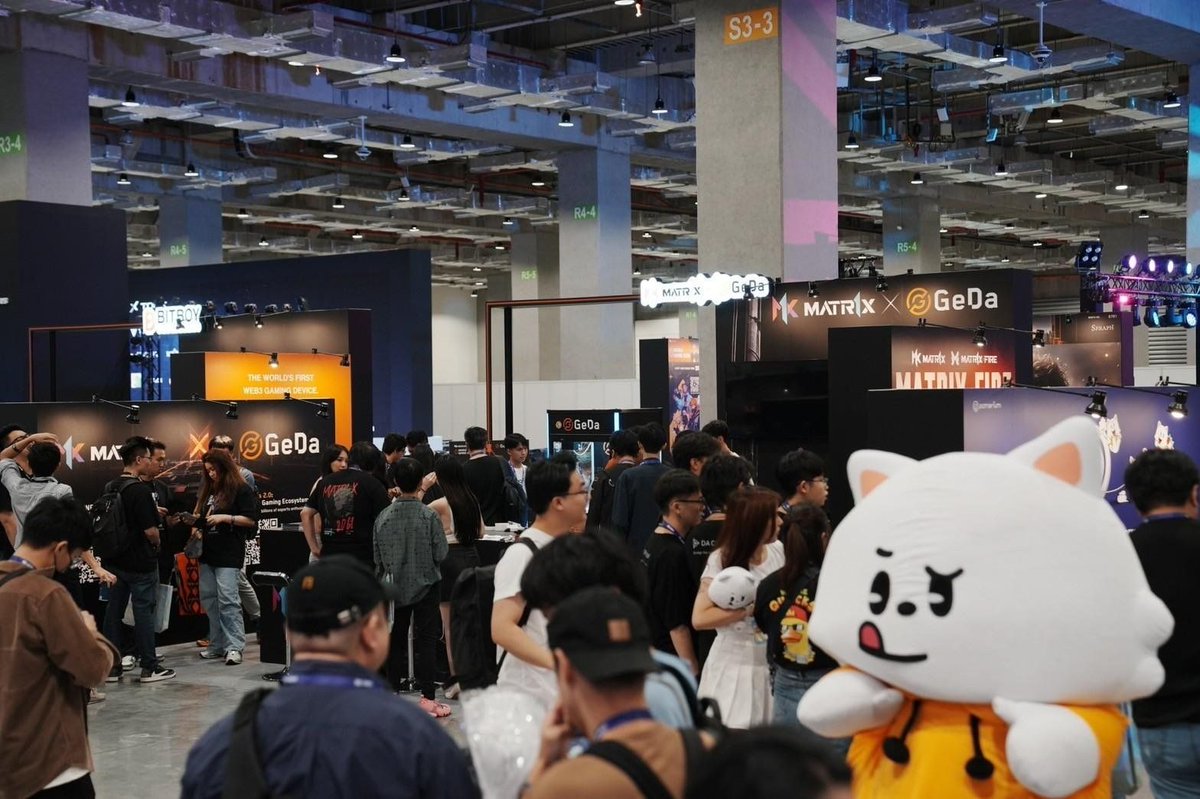
🚀 Our team is thrilled to have participated on panel at #ABS2024 in #Taipei these past week!
Engaging with top industry minds and exploring the latest in Web3 was truly inspiring. 💪
#Blockchain #Crypto #Web3 #Security #smartcontractExploit


2
6
111

18 Jul 2024
🚨 Crypto Theft Soars in H1 2024
Total losses hit $1.49B, a 120% YoY increase. Fewer attacks, bigger exploits.
🔍 Key Insights:
#Ethereum → Top target
#smartcontractExploit → On the rise
#Layer2 chains → Growing threat
Learn more → bit.ly/3S7nqEn
3
61

18 Jul 2024
Check out the new CTF challenge writeup by the team 😃. It may look simple, but this exploit has led to contracts being hacked and funds being stolen. Dive into the "BISC Safe Challenge" and learn more!
#smartcontractExploit #Blockchain #web3 #web3security
18 Jul 2024

🚀 Just published a new blog on our latest Web3 CTF challenge, "BISC Safe Challenge"! Dive into how we exploited a smart contract to retrieve a hidden flag. 🏴☠️
🔗 Check it out here:
medium.com/@MaanVader/ff7a9b…
If you find it interesting, please like, retweet, and share!
1
3
151

25 Jun 2024
How about using Stellarbitis to create personalized smart contracts? Stellarbitis is becoming a complex infrastructure and you still don't realize it
#Stellarbitis #DeFi #smartcontractExploit #ethereum #biticoin #Binace #token
3
52

6 Aug 2023
Curve Protocol Bug: Unraveling the Infinite Loop Exploit 🐞💻
#CurveProtocolBug #SmartContractExploit #SolidityProgramming #BlockchainVulnerability #InfiniteLoopBug #CryptoSecurity #ContractInteractions #ExternalContract #SmartContractDevelopment #BlockchainProgramming #Crypto
1
1
69

15 Mar 2023
👉 Like, comment, and retweet the first tweet in this thread to spread the word! #CryptoSecurity #SmartContractExploit #IntegerOverflow #Web3 #Cyvers #StaySafe
15 Mar 2023

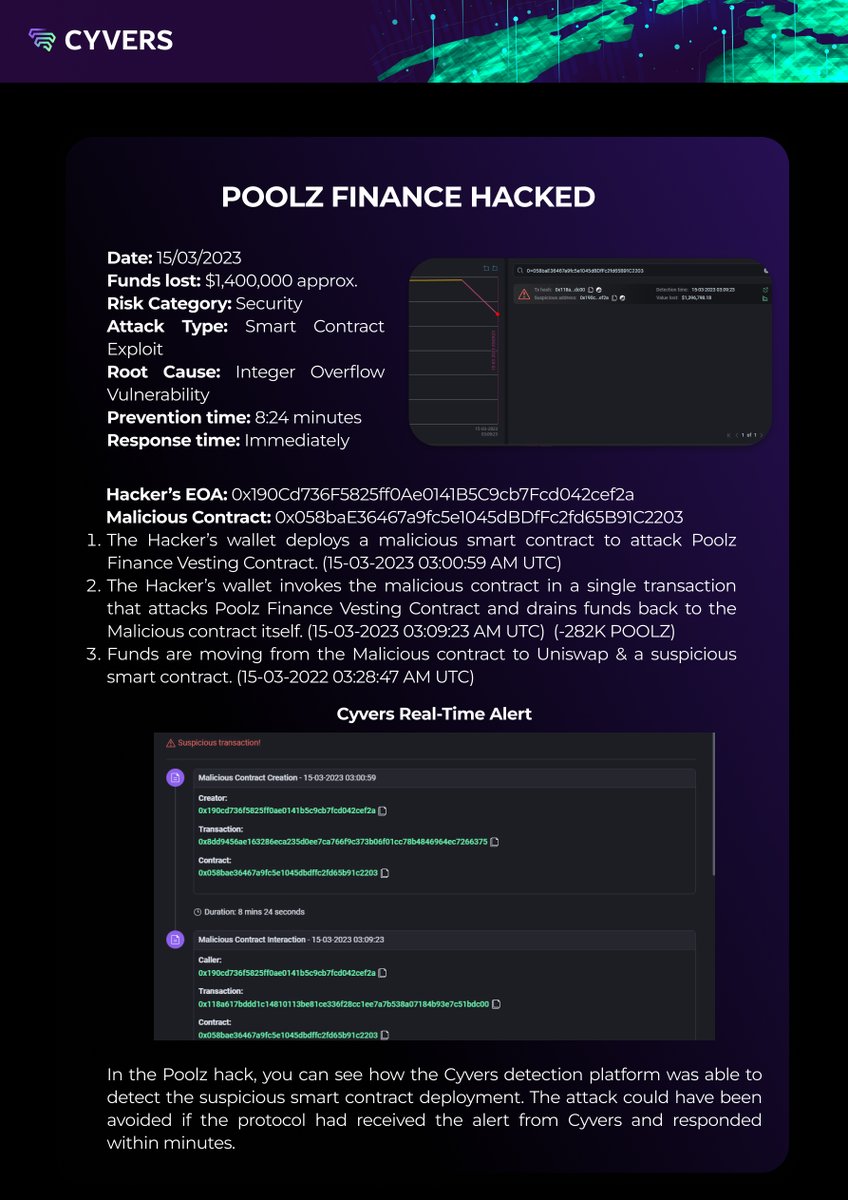
🚨 Crypto Hack Alert! 🚨
Today, March 15th, a significant security breach occurred at @Poolz__ , resulting in a loss of approximately $1.4 million!
The culprit behind this attack? A smart contract exploit due to an integer overflow vulnerability 😱
🧵
ALT Poolz Finance Hacked
1
1
3
147

23 Mar 2022
What is a "performance-based" and "pay-per-vulnerability" audit?
And why is it better than the market standard?
A thread👇
#SmartContractAudit #SolidityAudit #SmartContractExploit #DeFiExploit
1
3