
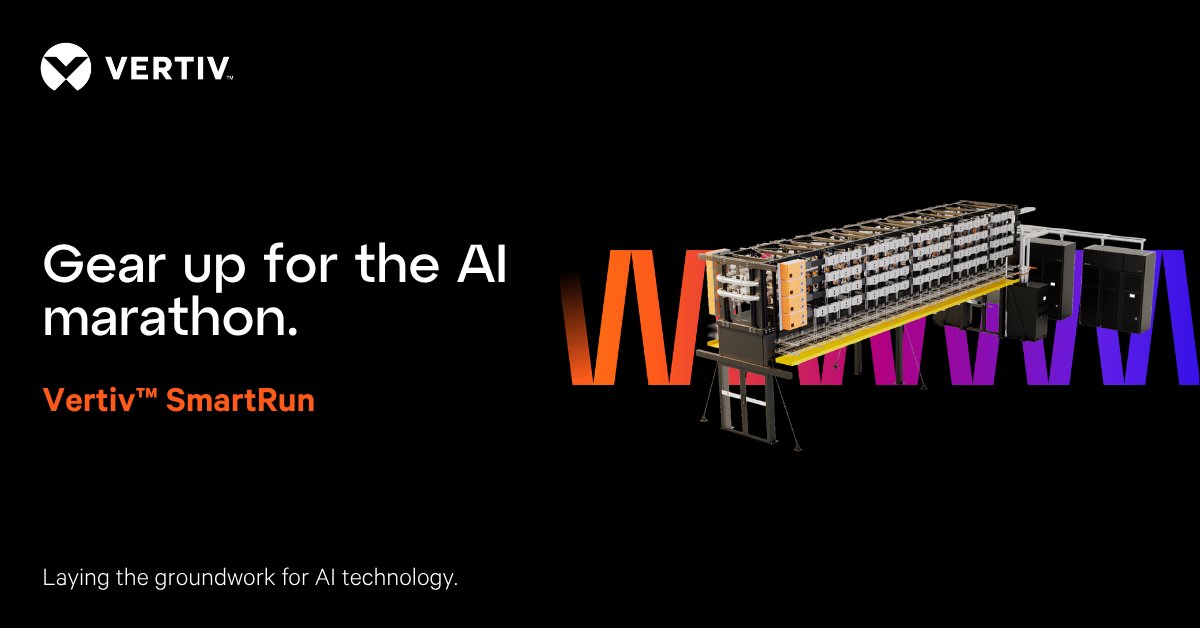
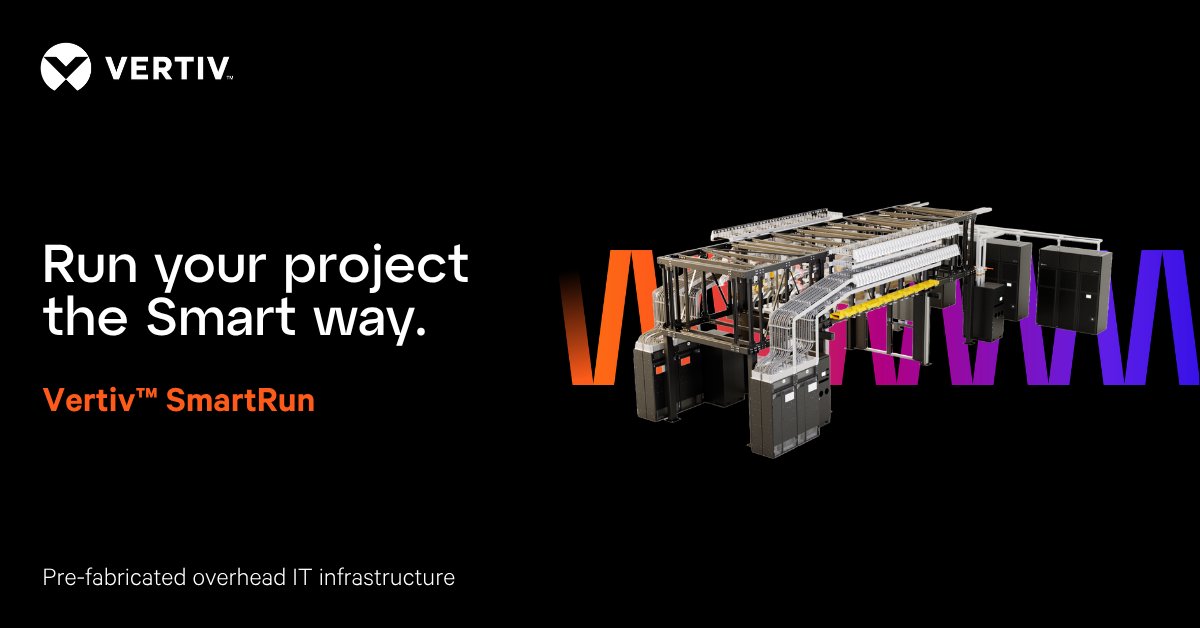
Vertiv™ SmartRun brings power, cooling, and IT infrastructure together in a pre-integrated, manufactured system assembled and tested before delivery. The result is less on-site work, more consistent execution, and faster time to capacity: ms.spr.ly/6019vY5PR
#HPC
1

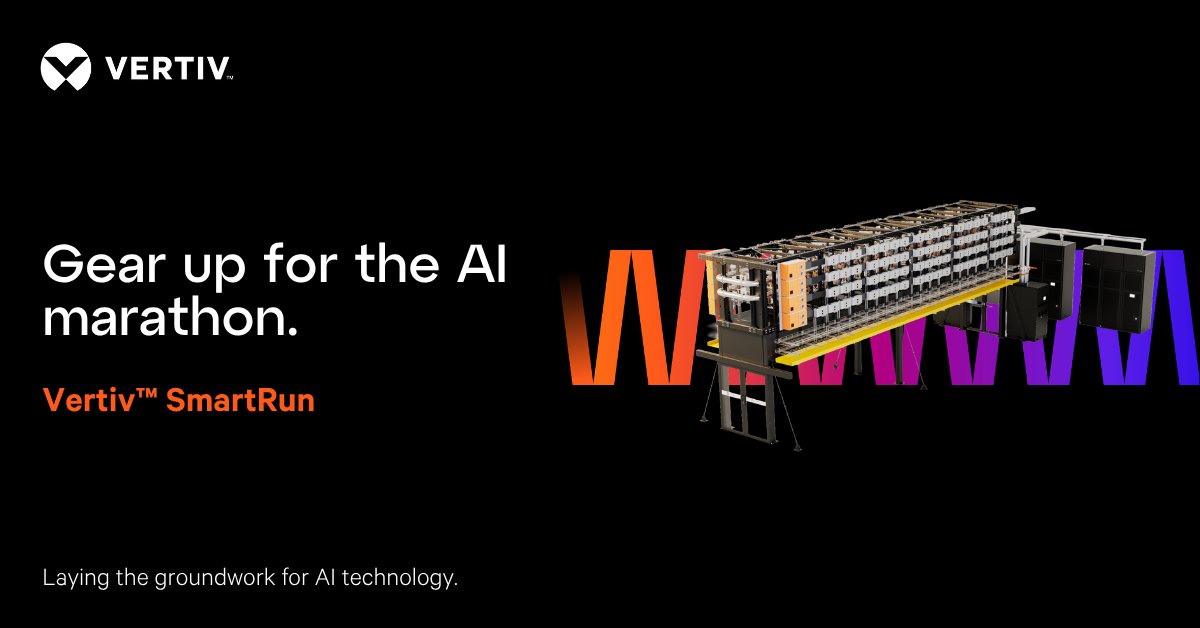
Vertiv™ SmartRun brings power, cooling, and IT infrastructure together in a pre-integrated, manufactured system assembled and tested before delivery. The result is less on-site work, more consistent execution, and faster time to capacity: ms.spr.ly/6018vYDzY
#HPC
4
11
250

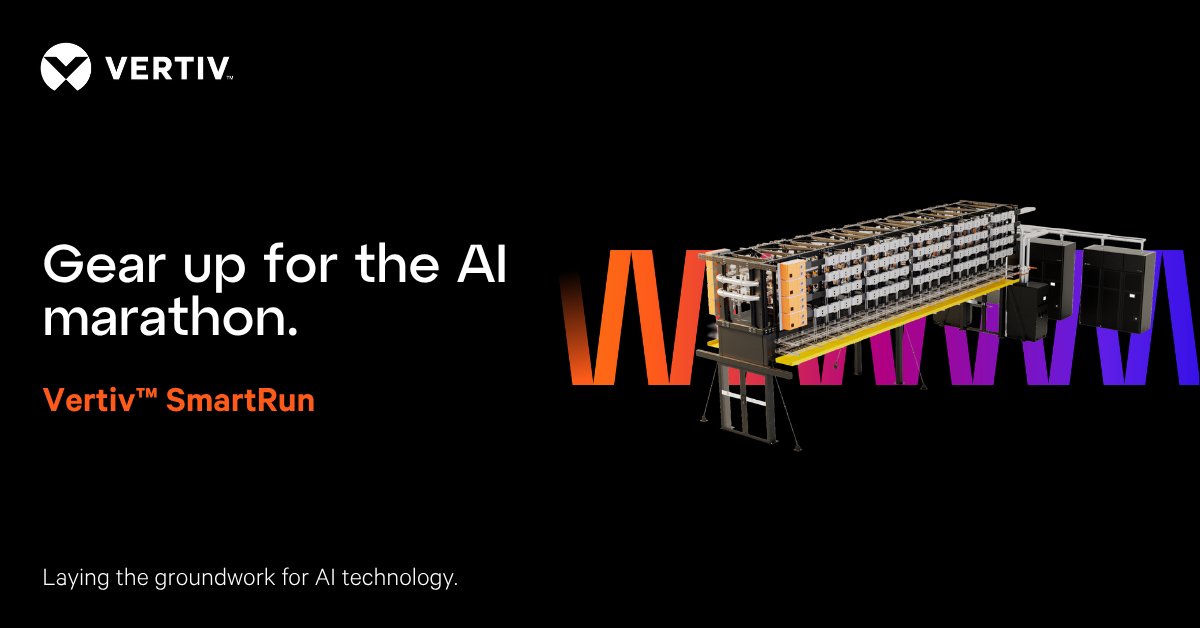
Vertiv™ SmartRun brings power, cooling, and IT infrastructure together in a pre-integrated, manufactured system assembled and tested before delivery. The result is less on-site work, more consistent execution, and faster time to capacity: ms.spr.ly/6015vYbpJ
#HPC
2

Vertiv introduceert eerste digital twin voor geconvergeerde fysieke infrastructuur in NVIDIA Omniverse DSX
Modelgebaseerde digital twin-functionaliteit van Vertiv™ SmartRun helpt het ontwerp, de simulatie en de uitrol van AI-fabrieken te versnellen
persberichten.com/persberich…
21

Vertiv SmartRun, digital twin per NVIDIA Omniverse DSX @VertivEMEA techfromthenet.it/2026/06/09…
14
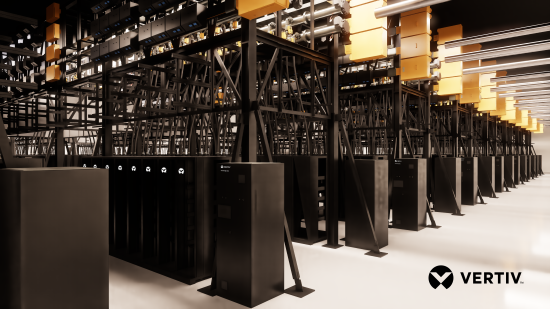
Vertiv™ SmartRun brings power, cooling, networking, and containment together in a manufactured, pre-integrated system assembled and tested before delivery. Learn more:ms.spr.ly/6012vbGwI
#Vertiv
1
3
11
576
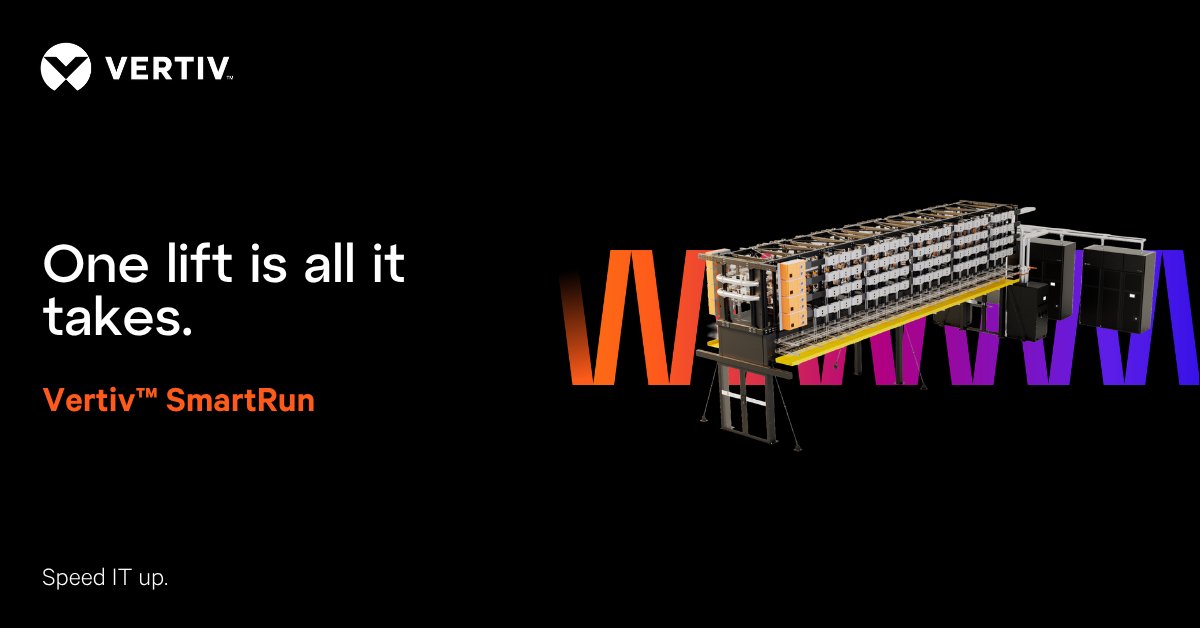
Vertiv™ SmartRun moves key integration work off-site, combining power, cooling, and containment into a manufactured system delivered ready for installation. That helps reduce on-site effort and supports deployment timelines up to ~85%: ms.spr.ly/6019vb61S
#ITInfrastructure
3
9
355


May 27
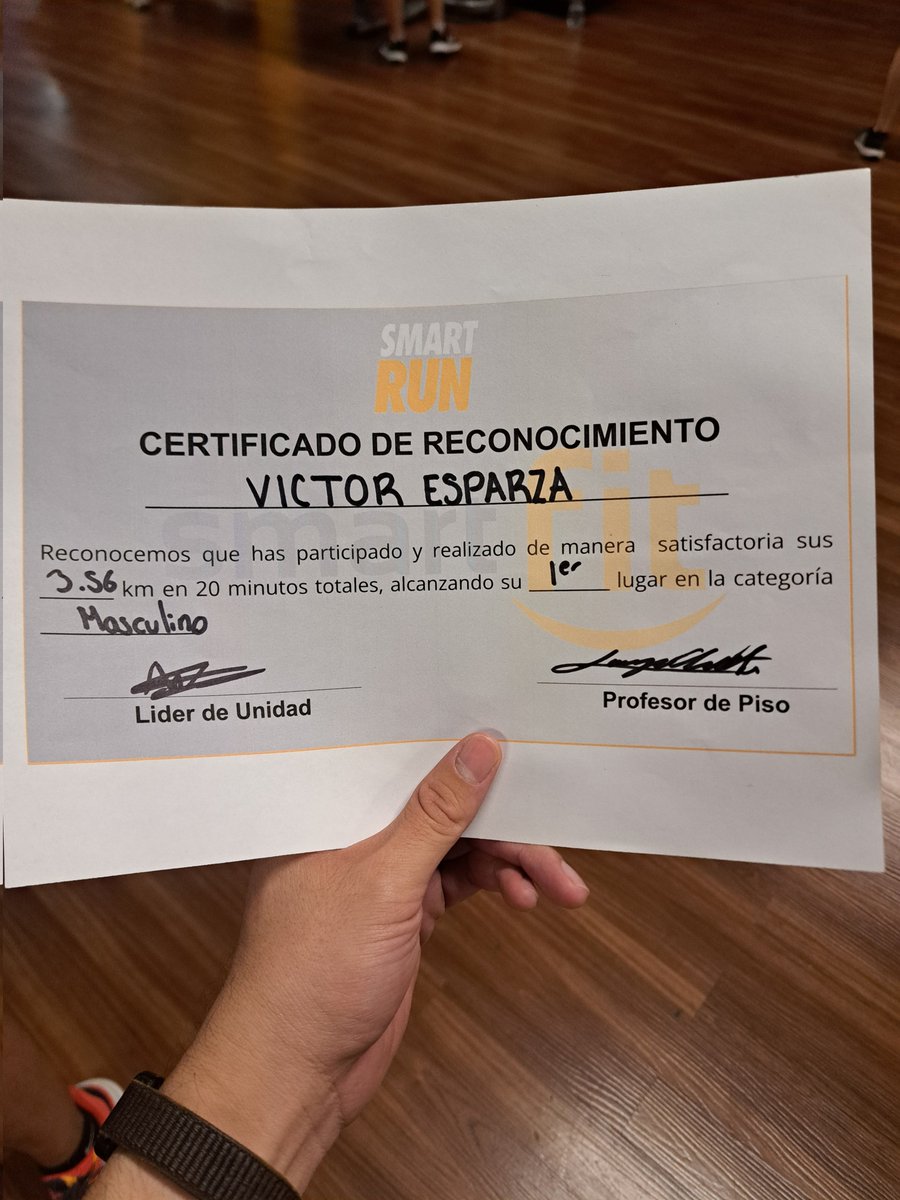
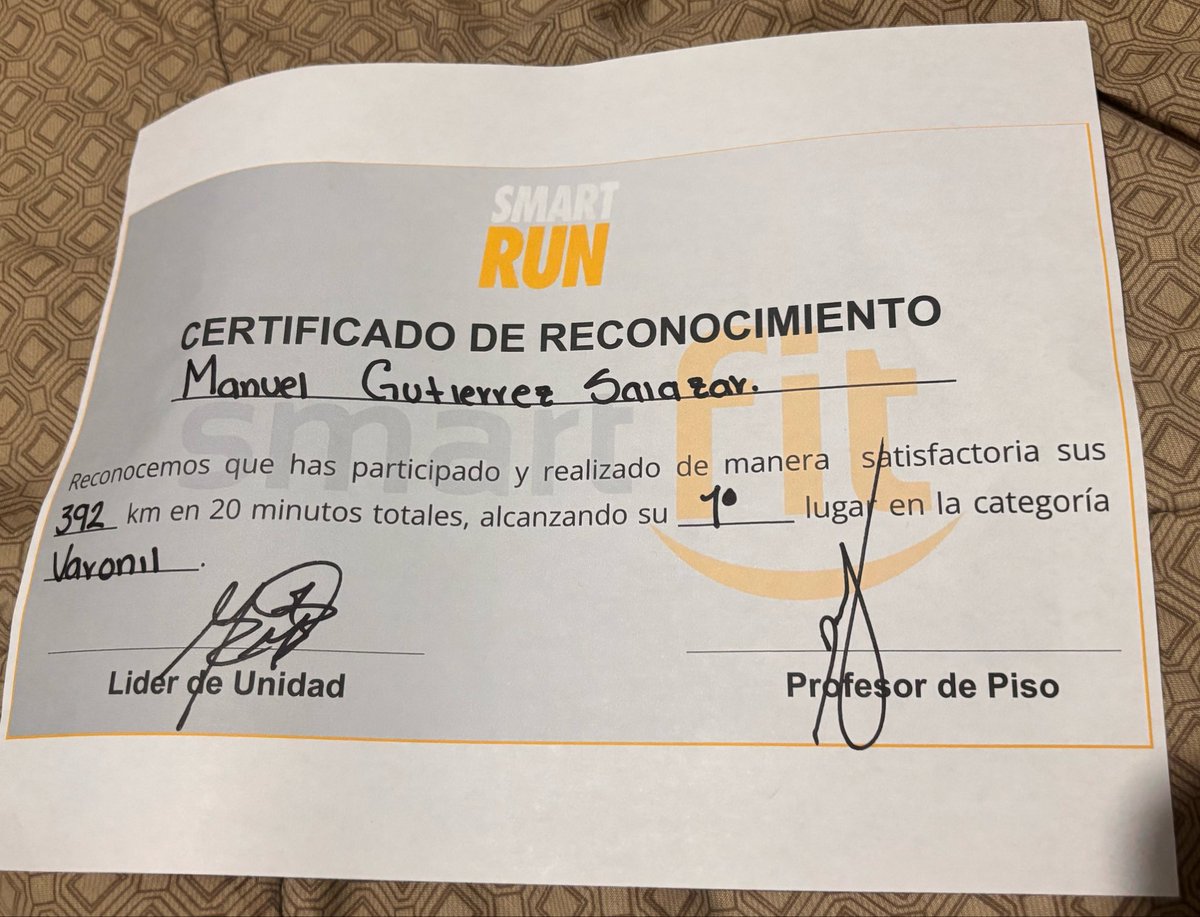
¡Se logró! 🏃♂️🥇
3.92 km en 20 minutos… y aun con lo dura que estuvo la competencia, se consiguió el 1er lugar. 💪🔥
¡Vamos por más! 🙌🏽🏅
#SmartRun #PrimerLugar #MetaCumplida
2
29
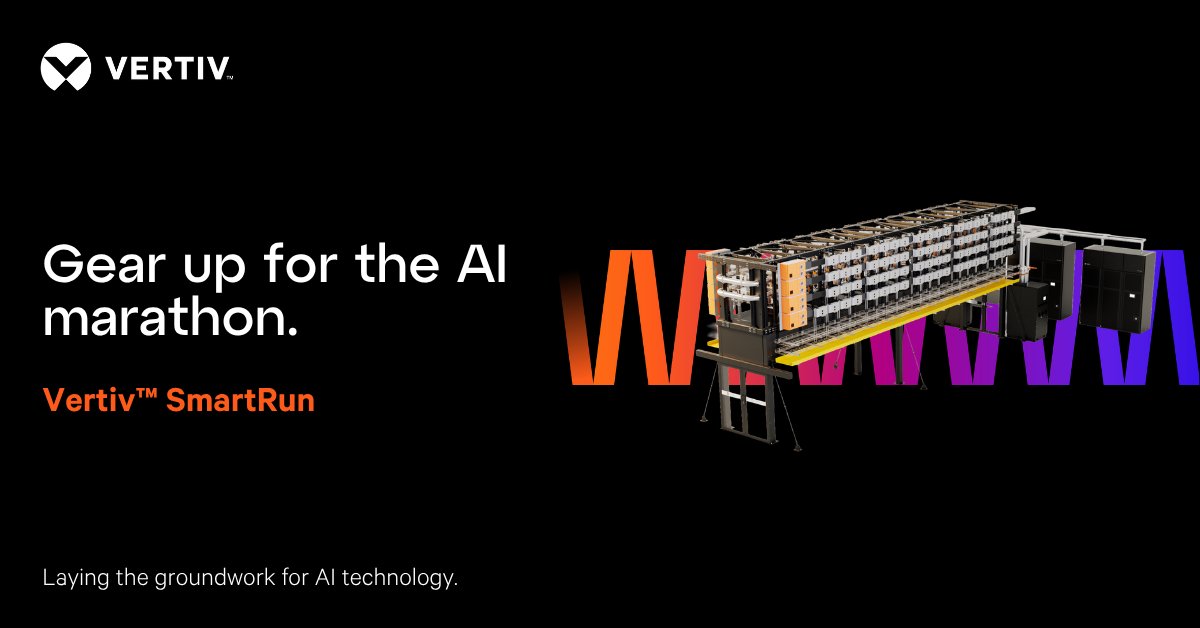
Vertiv™ SmartRun brings power, cooling, and IT infrastructure together in a pre-integrated, manufactured system assembled and tested before delivery. The result is less on-site work, more consistent execution, and faster time to capacity: ms.spr.ly/6015vXrwl
#HPC
2
16
382

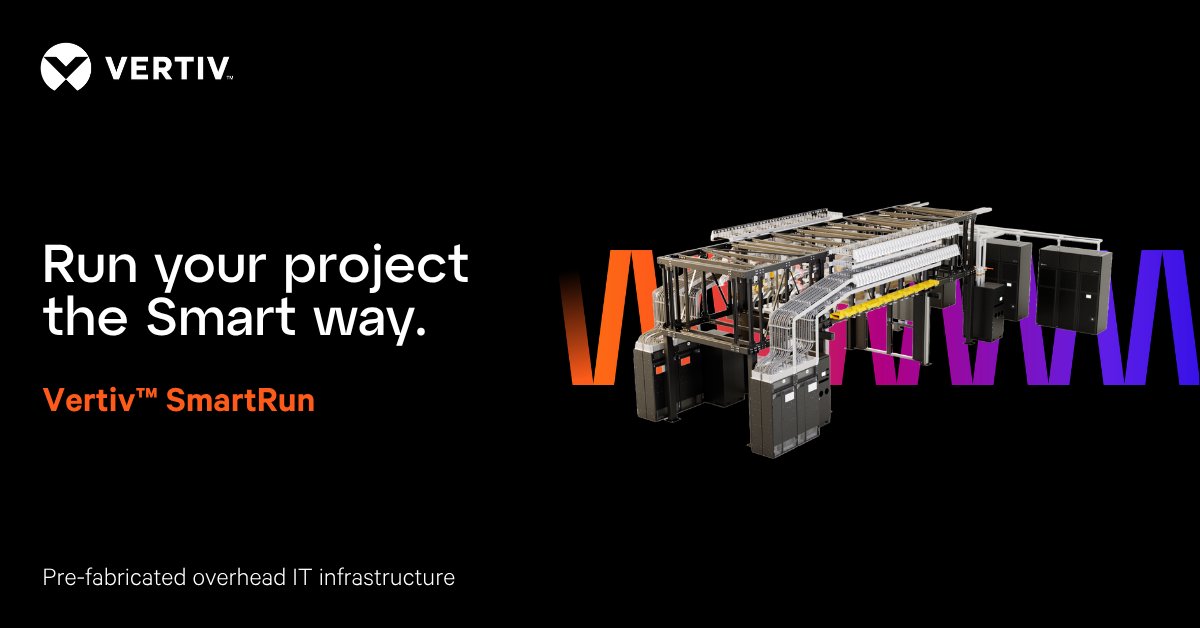
Reduce AI data center infrastructure deployment costs up to ~40% with a more predictable build approach. Vertiv™ SmartRun brings power, cooling, networking, and containment together in a pre-integrated system assembled and tested before delivery. ms.spr.ly/6011vOhEb
4
10
363
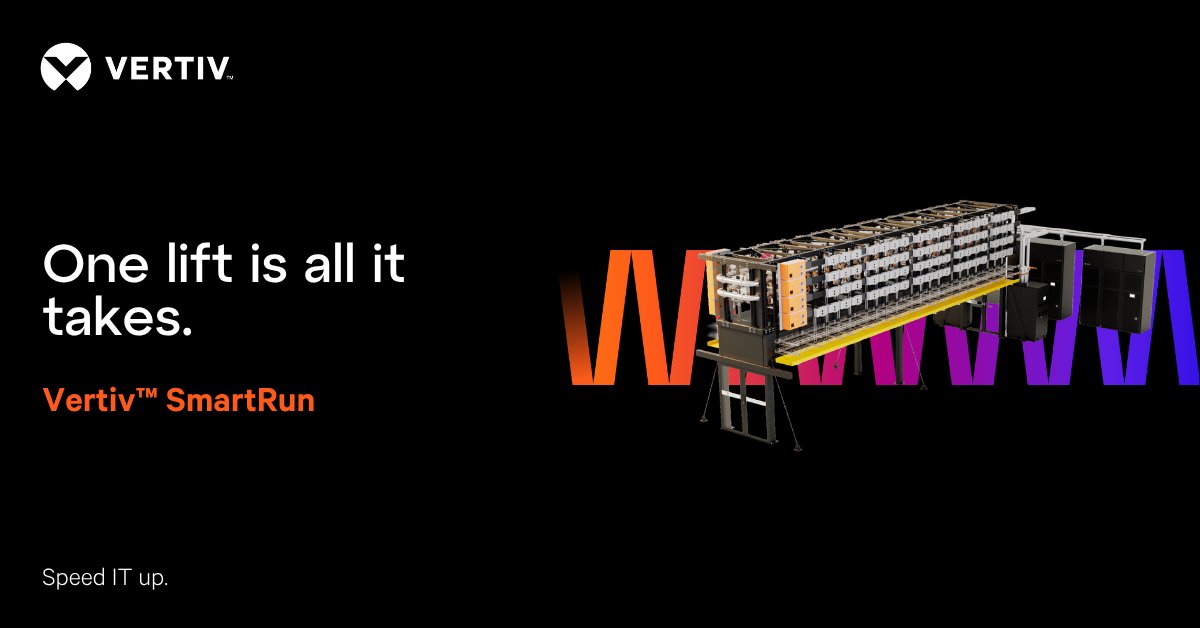
Vertiv™ SmartRun moves key integration work off-site, combining power, cooling, networking, and containment into a pre-integrated, manufactured system ready for installation. That helps reduce on-site effort and supports deployment timelines up to ~85%. ms.spr.ly/6019vOAIc
2
21
320
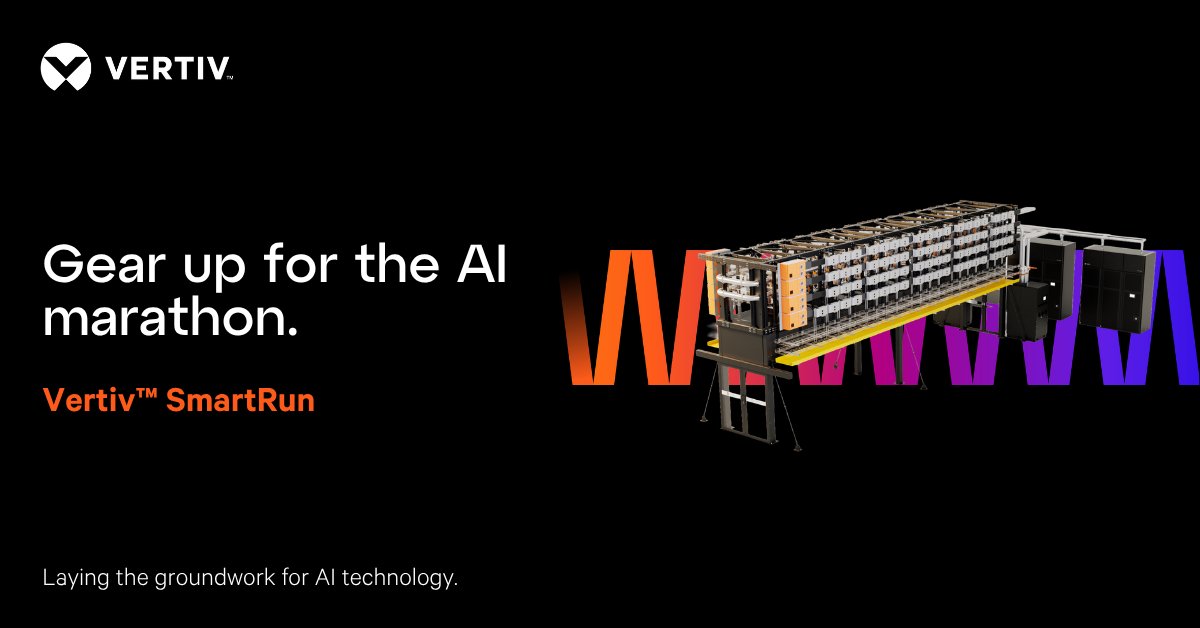
Vertiv™ SmartRun brings power, cooling, and IT infrastructure together in a pre-integrated, manufactured system assembled and tested before delivery. The result is less on-site work, more consistent execution, and faster time to capacity. ms.spr.ly/6016vOAYI
#HPC
4
11
312

Been reading a few transcripts lately
Best way to get a high level overview of what C suite and saying and doing. Especially when it comes to the trend of a certain theme.
Searched all the transcripts in April with a reference to "liquid cooling"
Still lots of big earnings calls to come so there will certainly be more to add.
I're read all the transcripts myself but I also uploaded them to Claude and asked it to break them down and give me its interpretation.
Executive Summary: Liquid Cooling in Data Centres — Q1 2026 Earnings Transcript Analysis
-Across 27 earnings transcripts from Q1 2026, liquid cooling emerges as one of the most consistently referenced growth themes in industrial technology. C-suite commentary is uniformly bullish, with a sharp shift in tone from "emerging" to "scaling" — particularly in the second half of the year and into 2027. The transition from air to liquid cooling is no longer a question of if but when, with the most advanced infrastructure players now treating it as a core capex thesis. Supply chain constraints and single-phase vs. two-phase architecture debates are the primary near-term friction points, but the directional consensus is unmistakable: liquid cooling is the dominant infrastructure paradigm of the next decade.
Architecture Debate: Single-Phase vs. Two-Phase
-The most detailed technical narrative came from Accelsius (Innventure), whose CEO Josh Claman provided a granular market dissection:
-Immersion cooling was predicted — and confirmed — to have failed broad adoption. Claman reiterated: "I think very close to our prediction 3 or 4 years ago that has not been adopted broadly. I don't think it will be adopted broadly."
-Single-phase direct-to-chip (water-based CDUs) won the first-mover advantage due to low technology barriers and supply chain availability. It dominated 2024–2025 buildouts.
-Two-phase refrigerant-based cooling is positioned as the superior long-term solution. Claman stated definitively: "There is really a consensus... amongst the most sophisticated thermal engineering teams, two-phase is going to come and it's going to dominate the market."
-He noted that chips are progressing from 1,000W → 1,500W → 2,200W → 4,000W on roadmaps, a heat density that exceeds the physical capacity of sensible (single-phase water) cooling.
Market Size & Growth Figures
Specific figures cited across transcripts:
-Total liquid cooling market: ~$1B (2024) → $2.5B → $3B trajectory, per Accelsius market slide data
-2026 data centre announcements: ~14 GW announced; only 4–6 GW expected to be commissioned due to supply chain lags
-Ecolab's CoolIT acquisition: CoolIT reported Q1 2026 sales growing "well ahead of 30% "year-on-year. Ecolab is building a $1.5B Global High-Tech Water CoolIT Ovivo platform growing at 20–25%
-Carrier: Committed to $1.5B of data centre sales in 2026, covered by existing backlog. CDU pipeline includes 1MW, 3MW, and 5MW units
-Equinix: 36 liquid cooling deployments across global footprint; 7 orders in Q1 alone, representing 50% quarter-on-quarter growth in liquid cooling deployments
-Gates Industrial: Flagged 700% revenue growth in data centre liquid cooling from a small base, targeting $100M–$200M in revenues by 2028
-Dover Corporation: Expects >$1B in AI and power generation revenue in 2026. Heat exchanger lead times have extended materially; capacity being added for 2027 demand
-nVent: Liquid cooling described as a standout in Q1, with the CEO noting organic orders up 40% driven predominantly by data centres
-Sensata: Specced by 2 hyperscalers for liquid cooling sensors; expects liquid-cooled (800V DC) data centre revenue to begin materialising from mid-2027
C-Suite Tone: Confident, Urgent, Competitive
-Vertiv (Gio Albertazzi): "Very excited about 800-volt DC programs" — 800V architecture will require liquid cooling not just on the chip but across the entire IT stack. SmartRun solution (integrated white space liquid cooling) described as "extremely successful".
-Carrier (David Gitlin): "I think [two-phase] is where the puck is going overall" — doubled down on ZutaCore (two-phase cooling) investment, stated CDU development is differentiated and competitive.
-Honeywell (Vimal Kapur): "If liquid cooling trend is true, it requires more sophisticated controls... that's where Honeywell technology is going to be very, very relevant." Sensors division actively working with all major liquid cooling providers.
-Ecolab (Christophe Beck): Used the phrase "powerhouse" to describe the combined $1.5B high-tech water platform. Committed to CoolIT driving "a couple of points of high-margin organic sales growth" at scale.
-Dover (Richard Tobin): "Liquid cooling is growing like wildfire" — direct quote from a Goldman Sachs analyst in the Q&A, with Tobin not disagreeing and noting lead times on large heat exchangers have extended materially.
Supply Chain & Execution Risks
-Accelsius/Innventure: Single-phase supply chain backlogs are causing a near-term lag in 2026 liquid cooling adoption. Expected to relieve H2 2026 and accelerate in 2027.
-Vertiv: Managing aggressive capacity ramp — "probably one of our bigger ramps in terms of capacity in the second quarter." Incremental margins near 30–35% expected to hold full-year.
-Dover: Supply so constrained that customers are placing orders to reserve capacity, extending lead times into Q3. Additional heat exchanger capacity being added, targeted at 2027 demand.
-Carrier: Delivery heavily back-end loaded in 2026; beginning to book significant volumes for 2027. CDU roadmap (1MW → 3MW → 5MW) on track.
The 800V Architecture Inflection Point
-Multiple companies flagged the migration to 800-volt DC power architecture as the next catalyst for a step-change in liquid cooling adoption:
-Vertiv: 800V is a "2027 thing" — launches expected H2 2026, shipping further out. Will require liquid cooling not just for chips but for a "much bigger array of electronics across the entire IT stack".
-Sensata: The shift from air-cooled low-voltage AC → 800V DC dramatically expands their product opportunity set from 2 products (temperature sensors circuit breakers) to 5 products (adding pressure sensors, flow sensors, and high-voltage contactors).
-nVent CEO Beth Wozniak: Working on CDU roadmaps with chip manufacturers out to 2030.
Key Takeaways
-The market is real and accelerating — Q1 2026 earnings show liquid cooling transitioning from pilot to production at scale, with a lag from supply chain rather than demand.
-Two-phase is the consensus winner long-term, but single-phase water is winning near-term contracts due to availability. The race is ongoing.
-The 800V DC architecture transition (~2027) is the single biggest catalyst for a step-change in liquid cooling TAM, expanding it from chip-level cooling to whole-rack and facility-level thermal management.
-Immersion cooling is effectively dead for broad adoption, per most practitioners.
-Insurance costs are becoming a real risk factor — Bloomberg reported data centres set to overtake aviation as the largest insurance premium market by 2025–2030, driven by water leak damage to GPUs. This accelerates the case for two-phase (non-conductive fluid) cooling.
Data centre operators (Equinix) are still in early adoption — 36 deployments globally suggests the enterprise and colo segment is just beginning, versus hyperscalers who are much further along.
$VRT $NVT $CARR $DOV $ECL $HON $EQIX $DLR $GTES $ST $INV $CLS $SANM $EME $PH $IDEX $AIT $BHE $GTX $RIOT $GLXY $SIFY $ALFVY $MODLY
2
4
29
8,264

Apr 29
$VRT
$JPM
揭秘 $VRT AI 電力散熱護城河 (2)
AI 基礎設施演進:技術深度與競爭護城河的擴張
隨著 AI 技術由理論進入大規模部署,市場需求已從單一設備採購轉向解決極其複雜的「系統級問題」。VRT 的優勢在於其能提供整合性的技術生態系,這在客戶追求極致效能的趨勢下,建構了深厚的護城河。
技術核心競爭力解析:
OneCore 系統級方案: VRT 被瑞典 EcoDataCenter 選中,為搭載最新一代 Vera Rubin GPU 的站點提供解決方案。這不只是硬體供應,更是透過其 OneCore 架構將電力、散熱、IT 空間與服務整合成單一系統,解決了「從電力到晶片(Power-to-Chip)」的複雜鏈結。
800VDC 與液冷的加法價值: 市場原先擔憂液冷會替代傳統電力架構,但數據顯示 800VDC 技術與液冷需求具高度正相關。800VDC 支持高密度運算,進而帶動液冷從晶片端延伸至整個 IT 機架。這對 VRT 是「相加(Additive)」關係,顯著提升了單一機架的產值(Content per Rack)。
縮短「代幣產出時間」(Time to Token): AI 客戶的核心競爭力在於 ROI 生成速度。VRT 的預製化(Pre-fab)模組化方案(如 SmartRun)能避開熟練勞動力短缺的瓶頸,大幅縮短施工週期,讓客戶能以最快速度讓 AI 模型開始生成輸出。
youtu.be/LddvbBAkay4
7
1,572
Compass Datacenters scales for next‑gen AI with Vertiv™ SmartRun, a standardized overhead layer that adapts without redesign and stays consistent across sites. Read how a standardized overhead layer supports AI scale: ms.spr.ly/6015Q22WN
#EndToEndSystems #IntegratedSystems
2
13
328