
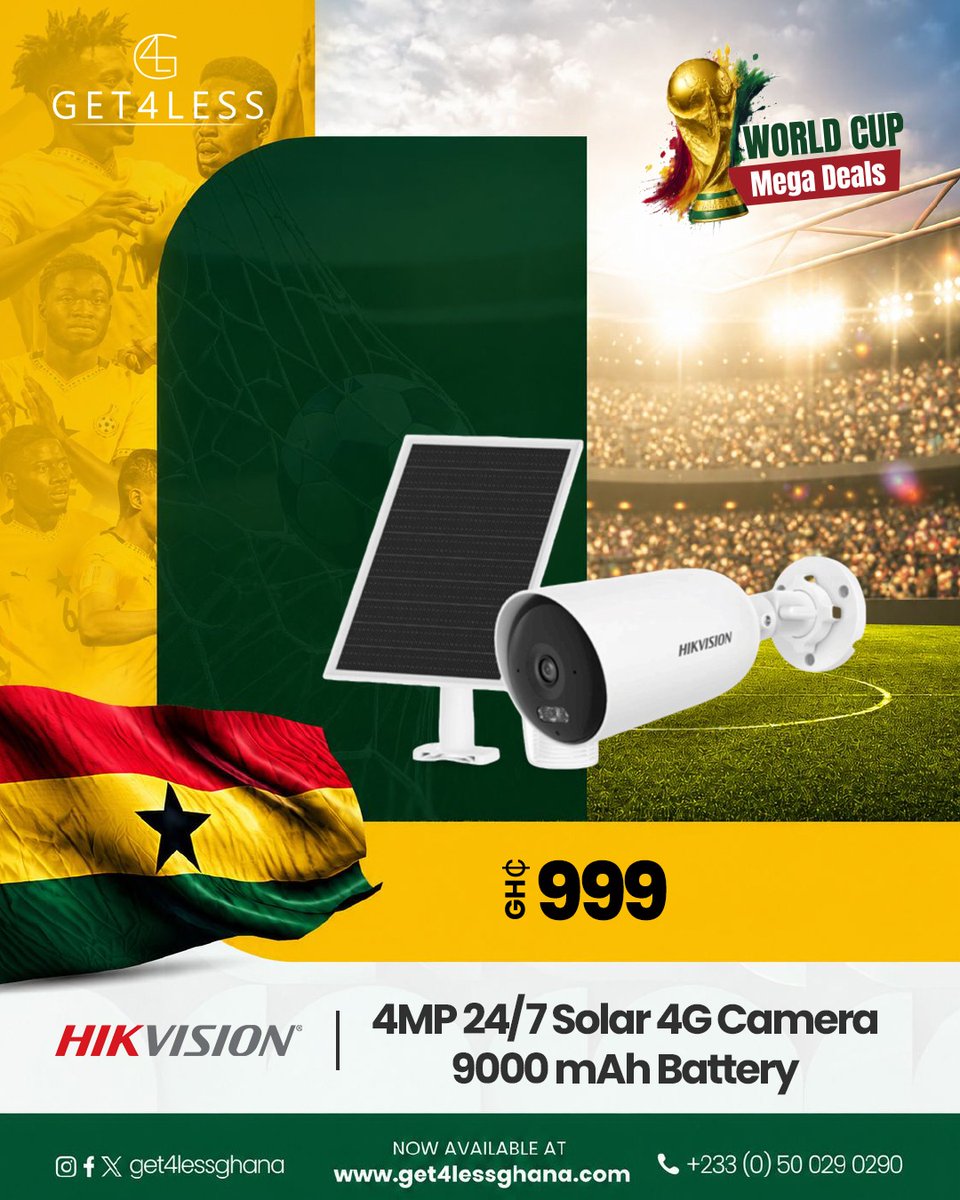
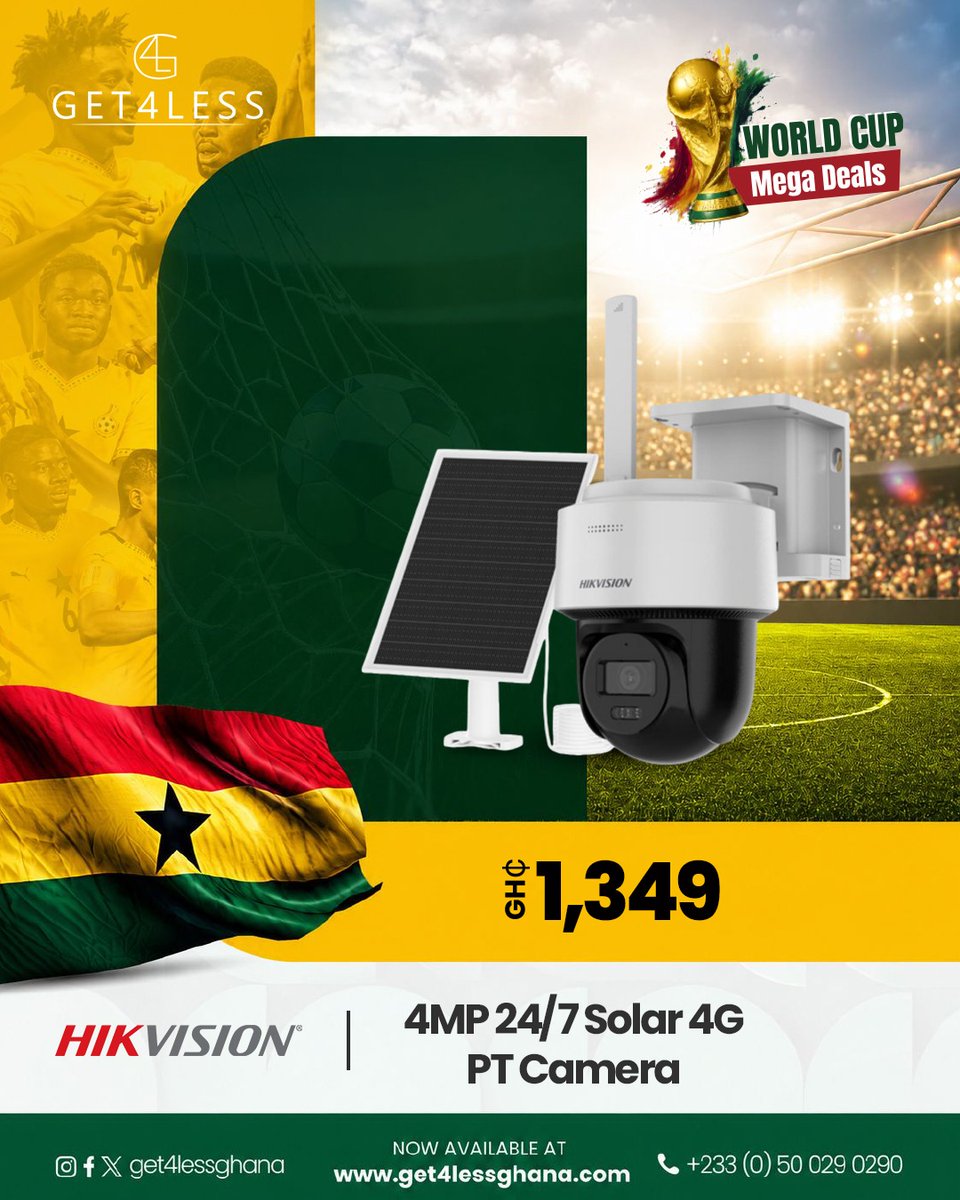
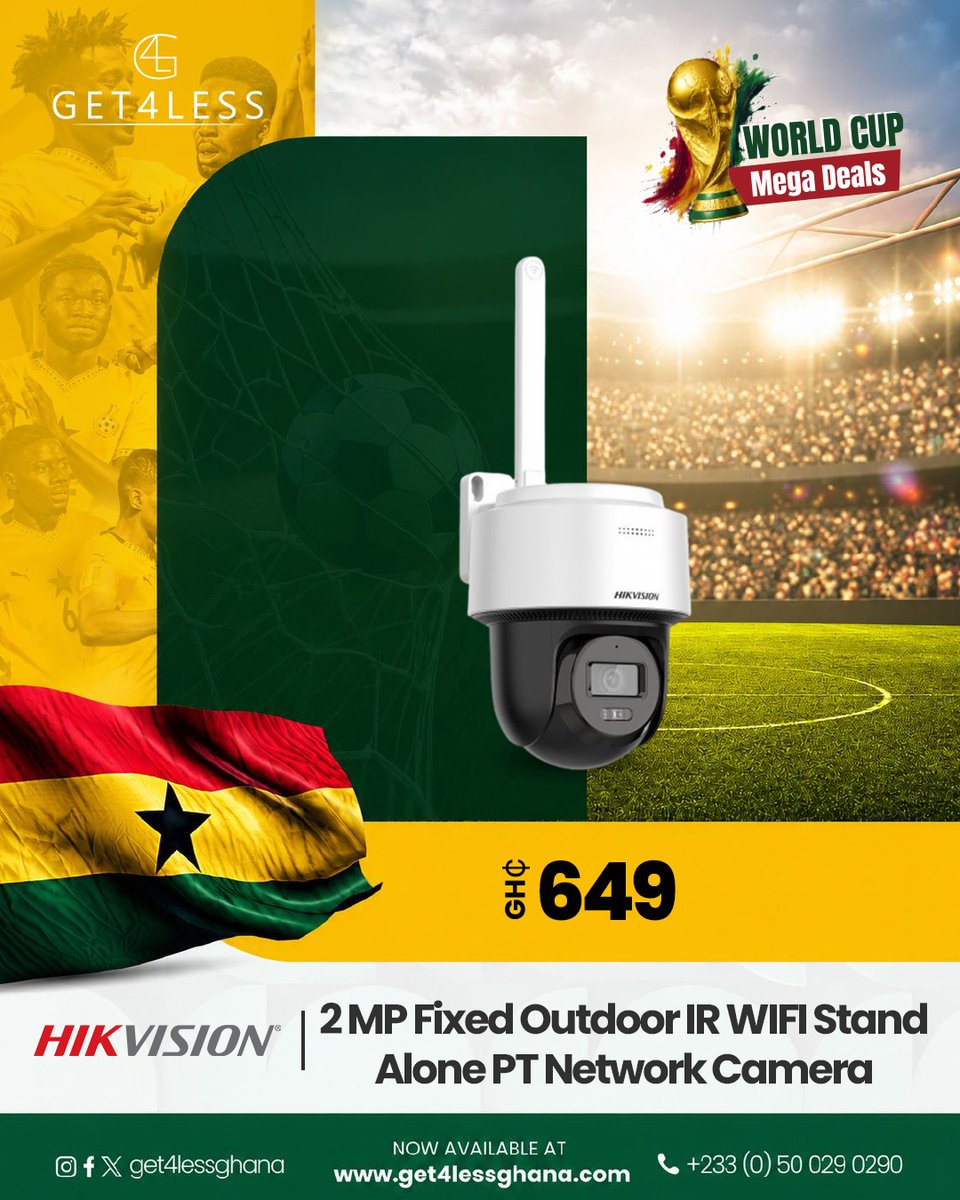
Stay secure anywhere with Hikvision solar-powered 4G and WiFi PT cameras 📹☀️. Enjoy 24/7 monitoring and reliable outdoor protection with Get4Less World Cup Mega Deals.
#Get4lessghana #WorldCupMegaDeals #Hikvision #SolarCamera #4GCamera #PTCamera #Sale #onlineshopping #fyp
11
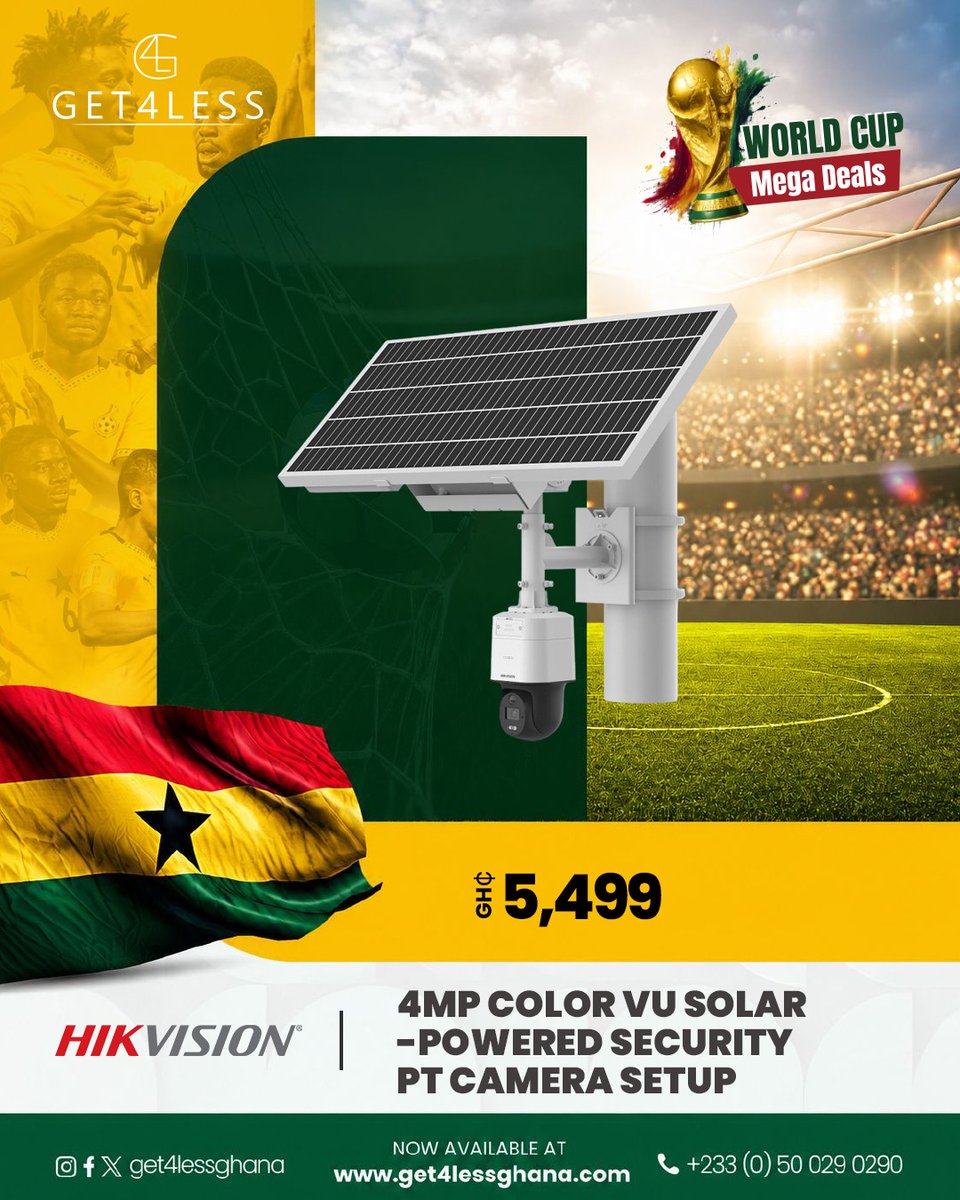
Stay powered and protected with the Hikvision 4MP ColorVu Solar PT Security Camera 📹☀️. Enjoy clear full-color surveillance day and night with Get4Less World Cup Mega Deals.
#Get4lessghana #WorldCupMegaDeals #Hikvision #SolarCamera #SecurityCamera #SmartSecurity #Sale #explore
14

Jun 12
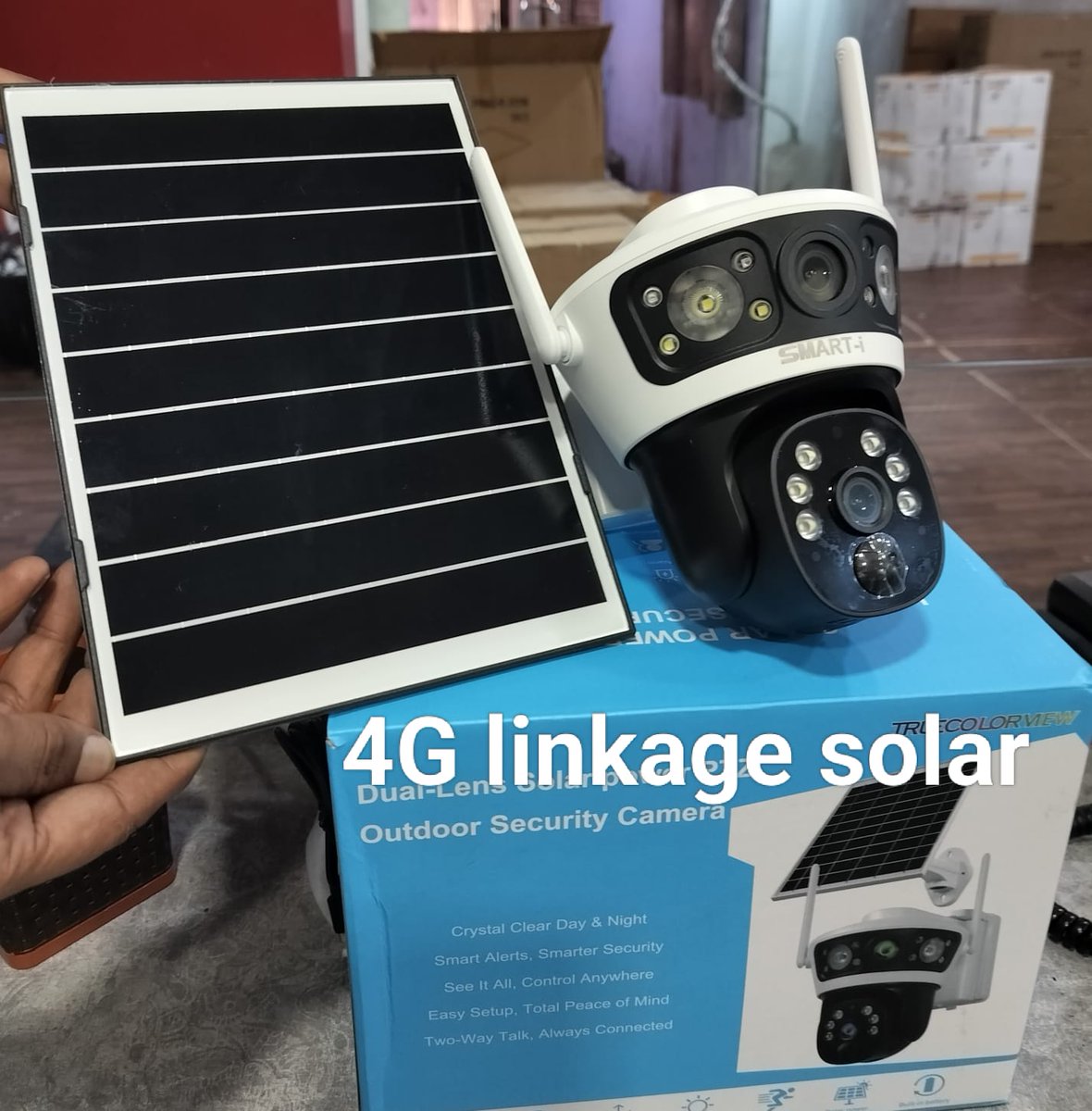
🌞🔋 4G Solar CCTV Camera Now In Stock!
✔ No Electricity Required
✔ No Wi-Fi Required
✔ SIM-Based 4G Connectivity
📞 91 788 401 3663 | 91 93012 55788
🌐 alokenterprises.in
#NowInStock #SolarCamera #4GCCTV #SmartSecurity #AlokEnterprises
I prefer this response
9

Jun 11
Stay connected from anywhere.
☀️ Solar Powered
📶 4G Connectivity
🎥 Dual Lens Monitoring
🌙 Color Night Vision
🏡 Watch what matters most.
👉 secuview.com/product/secuvie…
#Secuview #SolarCamera #4GCamera #FamilySafety #HomeSecurity #OutdoorSecurity

7
Jun 9
Keep your project site in view—without power cables or WiFi.
☀️ Solar Powered
📶 4G Connectivity
👀 355° Pan & 90° Tilt
🚶 PIR Human Detection
🌙 Colour Night Vision
Monitor your site anytime, anywhere.
👉 secuview.com/product/secuvie…
#Secuview #SolarCamera

7

Jun 8
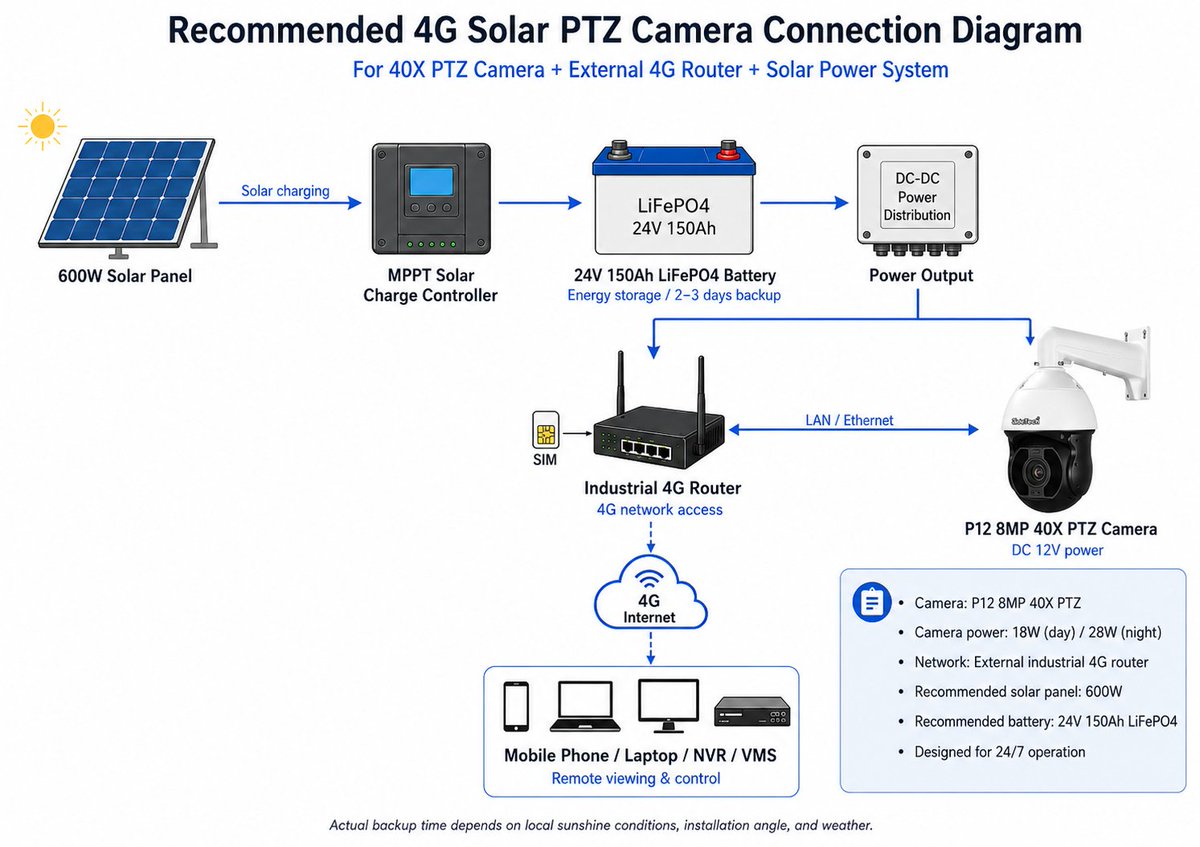
40X PTZ camera for remote sites with no wired internet or power?
Recommended setup:
P12 8MP 40X PTZ Camera
Industrial 4G Router
600W Solar Panel
24V 150Ah LiFePO4 Battery
MPPT Controller
Designed for 24/7 remote monitoring.
#JideTech #PTZCamera #SolarCamera #4GCamera #CCTV
19

May 13
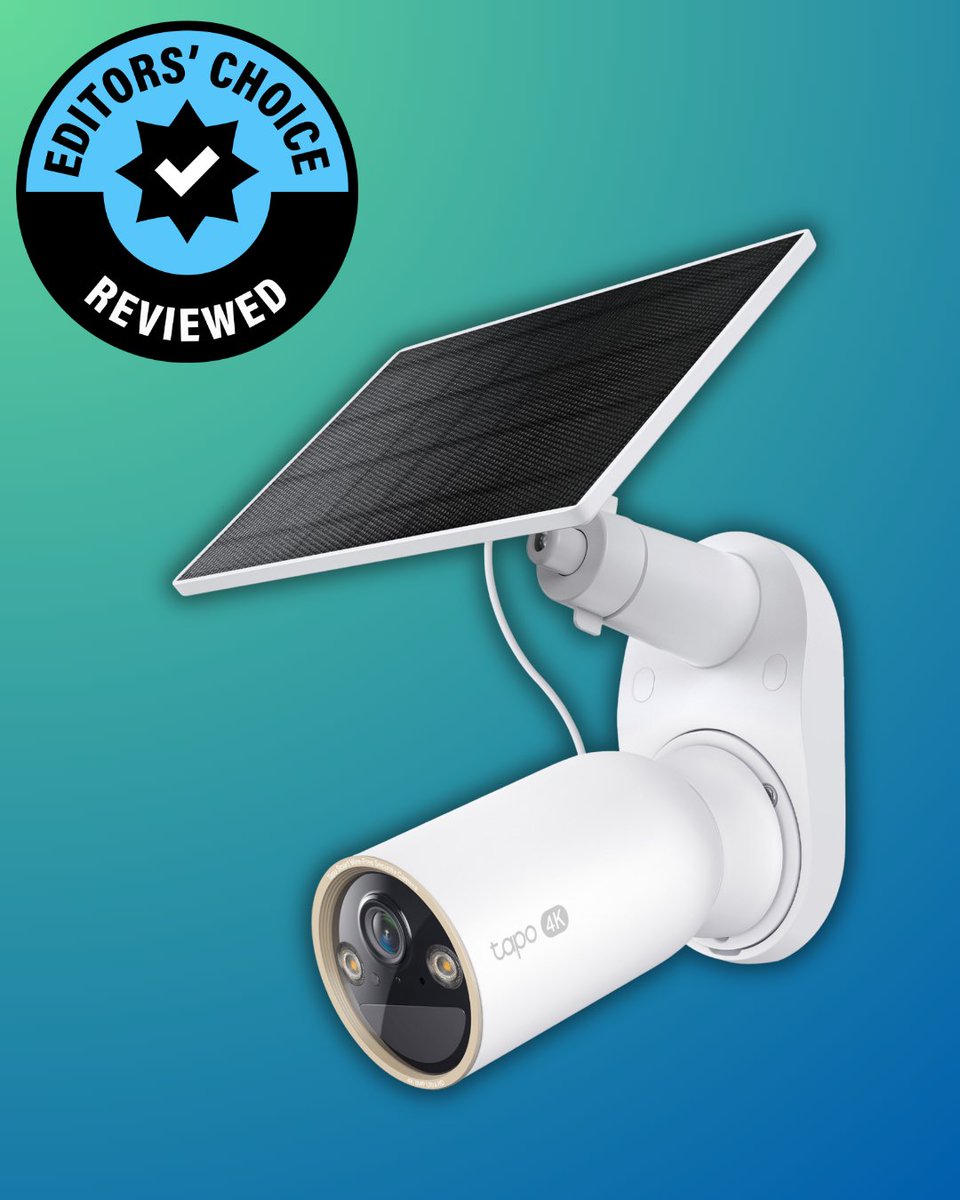
The Tapo C460 KIT just earned an Editor's Choice from Reviewed — and it's easy to see why.
45 minutes of sun = a full day of 4K protection
Color night vision. Free AI detection. 18x zoom. IP66 weatherproofing. All in one solar-powered package.
Article: reviewed.com/smarthome/best-…
Product Link: us.store.tapo.com/s/c460kit_…
#TapoC460 #SmartHome #SolarCamera #EditorChoice #Reviewed #TPLink #Tapo4K
3
183

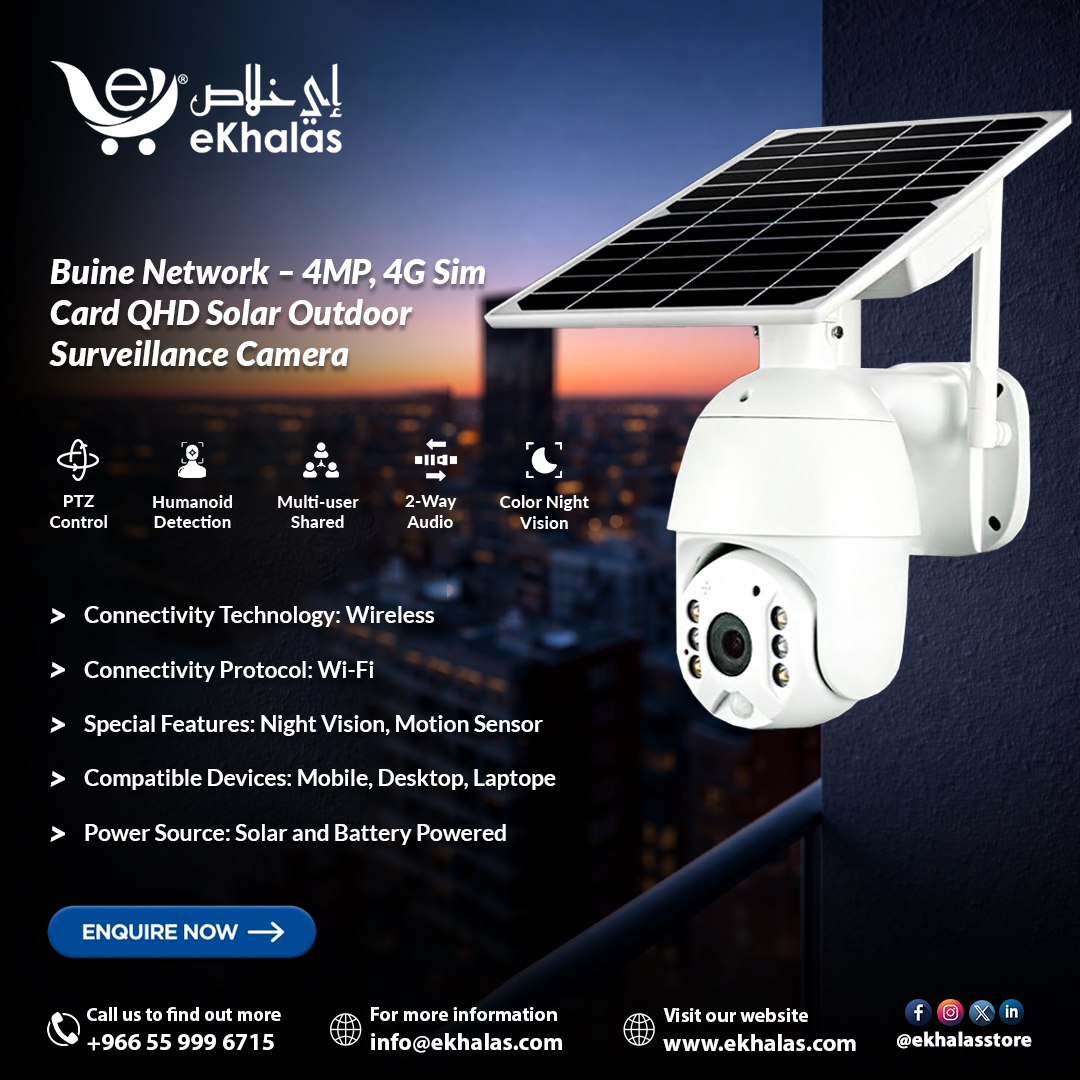
Buine Network – 4MP, 4G Sim Card QHD Solar Outdoor Surveillance Camera
#ekhalas #vision2030 #ekhalasstore #solarcamera #solar #solarpower #security #cctv #camera #homesecurity #solarpanel #streetlights #solarsecurity #solarstreetlight #solarstreetlighting #solarstreetlamp #solar
1
2
29

Mar 27
No Light? No Problem. 🔌❌
JAGOD Concept's Dual Lens Solar CCTV is built for 24/7 surveillance without the high electricity bills or wiring stress.
✅ 360° View ✅ Solar Rechargeable ✅ Mobile Alerts
Secure your site now: eshop.chiexclusive.com/produ…
#SecuritySystems #SolarCamera
2
2
53

Mar 18
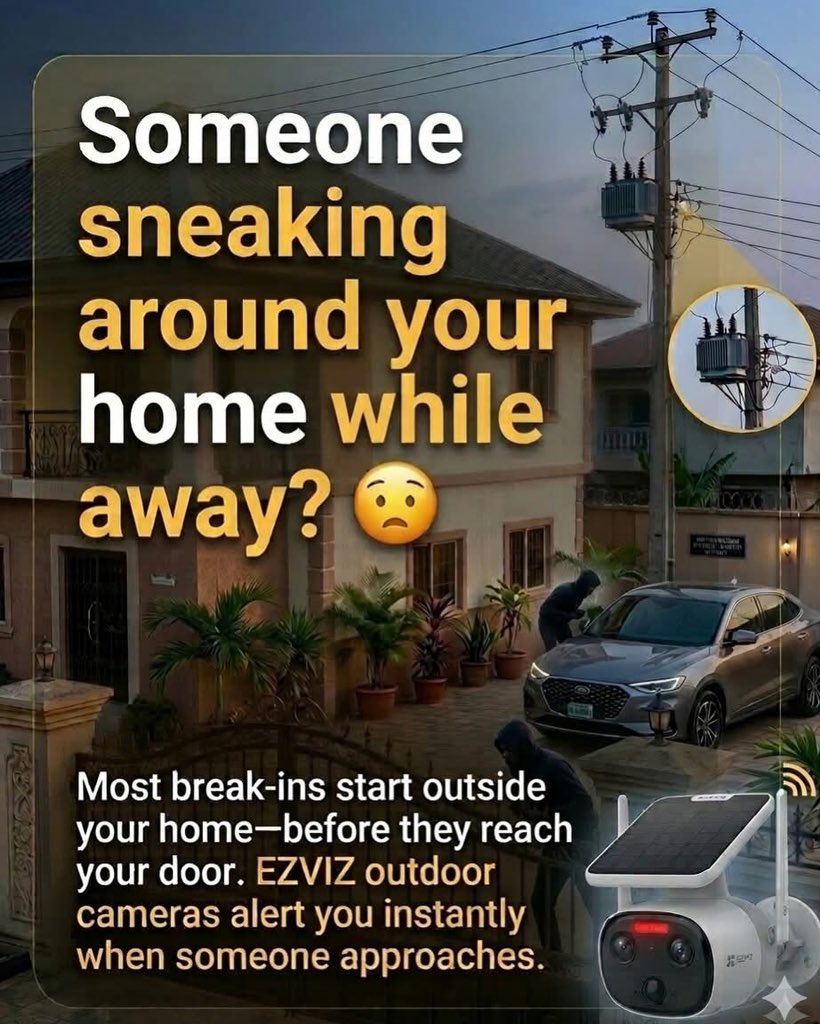
Security isn’t just about reacting, it’s about seeing trouble before it starts.
With OUR SOLAR CCTV outdoor cameras, you’re not just installing a device, you’re upgrading your awareness.
Why it stands out:
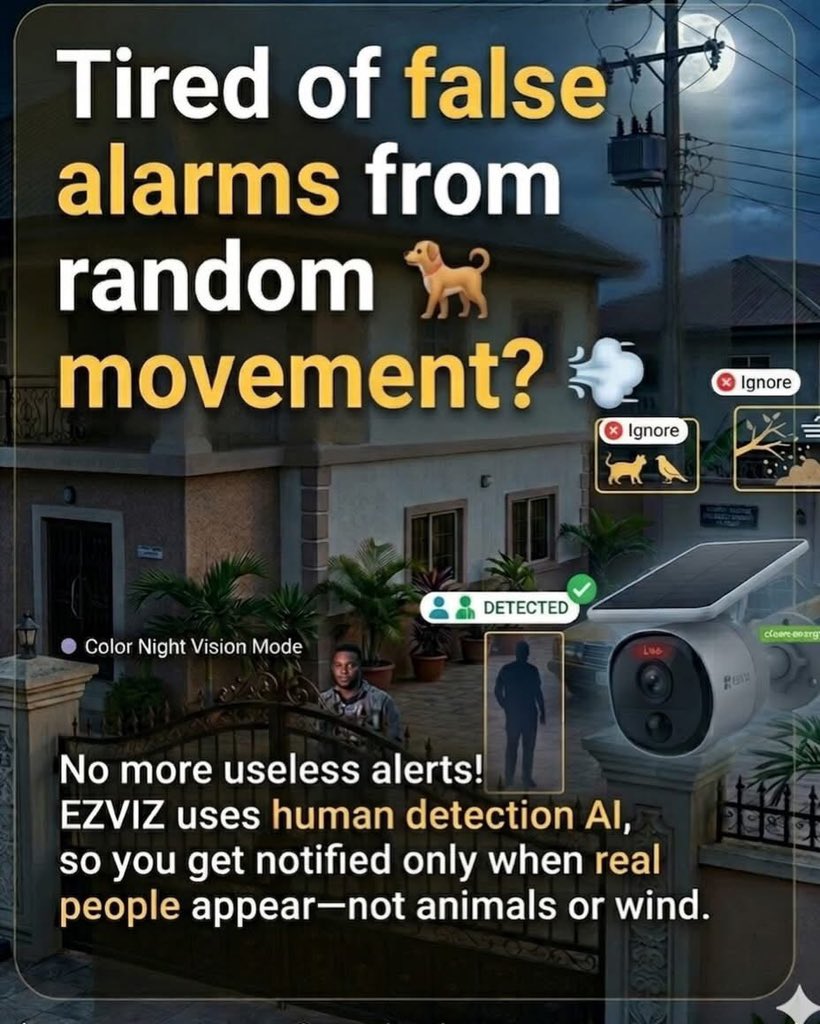
🔒 Smart Detection & Instant Alerts
Advanced motion detection sends real-time alerts straight to your phone the moment someone steps near your property before they even reach your door.
🌧️ Built for Tough Conditions
Rain, dust, heat, these cameras are designed to withstand harsh environments, making them perfect for homes, farms, and construction sites.
🔋 Reliable & Low Maintenance
Solar-powered options and long battery life mean less worry about power outages or constant charging.
📡 Remote Access Anytime, Anywhere
Whether you’re in Abuja or abroad, you can monitor your property live and stay in control 24/7.
🎯 Wide Coverage & Clear Footage
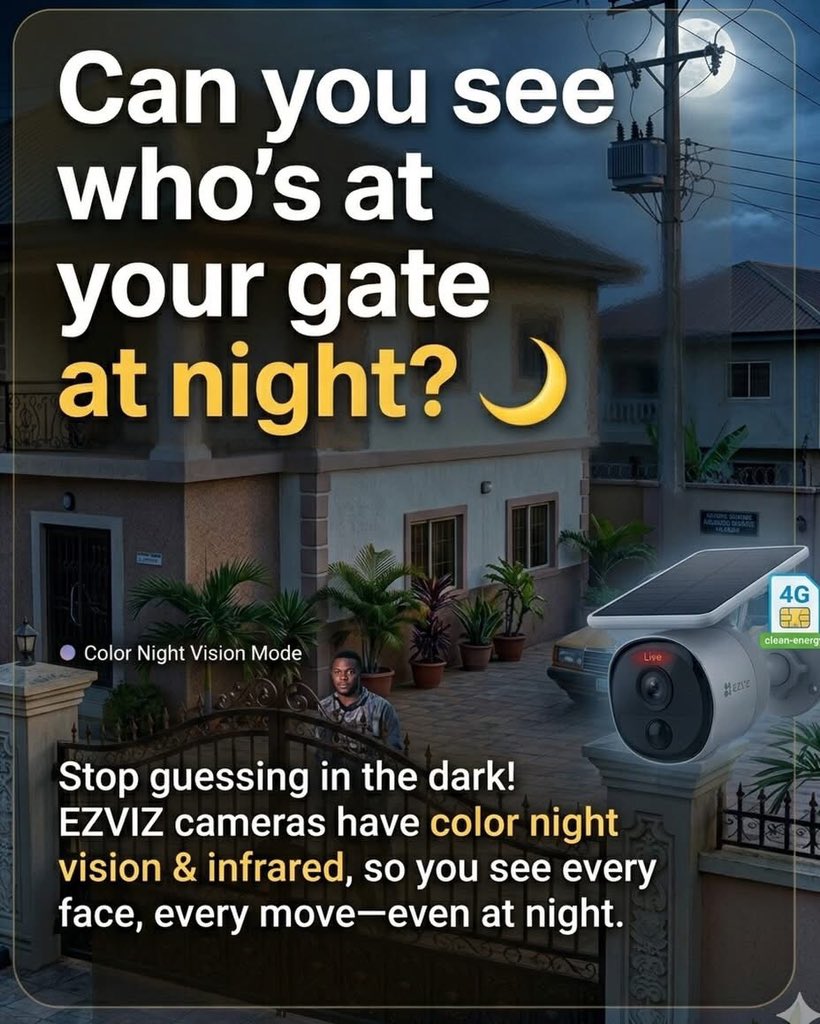
High-definition video with night vision ensures nothing goes unseen,day or night.
Why you need it:
🏡 For Homes: Protect your family and deter intruders before they act.
🌾 For Farms: Monitor livestock, equipment, and remote areas without being physically present.
🏗️ For Construction Sites: Prevent theft of materials and keep track of on-site activity.
In today’s reality, waiting until something happens is too late. Prevention, visibility, and control, that’s the real security.
Stay ahead. Stay aware. Stay protected.
Dm For Sales, Installation and Inquiries.
Nationwide services
#HomeSecurity #SmartSecurity #EZVIZ #CCTVInstallation #SecurityCamera #SurveillanceSystem #StayProtected #SmartHome #OutdoorCamera #24_7Security #MotionDetection #NightVision #HomeSafety #SecuritySolutions #AbujaBusiness #NigeriaSecurity #TechForSafety #SolarCamera #WirelessSecurity #PropertyProtection #FarmSecurity #ConstructionSiteSecurity #PreventTheft #PeaceOfMind
52
86
109
2,653

Get your smart outdoor CCTV camera from us @UniverseSolarr 💡 to monitor your Farm, residential home/Sites, business/company from the comfort of your phone
Price: 120k
Call/Chat:09110014269
#solarcamera #universesolar #home #office #estate #farm #hospital #hotel #school #salon
2
3
59

Feb 19
Feb 19

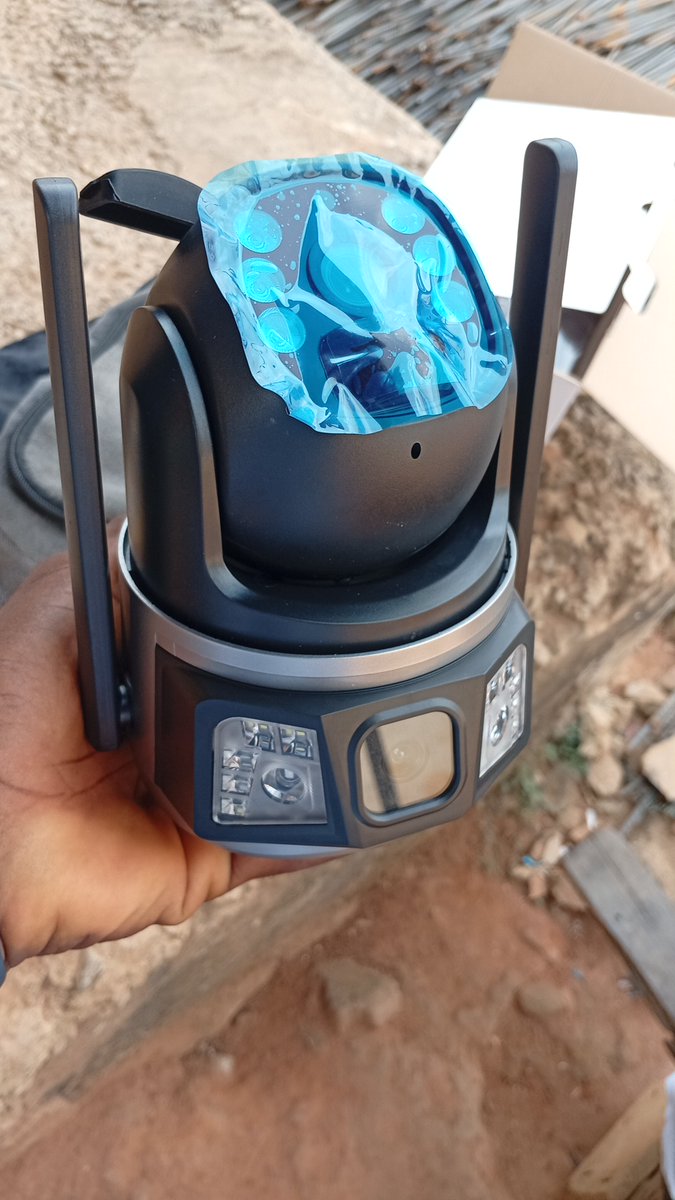
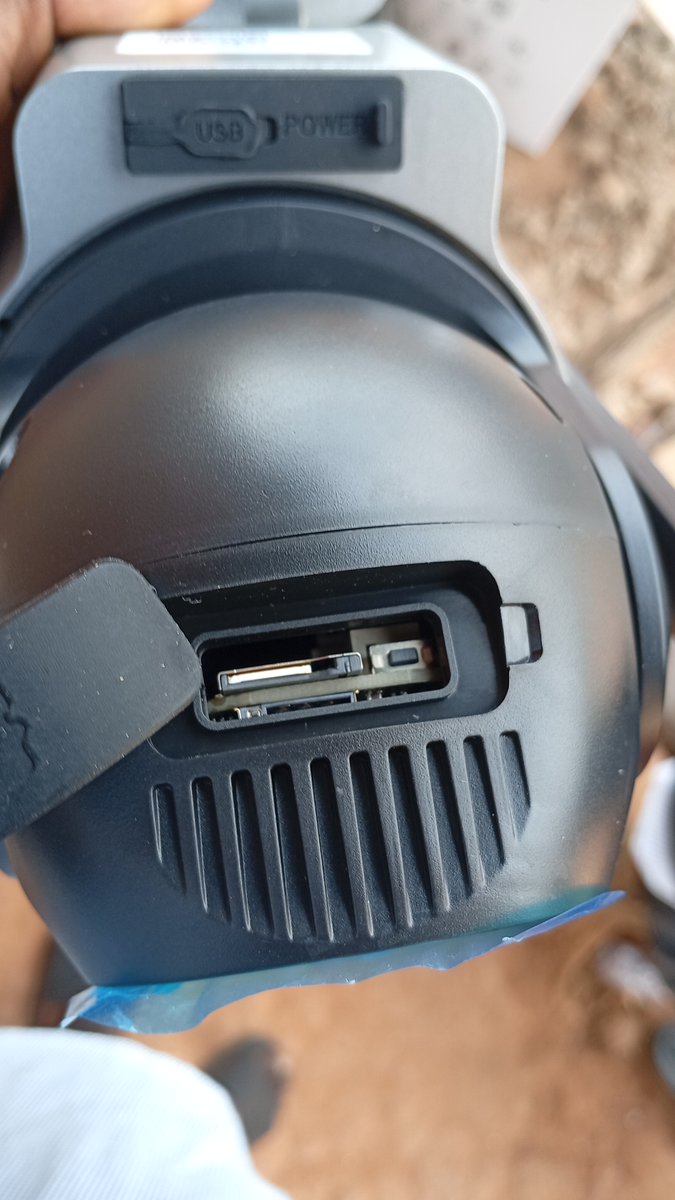
I went for a quick solar light and camera installation nearby and it's quite funny how the man offered me 5k, well next time.
I didn't even remember to take a pic, well let me give a conclusion to my @duolingo adventure
2
152

Jan 22
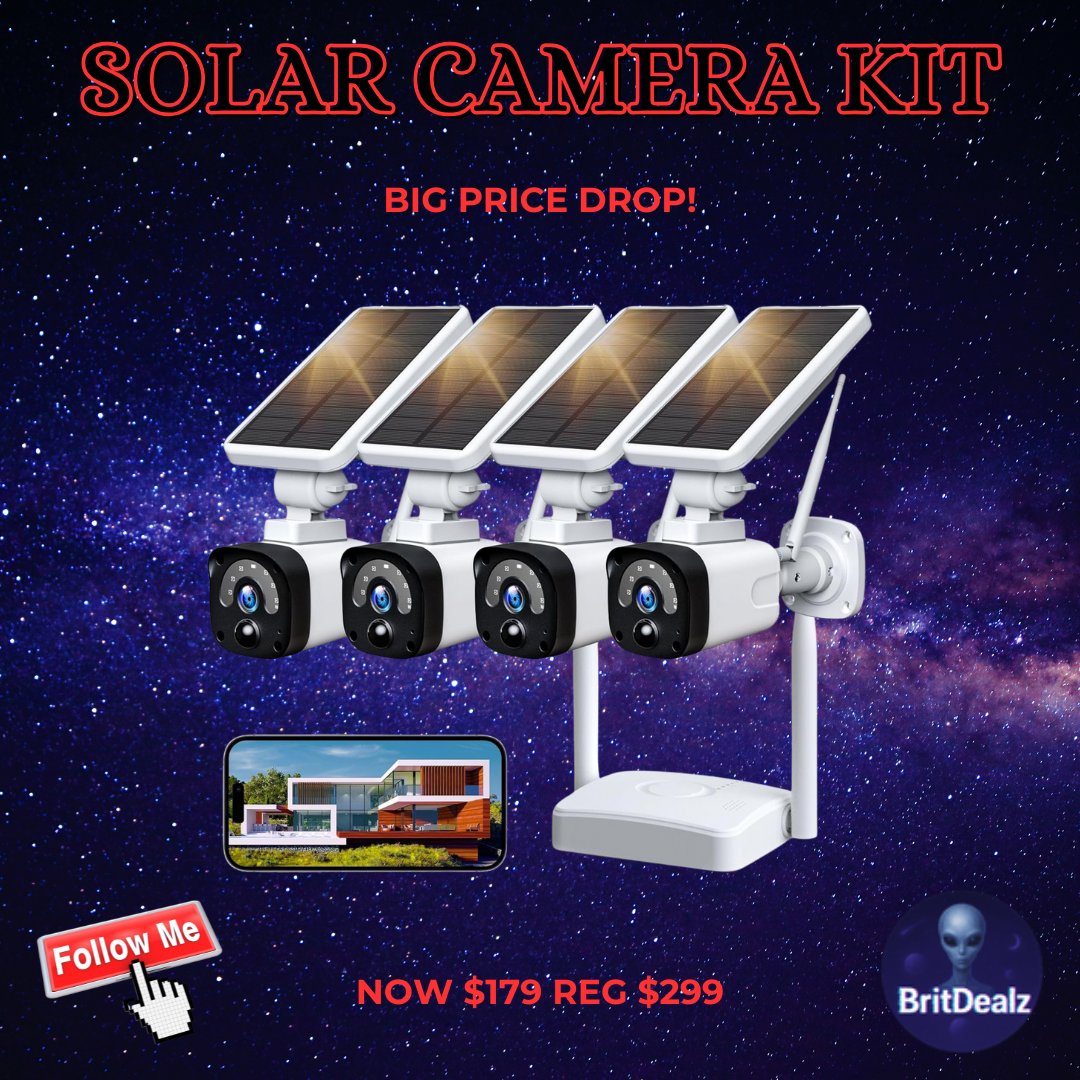
Price ⬇️
4MP Solar Cameras Kit
Now $179.xx
Was $299.xx
Discount 40%
joylink.io/gI8Vu5a or go to my website galaxydeals.net and deal will be on main page
#ad
Follow me for real life and real deals
#SolarCamera #SecurityKit #HomeSecurity #SmartHome
1
6
12
120

Jan 5
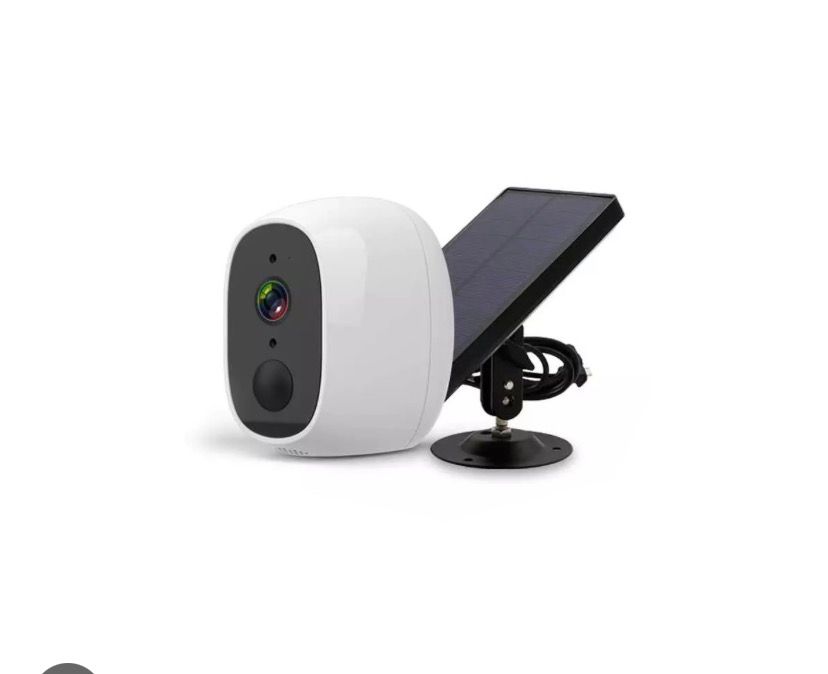
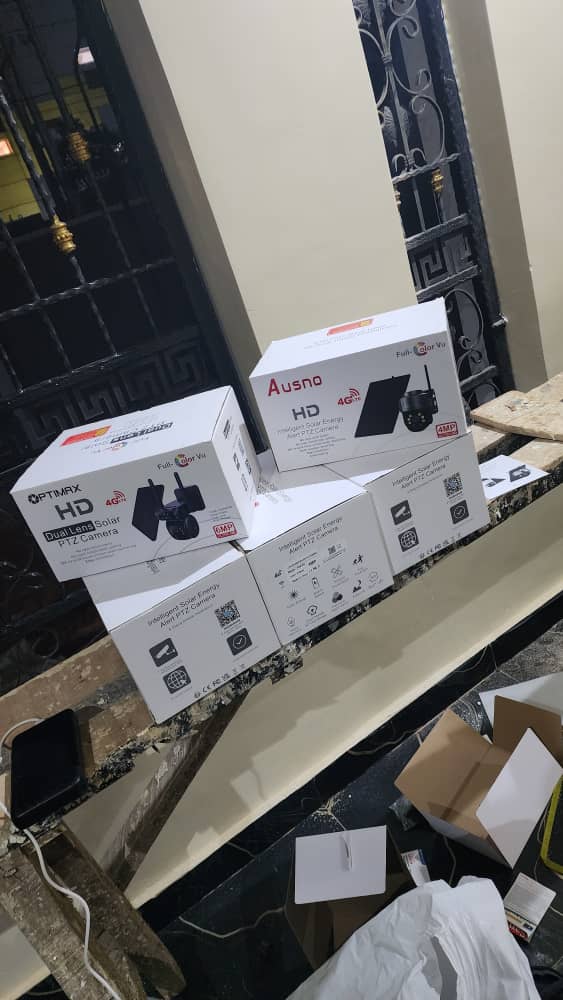
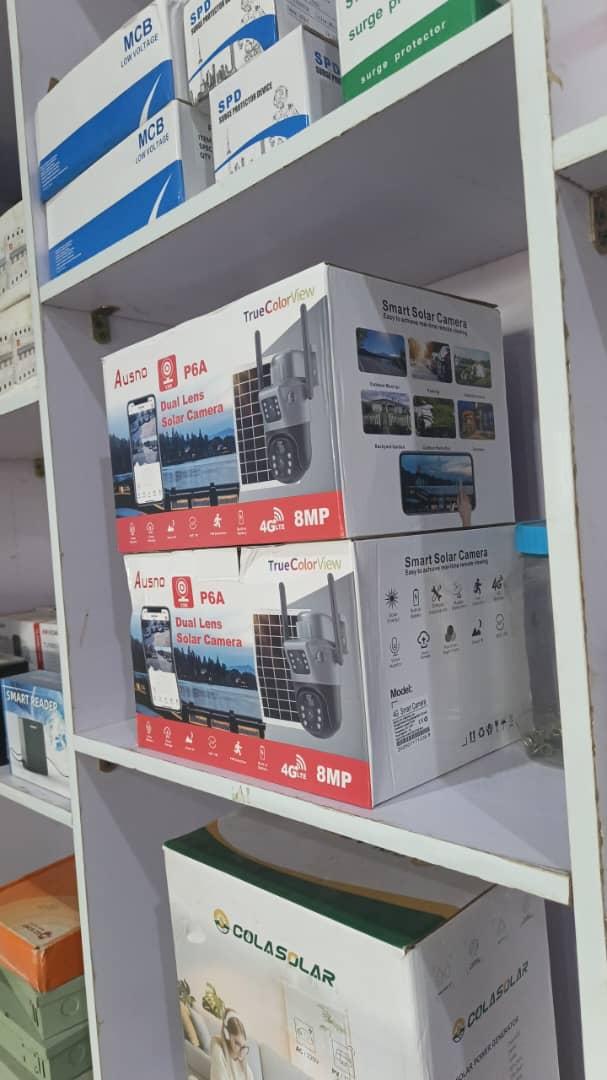
No more dark spots! Our solar-powered security cameras keep your property safe 24/7, even in areas without electricity.
Location is Mission Road, Benin City. Waybill is Nationwide.
#SolarCamera #Security #SmartHome #SafeLiving
1
23
22
1,064

28 Dec 2025
3/3
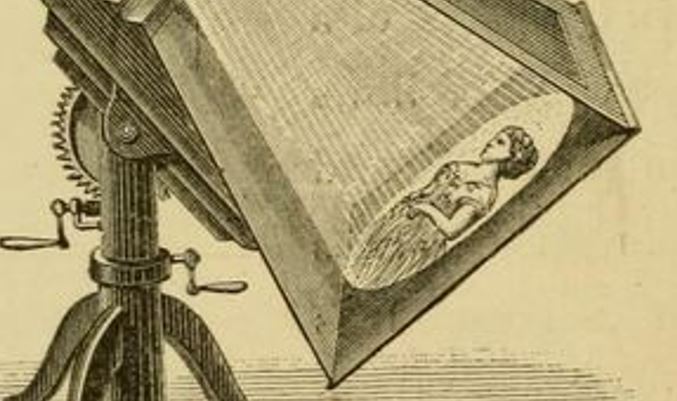
Beyond the #solarcamera, Liébert was an innovator in other areas. In 1879, he opened the first Paris studio equipped with electric lighting, and he patented a method for mechanically applying liquid dyes to prints.
He also documented the #ParisCommune of 1871, publishing a two-volume work, Les Ruines de Paris et de Ses Environs, 1870–1871, containing 100 albumen silver prints of the city’s destruction, including notable images of the #Vendômecolumn’s felling.
In 1897, he and his son Georges founded A. Liébert et Cie, a company focused on silver celluloid photographic paper, though it went bankrupt in 1906. -30-
28 Dec 2025

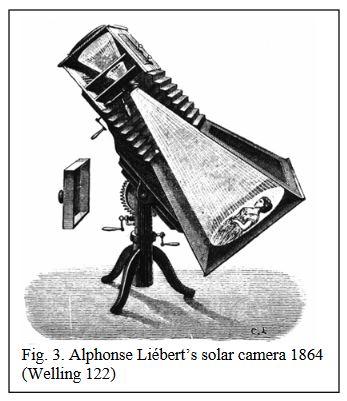
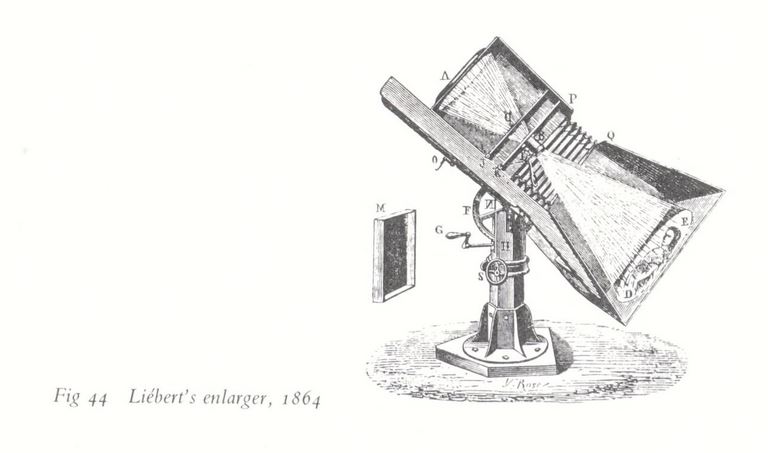
Liébert's concept was unique -- it was a closed structure that could be installed outside, normally on a rooftop. Compare that with todays outdoor cams. It was also built with a rack-and-pinion movement, allowing it to be rotated effortlessly toward the light, and with minimal vibration.
He patented a solar enlargement technique that improved upon earlier designs, such as David Acheson Woodward’s 1857 solar camera. Unlike Woodward’s model, which used a mirror to reflect sunlight and required frequent adjustments, #AlphoneJustinLiébert’s design eliminated the mirror, directing sunlight through the negative with a hand-operated drive to keep the condenser lens focused on the sun. This reduced vibrations and blurry exposures, though it still needed adjustments and was sensitive to external conditions like wind.
His solar camera could produce enlargements up to 17¾ × 23¼ inches from carte-de-visite-size negatives (3½ × 2½ inches) in about two hours, a significant achievement given the slow photographic papers of the time, such as salted paper and albumen. Liébert’s design was more practical than earlier models and became widely used in #NorthAmerica, while Woodward’s remained popular in France.
His solar camera was part of a broader movement to meet the growing demand for larger photographic prints, as patrons sought bigger portraits without the need for cumbersome large-format negatives. The device was typically set up on rooftops to minimize disturbances and maximize sunlight exposure, which was critical due to the low sensitivity of early photographic materials.
2
93

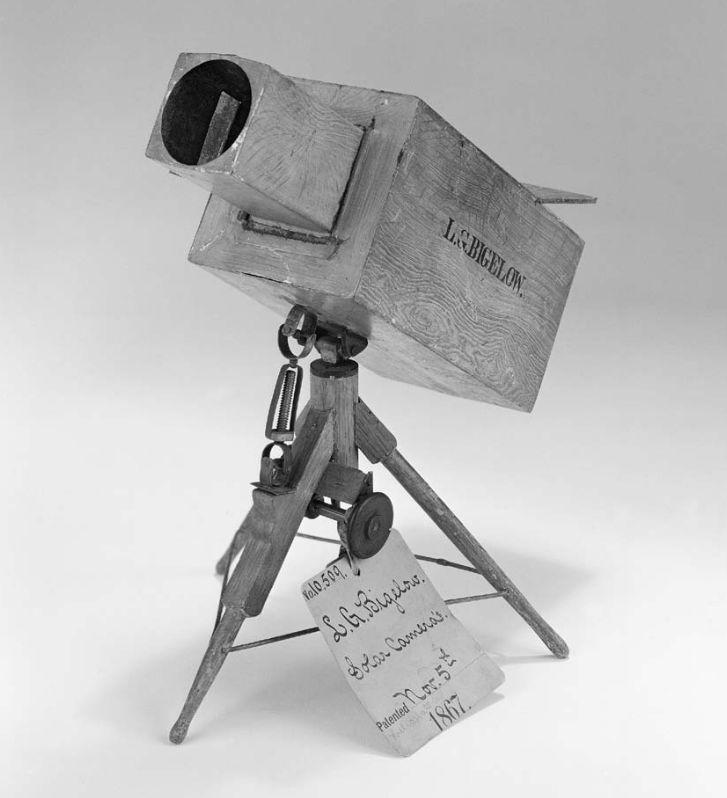
Bigelow's #SolarCamera represents an interesting development in #19thcenturyphotography because it allowed portrait studios to produce larger, higher-quality prints often sold as "life-size" portraits created from standard, small negatives, greatly expanding the commercial possibilities of photography. #historyofphotography #photographichistory
This was necessary because #artificiallighting wasn't yet powerful enough for quality large format printing. Think of it as the raster image vs. the vector image in our graphics world, with a solar image playing the part of the vector, having no issue with resolution: you can resize, rescale, and reshape vectors infinitely without losing any image quality.
Solar Camera image obtained from the Patent Models Index Guide to the Collections of the National Museum of American History, Smithsonian Institution.
1867
SOLAR CAMERA
LYMAN GOODALE BIGELOW (1841-1940)
Solar cameras were the standard mid 19th century enlarging apparatus that used sunlight, condensers and reflectors to project and enlarge glass plate negatives.
They were widely experimented with between 1850 to 1870ish by Woodward, Wöthly, Claudet, and Monckhoven, so Bigelow’s entry sits in a well-trodden technical field of #photographicenlargers of the period. He patented the camera you see here, on 5 November 1867 (№ US70509).

3
172

26 Oct 2025
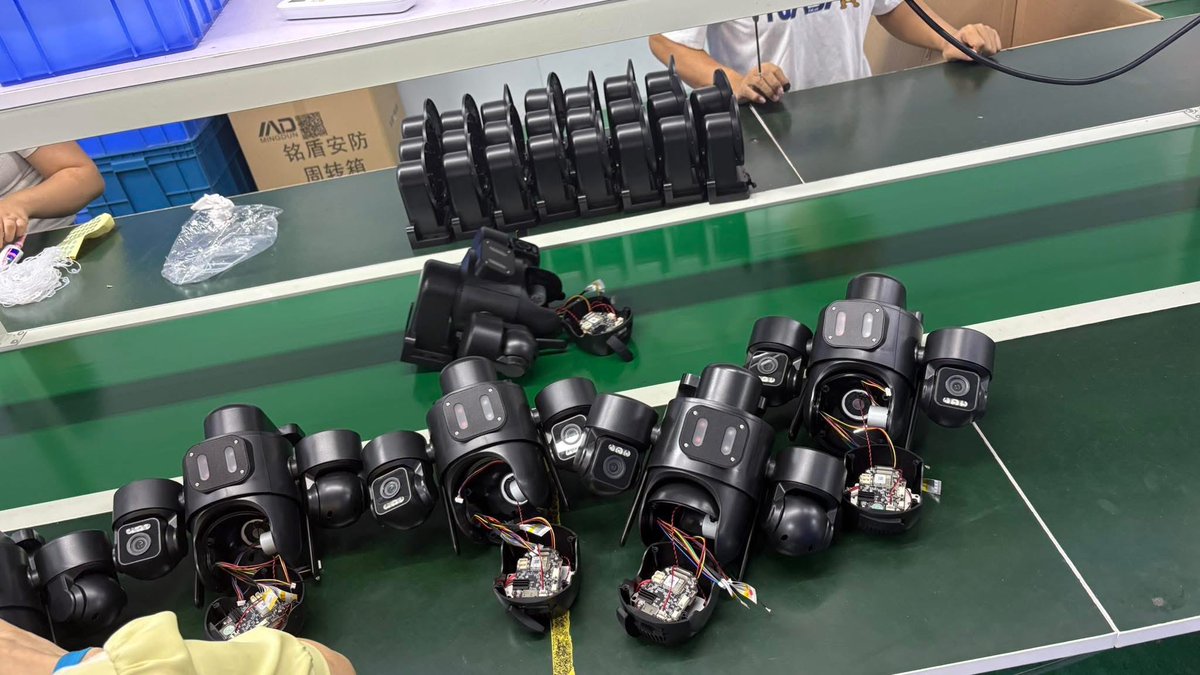
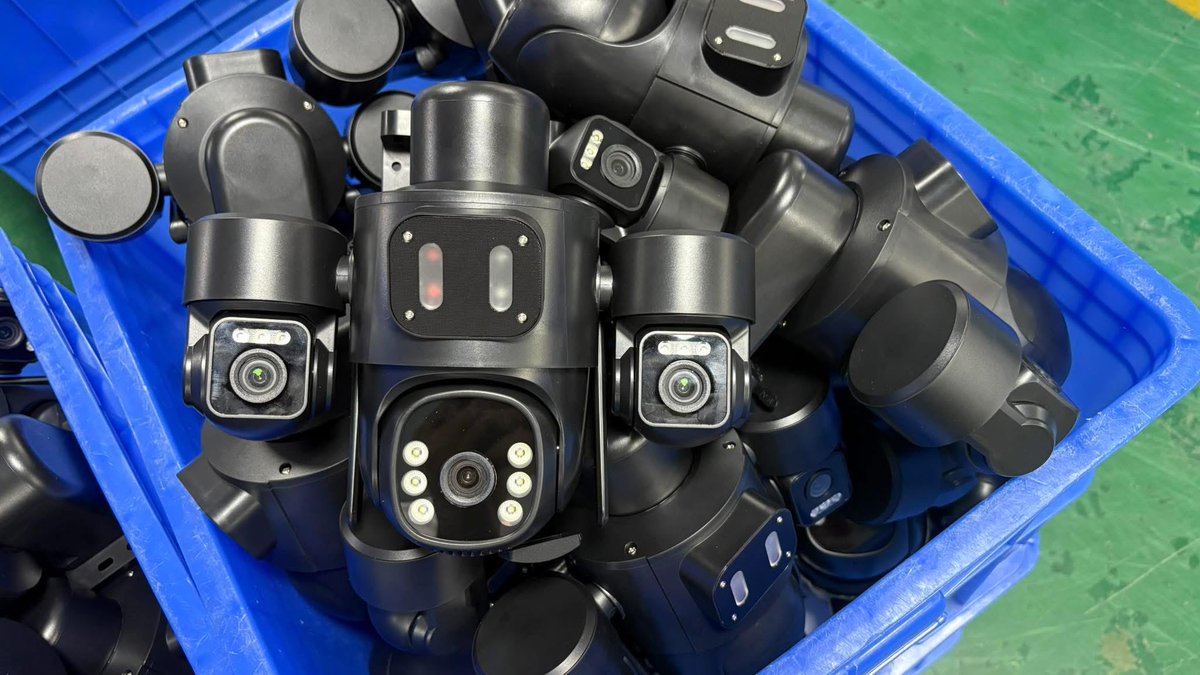
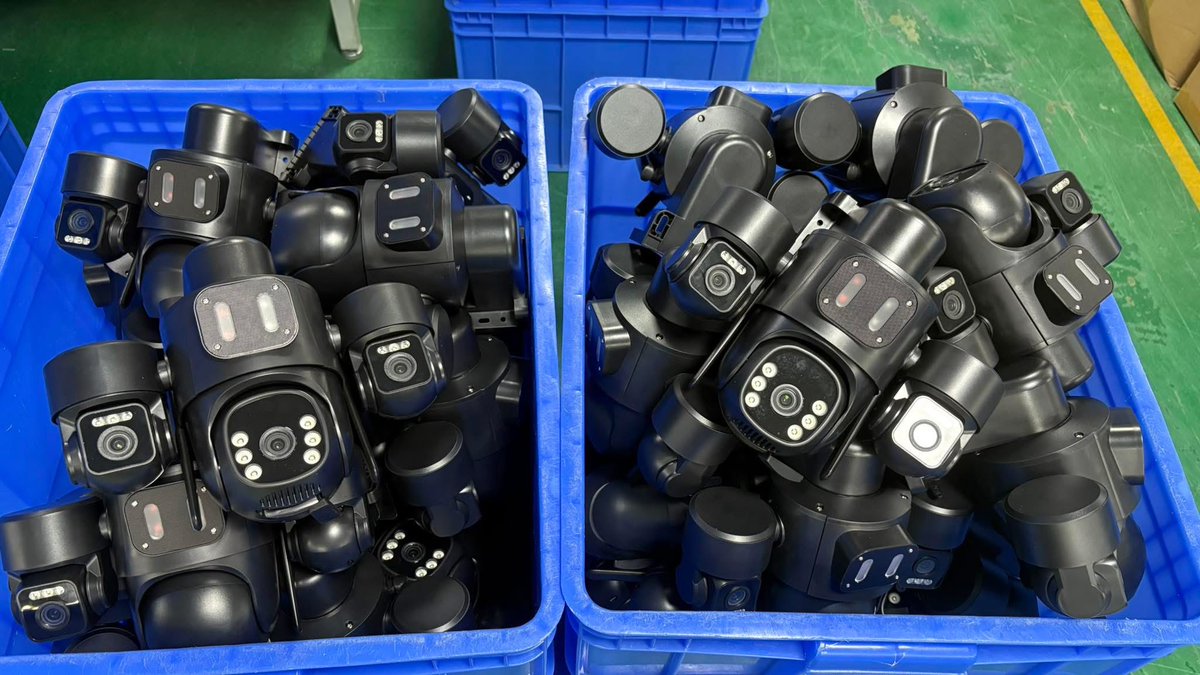
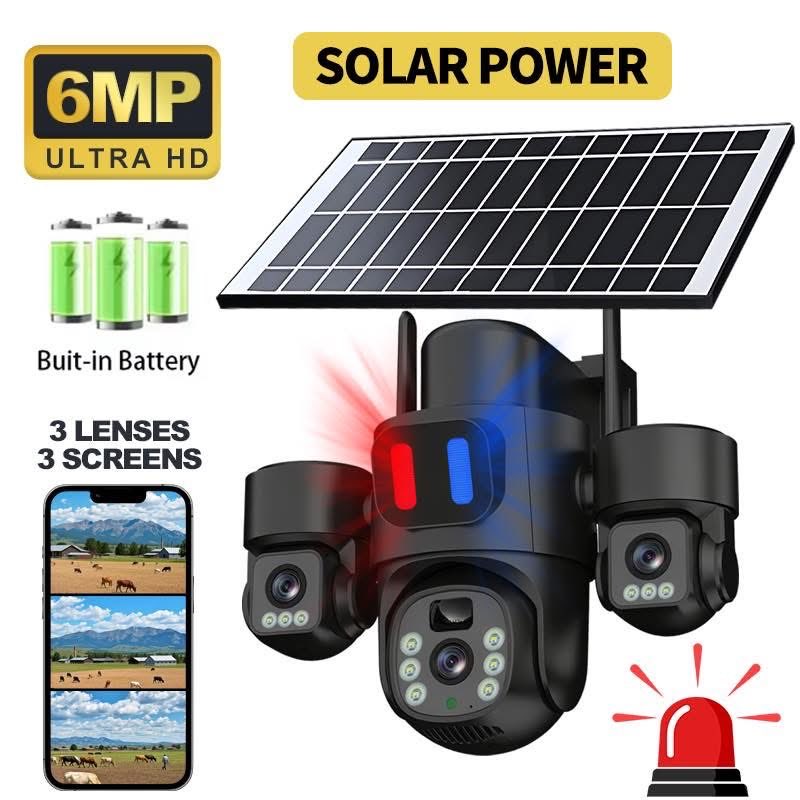
Real Three Lens Solar Camera /// Factory Price!!
1, Have 3 lens, 3 views
2, With red/blue alarm light.
2, 6MP resolution
3, With 7.5W solar panel, built-in 6pcs battery
4, 4G network,can support all brand SIM card.
5, B/W & colorful nightvision.
6, Two-way audio.
7, Support 350°pan and 105°tilt rotation.
8, Support Max 256G SD card storage.
#r2safetypro #solarcamera #factoryprice #abuja #nigeria
1
3
102

SHIWOJIA Camera Surveillance Exterieure WiFi 5MP App Tuya Smart Andr... youtu.be/5m7W2_AQF-Y?si=Tatz… via @YouTube #tofanger #SHIWOJIA #Camera #HomeSecurity #Securite # WifiCamera #SolarCamera #Tech #collaboration #Unboxing
2
14

19 May 2025
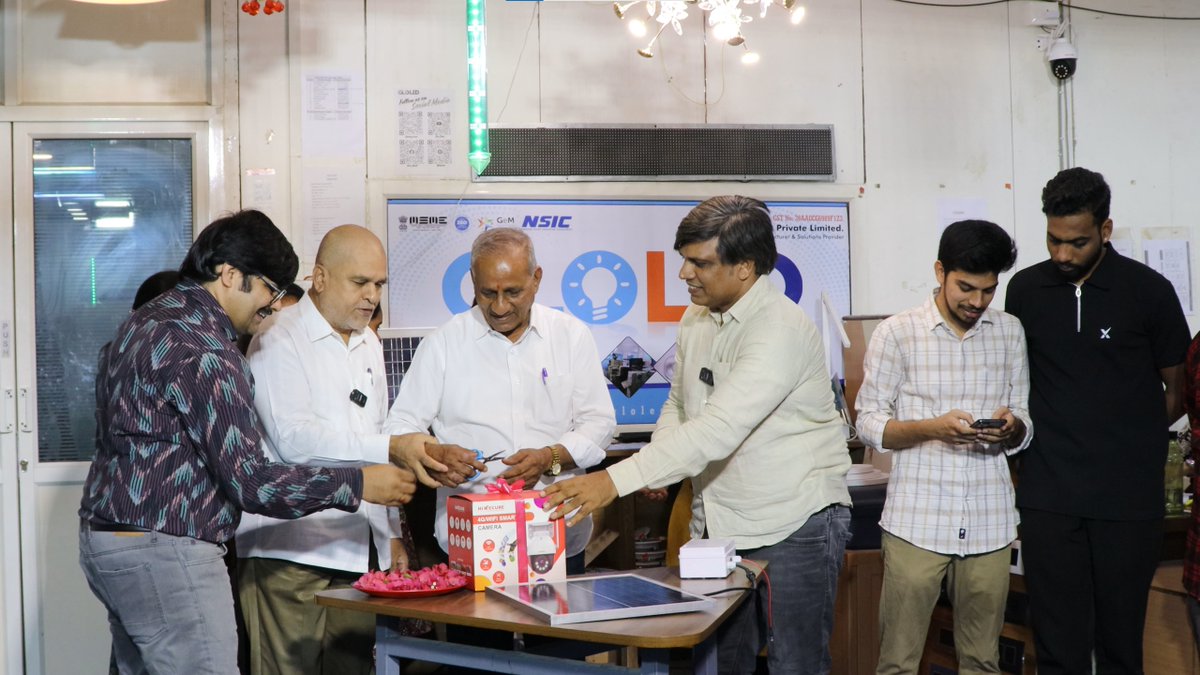
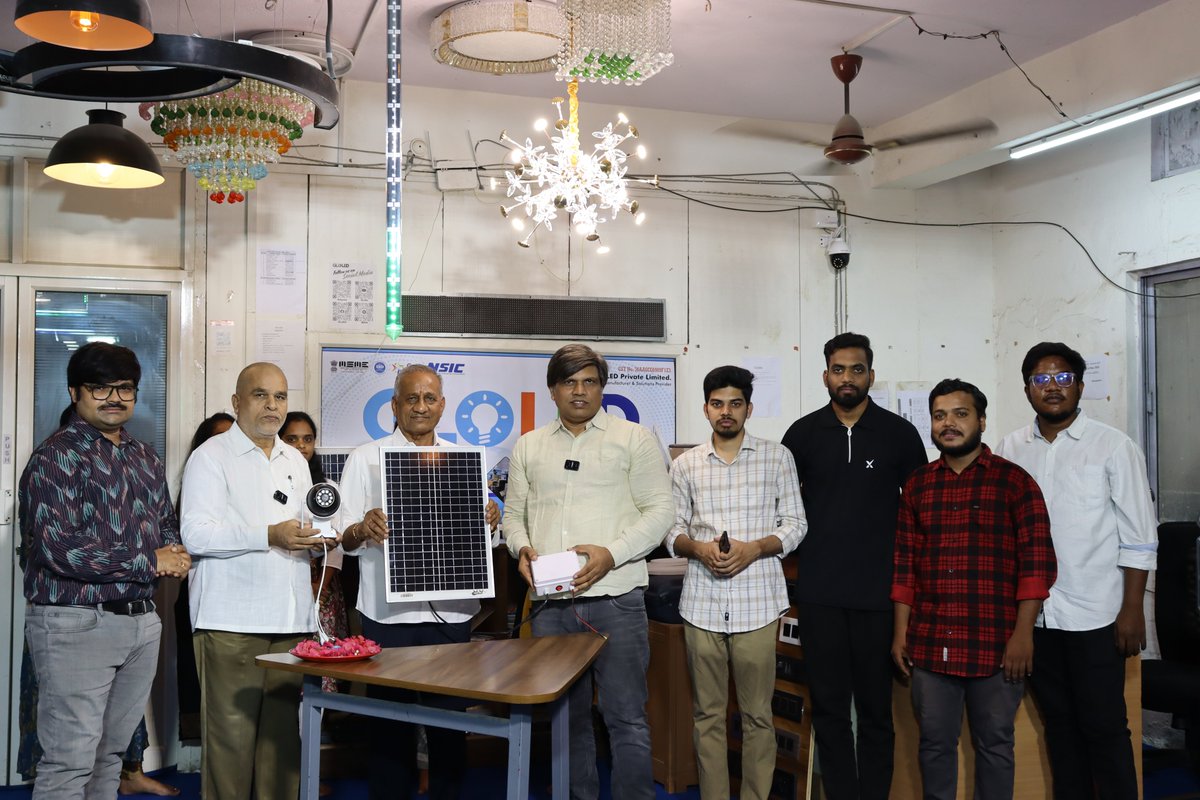
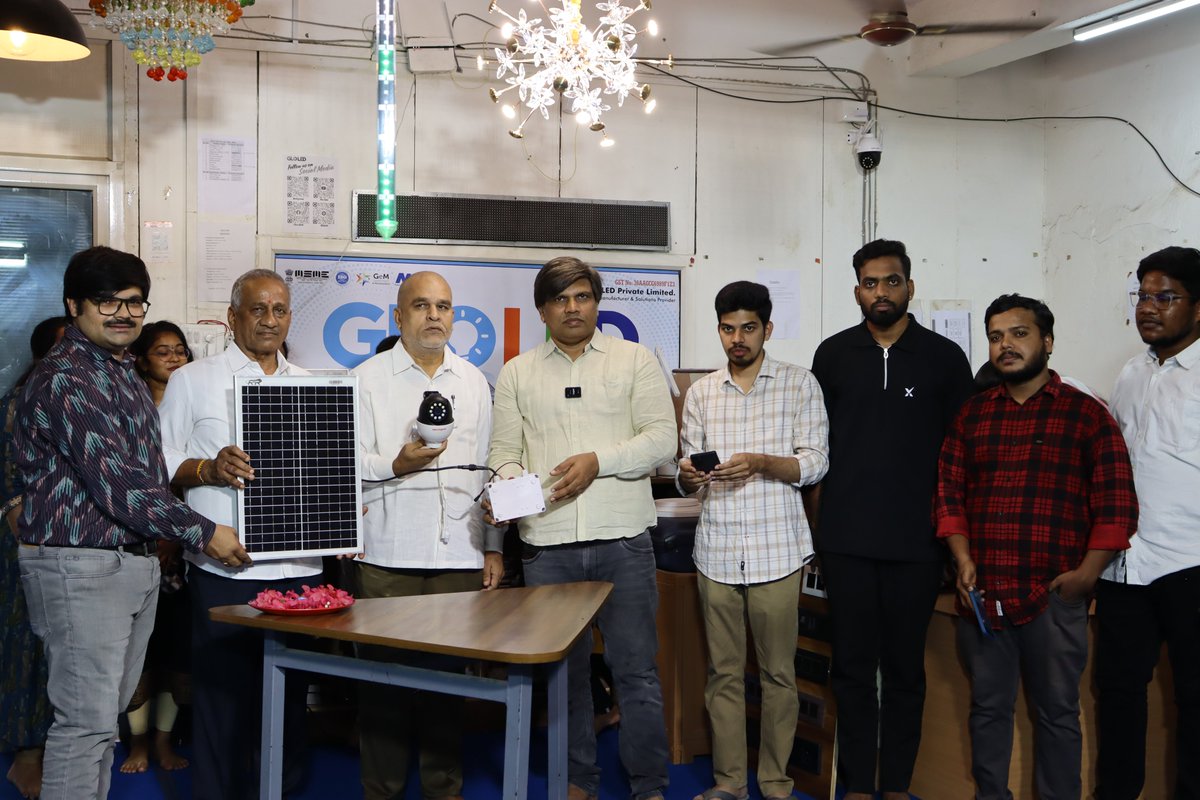
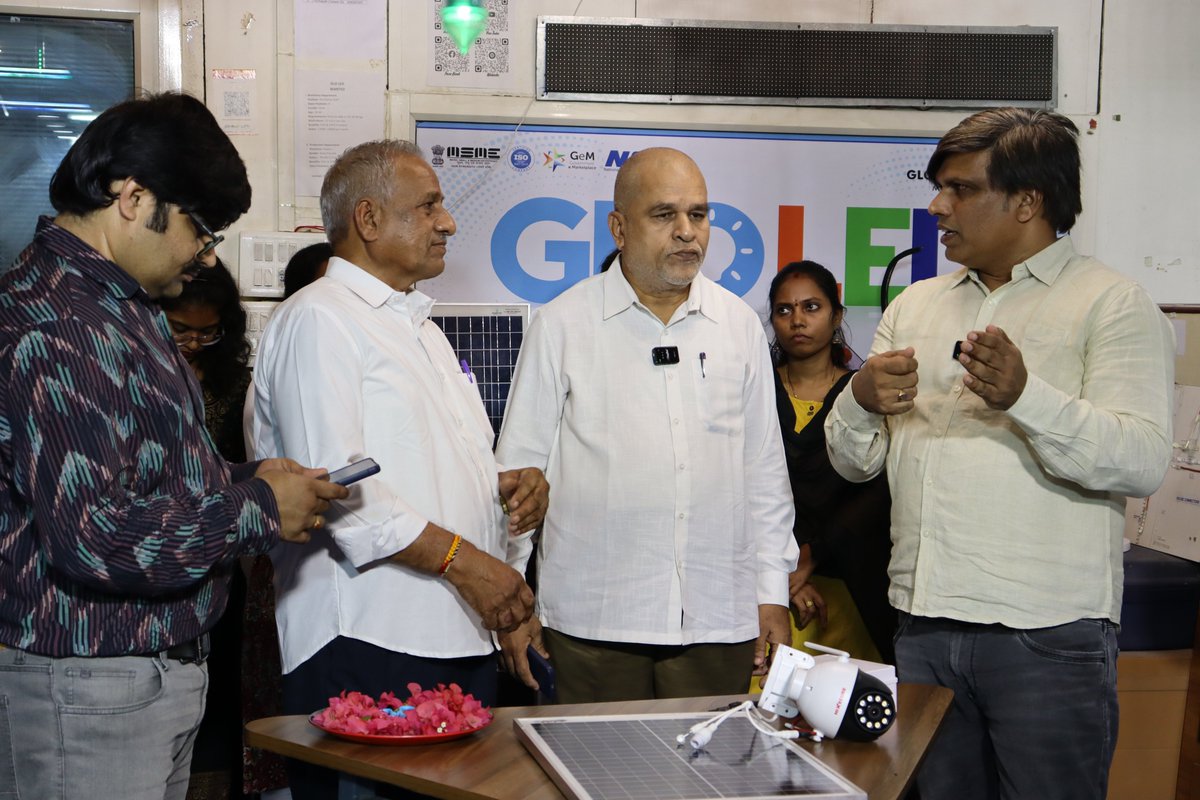
🎉📸 New Launch Alert!
Introducing the GLOLED Solar Smart Camera – Launched today by Ramarao garu (Industrialist) & Ravi Kumar garu (Builder) 🔥
🌞 Solar-Powered. Smart-Secured. Always Connected.
✅ 100% Solar Powered – No electricity needed
✅ Wi-Fi Enabled – Live streaming & remote monitoring
✅ Motion Detection Alerts
✅ Night Vision & HD Recording
✅ Weatherproof – Ideal for outdoor use
✅ Easy Installation – No wiring hassle
✅ Perfect for Homes, Apartments, Gated Communities, Factories & Farmhouses
🔐 Smart security made effortless with GLOLED!
📞 For Enquiries: 9553550700
🌐 gloled.co
#GLOLED #SolarSmartCamera #SmartSecurity #CCTVIndia #SolarCamera #WirelessSecurity #NewProductLaunch #RamaraoGaru #RaviKumarGaru #HomeSecurity #IndustrialSecurity #MadeInIndia #GloLaunch #SmartTech #EnergyEfficientSecurity #GatedCommunityCamera #StaySafeWithGLOLED
1
1
36