
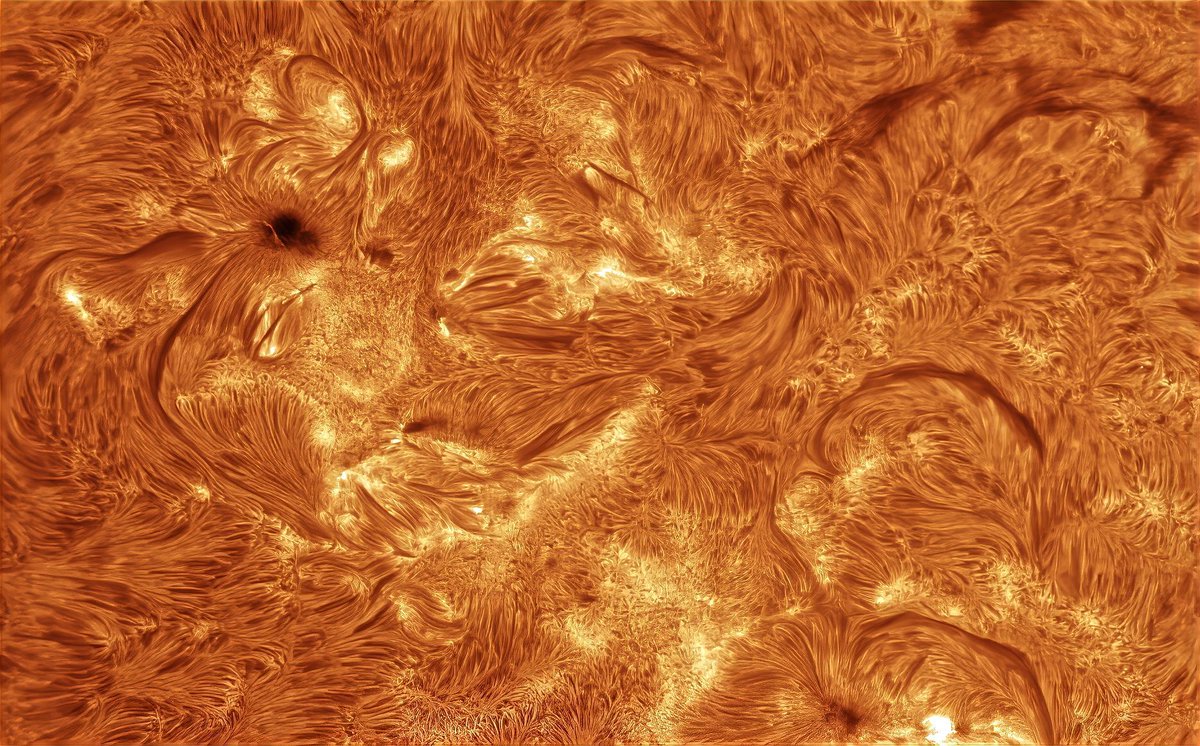
Solar Image of the Month: This exquisitely detailed image from August 6, 2024, features many dark filaments and bright patches of plage. Mark Johnston captured it using double-stacked Lunt Solar etalons on a TEC APO160FL refractor.
#SolarObserving #HAlpha #LuntSolar #SolarMaximum
9
22
1,335

May 21
GÜNEŞ MAKSİMUMU
Nasıl hayatta kalabiliriz?
SOLAR MAXIMUM
How can we survive?
#onerdoser
#solarmaximum
1
21
2,344
May 18
SOLAR MAXIMUM │ HOW CAN WE SURVIVE
#solarmaximum #SolarFlare #SpaceWeather #SolarActivity #onerdoser
youtu.be/hn3_O7_HP50
24
5,226

Mar 14
x.com/wonderofscience/status…
Our Sun in ultraviolet is simultaneously beautiful and formidable. Remember this as you watch the Sunrise tomorrow.
You do watch the Sun rise, don’t you?
#ufoX #ufoTwitter #SolarMaximum
 Wonder of Science
5
5
60
2,483

Mar 12
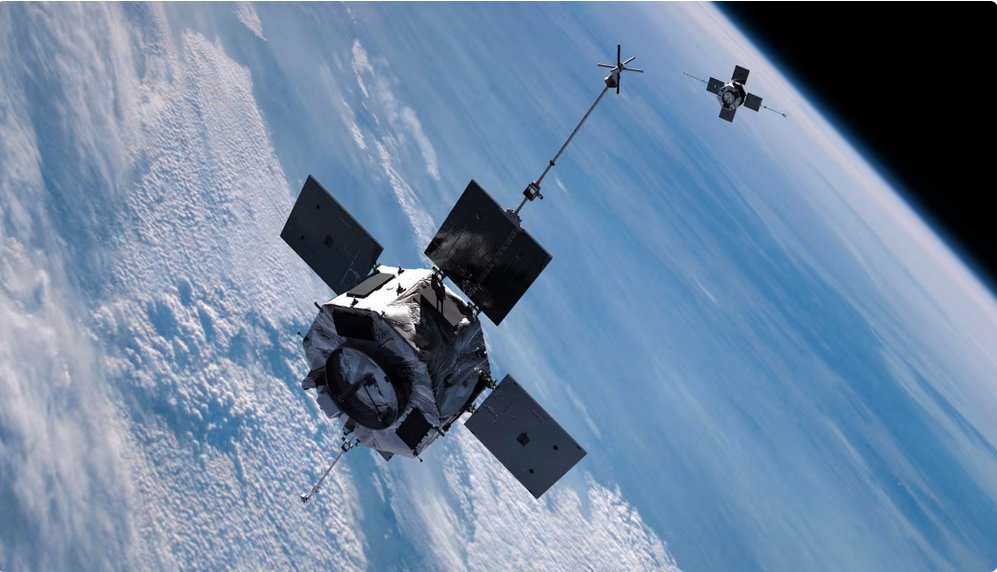
🚨NASA spacecraft makes an uncontrolled return to Earth years ahead of schedule
Van Allen Probe A, a 1,323 lb spacecraft launched in 2012 to study Earth's radiation belts reentered the atmosphere early Wednesday over the Pacific.
Most of the probe was expected to burn up during reentry, but NASA acknowledged that some fragments may have survived the plunge.
The probability of debris striking a person was estimated at 1 in 4,200. No injuries or confirmed debris discoveries have been reported so far.
What's interesting though is why it came down so early.
When the mission ended in 2019, engineers expected the probe to remain in orbit until 2034, but the current solar cycle has been far more active than predicted. Solar maximum increased atmospheric drag, slowly pulling the spacecraft back toward Earth faster than the predicted models anticipated.
The probe spent over a decade studying the Van Allen radiation belts the high energy particle zones trapped in Earth's magnetic field that help shield our planet from solar and cosmic radiation.
Its twin spacecraft, Van Allen Probe B, is now also expected to fall out of orbit earlier than planned potentially before 2030.
This event also highlights a growing issue in low Earth orbit with space debris.
Experts say objects the size of old rocket stages or satellites reenter Earth's atmosphere roughly once per week. Most burn up, but occasionally fragments survive and reach the surface.
As launches increase and orbital traffic grows, managing that debris is becoming one of the biggest long term challenges for space agencies and private space companies.
We're entering an era where Earth orbit is getting crowded and gravity always wins eventually.
#NASA #Space #VanAllenProbes #SpaceDebris #SolarMaximum
4
4
51
5,144

THE NORTHERN LIGHTS ARE HERE — AND YOUR WINDOW IS CLOSING 🌌🟢✨
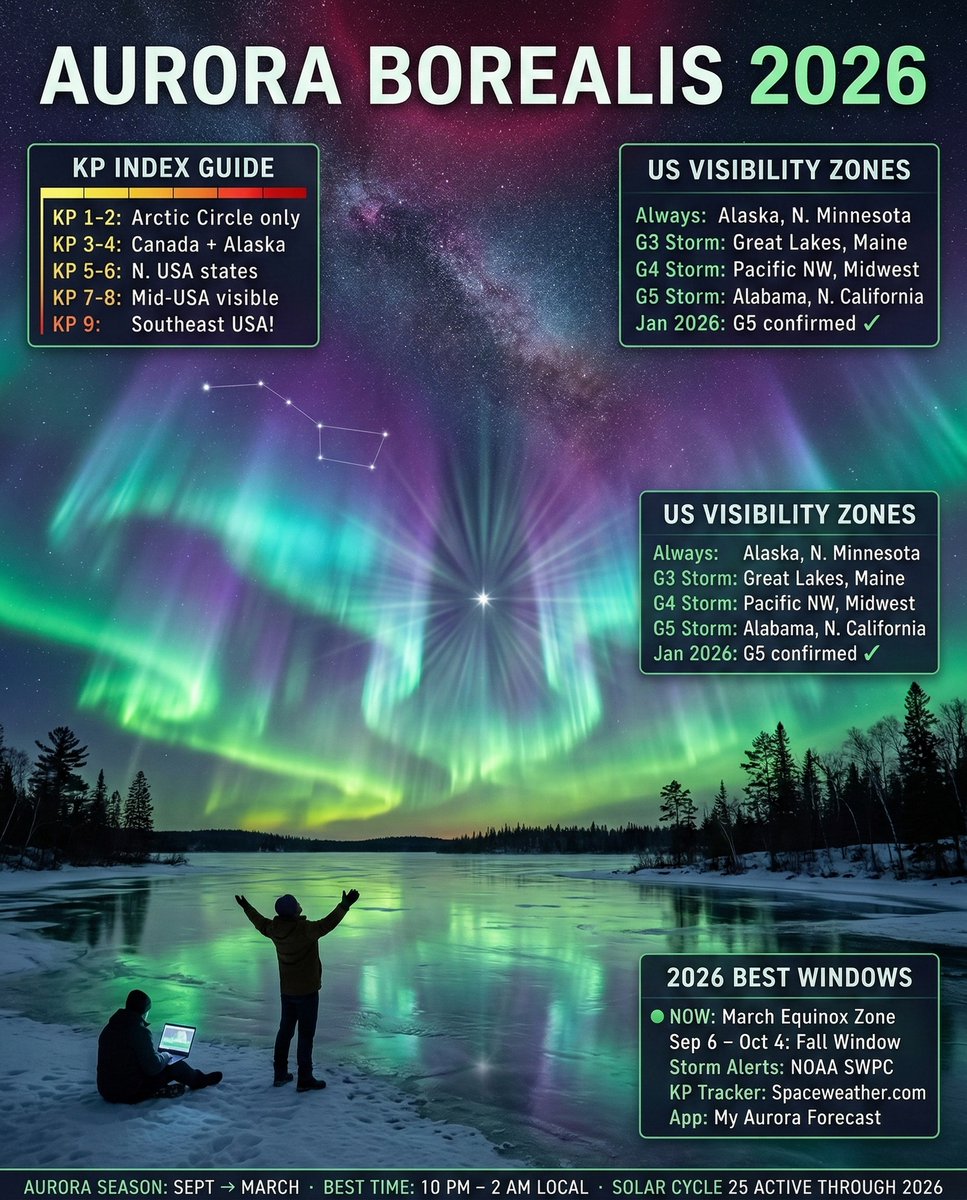
We are at the peak of Solar Cycle 25 — the most powerful solar cycle in decades. Strong auroras have lit up skies as far south as Alabama and California. But the window is closing fast.
⚡ WHY 2026 IS A ONCE-IN-A-DECADE OPPORTUNITY
Solar Cycle 25 has wildly exceeded predictions, delivering more X-class flares and geomagnetic storms than scientists expected.
Scientists now confirm a double-peak maximum — two surges of activity extending the aurora window well into 2026. After this, solar activity declines sharply toward minimum around 2028-2030.
The verdict from aurora experts is clear: mid-March 2026, boosted by the spring equinox effect, is likely the last best chance of the entire 2020s to see dramatic mid-latitude auroras.
🔬 WHAT ACTUALLY CREATES THE NORTHERN LIGHTS
The Sun hurls billions of tons of charged particles through space via solar flares and coronal mass ejections. Earth's magnetic field deflects most — but funnels particles down near the poles, where they collide with oxygen and nitrogen atoms and release energy as light.
💚 Green (most common): oxygen at 60-150 miles altitude
❤️ Red (rare): oxygen above 150 miles, only during powerful G4-G5 storms
💜 Purple/violet and 🔵 blue: nitrogen molecules at varying energy states
📅 YOUR 2026 AURORA WINDOWS
The Russell-McPherron Effect amplifies geomagnetic storms 30-50% around equinoxes — making spring and fall the statistically best aurora seasons of the year.
🌿 NOW through March 31: Spring equinox peak window — the single best aurora opportunity of 2026. If you can get under dark northern skies, go now.
🍂 September 6-October 4: Fall equinox window — longer nights, manageable temperatures, favorable magnetic geometry.
❄️ November 2026-February 2027: Still possible, but declining. Long dark nights remain an advantage.
🗺️ WHERE TO LOOK FROM NORTH AMERICA
👁️ Always visible (KP 3 ): Fairbanks Alaska, northern Minnesota, Glacier National Park, Upper Michigan, northern Maine
🟡 Moderate storms (KP 5-6): Seattle, Great Lakes shorelines, Vermont, Wyoming, Idaho, North Dakota
🔴 Strong storms (KP 7-9): Chicago, Pacific NW coast, northern California, Pennsylvania, Ohio — even Alabama and Tennessee during extreme G5 events
⏰ WHEN AND HOW TO WATCH
Best hours: 10 PM to 2 AM local time — aurora peaks near local midnight when you face directly into the geomagnetic storm.
Moon phase matters: a bright full moon washes out faint aurora. Plan trips around new moon periods for maximum darkness.
Essential alerts: NOAA swpc.noaa.gov for official G-storm warnings, SpaceWeatherLive.com for real-time KP index, My Aurora Forecast app for location-based notifications.
📸 PHOTOGRAPH IT LIKE A PRO
Smartphone: use Night Mode, tap the Moon or distant trees to lock focus, drag exposure down, use a 2-3 second timer, and always include a foreground — trees, a cabin, a silhouette.
DSLR: ISO 800-3200, f/2.8, 5-15 seconds. Shoot RAW. Wide-angle 14-24mm to capture the full sweep. Remote shutter plus tripod — non-negotiable.
Pro tip: cameras see more green than the naked eye. Do not be disappointed by what you see directly — check your screen and be amazed.
Have you ever watched the Northern Lights in person? Where were you standing — and is this the year you finally go? Drop your story or your plan below! 🌌👇
#NorthernLights2026 #AuroraBorealis #SolarCycle25 #SolarMaximum #LookUpTonight See less
16
1,025

Zou het kunnen dat we over het solarmaximum heen zijn dankzij de inspanningen van Rob Jetten?
4
1
9
438

Feb 9
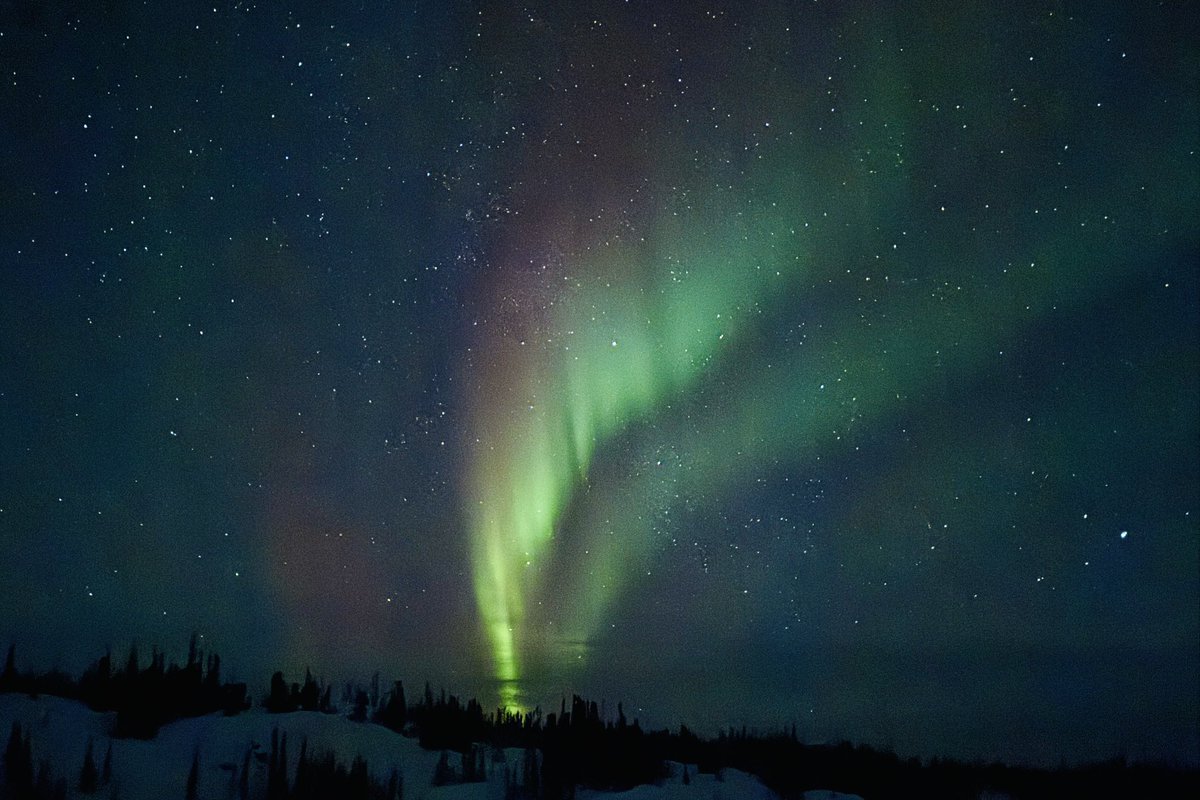
Northern Lights in Yellowknife are unreal! 🌌❄️
Just witnessed this magical dance in the frozen north – the sky came alive!
#NorthernLights #AuroraBorealis #Yellowknife #Aurora #NWT #SpectacularNWT #AuroraHunting #NorthernLightsCanada #CanadaWinter #SolarMaximum
7
300

Jan 10
🚨太陽フレア小康状態…でも極大期の余韻がまだまだ続いてる!🌞💥
2026年1月11日現在:
太陽活動はやや活発~小康レベル。
最近はCクラス中心の小規模フレアがポツポツ発生してるけど、
大規模Xクラスは一旦落ち着き気味🔥
でも!
Solar Cycle 25の極大期は2024-2025年にピークを迎えたけど、
2026年に入ってもまだ下降局面の序盤。
高エネルギー光が地球に降り注ぎ続けるこの時期、
集合意識のシフト・浄化の波は今が本番かもよ😵💫✨
大規模フレア+CMEが直撃したら…
・衛星通信大混乱📡
・GPSが完全に狂う🗺️
・電力系統トリプルパンチ⚡💥
外側の備えはもちろん(最低3日分→理想は1週間!)
でもこの波の本質は内側のアップデート🔥
こういう時こそ
内観🧘♀️ が最強の武器!
高周波の太陽光が
古い感情・トラウマ・制限信念を一気に炙り出してる…
眠気・イライラ・急な涙・体のだるさ…
全部「不調」じゃなくて
意識のOSが今まさにアップグレード中のサイン✨
簡単内観で今すぐ整えよう!
1. 深呼吸3回 → 太陽の黄金光を胸に取り込むイメージ
2. 「今、何を感じてる?」と自分に優しく質問(ジャッジ禁止)
3. 出てきた感情を「ありがとう、さよなら」と手放す
4. 「私は無限の光と繋がっている」と宣言してフィニッシュ💫
外の備え+内の浄化、
両輪で回せばこの太陽の波を
最高の覚醒のチャンスに変えられるよ🧡
みんな、今どんな感じ?
体調・感情の変化、出てる?
内観タイム取ってる?👀
一緒にこの高周波の波に乗って、
次の次元へジャンプしよう!🌟
#太陽フレア #SolarCycle25 #内観 #瞑想 #集合意識 #アセンション #浄化 #意識シフト #覚醒 #SolarMaximum #防災備え
Jan 9

【コンポートポジションに気づけ】
トランプNYTインタビューで爆弾発言🔥
「国際法?いらない」「俺を止められるのは俺の道徳観だけ」
→ これ完全に「力こそ正義」帝国主義フルスロットル宣言じゃん😱💀
タイミングがエグすぎる…
・1/3 ベネズエラ急襲→マドゥロ捕獲成功
・1/7 66の国際機関から一気に撤退
・1/8 NYTで国際法完全否定&「俺の道徳だけがリミット」
ベネズエラ占領直後にこれ…世界中凍りついてる中、🇯🇵日本はもう完全にスネ夫ポジ確定かよ🏧🏧😂
「ジャイアンやめて〜」ってヘコヘコするしかない弱小国モード全開…
欧州パニック、中露プロパガンダ祭り、ラ米激おこ
アメリカ・ファーストって言ってるけど、これもう世界総離れの始まりでしょ??
新しい世界秩序、見えてきた?
完全に古い「分断・対立システム」に気づいた人、一抜け〜✌️
2026年、もう序盤からカオスすぎんだろ…
構造に気付いて!
#Trump #国際法不要 #MadmanTheory #ベネズエラ侵攻 #アメリカ帝国主義 #スネ夫ジャイアン #PostLiberalOrder #トランプ2026 #新世界秩序
3
6
352

24 Dec 2025
Rare white aurora borealis swirling over Tromsø, Norway, during the 2025 solar maximum. These ghostly pale lights form when solar particles excite atmospheric gases at lower altitudes, creating structured, ethereal waves in the night sky.
Real science painting the Arctic with light. 🌌✨
Captured in Tromsø, Norway #AuroraBorealis #WhiteAurora #NorthernLights #Tromso #Norway #SolarMaximum #RealNature #ImpossibleFootage
1
9
32
3,171

The rare "white aurora" witnessed over Tromsø is a spectacular reminder of why 2025 is being called the year of the solar maximum. While the human eye often perceives faint auroras as pale due to night vision limitations, these intense white "structured continuum emissions" are scientifically distinct and linked to extreme heat sources in the upper atmosphere. With solar activity peaking, we are seeing atmospheric phenomena that even veteran guides describe as "once-in-a-decade" magic. 🇳🇴🌌✨
What’s the most unusual aurora color you’ve captured during this solar cycle, @SpaceWeather?
#Tromso #Norway #AuroraBorealis #SolarMaximum #RoviHere
2
24
1,092

7 Dec 2025
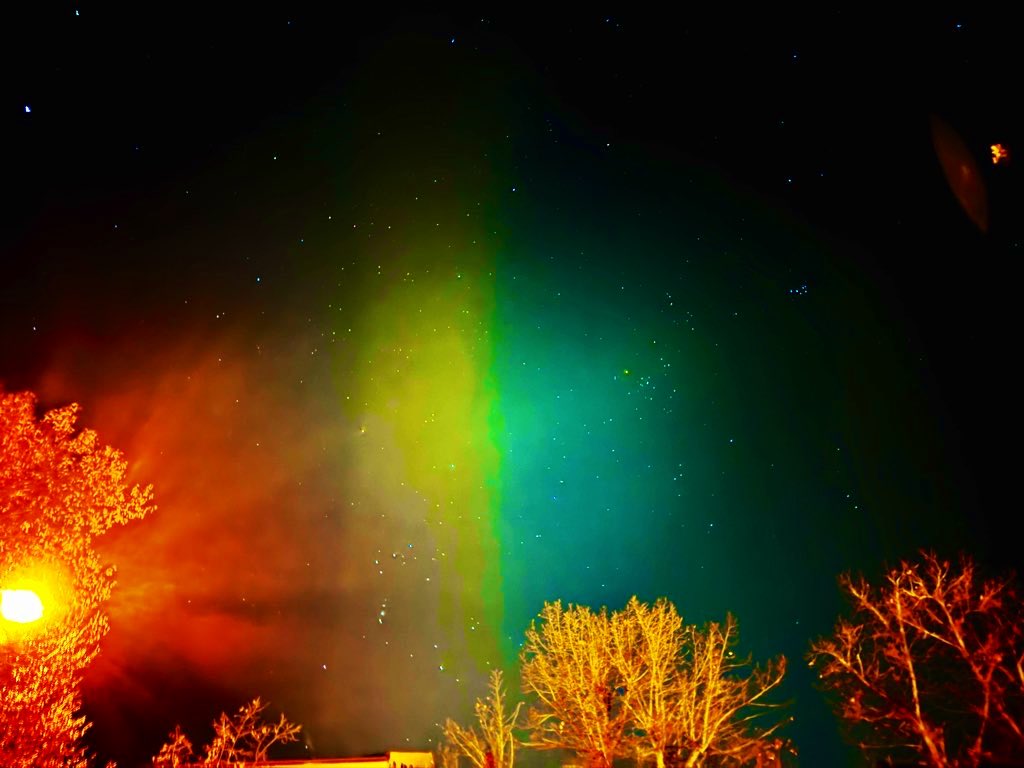
Heads up, space weather alert: Yesterday's M8.1 solar flare unleashed a full-halo CME heading straight for Earth – G3 storm watch for Dec 9! 99% shot at strong (G2/G3) storms, 15% for extremes. Auroras firing up from Dec 8 evening, peak on 9th – time for sky magic? #SolarStorm #CME #Aurora #SpaceWeather #SolarMaximum
2
114

1 Dec 2025
Mind-blowing scale 🤯
AR 4294-96 is now fully Earth-facing and already threw an X2 flare this morning. That’s 180,000 km of beta-gamma-delta chaos—14 Earths could fit side-by-side across it.
More X-class flares and Earth-directed CMEs are very possible in the next 48–72 h. Aurora chasers, stay glued to the data! 🌌☀️
#SolarMaximum #SpaceWeather
2
7
1,846

23 Nov 2025
Astronaut Zena Cardman, commander of NASA’s SpaceX Crew-11 mission, shared breathtaking footage of the aurora borealis as seen from space. Cardman highlighted the vibrant display over Houston, Florida, and the Gulf, with lightning storms over South America visible at sunrise.
Auroras occur near the poles when charged solar particles collide with Earth’s atmosphere. The phenomenon has been more frequent recently due to the Sun’s peak activity in its 11-year solar cycle, offering vivid light shows visible from space and Earth.
#NorthernLights #AuroraBorealis #NASA #ISS #SpacePhotography #SolarMaximum #AuroraAustralis #IndiaTodayGlobal
1
7
1,874

22 Nov 2025
The Sun Could Destroy the Earth in 2025?
Geomagnetic storms pose a significant threat to humanity, particularly as we enter a period of heightened solar activity known as the Solar Maximum. These storms have the potential to devastate the Earth's energy grid, leading to repair costs in the trillions of dollars and leaving some countries without power for years. Footage is sourced from Storyblocks and NASA. #GeomagneticStorms #SolarMaximum #EnergyGrid #NASA
msn.com/en-au/news/other/the…
1
2
55

18 Sep 2025
सौर तूफान से बिजली घर और सैटेलाइट्स प्रभावित हो सकते हैं
#solarstorm #nasa #science #SolarMaximum #Powerplants #satellites #newsnationtv #NewsUpdate | @irohitr
1
1
126

15 Aug 2025
Aurora’s Emerald Glow Stretches South — A Rare Solar Maximum Spectacle
Emerald curtains lit the night sky as far south as California & New Mexico — a gift from a G4 geomagnetic stormsparked by an M8.2 solar flare. Solar maximum is here, and the aurora’s reach is only growing. 🌌💚
#SolarStorm #SpaceWeather
#Aurora #NorthernLights #SolarStorm #AuroraBorealis #SpaceWeather #SolarMaximum #NightSky

4
4
83

23 Jul 2025
Solar Wind velocity is now back above 600 km/s! Lots of fast wind for this most recent phase of #solarmaximum. Sunspots are coming back so expect at least a few big solar flares this August. Earthquake #spaceweather continues
6
39
269
7,602

19 Jul 2025
🧲 JULY 4, 2025 — EARTH SHIFT TRIFECTA CONFIRMED
3 magnetic observatories. 1 coordinated impulse. Global proof.
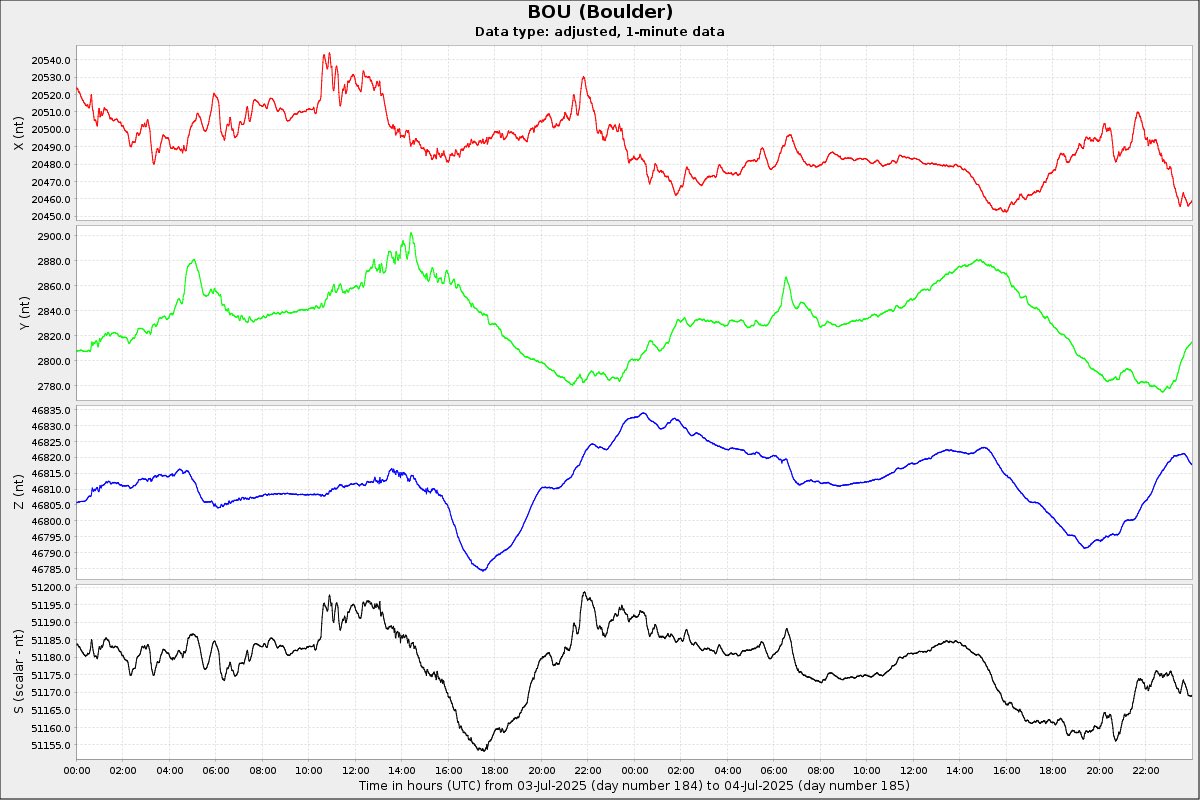
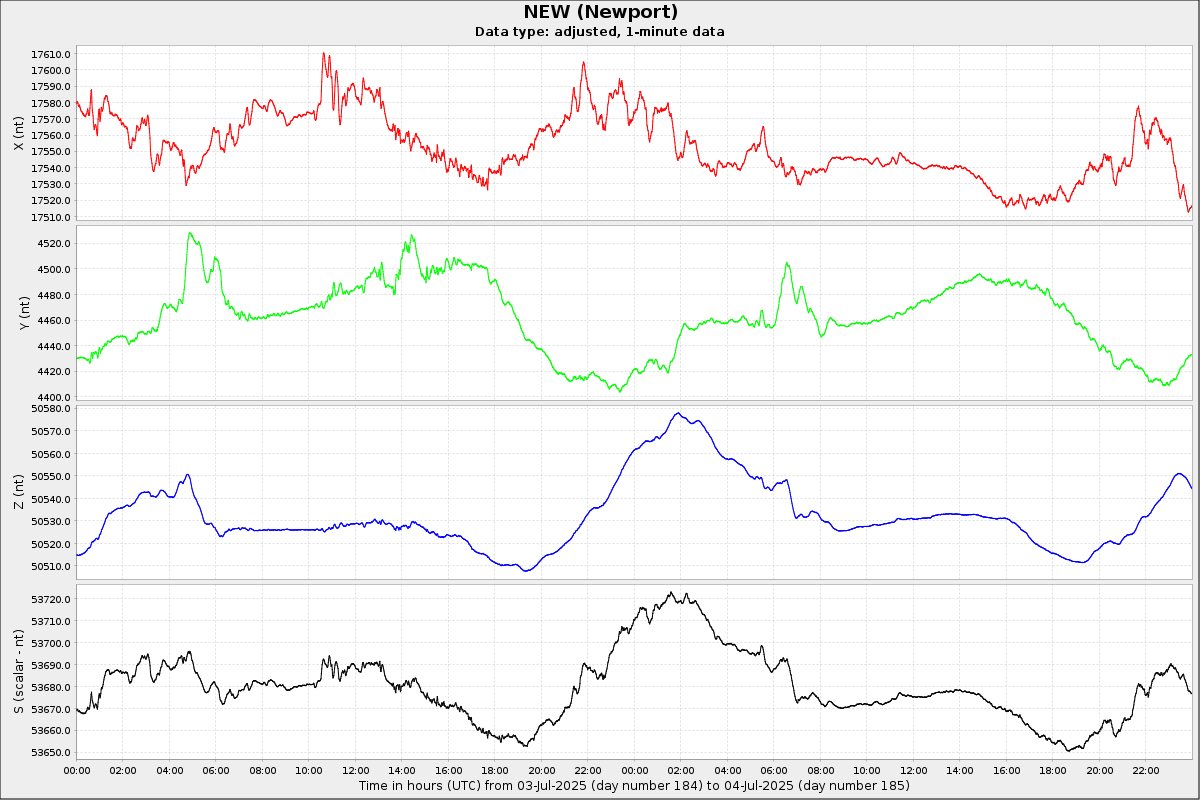
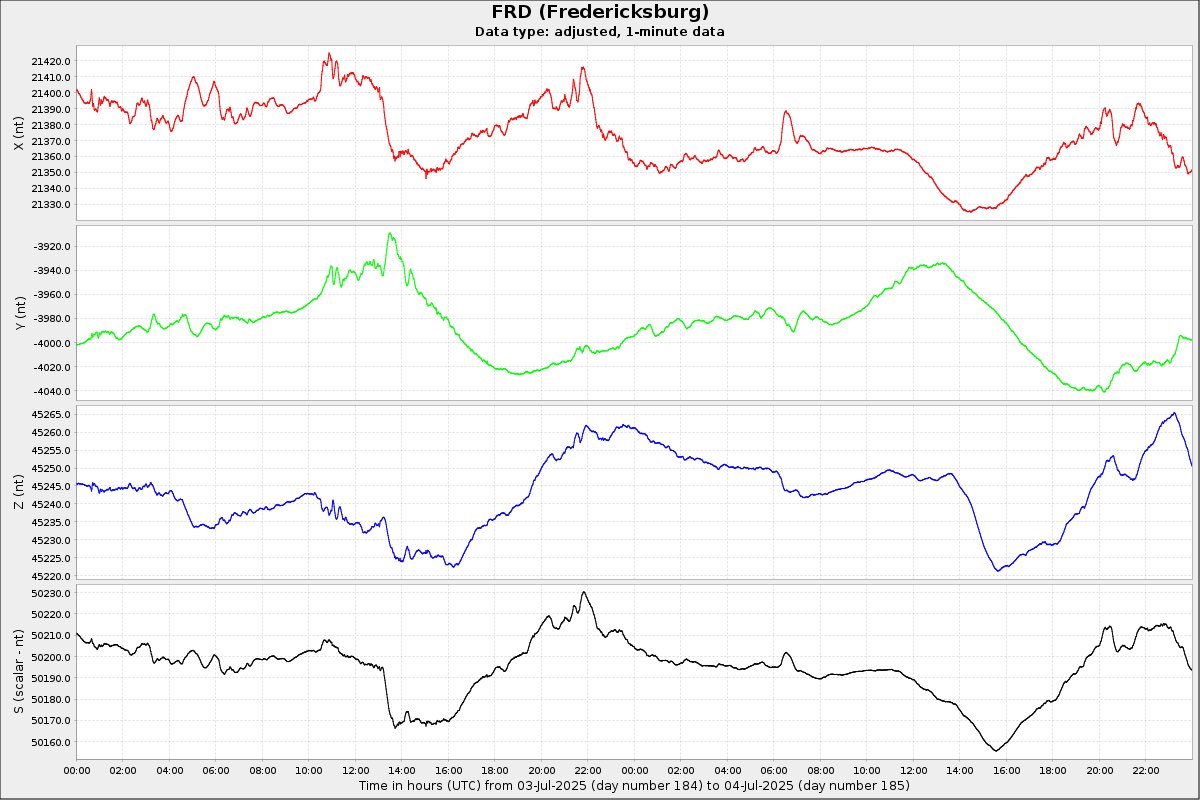
On July 4, 2025, a planet-wide magnetic wave hit — recorded by three U.S. stations:
📍BOULDER (BOU)
✔ Vector wobble in X, Y, Z
✔ Scalar drop in S ~3.5–4 nT
✔ Peak disruption: 18:00–22:00 UTC
📍NEWPORT (NEW)
✔ Matching magnetic dip, especially in Z and scalar S
✔ Field distortion synced with Boulder
✔ Confirms not a local anomaly
📍FREDERICKSBURG (FRD)
✔ Identical pattern: scalar field drop, directional deviation
✔ Confirms nationwide magnetic wobble
✔ Same UTC window, same field behavior
🔁 All 3 locations show:
•Field weakening across all axes
•Synchronous dips in scalar strength
•Core torque response pattern consistent with CDIGR predictions
🧭 This wasn’t just a blip. It was a planetary-level rebalancing event.
The IERS polar motion data also confirms a rotational impulse. GRACE satellite mass redistribution supports it. And the Venus–Sirius gateway was wide open.
This is not “just weather.”
This is a shifting planet.
This is magnetic torque releasing from the core.
🌍 Earth is rebalancing in real-time. And we now have hard proof from the field.
#ZeroReport #CDIGR #MagneticField #PoleShift #July4Anomaly #BOU #NEW #FRD #GRACE #IERS #ZeroKey #PlanetaryTorque #Magnetosphere #Geomagnetic #EarthShift #CoreDisplacement #VenusGate #SiriusWindow #SolarMaximum #Intermagnet
@nobulart @joerogan
14
815

11 Jul 2025
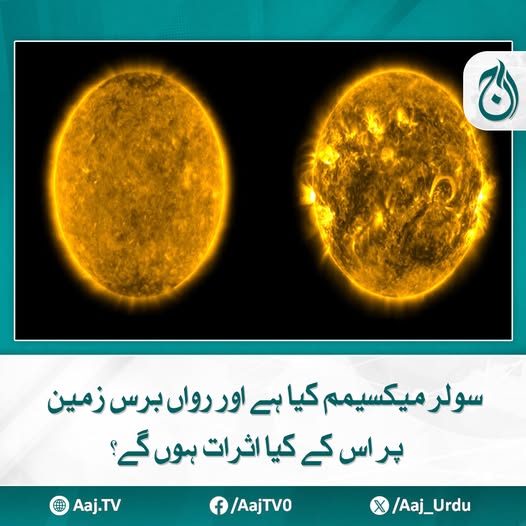
سولر میکسیمم کے دوران سورج کی شعاعوں میں اضافہ ہو جاتا ہے، جو خلا میں موجود خلانوردوں کے لیے خطرناک ہو سکتا ہے
مزید پڑھیئے: aaj.tv/news/30471381
#AajNews #SolarMaximum #sunactivity #spaceweather #SolarCycle25 #solarstorms #auroralights #spacescience #satellitesafety
447