
Jun 9
I'd state first what's wrong with current Citus, if anything.
We run many and very large workloads with Citus on StackGres, and I have little to no complaints.
So why Citus 2.0?
25
Mar 23
Enhorabuena!
Doble, de hecho: ahora puedes ser también contribuidor si quieres de StackGres (que soporta importantes cargas en prod allí) y ya sabes, modern Java Quarkus ...
2
67

Feb 23
⏰ Starting soon! Join us for Quarkus Insights Ep. #227 "What is StackGres?" with Álvaro Hernández & Matteo Melli.
bit.ly/quarkusinsights
#java #quarkus #quarkusinsights

ALT Quarkus Insights Ep. #227 "What is StackGres?"
5
505


23 Oct 2025
Deploying a basic Kubernetes cluster on Oracle Cloud for Stackgres — Part 2 medium.com/@plfarinha/deploy…
1
2
356
18 Oct 2025
Not running for us, but discussing internally whether to integrate it in StackGres for our Community of users.
Having a clear vision of the future plans would help a lot.
Feel free to DM if you want to talk more.
2
116

25 Sep 2025
O tradeoff no final do dia sempre vai ser: Gerenciar o DB ou usar pronto. Usar pronto é o sonho, gerenciar é "mais barato", mas ai vc decide até onde vai o mais barato.
A melhor opção até o momento é o stackgres, traz uma complexidade extra claro, mas até o momento o mais lindo.
1
2
682
25 Sep 2025
Sí! Gracias por el plug.
Tiene features únicas como sharding integrado (que usamos en el cluster de RPis) o Web Console. Y además de CRDs y la consola tiene un API REST para integraciones.
Va a haber demos (y creo que charla) de StackGres en pgibz.io pásate :)
2
24

25 Sep 2025
No sé si habéis probado StackGres (Postgres en K8s). Hace un tiempo desplegamos un cluster en 63 Rpi y fue la parte menos complicada. Además es opensource…sino que le pregunten a @ahachete
stackgres.io/
2
3
83

I’m running a fairly complex setup on Hetzner:
✅ Pros
- Rarely any downtime — extremely stable
- Kubernetes-based — scaling apps up/down is seamless
- Hosting 5 live apps: including many apps n8n, Grafana, Supabase, StackGres, Fluent, RustFS, email server, and large data engineering stack
- Using larger nodes to optimize cost
- Added too many governance layers — critical for a live healthcare app
⚠️ Cons
- Not as flexible as AWS
- Hetzner’s Blob Storage isn’t close to S3
- All data services need to be deployed and managed manually — I enjoy this, but it’s not for everyone
- Limited GPU availability
Considering making it available for outside users.
2
5
646

12 Jun 2025
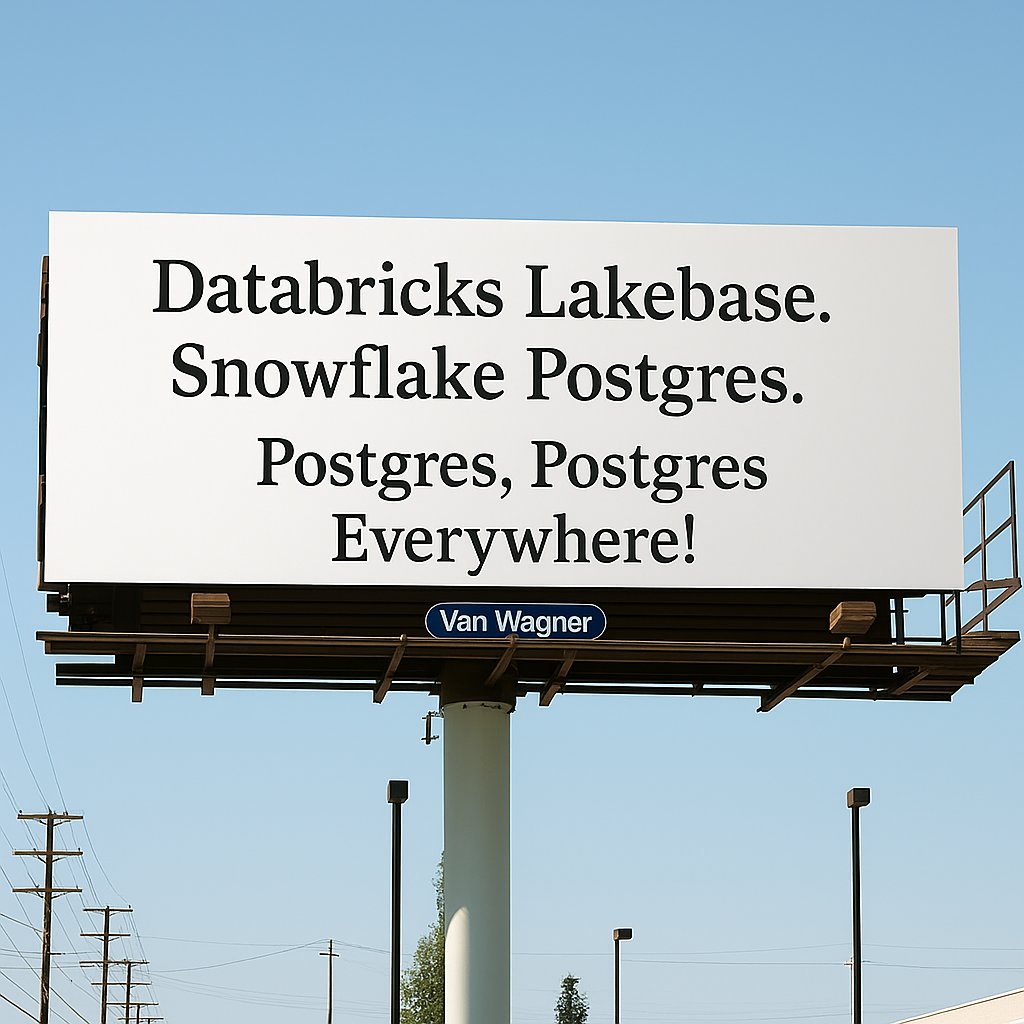
Databricks Lakebase. Snowflake Postgres. Postgres, Postgres Everywhere!
Postgres isn’t just rising—it’s dominating.
May 14: Databricks acquires Neon, the cloud-native Postgres firm.
June 11: That acquisition debuts as Databricks Lakebase.
June 2: Snowflake acquires Crunchy Data, a Postgres leader.
Soon after: Snowflake Postgres is unveiled.
The modern data stack is swinging Postgres-native.
PostgreSQL is no longer just the reliable open-source database, it’s now the No. 1 choice among developers.
Backed by strong community support, versatility, proven reliability, and a vast ecosystem, PostgreSQL has steadily climbed to the top.
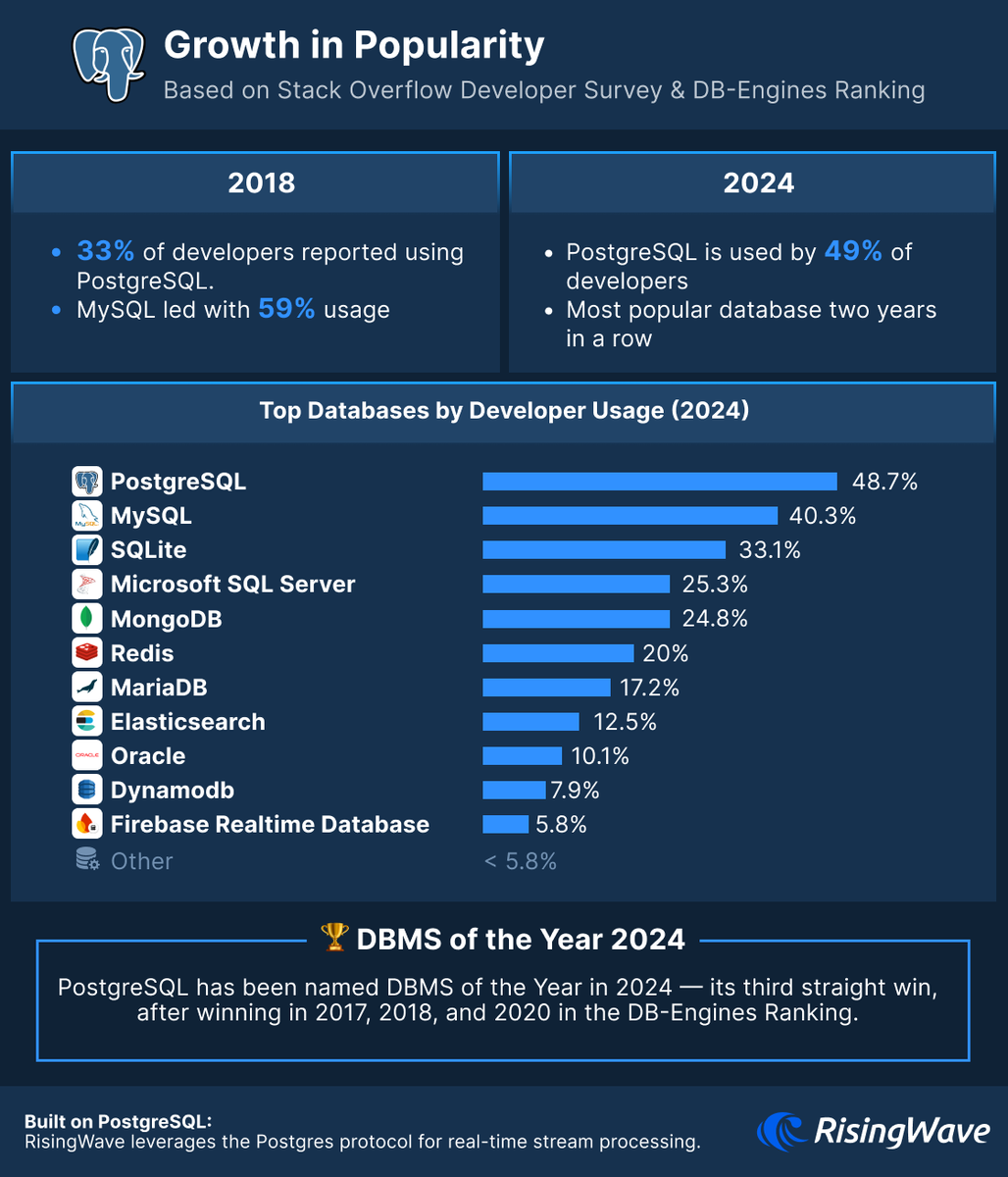
2018 vs. 2024: A Shift in Developer Preference
In 2018:
33 % of developers used PostgreSQL
MySQL led with 59 % adoption
In 2024:
PostgreSQL is now used by 49 % of developers
It has become the most popular database for two years in a row
🏆 Top Databases by Developer Usage (2024)
PostgreSQL – 48.7 %
MySQL – 40.3 %
SQLite – 33.1 %
SQL Server – 25.3 %
MongoDB – 24.8 %
…and more
🥇 DBMS of the Year: PostgreSQL
PostgreSQL was named DBMS of the Year 2024, marking its third consecutive win and fourth overall (2017, 2018, 2020, 2024).
This recognition reflects PostgreSQL’s growing role in production systems, developer tooling, and real-time workloads.
The PostgreSQL Ecosystem is Thriving
From core extensions to managed services and modern workloads, PostgreSQL is backed by a vibrant ecosystem:
TimescaleDB, Neon, Supabase, ParadeDB, Citus, Hydra, PostgresML, FerretDB, StackGres, Aiven, Tembo, PostgresAI—each pushing the boundaries in scale, vector search, machine learning, developer experience, and cloud-native architecture.
Key Takeaways
Developers trust it
Companies build on it
The future of data is Postgres-compatible
From transactional systems to streaming engines, PostgreSQL is powering the modern data stack!
Why It Matters for Real-Time Analytics
At RisingWave, we use PostgreSQL’s wire protocol to enable real-time stream processing, blending Postgres’s simplicity with the power of low-latency analytics.
RisingWave PostgreSQL = Streaming Power with SQL Simplicity! 🔥
1
9
414
3 Jun 2025
Postgres isn’t just rising, it’s absolutely winning. Databricks grabbed Neon. Snowflake just took Crunchy Data. The modern data stack is turning Postgres-native.
PostgreSQL is no longer just a reliable open-source database, it’s now the No. 1 choice among developers.
Backed by strong community support, versatility, proven reliability, and a vast ecosystem, PostgreSQL has steadily climbed to the top.
2018 vs. 2024: A Shift in Developer Preference
In 2018:
33% of developers used PostgreSQL
MySQL led with 59% adoption
In 2024:
PostgreSQL is now used by 49% of developers
It has become the most popular database for two years in a row
Top Databases by Developer Usage (2024)
PostgreSQL – 48.7%
MySQL – 40.3%
SQLite – 33.1%
SQL Server – 25.3%
MongoDB – 24.8%
...and more
DBMS of the Year: PostgreSQL
PostgreSQL was named DBMS of the Year 2024, marking its third consecutive win and fourth overall (2017, 2018, 2020, 2024).
This recognition reflects PostgreSQL’s growing role in production systems, developer tooling, and real-time workloads.
The PostgreSQL Ecosystem is Thriving
From core extensions to managed services and modern workloads, PostgreSQL is backed by a vibrant ecosystem:
TimescaleDB, Neon, Supabase, ParadeDB, Citus, Hydra, PostgresML, FerretDB, StackGres, Aiven, Tembo, PostgresAI, each pushing the boundaries in scale, vector search, machine learning, developer experience, and cloud-native architecture.
Why It Matters for Real-Time Analytics
At RisingWave, we use PostgreSQL’s wire protocol to enable real-time stream processing, blending the simplicity of Postgres with the power of low-latency analytics.
RisingWave PostgreSQL = Streaming Power with SQL Simplicity! 🔥
Key Takeaways
Developers trust it
Companies build on it
The future of data is Postgres-compatible
From transactional systems to streaming engines, PostgreSQL is powering the modern data stack!
4
336
25 May 2025
PostgreSQL Reigns Supreme: The Database Developers Love Most
PostgreSQL is no longer just a reliable open-source database, it’s now the No. 1 choice among developers.
Backed by strong community support, versatility, proven reliability, and a vast ecosystem, PostgreSQL has steadily climbed to the top.
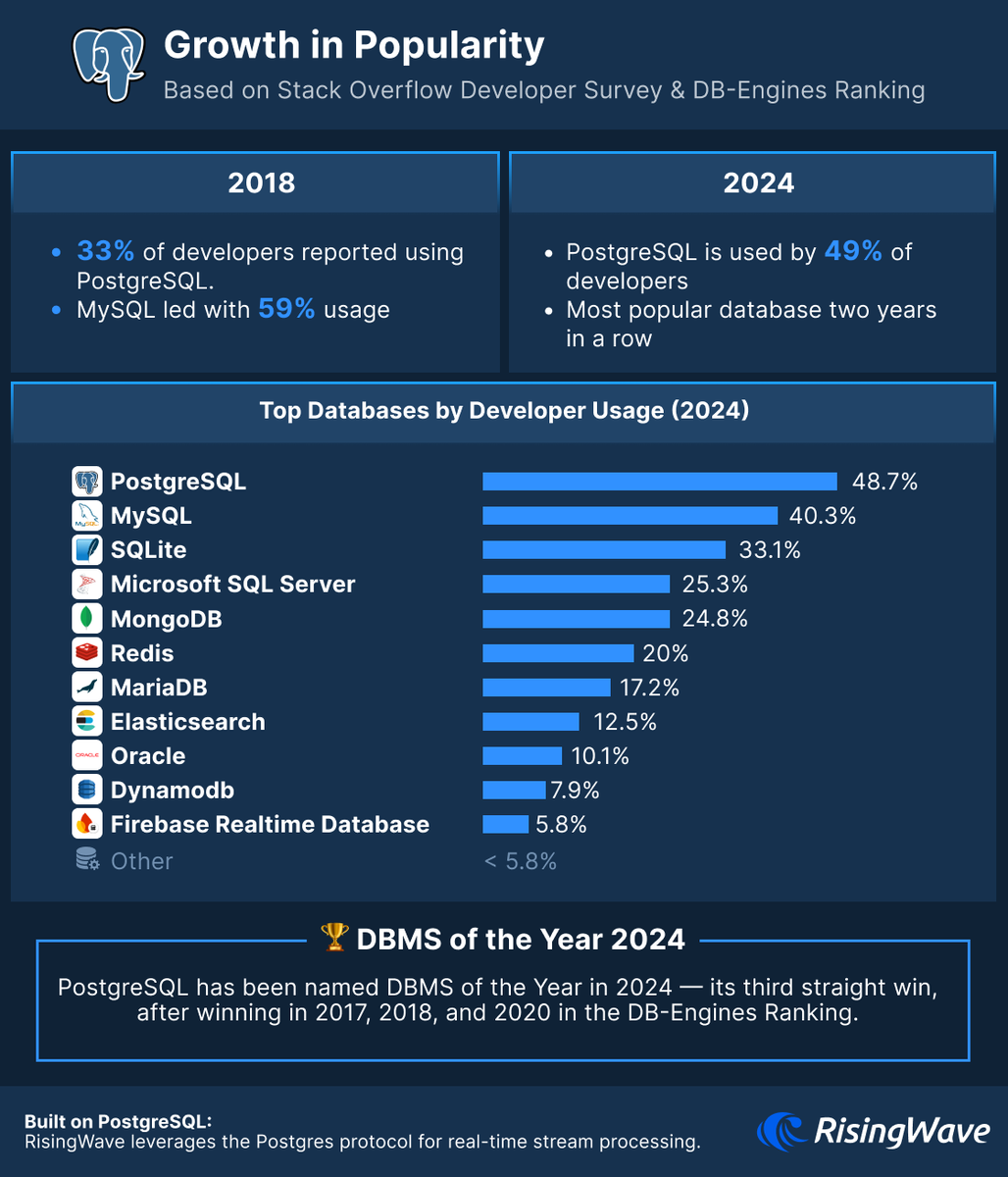
2018 vs. 2024: A Shift in Developer Preference
In 2018:
33% of developers used PostgreSQL
MySQL led with 59% adoption
In 2024:
PostgreSQL is now used by 49% of developers
It has become the most popular database for two years in a row
Top Databases by Developer Usage (2024)
PostgreSQL – 48.7%
MySQL – 40.3%
SQLite – 33.1%
SQL Server – 25.3%
MongoDB – 24.8%
...and more
DBMS of the Year: PostgreSQL
PostgreSQL was named DBMS of the Year 2024, marking its third consecutive win and fourth overall (2017, 2018, 2020, 2024).
This recognition reflects PostgreSQL’s growing role in production systems, developer tooling, and real-time workloads.
The PostgreSQL Ecosystem is Thriving
From core extensions to managed services and modern workloads, PostgreSQL is backed by a vibrant ecosystem:
TimescaleDB, Neon, Supabase, ParadeDB, Citus, Hydra, PostgresML, FerretDB, StackGres, Aiven, Tembo, PostgresAI, each pushing the boundaries in scale, vector search, machine learning, developer experience, and cloud-native architecture.
Key Takeaways
Developers trust it
Companies build on it
The future of data is Postgres-compatible
Why It Matters for Real-Time Analytics
At RisingWave, we use PostgreSQL’s wire protocol to enable real-time stream processing, blending Postgres's simplicity with the power of low-latency analytics.
RisingWave PostgreSQL = Streaming Power with SQL Simplicity!
PostgreSQL is powering the modern data stack from transactional systems to streaming engines!
2
264

23 Oct 2024
🚀 Reflecting on the Journey of Building @KoinerApp
The process of creating Koiner was more than just a project; it was a transformative experience that pushed the boundaries of my development skills. From tackling new challenges to exploring innovative tools, each step not only enriched my knowledge but also shaped the B2B SaaS product I was architecting in my day job.
Throughout this process, I also gained a deeper understanding of the @KoinosNetwork architecture, which has greatly benefited my dApp development efforts. I now have a comprehensive grasp of the details of the #Koinos blockchain and greater insights into the activities occurring on-chain.
This post is a trimmed down version—read the full post here: frenkz.com/lessons-learned-f…
Koiner V1
After substantial effort since early 2022, I launched Koiner soon after the Koinos Mainnet went live in November 2022. This achievement was a pivotal moment in my journey, pushing both the project and my skills forward.
I experimented with various architectures and design patterns, including hexagonal and event-driven architectures with @RabbitMQ, build tools like @NxDevTools, scalable cloud infrastructure with #Kubernetes, and front-end frameworks like @quasarframework, urql, and jsonforms.
Koiner V2
In developing Koiner, I embraced experimentation, using new tools and methodologies to refine my approach. Active testing of different software patterns and integrations provided valuable insights that significantly influenced Koiner’s development.
I’ve dedicated six months to developing Koiner V2 in 2023. In Q1 2024, I shifted my focus for a couple of months to the development of a new dApp. However, I'm now back to working on Koiner, aiming to release this significant update before returning to development of the new dApp.
New stack
The new Koiner stack includes some integrations I’m really excited about. It’s amazing to see how mature #opensource solutions are reshaping the software landscape and giving developers more leverage!
The open-source tools that will power Koiner V2 are @supabase, @PulumiCorp, #StackGres and @TimescaleDB 🫶
What's next
Koiner V2 is launching soon!🚀In my upcoming posts, I'll outline the roadmap for Koiner and Koiner Pro, detailing the exciting developments ahead.
Stay tuned Koiners!

5
9
45
943

9 Sep 2024
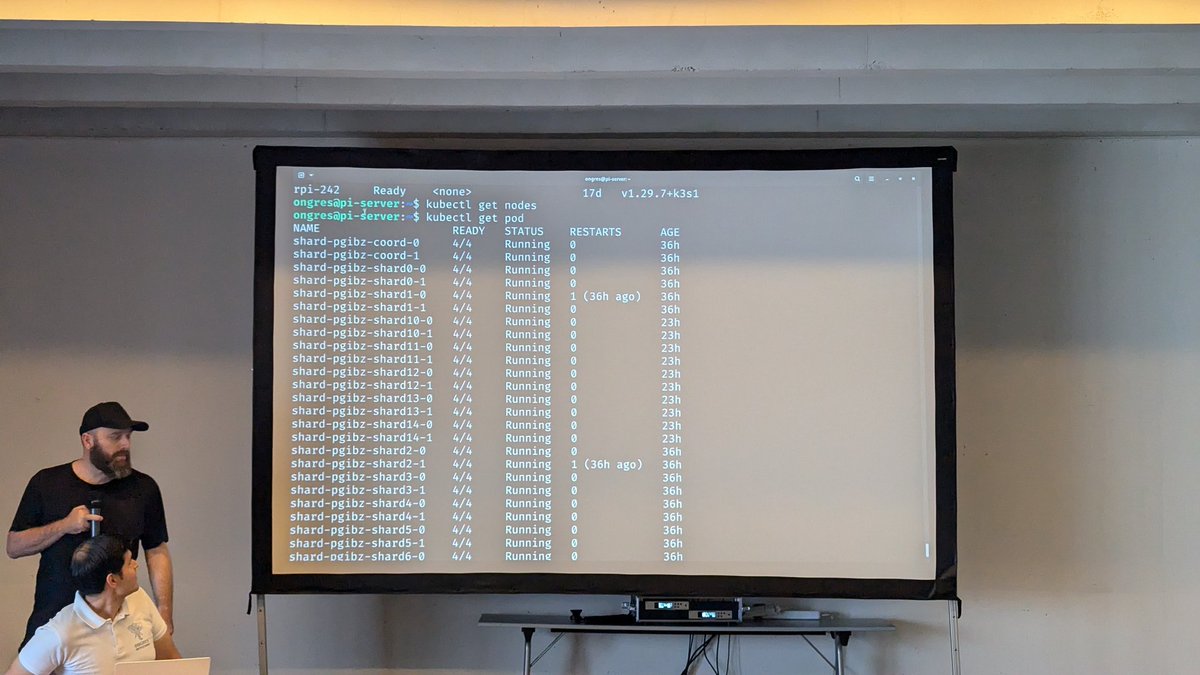
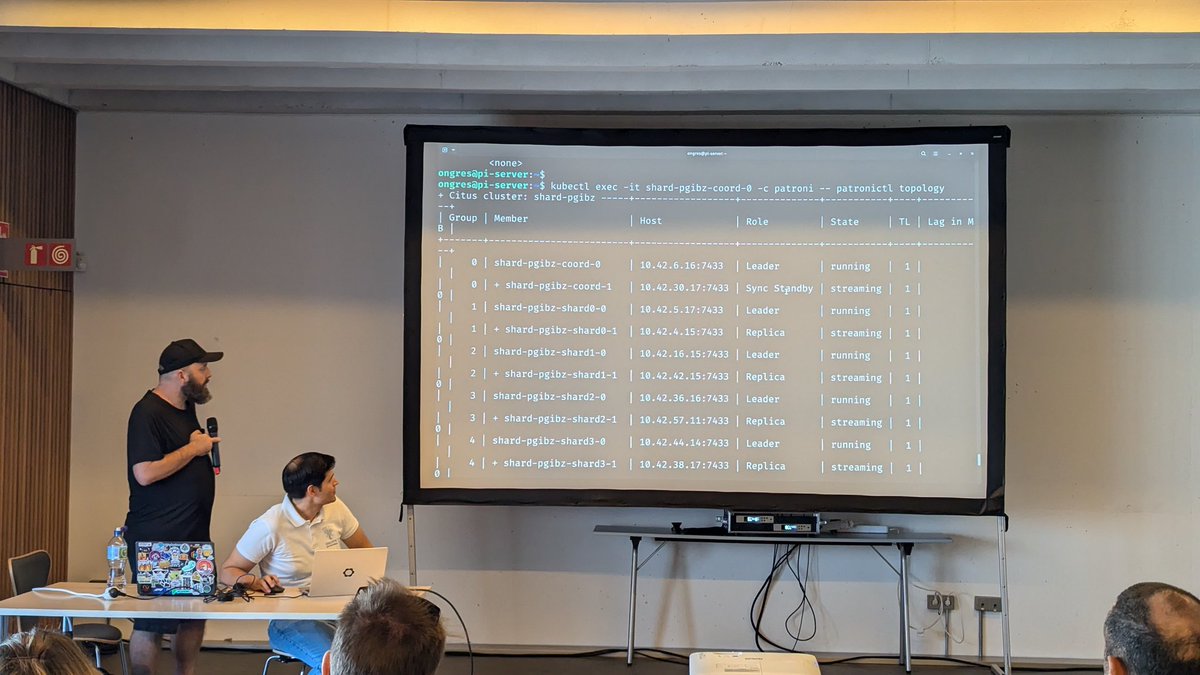
Live demo scaling up from 15 workers to 18 workers (plus their associated read replicas for HA) the RPI cluster running Citus sharded cluster on #StackGres
1
4
221

2 Aug 2024
I will be giving the crazy talk "63 RPis super cluster running StackGres" together with @IaaSgeek, a large Kubernetes cluster running StackGres just for fun (live on stage), you can't miss it.
2 Aug 2024

19 really top and 🤯 talks are waiting for you in September 9th-11th at Postgres Ibiza:
pgibz.io/talks.html
Don't let other tell you, just join us: pgibz.io/index.html#tickets
4
8
554


11 Jun 2024
That's how opensource chain works! Happy to see it's going to be available via stackgres too!
#postgresforeverything #postgresforall
11 Jun 2024

I'm impressed by this work by @TimescaleDB, making Postgres an even better vector database. Kudos for contributing it as open source for the benefit of all the Postgres Community.
pgvectorscale needs to land very soon in StackGres. Issue created: gitlab.com/ongresinc/stackgr…
6
164
11 Jun 2024
I'm impressed by this work by @TimescaleDB, making Postgres an even better vector database. Kudos for contributing it as open source for the benefit of all the Postgres Community.
pgvectorscale needs to land very soon in StackGres. Issue created: gitlab.com/ongresinc/stackgr…

PGVECTOR IS NOW FASTER THAN PINECONE. And 75% cheaper thanks to a new open-source extension – introducing pgvectorscale.
🐘 What is pgvectorscale?
Pgvectorscale is an open-source PostgreSQL extension that builds on pgvector, enabling greater performance and scalability (keep reading for the actual numbers).
By using pgvector and pgvectorscale, developers can build more scalable AI applications, benefiting from higher-performance embedding search and cost-efficient storage.
📈 How does it perform?
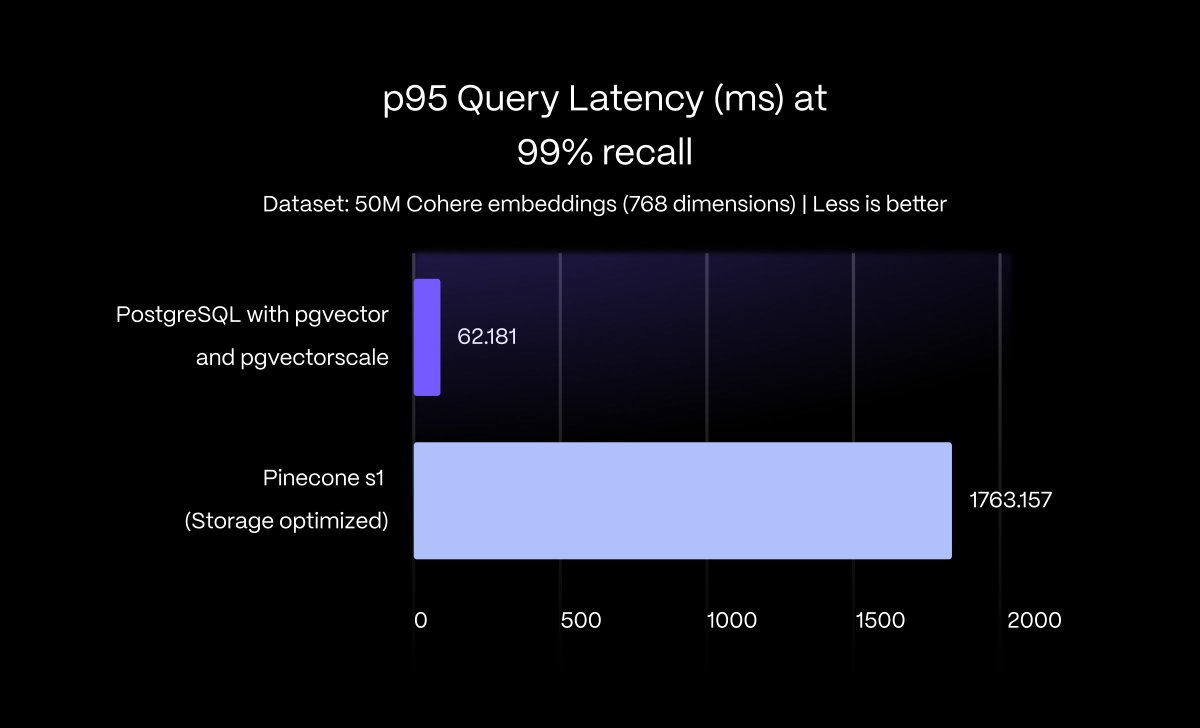
On our benchmark of 50 million Cohere embeddings (768 dimensions each), PostgreSQL with pgvector and pgvectorscale achieves 28x lower p95 latency and 16x higher query throughput compared to Pinecone for approximate nearest neighbor queries at 99 % recall, all at 75 % less cost when self-hosted on AWS EC2.
We also tested it against Pinecone’s p2 high performance index, see the blog post at the end of this post for full results (spoiler: It’s just as impressive).
🤔 Why did we build pgvectorscale?
Our team at @timescaledb built pgvectorscale to make PostgreSQL a better database for AI and to challenge the notion that PostgreSQL and pgvector are not performant for vector workloads.
⚙️How does it achieve such good performance?
Pgvectorscale brings specialized data-structures and algorithms for large-scale vector search and storage to PostgreSQL as an extension, including: (1) StreamingDiskANN – a high-performance, cost-efficient vector search index for pgvector data inspired by research at Microsoft, and (2) Statistical Binary Quantization (SBQ), developed by Timescale’s own researchers to improve upon standard binary quantization techniques.
These innovations help PostgreSQL deliver comparable and often superior performance than specialized vector databases like Pinecone. 👏 Big shoutout to @cevianNY and @sql_johnpruitt, two senior staff engineers at Timescale, who worked on these technical breakthroughs.
🧑💻 Sounds exciting! How can I get started?
Pgvectorscale is open-source under the PostgreSQL license, and free to use on any PostgreSQL database. You can find installation instructions on the pgvectorscale GitHub repository (see end of post). It’s also available on any database service in Timescale’s PostgreSQL cloud platform.
📚Learn more
[1] Pgvectorscale explainer blog: tsdb.co/avtharvectorscale
[2] Pgvectorscale github repo: github.com/timescale/pgvecto…
Share this post with your followers to let them know about pgvectorscale and comment your reactions and questions.
3
5
29
2,318