
22 Dec 2025
When your visuals need clarity, not just decoration.
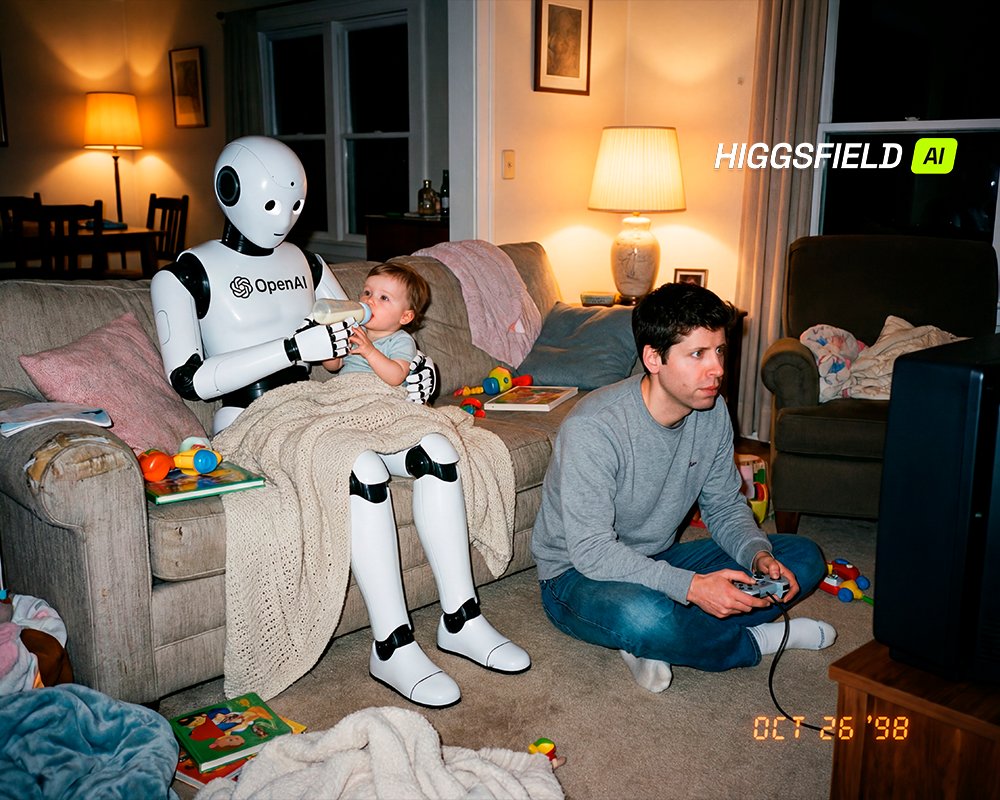
@higgsfield_ai presents GPT Image 1.5 which focuses on structured reasoning and accurate interpretation, perfect for diagrams, infographics, and planning visuals.
Now available at @higgsfield_ai with unlimited image models up to 67% off for 1 year.
👉 higgsfield.ai/openai-hazel #AIVisual #StructuredReasoning #Higgsfield



1
1
5
5,670

23 Jun 2025
We’re thrilled to share that our Ph.D. student Raj Jaiswal (Advisor: @RatnRajiv) has been selected as a recipient of the MSR India PhD Fellowship Award 2025.
The prestigious award includes a one-time grant to support his academic and professional growth, along with an invitation to attend the MSR India Academic Summit in Bengaluru on June 24–25.
Raj’s research lies at the exciting intersection of structured reasoning, multimodal learning, and efficient language models framework and fine-tuning strategies. He is working towards building adaptive, efficient, deployable and domain-grounded LLM and Multimodal systems that can reason, self-correct, and scale across scientific domains, mainly logically grounded AI systems that can advance scientific and educational applications.
Congratulations, Raj, on this well-deserved recognition!
@MSFTResearch
#IIITD #StudentAchievement #MSRFellowship #AIResearch #LLM #MultimodalAI #StructuredReasoning #PhDFellowship

2
9
353

23 May 2025
🎉 #ACL2025NLP – Cherry on Top! 🎉
In addition to our conference papers, we’re thrilled to share that CoRAL also got a demo paper accepted:
PRAISE: Enhancing Product Descriptions with LLM-Driven Structured Insights
- Adnan Qidwai, Srija Mukhopadhyay, Prerana Khatiwada, @DanRothNLP, me
- 🔗 Demo: project-praise.github.io/dem…
CoRAL, @SCAI_ASU, @ASUEngineering
@cogcomp, @PennEngineers
@UDelaware, @iiit_hyderabad
#NLP #AI #NLPProc #StructuredReasoning @aclmeeting
2
21
1,787
16 May 2025
🎉 #ACL2025NLP 🎉
CoRAL Lab @SCAI_ASU, @ASUEngineering has 4 papers accepted at ACL 2025! 🙌
All thanks 😊 🙏 and congratulations 🎉 🎊 to amazing students authors !!
✅ ACL-Main:
📌 GETReason – Enhancing Image Context Extraction through Hierarchical Multi-Agent Reasoning(Shikhhar, Abhinav, @cbaral, me)
tldr: GETReason deciphers event images by linking geospatial, temporal, and event clues to deeper context—setting a new standard with the GREAT metric.
📌 Map&Make: Schema Guided Text to Table Generation (Naman, Fenil, @cbaral, me)
tldr: A generalized framework for text-to-table generation via structure planning for guided table updation.
✅ ACL-Findings:
📌 LLM-Symbolic Integration for Robust Temporal Tabular Reasoning (Atharv, Kushagra, @viveksrikumar, @DanRothNLP, me)
tldr: Temporal tabular QA is hard for LLMs—TempTabQA-C and our schema-aware SQL method with adaptive prompting boost robustness and performance.
📌 TabXEval – Why this is a Bad Table? An eXhaustive Rubric for Table Evaluation (Vihang, Jainil, Tejas, @manshri, me)
tldr: A novel rubric based evaluation approach which is a comprehensive, explainable framework for evaluating tables.
Big win for first-timers (Atharv, Vihang, Naman, Shikhhar, Abhinav, Tejas) 🎓
Huge Congratulations 🎉 🎊 🍾 🎈 to all co-authors — see you in Vienna!🇦🇹
#NLP #AI #NLPProc #StructuredReasoning @aclmeeting
2
6
58
4,211

14 Mar 2025
Raisonnement fondé sur des preuves dans l'analyse du renseignement
Malgré les progrès rapides de l'intelligence artificielle, le domaine de l'analyse du renseignement reste largement tributaire des outils d'exploration de données et de visualisation, plutôt que d'une véritable augmentation analytique. Les solutions existantes se concentrent sur l'analyse textuelle, la cartographie des réseaux et les visualisations géospatiales, mais elles ne vont pas jusqu'à accompagner un véritable raisonnement analytique. Ces outils excellent dans la récupération, la catégorisation et la présentation des informations, mais ils n'ont pas la capacité de simuler, d'assister ou d'améliorer le processus de raisonnement humain lui-même. Par conséquent, les analystes continuent de s'appuyer sur l'interprétation manuelle et l'intuition, sans l'aide structurée de l'IA pour la génération d'hypothèses, la validation des preuves ou les processus décisionnels.
Pour que l'IA devienne un véritable multiplicateur de force dans l'analyse du renseignement, elle doit aller au-delà de l'automatisation de la récupération et de la représentation des données. Un véritable outil d'analyse assisté par l'IA devra intégrer plusieurs capacités : un accès transparent aux sources de données brutes, des pipelines de traitement de données structurées, des informations interactives basées sur l'IA et, surtout, la capacité de suivre et de soutenir le processus de raisonnement d'un analyste. Le principal défi n'est pas seulement de développer une IA capable de rechercher, filtrer ou regrouper des informations, mais de créer un système qui tienne compte de la logique, de l'incertitude et de la nature itérative des évaluations de renseignement, en aidant les analystes à affiner leurs conclusions de manière dynamique à mesure que de nouvelles preuves apparaissent.
Ainsi, si la recherche sur les capacités de raisonnement de l'IA est essentielle, elle est secondaire par rapport à la nécessité d'une compréhension plus approfondie du raisonnement analytique humain lui-même. Sans un modèle structuré de la façon dont les analystes du renseignement pensent, s'adaptent et évaluent les informations contradictoires, l'IA restera un outil périphérique plutôt qu'un véritable assistant cognitif. La question centrale de la recherche n'est donc pas seulement de savoir comment construire une IA qui imite le raisonnement, mais comment codifier et transférer les méthodologies analytiques expertes pour former les futurs analystes. Il est essentiel de comprendre les cadres cognitifs, logiques et probabilistes qui sous-tendent les évaluations de l'intelligence, à la fois pour développer des outils d'IA de nouvelle génération et pour s'assurer que les analystes humains sont formés à des processus de raisonnement structurés et systématiques.
#IntelligenceAnalysis, #CogentSystem, #HypothesisValidation, #AIinIntelligence, #StructuredReasoning, #EvidenceBasedDecisionMaking, #ProbabilisticReasoning, #CognitiveBias, #DataDrivenInsights
linkedin.com/pulse/raisonnem…
1
2
214

7 Jul 2024
🚀 Exciting News! 🚀
We're thrilled to announce that we have open-sourced the code for our AGI agent framework! 🧠✨
Our agent utilizes structured reasoning to enhance its ability to learn and adapt across multiple tasks. By incorporating intrinsic and extrinsic functions, it mirrors the modularity of the human brain, enabling it to:
Integrate and Learn from Prior Knowledge: Using large language models, our agent seamlessly incorporates cross-domain knowledge, making it more efficient in learning and adaptation.
Fine-Tune for Specific Tasks: Through supervised learning and reinforcement learning, our agent continuously improves its decision-making abilities.
Handle Complex Reasoning Tasks: From direct answering to complex chain-of-thought prompting, our agent excels in structured reasoning, significantly boosting performance across various domains.
Interact and Adapt in Dynamic Environments: Whether it's navigating complex simulations or real-world applications, our agent's intrinsic functions enable it to think, plan, reflect, and use tools effectively.
🔗 Code: github.com/huawei-noah/HEBO/…
🔗Documentation: ai-agent.readthedocs.io/en/l…
Explore the code, contribute to its evolution, and let's innovate together! 💡🤝
#AI #OpenSource #MachineLearning #ReinforcementLearning #AIResearch #StructuredReasoning
3
13
1,736