
New to sync in 2026? Here's a key insight beginners often overlook—and it's why you might be hearing crickets after submitting:
One-stop clearance is what supervisors prioritize.
With tight deadlines and budgets, music supervisors need tracks they can license fast, with no legal risks or multi-party hassles.
That means one-stop: one contact controlling both the master (recording) and publishing/composition rights 100%.
Clear chain of title = quick approval.
Why it's critical now:
- Massive competition—thousands of tracks per brief.
- They favor "easy clear" options to skip delays or disputes.
- Indies with full ownership stand out, as complex splits can drag on.
A common beginner risk: Non-exclusive leased or pre-made beats
Many start with these—affordable, fast instrumentals that work great for streaming or indie releases. But for sync:
- The producer often retains rights and can license the same beat to others.
- Duplicates may exist → no exclusive control guarantee.
- Chain of title issues: Hard to confirm no conflicts (like Content ID flags or prior claims).
- Result: High rejection risk from libraries, agents, and supervisors, as clearance isn't always clean or simple. While some succeed by upgrading to full exclusives with proper transfers, it's not as reliable—many get passed over for safer, fully owned options.
The reliable path many use: Build originals with licensed tools or create your own from scratch
Cinematic, trailer, and production composers/producers do this routinely in DAWs like Logic Pro, Cubase, or others:
- Use royalty-free, commercially cleared libraries (e.g., Kontakt expansions) as building blocks—not shared beats.
- Or create your own music with instruments: program drums, melodies, chords, and sounds yourself for full control (the absolute safest for one-stop clearance).
- Either way, you own the final track 100% → true one-stop.
- Licenses (or self-creation) support sync use in TV/film/ads—no extra hurdles.
- In sync sheets: "100% original composition; elements from cleared royalty-free libraries (e.g., Kontakt, Orchestral Tools, Spitfire) or self-produced with instruments; one-stop rights controlled by me." This gets accepted widely—it's industry-standard.
Audit your catalog for true ownership, shift to owned builds if needed, and watch responses improve. Many beginners escape this trap and land real deals.
#SyncLicensing #MusicForTV #OneStopClearance #IndieMusic #SyncTips
15
138
Buried Alternate Mixes Keeping Your Tracks Invisible (And the Simple Fix That Changes Everything)
Ever had an amazing track that perfectly matches the brief only to watch it get passed over because the supervisor couldn't spot the instrumental, stems, or clean edit in seconds?
That's the frustrating reality for too many right now.
In today's sync world, missing or buried alternate mix metadata on platforms like DISCO, Musicbed, Epidemic Sound, or your library setup is quietly blocking placements.
You’ve done the work—full vocal mix hits the exact energy needed—but the scene demands an instrumental under dialogue, a clean version, or stems for quick tweaks. Supervisors filter hard and fast: "instrumental only," "no vocals," "stems available," "vocal-up." If those alternates aren’t tagged precisely or linked as related assets, they don’t appear in results. Your high-quality, flexible catalog? Hidden in plain sight, even when it’s the ideal fit.
With 2026's smarter searches and auto-tagging taking over, strong metadata is no longer optional—it's the key that turns overlooked tracks into discoverable, go-to options.
The solution is practical, repeatable, and shifts everything for newcomers.
Here’s your straightforward playbook:
1.) Prep Alternates as Standard Practice
Export every track with: full vocal mix (your main), instrumental (vocals harmonies fully removed), clean version (if explicit), plus extras like 30s/60s cutdowns and grouped stems (drums/bass/etc.). Always deliver in pro specs: 48kHz/24-bit WAV or AIFF files. (WAV is universal and widely accepted; AIFF embeds metadata better for reliability.)
2.) File Naming That Works
Keep it clean and consistent:
YourName_SongTitle_FullMix.wav
YourName_SongTitle_Instrumental.wav
YourName_SongTitle_30s_Instrumental.wav
Platforms and supervisors scan names immediately—avoid messy labels like "final_alt_v3_demo."
Tag Like Your Income Depends on It
Embed ID3 tags (free tools: Mp3tag or your DAW): Add "Instrumental," "No Vocals," BPM, key, mood in comments/description.
On platforms: Select categories like DISCO’s "Vocals: Instrumental" or "No Vocals." Upload alts as separate versions/assets and link them to the main track. Include 10-15 targeted keywords: "bed music," "underscore," "stems available," "instrumental only." Consistency = real discoverability.
4.) Mindset Shift for Real Wins
View metadata as your silent pitch, not busywork—it makes tracks plug-and-play for busy supervisors. Start small: Pick your top 5 songs, prep/tag alts properly, upload, and notice how responses improve.
Supervisors love creators who save them time and effort. Master this, and you become the one they reach for. Who’s dealt with buried alternates?
#SyncLicensing #MusicSupervisors #SyncTips #IndieArtists #MusicProduction
2
9
203
🚨 Is Your Signature Sound Secretly Sabotaging Your Sync Placements?
Tired of amazing tracks getting passed over—even when production is spot-on?
One sneaky culprit many producers overlook: Catalog Monotony.
You've got a strong, recognizable style—that's your superpower. But if your library stays locked in one sonic world (e.g., all polished mid-tempo pop with similar chords, instruments, vocals, or vibe), it quietly kills opportunities.
Supervisors handle diverse briefs daily: high-energy ads, introspective indie films, tense dramas, feel-good montages. They crave catalogs with real "light and shade" —the pro term for contrast in moods (uplifting vs. melancholic), tempos (slow builds to driving beats), genres (cinematic to lo-fi electronic), and emotional tones that flex without forcing the fit.
Recent sync industry insights confirm: Versatility turns you into a go-to resource. Diverse tracks surface in searches ("moody ambient for drama" or "upbeat indie montage"), fit scenes naturally, and build a timeless catalog covering high-energy drops, subtle underscores, quirky experiments.
Without that shade, even the strongest production can get overlooked—supervisors need options to shape a scene's emotional journey.
How to build more versatility without losing your unique sound
Here are 4 practical steps that actually work:
1.) Quick catalog audit
List your tracks by mood, BPM range (under 80, 80–110, etc.), genre, and energy level. A simple spreadsheet (or tools like DISCO/Airbit) will show you what’s missing fast. Example: “I have tons of upbeat tracks but nothing dark or cinematic.”
2.) Produce in focused batches
Intentionally fill the gaps. A common split sync pros use:
- 20–30% cinematic / underscoring (swells, drones, tension/reflection)
- 20% upbeat electronic / danceable (montages, ads)
- 15–20% indie / acoustic / folk (organic, emotional vibes)
- 10–15% experimental / niche (lo-fi, quirky, global sounds)
Do the rest in your core style but create mood variations.
3.) Create multiple versions of every track
For each new piece, deliver: full mix, instrumental, stems, 15/30/60-second edits, and mood-altered versions. This gives editors what they need without extra work—huge placement advantage.
4.) Showcase your range when you pitch
Lead with diversity: “Versatile producer with 50 tracks spanning cinematic tension to upbeat electronic.” Organize playlists by mood/genre on your EPK, SoundCloud, Musicbed, or Epidemic Sound profile.
Artists who expand their emotional palette become indispensable—their music solves real supervisor headaches. It's not ditching your style; it's amplifying your voice across more contexts.
What's one mood or style you've been thinking about adding to bring more "shade" to your library?
#SyncLicensing #MusicSync #SyncTips #MusicProduction
8
68
Ever said yes to a "free" sync placement for exposure... and got silence in return?
If that stings, you're not the only one.
Many indie artists, producers, and composers accept gratis deals (no upfront fee) in low-budget films, web series, or online content, hoping it builds to paid gigs.
But these often come with minimal or no backend royalties/residuals—especially when performers (not songwriters) miss out on extra royalties in places like Canada, or in countries where the rights aren't set up properly. It’s a trap that devalues your music and sets a precedent for unpaid work—exposure rarely pays the bills on its own.
The bright side: You can turn gratis into smart strategy without saying no to opportunities. Here's how to protect your value and build real momentum:
1.) Negotiate a Small Fee or Backend Every Time
Even in "exposure" deals, push for $100–$500 upfront or performance royalties. Add a clause to the license: "Licensee agrees to file cue sheets and pay royalties as required by PROs."
Use free ASCAP/BMI templates—it's standard and most productions agree IF you frame it as "mutual protection."
2.) Affiliate Globally for Better Collection
Join SOCAN (for Canada) or use services like Songtrust ($100 setup, 15% fee) to affiliate with multiple international PROs. This captures royalties where possible, even in gratis deals—songwriters often get performance pay via SOCAN for ads, but performers may miss neighboring rights without setup.
Make sure your IPI (writer/publisher ID), ISWC (song code), and ISRC (recording code) are registered and included in your metadata—they help PROs match cue sheets accurately and prevent lost payments.
3.) Track & Leverage Exposure Smartly
Use Google Alerts, Tunefind, or Shazam to monitor usages. Log stream spikes, new followers, or inquiries. Follow up with the supervisor 3–6 months later: "The placement drove X streams—let's discuss paid opportunities." Many turn gratis into paid by showing tangible value.
4.) Set Boundaries with a Personal Policy
Decide upfront: Only do gratis for causes you love or if it includes royalties/credits. For everything else, quote a low fee and walk if needed. Join online communities to hear how others escaped the trap—many regret early freebies but use them as lessons.
Gratis isn't 'bad'—it's a tool when used wisely. Focus here, and you'll build a career that pays, not just exposes.
What's your gratis deal regret (or win)? Share below.
#SyncLicensing #MusicProducers #IndieArtists #MusicBusiness #SyncTips
1
3
113
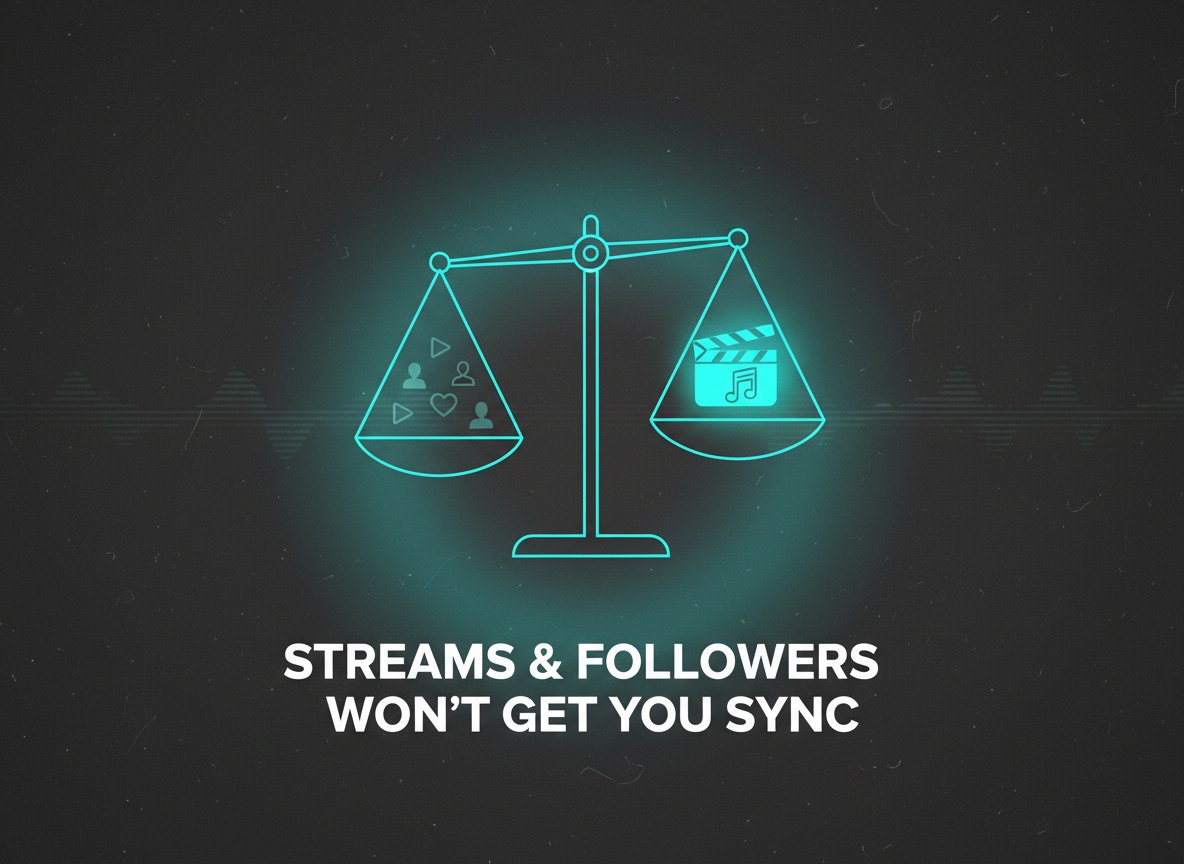
The Misconception That Social Following or Streams = Sync Success
Ever poured time into building TikTok followers or Spotify streams, thinking it would unlock sync placements? Many indie artists do—and then get frustrated when a viral track gets passed over for a lesser-known one that "just fits better."
Here's the truth most hype overlooks: Music supervisors prioritize the right song over metrics.
They search for emotional fit, mood match, editability (instrumentals/stems), and one-stop clearance—not follower count or stream numbers.
A big social presence might help with exposure or label interest, but it rarely sways sync decisions. Supervisors have said to me (and many others in interviews/forums): "We need the track to serve the scene, not the artist's brand."
This misconception leads to wasted energy chasing vanity metrics instead of sync-ready music, causing burnout when "success" doesn't translate.
Real-World Solutions to Shift Focus and Land Placements:
1.) Prioritize Song Fit Over Followers
Create "spec" tracks tailored to common briefs (e.g., quirky indie for social ads, emotional builds for dramas). Listen to recent placements via Tunefind/IMDb and write what supervisors actually need—authentic, versatile, emotionally clear music.
2.) Optimize for Supervisor Search (Not Algorithms)
Use DISCO.ac or similar to build searchable catalogs with strong metadata (mood, tempo/BPM, genre, instruments, lyrics/themes). Supervisors filter by these tags first—good metadata beats stream counts every time.
3.) Network Authentically, Not Transactionally
Attend Sync Summit or engage supervisors online with genuine, no-strings comments ("Loved your work on [show]—the mood you captured was perfect"). Build trust over time—trusted creators get briefs first. (Hold off on sending tracks until they engage back or a relevant opportunity arises.)
4.) Track What Actually Matters
Measure placements, feedback emails, or library accepts—not streams/followers. Use a simple spreadsheet to log pitches and wins. Celebrate small sync steps—they build momentum faster than vanity metrics.
Sync rewards the right music in the right hands—not social proof. Shift your focus here, and placements start feeling achievable, not elusive.
What's the biggest "metrics myth" you've fallen for in sync?
#SyncLicensing #MusicProducers #IndieArtists #MusicBusiness #SyncTips
2
4
86
Landed a sync placement and cashed the upfront fee... only to watch backend royalties vanish into thin air? 😞 This hidden trap catches even experienced creators off guard.
You nailed the deal, your track airs on TV or streams globally, but the real long-term money (those juicy performance royalties from ASCAP, BMI, or SESAC) quietly disappears. Why?
Because it all hinges on one tiny thing: a cue sheet. A simple form the production team (or company) is supposed to file listing your music’s details.
Industry chatter shows this happens in 30–50% of smaller productions—lost royalties worth hundreds or even thousands per track. It’s especially common in non-union or independent projects where small, overwhelmed teams forget, delay, or mess up the filing.
You did everything right… and still got shortchanged.
That’s the gut-punch many creators don't see coming.
The bright side: With a few smart moves, you can protect your backend and turn placements into steady income. Here's how:
1.) Add a Cue Sheet Clause to Every License
Include standard language: "Producer agrees to file cue sheet within 30 days of airing and provide a copy to composer." Use ASCAP/BMI templates—it's routine and rarely scares off pros. For low-budget gigs, soften to "reasonable efforts as required by PROs."
2.) Register Fully with Your PRO
Join one PRO (ASCAP, BMI, or SESAC) as a writer—most creators pick ASCAP or BMI for ease of entry. You can only affiliate with one PRO at a time as a writer, but publishers can join multiple. Upload accurate metadata (title, writers, splits, ISRC, IPI). Check statements quarterly—set calendar reminders. Tools like SoundExchange handle digital royalties automatically.
3.) Follow Up Proactively
After airing, email the supervisor/production coordinator for a cue sheet copy. If nothing after 3 months, nudge politely: "Excited about the placement—do you have the cue sheet to ensure royalties flow?" Libraries often help with this too.
4.) Partner with a Publisher or Admin
Use affordable services like Songtrust to collect globally and chase cue sheets for a small fee (10–20%). They have the leverage productions respond to—many recover lost royalties this way.
5.) Audit Past Placements Annually
Review old deals: Request cue sheets retroactively (PROs allow up to 3 years back). Fix errors via amendments to unlock held funds—it's free and often uncovers surprises.
These steps aren't busywork—they're your royalty safety net. One cue sheet fix can mean thousands in backend over time. Start with registering one track or following up on a past placement today—you deserve the full payout!
What's your cue sheet horror story (or win)?
#SyncLicensing #MusicProducers #IndieArtists #MusicBusiness #SyncTips
6
122
Ever had a sync supervisor pass on your track because of clearance issues? 😩 It happens to almost every indie producer at some point.
Many indie artists and producers use uncleared samples, loops from libraries, or leased beats without full ownership. Supervisors need 100% clearance on both the master (recording rights) and publishing (composition rights) to avoid legal risks. Anything less? Your music gets passed over in most cases—no supervisor wants to risk legal issues.
The good news: You can fix this and make your catalog truly sync-ready.
Here are simple, practical steps to eliminate clearance issues and open doors:
1.) Create Original Content Whenever Possible
Build from scratch or use royalty-free, fully cleared libraries (e.g., ones that provide 100% cleared samples with no restrictions for sync). Original = zero clearance headaches.
2.) Clear Samples Properly If You Use Them
Get written permission from both master owner (label/artist) and publishing owner (songwriter/publisher). Start early—contact via email or through services like Tracklib (pre-cleared samples). Document everything.
3.) Switch to Buyouts for Beats
For producers: Advise clients/artists to buy exclusive rights outright (not lease). Leased beats often carry uncleared samples or limited rights—supervisors avoid them entirely.
4.) Audit Your Catalog Now
Run a quick "Sample Clearance 101" check: List every track → note any samples/loops/beats → verify full ownership proof (split sheets, agreements, library EULAs). Fix or remove uncleared elements.
Bonus: Register with a PRO (ASCAP/BMI) and keep cue sheets/splits ready—supervisors love "one-stop" clean music.
Clearing upfront isn't extra work—it's the key to real placements. Start with one track audit this week; you'll be amazed how many doors open.
Sync is about RELATIONSHIPS. Let’s bring back the collaborative spirit the sync industry used to thrive on — if you’re a pro who can genuinely help with clearance or sync issues, drop your services/info below.
What's your biggest clearance headache?
#SyncLicensing #MusicProducers #IndieArtists #MusicBusiness #SyncTips
1
9
170
Tired of waiting for that "big sync payday" that never seems to come fast enough? 😊You’re in good company— (and this rings true for voice actors too, where building a reel and client relationships takes similar patience).
In the sync world, expecting quick income can feel disappointing at first—it's a long-game industry where building a strong catalog, clearing rights, and forming relationships takes time (often 1–2 years for steady flow). Early placements might be low-paying ($100–$1K for small ads or indie films), and royalties build slowly (6–12 months via PROs).
I'm not saying instant success never happens—some tracks land big quickly—but that's the exception, not the rule.
But here's the bright side: With patience and smart steps, many hit $5K–$10K in year 1, scaling to six figures as momentum grows.
As part of my Sync Placement Series, here's how to embrace the journey and turn it into sustainable success:
1.) Treat Sync Like a Business
Set up a simple plan: Produce 1–2 tracks weekly, focusing on versatile instrumentals. Track progress in a spreadsheet—submissions, rejections, small wins. Diversify income (streams, gigs, merch) so sync is a bonus. I advise every music management client to take advantage of sync opportunities this way.
2.) Build Your Catalog Steadily
Aim for 50 cleared tracks over months: Upbeat for ads, emotional for dramas, hybrids for trailers. Include stems/edits for flexibility. Use DISCO.ac to organize and pitch easily.
3.) Foster Relationships Patiently
Network at Sync Summit or online groups ("Sync Songwriter" on FB). Start with genuine outreach: "Love your work on [show]—here's a track that might fit." Relationships lead to repeat calls and better fees.
4.) Celebrate Small Wins
Every library sign-up, feedback email, or micro-sync is progress. Reward yourself (new gear after 10 tracks). This keeps motivation high and prevents burnout.
Sync rewards consistency—many who stick it out see life-changing exposure and earnings. You're building something lasting; start celebrating the steps today!
Sync is about RELATIONSHIPS. Let’s revive that collaborative spirit—if you're a pro who can truly help with sync placement issues, drop your services/info below.
What's your biggest "long-game" challenge in sync? Share below—let's encourage each other!
#SyncLicensing #MusicProducers #IndieArtists #MusicBusiness #SyncTips
6
78
Tired of seeing a sync brief pop up and then rushing to miss the deadline?😩I hear this all the time.
Many indie artists, producers, and composers spend hours creating or submitting after a brief drops—but most briefs close in just 24–48 hours (sometimes faster for ads or trailers). By the time you see it and try to jump in, the pros with ready music have already sent their best options. It feels like a waste of energy and leads to a lot of frustration with no placements.
Here are some simple, practical tips to flip things around and be ready BEFORE the briefs come in:
1.) Build a Versatile Catalog Ahead of Time
Create 50 solid tracks (or start with 20–30) that cover the most common sync needs: upbeat and positive for commercials, emotional and melodic for TV dramas, tense or epic for trailers, fun/quirky for social media spots.
Make sure most are instrumentals (they get used in ~88% of placements because they’re easy to edit). Add stems (separate drums, guitar, etc.), clean versions (no lyrics or bad words), and short edits (60-sec, 30-sec, 15-sec).
Tag every track clearly—mood (happy, dark, cinematic), tempo/BPM, genre, instruments, and key lyrics—so you can find the right one fast in a tool like DISCO.ac.
2.) Write “Spec” Tracks for Common Requests
Look at past placements on Tunefind or IMDb to see what kinds of music get used a lot (motivational sports tracks, nostalgic retro vibes, quirky indie pop).
Spend time each week writing one or two “spec” tracks for those exact styles. Try blending genres (like folk with electronic beats) so one track can work for several different briefs.
3.) Stay Ahead of Trends
Sign up for The Sync Report newsletter to see briefs and trends early. Join Facebook groups like “Sync Songwriter” or Reddit threads. Follow music supervisors on LinkedIn.
Watch recent ads on iSpot.tv and notice what moods keep coming up—then make or tweak tracks to match before the next brief arrives.
4.) Get Your System Ready
Put your music in DISCO.ac folders so you can share professional links instantly (supervisors love the easy downloads, stems, and clear info).
Build relationships at events like Sync Summit so trusted people send you briefs early. Keep short pitch emails ready to go—no attachments, just a good subject line and DISCO link.
When you prepare like this, you stop chasing and start landing placements. Sync is a long game—start small this week with one new track or a quick catalog check.
Sync licensing is all about RELATIONSHIPS. Let’s bring back the collaborative spirit the sync industry used to thrive on — if you’re a pro who can genuinely help:
If your services can provide real value to those experiencing issues in the sync placement world, feel free to share your info below.
What’s the toughest part of briefs for you right now?
#SyncLicensing #MusicProducers #IndieArtists #MusicBusiness #SyncTips
7
148
Tired of uploading your tracks to music libraries like Epidemic Sound or Songtradr, only to hear crickets?
You’re not alone. As indie artists, producers, and composers, we've all chased that "easy" sync placement through submission platforms. But here's the harsh truth:
These sites are OVERSATURATED with thousands of uploads weekly, turning your gems into needles in a haystack. No feedback, no visibility, and supervisors rarely dig deep—your music gets buried without a chance.
I know what you're thinking: "But aren't these the ONLY way to reach supervisors?" Nope! That's a myth keeping too many creators stuck. Platforms are low-barrier entry points, sure, but they create a black hole where even killer tracks vanish.
High competition means rejection rates skyrocket, wasting your hours on uploads that lead nowhere. And those required Spotify links? Supervisors don't care much for them—clunky downloads, limited metadata access, and they're tied to a consumer streaming app rather than pro workflows. They prefer dedicated tools for easy, hassle-free access.
At Music Alliance Management & Development, we help music artists, producers, and composers solve these exact real-world obstacles to move closer to their sync goals. Here are some real-world tips and tricks that are proven to work that can help YOU break free and get your music heard:
1.) Build Direct Relationships the Smart Way:
Attend events like Sync Summit where supervisors speak. Go prepared: Research their recent credits on IMDb or Tunefind, then approach genuinely—"Loved your work on [specific show]; my [genre] track has that same emotional vibe." Focus on listening and adding value first—one authentic connection often beats 100 cold uploads.
2.) Curate a Targeted, Sync-Ready Catalog:
Limit to 10-50 strong, versatile tracks. Prioritize instrumentals (they land in ~88% of placements), plus vocal versions, clean edits, short stems, and alternate mixes. Tag meticulously: mood (e.g., "uplifting," "dark cinematic"), tempo, genre, and lyrics in metadata. Use tools like DISCO.ac (industry favorite) to create shareable playlists/folders with downloadable high-quality files—supervisors prefer this over Spotify for easy access and pro workflows.
3.) Pitch Personally with Precision:
Research supervisors via IMDb, Tunefind, or iSpot.tv to see what they license. Craft short, personalized emails: Clear subject line (e.g., "Indie Folk Track for Emotional Drama Vibes"), 2-3 sentences max, no attachments—link to a DISCO folder or private SoundCloud. Mention why it fits their style. Follow up thoughtfully every 3-6 months if no reply. Or explore non-exclusive sync publishers/agents as partners—they handle clearances and have established networks.
4.) Network Strategically Beyond Events:
Join online communities like The Sync Report for briefs and insights. Monitor trends (upbeat ads, hybrid scores), build a focused "map" of where your music fits, and always be ready with one-stops (full rights clearance). Persistence genuine value builds trust—many placements come from repeat relationships, not one-offs.
This mindset shift has helped creators escape the oversaturation trap and move toward real opportunities. Sync isn't a lottery; it's about strategy, preparation, and relationships.
Let’s bring back the collaborative spirit the sync industry used to thrive on — if you’re a pro who can genuinely help:
If your services can provide real value to those experiencing issues in the sync placement world, feel free to share your info below.
#SyncLicensing #MusicProducers #IndieArtists #MusicBusiness #SyncTips
1
7
195
🎬 Sync Placement Tip: Why Supervisors Ghost Your "Sad Songs" (And the Simple Shift That Gets More Placements) 👻
I was just thinking... how heartbreaking it is that so many deeply emotional, soul-baring tracks—the ones you poured everything into—get quietly passed over in sync pitches.
Not because the music isn't powerful or authentic... but because they slip into that sneaky "sad song trap" that makes them tough (or impossible) for supervisors to actually use in scenes.
Supervisors aren't anti-emotion—they're pro-utility.
They need music that supports the story without hijacking it, stays flexible for edits, and dodges clearance/brand risks. Pure, heavy, unresolved sadness often creates more problems than it solves.
Here's the breakdown how to flip it into your advantage:
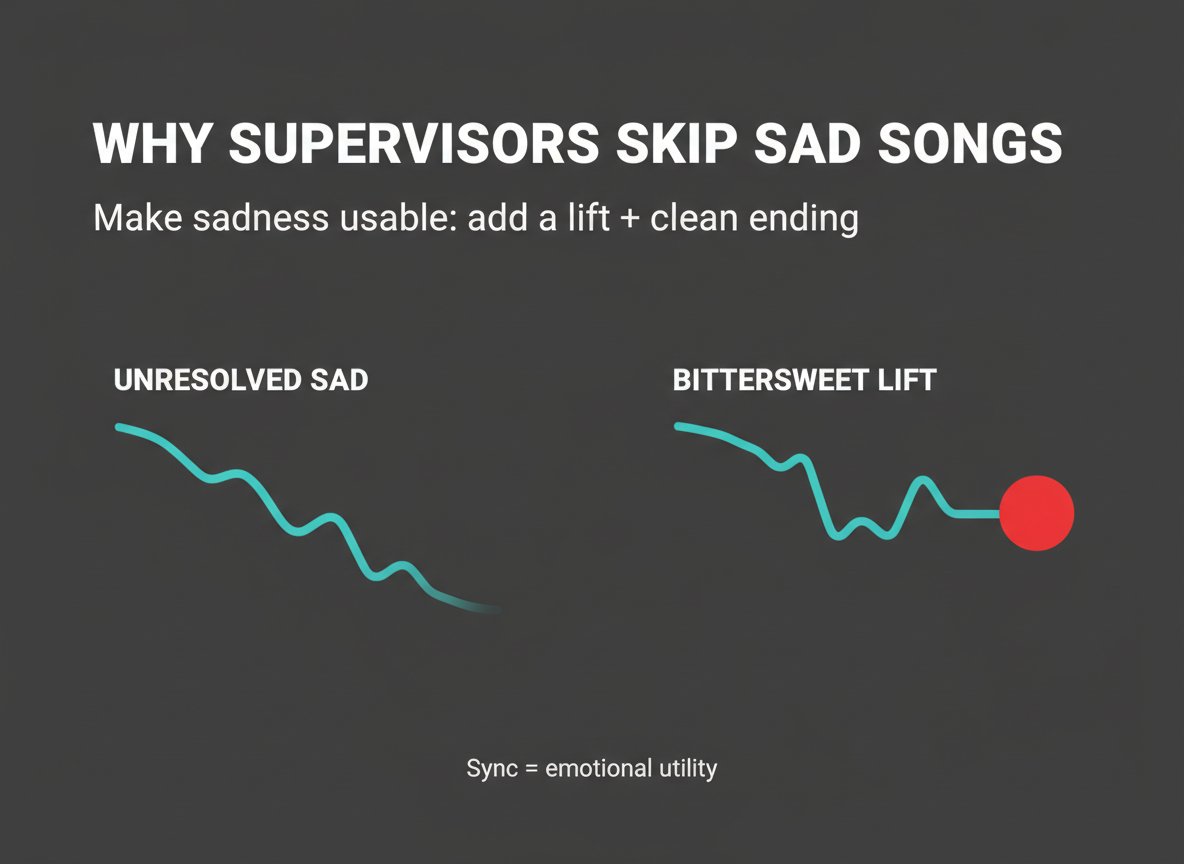
1.) Unresolved Sadness Makes Scenes Feel "Stuck"
Downward-spiraling tracks (no lift, no release) weigh everything down—scenes drag, pacing slows, editors struggle to cut promos or ads. It leaves the moment feeling heavy instead of moving.
The Fix: Build in hopeful uplift—even if bittersweet. A subtle arc, cathartic build, or forward-moving resolution gives editors flexibility. It sits under dialogue beautifully and lands a clean "button" ending. Sad but empowering? That's sync gold—versatile across heartbreak, growth, or reflective moments.
2.) Lyrics Can Trigger Instant Red Flags
Lines like "I'm broken / can't go on / everything's dark" scream conflict with brand messaging, standards & practices notes, or scene tone. In ads especially, negativity risks rejection fast.
Creator Hack: Frame sadness as reflection momentum. Think: "I miss you but I'm healing / I'll be okay" or "Hurting now but rising soon." This keeps your track usable in way more contexts—loss with resilience, character arcs, emotional farewells—without pinning it to despair. Pro move: Always prep a strong instrumental version to sidestep lyric risks entirely.
3.) Versatility > Raw Intensity Every Time
Emotion that locks a scene into one narrow read (total hopelessness) limits repurposing—for trailers, international cuts, or quick edits. Supervisors want low-risk, high-flex cues that enhance without dominating.
Your Edge: Craft "moving sadness" or "bittersweet" vibes—melancholy layered with beauty, hope, or resolution. Ask yourself mid-production: "Can this flex for different lengths? Support without overwhelming?" Avoid temp-track traps by building edit-friendly arcs from the jump.
This isn't about diluting your soul—it's about making your art sync-ready so supervisors can actually use it (and pay you for it). This one tweak has turned "great but too heavy" into "we need this now" for creators in the sync game.
Like if this hit home, share with a producer buddy chasing placements, and follow for the next real-talk tip. We're unlocking those sync wins one insight at a time.
#SyncMusic #SyncTips #MusicSupervision #MusicProducers
14
177
Warning: If your sync pitch includes an unfinished track, it's probably dead-on arrival.
Supervisors want drop-in-ready magic—not demos. Let me show you the polish that gets 'yes'.
Music supervisors and brands aren't hiring producers—they want music that drops straight into the picture. Clean mix, balanced dynamics, final polish, ready to license. No "we'll fix it later," no guessing on stems, no rough vocals bleeding through.
If your track doesn't sound broadcast-ready, it often gets skipped in seconds.
Quick checklist to get placement-ready:
- Full professional mix & master (loudness targets: -14 LUFS integrated for most briefs)
- Clean instrumental/stems ready if requested
- No copyrighted samples unless cleared
- Metadata spot-on (ISRC, splits, PRO registration)
Polish isn't optional—it's the gatekeeper. I've seen firsthand how that final 10% polish turns solid demos into sync-winners—making supervisors instantly say "yes, this fits now."
What’s your biggest sync pitching hurdle right now? Drop it below.
#SyncLicensing #MusicPlacement #MusicProduction #IndieArtist #SyncTips
6
131
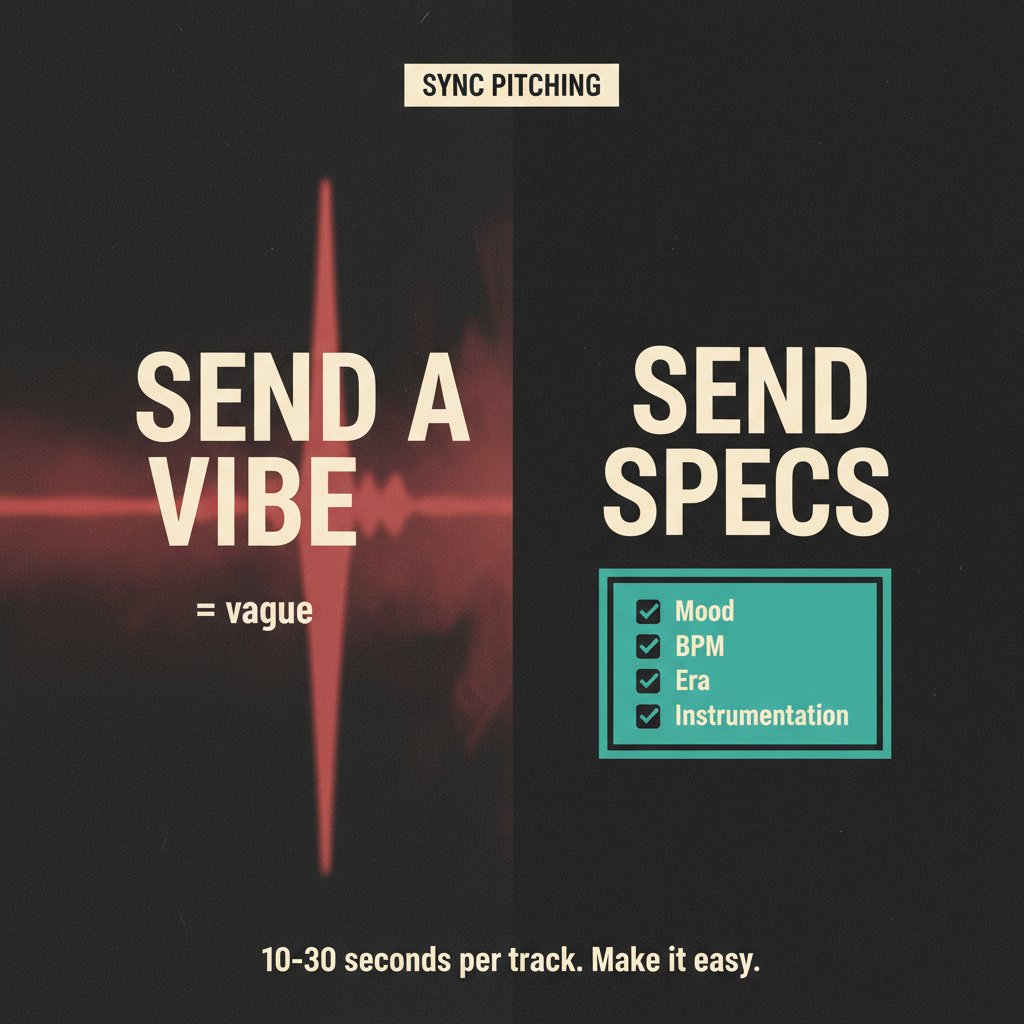
🚨Why “Send a Vibe” Kills Most Sync Pitches
Vibe” is the human way people talk about music. Supervisors/editors have to turn that human feeling into something they can search, cut, clear, and deliver under deadline. So when they say “a vibe,” what they really need is: a track that fits the scene is easy to edit is easy to license.
Artists think “vibe” means taste. Supervisors think “now translate emotion into specs before deadline.” That gap kills placements.
What “vibe” really means — four concrete specs:
1.) Mood / Emotion — Confident • Playful • Bittersweet • Tense • Triumphant • Intimate • Dreamy
2.) Tempo / Energy — 70–90 BPM half-time swagger • 95–115 BPM mid-tempo bounce • 120–140 BPM driving pulse
3.) Era / Reference — ’80s synthpop • ’90s alt rock • modern pop • cinematic hybrid
4.) Instrumentation — No vocals • vocal minimal • no trap hats • no guitars • organic only • electronic only
POV Skit:
- Artist (excited): “Sent the perfect vibe!”
- Supervisor: “Vibe: cool modern energy.” → “Mood? BPM? Era? Nope.” Tab closed.
- Supervisors have 10–30 seconds per track. Specs win. Vague loses.
Translator Template (copy-paste):
Mood: ___
BPM / Feel: ___
Era / Reference: ___
Instrumentation: ___
Structure: ___
Deliverables: Full instrumental stems 60/30/15
Example:
- Vague: “Cool modern vibe for tech ad.”
- Usable: Confident/sleek/optimistic • 118–125 BPM steady drive • Modern electronic/pop • Pulsing synth bass, tight drums, instrumental • Hook in 5 sec, edit points every 4/8 • Full instrumental 60/30/15
I’ll be diving deeper into sync workflows, metadata mastery, and real-world pitch wins in upcoming posts. Drop a comment if there’s a specific sync pain point you want covered next!
#SyncTips #MusicProducers #SyncMusic #MusicBusiness #SyncLicensing
8
172
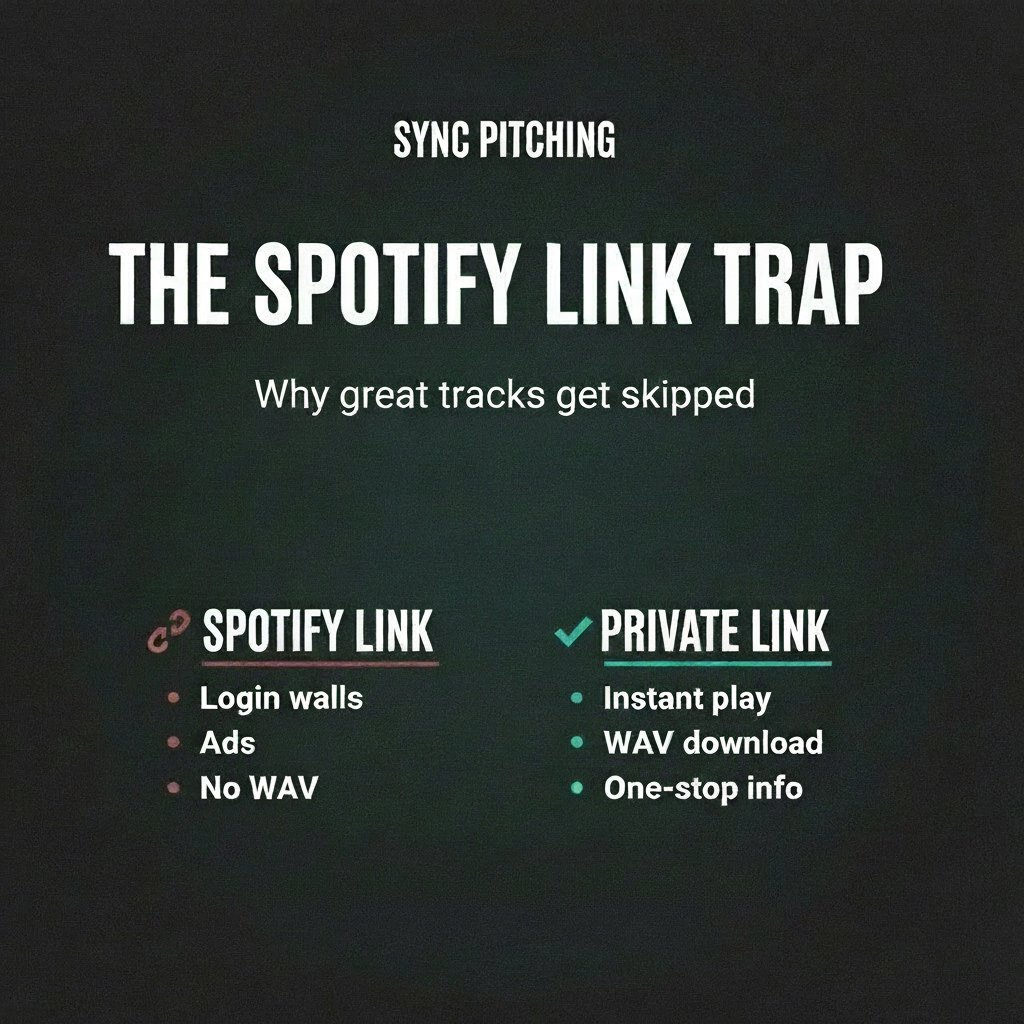
🚨The Spotify Link Trap: Why Your “Professional” Delivery Is Actually Sabotaging Sync Pitches
In the sync world, getting a supervisor to hit play is everything… but attaching a Spotify (or Apple Music) link as your main delivery method is one of the silent killers of talented tracks today.
It's not about Spotify being bad—it's phenomenal for fans and building your stream count. The issue is context: music supervisors work under brutal deadlines, reviewing dozens of pitches daily.
They need instant, hassle-free access to usable files. A consumer streaming link introduces barriers they won't fight, so your music gets passed over—not for quality reasons, but for convenience.
Common pain points supervisors face with these links:
- Login walls, region locks, or pay prompts: Click → barrier appears → tab closed instantly.
- Ads interrupting: Free-tier ad mid-track? Professional workflow killer.
- No easy clean WAV download: They often require the file right now for edits or mockups—streaming doesn't help.
- No rights or contact clarity: No quick info on one-stop status (master pub control) or who to reach for licensing.
- Team collaboration friction: Links that glitch or demand accounts slow down entire edit teams.
They're not ignoring your art—they're protecting their time. Eliminate the delivery obstacles, and your track stands a real chance.
POV Skit (Reel-Ready, Scroll-Stopping):
You (pumped): "Sent my killer track to the supervisor. Fingers crossed—this is it!"
Supervisor POV: Clicks → "Sign in required" → ad plays → "Not available in region." Tab slams shut.
Supervisor: "Next."
On-screen text: "They're not judging your talent. They're avoiding friction."
That moment of silence after sending? Often it's this exact issue. Flip the perspective, fix the fixable.
Better Way: Deliver Friction-Free
Send a private link that gives them exactly what they need:
- Instant play (no login, no ads, no geo-blocks)
- One-click WAV download
- Built-in essentials: one-stop confirmation (master publishing), title, BPM, key (optional), mood/genre vibe, your direct contact
Ready-to-copy pitch line that supervisors love:
"Here's the private link for instant stream instant WAV download: [add your link here]
One-stop clearance (I control master publishing)
Title: Pulse Drive
BPM: 135 | Key: Dm | Mood: High-Energy Chase / Action Build
Hit me up anytime: xyz@yourwebsitehere.com"
Quick win: Pop your link into incognito mode on a different device or from another country. Plays instantly and downloads the WAV with zero hassle? Boom—you're supervisor-ready.
This simple switch is low-effort but massive ROI—it's turned ghosted pitches into "We love this, send stems/multitracks" and scored real placements for creators just like you. Sync isn't just about killer music; it's about making licensing dead easy for the people who can get it placed.
#SyncTips #MusicLicensing #ProducerLife #SongwriterHacks
11
207
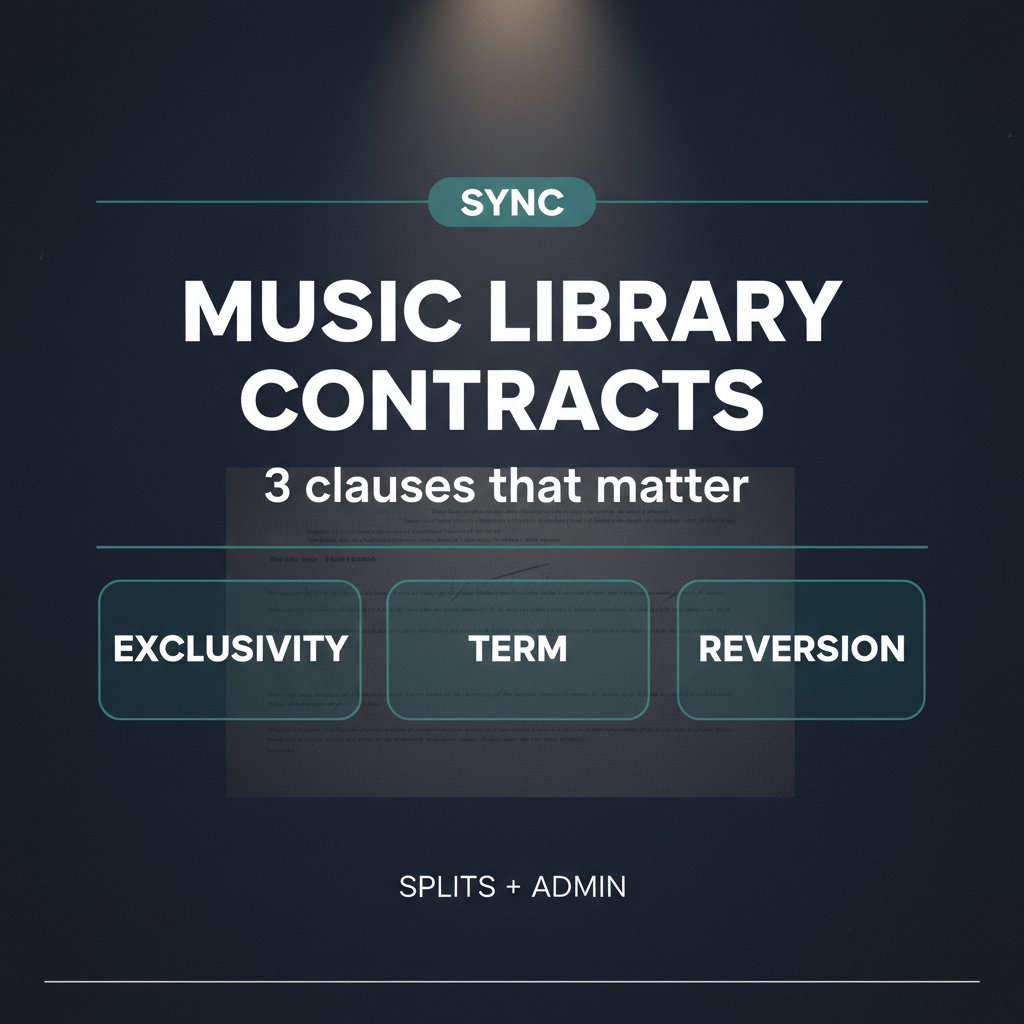
🚨 Music Library Contracts: The 3 Clauses That Can Make or Break Your Sync Career
In the world of music libraries, a “yes” from a supervisor is gold… but signing the wrong deal can quietly lock your music (and income) away for years.
No legal advice here—just the rapid basics every independent artist, producer, and composer needs to know before hitting “accept.” (Sync licensing? That’s when your music gets placed in TV shows, ads, movies, or games and earns you royalties.)
Many handle routine non-exclusive sign-ups DIY after a careful read. But nail these 3 clauses to protect your tracks:
1. Exclusivity: Can you share the track with other libraries?
This says whether this library is the only one allowed to pitch your song.
Exclusive = Only them. They might push it harder (good if they're great at placements), but you can't sign it anywhere else.
Non-Exclusive = You can put the same track in multiple libraries. More chances to get heard, but sometimes it causes mix-ups (like two libraries pitching the same track to the same show).
Newbie check: Start non-exclusive—it's flexible and safer. Exclusive (esp. whole catalog)? Only if they deliver real placements/promo.
2. Term: How long do they control it?
This is how many years they get to pitch and license your music.
Common: 1–5 years. Some auto-renew (keep going unless you say stop). "Forever" deals exist but are risky unless they pay you upfront or guarantee action.
Key: Can you exit early if no action?
Quick check for newbies: Shorter is usually better for beginners—you don't want your music stuck forever if the library isn't active. Ask: What do they actually do to get my track placed?
3. Reversion/Removal: Easy to get it back?
When the deal ends, do your rights return to you fully and quickly?
Good: Rights come back automatically at the end, or you can request removal and they pull it fast.
Watch out: Some let them keep pitching even after you leave or drag their feet on takedowns.
Quick check for newbies: You want a clean exit. If you walk away, your music should be free to go elsewhere—no lingering control.
Bonus money checks:
Splits: Who gets what from a placement fee? Often 50/50 between you and the library—confirm this. You usually keep your full "writer" royalties (from PROs like ASCAP/BMI), but they might handle the "publisher" side.
Admin stuff: Who registers your track with your PRO? Do they change the title or info? Clear rules here stop payment problems later.
Spot these basics early, ask questions, and choose deals that help your music shine—not hold it back.
I dive deeper on affordable help, beginner wins, and pitfalls in my upcoming sync licensing book for indies.
Stay tuned—and tell me: What's your biggest question about library deals right now? Or a red flag you've spotted? Drop it below
#SyncLicensing #MusicBusiness #MusicProduction #IndieArtists #SyncTips
13
140
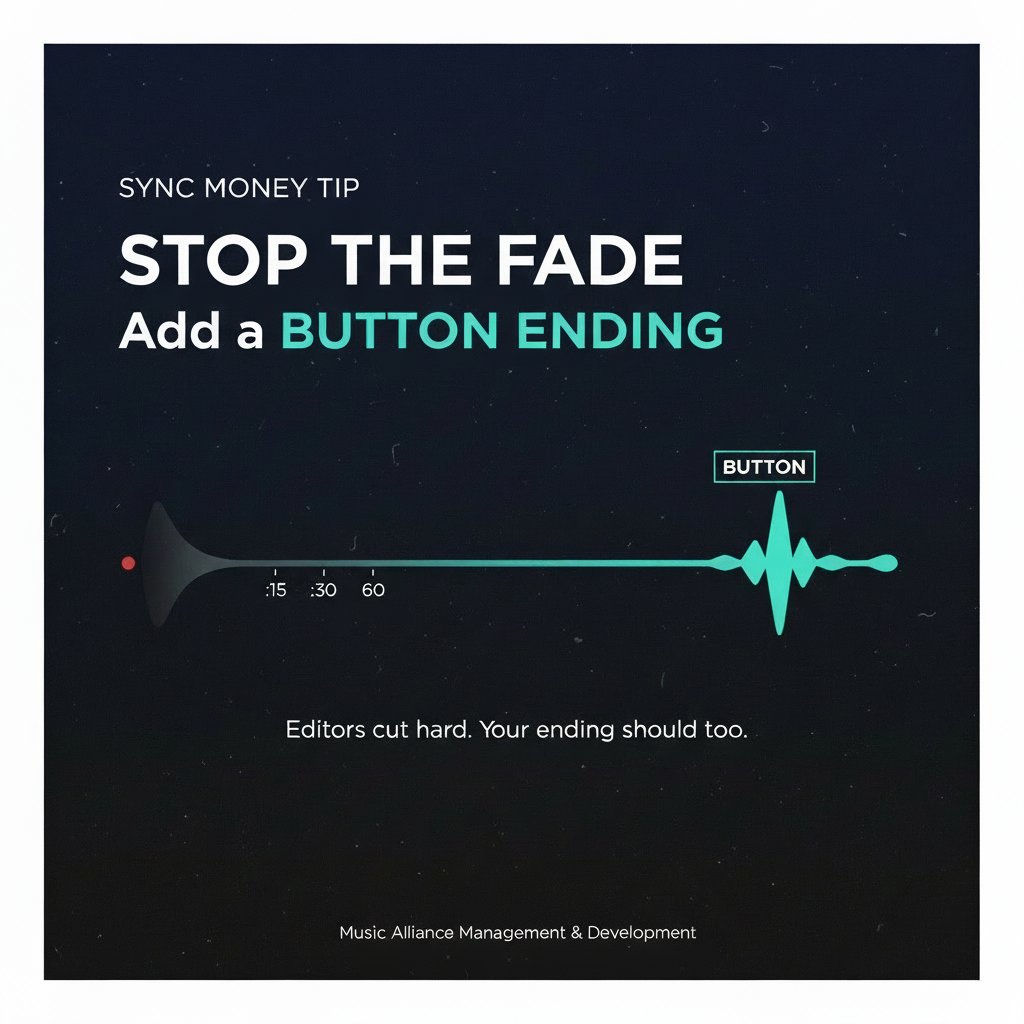
If your sync tracks fade out slowly, you're quietly sabotaging your own placements.
Not because the music isn't fire.
Because video editors live in a world of hard cuts: :15s, :30s, :60s, logos, reveals, and scene transitions that demand precision.
A lingering fade-out? It forces awkward overlaps, muted energy, or forced edits that kill the impact.
Result: Your track gets skipped for one that "just works."
Enter the button ending (aka stinger or sting): A decisive final hit/chord/sting that resolves cleanly, with a short, controlled tail (0.5–2 seconds). Boom — done.
Why this one change unlocks more sync money (TV, ads, trailers, games):
- Editors can snap-cut to picture instantly (no messy tails bleeding into dialogue or visuals)
- Perfect for punchy moments: product shots, montages ending strong, promo stings
- Libraries love edit-friendly tracks → more forwards to supervisors → higher chance of repeat licenses
- Bonus: Create 15/30/60 cutdowns effortlessly from the same master
Quick before/after (imagine this over your track — works great in Reels too):
BEFORE (fade-out):
The final chorus builds... then slowly dissolves. Energy drifts away over 10–20 seconds. Reverb lingers endlessly.
Editor thinks: "Great vibe, but I can't land the logo at :29.5 without it sounding weak." → Pass.
AFTER (button ending):
Final chorus peaks... then BAM — big, resolved chord/stab crisp hit. Short natural ring-out. Sharp stop.
Editor thinks: "Perfect — cuts clean to black, hits the reveal, or transitions seamlessly." → Licensed.
Pro checklist to add a button ending today:
- Resolve strong (tonic/root note for satisfaction)
- Clean stop (gate noisy elements, no endless cymbal/reverb wash)
- Short tail only (let it breathe, but control it)
- Add a super-short stinger alt (1–3 sec) for ads/trailers
Start retrofitting your catalog with these, and watch placements stack up.
I'll be diving deeper into these strategies—and sharing many more advanced pitch tactics, curation tips, and real-world examples—in my upcoming book on sync licensing for independent artists.
Stay tuned for updates—and more tips & tricks along the way!
#SyncLicensing #MusicForFilm #SyncTips #MusicProduction #IndieProducer #ComposerTips #MusicLibrary
8
104

11 Feb 2023
ATL producer London Elixir’s music has appeared on CBS, ESPN, HBO, PrimeVideo, Nickelodeon and more! She shares her sync tips with The Static Dive. #sync #musicproducer #musicsupervisor #atl #musician #synctips #newmusic #indie #blogger #musicblog
staticdive.com/2023/02/10/lo…
1
5
99


10 Oct 2022
Thanks so much @lenahan_dave for having me on your podcast! Check out my episode here 👉 podcasts.apple.com/us/podcas…
#shantellogden #breakingsomethingwild #podcasts #synctips #horses #nashville #podcast #newpodcastepisode #songwriterconnectionpodcast #songwriter #singersongwriter
1
4
4 Sep 2022
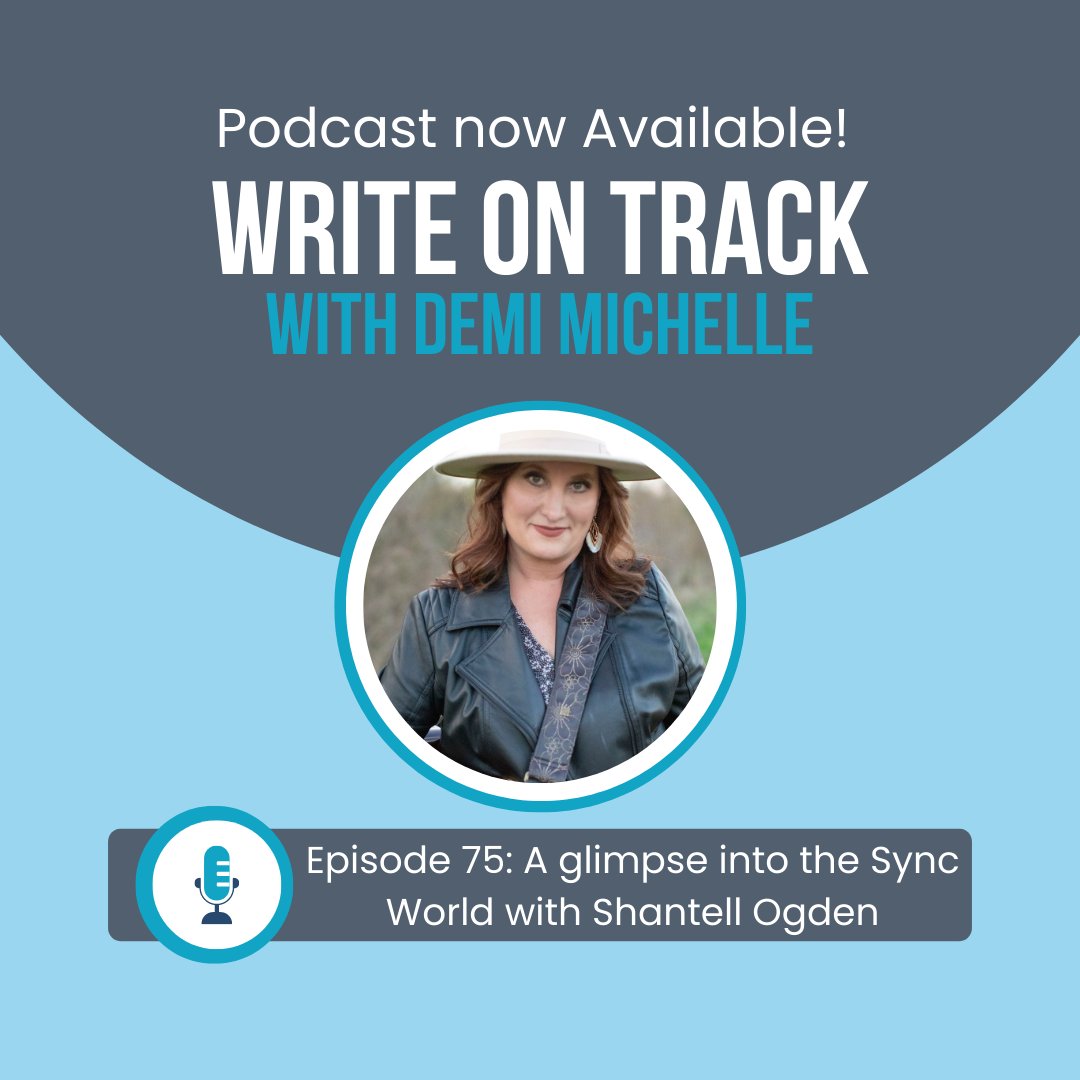
It was a lot of fun talking about getting started with sync deals and how sync impacts your brand with @demimschwartz - thanks for having me on the show! #synctips #songwriters #tvfilm
3
8