
Jun 11
MakeLogo, AI generated logos, sold for $65k, monetized with one time payments
Talknotes, AI voice transcription. sold for $200k, monetized trough subscriptions ($7000 MRR at the time of the sale)
27

Jun 9
The internet is full of free tools. Most people will never find them:
1. 12ft. io — removes paywalls from any article instantly
2. archive. org — accesses any deleted website or old version of any site
3. radio. garden — listens to live radio from any city in the world
4. themostembarrassing. website — checks how embarrassing your old tweets were
5. 10minutemail. com — creates a throwaway email that deletes itself
6. justdeleteme. xyz — shows exactly how to delete any account from any website
7. killyourmeetings. com — calculates how much every meeting actually costs
8. dongerlist. com — finds every possible text emoticon ever made
9. fakenamegenerator. com — generates a complete fake identity for signups
10. manytools. org — does hundreds of small tasks without downloading anything
11. privnote .com — sends messages that permanently delete after being read
12. papertyper. net — generates filler academic text that actually sounds real
13. pixelpeeper. io — finds what camera settings were used in any photo
14. wheeldecide. com — makes any decision for you with a spinning wheel
15. hackertyper. net — makes you look like a Hollywood hacker instantly
16. theuselessweb. com — sends you to the most pointless websites ever made
17. mapcrunch. com — drops you into a random street anywhere in the world
18. writewith. ai — helps you write anything when you are completely stuck
19. talknotes. io — turns your voice into clean written notes instantly
20. getpocket. com — saves any article to read later without distractions
21. similarsites. com — finds websites similar to any site you already like
22. waybackmachine. org — reads any webpage exactly as it looked years ago
23. textfac. es — copies any text face expression in one click
24. copychar. cc — finds and copies any special character instantly
25. wiretype. io — makes your writing sound more professional instantly
26. calmly. app — writing app that hides everything except your words
27. noisli. com — plays background sounds to help you focus deeply
28. coffitivity. com — recreates coffee shop sounds for better concentration
29. musicforprogramming. net — plays music scientifically designed for deep focus
30. asoftmurmur. com — mixes rain fire thunder and other sounds freely
31. huntr. co — tracks every job application in one clean place free
32. leet. codes — practices coding interview questions completely free
33. biginterview. com — practices real job interview questions with feedback
34. resumeworded. com — scores and improves your resume with AI free
35. visualcv. com — builds beautiful visual resumes for free
36. read. cv — creates a minimal clean professional profile page free
37. overleaf. com — writes and formats academic papers professionally free
38. zotero. org — organizes all your research and citations automatically
39. connectedpapers. com — visualizes how research papers connect to each other
40. researchrabbit. ai — finds related research papers you never knew existed
2
27
146
4,951
May 31
You don't see them because most people who make $$ with ads don't post here 😆
There are every incentive to NOT share ads result, the moment you do you get 500 copycats doing the same thing and it increase your ads costs (happened to me with Talknotes)
2
1
14
1,019

Apr 21
Your voice notes just got a massive clarity boost. 🚀
Our latest update adds Spectral Noise Reduction and Voice Isolation EQ. By cleaning the audio before it’s transcribed, our AI delivers incredible accuracy.
#AI #Productivity #IOS26 #IndieDev #SpeechToText #TalkNotes
1
2
6
57

The smartest founders don’t always build from scratch:
- ImprovMX: Bought for $5K → grew to $350K ARR → acquired again
- Feather: Bought by Tibo → added $2K MRR immediately
- Talknotes: Grown to $7.5K MRR in 11 months → sold for $200K
- EasyShorts: Built, grew to $570 MRR → sold for $32K
- iCodeThis: Earned $67K in 2 years → sold for $50K
Buying undervalued side projects is the most underrated path in SaaS.
Microns.io has listed $450K worth of SaaS products sold. This market is real.
1
1
19
1,301

25 Nov 2025
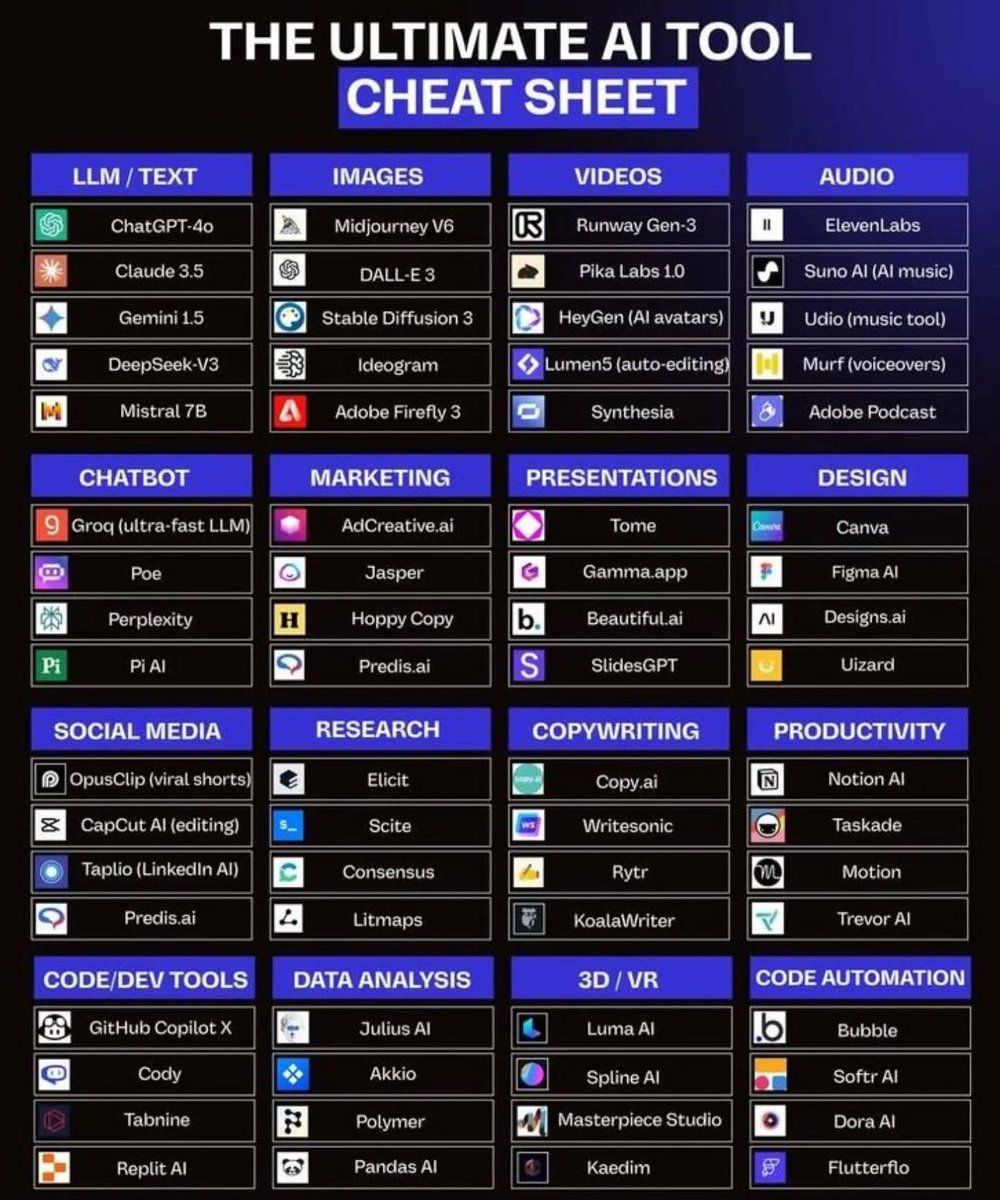
Herramientas IA que debes conocer:
[Deberías 🔖 Guárdalas]
1. LightPDF com (Editar y administrar PDFs)
2. Scholarcy com (Resumen de artículos)
3. Merlin foyer work (Buscar y chat)
4. Scispace com (Investigación)
5. Ellie ai (Planificadora de estudio)
6. Caktus ai (Escribe y cita)
7. Talknotes io (Grabar y transcribir)
8. DeepL com (Asistente de escritura)
9. GitMind com (Ideas de mapa)
10. Rephrasely com (Reescribir y mejorar)
11. Otio ai (Gestión del Tiempo)
12. Type ai (Proyecto y edición)
Otras herramientas de IA alucinantes
1. Coding / Development
- GitHub Copilot
- Replit Ghostwriter
- Cursor
2. Presentations
- Voxdeck
- Gamma
- Prezi
- Pitch
- PopAi
- Slides AI
- Slidebean
3. Ideas
- YOU
- Claude
- ChatGPT
- Perplexity
4. Website
- Dora
- Wegic
- 10Web
- Framer
- Durable
5. Writing
- Rytr
- Jasper
- Copy AI
- Textblaze
- Writesonic
6. AI Models
- RenderNet
- Glambase App
- Luma AI
- Sora (OpenAI)
- Leonardo AI
7. Meeting
- Tldv
- Krisp
- Otter
- Avoma
- Fireflies
8. Chatbots
- Poe
- Claude
- Gemini
- ChatGPT
- Grok
- HuggingChat
9. Automation
- ClickUp
- Drift
- Outreach
- Emplifi
- Phrasee
10. UI/UX
- Uizard
- Visily
- Khroma
- Galileo AI
- VisualEyes
11. Image
- Stylar
- Freepik
- Phygital
- StockIMG
- Bing Create
12. Video
- Pictory
- HeyGen
- Nullface
- Decohere
- Synthesia
13. Design
- Looka
- Clipdrop
- Autodraw
- Vance AI
- Designs AI
14. Marketing
- AdCopy
- Predis AI
- Howler AI
- Bardeen AI
- AdCreative
15. Twitter
- Typefully
- Postwise
- Metricool
- Tribescaler
- TweetHunter
Domina la IA... Domina el Futuro.
Mira mis recursos donquijotexia.bio.link/, desde cursos a ebooks, prompts, noticias IA, tecnología...
La IA no te reemplazará, pero quien use IA sí lo hará.
14
41
169
27,189
20 Nov 2025
I'm still working on Heyo, and it's growing well, I even pushed a big update to the Visitor tab today :D
But to answer:
Heyo is more fun to work on and smaller scale it's something I use myself every day. I can launch features in just a few hours VS AdKit where it takes days
I think one reason I burned out from Talknotes is because I was only doing this non-stop, so hopefully this will help avoid that too
Also, Adkit is a bigger project, and I want to eventually merge all my ad-related projects with it, it's a much much bigger thing I've been planing for a long time
1
2
241

17 Nov 2025
How to grow, earn and build your network, by using the right tools:
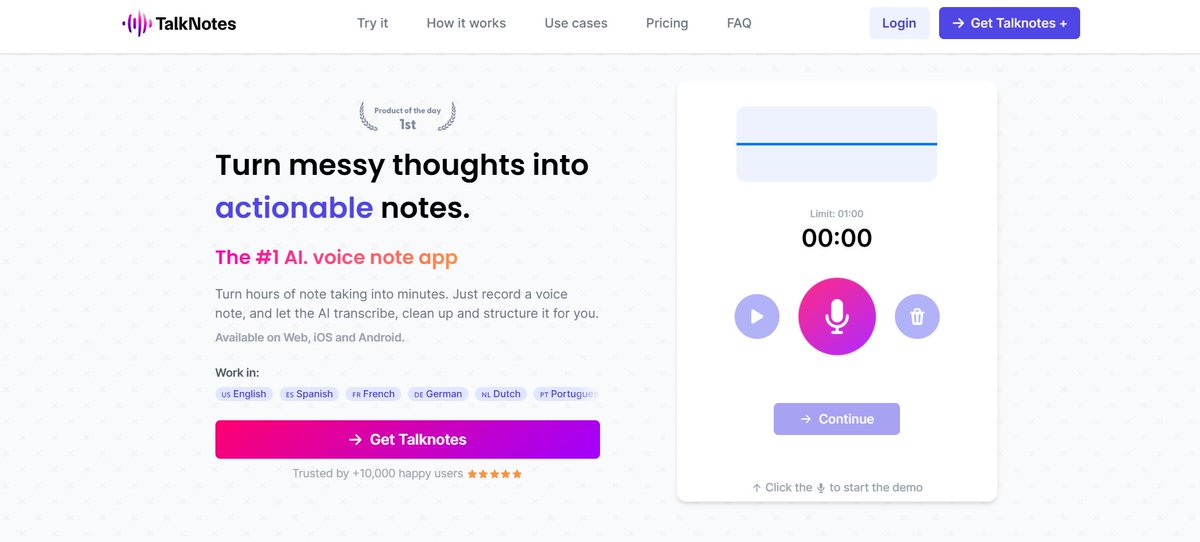
▶️Use TalkNotes AI to turn your voice rambles into structured Notes ($12/mo)
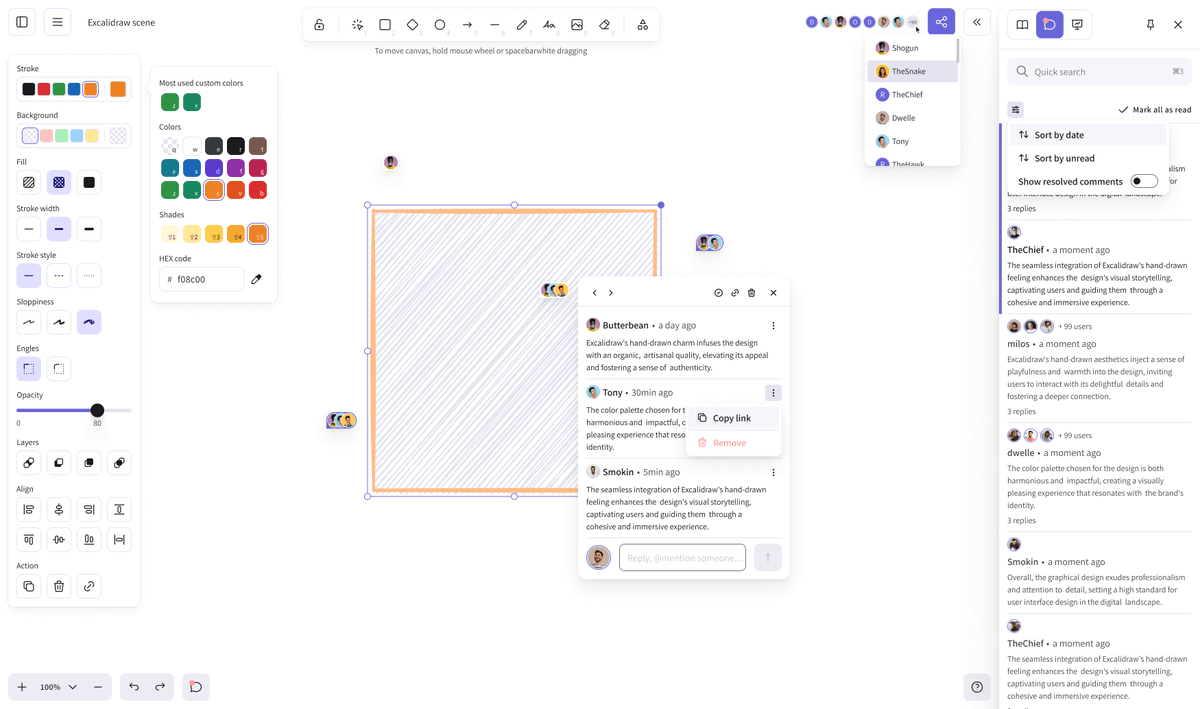
▶️Map ideas visually with Excalidraw 👉 text, images, flows, links, illustrations in an Infinite Canvas (can be free), Paid if Excalidraw
Plan your moves with Notion or Trello, clarity kills procrastination
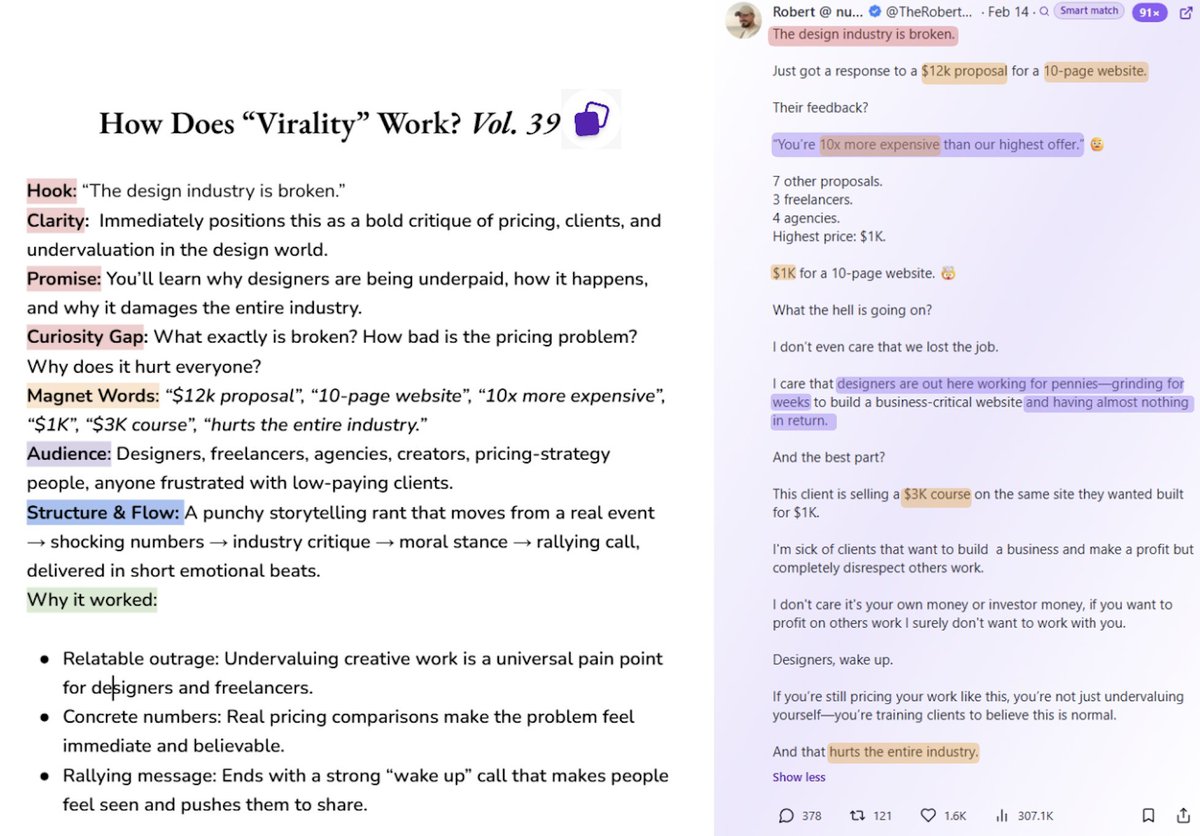
Upgrade every post with Postel App : better hooks, cleaner structure, smarter content
if you want to create visual content or visual storytelling
▶️Higgsfield AI handle visuals UGC, face swaps, reels, image to video with most of the existing models
You're not required to use them to make it, providing value & reply guy is enough
That's if you're interested to level up your game for the future !
Stay consistent and treat your content like a business
Smart systems make legendary outcomes
10
1
16
392
4 Nov 2025
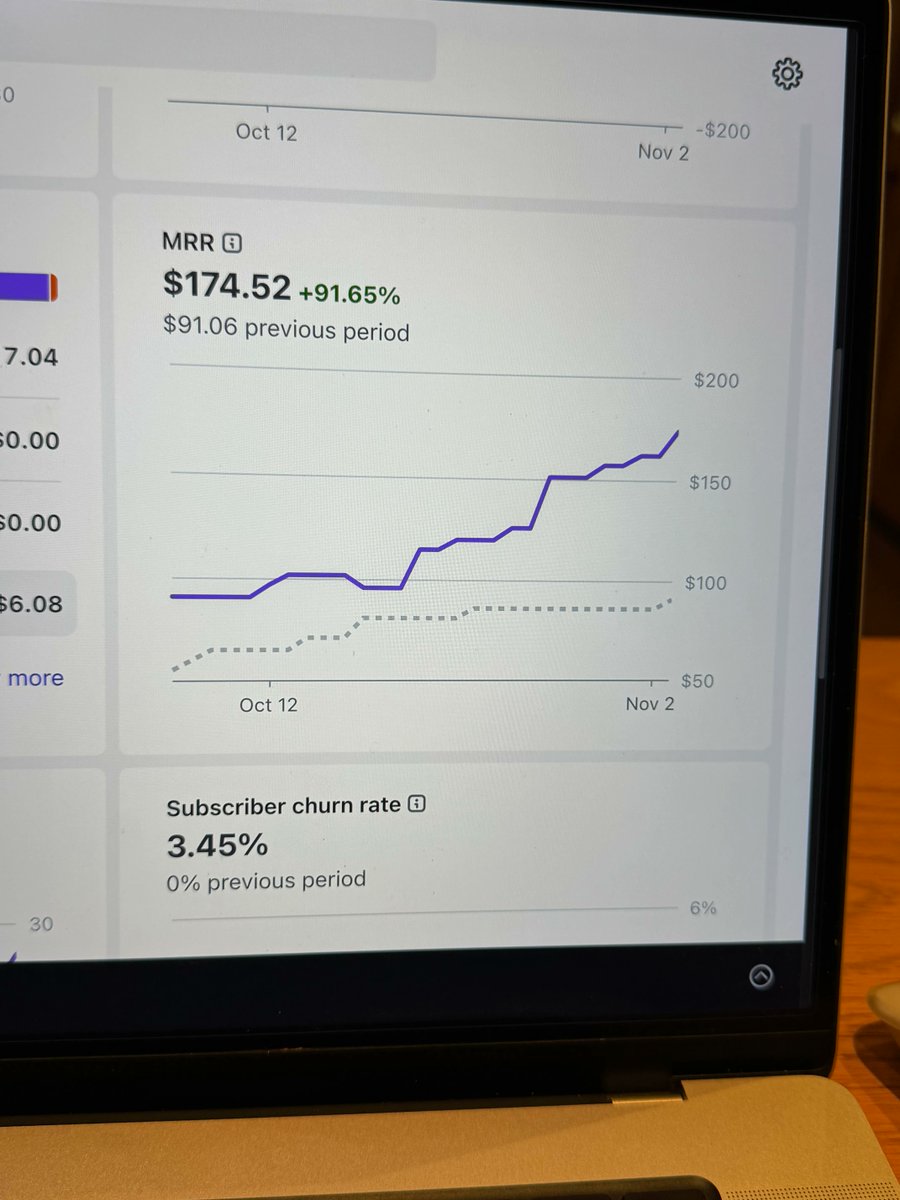
Last 3 months progress update for my startups:
Total MRR is now at $174, almost double last month!
This includes BOTH Heyo (~$130) and AdKit (~$40 MRR)
(AdKit is not launched yet, MRR is from users I onboarded manually)
=====
✅ Good stuff & What worked: ✅
=====
✅ 1. Both projects: Talking with users (again!!)
I spent most of September and October doing calls with to figure what to build.
I did not wanted to repeat the mistakes of last year building stuff no one wanted. So I asked people what their problem was, and I built a solution. Of course it's still a very low MRR but it's a good start. People love Heyo, and got great feedback about AdKit's ad library (launching soon)
The key with talking to users is to NOT ask about the future (ex: "Would you use that?" "Will you buy it?" etc.). You have to ask about their current and past behavior and make your own conclusions. People can't tell you what to build, they can only tell you what they do.
-> I try to get on calls with as many users as possible to keep improving the app
✅ 2. Heyo: Going all-in with the human-first positioning.
Yes, it's a tiny market, because everyone is moving toward AI etc. But people who like building great products and prodiding high-quality support to their users love Heyo for this reason. I kept adding feature specifically for this positioning (ex: video widget and more) and people were super happy about it, I didn't got any negative feedback so far, so it's great.
✅ 3. AdKit: Direct DMs & Pre-orders
AdKit first tool is very technical, I've been working on it for a month and it's still not fully done. I wanted to get some validation before building it. So once I had a clear idea of what to build, I messages people I had on interview calls and people I thought could be interested and pitched them. Definitely doesn't feel comfortable pitchng to people I know but I also didn't wanted to waste a month building something no one cared about.
And it worked pretty well! I got 4 pre-orders so far, on the ~8 people I messaged. Got great feedback on how to improve it. Problem is that I quickly ran out of people I knew who could be interested, so I need to launch the beta soon to get more users.
✅ 4. General: Getting wisedom from others
I have to admit, last year I was guilty of "I know it all". After selling MakeLogo Talknotes and having other successful products, I really thought I didn't need more knowledge about marketing, SaaS, etc.
I was completely wrong, this is absolute BS. There is so much more to learn. I got lucky a few times and I let my ego grow big.
So I started reading again, asking qualified people about their opinion and humbling down. I learned more in those past few months than in the last year. Accept you know nothing, read books, be curious, and talk with people.
Thanks to all the people who shared their wisedom either by writing or talking @asmartbear @helloitsolly , @mjwhansen, and many more!
=====
❌ The bad stuff & what didn't worked: ❌
=====
❌ 1. Heyo: No real marketing
I havent done much non-X marketing for Heyo yet. Most of the sales are coming from X.
It's not healthy for a long-term business because it means I have to keep posting to get more people. I need to look for other channels eventually. The LTV is too low to support ads, so I will probably be stuck with organic and maybe SEO.
Will start doing some SEO soon but I have serious doubt I can compete with big brands.
This is also why I'm working on AdKit, cause the price point will be higher, so I will be able to run ads for it. Heyo will probably be a nice slow-growth product, while Adkit can support ads etc.
❌ 2. AdKit: Refactoring & over-enginering
I'm guilty of what I made fun of a few years ago: Over-engineering. I spent way too much time fixing bugs and cleaning the code for AdKit and the scrapers even tho there are almost no users. I spent the last 3 days cleaning up my scrapers to fix minor bugs no one would have noticed. It's not "bad" but it's not a good use of my time right now.
It just feels good because unlike marketing, there is a "completion" state where the bug is fixed and dopamine is released by my brain (which is not the case with marketing). I got addicted to that.
I need to stop fixing bugs no one is experiencing. Fixing bugs should be a thing only if it impact user satisfaction. No one gives a shit if the databse is not "clean". I need to launch a public beta ASAP.
❌ 3. General: I'm drained
The last real time off I took was in July. I didn't see time pass at all. I went to Turkey for Microconf but it was not relaxing, just more work so, I need to take some real time off. I'm starting to go crazy locked in my appartment
I wanted to launch AdKit and take vacations as a reward, but I also don't want to deal with bugs and too much support during my vacations.
I think I might go if I feel like I don't "deserve it". I'll either launch this week or launch after vacations
The worst I can do is burning out while momentum is building, so I will force myself to take vacations this month no matter what.
62
7
226
21,287
3 Nov 2025
Hate taking notes? Let your iPhone do it.
Talk Notes: Record. Transcribe. Summarize. Export.
Done. 👇
#ios #apple #productivity #talknotes
3
9
67

28 Oct 2025
1 year ago I watched @nico_jeannen build and sell Talknotes for $200k.
Today I met up with the legend for dinner.
Full circle X moment 🙏
28 Oct 2025

Couldn’t have picked a better timing for tagging both of us
We approve this message 😎😂

18
116
8,790

1 Oct 2025
3 Herramientas de IA imprescindibles en 2024:
1. Convertir YT Video a 𝕏 post
⇾ Tugan - tugan.ai
2. Escribir fórmulas de Excel con IA
⇾ Sheetplus - Sheetplus.ai
3. Notas de voz con superpoderes
⇾ Talknotes - talknotes.io
🔥
1
1
745
1 Oct 2025
3 Herramientas de IA imprescindibles en 2024:
1. Convertir YT Video a 𝕏 post
⇾ Tugan - tugan.ai
2. Escribir fórmulas de Excel con IA
⇾ Sheetplus - Sheetplus.ai
3. Notas de voz con superpoderes
⇾ Talknotes - talknotes.io
🔥
358
18 Sep 2025
Try some UGC ads if u can too, worked really well for Talknotes back then!
(real people tho, no AI shit)
1
3
351
15 Sep 2025
📝 The new Talk Notes update is live on the App Store! Transcribe speech to text instantly, now with enhanced audio features. #TalkNotes #iOS #AppUpdate #SpeechToText #TalkNotes #iOS #AppUpdate #SpeechToText #Productivity #NewFeature #Tech #MobileApp #AppDev #SoftwareUpdate
3
8
87
11 Sep 2025
This is absolutely true
After selling Talknotes for $200,000 I thought I knew it all and could easily replicate it
Turns out I knew nothing

Quick success builds ego, slow and painful success builds character and spine.
That's the reason most of these drop shipping, course bois and meme coin bros are quite arrogant, while people with actual business are quite down to earth.
22
2
188
25,510
2 Sep 2025
Patience yes, 100%.
Purpose idk, I grew Talknotes to $7k MRR without caring much, and another one to $1,000 without knowing anything or caring about the industry
Purpose can be elsewhere, for me I just wanted to make $$ and it was enough
3
27
2,298
1 Sep 2025
I swear, best things I could come up with so far was Talknotes, sometimes I feel like I’m wasting my time 💀
1
5
453
27 Aug 2025
Another reason is that I stopped doing what worked for me
After selling Talknotes, I worked on projects that were doomed from the start, and tried to force my vision instead of adapting and moving on quickly
For ex, I worked on TestIt and positioned it for other solo founders.
But the average solo founder doesn't care about A/B testing,
it was just me.
I kept adding features
instead of changing my positioning or moving on.
I knew from the start it flopped.
I just didn't want to accept it because I spent one month working on it,
and I used the app myself, so I got emotionally attached to it.
So, this put me into a loop of working on something that will never take off in its current state...
...and getting depressed/burned out because it's not working
All of this can be fixed by talking to customers BEFORE, DURING and AFTER the base version of the app is done.
I started doing it already for Heyo.
I actually did not plan to launch it, but after talking with users, I realised that ppl were looking for a solution, so I took time to release it
I know it won't be a million-dollar app, but it's a great way for me to scratch my own itch and train my product management skills with something people asked for
That's also why the free plan is generous, making profit from it is not necessary the main goal, I just want to learn skills that will take me to the next step of the journey!
17 Aug 2025

I think the biggest reason why I haven't done shit felt empty since I sold Talknotes is the loss of purpose.
I learned to code in the first place because I was desperate to avoid running out of cash.
I had a fire burning, I could sleep 3h and still work the whole day, because I knew exactly where I wanted to go: Making money again
I gave no shit whether I was tired or sad, or what others thought of me.
All that mattered was to figure this shit out fast
But after selling Talknotes, this issue got "solved". I have enough money to live for the next 20 years or so now.
So my biggest problem disappeared
So it's kinda funny, the moment my problem disappeared, I became unhappy, because I lost my purpose
Discipline gives you the fuel, but purpose gives you the direction.
Without discipline, you never move forward, but without purpose, you just drift
13
1
58
10,286
26 Aug 2025
Seems like many people are confused about ads and if they're right for them
Since there are almost no *good* resources about it, and I've been doing ads for almost 10 years, I started writing about SaaS ads 🤓
The first one is be about when does it makes sense to run ads for a SaaS.
It's still a draft but should give u some good insights already
(website version available in first comment, much easier to read)
===
There are many types of ads, and while a good chunk of what you will find here can be applied everywhere, I'm going to specifically focus on online ads (Facebook Ads, Google Ads, Reddit Ads, LinkedIn Ads, etc)
1. You want Volume and Speed
Yes, this one is the obvious but I had to mention it. 😅
Unlike "free" marketing channels like SEO or organic content, ads will cost you some money. So, why pay for ads when you can get users for free?
Let's say you are selling a $100 product, and you make $50 of profit per customer.
Let's compare 2 scenarios, one with full organic growth (A), and one where you run ads (B).
Scenario A: 10 sales with $50 of profit = $500 total
Scenario B: 100 sales with $20 of profit = $2,000 total
Scenario A might gets you more profit in percentage, but Scenario B gets you more total profit.
Basically, ads allow you to trade off profit (and speed) in exchange for volume.
If you prefer high-profit slow growth, ads might not be the best fit for you.
Now, I mentioned "free" channels above. I specifically wrote "free", because... it's not really free.
With organic channels like SEO or other, the cost is your time and energy. You create content that platforms and people might like, and in return, they might show your content to their audience. But the only way to see results is with time, you won't get millions impressions overnight.
With ads, you're leveraging someone else's audience to grow faster. What it costs you in money, it makes it up in time. You pay money, and you get impressions immediately.
Instead of waiting for weeks or months to see if your new landing page converts better, ads gets you immediate data, in exchange of money.
But this also means... you need to have your finance in order
2. You have your finance in order
There are 2 essential numbers when you run ads:
Your lifetime Value (LTV): How much revenue you make per customer
Your Acquisition Cost (CAC): How much you spend to acquire a new customer
If your Lifetime Value is higher than your maximum Acquisition Cost, you ads are profitable and you can acquire new customers profitably.
So how do you calculate all that?
Lifetime Value (LTV)
The Lifetime Value is the sum of all the money you make from a customer over the span of their relationship with your business.
How to calculate LTV for Subscriptions
How to calculate LTV for One-Time Payments
It might be hard to calculate if you're just starting out and don't have data about churn or extra purchases.
When you lack the data, just try to make an educated guess, aiming on the pessimistic side just to be safe.
Customer Acquisition Cost (CAC)
The Customer Acquisition Cost is the cost you can afford to spend to acquire a customer.
The acquisition cost itself it determined by your ads result, so you can't calculate it in advance, but you can calculate your Maximum Acquisition Cost.
For this, take your Lifetime Value and substract all the average operational costs per user (AI usage, hosting, etc).
That's your Maximum Acquisition Cost.
If the cost of getting a new user via ads (or any kind of paid marketing) is below this amount, you make profit.
If you're exacty at this amount, you're breaking even. If it's above, you are at a loss.
For example:
$120 LTV - $10 Cost per user = $110 Max Acquisition Cost
If your ads costs you $109 per new customer, then you make profit.
Of course, you don't want to make just $1 of profit per customer, so you need to define a Target Acquisition Cost. But you have to stay realistic.
You can use our free Ads Profit Calculator tool to test different scenarios with your LTV, conversion rate, and ad costs.
Keep it mind it's impossible to know the exact cost in advance, as it completely depends on your industry and your marketing strategy.
This brings us to our next point...
Managing your Cashflow
Since it costs money, you also have to manage your cashflow, esspecially if you have a subscription model.
Let's take one of my previous businesses as an example: Talknotes
Talknotes had a $12/month subscription, and it costed me up to $50 to acquire a new paid user
That means that I was loosing money upfront: $50 Acquisition Cost - $12 subscription = $38 loss per user upfront.
But... why would anyone want to loose money on ads? 🤨
Well, you aren't loosing money. Not really. You're just delaying the revenues.
My lifetime value was something around $80, but since it was paid in monthly subscriptions, it took me a few months to make the money back.
It means I was loosing money upfront, to (maybe) make money over time. Exactly like an investment (because it is one!)
So, if your revenues are delayed, it means you need to have some cash available to make up for the upfront loss.
But luckily, there is an easy way to mitigate this: Yearly details.
In truth, for Talknotes I was not loosing any money upfront, I was actually making profit.
How?
Because I offered a cheaper yearly subscription to make up for the upfront loss. The yearly option was at $60, close to a 60% discount from the monthly price, so it was an amazing deal for users.
Around half of the users went with the yearly deal. This mean that I was making a profit upfront, AND I still had the higher profit from monthly subscribers.
This allowed me to scale Talknotes from $1,500 MRR to over $7,000 in just a few months, before I sold it.
💰 Total profit: $200,000 exit over $40,000 profit (For $70k total sales)
Had I stayed with organic channels to maximize profit, I would never have been able to grow as fast as I did and sell it. And even if I decided to keep it and shut down all the ads, I would have kept making profit from the recuring subs as well as the natural organic growth (word of mouth, etc).
This is actually what the new buyer did, he shut down most of the ads, but the app kept growing to $10k of MRR while generating profit every month.
All that because I was fine loosing money on the short term to maximize growth.
So, consider what matter the most to you:
Maximizing profit at the cost of your time and energy (organic channels)
Maximize growth at the cost of your profit (ads)
But if you choose to maximize growth, make sure your finance are in order so you don't run out of cash and are forced to stop your ads.
But finance is only one part of the equation...
3. You have a proven product & positioning fit
Simply said, if you don't have feedback or customers yet, you are moving blindly. It's not directly a problem per se, but if you launch ads and they don't work, you will have no idea if it's an issue with your ads, your landing page, or your product.
The goal is to reduce the amount of uncertainty as much as possible to save money.
Having 3 unknown variables (product - positioning - ads) is a recipe for disaster, because you won't be able to properly figure out what's working and what's not.
If you have no clicks, it could be your ad's design, it could be your messaging, or it could be your targeting. You will have no way of knowing.
3. You have a good Funnel
None of what we mentioned above matter if your funnel sucks. For an online business, your funnel is the whole business.
If it's broken, all the money and time you put into marketing will be wasted.
This is especially true for ads, because ads platforms like Facebook or Google penalize you for not converting users they send you.
If your landing page sucks, platforms will see that they are sending traffic to a low quality page, which will lower your user experience score and predicted action rate.
User Experience Score is an internal metric often used by platforms, to determine the cost of your ads and many other things.
This means that if you have a funnel that does not convert, you will pay way more for your ads
Now, here is the good thing: You have 100% control over your funnel. This is the only thing in the advertising process where you have absolute control over
You can always improve your ads and targeting, but the result is still dictated by an algorithm, not you.
On the other hand, you can improve your landing page at any time, the only thing dictating how good it performs is your copywriting skill.
It's much easier (and faster) to improve your landing page and funnel than making better ad creative.
Improving your landing page conversion rate from 0.5% to 1% means you get twice more sales with the same amount of traffic. Which means your ads will be twice cheaper. That can be the difference between making profit or not.
You can use the Ads Profit Calculator to see how different conversion rates impact your profitability and how even a small improvement can make a huge difference!
There are many ways to improve your conversion rate, and this will be a whole article on its own.
But the bottom line is:
Algorithm will penalize you for not converting users they send you.
Unlike ads, you have 100% control over your landing page and funnel
Doubling your conversion rate means doubling your sales for the same amount of ad spend.
So, get your funnel in order!
Now, before we finish our article, there are a few additional things that are important to consider.
3. Audience Size & Identifiability
Audience Size
Obviously, there is no point running ads if your audience can't be reached by the ad platforms.
I think the best way to illustrate this is with an example, so let's take ScreenshotOne as an example.
ScreenshotOne is a SaaS that allows you to take screenshots of websites. Since it's an API, you can use it pretty much however you want to take screenshots.
So, what kind of ads should we run if we want to promote it?
First, we need to answer the question: "Who would use a Screenshot API?"
Developpers, of course.
But not ALL developpers. Developpers building a software that need website screenshots in a way or another.
We're close, but not quite yet. There is more to consider.
Adding an API to your app is complex and take lots of work. It's usually something you do only once, and once you have a solution, you don't touch it ever again (unless the solution sucks and you need to change it).
So, in this very specific example, we are targetting developpers that are building a software that need website screenshots, AND don't have a solution yet.
That's a VERY small and VERY specific audience!
If you use an large-scale Interruption-based platform (like Facebook Ads), it will have a hard time finding customers because it's using AI under the hood to find people who are similar to the ones who already took action on your website. For it to work, you need to have a somewhat large pool of audience.
However, if you use a Search-based platform (like Google Ads), that works mainly with user intent (ex: searching "Screenshot API" on Google), you will be able to reach out to your audience easily, because you're basically advertising where they are looking to find a solution.
Simply said, interruption-based platforms don't need an advanced AI to find the right people, because the right people identify themselves via their Google searches.
Note: I'm purposely simplifying some things here. Google Ads does have an AI under the hood, it's just very different from Facebook Ads.
So, does that means that if your audience is small and ultra specific, or if you need to reach them out at a very specific time of their buying journey, search-based platforms are usually better?
Yes... and no. Like everything, there are exceptions!
Which adds our second criteria, identifiability, or how easy it is to identify the audience.
Identifiability
A great example I can think of to illustrate this is weddings. While the pool of "getting engaged" audience is large, it's something that only happens (hopefully) once in a lifetime. And yet, Facebook can still figure out who is getting married, and even has a specific targetting option for that (source)
This is because getting engaged created a big shift in consumed content, and platforms Facebook or Reddit can figure out who is getting married based on that, thanks to their internal data (ex: content watched on their platforms) as well as external data (ex: Content watched on websites with a tracking pixel installed).
Taking back our first example, it would be VERY difficult to identify a developper looking for a screenshot API, because there is no significant change in behavior platforms can catch up with.
They won't spend weeks watching videos about it, it probably takes a few days maximum to pick a solution and install it and that's it.
In this case, the only way to identify the audience would be trough their intent, meaning you need to advertise where they are looking to find a solution (Google Docs, Blog posts, Youtube tutorials, etc)
There can be more to consider in some specific cases (ex: Retargeting or Brand awareness ads), but that will be for the last part of the article.
In the meantime, to recap this part:
Pick the right platform based on the audience size and identifiability
Small audiences Search intent / Time-sensitive products = Interruption-based platforms
Large audiences Time-insensitive products = Search-based platforms and interruption-based platforms
Audience Size: How large is your audience? Especially considering the timing
Identifiability: How easy is it for platforms to identify the right audience, at the right time?
4. Pre-orders and other special cases
In the article, I kept mentioning there were special cases etc. This is what we will talk about here!
There are some situations where the rules mentioned above don't necessarily applies
Pre-orders, Waitlists, etc
There are cases where making a MVP would take too much time, and you would rather have some proof the market will want the product before actually building it. This is when pre-orders, waitlists or other market pre-validation tactics can make sense.
There are usually 3 ways to do this:
Waitlists: Explain what the product will be, then let people join the waitlist to know when it will be ready.
Pre-orders: Explain what the product will be on the landing page, then let people pre-order it
Fake landing page: Pretend the product exists, with a
31
5
162
45,762