
Apr 23
The Structural Integrity of Corruption: Why the Abuja Bus Terminal failed.
The collapse of the Kugbo Bus Terminal roof during a windstorm is not just an engineering failure—it’s a procurement crime scene. When a brand-new, multi-billion naira facility fails before it even opens, the issue is not the "wind." The issue is that the failure was likely baked into the initial bid.
As an engineer with nearly three decades in supply chain and technical leadership, here is how you perform a real forensic audit on a project like this:
Let the Debris Speak First:
Don't start with the files; start with the wreckage. Perform metallurgical testing on the fasteners and trusses.
• Did the steel meet the specified gauge?
• Were the anchors designed for the "uplift" forces of an Abuja storm?
• Physical material does not lie.
Circle Back to the BOM:
Once you have the physical baseline, compare it to the original Bill of Materials (BOM). This is where you find the "The Spec Gap." If the BOM called for high-grade industrial fasteners but the debris shows cheap alternatives, you've found the point of compromise.
The "Baked-In" Corruption Trap:
Corruption in public infrastructure often starts at the bid stage. When contractors are forced to pay high "entry fees" or win on impossible margins, they don't just cut corners—they hollow out the structural integrity of the project. They buy Grade-C materials while the government pays for Grade-A.
The Result?:
A building that looks "commissioned" on a sunny day but becomes a liability the moment the environment performs a real-world stress test.
We need Pre-Contract Technical Validation. We need leaders who can look at a bid and identify that the technical requirements cannot be met at the proposed rate.
No problem is too big to be solved if we deconstruct the variables. But we must be willing to look at the debris first.
#Abuja #KugboTerminal #Engineering #ForensicProcurement #SupplyChain #Nigeria #TechnicalIntegrity #Leadership
1
1
3
76

20 Aug 2025
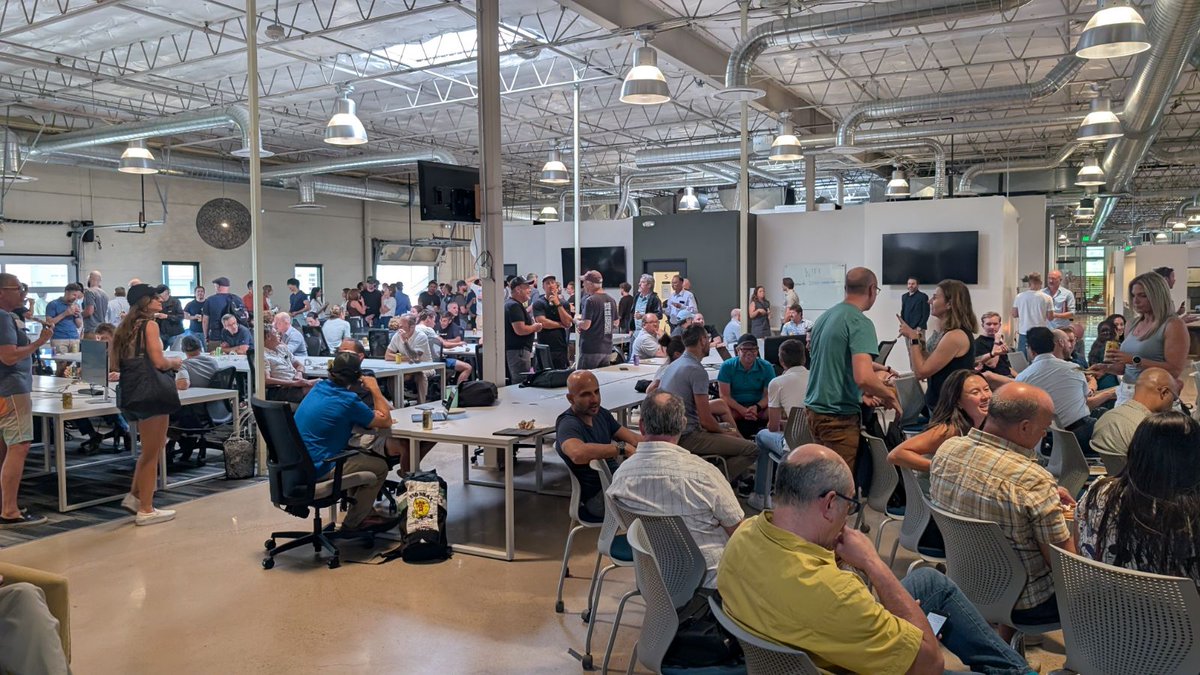
Our CEO @Thelosen and Lead Product Designer @JoshuaKatowitz recently had the opportunity to attend and speak at AI Builders in Boulder, an energizing evening filled with early-stage founders, builders, and operators solving real-world problems with AI.
We appreciated the honest conversations around agentic frameworks, automation tools, and the challenges of deploying point solutions in complex environments.
Huge thanks to Ian Cairns, @thadeby, @ericwryan, Tim Morrissey, and the entire @drivecapital team for hosting such a thoughtful and well-run event.
It’s gatherings like these that keep the momentum strong.
#AI #Startups #Governance #Cybersecurity #BoulderTech #AgenticAI #LLM #AIAdoption #EnterpriseAI #SiliconValleyBank #DriveCapital #TechnicalIntegrity #MatchstickVentures #Freeplay #Ombud #FounderCentral #ColoradoTech #AISecurity
3
218