

── Dappcon 2026 Sponsor ──
The bottleneck for ZK adoption isn't the math. It's the tooling. @ziskvm fixes that.
An open-source zkVM and ZK proving toolstack — built for production, optimized for speed and cost, and designed so developers can write circuits in Rust rather than starting from scratch.
Born at Polygon Labs and now stewards by SilentSig as a community-driven project, ZisK is what zero-knowledge proof generation looks like when accessibility is a first-class concern.
Proud to have them in Berlin.

1
113

Jun 9
Jitter has become a useful presentation layer in my toolstack.
Sometimes a static screen isn't enough to communicate the idea.
1
30
723

Built ToolStack — an AI-powered software review platform targeting the tools people actually buy. Recurring affiliate commissions. No manual content. No天花. toolstack-6.polsia.app
1
23


It was a late Friday night. The room was dark with only her eyes peering through the mask, but that VOICE... 🎧 Daphne Marina reads to you. Listen NOW to "STEAL My Toolstack: Claude Canva Blotato." Link in Comments. #StealMyStack #ClaudeAI #CanvaDesign #Blotato
1
2
44

May 27
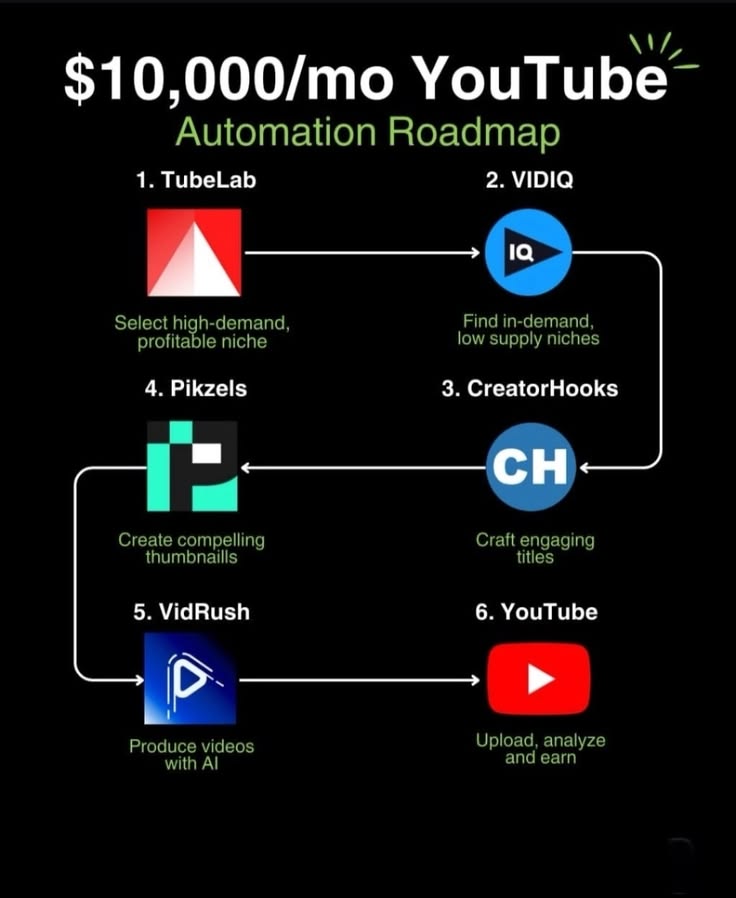
🚀 The $10,000/mo YouTube Automation Blueprint (Zero to Monetized) 🧵
Most creators fail because they rely on guesswork. Top-tier channels rely on systems.
If you want to treat YouTube like a high-yield asset rather than a hobby, here is the exact 6-step toolstack to automate your revenue pipeline:
1️⃣ Market Selection: TubeLab
Before you record a single second, you need data. Use TubeLab to identify high-demand, high-RPM (Revenue Per Mille) niches. Don't guess what makes money—validate it.
2️⃣ Gap Analysis: VIDIQ
Once you have a niche, find the entry point. VIDIQ allows you to spot high-volume search queries that suffer from low creator supply. This is your competitive advantage.
3️⃣ CTR Optimization (Part 1): CreatorHooks
The click starts with the psychology of the title. CreatorHooks helps you craft high-converting, curiosity-driven titles that practically force users to click through.
4️⃣ CTR Optimization (Part 2): Pikzels
A great title needs a visual hook. Pikzels automates the creation of high-contrast, compelling thumbnails. High CTR (Click-Through Rate) is the ultimate metric for algorithmic push.
5️⃣ Scalable Production: VidRush
Consistency is where most manual creators burn out. VidRush leverages AI to streamline video production, letting you generate high-retention content at scale without spending 20 hours editing.
6️⃣ Distribution & Monetization: YouTube
The final stage. Upload systematically, dive deep into your retention analytics after 48 hours, optimize the outliers, and compound your ad revenue.
📈 The Formula: High-Demand Niche Low Supply Optimized CTR Scalable AI Production = Predictable Cash Flow.
Stop treating content like art and start treating it like a media business.
Which of these tools are you adding to your workflow first? 👇
#AI #Youtube #Automation #Twittercommunity
11
16
44
422

May 21
Now that My Reel Agent is back, I have started to post content again on my Instagram
Yesterday I taught it a new format, Check it out
The Whole video is edited by AI, Directed by me
Before you all ask me the cost and toolstack
Here it is :
Estimated paid API cost for the last Figma agent video:
Rough total: $0.55–$1.30
Breakdown:
- ElevenLabs voice: ~426 characters : <$0.01–$0.05
- HeyGen avatar: ~25.87 sec / 0.43 min : $0.43–$1
- VEED/FAL subtitles: ~55 sec At ~$0.10/min: ~$0.09
- Local editing / ffmpeg / sound design / music mix: $0
- Music whoosh files: supplied, so $0 extra
9
1
43
3,167

May 21
做个非正式调查,独立开发者们日常用哪套 AI 工具组合?
我的当前工具栈:
🧠 架构设计 → Claude(推理强)
⌨️ 日常编码 → Cursor(速度快)
🔨 复杂重构 → Claude Code(能自己跑测试)
🎨 美术资产 → Scenario Midjourney
🎵 音效 → Suno
月成本大概 $200-300,相当于省了 2-3 个外包的钱。
你的工具栈是什么样的?有没有什么"冷门但超好用"的工具推荐?
#AI #IndieGameDev #ToolStack
2
2
226

Hey #Datafam
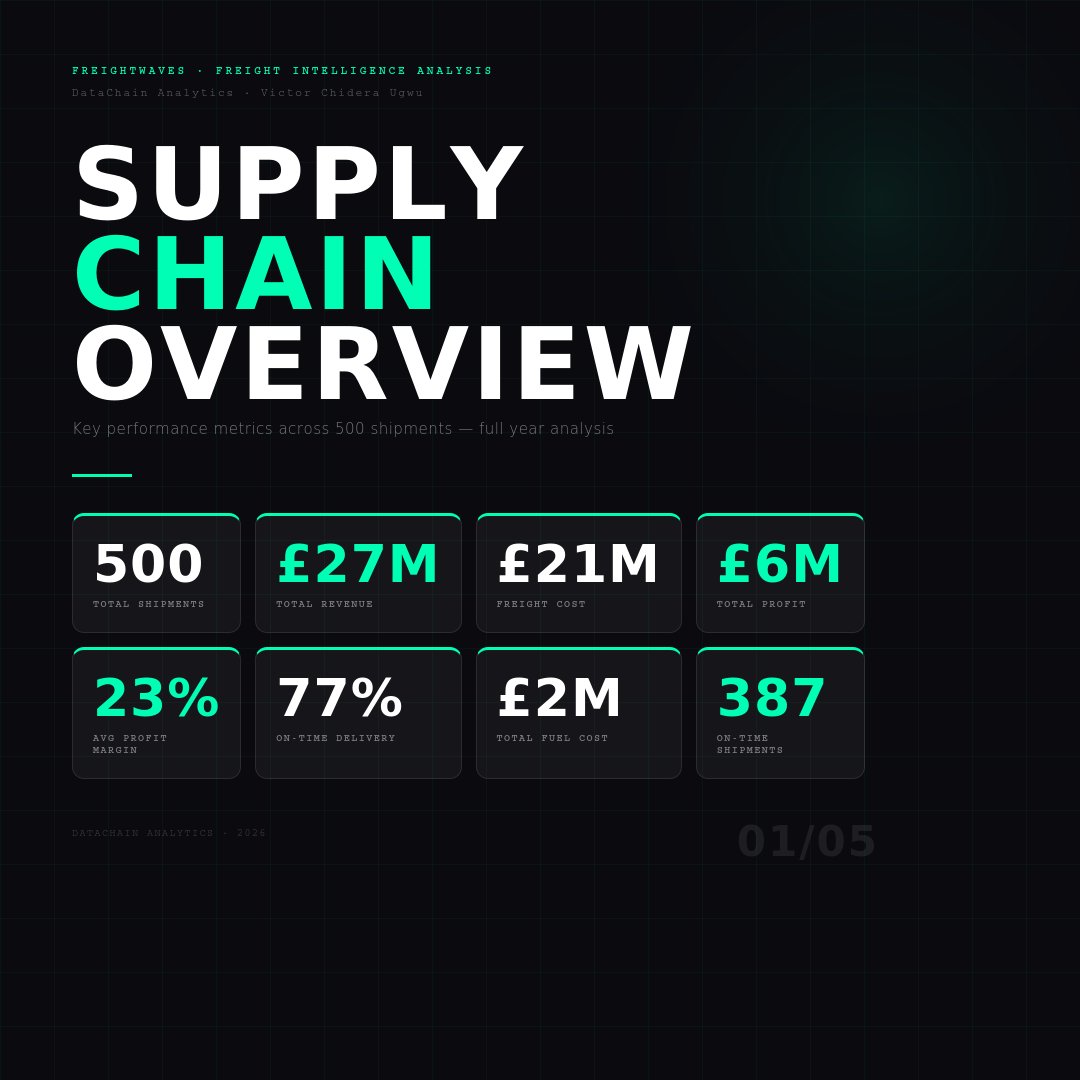
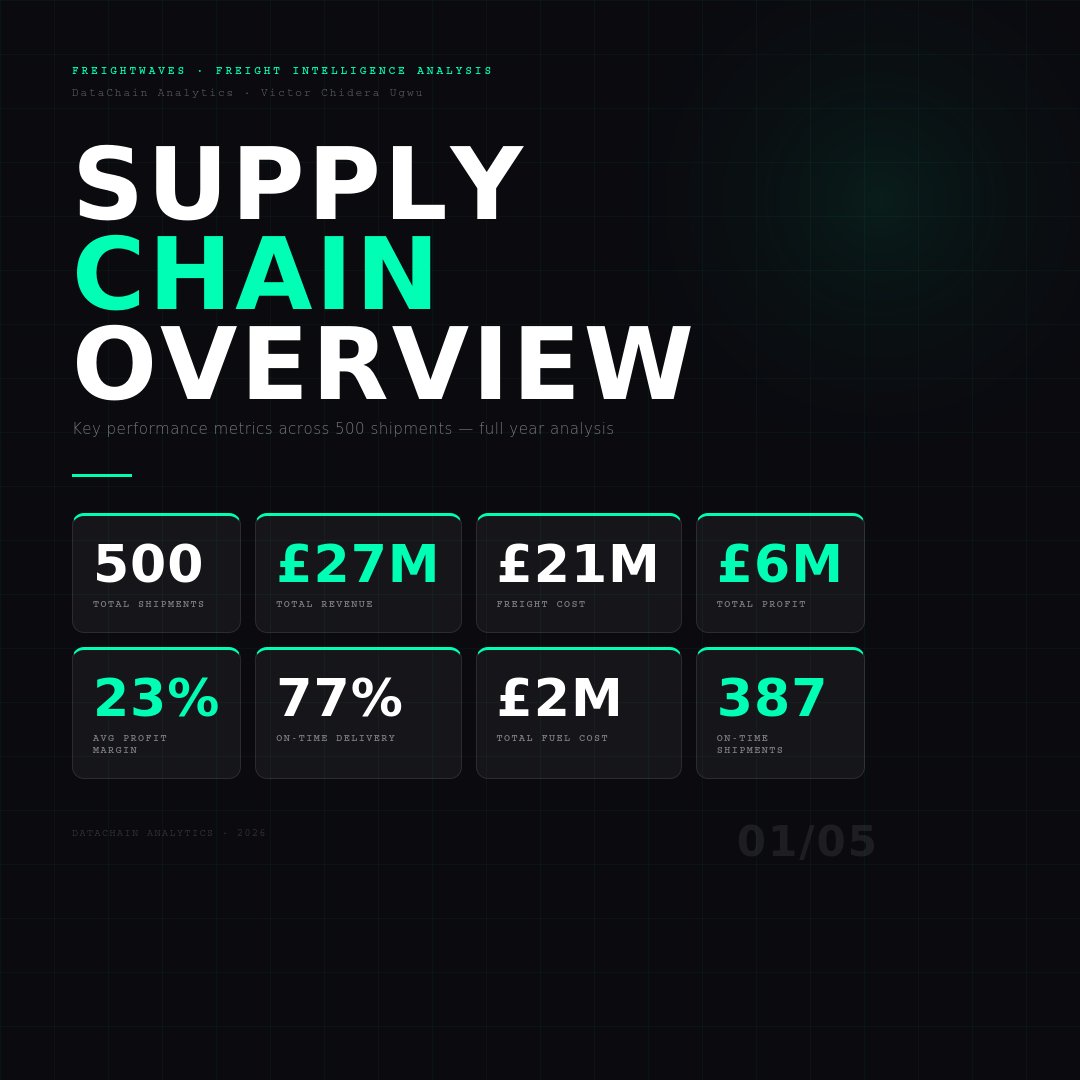
3 months ago, I built a freight intelligence analysis for FreightWaves using ELT, DAX, and PowerPoint. Here’s what the data whispered and what I recommend you act on.
3 months ago, I delivered a full freight intelligence analysis for FreightWaves covering financial performance, carrier efficiency, commodity profitability, and regional revenue.
My toolstack:
🔹 Power Query (ELT – extract, load, transform)
🔹 Excel
🔹 Data Modelling & DAX
🔹 PowerPoint (dashboard layouts)
No over‑engineering. Just clean data, sharp logic, and board‑ready design.
Here’s what 500 shipments told me and what I recommended to leadership.
🔍 3 Findings That Caught My Eye
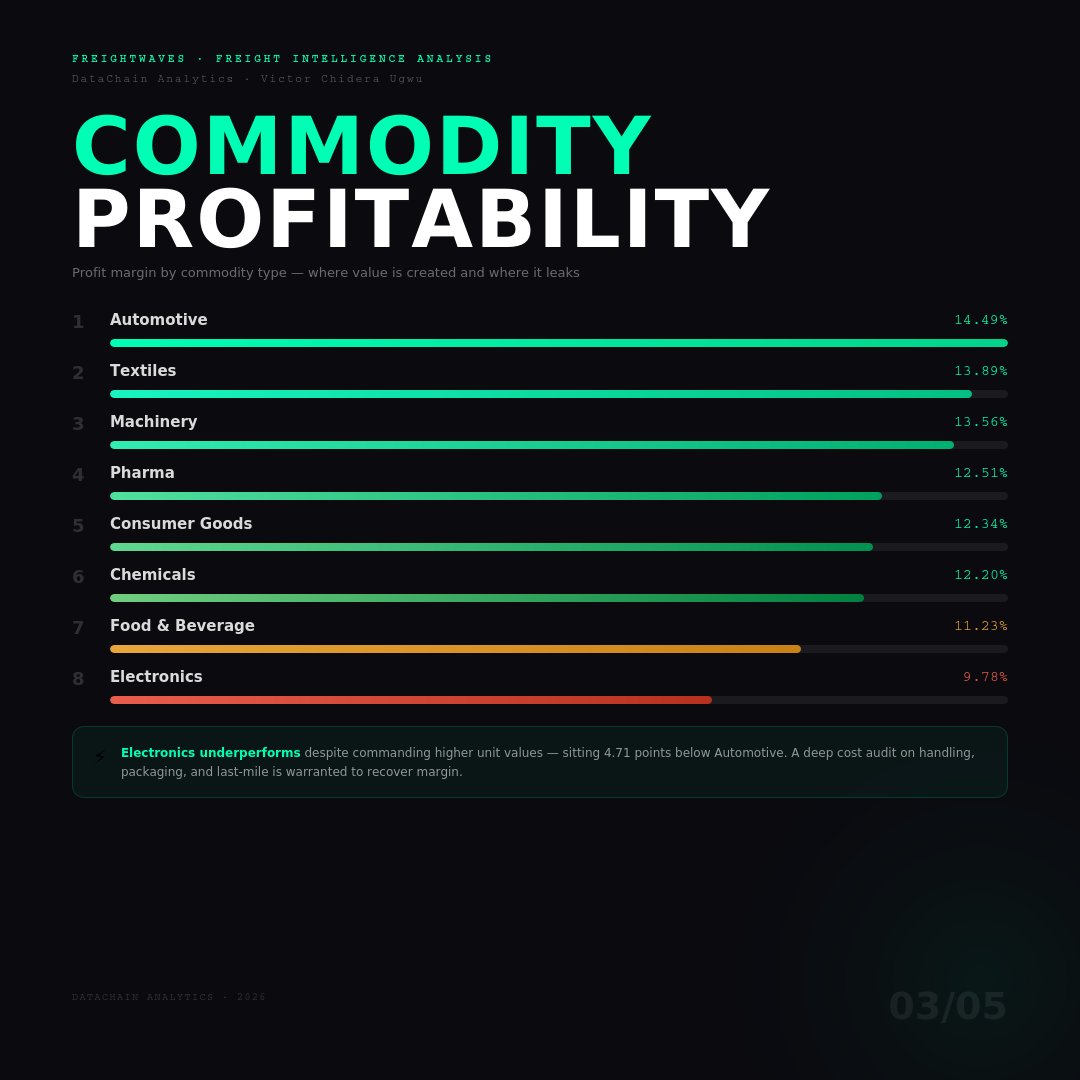
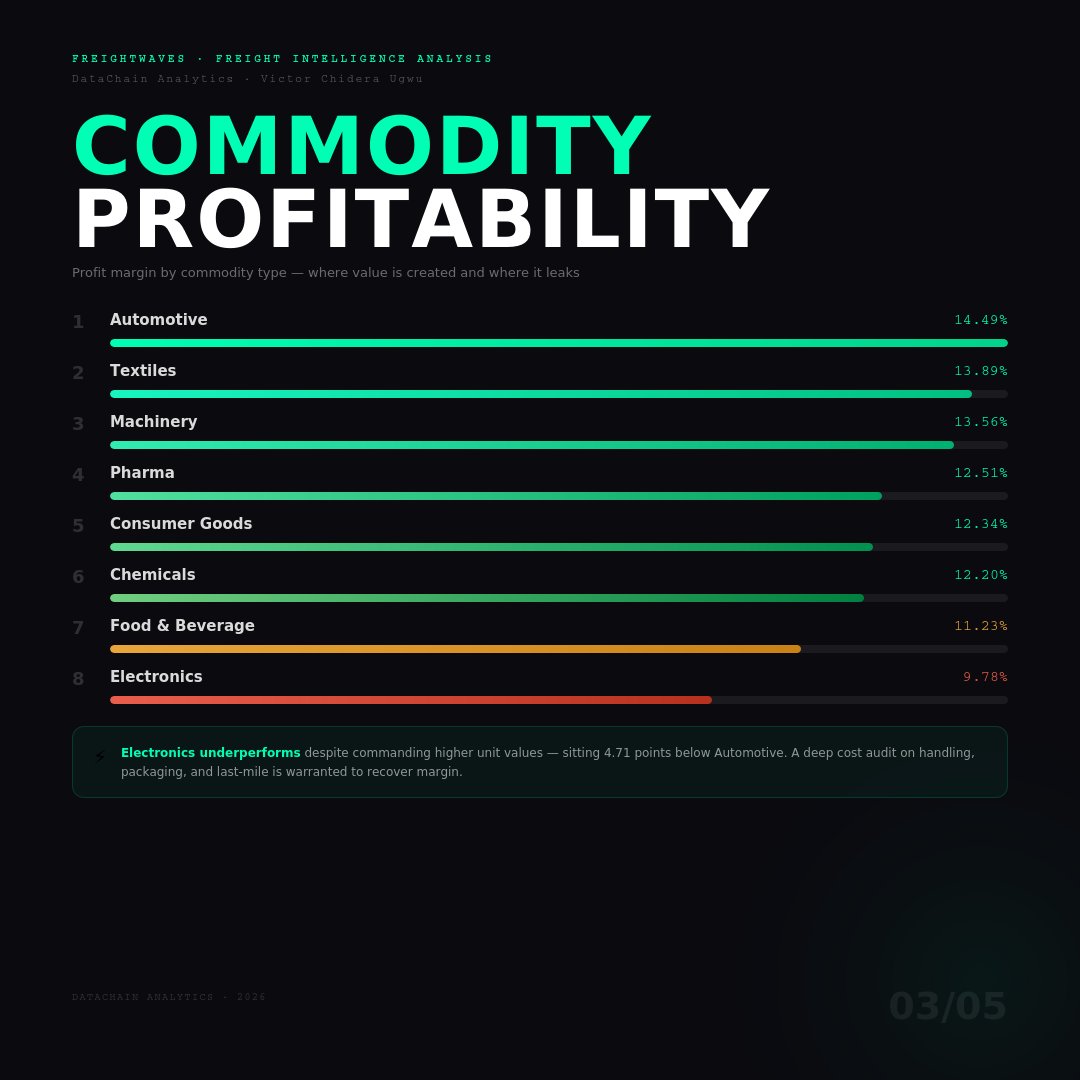
1. Electronics = lowest margin (9.78%) – despite high unit value. That gap screams for a cost‑audit per lane.
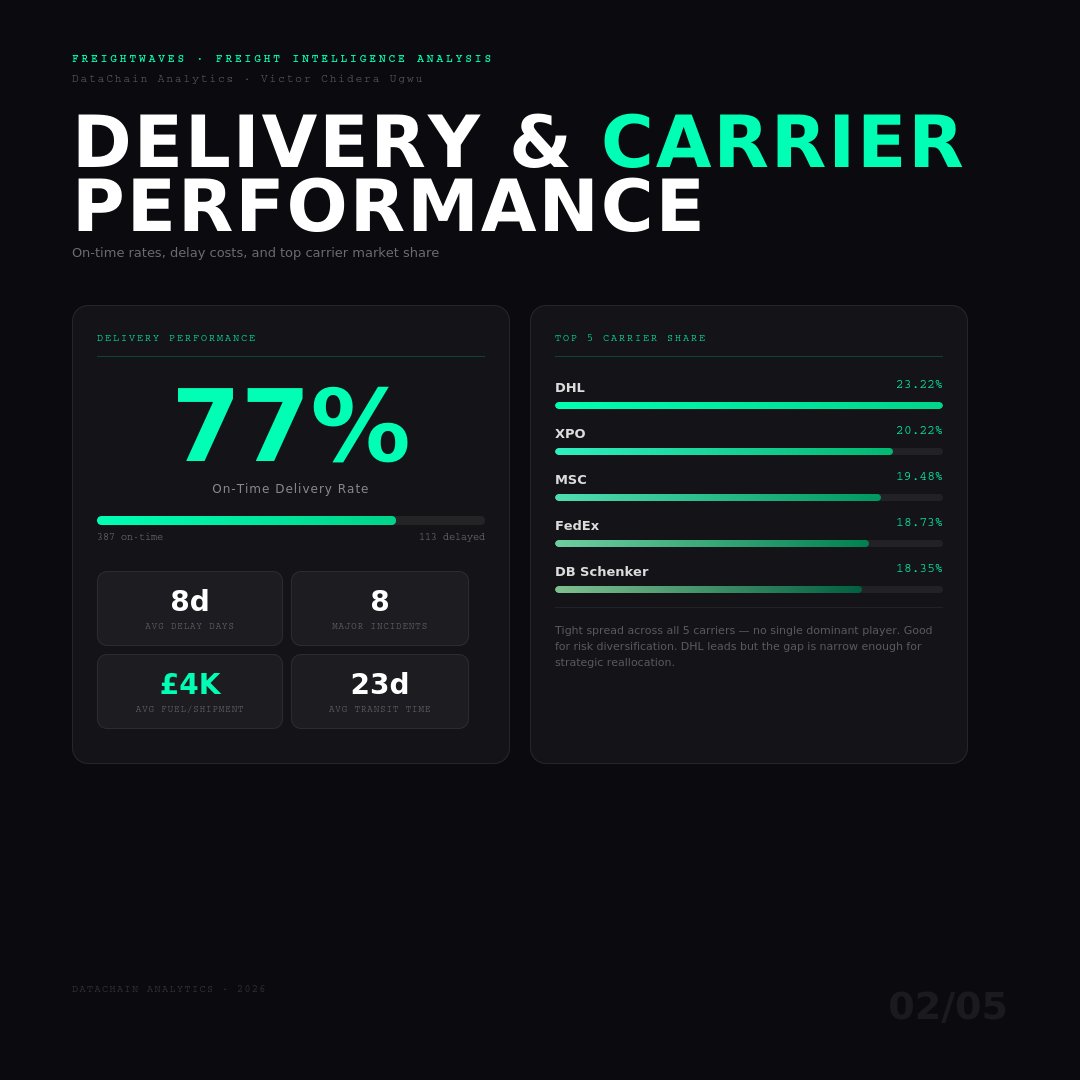
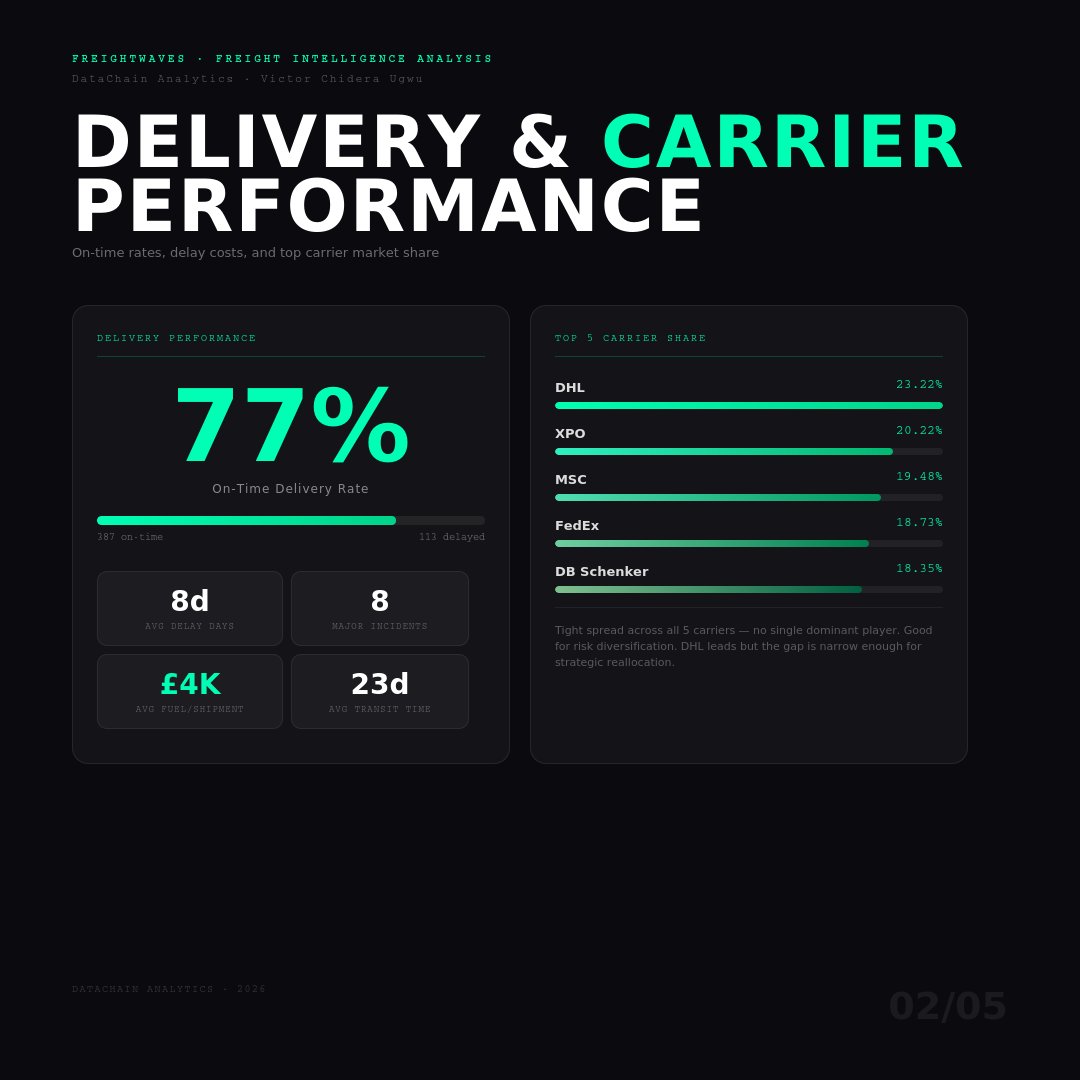
2. 77% on‑time delivery – 23% operational leakage. Average delay: 8 days. At £4K fuel per shipment, that’s real money bleeding.
3. Revenue stable at ±£2M/month – consistency is great, but also means headroom for targeted growth (no volatility excuses).
📌 My Recommendations to Founders & Supply Chain Leaders
✅ Audit the “high‑value, low‑margin” paradox
Electronics & Pharma underperform. Use DAX measures to model freight cost by commodity lane and isolate the leak.
✅ Kill the 23% delay gap
Eight major delay incidents pushed avg transit time to 23 days. Investigate by route – this is fuel savings customer retention gold.
✅ Optimise carriers without concentration risk
DHL (23.22%), XPO (20.22%), MSC (19.48%) – tight spread. No single carrier dominates → good for risk. But it also means you can renegotiate across multiple players.
✅ Grow where the signal is strongest
Latin America E‑Commerce = £2M (top regional‑segment pair). Africa = £1M and growing. Enterprise segment revenue varies wildly (972K–£2M) → pricing or service inconsistency. Fix that.
🛠️ How I Built It (The Real Workflow)
1. Power Query (ELT) – extracted raw shipment data, loaded into a clean schema, transformed cost & time fields.
2. Data Modelling & DAX – built profit margin KPIs by commodity, mode, region; surfaced carrier spread and the Electronics gap.
3. Excel – quick validation and scenario testing.
4. PowerPoint – designed the final dashboard layouts for FreightWaves leadership. No BI tool sprawl – just clarity.
Supply chain data doesn't lie but it whispers. Your job as an analyst is to amplify the signal, kill the noise, and show decision‑makers exactly where value leaks and where it compounds.
Founders, business leaders, supply chain pros – what’s one metric you track that most people overlook? Drop it in the comments. Let’s talk data.
#SupplyChainAnalytics #FreightWaves #PowerQuery #ELT #DAX #DataModelling #FreightIntelligence #BIConsulting
1
3
284
Hey #Datafam
3 months ago, I built a freight intelligence analysis for FreightWaves using ELT, DAX, and PowerPoint. Here’s what the data whispered and what I recommend you act on.
3 months ago, I delivered a full freight intelligence analysis for FreightWaves covering financial performance, carrier efficiency, commodity profitability, and regional revenue.
My toolstack:
🔹 Power Query (ELT – extract, load, transform)
🔹 Excel
🔹 Data Modelling & DAX
🔹 PowerPoint (dashboard layouts)
No over‑engineering. Just clean data, sharp logic, and board‑ready design.
Here’s what 500 shipments told me and what I recommended to leadership.
🔍 3 Findings That Caught My Eye
1. Electronics = lowest margin (9.78%) – despite high unit value. That gap screams for a cost‑audit per lane.
2. 77% on‑time delivery – 23% operational leakage. Average delay: 8 days. At £4K fuel per shipment, that’s real money bleeding.
3. Revenue stable at ±£2M/month – consistency is great, but also means headroom for targeted growth (no volatility excuses).
📌 My Recommendations to Founders & Supply Chain Leaders
✅ Audit the “high‑value, low‑margin” paradox
Electronics & Pharma underperform. Use DAX measures to model freight cost by commodity lane and isolate the leak.
✅ Kill the 23% delay gap
Eight major delay incidents pushed avg transit time to 23 days. Investigate by route – this is fuel savings customer retention gold.
✅ Optimise carriers without concentration risk
DHL (23.22%), XPO (20.22%), MSC (19.48%) – tight spread. No single carrier dominates → good for risk. But it also means you can renegotiate across multiple players.
✅ Grow where the signal is strongest
Latin America E‑Commerce = £2M (top regional‑segment pair). Africa = £1M and growing. Enterprise segment revenue varies wildly (972K–£2M) → pricing or service inconsistency. Fix that.
🛠️ How I Built It (The Real Workflow)
1. Power Query (ELT) – extracted raw shipment data, loaded into a clean schema, transformed cost & time fields.
2. Data Modelling & DAX – built profit margin KPIs by commodity, mode, region; surfaced carrier spread and the Electronics gap.
3. Excel – quick validation and scenario testing.
4. PowerPoint – designed the final dashboard layouts for FreightWaves leadership. No BI tool sprawl – just clarity.
Supply chain data doesn't lie but it whispers. Your job as an analyst is to amplify the signal, kill the noise, and show decision‑makers exactly where value leaks and where it compounds.
Founders, business leaders, supply chain pros – what’s one metric you track that most people overlook? Drop it in the comments. Let’s talk data.
#SupplyChainAnalytics #FreightWaves #PowerQuery #ELT #DAX #DataModelling #FreightIntelligence #BIConsulting
1
2
2,285

Exactly, as much as I was a massive skeptic of AI I have begun realizing just how powerful it can be and its only in its infancy right now on where it will likely be in the coming decades. As a result
For example, I took the project here:
github.com/mrexodia/ida-pro-…
From @mrexodia and others work. i have my own private version of it all expanded upon via AI that takes a native first approach for windows and Linux with Python as the fallback and gives control over IDA for every aspect of analysis, context adding/appending, searching, modifying data, diaphora like capabilities without it taking literally a week for large binaries, total control over multiple windows debuggers and Linux debuggers, etc. In total my MCP Toolstack for IDA Pro bow has 550~ individual tools that can be called to do effectively everything I could want from an IDA perspective.
I also made prompts based on @SquiblydooBlog analysis prompt they were using for processing potential malware and expanded upon it to cover all key window, Linux, Mac and productivity document analysis processes. It has a routing document where file type is determined then its routed properly to subprompts focused on detailed and exhaustive analysis for potential threats in the files. Its also a private build. But his original foundation prompt I based it on is here:
github.com/Squiblydoo/Remnux…
But in the end I can hand a malicious file to Claude Opus 4.6 and have it automatically and extensively do detailed vibe RE, vibe debugging and vibe emulation of the files and their behaviors and then write comprehensive reports in a matter of hours instead of days/a week of manual effort .
All while I work on other tasks that require manual effort.
3
133


May 13
Maybe the short term targets are not entirely realistic anymore, but they still mention prefs on many slides as one of the key tools in their toolstack.
Patience.
5
464


You can have all the data in the world, but if your organization isn't structured to act on it, you're just collecting expensive noise. The real competitive advantage isn't in the analytics toolstack, it's in how quickly you can turn insight into action. 📊
2
2
9

May 6
The AI toolstack I use for client delivery:
• Notion → project hub
• n8n → auto-updates on milestones
• Claude → writes status reports
• Loom → auto-records walkthroughs
• Stripe → triggers onboarding flow
Client thinks I have a team of 10.
It's just Claude and me
22
34
2,242