Glenna Demeter retweeted
Should it matter to you if your therapist uses a foodbank? The Great #Uberisation is happening for all of us - whether its App drivers or #UberTherapists
Full podcast with @WorkerInfoX @MartinSmith @survivingwork @SurvivingWk
lnkd.in/eRmG_jri
#ILC2026 #C193
1
31

C'est vraiment le côté sous traitance uberisation etc bien libéral débridé c'est un mélange du pire de ce que l'humanité a à proposer
1
18

👇Catch up on the last episode in series 4 of The Organising For A Change #podcast.
The chaos of Dynamic Pay Algorithms in the workplace as Uberisation of the jobs market rolls out.
🎧Listen here: open.spotify.com/episode/2iR…
#GFTU
1
24
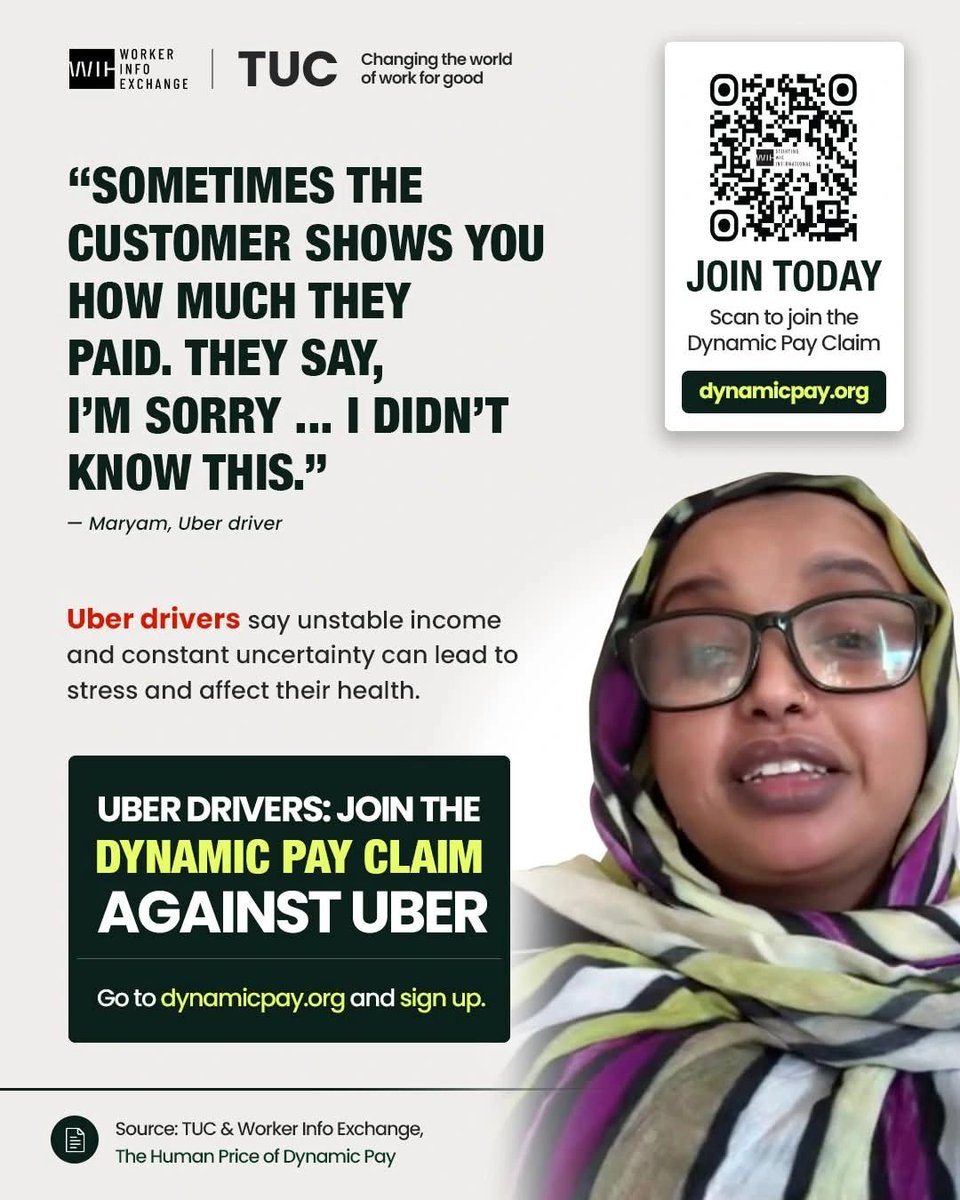
Join the DynamicPay.org collective claim against #Uber here. The Great Uberisation is happening for all of us - whether its App drivers or #UberTherapists
Listen to full podcast here facebook.com/watch/live/?ref…
@WorkerInfoX @FnvPlatformwerk @PsiANorg @ADCUnion
34

Jun 13
cest la uberisation de cette société de m…
Jun 13

on a tous été choqué de l’épisode de black mirror ou les gens se notaient entre eux on a tous été choqué par la lecture de 1984 et ce que ça prévoyait par contre c’est la réalité des livreurs des plateformes comme uber depuis leur ouverture et ça ne choque personne
64

Jun 12
Reforme des retraites, uberisation du marché, réduction des droits des travailleurs (durée chômage, rupture co) facilitation des licenciements, traités de libre échange, 211 Milliards d'aides ou crédit d'impôt aux entreprises etc. Ya pas à dire un sacré socialiste ce Manu...
1
15

Jun 12
The Great Uberisation - @WorkerInfoX campaign against #Uber @jamesfarrar @martinsmith02 @SurvivingWk
facebook.com/WorkerInfoX/vid…
If you take a #Uber this weekend speak to your driver about joining
@TUCYoungWorkers @The_TUC @PcuTrainee @PsiANorg
49

Jun 12
Le médecin et le patient sont les produits de ce truc.
Hors de question que quelque start up que ce soit trace mon activité .
Uberisation de la médecine
Dévalorisation de l’acte
Lapins garantis
Et ça coûte une fortune.
2
47

Jun 11
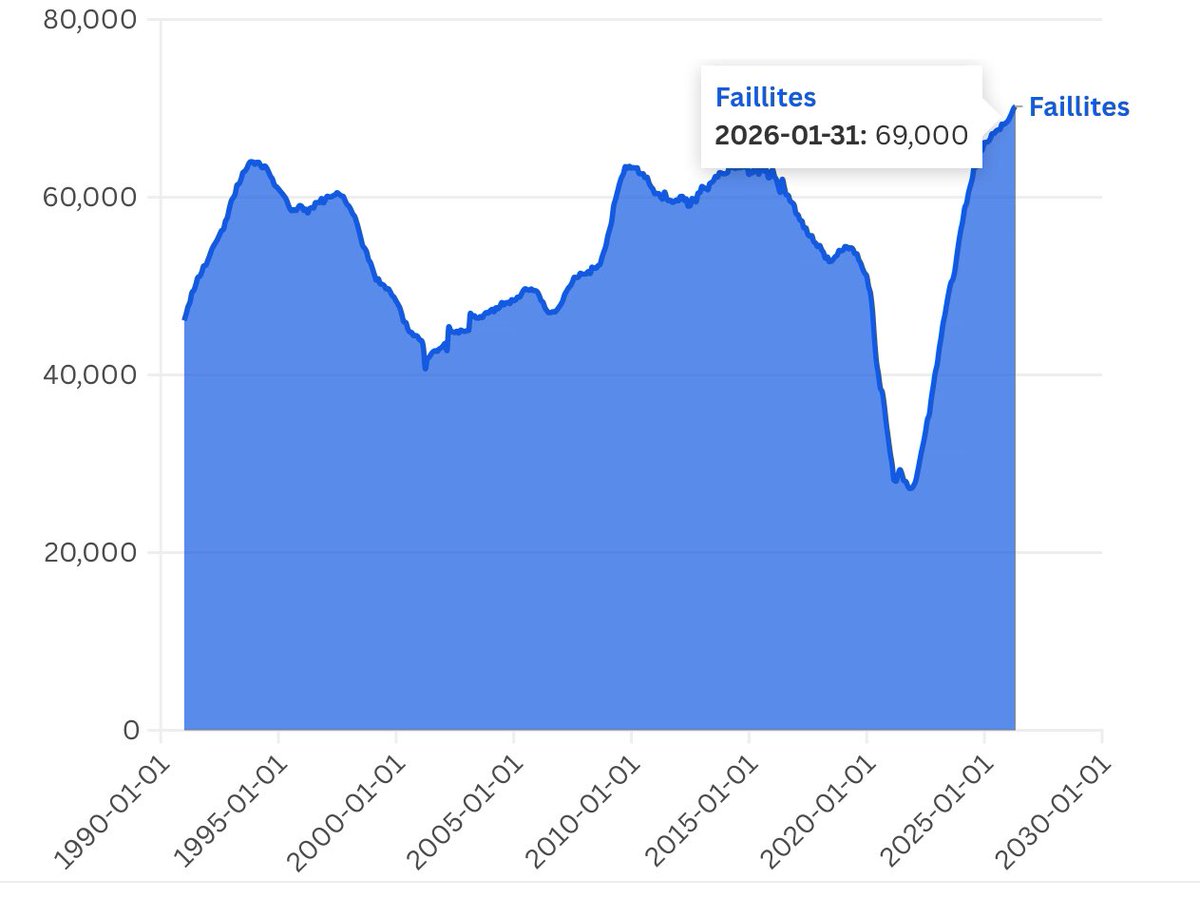
Un contre feux pour faire oublier l’echec de 9 ans et plus de macronisme ? Qu ont il fait des milliards extorqués aux Français ? Le record de faillite c’est en France est c’est lié a la désindustrialisation, delocalisation, uberisation et au cout de l’énergie a cause des enr ….et les copains de cron cron et ursula se gavent….

5

Jun 10
يبدو أن الرأسمالية الرقمية قد دمجت المصطلحين معاً في عصرنا الحالي عبر نظام (Uberisation)، فتحوّل العامل بفضل تطبيقات الهواتف النقالة من إنسان خارق (Übermensch) يركض طوال اليوم لتلبية الطلبات، إلى إنسان بلا حقوق (Untermensch) مجرّد من أمانه الوظيفي لصالح خوارزميات شركات التقنية!
1
1
98

Jun 7
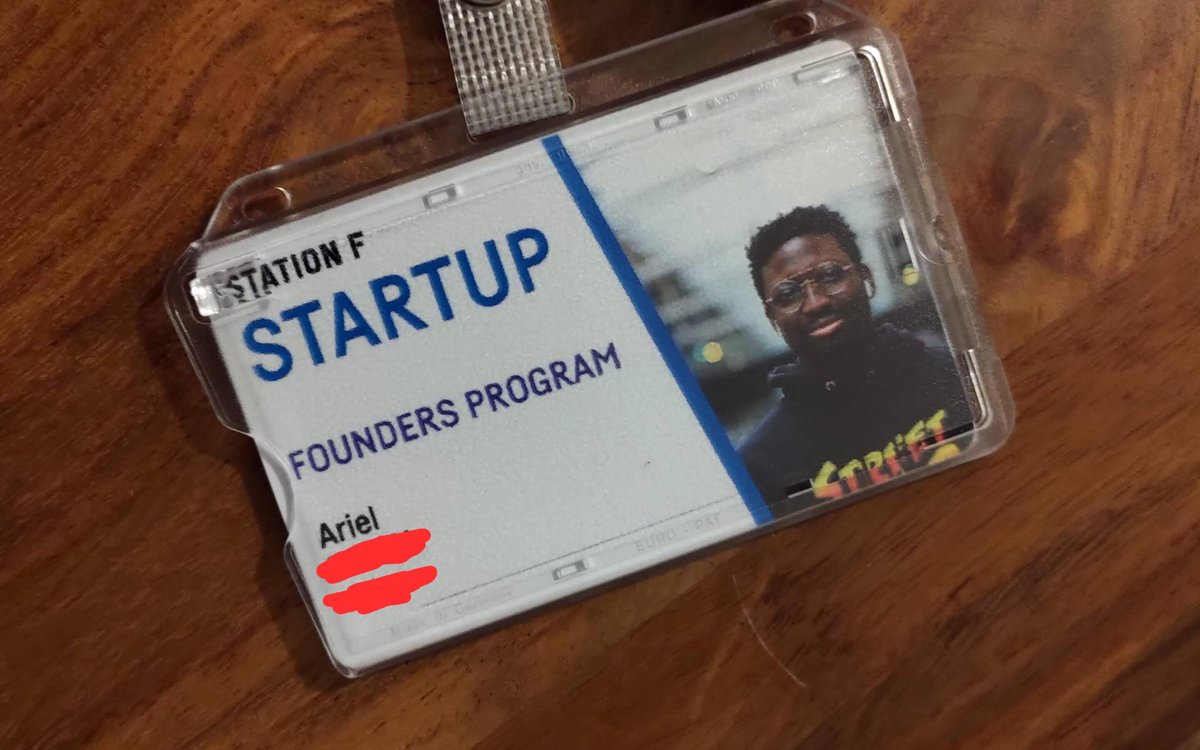
Comment je suis entré à Station F ?
Je suis entré à Station F pour la première fois en 2017.
C'était en tant que prestataire pour une startup dans le transport/uberisation.
Ensuite en 2020 j'ai postulé avec mon propre projet, un SaaS dans l'EdTech.
J'ai été pris et suis rentré en 2021.
Comment ça s'est passé ?
D'abord tu candidates en ligne via un formulaire où il faut remplir :
Ton idée, la cible, tes stats si t'en a, et tout ce que t'as déjà fait.
Quand j'ai postulé notre SaaS n'était pas encore sorti du tout.
Mais j'ai déjà fait plusieurs choses comme des sondages, des beta tests qui commençaient, etc.
Mon plus gros conseil ici c'est qu'il faut vraiment connaître ton secteur et ce que tu comptes faire, ainsi que montrer que c'est un projet ambitieux.
Ensuite quand la candidature écrite passe t'as un entretien en visio avec une app et un timer.
C'est très perturbant car c'est pas un humain qui post les questions.
T'as juste la question à l'écran dans l'app et t'as N secondes pour répondre à l'app qui enregistre la vidéo.
Là c'est qu'il faut c'est être prêt à toute éventualité dans les questions et si t'es avec un confounder que vous soyez déjà un peu aligné sinon...
Le risque de bug devant la caméra quand une question tricky arrive peut tout faire foirer.
Je parle de question du type "si votre associé à fait une grosse erreur, vous faites quoi ?"
Et après chacun doit répondre.
Je paraphrase, mai il y avait des questions du style.
Les questions dépendent de ce que vous avez mis dans votre candidature écrite (nombre de founders, etc).
Une fois que vous êtes pris, vous recevrez un mail vous indiquant le jour de la rentrée.
Ensuite le jour J vous aurez un badge founder, et accès à un espace avec l aliste des autres boîtes, un slacks, des perks et plus encore.
Vous avez droit d'être jusqu'à 12/13 de tête, et vous payez par seat.
Voilà voilà.
Jun 7

Merci !
Rien à voir mais il me semble que tu as été incubé à station F, t’avais fait le fighters programme ?
2
1
24
7,336


En même temps, c'est pas compliqué : ils chialent qu'on se plaint de nos jobs pourris, et il nous propose quoi comme soluce ?
...: l' #uberisation .
1
2
19

May 30
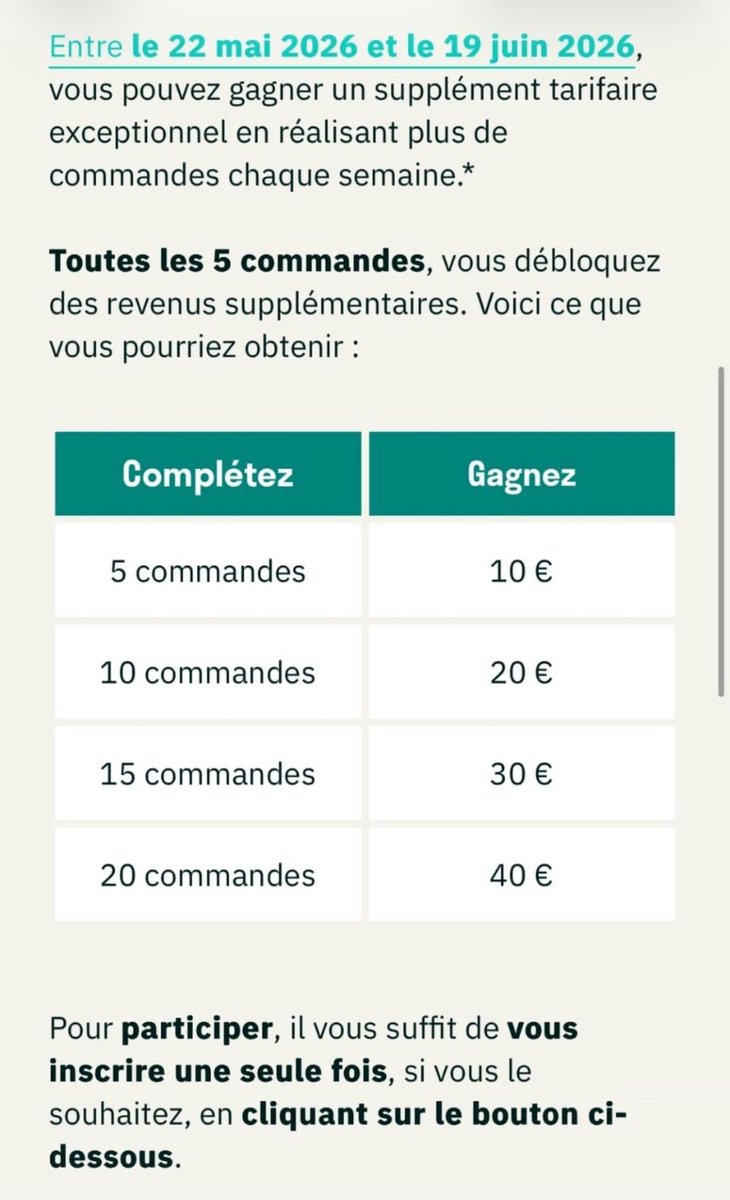
En sachant pertinemment que cette "prime" sera captée par les loueurs de comptes qui sur exploitent les livreurs sans papier ...
il est temps de sortir de ce système d'exploitation qui n'est autre chose que de l'esclavagisme moderne !
#uberisation #deliveroo
May 30

En pleine canicule, Deliveroo lance un « challenge » à ses livreurs pour qu’ils effectuent plus de courses.
Augmenter les salaires ? Non.
Réduire le temps de travail ? Non.
Pousser les livreurs à se mettre en danger ? Oui !
Honteux.
1
8
341

May 23
The ‘Uberisation’ of domestic work.
From metro cities to Tier-2 towns, what does the rise of these apps reveal about India’s domestic help market?
Listen to @SnehaMordani.
#DashboardToDoorbell | @SnehaMordani
1
1,166


May 16
#ÀlaUne des 16 et 17 mai 2026 #Uberisation #Plaisance #Loup #Alpes #RueDeLaRépublique #Logement #AudreyGarino #Marseille #RCT #Toulon #OM #TeamOM #WeekEnd
En kiosque et par abonnement sur lamarseillaise.fr

2
4
222

May 15
Les deux pays sont dans le même état
>peuple de souche livré à lui-même méprisé par l'hyper-classe
>bourgeoisie en voie de déclassement imitant les codes de l'hyper-classe par pur copium
>immigration de masse prédatrice
>perte de confiance, uberisation, mort des centres villes...
3
13
412

May 5
Earlier this week, our CEO and Co-founder @theonejvo spoke with @MizenRonald, Senior Political Correspondent at the The Australian Financial Review, for a piece on Assistant Technology Minister @Charlton_AB's push to keep Australian AI procurement spend onshore.
The framing of the piece is a useful one for the future.
Every AI procurement decision Australian businesses make today have small individual consequences and enormous collective ones.
$100 billion in wealth retained by developing and exporting Australian AI versus the "Uberisation" of the digital economy with profits flowing offshore, is not an abstraction, it is the actual choice Australian boards are making in real time, often without recognising it as a choice at all.
That argument applies most sharply to AI cyber offense and defence capability, which is where Aether AI sits.
@tryaether_ai is Australia's, and the world's, first full-spectrum frontier attack and defence AI, securing cloud, mobile, wireless, web, identity, API and adjacent surfaces under a single architecture.
Cyber is no longer a tool category that can be outsourced as a procurement convenience. It is becoming a national security & capability question.
@AnthropicAI's Mythos changed the threat picture, and project Glasswing's invite-only access list, with no Australian bank publicly listed on it, illustrated that foreign-controlled frontier AI is now a strategic asset held by its host country, available to other countries on terms that can be influenced by the host country's politics.
None of this is opposition to Anthropic.
In fact, we've been accepted into their Cyber Verification Program, use their frontier models inside our architecture (alongside our own cyber model), and we want to keep working alongside them on what comes next. So, the sovereignty argument is structural, not adversarial.
Without it, a meaningful part of the country's cyber posture is outsourced.
AUKUS Pillar II was designed to make Australia a co-developer of advanced capability, not a customer.
On AI cyber specifically, that role only works if Australia has its own offensive and defensive AI capability to bring to the trilateral, therefore, if the country does not build it now, the next decade of Five Eyes cyber cooperation will be entered as a buyer. That is not the role AUKUS was designed for.
Last week's coverage on Mythos, the @ASDGovAu's updated frontier-AI guidance, and the @AUSTRAC and @APRAinfo commentary, describe the same thesis from four different angles.
1. The AI cyber threat picture has shifted
2. Australian organisations are not adequately positioned
3. Foreign capability cannot be the default answer
4. The window for Australia to build its own AI capabilities is short and closing.
2
1
2
2,002