
Israel is the problem. We must untangle this dysfunctional relationship with Israel immediately.
1
We must join together and focus on one thing and that is relentlessly voicing our outrage of Israel and demand that we as a country untangle our dysfunctional relationship with them. We must demand we cut ties with them completely and immediately.
5

I know… the US needs to immediately untangle itself with the terrorist rogue state of Israel
4
Nurul retweeted

Complicated
America needs to untangle itself from Israel

JUST IN: 🇮🇷🇮🇱🇱🇧 Response by Iran’s Foreign Ministry to Israel’s claim they will not withdraw from Lebanon:
– We know that Israel never takes any action without consultation and direct coordination with America.
– Therefore, we hold America directly responsible if it fails to force Israel to submit to its obligations as part of the MoU, with necessary consequences.
1
2
16

I am literally taking a break and cancelled my gpt 5.5 sub till fable is back. Nothing matters till then I will jsut make more of a mess fable has to untangle
42

The solution is to untangle your life as much as you can from your phone.
Manufacturers.are short sighted if they think this won't effect them.
Very few are going to spend £1000s on government controlled phones.
Might take a while but the social tech boom will be over.
1
14

32m
and that is why i admire good writers so much... not because they use fancy words, but because they can gently untangle what is inside them and let others understand it.
4/4
5

That may very well be the case. Problem is, if Leone signed away the rights Ruthless is claiming to own - knowingly or not, homie’s gonna need Matlock to untangle that mess.
3


When DeFi feels like juggling flaming swords, @pheasantnetwork aims to make it as simple as a text message. Can AI-powered intents finally untangle the cross-chain chaos? Check out their super app 👉 pad.chaingpt.org/pools/pheas… #PheasantNetwork $PNT

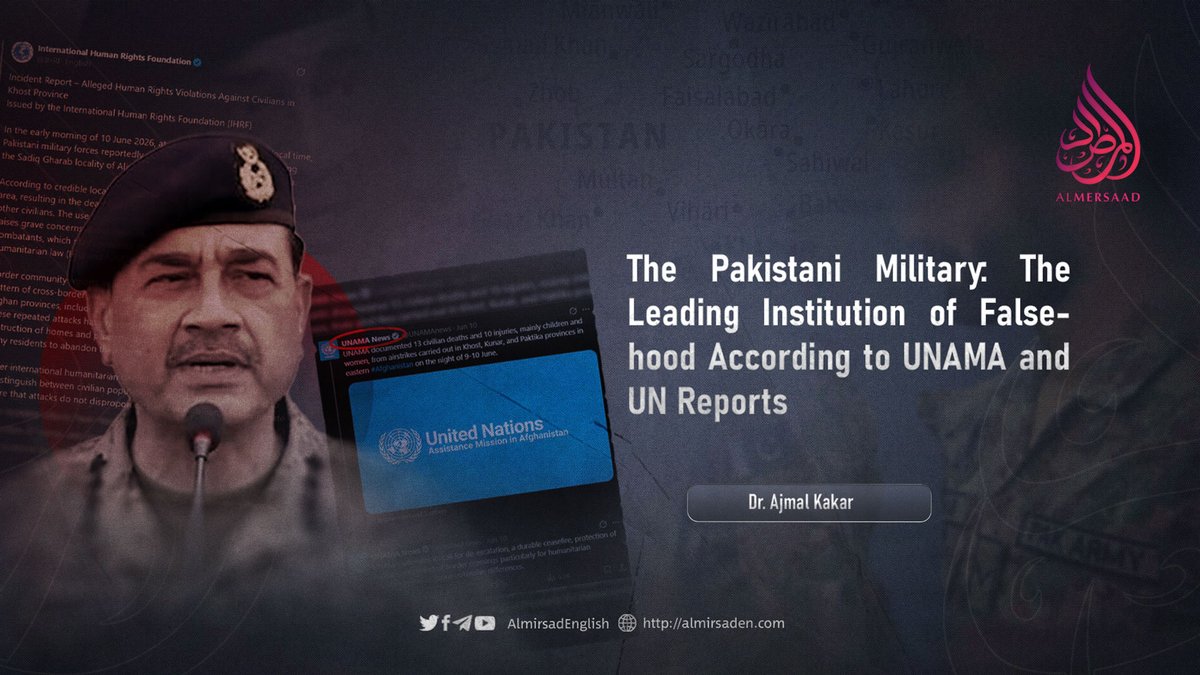
On the night between June 9 and 10, 2026, when the frightening echoes of explosions suddenly shattered the calm of Khost, Kunar, and Paktika, this was not just another routine cross-border strike by the Pakistani military. It was a bloody and decisive moment that erased the already blurred line between truth and falsehood in the region, a line that for years had been covered by competing narratives.
The smoke from the explosions had barely begun to clear when a press statement, prepared by the Pakistani military and handed to Federal Information Minister Attaullah Tarar, was released. The statement claimed that the strike had been carried out on the basis of precise, reliable, and credible intelligence, that it had been carefully planned, and that its purpose was to target militant hideouts across the Durand Line.
The official narrative promoted by the military headquarters (GHQ) in Rawalpindi, further claimed that 26 militants had been killed in the strike and that concerns raised by the Afghan government regarding civilian casualties were merely part of an organized propaganda campaign against Pakistan.
History, however, has always shown that propaganda and fabricated narratives rarely survive for long. This time too, the effort to conceal the truth did not last long, and the official story quickly fell apart.
The inflated picture painted by the state narrative collapsed entirely when the spokesperson for the United Nations Secretary-General, Farhan Haq, publicly rejected the military's claims and presented the actual picture of the incident to the international community. Soon afterward, UNAMA, the United Nations Assistance Mission in Afghanistan, released its detailed fact-finding report, which fully supported the Afghan government's position.
According to the findings of these international institutions, a thorough assessment of the targeted areas showed that the so-called "defensive operation" had not struck militant centers at all. Instead, it had hit simple mud-built homes where innocent families were asleep. As a result of this bloody and inhumane attack, 13 civilians, including women and children, were martyred and another 14 were seriously wounded.
With the United Nations and UNAMA supporting the Afghan position, the falsehoods hidden behind the Pakistani military's artillery and the press statements produced by GHQ crumbled like a wall of sand. And from here a deep and troubling question arises: why would an army that considers itself at the peak of professional capability carry out such a dangerous cross-border strike? And more importantly, what hidden factors and motives drive this so-called professional military to spill the blood of its Muslim neighbors?
To untangle this complicated puzzle, we cannot look only at the mountains along the Durand Line. We have to look at the full geopolitical chessboard spread across the region. Experts in international affairs and seasoned analysts view the situation from a much deeper strategic perspective. If you study the major events of recent regional history, a curious and recurring pattern emerges: whenever political or military tensions between the United States and Iran have reached their peak in the Middle East, the smell of gunpowder has suddenly appeared along the Durand Line as well.
Many analysts do not see this as mere coincidence. They view it as part of a deliberate strategy of manufactured crises. Pakistan today faces severe economic and political difficulties, and its struggling economy depends heavily on financial assistance from Gulf countries, particularly Saudi Arabia, as well as loans from the International Monetary Fund (IMF). Whenever tensions rise in the Middle East and the possibility increases that Iranian actions could threaten American or Saudi interests, pressure also grows on Islamabad and Rawalpindi to take their defense commitments and regional alliances into account.
Yet Pakistan faces a...
Read more 🔗
almirsaden.com/the-pakistani…
5
17
195


Companies that go all in on AI software will one day realize that they created a pile of unreadable shit that is impossible to untangle or build on, even by the best models. They'll have to throw it away and start anew.
3
38

the NFTs sort of tag along for the ride and end up in giant black holes.
with a lil bit of graph theory (node degree analysis, input vs output txs) we can untangle the network and identify the edge vs core of their wallet/address aggregation system.
(deposit addresses, hot wallets, cold wallets)
2
3
66

lalu ada earphone baseus kecuci di mesin cuci 1 kali, ketarik step motor dan plat nomor berkali kali, kelilit sampe untangle 94629219 kali masi idup
4

4. Intention when brushing hair -> Yaa Allah, untangle the difficulties in my life and guide me to what is best.
1
1

I see no possible scenario where we’re able to prevent China or Chinese intelligence folks from accessing our frontier lab models.
China’s intelligence web is already deeply embedded throughout our entire country that there’s no way to untangle it.
137


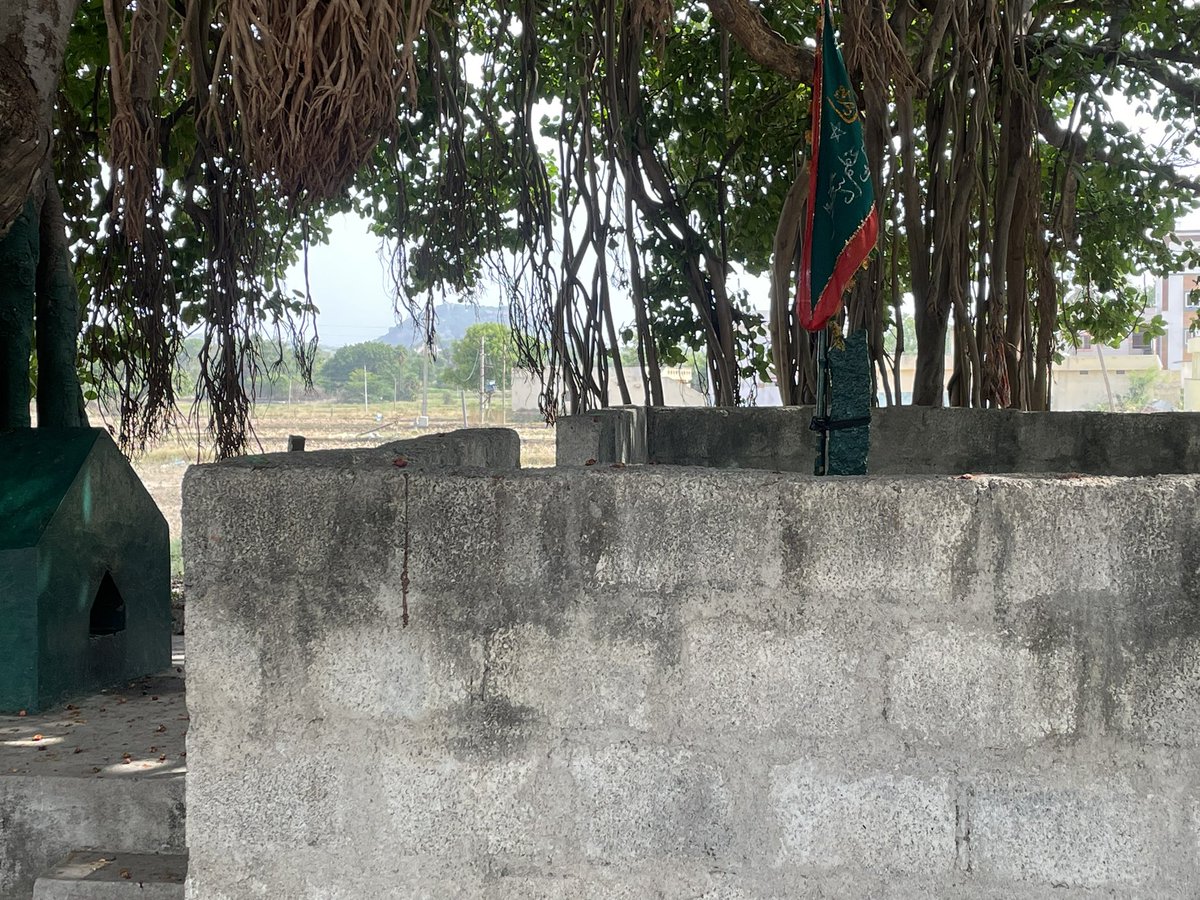
Yesterday I had written about a Mazar standing inside the premises of an 800-year-old Sri Santhana Venugopala Swamy Temple Kondamadugu, near Bibinagar. Curious about how such a situation came to exist, I went back to the temple today and made some inquiries.
What I heard was fascinating, ironic, and perhaps a lesson in how ignorance can create problems that become almost impossible to untangle later.
According to the temple authorities, on paper the entire area surrounding the temple more than 150 acres belongs to the temple. However, for many years the temple remained neglected and largely abandoned. As time passed, villagers gradually began cultivating portions of the land. Nearly 100 acres eventually came under agricultural use.
The village itself has only 4–5 Muslim families. The overwhelming majority are Hindus.
Around 26 years ago, the government decided to conduct a survey of the temple lands. This is where the story takes an unexpected turn.
A Hindu villager reportedly became possessed by a deity and declared that a highly respected Muslim man should be buried under the sacred tree within the temple premises. Another Hindu followed this instruction. Soon, Hindus and Muslims together built a small burial mound and declared it a holy shrine.
When government officials arrived to survey the land, many of the encroachers refused to cooperate. The reason? They feared the curse of the holy man believed to be resting beneath the tree.
When officials attempted to proceed using force, the entire village Hindus and Muslims alike united in opposition.
What began as a small burial mound slowly evolved into a protected structure. For the past 21 years, Muharram-related festivities have been celebrated there under the name "Peerula Panduga." Hindu villagers participate enthusiastically. They visit the temple and also join the celebrations at the shrine, dancing and taking part in the festivities alongside their Muslim neighbours.
Now comes the irony.
According to mainstream Islamic teachings, constructing Mazars over graves and seeking blessings from the deceased is considered impermissible by many scholars, and praying to or through the dead is viewed as shirk.
According to Hindu tradition, a place associated with a revered saint or sacred presence is naturally treated with respect and reverence.
So what do we have here?
A shrine that many Muslims would consider religiously problematic.
A shrine that many Hindus accept as sacred.
A village where both communities participate wholeheartedly.
And a situation that has effectively helped prevent the recovery of large portions of temple land.
Over the years, several organisations reportedly tried to remove the structure and restore the encroached lands to the temple, but none succeeded. During the previous government, even securing 9 acres for the temple was said to have been an uphill battle.
This leaves an uncomfortable question.
Who exactly is responsible?
Is it only the Muslims?
Is it only the Hindus?
Or is it a case where collective ignorance, mixed with local interests and community unity, created a situation that neither religion actually intended?
Some people suggest that the solution is simple: demolish the Mazar without a second thought.
But is that really the right answer?
When a structure has existed for decades, when an entire village mostly Hindus has participated in maintaining it, and when emotions, faith, history, politics, and property disputes have all become tangled together, the issue becomes far more complicated than a bulldozer solution.
Sometimes the most difficult problems are not created by malice. They are created when people stop understanding their own traditions, while still acting in the name of them.
And decades later, everyone inherits the consequences.
Jun 14

Yesterday, in a prayerful mood, I visited the 800-year-old Sri Santhana Venugopala Swamy Temple at Mahadevpura near Bibinagar, a temple dating back to the Kakatiya era.
To my surprise, a Mazar has appeared under the sacred Ashwatha (Banyan) tree around which devotees traditionally perform pradakshina as part of temple worship.
How and why was a Mazar established inside a Hindu temple campus, beneath one of its most sacred trees? Was this done with the knowledge and consent of the temple authorities and devotees, or was it an overnight encroachment? These are questions that deserve clear answers.
1
36