



Jun 15
Driudor, the CEO of GenLayer, joined a livestream to talk about something really important
How AI is changing oracles, and what that means for prediction markets.
So if you missed it, here’s a simple breakdown.
Let’s start with the basics.
Blockchains are powerful, but they can’t see the real world.
They don’t know prices, events, or outcomes.
That’s where oracles come in.
They bring real world data on-chain so smart contracts can actually work.
Now traditionally, oracles are very rigid.
They rely on predefined data pipelines, built and maintained by engineering teams.
It works but it’s limited.
GenLayer is taking a different approach.
Instead of fixed pipelines, it works more like a decentralized jury.
Multiple AI agents look at the same question, reason through it, and agree on an outcome.
But here’s the challenge
Blockchains need exact answers.
AI doesn’t give exact answers, it gives slightly different ones that mean the same thing.
So how do you reach consensus?
GenLayer introduces something called the Equivalence Principle.
Instead of matching words exactly, it focuses on meaning.
If different AI agents arrive at the same conclusion, even with different wording, that’s enough to reach consensus.
Now what about more personal or niche predictions?
Things that aren’t on the internet.
GenLayer handles that too.
It uses multiple AI agents that can choose tools depending on the task.
For example, if the question is:
Did I get home in 20 minutes?
One agent might check Google Maps.
Another might check Apple Maps.
If both confirm the same result, the outcome is settled.
Now you might be wondering
What stops people from cheating?
Two things.
First, secure environments called TEEs.
These keep the AI agents protected so no one can tamper with them.
Second, random selection using VRFs.
This means no one knows which agents will be chosen ahead of time, so collusion becomes almost impossible.
There’s a lot more in the full discussion…
But if you’re interested in prediction markets, or how AI fits into blockchain…
This is definitely worth paying attention to.


Yesterday @driudor, CEO of @GenLayerFDN, joined @wallet's Finding Alpha livestream to talk about the role of AI in oracles and where the Intelligent Oracle fits as the resolution layer for outcome markets on @XLayerOfficial's Exchange OS.
Full conversation below 👇
3
9
83


Jun 14
Imagine a 1v1 blackjack game where winning pays in SOL
@playdolero makes it real: outplay the person across from you and take the pot
Magic relics let you mess with your opponent mid-match; the smarter player wins
Available on Solana Seeker, powered by MagicBlock VRFs ✨🎲
7
12
90
5,251

Jun 12
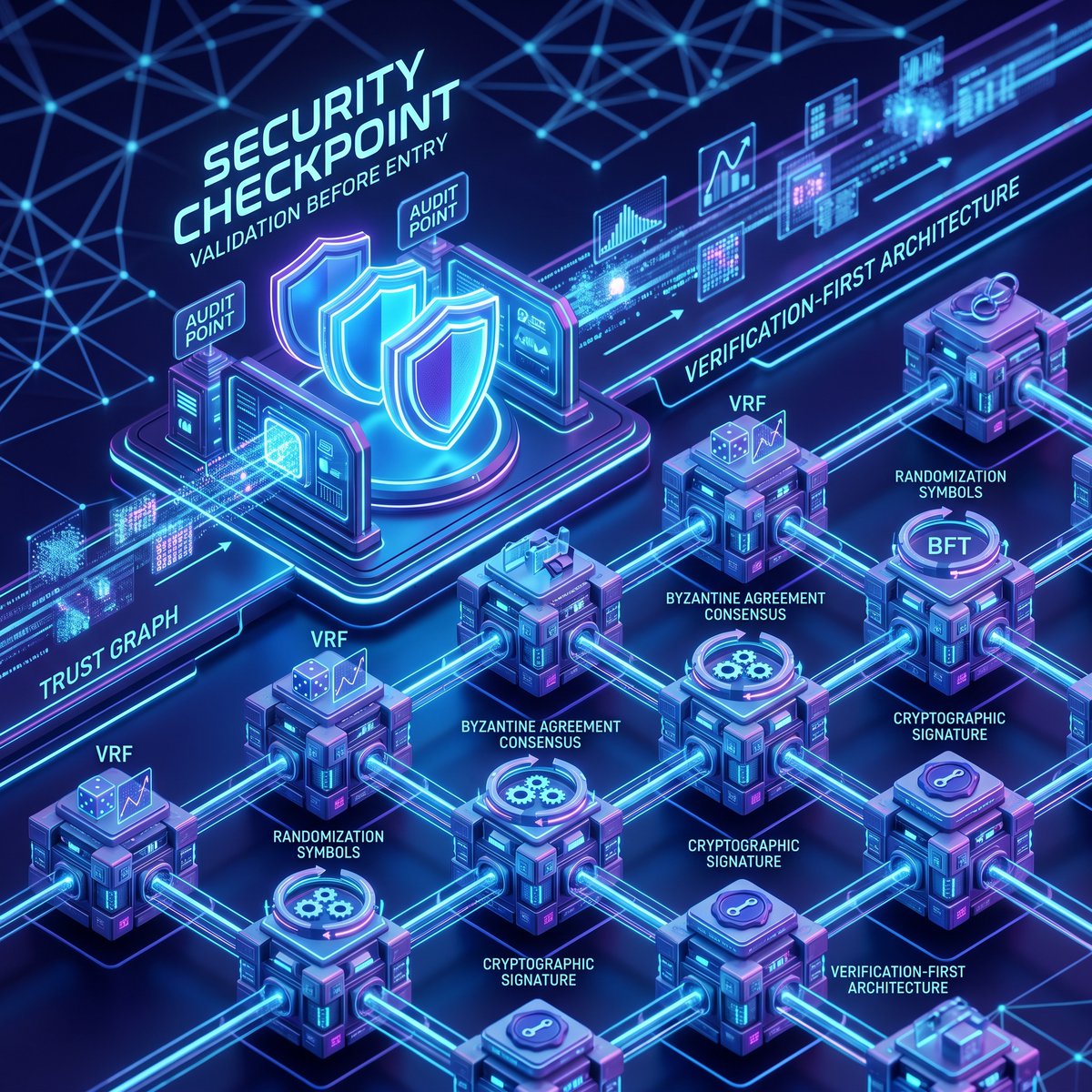
1️⃣ Vercel Security Checkpoint reflects edge validation.
2️⃣ POCI adds trust to distributed computing.
3️⃣ Echoing Byzantine agreement VRFs, coordination is key.
4️⃣ Verification-first design reduces risk in decentralized systems. #POCI
51
Jun 11
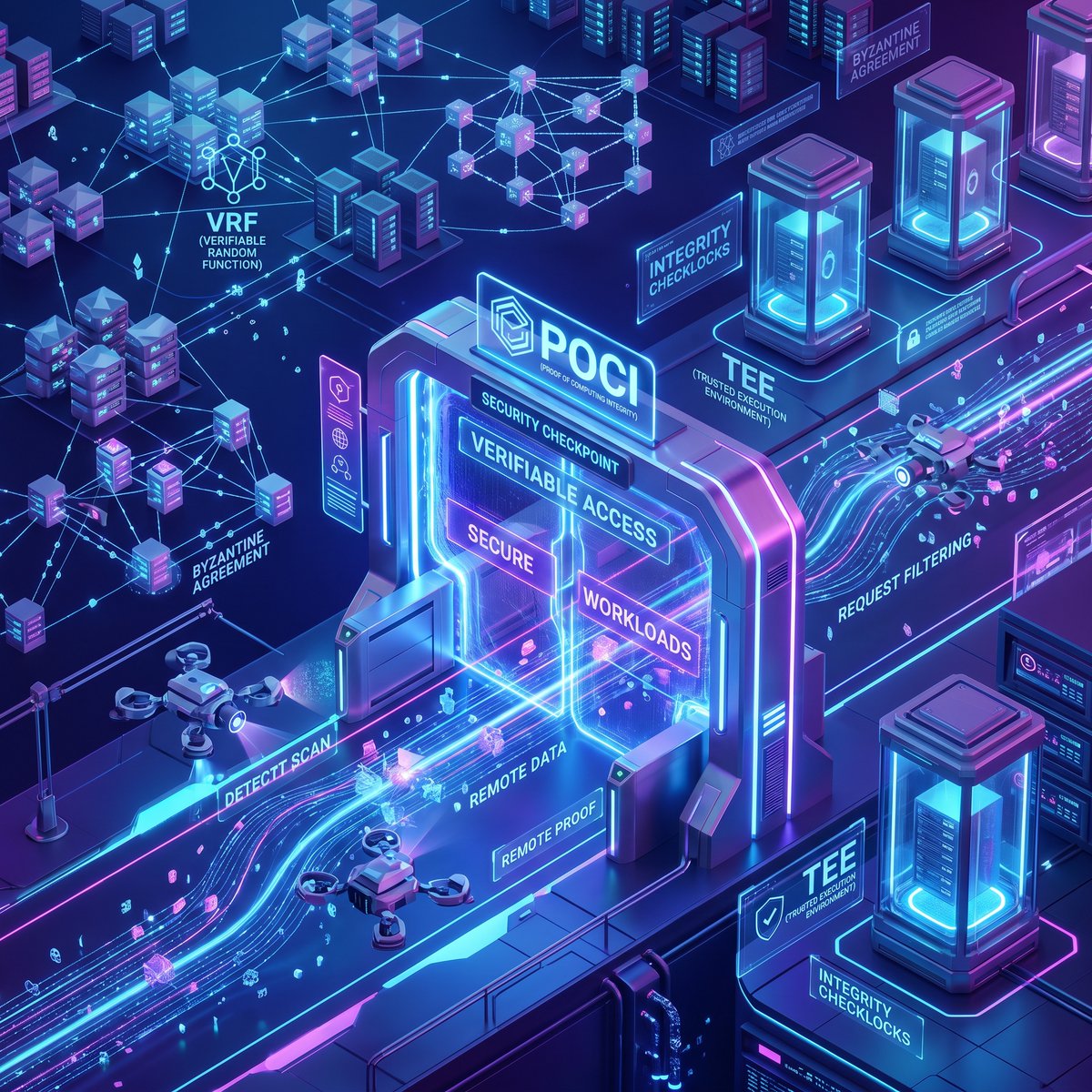
1️⃣ Vercel Security Checkpoint shows why verifiable access matters. In POCI Distributed Computing, trust starts with bot detection, request filtering, and remote proof.
2️⃣ From VRFs to Byzantine agreement, secure coordination needs verifiable execution. That also echoes isolated environments and TEE-backed integrity.
3️⃣ POCI connects secure compute with scalable systems. Clear proofs, safer workloads. #POCI #DistributedComputing utnet.org/
1
45

Jun 11
This game is planned for this Fall on Quest3.
Personally I prefer motion soccer , VRFS or Rezzik
1
3
154


Jun 5
VRFs: LaV (ia.cr/2022/141), Ring VRF (ia.cr/2026/772).
Sure, Bitcoin doesn't need a VRF, but they do already exist.
1
3
61

Bitcoin does not use VRFs (core to Ouroboros block production), nor aggregatable signatures (core for Leios and Peras). Bitcoin won't prove that Cardano's PQ approach is secure (although IO researchers proved Bitcoin is secure).
1
1
2
83

Jun 5
New exploits are coming. Google has brought its post-quantum migration forward to 2029 – ahead of the NSA's 2031 and the US government's 2035 deadlines.⏰
The challenge for Cardano – post-quantum VRFs for Nakamoto-style leader election – is an open research problem. CV26 funds IOR to solve it:
🔬 Performance-optimized PQ VRFs
⚙️ Quantum-secure Ouroboros analysis
📜 A clear migration roadmap and CIP
Cardano is positioned to lead the migration now, not follow.
📺 Varun Maram on the post-quantum strategy: jump in from 0:53 to 4:25 if you want a summary
10
81
343
9,387

Jun 3
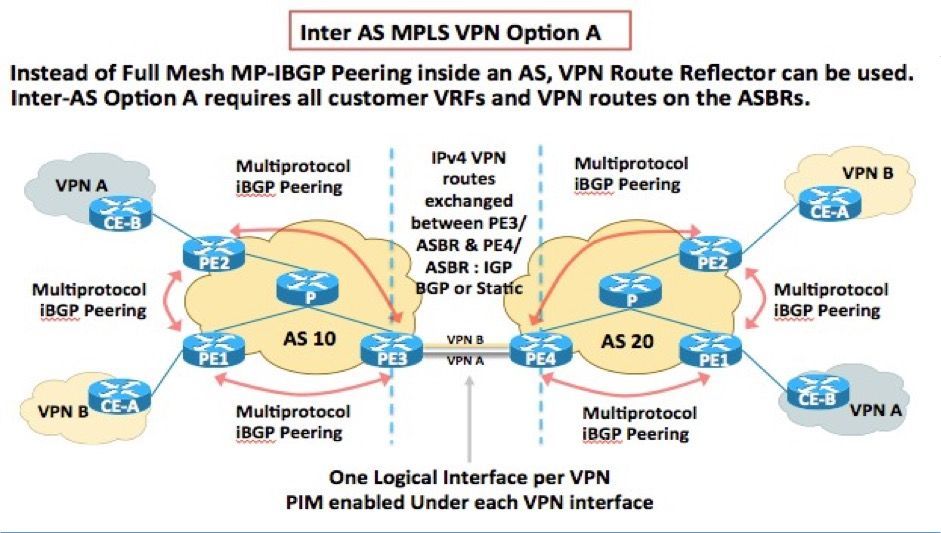
Inter-AS MPLS VPN Option A, it is the simple option, but at a cost!
Inter-AS MPLS VPN Option A connects two MPLS-enabled autonomous systems using back-to-back VRFs on ASBRs.
Each VPN is manually extended between ASes using static routes or any dynamic routing protocols, no MPLS labels are exchanged, so traffic is IP routed at the ASBRs.
It is simple and secure; we don't exchange the IP Infrastructure prefixes between the ASes.
But the downside? It doesn’t scale.
Managing VRFs and per-VPN routing between ASBRs becomes a nightmare as the number of VPNs grows.
Option A is still used in smaller deployments or mergers and acquisitions, but in large-scale designs, Option B or C is preferred.
Understanding when and why to use designs like Option A is key to thinking like a network architect and that’s exactly what we teach in our CCDE v3.1 course: buff.ly/dPXoxc7
If you want to go beyond configs and master real-world network design, this course is built for you.
#CCDE #NetworkDesign #NetworkArchitecture #OrhanErgun #OrhanCCIE #OrhanCCDE
5
27
846

May 31
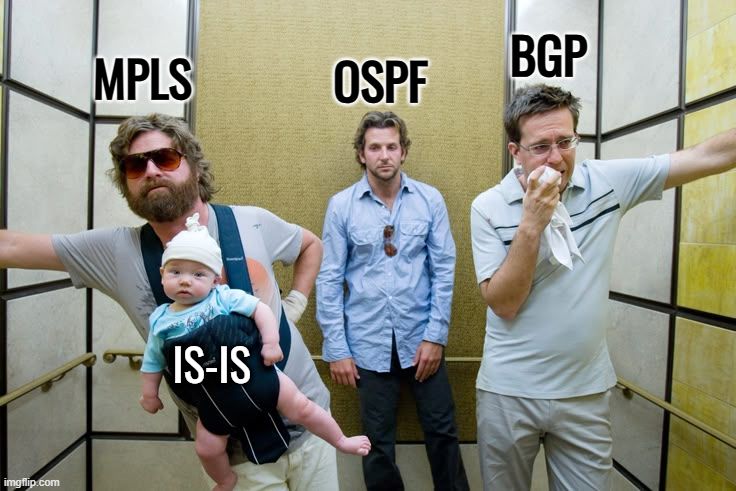
Network engineers when they meet advanced routing protocols... 😅
Mastering enterprise networking today is no longer limited to configuring a few routing protocols. It’s about understanding how large scale service provider and enterprise infrastructures actually operate in real world environments.
This is usually the moment engineers realize that OSPF adjacency formation and route advertisements were only the beginning.
Suddenly, they find themselves diving into OSPF SPF calculations, LSA behavior, multi-area designs, virtual links, IS-IS hierarchies, BGP path selection, route reflectors, confederations, communities, MPLS label forwarding, VRFs, and VPN route leaking.
Every protocol introduces its own database, packet types, troubleshooting methodology, and verification process.
A single route may be learned through BGP, resolved through an IGP, transported using MPLS labels, and isolated within a VRF before finally reaching its destination.
That’s when engineers move beyond basic configuration and start understanding how routing, switching, and transport technologies work together to build scalable, resilient, and highly available networks.
If you're looking to develop expertise in advanced OSPF, IS-IS, BGP, MPLS, and VPN technologies, let's connect ♥️♥️
1
1
8
83

May 28
Post-quantum security is no longer theoretical for @Polkadot.
The @Web3foundation has unveiled a technical roadmap for making both Polkadot and JAM resistant to future quantum threats.
What stands out:
• Migration toward NIST-standardized post-quantum cryptography
• ML-DSA (Dilithium), Falcon, and ML-KEM integrated into consensus and accounts
• Post-quantum randomness beacons replacing classical VRFs
• FRI-based SNARKs enabling secure account migration without exposing private keys
• Quantum-resistant BEEFY bridge architecture
• @kusamanetwork positioned as the experimental frontier for PQ upgrades before Polkadot deployment
This is bigger than an upgrade.
It’s a signal that Polkadot is thinking decades ahead - preparing infrastructure not just for today’s internet, but for the cryptographic realities of the next era.
While most ecosystems are still debating scalability narratives, Polkadot is already engineering for a post-quantum future.
The future of Web3 will belong to networks that can survive technological discontinuities.
Polkadot and JAM are preparing for exactly that.
#Polkadot #Kusama #Web3 #JAM

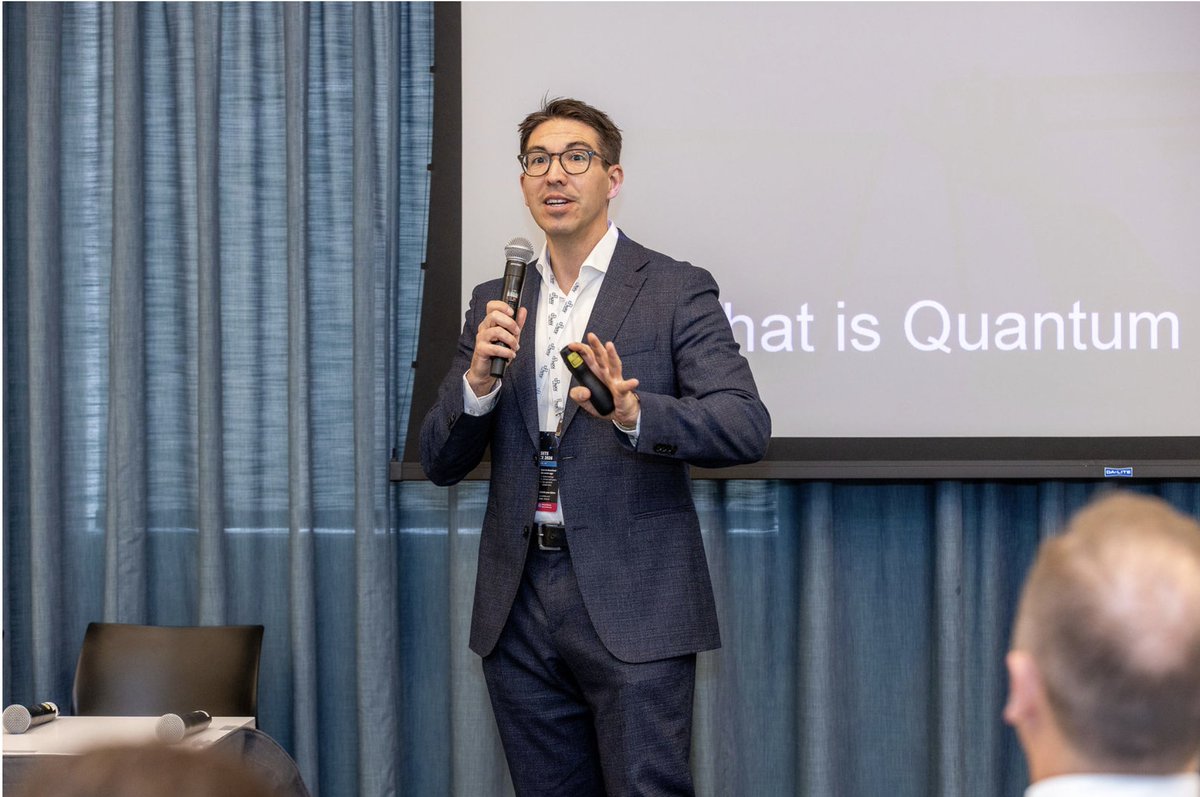
I had a great time discussing the threat of quantum computing to blockchain at the AIMA Digital Assets Conference last week.
If you're interested in learning more about the post- quantum cryptography roadmap for Polkadot, check out this post on the Polkadot Forum - forum.polkadot.network/t/pos…
4
13
93
2,441