
Unborn BABIES will never be as important as the mother carrying them, and she has every right not to carry that baby up to viability, and then for medical reasons beyond. Those are her rights as a woman whether you like it or not.
2

They don't become viable.
The 'price of oil' is a matter related to short term economics rather than a discussion involving energy viability.
4

It's not the 1st law because solar panels don't produce energy, just capture it. It's not the SQ limit because that just caps efficiency. The only phys limit would be the amount of sunlight hitting earth times the SQ limit. And again, this is not about viability of solar.
1
4

Yeah, way overpriced considering its lack of long-term viability
23

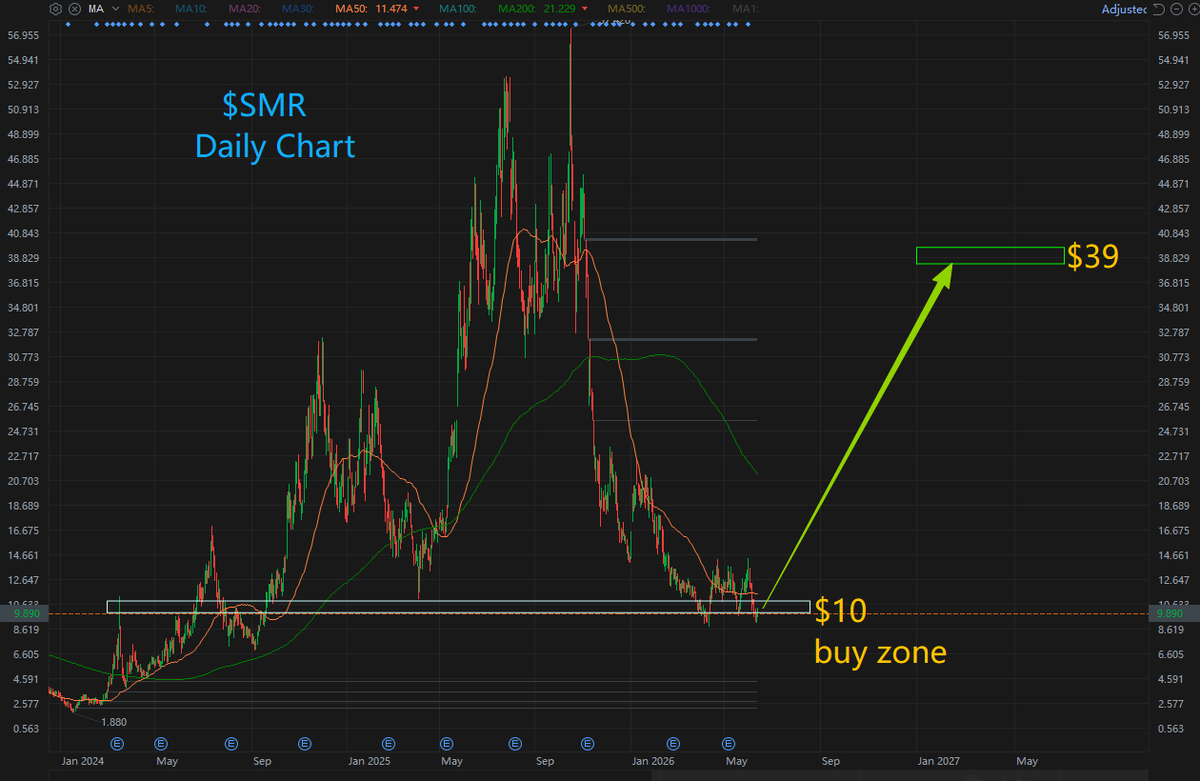
$SMR --- $SMR is advancing its 6-GW SMR mega-project in partnership with ENTRA1 and the Tennessee Valley Authority (TVA)—on track to become the largest SMR project in the world. CEO John Hopkins recently confirmed the project’s Power Purchase Agreement (PPA) is set to be finalized by year-end. Once the binding long-term power purchase contract is signed, the project’s timeline and commercial viability will be fully de-risked.
As part of the U.S.-Japan energy cooperation agreement, ENTRA1 was previously selected to receive up to $25 billion in U.S. government funding to deliver clean energy for AI data centers, advanced manufacturing, and national defense.
1.The Ultimate Solution to the AI Power Crunch
The AI compute boom has created insatiable power demand, and tech giants like Microsoft, Google, and Amazon have strict net-zero carbon emissions targets. Wind and solar are inherently intermittent. Nuclear is the only 24/7 stable, zero-carbon baseload power source. SMRs are compact, deployable directly adjacent to large data centers, and are widely seen as the perfect fix for AI’s power crisis.
2.Pristine Balance Sheet = Massive Downside Protection
Unlike shell companies or cash-burning startups, NuScale has an extremely healthy balance sheet. Per latest earnings, it holds ~$1 billion in liquid assets (cash and short-term investments) with zero long-term debt. That means even without large-scale revenue, it has ample cash runway to fund R&D and construction phases for years to come.
3.Policy Tailwinds Energy Security Imperative
Against the backdrop of global energy de-Russification and decarbonization, U.S. domestic prioritization of uranium resources and next-generation nuclear technology has been elevated to a top national security priority.
1
1
118

Zero-Boil-Off Cryogenic Storage, Transfer & Starship Integration – Creating On-Surface Propellant Depots for Rapid Fleet Reusability
Zero-boil-off cryogenic storage and seamless Starship integration represent the final, operationally critical link in Elon Musk’s multi-planetary propellant ecosystem. Turning produced methalox (or lunar oxygen) into immediately usable rocket propellant — with near-zero losses — enables rapid vehicle turnaround, full reusability, and the high flight cadence required for building a million-person Mars civilization and expanding humanity to the stars.
Strategic Importance
After prospecting, chemistry, and power generation, the propellant must be stored, maintained, and transferred efficiently. Boil-off in cryogenic liquids (methane at -162°C, oxygen at -183°C) can destroy economic viability on Mars or the Moon. High-performance storage and transfer systems make on-surface refueling routine, allowing Starships to land, reload, and relaunch with airline-like frequency. This completes the virtuous cycle: land → produce → store → refuel → launch, slashing costs and enabling fleet growth, orbital refueling networks, and cislunar/lunar depots as stepping stones to interstellar missions.
Core Technologies and Approach
sZero-Boil-Off Storage: Advanced multi-layer vacuum insulation, active cryocoolers, and thermodynamic venting systems that maintain propellants in liquid state for months to years with minimal or zero losses. Large-scale spherical or cylindrical tanks optimized for low-gravity settling and Mars dust environments.
Precision Transfer Systems: Robotic arms, automated quick-connect couplers, and cryogenic fluid management tech for safe, high-flow refueling directly into Starship tanks. AI-controlled monitoring ensures purity, temperature, and pressure control.
Starship Integration: Seamless interface with Starship’s flight systems, leveraging vehicle-level designs for rapid propellant loading while on the surface. Modular depot architectures that scale from early demonstration tanks to city-scale propellant
Path Forward
Extreme environments, dust mitigation, and energy demands can be addressed through iterative testing (analogue sites, Swarm robotics, Tesla-derived Optimus-style autonomy). Near-term demonstrations via commercial landers and uncrewed Starship missions will de-risk the system, paving the way for MW-scale production plants.
Autonomous robotic prospecting and mega-scale harvesting are not incremental tools but transformative infrastructure—the “pickaxe and shovel” for building a multi-planetary economy. Investing aggressively here aligns with the bold engineering ethos needed to make life multi-planetary and, ultimately, multi-stellar. This capability will prove decisive in turning science fiction into industrial reality.
1
16

Cycling Investor 🟧 retweeted

This story isn’t actually about either Graham man — it’s about the viability of @AnnieAndrewsMD’s candidacy and how we have an obligation to help her get over the finish line in November by volunteering and donating: store.drannieandrews.com/pro…
11h

Two high-profile Grahams faced voters in US Senate primaries this week: Graham Platner and Lindsey Graham. One did much better than the other.
bit.ly/4onrsaV
1
31
105
22,166

Defeated?
The only things he has defeated are
1) economic/political stability
2) integrity of his institution
3) viability of the state
4) Corruption cases against Sharifs, Zardaris, etc.
21

46m
Network effects accelerate adoption once production deployments prove viability.
3
48m
Network effects accelerate adoption once production deployments prove viability.
4
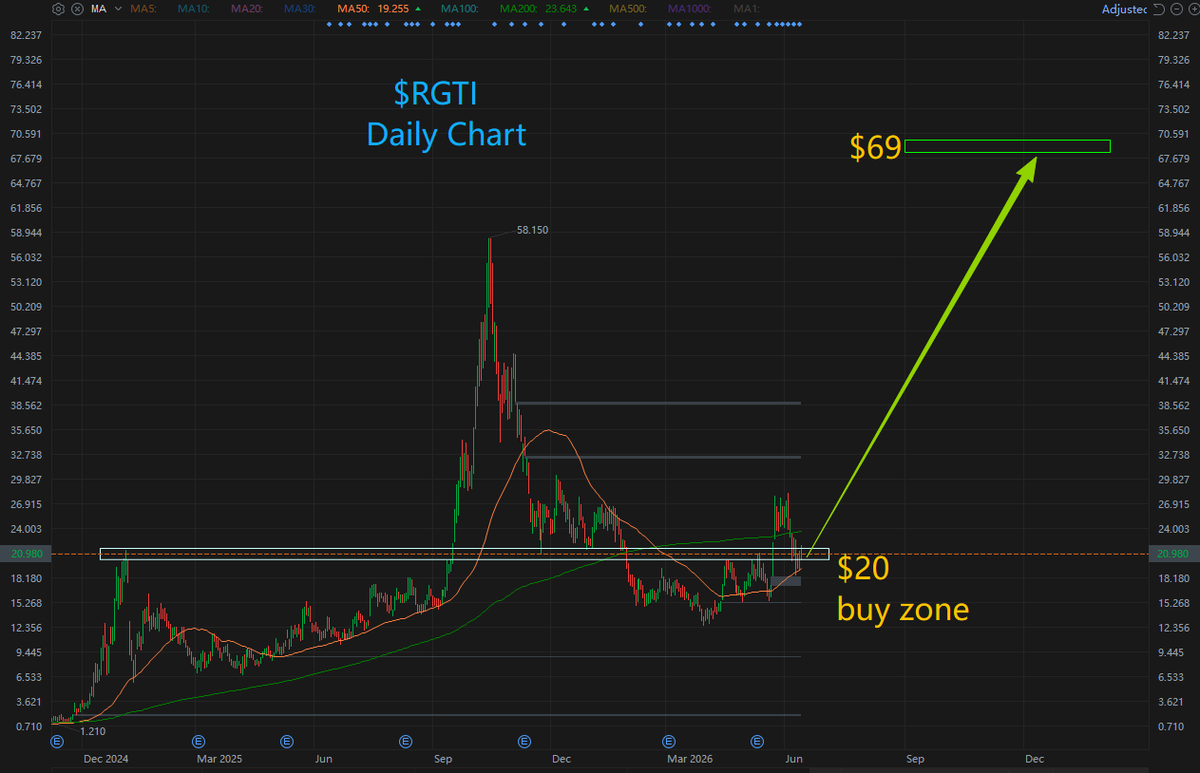
$RGTI --- In early June 2026, the U.S. Department of Commerce and CHIPS and Science Act issued a letter of intent to $RGTI, offering up to **$100 million in potential funding** over three years (the federal government will take an equity stake in exchange). The capital not only eases cash burn concerns for the startup, it formalizes Rigetti’s inclusion in the U.S.’s $2 billion national quantum infrastructure supply chain—delivering top-tier official technology validation.
$RGTI ’s latest-generation Cepheus-108Q (108-qubit) processor is now live across all major public cloud platforms. Wall Street sell-side research (roadshows and investment bank reports) notes this marks the company’s true transition from a "pure science lab" to a commercial compute delivery business.
1. Superconducting Pathway Has Industry Consensus on Viability
Quantum computing has multiple competing technical pathways: photonic, ion trap, superconducting, and more. Rigetti uses the exact same superconducting qubit pathway as IBM and Google. This path delivers extremely fast gate speeds and is far easier to scale for mass manufacturing using existing semiconductor silicon processes. Once the industry crosses the quantum advantage inflection point, superconducting is the pathway most likely to drive mainstream commercial adoption.
2. High-Beta Profile = Explosive Short-Term Upside
As a sub-$7B growth stock, $RGTI has an extremely tight float. As we saw in the late May to early June rally, even a small influx of capital or policy catalyst can spark 15%–25% single-day rallies in just a few days. For momentum traders chasing high-risk, high-reward volatility, RGTI is the perfect high-octane play.
2
7
453

"Traditional grant funding often fills gaps but does little to change the underlying economics of delivery"
Opinion: How to boost viability? Look no further than Manchester | @iain_jenkinson @CBRE
greenstreetnews.com/article/…

43

The studies revealed that anthocyanins have anticancer potential by inhibiting cancer cell viability and proliferation, controlling cell cycle, and promoting apoptosis.
4

@IndiaPostOffice
2)The parcel contained valuable temperature-dependent biological research samples intended for scientific analysis. These samples were collected and prepared as part of my research and required timely delivery to maintain their viability and scientific utility
1
Christian Halper retweeted

2 Sep 2024
My concern isn’t with short-term outcomes but with the long-term viability of a system that allows value to be exchanged freely, efficiently, and in ways that have never before been possible.
That’s what I built BSV for, to be the bedrock of a future where micropayments can thrive.
2
27
135
4,239


thats not what im saying at all, viability is my main point. if the fetus cannot live without the assistance it's getting from being in the womb, it is not viable and therefore it's morally justified to terminate the pregnancy. beyond that point, it pretty grey.
1
6


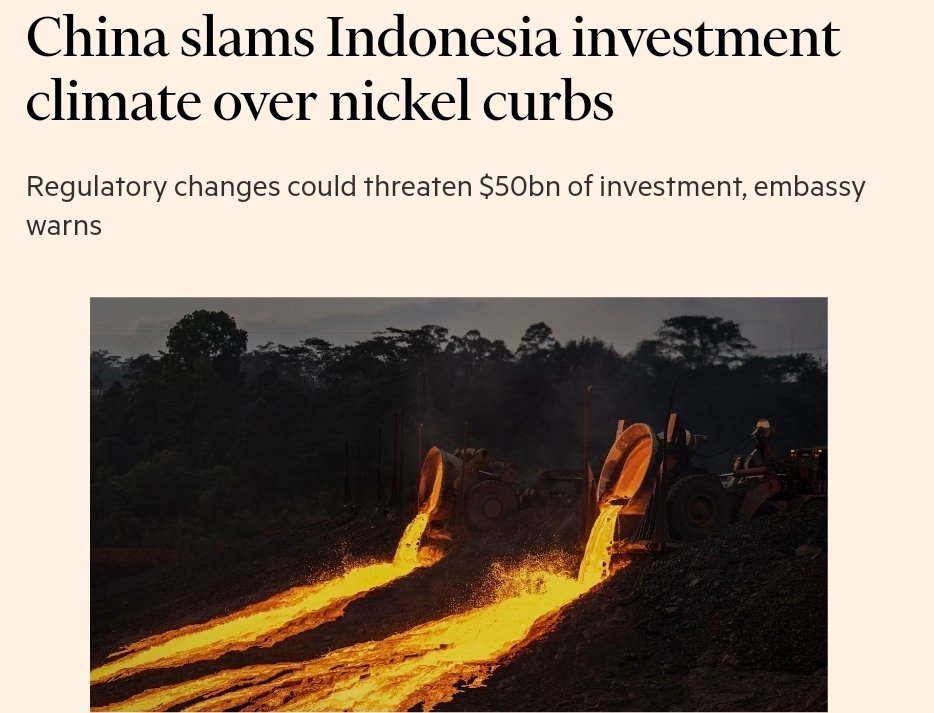
China warns up to $50bn in Indonesia investments are at risk after new nickel rules cut mining quotas and raise ore prices. The shift threatens EV battery projects and much of the sector’s viability despite Indonesia’s dominance in global supply amid regulatory uncertainty.
- FT
1
2
752