
DIGITAL FORENSIC ROADMAP
Beginner level - Advanced Skills:
1. Establish a Solid Foundation:
- Learn the basics of computer systems, operating systems, and networks.
- Understand common file systems and data storage technologies.
- Familiarize yourself with computer hardware and software components.
2. Gain Knowledge in Forensic Principles and Procedures:
- Study the fundamental principles and concepts of digital forensics.
- Learn about the legal and ethical aspects of digital investigations.
- Understand the forensic investigation process and best practices.
3. Obtain Formal Education and Certification:
- Pursue a degree or certification in digital forensics or a related field.
- Consider certifications like Certified Forensic Computer Examiner (CFCE), Certified Information Systems Security Professional (CISSP), or others.
4. Master Forensic Tools and Techniques:
- Familiarize yourself with popular digital forensics tools such as EnCase, FTK (Forensic Toolkit), Autopsy, and Volatility.
- Learn techniques for acquiring and analyzing digital evidence, including disk imaging, memory analysis, file carving, and metadata examination.
5. Specialize in Operating Systems and File Systems:
- Focus on understanding different operating systems (Windows, macOS, Linux) and their file systems.
- Learn about file system structures, artifacts, and metadata associated with each operating system.
6. Explore Network Forensics:
- Study network protocols, packet capture analysis, and log analysis.
- Learn to identify and investigate network-based attacks, intrusions, or suspicious activities.
7. Expand to Mobile and Cloud Forensics:
- Gain expertise in mobile device forensics, including extracting data from smartphones and tablets.
- Explore cloud computing concepts, virtualization, and the challenges of digital investigations in cloud environments.
8. Develop Advanced Forensic Techniques:
- Dive into memory forensics to analyze volatile memory for advanced malware analysis and intrusion investigations.
- Explore anti-forensics techniques and countermeasures to enhance your ability to detect and overcome them.
9. Stay Updated and Engage in Continuous Learning:
- Keep up with the latest advancements in digital forensics, emerging technologies, and evolving attack vectors.
- Attend conferences, workshops, and webinars.
- Engage with the digital forensics community through forums, blogs, and professional associations.
Remember, hands-on experience and practical application of knowledge are vital in digital forensics. Engaging in real-world scenarios, participating in capture-the-flag (CTF) challenges, or working on case studies can help solidify your skills and enhance your expertise as you progress through the roadmap.
20
Tinz Twins | AI and Coding retweeted

Run Any OS on Your Mac!
Unlock the full potential of your Mac with UTM, the ultimate open-source virtualization tool.
Key Highlights:
- Free and open-source software
- Virtualize or emulate any OS
- Easy Ubuntu installation guide
tinztwinshub.com/software-en…
1
1
33

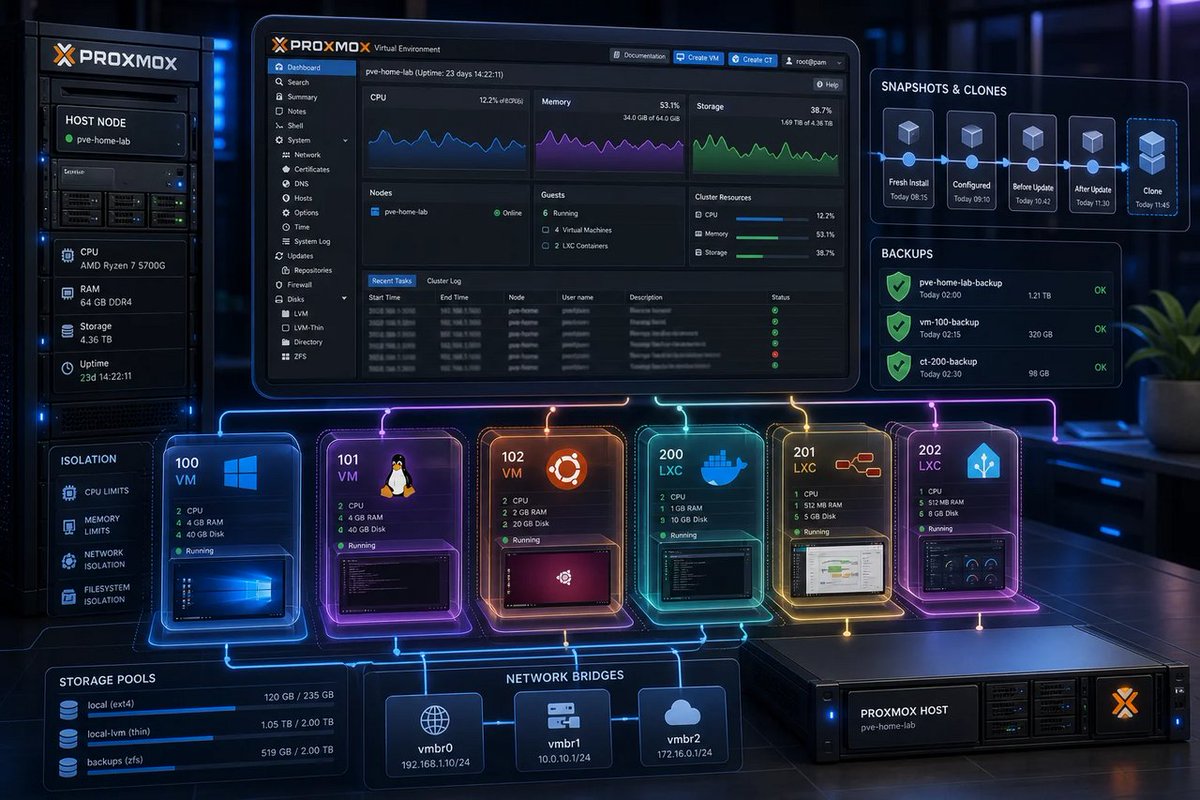
🪟 Proxmox beats “plain Debian” because it gives your homelab a cockpit instead of a CLI yak shave. VMs, containers, snapshots, backups in one browser = fewer weekends sacrificed. #Windows #Microsoft #Proxmox #Homelab
windowsforum.com/threads/why…
#Virtualization #ProxmoxVe #Homelab
3

This is the side effect of too much virtualization in real life and too much screen time low IQ.
3

🚀 Our sister company PT Visindo Prima Nusantara is #Hiring!
We are looking for a Presales Engineer – Data Center Infrastructure to join our growing team. If you are passionate about designing technology solutions, engaging with customers, and building modern data center environments, this opportunity is for you.
📍 Location: Jakarta
💼 Employment Type: Full-Time
Responsibilities
• Gather information from customers to identify business and technical requirements.
• Analyze, develop, and propose suitable Data Center Infrastructure solutions, including technology and equipment recommendations.
• Prepare technical designs, Bill of Materials (BOM), Scope of Work (SOW), project schedules, and technical proposals.
• Deliver product presentations, demonstrations, and Proof of Concept (POC) sessions to customers.
• Provide pre-sales consultation and act as the primary technical liaison between customers and internal teams.
• Coordinate with vendors, principals, and distributors to obtain pricing, technical specifications, and demo equipment.
• Collaborate with internal departments to ensure project readiness before implementation.
• Support the sales team in developing technical solutions that align with customer needs and business objectives.
Requirements
✔ Bachelor’s Degree in Information Technology, Computer Engineering, Electrical Engineering, or a related field.
✔ 2–5 years of experience in Data Center Infrastructure, IT Infrastructure, Network Solutions, or Presales Support.
✔ Understanding of Data Center technologies including Servers, Storage, Virtualization, Networking, UPS, Precision Cooling, Racks, and Structured Cabling.
✔ Experience in solution design, technical proposal preparation, and customer presentations.
✔ Familiarity with major technology vendors is an advantage.
✔ Strong analytical, documentation, and problem-solving skills.
✔ Excellent communication and presentation skills in English.
✔ Ability to work collaboratively across multiple teams and stakeholders.
✔ Customer-oriented mindset with a proactive and solution-driven approach.
🌟 Why Join Us?
• Work on enterprise-scale Data Center Infrastructure projects.
• Exposure to leading technologies and industry solutions.
• Professional development and certification opportunities.
• Collaborative and innovative work environment.
📩 Send your CV to lnkd.in/gYUsGPua
Join PT Visindo Prima Nusantara and help organizations build reliable, scalable, and future-ready infrastructure solutions.
#Hiring #PresalesEngineer #DataCenter #DataCenterInfrastructure #ITInfrastructure #Networking #Virtualization #Servers #Storage #TechJobs #CareerOpportunity #VisindoPrimaNusantara #lowongankerja
17

Hypervisors aren't just scheduling workloads anymore—they're enforcing policy. The governance layer just moved into the virtualization stack. Most orgs are still operating like it didn't change. #SystemDesign #CloudArch #Infrastructure
rack2cloud.com/hypervisor-po…

StarWindユーザ事例:オーストラリアのITサービスプロバイダーであるRapid ITは、StarWind Virtual SAN(VSAN)を中心に高度なストレージインフラを展開し、顧客運用のITサポートを途切れなく保証しています。
製品詳細は: climb.co.jp/soft/starwind/
#VirtualSAN #VSAN #HighAvailability #Virtualization #HACluster
1
115

Bro she literally has the highest de-virtualization record of the entire team.
1
61

9h
They really had her go to lyoko and sharpen her skills all for a instant de virtualization
501

Stuck on shared hosting? 🤦♂️ You can't install what you want, no root access, performance limited by noisy neighbors.
VPS gives you:
✅ Full root control
✅ KVM virtualization
✅ Intel Xeon CPUs
✅ 1Gbps network
✅ 30-100GB SSD/NVMe
Stop being cramped. Start owning your infrastructure.
swisslayer.com/vps-switzerla…
#VPS #SelfHosted #PrivacyFirst
10

The MVP and the probably highest de virtualization count and by extension highest survival rate against xana
1
3
1,453

14h
pages panel from my upcoming launch
notice how closing folders (aka sections) does not deselect the current active page - this is similar to how file systems like finder behave
the pages panel also only renders expanded items - collapsed ones are not rendered which makes it extremely smooth and i haven't added list virtualization yet
1
44

Apple's New Container Tool for macOS Developers
Apple recently open-sourced apple/container, a Swift-based tool for running Linux containers on macOS (Apple silicon) using lightweight VMs. It’s gaining attention because it simplifies container workflows while leveraging macOS-specific virtualization features (requires macOS 26 ).
Why it matters:
OCI-compatible, so it works with existing container images/registries
Persistent container machines with host integration (shared dirs, user mapping)
Secure registry auth via system keychain
Build pipeline handlers for streamlined container creation
This isn’t a Docker replacement but a native macOS alternative with tight integration. Useful for devs who want Linux containers without heavy emulation.
macOS #Containers #AppleSilicon #DevTools #OpenSource
Source: github.com/apple/container
13


Need to move AI from pilots to production? Get out of virtualization limbo? Build your resiliency strategy? Our 150 demos will show you how. Join us from June 15-18 at #HPEDiscover Las Vegas 2026. Dive into our demo line-up hpe.to/6010B8hmWr hpe.to/6011B8hmWT
7

Good day Iretioluwa. Curiosity about how the internet works was my drive to start. I've spent months learning basics cryptography, how computers interact with each other, protocols, Linux, & virtualization. I own a laptop, I'm teachable, & have great comms. Would love to join!
2
97
Virtualization economics are shifting fast - and the Great VM Reset is underway.
#HPEDiscover Las Vegas 2026
hpe.to/6013B8hcNh
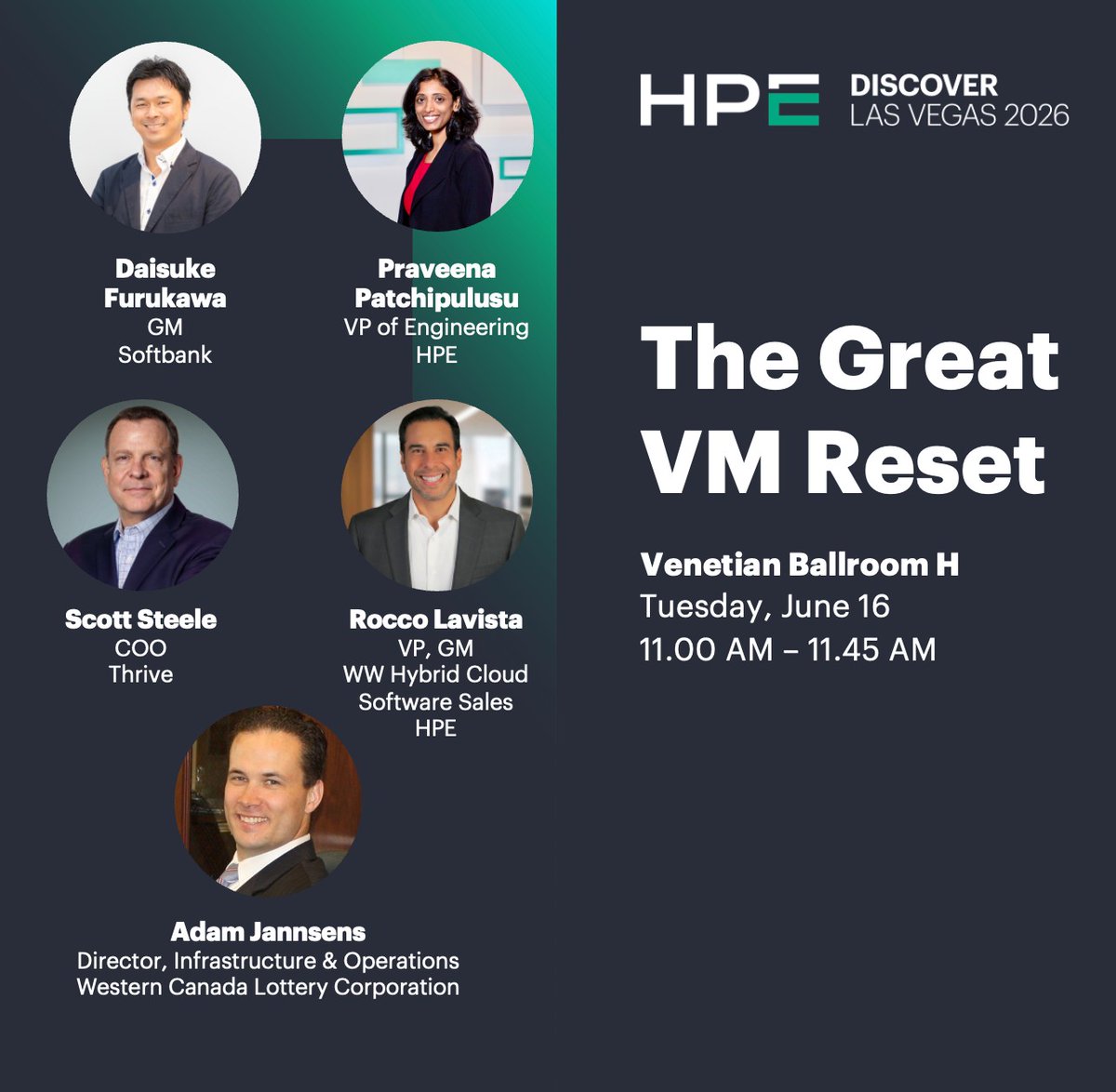
ALT Discover 2026 | The Great VM Reset: Lessons from practitioners | Panel Session

Expand multi-tenancy options for at-scale AI deployments. @HPE enhances the HPE AI Factory portfolio and supports multi-tenancy models for VMs through @SUSE Virtualization and SUSE Rancher Prime Suite. Learn more at #HPEDiscover Las Vegas 2026: hpe.to/6016B87nT2
#HPEAlliances
26

كل التفاصيل اللى إنت محتاج تعرفها على موقعنا هنا
itwithhossam.com/ccnp-online
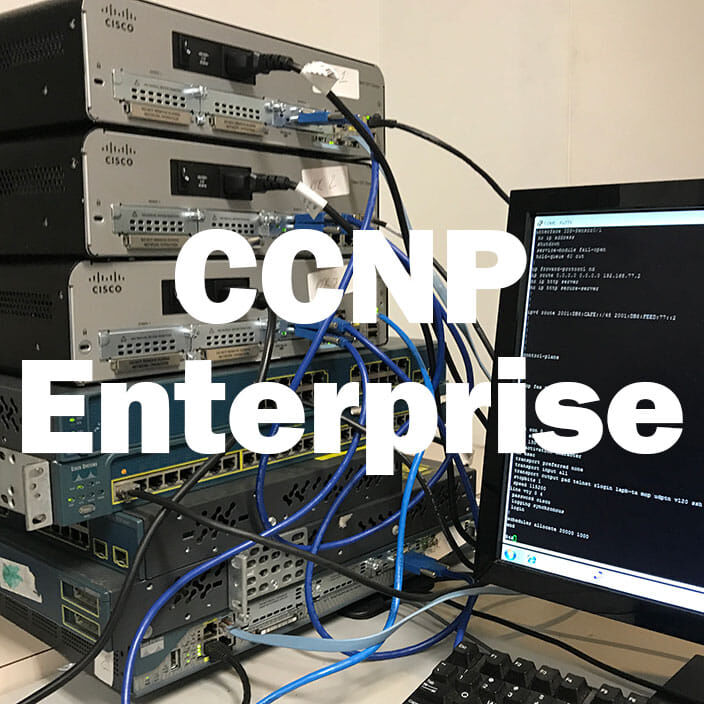
📚 كورس المحترفين CCNP Enterprise
هنشرح تراكين مع بعض:
✅ ENCOR 350-401
✅ ENARSI 300-410
🎯 هنتعلم مواضيع شاملة ومهمة:
🔹 Routing:
OSPF, EIGRP, BGP
MPLS L3 VPN, VRF
Route Target / Route Distinguisher
PBR, BFD
🔹 Switching:
RSTP / MSTP / PVST
VTP, Etherchannel, DTP
FHRP (HSRP / VRRP / GLBP)
BPDU (Filter, Guard), (Loop, Root) Guard, UDLD
🔹 Security:
AAA, 802.1X, Access Lists
DMVPN, IPSec, NGFW, NGIPS
DMVPN, IPSec, IPv6 First Hop security features
🔹 SDN & Automation:
SD-Access, SD-WAN, DNAc
Python, APIs, Netconf, Restconf
JSON, LISP, XML
🔹 Virtualization:
Virtual Machines, VXLAN, LISP
VM vs Container
🔹 Network Assurance:
SNMP, SysLog, NetFlow
IPSla, SPAN
🗓️ المواعيد:
📍 الجمعة والسبت : 8 مساءً - 11 مساءً بتوقيت القاهرة 🇪🇬 🕗
تواصل معايا للحجز على واتساب من هنا 👇
wa.me/ 201010962050
🚀 ابدأ رحلتك مع Cisco وحقق حلم الاحتراف!
21
