


4 ways to use LatinChain PREMIUM:
1. Test source code on WebCode.
2. Write drafts on WebOffice.
3. Play chess on Chess dApp.
4. Watch Torrents on WebTorrents.
Bonus. Watch TV Online.
And more than 26 extra ways, come and discover.
latinchain.pinet.com
2
6
61


May 30
Media Man Group
Technology Upgrade Day
Enter The Matrix or Escape The Matrix?!
Grunt Work With Technology Mastermind Mr X
Codes: 0, 1, 0, 1, 0, 1, 3, 6, 9 ...
FTP's
Back-ups
Consultation
Configs
Publishing
Search Engines
Need To Know's
Meeting with a Mr X who is a whole lot smarter than us, but hey, someone has to be the face of a company and brand.
Preperation For Combat Sports Weekend
Preperation For Upcoming Pop Culture Month
Trade Secrets
"It's not all fun and games keeping a media and digital media enterprise going for decades. Sure, there's some fun times involved, but there's a lot of hard work and smart work going on behind the scenes that only the real inner circle knows about. If you know, you know" Greg Tingle, Founder, Media Man Group
"So is The Matrix real or not? What is real anyway"
Websites
Media Man Int
mediamanint.com
Media Man
mediaman.com.au
and many more!
#Media #MediaMan #TheMatrix #Matrix #Code #Webcode #Tech #SEO #Backups #Search #Google #BTS #BehindTheScenes #Neo #Morpheus #Trinity #TheArchitect #Publisher #Publishing #Work #Biz #Digital #CombatSports #PopCulture #NeedToKnow #MrX #MrCode #MrWeb #MrNews #MrWiki #WhiteRabbit #Meeting #Creator #Founder #World #AI #MediaManGroup #MediaManAustralia #MediaManInt
(Images: Warner Bros) with Media Man editing



4
4
84

May 14
I wouldn't be surprised if flump was one of those gay ass wordfilters bad spot put in the webcode, like pooptouching is a filter on the Farms today.
Dawg you really do Null no favors by endlessly excusing his cringe ass behavior as a young man with an undeveloped frontal lobe.
10
129

May 11
@grok elon companies doing real full stack engineering, not just webcode, real world engineering!
1
1
3
25
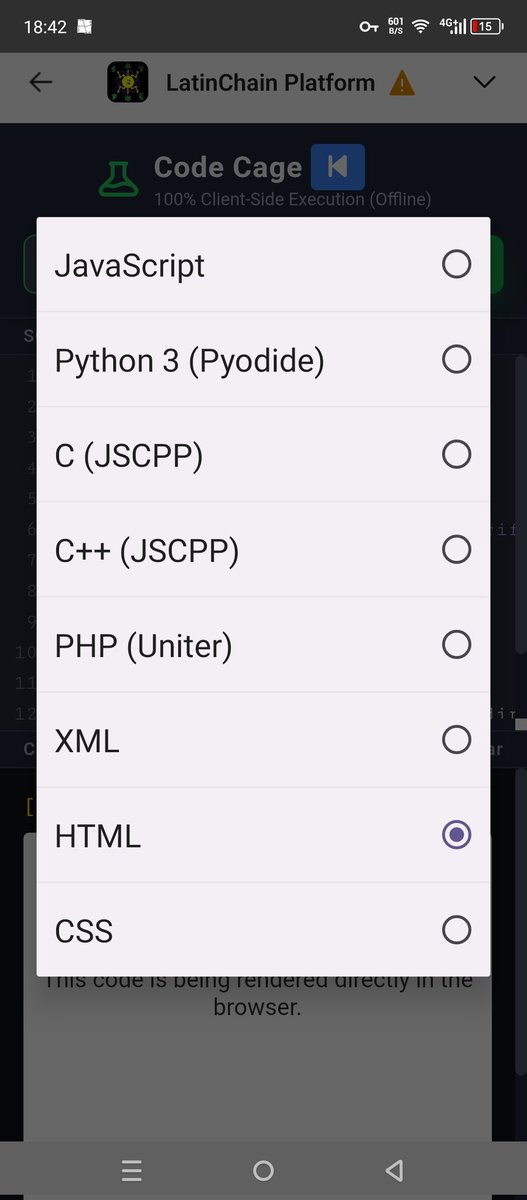
More languages support on WebCode editor.
Only on LatinChain.
3
74

Apr 23
among the takeaways from webcode
Mar 23

the project I'm most excited to have worked on at Exa
code is the primary use case for agents but there are major gaps in how existing evaluations measure contents and retrieval quality
this eval suite was built to improve search where parametric memory fails, entirely oss
4
556

@ExaAILabs grounds coding agents at cursor, coderabbit, and vercel. webcode eval scored exa 82.8 on extraction completeness. parallel is 74.2. claude is 59.8. exa.ai/blog/webcode
Apr 22

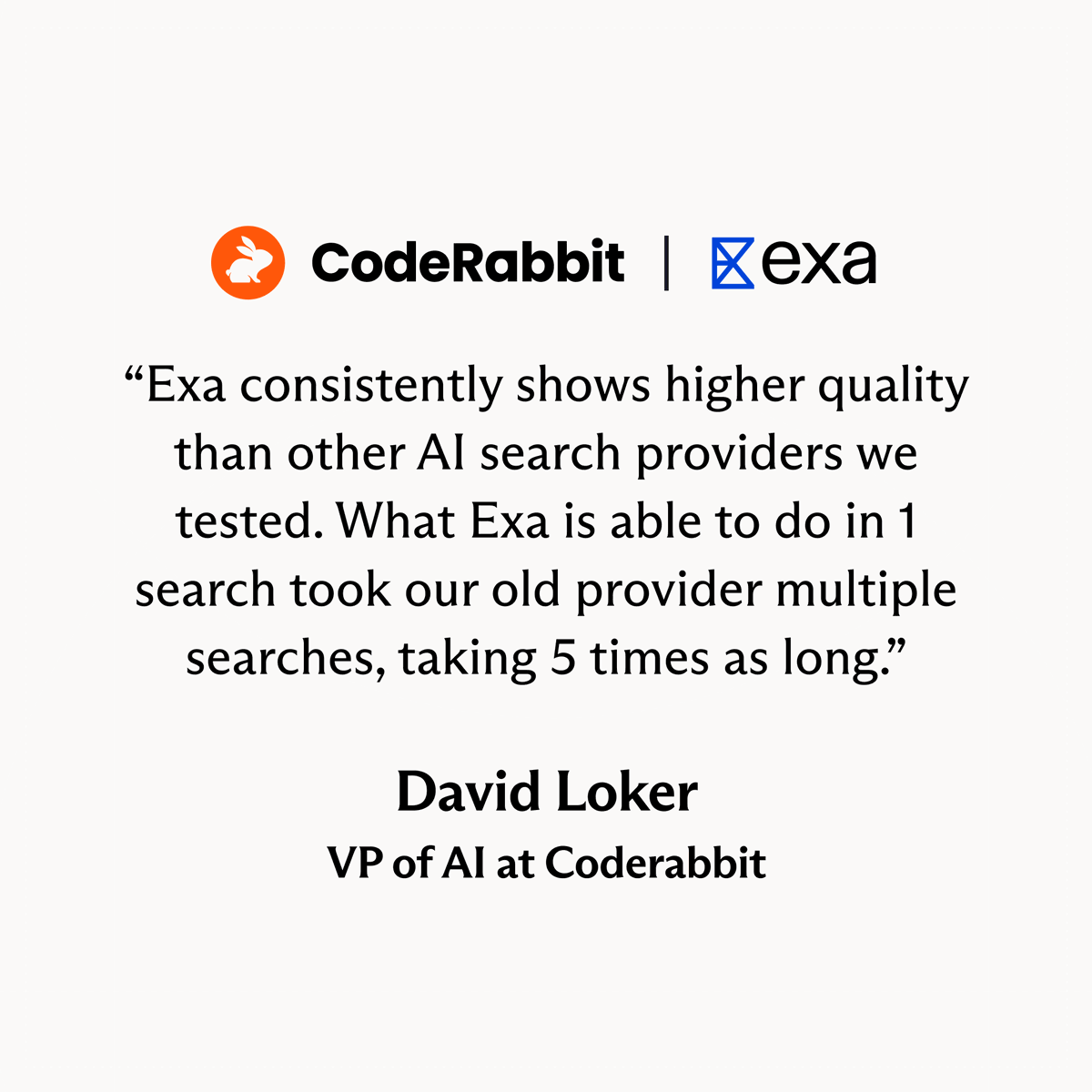
We're excited to help CodeRabbit reduce the number of bugs in the world!
By using Exa search, the CodeRabbit review agent can ground code reviews with technical information better, 5 times faster.
2
67

Naja, die Erlaubnis den WebCode zu benutzen hattest du nie da ist ''Außerdem scheint der ursprüngliche Entwickler des Open Source Codes nicht mehr zu wollen, dass wir diesen verwenden'' etwas Irreführend da es nie eine klare Erlaubnis gab.
Der Name war außerdem 1:1 :/
22
746
Hast du eigentlich so gar kein Scham gefühl? Mal im ernst, du klaust die bereits vorhandene Idee, klaust den Namen den kompletten WebCode nimmst das Logo und wirfst es in eine AI
Ich dachte ursprünglich du könntest mir gar nicht unsympathischer werden als schon zu ACNH Zeiten
1
2
154
Mar 31
Media Man Web Tips
SEO News via Media Man: Ways to Improve your Site’s Ranking (SEO)
Ways to Improve your Site’s Ranking (SEO)
New strategies for Search Engine Optimization
What is SEO?
Search engine optimization (SEO) is an essential digital marketing practice that plays a vital role in making your website visible to both visitors and search engine crawlers. The primary objective of SEO is to optimize relevant and authoritative content to assist visitors in finding solutions to their queries efficiently.
The ultimate aim of SEO is to create high-quality and informative content that increases the volume of traffic that your website receives daily. Optimizing your website involves creating and expanding your content to ensure that search engines will choose your site over its competitors.
The focus of SEO is to perfect the quality and quantity of your webpage to make sure that your website has an edge over others. Therefore, SEO plays an essential role in driving traffic to your website, which is crucial for the visibility and success of your online Business.
1. Publish Relevant, Authoritative Content
This article provides valuable suggestions on how to improve search engine optimization (SEO) and enhance website ranking on search engine results. Creating quality content that caters to the user’s needs is the driving factor of SEO marketing, and the article emphasizes that there is no substitute for great content.
The article further provides guidance on identifying appropriate keyword phrases for each authoritative content page and making use of them strategically throughout the content. Creating distinct web pages for each distinct targeted keyword phrase is advisable to enhance ranking.
The article suggests using keywords in headings, subheadings, URLs, and titles, and stressing the importance of readability and user-friendliness of the content. Using emphasis tags and strategically linking to relevant sources is also encouraged. By following these valuable suggestions, users can create SEO-friendly content that benefits the readers while improving their website’s overall ranking.
2. Update Your Content Regularly
Maintaining updated content is crucial to improve your website’s relevancy, and it is a crucial factor that search engines prioritize as well. We highly recommend scheduling regular content audits, for instance, on a semesterly basis, to update your webpages and blog posts accordingly.
Writing additional content frequently on your departmental news blog can enhance your search engine rankings by incorporating relevant keyword phrases. Brief blog posts can also be helpful if they offer specific updates related to your targeted topics.
Moreover, interlinking your related CMS webpages and blog posts can provide readers with a better understanding of your website’s content and additional information on the subject. Thus, keep your website updated and relevant to improve your visitor’s user experience and attract more traffic to your site.
3. Metadata
Website designers use metadata to provide information about a website’s content. When creating a webpage, a space between the “head” tags is reserved for metadata.
If you use a CMS website produced by the team, they have already filled in the metadata. However, as your content changes, it is important to review and update the metadata.
Title Metadata
Title metadata is the most important because it determines the page title that appears at the top of a browser window and in search engine results. For those with a CMS website, the web team has automated this process based on your page title. Therefore, it is essential to use well-thought-out page titles that include keyword phrases.
Description Matadata
Description metadata is a brief and interesting summary of what your website contains. It’s like a store’s attractive display that encourages people to visit. Usually, it should be two sentences long. Search engines may or may not use this summary, but it’s good to have it in case they do.
Keyword Metadata
Keyword metadata is not very helpful in improving your search engine ranking. However, it’s useful to include some of your important keywords in the metadata. You should select a few phrases with one to four words each and add three to seven of them. For example, “brand creative agency” is a good keyword phrase to use.
4. Have a Link-worthy Site
Making your website popular involves efforts in developing valuable content and enhancing its search results. To achieve this, you must focus on creating informative and unbiased content that caters to the readers’ interests and queries.
Furthermore, your website might earn a backlink from other websites if it provides good value to the readers. This can improve its search engine ranking immensely, which can bring in more visitors. It is also crucial to incorporate descriptive hyperlinks in the text as opposed to generic “click here” links.
This helps in giving proper context to people who use screen readers and makes it easier for search engines to crawl your website. You can lift your website SEO performance by using appropriate keywords in your content and developing internal links. These techniques can help you build a better online presence and increase your website’s popularity.
5. Use ALT Tags
Want search engines to find your website and to make it more accessible for people who use text-only browsers or screen readers? Simply put, use alt tags to describe your media content, like images and videos, with alternative text descriptions.
These descriptions act as labels for search engines and help them identify your page better. They also provide context for those who cannot view the media directly. By making your website more accessible and searchable, you can improve its overall user experience.
News
New strategies for Search Engine Optimization
New areas of digital marketing are as changeable and require so much adaption and new-thinking as the world of SEO. Search Engine Optimization has come a long way from its beginnings in the 1990s, and the technologies deciding what is “good SEO” or not changes from year to year.
That’s why tech companies are launching new strategies aimed at long-term goals in both data-driven and relations-based SEO all over the world, by implementing tactics from both traditional PR and modern SEO and link-building.
Below, we will discuss the nature of SEO, how SEO is changing, and why choosing an agency will be the key to your SEO success.
Best SEO practices:
Find your customers with data-driven market analysis
Find authoritative marketing partners using data-driven PR
Reach your customers with high quality outreach and credible link-building
What is SEO?
In order to discuss the ways in which SEO works, it’s important to understand the basic principles on which the concept is built. SEO is an acronym for Search Engine Optimization, and is an umbrella term for processes in which users optimize their websites in order to rank higher on search engines such as Google whenever customers search for keywords relevant to their website.
By optimizing the various aspects of a website, SEO aims to improve its ranking on search engine result pages (SERPs), thereby increasing the quantity and quality of traffic. In layman’s terms, it helps more people to find your website by increasing its digital visibility.
Why is SEO important?
There’s an old SEO joke that goes like this: A man asks a detective “Where’s the best place to hide a body?” The detective answers “Why, on the second page of Google, of course!”. In other words, ranking on the first page of Google is the key to getting traffic and therefore sales or viewings on your webpage, as few people bother to look past the first results page.
In fact, the first spot on Google is ten times more likely to get a click than results number ten, and the top three results receive over half of all clicks. That’s why the goal of every SEO strategist is to get a website into the top ten search results on Google, and preferably in the top three.
That’s why SEO marketing lives on, despite some people saying that SEO is dead. The answer is: it’s more alive than ever. It just doesn’t fit into the mold of the quick-results culture of the modern world, but it is still effective.
The evolution of SEO
SEO as a term first came into use in 1997, despite the first website being published in 1991. The coin was termed John Audette of Multimedia Marketing Group early that year, and so the hunt for the top of the search engine results pages began.
In the beginning, there were several competing names for the concept, including search engine ranking, website promotion, etc. The strongest competitor was the term “search engine marketing”, which was originally pitched as a successor to SEO. But ultimately, search engine optimization proved to be the most steadfast and all-encompassing term, while SEM is used to describe concepts like paid search marketing and advertising.
Google’s rise to power
In the 2000s, Google grew to become the search engine giant we know it as today. Soon enough, the organization was able to survive on its own. At that time, they also launched effective web crawlers and PageRank algorithms, which changed the SEO game.
Google began measuring both on-page and off-page content to decide SERP listings, forcing SEO to expand their work sphere and link-building took off as a popular tactic. Around the same time, Google also introduced PageRank scores, a website score between 1-10, which was an early version of today’s Domain Authority.
These measures were broken down further with the introduction of Google Analytics and the Google Webmaster Tools (Search Console) in 2006. Later major updates, such as Panda and Penguin in 2011 and 2012 respectively, were put in place to sort out poor quality SEO work and reward those with quality websites.
To this day, Google continues to release core and minor updates that impact the way that SEO can work. The platform has grown to be such a reputable platform that in 2022 it was estimated that Google accounted for more than 85 percent of the search engine usage, which is why it’s the platform that most SEO strategies focus on today.
The big three: Local, social, mobile
There have been three major changes in the way that people search the web, that has not been a result of search engine updates. The first of these came in the mid-2000s, when there was an adaptation toward geographical searches, which birthed local SEO. This meant that people were now searching for businesses near them, such as restaurants or car washes, thus increasing the need for separate local search engine strategies. This development also resulted in the advancement of end-user data, including search history and personalized interests.
Fast-forward another decade into the 2010s, and a whole new set of searching and web-using emerged. Rather than just using the universal search-functions, users were now turning to medias such as YouTube, Facebook, LinkedIn and other social medias for news and knowledge. Most importantly for SEO, these networks became revolutionary in building brand awareness. As such, the old term of search engine marketing (SEM) became ever more important on these platforms.
As users started to bring their lives and entertainment from the big screens, such as laptops or TVs, they also began to use search engines straight from their mobile phones. This third change in user patterns led to mobile searching overtaking desktop searches in 2015, and added mobile adaptability to the list of SEO tools.
The 2020s, AI, and the future of SEO
We’ve finally arrived at our current time. The 2020s have brought with it a continued increase in digital usage and SEO is perhaps more important than ever. One of the biggest challenges the world of SEO stands before today is generative AI. Chat GPT, the free global access to generative AI as a search function, was released in the winter of 2022/2023, and has garnered instant attraction from both customers and competitors, including Google. It is still unclear what impact generative AI will have on SEO practices such as keywords analysis, although it is already affecting the quality of content on the web.
New strategies for new challenges
As new SEO directives arrive from Google’s updates, they also require new strategies. However, some companies have decided to create new strategies with a focus on longevity. Among new strategies are both traditional link-building and outreach including, in combination with inspiration from the traditional PR marketing sphere.
The other two strategies that they’ve developed are strongly data-driven market research and PR. The market research is a process in which the company can help customers who want to scale globally to find the best geographical place for them to start their SEO journey, based on SEO factors such as demand and competition.
The market-driven PR can build on that market research or stand alone, as a new way of reaching new marketing partners in international business circles. From these new partners, it is then possible to continue with link-building as well as traditional PR strategies. This is a unique way of piercing niche markets across the globe to attract potential customers.
How does SEO work?
Now that we’ve seen the evolution of SEO it’s time to get to the real question: what is SEO marketing actually, and how does it actually work? In order to understand how SEO works, it’s important to understand these two things: what Google wants and what the customers want. Only by doing so will you understand how you should optimize your web page.
What Google wants
One of the reasons why Google rose to such immense heights early on was due to the founders’ initiative to implement RankPage, or clear guidelines for how to rank content on their platform. Initially, the program worked by ranking content dependent on the linkstructure of the website, that built the foundation for the modern linkbuilding strategies. Simply put, links to the webpage acted as votes of confidence for the webpage.
Today, this concept has developed into the E-E-A-T formula, where Google ranks content based on Experience, Expertise, Authoritativeness, and Trustworthiness. These measures are interpreted by what the site’s linkbuilding looks like, such as what EEAT websites include links back to their landing page. They then ensure that the webpage produces reliable and accurate information, and are most likely to answer their customers’ questions.
Ultimately, the reason why Google wants to prioritize high quality content is because happy Google customers are more likely to return to Google for more information, and therefore generating income for the search engine.
So, how does Google find and rank the webpages? They do this through three stages: crawling, indexing, and serving results.
Crawling means that Google sends “bots” or computer programs to scan through large chunks of the internet to find new or updated pages. They can only find it by going through a link.
Google then sorts through and organizes the content and puts it in the huge Google Index – a database for webpages.
Lastly, Google serves the results by how relevant they are to the customer queries.
What the customer wants
Broadly speaking, there are three types of searches that customers make, and they can be described as Do-Know-Go. Whenever we search the internet, we either want to do something (such as make a purchase or visit a tourist attraction), know something, or go somewhere. These three types of searches can be further broken down, but these are the basic concepts.
These three prompts can help you optimize your content so that you are answering the demand of the people. By realizing what your customer wants, you can provide SEO-optimized content which is relevant and fresh, which Google will reward you for.
SEO components, or how to do SEO
So how does a webpage get to that top of the search engine results page? While there is no quick fix, SEO provides a long-term strategy which aims at doing just that. SEO incorporates several different tactics in this long-term strategy, in which there are three main components:
Technical SEO
On-page SEO
Off-page SEO
Technical SEO refers to optimization on your webpage. This can for example mean implementing site maps so that Google can crawl the page more easily, increasing the website speed, or making the site mobile adaptable.
On-page SEO refers to edits to the content that is already on the webpage, rather than the technicalities behind it. This can for example include keyword optimizing headings, producing SEO-optimized blog posts, URL and picture optimization, and adding meta titles and descriptions.
Off-page SEO, on the other hand, is part of the link-building strategy. The focus here lies on building credibility and brand awareness by for example writing guests posts and linking to your webpage on other, reputable sources. The key here is to create backlinks, which give authority and endorsement to your website, and thus giving Google a sign that you are a credible source too.
To get good results, it’s important to implement all of the tactics above in a combined effort to get Google’s attention. However, these general descriptions are only scraping the top of the iceberg of SEO. Beneath these lay a whole science of various methods and strategies to rank at the top of the results page.
Link-building
The on-page and off-stage SEO practices can also be called SEO link-building. That’s because they both refer to building a link-system which Google will reward, whether it’s by driving links to your website from other credible sources or creating a seamless link-flow internally on your webpage.
Links to and on your website act as votes of trust, credibility and authority, which is why they are a crucial part of your SEO strategy. However, the links need to be carefully and thoughtfully crafted so that they maintain the right level of relevance and credibility, which can be done through producing high quality SEO content.
SEO content
For both on-page and off-page work, SEO content plays a huge role. As mentioned earlier, Google ranks webpages depending on both their link-building and how credible, authoritative, and expert their content is. However, these two factors are not as separate as one might think: with high quality content, it is also easier to build a good SEO link-building network.
Often when we discuss SEO content, we tend to think of texts of lesser quality that are packed with poor quality links. However, due to Google’s updates, such as Penguin, poor content is continually being phased out. That means individuals and agencies are having to spend more time recruiting better writers and spending more time on content.
As we discussed earlier, SEO content needs to be adapted to both the demands from the customer (a.k.a. the searching person) and Google. That means texts need to be relevant, authoritative, credible, and high quality. These texts also need to be SEO optimized using meta-data, such as titles and descriptions, and keywords in the headings in order for Google’s crawlers to pick up better on the relevancy factor.
That being said, the research and preparation for both good and bad content remains the same – all SEO content needs proper keyword research.
Keyword research
Finding the right keywords will not only make you more competitive as an SEO user, but will also help you understand your audience better. That’s because keywords are clues to who your audience is. For example, the keywords “how to ski” and “ski maintenance” could technically be placed in the same text contextually, but they imply that we’re dealing with skiers of different skill levels.
The keywords are both guides for the link-building process and the content. When building links, it’s important that both the link, the placement, and the publishing website are relevant in the context in order for Google’s crawlers to give it a credible ranking.
There are several tools on the market for finding the best keywords, and there are also a ton of metrics for understanding how good a keyword is and what the chances are of breaking into the competition for that specific keyword. Common metrics include keyword difficulty, traffic potential, cost-per-click, etcetera.
Brand awareness
Ultimately, what these various tactics aim to do is to bring brand awareness to your website. People are twice as likely to purchase from a brand they recognize. An American study found that 75 percent of shoppers tend to go for known retailers, and nearly 70 percent do the same when deciding what search result to click on.
Doing SEO: alone or SEO agency?
As you can tell, there is a lot of information and knowledge that goes into producing and completing good SEO strategies. If you are considering adapting some SEO strategies, you may be wondering whether you should do it all on your own or hire an agency.
Without sugarcoating it, doing SEO alone is a lot of hard work. First and foremost, you got to have basic understandings of both SEO tools, Google Analytics, and good writing skills. Then you need good networking skills and a sense of price bargaining to get your links out to credible sources. On top of this, you need to stay up to date with all the latest developments within Google updates, market changes, and new technologies such as generative AI which can impact your SEO strategies. All of this can be both time consuming and costly.
If it feels overwhelming, there are a ton of SEO agencies on the market that are ready to help. Some of them focus solely on SEO content production, whereas others focus solely on technical SEO or solely on SEO link-building.
Some agencies offer entire packages, where staying SEO updated, building and optimizing webpages, link-building, content production, and publishing is included. Together with the new data-driven strategies and tactics, Media Man offers services that are great for both those who are somewhat new as to those who are already familiar and wanting to grow beyond.
FAQ: Frequently asked questions about SEO
What is SEO?
SEO stands for Search Engine Optimization. It is a digital marketing form that focuses on creating digital visibility on search engines such as Google by improving websites’ rankings in the search results.
What is the difference between SEO and SEM?
SEO stands for Search Engine Optimization and works with creating organic ranking improvements on platforms like Google. SEM stands for Search Engine Marketing and focuses on paid promotions and marketing on platforms like Google.
How long does SEO take?
Good SEO typically takes between 4 months to a year to see good results. However, it’s crucial to understand that SEO is a long-term strategy, that is never really finished. If you are lucky enough to rank at 1 on Google, the job doesn’t stop there: then you want to maintain that spot by continuing your SEO work.
Why do you need SEO?
SEO helps to build brand awareness, which is key in gaining credibility amongst both Google and potential customers. That’s why SEO is worth it, even if it is a long game.
Media Man
The Media Man Group is primarily and online news, media and sports management firm and website portal developer. By default Media Man developed many effective SEO (Search Engine Optimisation) techniques and strategies since their launch in 2001. SEO helped elevate Media Man websites into Hitwise "Top 10" status (entertainment - personalities) category. Media Man also offers a range of media and convergent media services including article copy, PR (public relations), text link based campaigns, product placement and endorsement, buzz marketing (via websites and social media) and brand building.
The company is best known for insightful media analysis, specialising in pop culture/entertainment, streaming and subscriber television including PPV (Pay-Per-View), pro wrestling aka sports entertainment coverage, MMA (mixed martial arts), and commentary and coverage on an array of trending topics, with strong focus on X (FKA Twitter), Alphabet (Google, YouTube, Blogger etc) and new and emerging technology and news platforms and developments.
Media Man is often referenced in both mainstream, niche and alternative news media stories. The company motto remains "Putting Your Name Out There".
Est 2001
Media Man
Web Tips
mediamanint.com/web_tips.htm…
SEO News
mediamanint.com/seo_news.htm…
Search News
mediamanint.com/search_news.…
Blog
mediamanint.com/bloggers.htm…
#SEO #Search #SearchEngine #WebTips #SearchEngineOptimization #Digital #Rank #Index #Code #Webcode #Online #PopCulture #Authority #Expert #Trust #Niche #Ghost #Content #Marketing #OnlineNews #Agency #Creative #News #NewsMedia #media #mediaman #XNews
(Image: Google) with Media Man A.I
4
1
4
1,889
Mar 20
SEJ ⋅ SEO
Google Explains Why HTTPS Migration May Negatively Impact SEO
Google's John Mueller explains why migrating a site to HTTPS may cause it to drop out of the search results.
(In Case You Missed It)
March 18, 2026
By Roger Montti
Google’s John Mueller answered a question about moving to HTTPS, explaining why the process of making a site secure is actually a major undertaking that can have a negative impact on rankings.
Loss Of Top 3 Google Rankings
A person asked on Reddit why they lost their top 3 rankings in Google after making their site secure with HTTPS. They also replaced their old WordPress theme and updated their content.
They explained their situation and asked for advice:
“We have a 15 year old financial website hosted with godaddy deluxe plan, suddenly disappeared in google after moving https. We replaced our wordpress old theme and updated new content. Our old http site scored top 3 in google. We implemented 301 using real simple ssl few days ago so far rankings not recovered. Some of the http links still not crawled and updated by google.
Do you think going back to http would recover our rankings? We feel all is lost.
Any chance of recovery.”
HTTPS Migration
There are multiple things that stand out as possible reasons for losing their rankings. But John Mueller focused exclusively on the HTTPS migration as the likely reason for losing their rankings.
Mueller responded:
“Moving to HTTPS is a bit like a site migration, all the URLs have to be recognized, recrawled, and reprocessed individually. So especially if this move was made a few days ago, you need to give it time to recover (in particular, don’t use the URL removal tool to try to get rid of the HTTP URLs, since it will also remove/hide the HTTPS URLs). (I won’t touch upon finally moving to HTTPS after so many years, but I guess I just did :))” (SEJ)
Full article and coverage via Search Engine Journal @sejournal
searchenginejournal.com/goog…
searchenginejournal.com
Social Media
Media Man Peg=On
Search Engine Journal: SEJ on the front foot. In Case You Missed It! Search Engine Journals' Roger M and Google's John M nails it! This news item hits hard. Search pop culture meets search and tech biz hybrid. Listen to your Google - Alphabet cornermen and trainers. Don't KO yourself, or get KO'ed by others! Search for the opening, duck and weave, rope a dope, jab, fake, straight right, uppercut and huge right hand for the victory. Send the opposition to the mat, and go onto victory and from top 10 status to champion of the world.
Media Man peg-on. "My toughest opponent has always been me" (Muhammad Ali). The Man In The Arena! Team Media Man Group, with guidance from Search Engine Journal and the likes of Google Search Off The Record Podcast and blog. Now emerge from the ring victorious and back to the webcode and training in preparation for the next challenger!
Media Man
News
Search Engine Journal wins Media Man 'Search Publication Of The Month' award
Google wins Media Man 'Search Engine Of The Month' award
#Search #SEJ #SearchEngineJournal #SearchNews #Results #SEOTips #Websites #Webcode #Code #Google #GoogleNews #GoogleSearch #Console #Authority #Performance #Meta #Alphabet #Alpha #KO #HTTPS #Win #LinkedIn #X #Social #Trend #Buzz #PegOn #GregTingle #Media #MediaMan

2
2
132
Mar 13
Google Search Central
Google @Google x Google Search Central @googlesearchc
Google Search Central
It's duplicate content Thursday! You might've seen this description for a podcast episode two weeks ago. This week it's for the correct episode for a change. Enjoy! G
---
Think Googlebot is just a single "googlebot.exe" program we can run?
In the latest episode of Search Off the Record, Martin Splitt and Gary Illyes dive deep into the reality of Google's crawling infrastructure.
Key takeaways include:
-- Why "Googlebot" is actually a misnomer.
-- How it operates kind of as a central software-as-a-service (SaaS) used across Google products.
-- The sophisticated throttling and "don't break the internet" safeguards that control crawl behavior.
Check out the full discussion on YouTube: lnkd.in/erZkTGJ8
For more on how we crawl the web, visit: lnkd.in/eCu8EzyM
PS: who let gary post to LinkedIn and, more importantly, why? (Credit: Google / Google Search Central)
Websites
Google for Developers
developers.google.com/
Google for Developers: Crawling
developers.google.com/crawli…
Google Search Central YouTube
youtube.com/@GoogleSearchCen…
Google Search Central LinkedIn
linkedin.com/showcase/google…
Social Media
Media Man Peg-On
Google Search Central: Inside GoogleBot. Behind the scenes and beneath the surface, which I've been fascinated with for decades. What one sees and experiences at surface level is just a small part of the story. It's often the hidden and shadow work where the real magic happens. Get the basics and foundation right, adapt and evolve, and many other aspects will fall into perfect place. Another world class paper and podcast by the Alphabet - Google powers that be. Our 'G' peg-on for the day, and now back to the webcode and grunt work, behind the scenes! PS: Google Search Central wins Media Man 'Search Podcast Of The Month' award
Podcast
Google crawlers behind the scenes (Google Search Central YouTube)
youtube.com/watch?v=JpweMBnp…
Developers often talk about Googlebot as if it were a single program you could just run as “googlebot.exe”, but that is not how Google’s crawling actually works. In this episode of Search Off the Record, Martin and Gary from the Search Relations team unpack how Google’s crawling infrastructure is really built and operated. They cover why “Googlebot” is a misnomer and how it relates to a central crawling software-as-a-service used by many Google products, how crawl behavior is controlled centrally to avoid overwhelming sites (throttling, handling 503s, and “don’t break the internet” safeguards) and more! If you build for the web, work on SEO, or just want a more accurate mental model of how Google crawls pages, this behind‑the‑scenes discussion is for you. (Credit: Google/YouTube)
#SEO #GoogleSearch #SOTRpodcast #Googlebot #Google #GoogleSearchCentral #Podcast #PodcastOfTheMonth #Webcode #Crawling #Search #BTS #BehindTheScenes #Software #Internet #PegOn #SocialMedia #Trend #Buzz #Media #MediaMan #XSearch
(Image: Google) with Media Man editing

1
1
88

Mar 12
Their web browser I forget what it's even called now is so integrated into the OS that you can't remove it and it handles most of the UI stuff so it's written in webcode. Yeah.
Oh yeah is it Edge? Is that what it's called?
2
29
6,186
SEJ ⋅ SEO
Google AI Overviews Surges Across 9 Industries
Google AI Overviews accelerates its presence across nine industries as it dominates in nearly half of all search queries.
(In Case You Missed It)
March 1, 2026
By Roger Montti
New research from BrightEdge shows that while AI Overviews (AIO) has expanded its coverage since launch, it surprisingly doesn’t represent a complete shift away from traditional organic search results, as just over half of queries continue to trigger classic search results.
AIO Grows 52% In One Year
A twelve-month comparison from February 2025 to February 2026 shows that AI Overviews (AIO) coverage grew by a whopping 58%. The education sector experienced the strongest expansion in the number of queries triggering AI search results, from 18% of queries in May 2025 to 83% of queries triggering AI search results by December 2025.
Similarly, B2B technology queries experienced a massive expansion of queries that triggered AI search results, growing from 36% to 82%. One of the strongest growing sectors for AI search results is restaurants, growing from 10% of queries to 78% of queries triggering AI search results.
Meanwhile, healthcare queries were already triggering AIO results by a large margin since 2024, at a rate of 72% of the time. By December 2025, however, the rate at which healthcare queries triggered AIO edged up to 88%, which is an extraordinary amount of AI search results. Given that AIO is said to be driven by user satisfaction metrics, this may mean that users are appreciating having an AI explain healthcare-related topics in a conversational format.
These results track with a report published by OpenAI in January 2026 that showed over 5% of all chats are healthcare-related and that 25% of weekly active users globally search ChatGPT with health-related questions.
It’s not just patients who are using AI for health related questions. According to a recent Brookings Institution survey, 53% of healthcare professionals use AI.
The nine industries experiencing the most expansion are:
Healthcare
B2B Tech
Education
Insurance
Entertainment
Travel
eCommerce
Finance
Restaurants
Organic Search Holds A Slim Majority
Yet despite those high growth numbers, classic search results are still appearing at a rate of 52% of all queries, meaning that AI and classic search are almost at an even number. Yet clearly, many of the high-value queries in sectors such as B2B are moving away from classic search and showing up more frequently in AI search. (SEJ)
Full article and coverage via Search Engine Journal @sejournal
searchenginejournal.com/goog…
searchenginejournal.com
Social Media
Media Man Peg-On
SEJ's Roger on the front foot. Google and Google Gemini, Deepmind, and whatever else "The Big G" is cooking up. Appears like a swallow up any comp direction and execution, which is smart. We have a soft spot for X and Grok, but that may be akin to the biblical battle of David and Goliath, but perhaps Elon Musk may use another analogy. Back on point. if you eliminate or just massively stifle the competition, well, what's left?" Breadcrumbs or low hanging fruit. A few years ago under the prior U.S Administration Alphabet's Google divested a few business arms and products including Google Domains, but at present it's full speed ahead. A Google Doodle Pac-Man image would have also fit the coal miners glove. Google Gold Digging Department. All That Glitters! Real life Google/Alphabet movie is real time playing Digital Hunger Games. Employ Darwinism 101 or perish. It still pays to be Google Friendly, and A.I twist 'n shout. Pop Culture reference for the day complete. Thanks SEJ, LinkedIn, X and HAL 9000. Back to the webcode.
#SEJ #SearchEngineJournal #Search #SearchEngine #SearchNews #GoogleAI #Google #Gemini #Deepmind #AIO #SEO #SEO #SEO #Synthetic #AIOverviews #Results #Authority #Performance #Strategy #Marketing #SearchTips #Digital #Publishing #Code #Webmasters #Tech #PegOn #Trend #Buzz #Media #MediaMan #XSEO #XSearch

2
2
95
Media Man Web Terms
Schema Markup
Schema markup is structured data that translates your content into machine-readable context, giving AI systems the verified information they need to accurately cite your website in their responses.
Intel ...
Schema markup (or structured data) is a standardised code added to a website's HTML to help search engines understand its content more clearly. By providing explicit clues about the meaning of a page, it allows search engines to display "rich results"—enhanced search listings that include extra details like star ratings, prices, or event dates.
Why It Matters for SEO
Enhanced Visibility: It enables Rich Results, making your site stand out with visual elements like images, review stars, and FAQ toggles.
Improved Click-Through Rate (CTR): More informative and visually appealing results often lead to more users clicking on your link.
Better Context: It helps search engines disambiguate entities, such as distinguishing between a "person," an "organisation," or a "product".
Voice Search & AI: It provides the structured context needed for AI tools and voice assistants to accurately read or reference your content.
Schema App
Common Schema Types
The Schema.org vocabulary includes over 800 types of entities. Some of the most frequently used include:
Schema.org
Articles: For news, blogs, or scholarly articles.
Local Business: For physical locations, including hours, address, and contact info.
Product: Includes details like price, availability, and shipping info.
Recipe: Highlights ingredients, cook time, and calories.
Events: Details for concerts, webinars, or local festivals.
FAQ: Displays questions and answers directly in the search results.
How to Implement It
Choose a Format: Google recommends JSON-LD, a JavaScript-based format that is easy to maintain and does not interfere with user-visible text.
Generate the Code: Use tools like the Google Structured Data Markup Helper to tag your page elements and generate the script.
Add to Your Site: Paste the generated script into the <head> or <body> section of your HTML.
Test the Markup: Use the Rich Results Test or the Schema Markup Validator to ensure there are no errors.
Media Man Web Tips
FAQPage — The highest-impact schema for AI citations. AI systems extract question-and-answer content almost verbatim. Keep answers 40–60 words, clear and definitive. This is the closest thing to a shortcut in structured data.
Organization — Connects your brand to your logo, social profiles, Wikipedia, and official URLs. This is how AI systems verify you're a real, credible source and not just a string of text. Without it, you're anonymous to machines.
Person — Ties your authors and founders to E-E-A-T signals. ChatGPT in particular leans heavily on this: 70.4% of sources it cites include Person schema. AI links content to real, identifiable experts — and that increases authority across every platform.
Best Quotes
Fabrice Canel, Principal Product Manager at Microsoft Bing
"Schema markup helps Microsoft's LLMs understand content."
Media Man Int
Web Tips
mediamanint.com/web_tips.htm…
Authority, Expert
mediamanint.com/authority_ex…
SEO News
mediamanint.com/seo_news.htm…
Technology News
mediamanint.com/news3.html
Business News
mediamanint.com/business_new…
Top 10
mediamanint.com/top_10.html
Bloggers
mediamanint.com/bloggers.htm…
#WebTips #Web #SEO #GEO #Authority #Expert #Index #Indexed #Results #Content #ContentNews #Schema #Markup #SchemaMarkup #Language #Code #Webcode #Webmaster #AI #AINews #ChatGPT #Search #SearchNews #Data #Business #Biz #Marketing #OnlineMarketing #Agency #Creative #PopCulture #News #Newsfeed #Top10 #Trend #Buzz #media #mediaman #XCode #XBiz

2
2
67
Feb 23
SEJ ⋅ Content Creation
Why AI Misreads The Middle Of Your Best Pages
Why models drift in the middle, why systems compress it away, and what to change without rewriting everything.
(In Case You Missed It)
February 19, 2026
By Duane Forrester
The middle is where your content dies, and not because your writing suddenly gets bad halfway down the page, and not because your reader gets bored. But because large language models have a repeatable weakness with long contexts, and modern AI systems increasingly squeeze long content before the model even reads it.
That combo creates what I think of as dog-bone thinking. Strong at the beginning, strong at the end, and the middle gets wobbly. The model drifts, loses the thread, or grabs the wrong supporting detail. You can publish a long, well-researched piece and still watch the system lift the intro, lift the conclusion, then hallucinate the connective tissue in between.
This is not theory as it shows up in research, and it also shows up in production systems. (SEJ)
Full article and coverage via Search Engine Journal @sejournal
searchenginejournal.com/why-…
searchenginejournal.com
Social Media
Media Man Peg-On
Search Engine Journal: SEJ's Duane with a great write-up/read on AI, content and such, as why where it is placed on a page and site matters. Quick take: Get the real message high up on the page, and follow-up the message content, theme etc in the middle, and further, to ensure the A.I powers that be get the message and understand what to draw main attention and focus on. The scribe by SEJ got our attention, hence the peg-on, so Search Engine Journal and associates are doing many things right. Success once again Now, back to the webcode and the core business at hand.
#SEJ #SearchEngineJournal #Search #AI #AINews #AISearch #Content #ContentNews #ContentMarketing #Publishing #Code #Webcode #System #Results #Authority #Expert #Algorithm #Tech #Developer #Developers #Webtips #SEONews #SEOTips #Comms #Trend #Buzz #News #Media

2
2
85
Feb 22
SEO, Search Engines, Hunt Machine on the web and more; Gonzo news for business and disruptors
SEO For Agencies, Creatives, Affiliates, Entertainment, Showbiz, Brands, Combat Sports, Trends, Buzz And Disruptors
SEO, Search Engines, Hunt Machine on the web and more; Gonzo news for business
(Back By Popular Demand)
SEO or Hunt Machine Optimisation is the process of perfecting the website’s visibility to have applicable quests on hunt machines. More visibility in hunt results makes the point attract the attention of the druggies.
Search Machines similar as Google, Yahoo, Bing use technology to bottleneck on the web on different spots. They collect information about each point and also put them in an indicator. Further, the algorithm analyses the runners in the indicator grounded upon numerous different factors to determine the applicable spots that appear in a hunt result. The ranking factors for SEO Sydney can be keywords, unique content, applicable length of content, image attributes, etc. Optimizing the point with SEO factors can grease crawling and indexing and help the point rank advanced in hunt results. Unlike paid hunt advertisements, organic rankings on point can’t be achieved on hunt machines. thus, it becomes important to optimize websites to rank advanced in hunt results.
When it comes to Statistics, The first five Google quests on the first runner account for 67.60, while only 0.78 of Google quest click on the alternate runner. 70 of the marketers consider SEO more effective than PPC for generating deals. 51 of shoppers surveyed say they use Google to probe a purchase they plan to make online. These are a many statistics to punctuate the significance of SEO.
An effective SEO strategy can help the runner rank advanced and reach the right followership and increase website business when it comes to businesses. It can also help in getting transformations. Readout why SEO is important for businesses.
1. Increases visibility of a website
SEO, when done right, can help businesses increase their visibility on the website. It’s the direct motorist of bettered visibility and prints in the hunt results. Using the right keywords, adding backlinks from high sphere authority websites, optimizing metadata on the point, and participating unique content are among the many factors that can help the point increase visibility. SEO facilitates crawling and indexing, which helps in adding the visibility of a website.
2. Increases website business
Organic hunt is pivotal to a business. Search Machines contribute to a business’s visibility, and SEO can help druggies land to the point. SEO builds an online presence, increases website business, and helps the business to grow. The advanced the website ranks, the further business the business shall admit. The first Google hunt result has a 28.5 click- through rate which falls down to2.5 for the tenth hunt result.
3. Enhances stoner trust on website
SEO establishes the authority of content on the hunt machine by admitting parameters like unique content, quality backlinks, advanced runner ranking, and stoner geste, which enhances stoner trust in the website. spots that are listed on the hunt machine are considered believable than the runners that aren’t. Quality SEO helps establish business credibility, gives exposure, and enhances its character.
4. This leads to a better consumer experience of the website.
SEO can help in perfecting the consumer experience and furnishing quality content to the consumers. It makes the content dependable through quality backlinks and the right keywords. SEO helps search machines in relating the right spots that are helpful to the stoner. Website speed is another criterion that plays an important part. A slow website will have a high brio and tends to distort the stoner experience.
5. Search Machines aren’t perfect, and if you don’t take applicable way, your website will be ranked lower.
Hunt Machines need or, as we call, colorful conditions to identify point applicability. SEO enables the hunt machine to effectively judge its applicability and show the same in the hunt results. The better these conditions are satisfied, the advanced the runner ranks, which can help the business get website business, make credibility, and lead to transformations.
6. High website business would lead to advanced transformations.
Transformations can be appertained to the asked thing the point or business has. That can be enabling deals, subscribing to a service, adding readership, etc. Quality SEO promotes high website business which in turn leads to advanced transformations. High-engaging websites are bound to get a better conversion as they can gather maximum eyeballs.
Conclusion
SEO has come a critical element to the online success of businesses. Businesses who want to make sure of their strong online presence need to invest in SEO.
Media Man Web Tips
Organic Results Enjoy More Street And Biz Cred
Organic With Some Paid Agency Results To Double Chances Of Results
Plug Into Established Website Portals Such as Media Man Australia and Australian Sports Entertainment
Niche Sectors: Pop Culture, Pro Wrestling, MMA, Beach Culture, Online Games, Top 10 Industry Lists, Streaming Media/Entertainment/TV/Sports Sector, Sports Broadcasters, Transportation Services, Well-being, Media And Business Disruptors! (Media Man Ed with AI assistance).
Final word: The next X post on this matter will be more conservative in nature. People wanted to see the original, gritty, edgy and gonzo style scribe, so we delivered. Results and standing out from the pack still matters, so here it is in a live example. Now back to business and webcode. Thanks for reading.
Media Man SEO
SEO News (Media Man Int)
mediamanint.com/seo_news.htm…
Search Engine News (Media Man Int)
mediamanint.com/search_engin…
Authority, Expert News (Media Man Int) *dynamic and in progress and additional development for live and near live results
mediamanint.com/authority_ex…
Niche Media (Media Man Int)
mediamanint.com/niche_media.…
Media Man Group (Media Man Int)
mediamanint.com/media_man.ht…
About Us (Media Man Int)
mediamanint.com/aboutus.html
#Authority #LinkBuilder #GoogleSearch #AuthorityWbsite #linkbuilding #SEO #GEO #SEM #Search #Experience #Expertise #Trustworthy #EAT #EEAT #SERP #SERPS #Tags #Metatags #Meta #Results #Organic #Online #Agorithm #Blog #Blogger #Paid #AdNews #SEONews #Biz #BTC #MMA #PPV #AI #PopCulture #XWrestling #cafenews #watercooler #Imagination #Agency #trends #trending #buzz #XNews #X #media #mediaman #mediamanint


1
1
1
93
Media Man Web Tips
SEO News via Media Man: Ways to Improve your Site’s Ranking (SEO)
Ways to Improve your Site’s Ranking (SEO)
New strategies for Search Engine Optimization
What is SEO?
Search engine optimization (SEO) is an essential digital marketing practice that plays a vital role in making your website visible to both visitors and search engine crawlers. The primary objective of SEO is to optimize relevant and authoritative content to assist visitors in finding solutions to their queries efficiently.
The ultimate aim of SEO is to create high-quality and informative content that increases the volume of traffic that your website receives daily. Optimizing your website involves creating and expanding your content to ensure that search engines will choose your site over its competitors.
The focus of SEO is to perfect the quality and quantity of your webpage to make sure that your website has an edge over others. Therefore, SEO plays an essential role in driving traffic to your website, which is crucial for the visibility and success of your online Business.
1. Publish Relevant, Authoritative Content
This article provides valuable suggestions on how to improve search engine optimization (SEO) and enhance website ranking on search engine results. Creating quality content that caters to the user’s needs is the driving factor of SEO marketing, and the article emphasizes that there is no substitute for great content.
The article further provides guidance on identifying appropriate keyword phrases for each authoritative content page and making use of them strategically throughout the content. Creating distinct web pages for each distinct targeted keyword phrase is advisable to enhance ranking.
The article suggests using keywords in headings, subheadings, URLs, and titles, and stressing the importance of readability and user-friendliness of the content. Using emphasis tags and strategically linking to relevant sources is also encouraged. By following these valuable suggestions, users can create SEO-friendly content that benefits the readers while improving their website’s overall ranking.
2. Update Your Content Regularly
Maintaining updated content is crucial to improve your website’s relevancy, and it is a crucial factor that search engines prioritize as well. We highly recommend scheduling regular content audits, for instance, on a semesterly basis, to update your webpages and blog posts accordingly.
Writing additional content frequently on your departmental news blog can enhance your search engine rankings by incorporating relevant keyword phrases. Brief blog posts can also be helpful if they offer specific updates related to your targeted topics.
Moreover, interlinking your related CMS webpages and blog posts can provide readers with a better understanding of your website’s content and additional information on the subject. Thus, keep your website updated and relevant to improve your visitor’s user experience and attract more traffic to your site.
3. Metadata
Website designers use metadata to provide information about a website’s content. When creating a webpage, a space between the “head” tags is reserved for metadata.
If you use a CMS website produced by the team, they have already filled in the metadata. However, as your content changes, it is important to review and update the metadata.
Title Metadata
Title metadata is the most important because it determines the page title that appears at the top of a browser window and in search engine results. For those with a CMS website, the web team has automated this process based on your page title. Therefore, it is essential to use well-thought-out page titles that include keyword phrases.
Description Matadata
Description metadata is a brief and interesting summary of what your website contains. It’s like a store’s attractive display that encourages people to visit. Usually, it should be two sentences long. Search engines may or may not use this summary, but it’s good to have it in case they do.
Keyword Metadata
Keyword metadata is not very helpful in improving your search engine ranking. However, it’s useful to include some of your important keywords in the metadata. You should select a few phrases with one to four words each and add three to seven of them. For example, “brand creative agency” is a good keyword phrase to use.
4. Have a Link-worthy Site
Making your website popular involves efforts in developing valuable content and enhancing its search results. To achieve this, you must focus on creating informative and unbiased content that caters to the readers’ interests and queries.
Furthermore, your website might earn a backlink from other websites if it provides good value to the readers. This can improve its search engine ranking immensely, which can bring in more visitors. It is also crucial to incorporate descriptive hyperlinks in the text as opposed to generic “click here” links.
This helps in giving proper context to people who use screen readers and makes it easier for search engines to crawl your website. You can lift your website SEO performance by using appropriate keywords in your content and developing internal links. These techniques can help you build a better online presence and increase your website’s popularity.
5. Use ALT Tags
Want search engines to find your website and to make it more accessible for people who use text-only browsers or screen readers? Simply put, use alt tags to describe your media content, like images and videos, with alternative text descriptions.
These descriptions act as labels for search engines and help them identify your page better. They also provide context for those who cannot view the media directly. By making your website more accessible and searchable, you can improve its overall user experience.
News
New strategies for Search Engine Optimization
New areas of digital marketing are as changeable and require so much adaption and new-thinking as the world of SEO. Search Engine Optimization has come a long way from its beginnings in the 1990s, and the technologies deciding what is “good SEO” or not changes from year to year.
That’s why tech companies are launching new strategies aimed at long-term goals in both data-driven and relations-based SEO all over the world, by implementing tactics from both traditional PR and modern SEO and link-building.
Below, we will discuss the nature of SEO, how SEO is changing, and why choosing an agency will be the key to your SEO success.
Best SEO practices:
Find your customers with data-driven market analysis
Find authoritative marketing partners using data-driven PR
Reach your customers with high quality outreach and credible link-building
What is SEO?
In order to discuss the ways in which SEO works, it’s important to understand the basic principles on which the concept is built. SEO is an acronym for Search Engine Optimization, and is an umbrella term for processes in which users optimize their websites in order to rank higher on search engines such as Google whenever customers search for keywords relevant to their website.
By optimizing the various aspects of a website, SEO aims to improve its ranking on search engine result pages (SERPs), thereby increasing the quantity and quality of traffic. In layman’s terms, it helps more people to find your website by increasing its digital visibility.
Why is SEO important?
There’s an old SEO joke that goes like this: A man asks a detective “Where’s the best place to hide a body?” The detective answers “Why, on the second page of Google, of course!”. In other words, ranking on the first page of Google is the key to getting traffic and therefore sales or viewings on your webpage, as few people bother to look past the first results page.
In fact, the first spot on Google is ten times more likely to get a click than results number ten, and the top three results receive over half of all clicks. That’s why the goal of every SEO strategist is to get a website into the top ten search results on Google, and preferably in the top three.
That’s why SEO marketing lives on, despite some people saying that SEO is dead. The answer is: it’s more alive than ever. It just doesn’t fit into the mold of the quick-results culture of the modern world, but it is still effective.
The evolution of SEO
SEO as a term first came into use in 1997, despite the first website being published in 1991. The coin was termed John Audette of Multimedia Marketing Group early that year, and so the hunt for the top of the search engine results pages began.
In the beginning, there were several competing names for the concept, including search engine ranking, website promotion, etc. The strongest competitor was the term “search engine marketing”, which was originally pitched as a successor to SEO. But ultimately, search engine optimization proved to be the most steadfast and all-encompassing term, while SEM is used to describe concepts like paid search marketing and advertising.
Google’s rise to power
In the 2000s, Google grew to become the search engine giant we know it as today. Soon enough, the organization was able to survive on its own. At that time, they also launched effective web crawlers and PageRank algorithms, which changed the SEO game.
Google began measuring both on-page and off-page content to decide SERP listings, forcing SEO to expand their work sphere and link-building took off as a popular tactic. Around the same time, Google also introduced PageRank scores, a website score between 1-10, which was an early version of today’s Domain Authority.
These measures were broken down further with the introduction of Google Analytics and the Google Webmaster Tools (Search Console) in 2006. Later major updates, such as Panda and Penguin in 2011 and 2012 respectively, were put in place to sort out poor quality SEO work and reward those with quality websites.
To this day, Google continues to release core and minor updates that impact the way that SEO can work. The platform has grown to be such a reputable platform that in 2022 it was estimated that Google accounted for more than 85 percent of the search engine usage, which is why it’s the platform that most SEO strategies focus on today.
The big three: Local, social, mobile
There have been three major changes in the way that people search the web, that has not been a result of search engine updates. The first of these came in the mid-2000s, when there was an adaptation toward geographical searches, which birthed local SEO. This meant that people were now searching for businesses near them, such as restaurants or car washes, thus increasing the need for separate local search engine strategies. This development also resulted in the advancement of end-user data, including search history and personalized interests.
Fast-forward another decade into the 2010s, and a whole new set of searching and web-using emerged. Rather than just using the universal search-functions, users were now turning to medias such as YouTube, Facebook, LinkedIn and other social medias for news and knowledge. Most importantly for SEO, these networks became revolutionary in building brand awareness. As such, the old term of search engine marketing (SEM) became ever more important on these platforms.
As users started to bring their lives and entertainment from the big screens, such as laptops or TVs, they also began to use search engines straight from their mobile phones. This third change in user patterns led to mobile searching overtaking desktop searches in 2015, and added mobile adaptability to the list of SEO tools.
The 2020s, AI, and the future of SEO
We’ve finally arrived at our current time. The 2020s have brought with it a continued increase in digital usage and SEO is perhaps more important than ever. One of the biggest challenges the world of SEO stands before today is generative AI. Chat GPT, the free global access to generative AI as a search function, was released in the winter of 2022/2023, and has garnered instant attraction from both customers and competitors, including Google. It is still unclear what impact generative AI will have on SEO practices such as keywords analysis, although it is already affecting the quality of content on the web.
New strategies for new challenges
As new SEO directives arrive from Google’s updates, they also require new strategies. However, some companies have decided to create new strategies with a focus on longevity. Among new strategies are both traditional link-building and outreach including, in combination with inspiration from the traditional PR marketing sphere.
The other two strategies that they’ve developed are strongly data-driven market research and PR. The market research is a process in which the company can help customers who want to scale globally to find the best geographical place for them to start their SEO journey, based on SEO factors such as demand and competition.
The market-driven PR can build on that market research or stand alone, as a new way of reaching new marketing partners in international business circles. From these new partners, it is then possible to continue with link-building as well as traditional PR strategies. This is a unique way of piercing niche markets across the globe to attract potential customers.
How does SEO work?
Now that we’ve seen the evolution of SEO it’s time to get to the real question: what is SEO marketing actually, and how does it actually work? In order to understand how SEO works, it’s important to understand these two things: what Google wants and what the customers want. Only by doing so will you understand how you should optimize your web page.
What Google wants
One of the reasons why Google rose to such immense heights early on was due to the founders’ initiative to implement RankPage, or clear guidelines for how to rank content on their platform. Initially, the program worked by ranking content dependent on the linkstructure of the website, that built the foundation for the modern linkbuilding strategies. Simply put, links to the webpage acted as votes of confidence for the webpage.
Today, this concept has developed into the E-E-A-T formula, where Google ranks content based on Experience, Expertise, Authoritativeness, and Trustworthiness. These measures are interpreted by what the site’s linkbuilding looks like, such as what EEAT websites include links back to their landing page. They then ensure that the webpage produces reliable and accurate information, and are most likely to answer their customers’ questions.
Ultimately, the reason why Google wants to prioritize high quality content is because happy Google customers are more likely to return to Google for more information, and therefore generating income for the search engine.
So, how does Google find and rank the webpages? They do this through three stages: crawling, indexing, and serving results.
Crawling means that Google sends “bots” or computer programs to scan through large chunks of the internet to find new or updated pages. They can only find it by going through a link.
Google then sorts through and organizes the content and puts it in the huge Google Index – a database for webpages.
Lastly, Google serves the results by how relevant they are to the customer queries.
What the customer wants
Broadly speaking, there are three types of searches that customers make, and they can be described as Do-Know-Go. Whenever we search the internet, we either want to do something (such as make a purchase or visit a tourist attraction), know something, or go somewhere. These three types of searches can be further broken down, but these are the basic concepts.
These three prompts can help you optimize your content so that you are answering the demand of the people. By realizing what your customer wants, you can provide SEO-optimized content which is relevant and fresh, which Google will reward you for.
SEO components, or how to do SEO
So how does a webpage get to that top of the search engine results page? While there is no quick fix, SEO provides a long-term strategy which aims at doing just that. SEO incorporates several different tactics in this long-term strategy, in which there are three main components:
Technical SEO
On-page SEO
Off-page SEO
Technical SEO refers to optimization on your webpage. This can for example mean implementing site maps so that Google can crawl the page more easily, increasing the website speed, or making the site mobile adaptable.
On-page SEO refers to edits to the content that is already on the webpage, rather than the technicalities behind it. This can for example include keyword optimizing headings, producing SEO-optimized blog posts, URL and picture optimization, and adding meta titles and descriptions.
Off-page SEO, on the other hand, is part of the link-building strategy. The focus here lies on building credibility and brand awareness by for example writing guests posts and linking to your webpage on other, reputable sources. The key here is to create backlinks, which give authority and endorsement to your website, and thus giving Google a sign that you are a credible source too.
To get good results, it’s important to implement all of the tactics above in a combined effort to get Google’s attention. However, these general descriptions are only scraping the top of the iceberg of SEO. Beneath these lay a whole science of various methods and strategies to rank at the top of the results page.
Link-building
The on-page and off-stage SEO practices can also be called SEO link-building. That’s because they both refer to building a link-system which Google will reward, whether it’s by driving links to your website from other credible sources or creating a seamless link-flow internally on your webpage.
Links to and on your website act as votes of trust, credibility and authority, which is why they are a crucial part of your SEO strategy. However, the links need to be carefully and thoughtfully crafted so that they maintain the right level of relevance and credibility, which can be done through producing high quality SEO content.
SEO content
For both on-page and off-page work, SEO content plays a huge role. As mentioned earlier, Google ranks webpages depending on both their link-building and how credible, authoritative, and expert their content is. However, these two factors are not as separate as one might think: with high quality content, it is also easier to build a good SEO link-building network.
Often when we discuss SEO content, we tend to think of texts of lesser quality that are packed with poor quality links. However, due to Google’s updates, such as Penguin, poor content is continually being phased out. That means individuals and agencies are having to spend more time recruiting better writers and spending more time on content.
As we discussed earlier, SEO content needs to be adapted to both the demands from the customer (a.k.a. the searching person) and Google. That means texts need to be relevant, authoritative, credible, and high quality. These texts also need to be SEO optimized using meta-data, such as titles and descriptions, and keywords in the headings in order for Google’s crawlers to pick up better on the relevancy factor.
That being said, the research and preparation for both good and bad content remains the same – all SEO content needs proper keyword research.
Keyword research
Finding the right keywords will not only make you more competitive as an SEO user, but will also help you understand your audience better. That’s because keywords are clues to who your audience is. For example, the keywords “how to ski” and “ski maintenance” could technically be placed in the same text contextually, but they imply that we’re dealing with skiers of different skill levels.
The keywords are both guides for the link-building process and the content. When building links, it’s important that both the link, the placement, and the publishing website are relevant in the context in order for Google’s crawlers to give it a credible ranking.
There are several tools on the market for finding the best keywords, and there are also a ton of metrics for understanding how good a keyword is and what the chances are of breaking into the competition for that specific keyword. Common metrics include keyword difficulty, traffic potential, cost-per-click, etcetera.
Brand awareness
Ultimately, what these various tactics aim to do is to bring brand awareness to your website. People are twice as likely to purchase from a brand they recognize. An American study found that 75 percent of shoppers tend to go for known retailers, and nearly 70 percent do the same when deciding what search result to click on.
Doing SEO: alone or SEO agency?
As you can tell, there is a lot of information and knowledge that goes into producing and completing good SEO strategies. If you are considering adapting some SEO strategies, you may be wondering whether you should do it all on your own or hire an agency.
Without sugarcoating it, doing SEO alone is a lot of hard work. First and foremost, you got to have basic understandings of both SEO tools, Google Analytics, and good writing skills. Then you need good networking skills and a sense of price bargaining to get your links out to credible sources. On top of this, you need to stay up to date with all the latest developments within Google updates, market changes, and new technologies such as generative AI which can impact your SEO strategies. All of this can be both time consuming and costly.
If it feels overwhelming, there are a ton of SEO agencies on the market that are ready to help. Some of them focus solely on SEO content production, whereas others focus solely on technical SEO or solely on SEO link-building.
Some agencies offer entire packages, where staying SEO updated, building and optimizing webpages, link-building, content production, and publishing is included. Together with the new data-driven strategies and tactics, Media Man offers services that are great for both those who are somewhat new as to those who are already familiar and wanting to grow beyond.
FAQ: Frequently asked questions about SEO
What is SEO?
SEO stands for Search Engine Optimization. It is a digital marketing form that focuses on creating digital visibility on search engines such as Google by improving websites’ rankings in the search results.
What is the difference between SEO and SEM?
SEO stands for Search Engine Optimization and works with creating organic ranking improvements on platforms like Google. SEM stands for Search Engine Marketing and focuses on paid promotions and marketing on platforms like Google.
How long does SEO take?
Good SEO typically takes between 4 months to a year to see good results. However, it’s crucial to understand that SEO is a long-term strategy, that is never really finished. If you are lucky enough to rank at 1 on Google, the job doesn’t stop there: then you want to maintain that spot by continuing your SEO work.
Why do you need SEO?
SEO helps to build brand awareness, which is key in gaining credibility amongst both Google and potential customers. That’s why SEO is worth it, even if it is a long game.
Media Man
The Media Man Group is primarily and online news, media and sports management firm and website portal developer. By default Media Man developed many effective SEO (Search Engine Optimisation) techniques and strategies since their launch in 2001. SEO helped elevate Media Man websites into Hitwise "Top 10" status (entertainment - personalities) category. Media Man also offers a range of media and convergent media services including article copy, PR (public relations), text link based campaigns, product placement and endorsement, buzz marketing (via websites and social media) and brand building.
The company is best known for insightful media analysis, specialising in pop culture/entertainment, streaming and subscriber television including PPV (Pay-Per-View), pro wrestling aka sports entertainment coverage, MMA (mixed martial arts), and commentary and coverage on an array of trending topics, with strong focus on X (FKA Twitter), Alphabet (Google, YouTube, Blogger etc) and new and emerging technology and news platforms and developments.
Media Man is often referenced in both mainstream, niche and alternative news media stories. The company motto remains "Putting Your Name Out There".
Est 2001
Media Man
Web Tips
mediamanint.com/web_tips.htm…
SEO News
mediamanint.com/seo_news.htm…
Search News
mediamanint.com/search_news.…
Blog
mediamanint.com/bloggers.htm…
#SEO #Search #SearchEngine #WebTips #SearchEngineOptimization #Digital #Rank #Index #Code #Webcode #Online #PopCulture #Authority #Expert #Trust #Niche #Ghost #Content #Marketing #OnlineNews #Agency #Creative #News #NewsMedia #media #mediaman #XNews
(Image: Google) with Media Man A.I
5
6
321