
25 Apr 2025
I know that somewhere out there an economist read this and lost his mind at my description of trade deficits. Fair enough. I will clarify.
Running a current account deficit (importing more than exporting) is not necessarily bad. Debt is not always a negative.
For instance, let us say you are a business owner making $100k a year. Let's say you also spend all of this profit on personal expenses. Your in-goings and out-goings are even. You have a current account balance of zero.
But let's say you see a market opportunity and want to expand by buying an additional widget-maker for $50k. You don't have the money for this, though, so you need to borrow the money from a bank.
If you get that loan, your capital account will have a surplus of $50k. When you buy the widget-maker you will run a trade deficit (current account deficit) of $50k because you spent $100k in personal expenses AND $50k on the widget-maker.
Let's say this widget-maker doubles your income. Yes, you owe interest on the device back to the bank but it doesn't matter because you've massively increased your income. Now you make $200k a year! After paying the interest ($5k) and your old expenses ($100k), you could, if you wanted, spend the other $95k on new cars, watches, houses, whatever.
You could then also borrow another $50k for a new widgetmaker thereby running both another capital account surplus and another trade deficit. It would be hard to say you were losing in this scenario--even though your outgoings exceeding your incomings, your overall wealth is growing due to capital expansion.
A foreigner--the bank--is fueling your growth and making you richer by the day. This is awesome! If you are an economist and you see people, like me, condemning trade deficits, it causes you to lose your mind. "These people are idiots who have no idea how wealth creation actually works," you think to yourself.
And yes, it is true that running a trade deficit can be a good thing. It can be a sign of economic vitality, capital expansion, and wealth-creation. HOWEVER, it can also be a sign of profligacy, mal-investment, malice, or stupidity on the part of both the creditor and the debtor. It very much depends on what kind of trade deficit you are running.
If I take out a reverse mortgage on your home you can spend more than you make. You are running a trade deficit and capital surplus, but if you spend that money on bullshit consumer goods (vacations, parties, beanie babies, etc.) then instead of a success story about capital growth, we are watching a disgusting vision of folly and excess culminating in poverty.
And, to go back to the first example, running constant trade deficits and capital expansion can boost wealth, but it can also expose the debtor to significant risk. If the businesses experiences a market shock, he doesn't have the savings to protect himself from default. Whoops.
Today, I believe America's trade deficits are bad for us because they represent both profligacy and mal-investment. The federal government, for instance, sells trillions of dollars in bonds to foreigners to fund our stupid foreign wars, bloated welfare state, and salaries for useless government employees. Moreover, our massive service sector growth at the expense of industry has surely boosted our GDP, no doubt about it, but it also exposed us to serious geopolitical risk.
We simply cannot produce critical weapons systems using organic resources. If China were to go through another massive shock like COVID (or a civil war, etc.) it would be very bad for Americans because we have come to depend on them for all kinds of critical goods (like computers!)
Specialization (comparative advantage) creates wealth, but it is also subject to volatility and risk. That is why any sober-minded wealth advisor will tell you to diversify your assets.
I am in favor, at a national level, of diversification. We need to build more shoes, clothes, machines, and computer equipment here at home. We should not rely on far off powers, even our allies, for the total production of key goods or the inputs for the same.
Dependence on our allies presumes that we all share the same liberal values and the same fundamental interests. But if that is actually true then why not just incorporate all of our allies into America? Why not create one giant planetary liberal world-state?
Personally, I would rather share my country with Americans and not a hodge-podge of foreigners with totally alien cultural mores and spiritual impulses. There are obvious political problems with such an arrangement.
Economic diversification increases social stability, too. Outsourcing factories has had absolutely ruinous consequences on American political and cultural life.
Yes, technological disruptions can have similar effects. But there is a world of difference between losing out to competition with your neighbor and to a foreigner. Your neighbor is your fellow citizen. You are bound together by oaths of fealty and alleigance. If there were a war or a natural disaster, your neighbor would be there for you. That's just part of what it means to be a good citizen.
The foreigner, however, has no such alleigance to you. He doesn't care about you because he doesn't need to. You have fundamentally different interests.
Utilizing foreign labor to undercut your neighbor's wage, therefore, should come at a price, namely, tariffs.
I do not buy the argument that only individuals trade, for the same reason I do not buy the argument that only individuals fight wars.
The individual is part of a nation because, for virtually everyone on earth, society--the common bond of duty and alliance--is necessary to his self-preservation. The foundations of wealth are not just individual excellence and hard work, but also social trust. We need courts of law, militaries, and regulations on negative externalities from production and consumption.
Society requires restrictions on the individual's freedom in order to exist. That is part of the tragedy of human life. Society is often too repressive, but, by contrast, individual existence is unstable and anarchic. Alas.
The best balance I can think of is to expand the reach of freedom as much as possible. I believe we should have free trade (or as close to it as possible) within the borders of the United States, but that we need to have protectionism in regards to foreigners.
This limitation on free trade means curtailling potential GDP growth. If we had a functioning planetary free market the whole world would be wealthier! But we cannot have that planetary free market due to the differing interests of the peoples upon the earth.
The wickedness and stupidity of men prevents the world-state or world-market from coming into being. That is tragic, in its way. I understand that.
We cannot always work to acquire wealth. We must also work to protect the wealth we already have. Taking protective steps for your business is not profitable. Putting a lock on your door, buying a fire suppression system, building a berm against floods--these things are not profitable. But if you do not do them you can be ruined in a moment.
The wise man is a mixture of both ambition and caution. He prepares for bad times in the good times and he seeks always to know what sort of time he is in!
For my part, I think contemporary economists, both libertarian and liberal alike, are far too optimistic about human nature and the future. This irrational exuberance leads to a serious mis-judgment about the stability of our contemporary order.
Our current trade policies are not wise and have lead to real social, political, and economic problems. We should choose a different course, even if that means short-term pain.
24 Apr 2025

Any attempt to explain the current global trade arrangement that ignores WWII and the monetary regime created in its aftermath is incorrect.
The primary reason American-made goods are low quality or non-competitive today is because American deindustrialization is the necessary component of making the dollar the world's reserve currency.
Our financial and monetary hegemony comes at the expense of our manufacturing power and technological innovation.
The foreign demand for dollars requires that we run a perpetual trade deficit to supply those dollars abroad. We must therefore import more than we export.
In order for America to be a net importer, other nations must be net exporters. That is why China and Germany run massive trade surpluses. The Germans do this because they are our slaves and are not allowed to be sovereign.
The Chinese do it because they want to rape the American economy for the sake of boosting their own national wealth in the long run.
Running perpetual trade deficits demands that we sell off our assets (farmland, businesses, and stocks) and debts (treasuries) to foreigners. American dollars that go abroad for cheap plastic shit, iPhones, and tools etc. come back to us in the form of bonds, assets, and equities purchased by foreigners.
This HAS to be the case because a nation requires a balance of payments between its current account and capital account.
You can see this in your household finances. If you spend more than you make then that money has to come from somewhere. You can get it by selling off assets or taking out loans. That is what the American government has been doing essentially non-stop since the 1970s when we were forced to abandon the gold standard component of Bretton Woods.
The current international monetary regime means America cannot be a manufacturing powerhouse like we once were. If we started becoming a net exporter of goods again, then the dollar's status as reserve currency would collapse due to the influx of dollars back into the American economy from abroad.
We had to caponize our industrial base in order to make this financial arrangement possible.
American dominance in the liberal world order demanded the integration of the United States into the global economy. This means outsourcing, deindustrialization, and mass migration.
3
6
50
5,016

6 Jan 2023
When the sector falls out of favor and LO money leaves and it’s just specialists left it all becomes positioning & managing factors/crowding & buyside bogey & cascading pod implosions. That’s harder than digging into a new flavor of widgetmaker (which semis are)
3
404

4 Aug 2021
I’m so glad I’m at a level that nobody needs to actually see me in my meetings. #workerbee #widgetmaker #nobodycares👀

21 Dec 2020
If you were the product manager of iOS Widgets at Apple, would you have released the WidgetMaker™ (like Dashcode but for widgets)
a) before official release of Widgets
b) simultaneously with Widgets
c) a month later
d) a year later
e) in 2038
f) never
↓
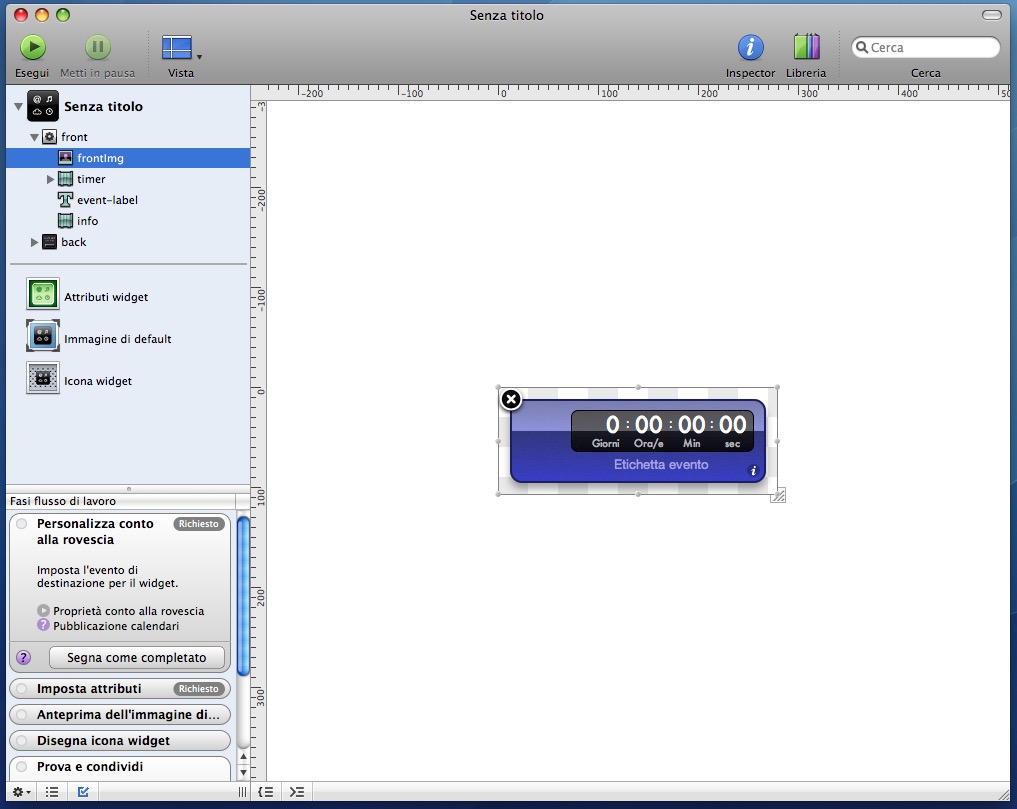
ALT Dashcode app graphical interface for making widgets for iOS
2
2

23 Jan 2020
First Talk @FlutterEurope @norbertkozsir Talking about widgets renderobjects and elements #widgetmaker @codemagicio

1
22

5 Dec 2019
This. Is. Happening.
Watch out for future updates to the #widgetMaker at widgetmaker.dev
#FlutterIDE
27 Jun 2019

#SwiftUI for #Flutter? Sure!
Combine the power of a visual interface and code!
#widgetMaker @timsneath @FlutterDev @csells #devTools
3
2
40

30 Oct 2019
@norbertkozsir really nice tool for an easier ui development in flutter. #flutter #widgetmaker #devtools #dev #code #codenews

2
3

#WidgetMaker is here 🥳🎉 Great job @norbertkozsir 👏 Checkout -> widgetmaker.dev #Flutter #FlutterCommunity
6

27 Oct 2019
Logging? Telemetry? Fuck, I just want the fucking network team to stop opening up routes to the damn Internet. "Sorry this 30 year old widgetmaker needs 445 so it can phone home. And your AV sucks. Do your job, security team!"
2
27 Jun 2019
#SwiftUI for #Flutter? Sure!
Combine the power of a visual interface and code!
#widgetMaker @timsneath @FlutterDev @csells #devTools
23
66
321

28 May 2019
Damascus billet number two TIG'd up ready to squish together. This time 9 layers. Wish he luck!
#widgetmaker #forge #widgetmakerforge #foregewelding #welding #forging #forgeweld #damascus #billet #venturi… instagram.com/p/Bx_S1mBFRD9/…
1
20 May 2019
Here is the first billet after a few hours I'm coffee. Super stoked right now! Can't wait to make the next billet with more layers!
#widgetmaker #forge #widgetmakerforge #foregewelding #welding #forging #forgeweld… instagram.com/p/Bxq7cZHlm_B/…
1
19 May 2019
I knew this giant mug would come in handy some day. That's 500ml of coffee etch right there!
#coffe #codfeeetch #penzoil #motoroil #thatsabigmug #widgetmaker #forge #widgetmakerforge #foregewelding #welding… instagram.com/p/BxqGG23F2TU/…
1
19 May 2019
Looks like a homogeneous piece... I believe I've ground past the welds... We'll see after the coffee!
#widgetmaker #forge #widgetmakerforge #foregewelding #welding #forging #forgeweld #damascus #billet #venturi… instagram.com/p/BxqF2LwFSMW/…
1
19 May 2019
Running forge welding temps easily at 10psi. Wound up turning it down to around 8psi later.
#widgetmaker #forge #widgetmakerforge #foregewelding #welding #forging #forgeweld #damascus #billet #venturi… instagram.com/p/BxqATuHlAaL/…
1
5 May 2019
One #widgetmaker forge and two forge welding capable naturally aspirated burners assembled and ready to go to their new owners!
#widgetmakerforge #propane #propaneforge… instagram.com/p/BxEMu68FbGa/…
1

8 May 2018
My main man, the WidgetMaker~! Whadup D! Nothing but love brother!
1
2

A5 Demonstrating trust is important. Adm-T relationship must feel like a collaboration, not a boss-widgetmaker #engagechat
1
2
7

5 Oct 2009
Top 5: Nokia's widgetmaker, Prius headtracking, Sony's beautiful sounds and more http://bit.ly/GI649