
Apr 14
WorkFour: Making the 4-Day Workweek a Reality in the U.S. share.google/JdtMrBBPumYKLhA…
1
2
138

Jan 19
Emails at 6 AM and 10 PM? 😳 Stop the 9-to-5 nightmare. A 4-day workweek protects your peace and your life.
📽️ Credit: YouTube: Ben Talks Talent – Interview Tips: Are Workers in America Destined to Endure the INFINITY WORKDAY?
#WorkFour #letsworkfour #4DayWorkweek
1
1
52
27 Oct 2025
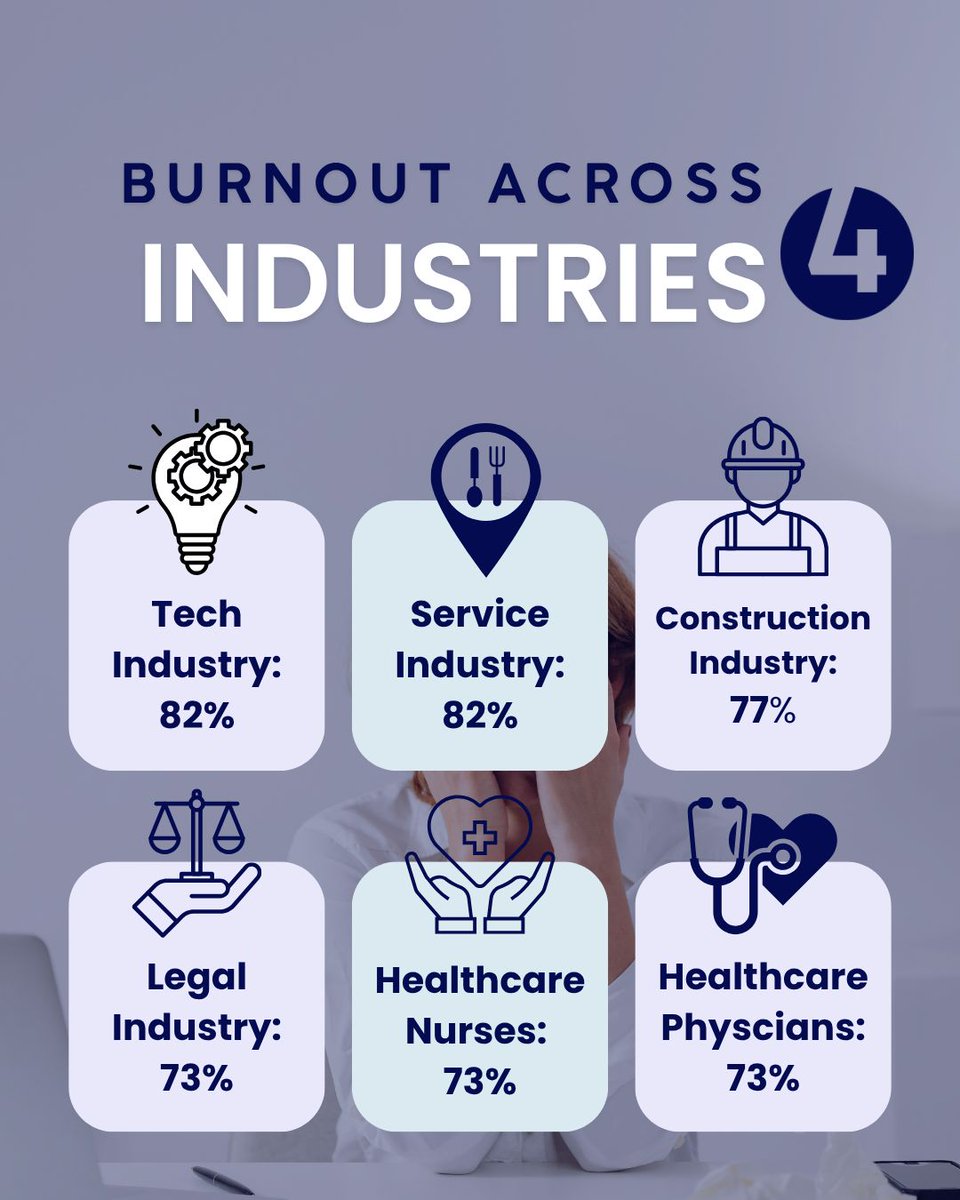
Burnout isn’t limited to one field — it’s happening everywhere. From healthcare to tech to education, workers are feeling the pressure of long hours and unrealistic expectations. A 4-day week could be the reset button we all need. 💡
#WorkFour #4DayWorkWeek #BurnoutAwareness
1
2
48

20 Oct 2025
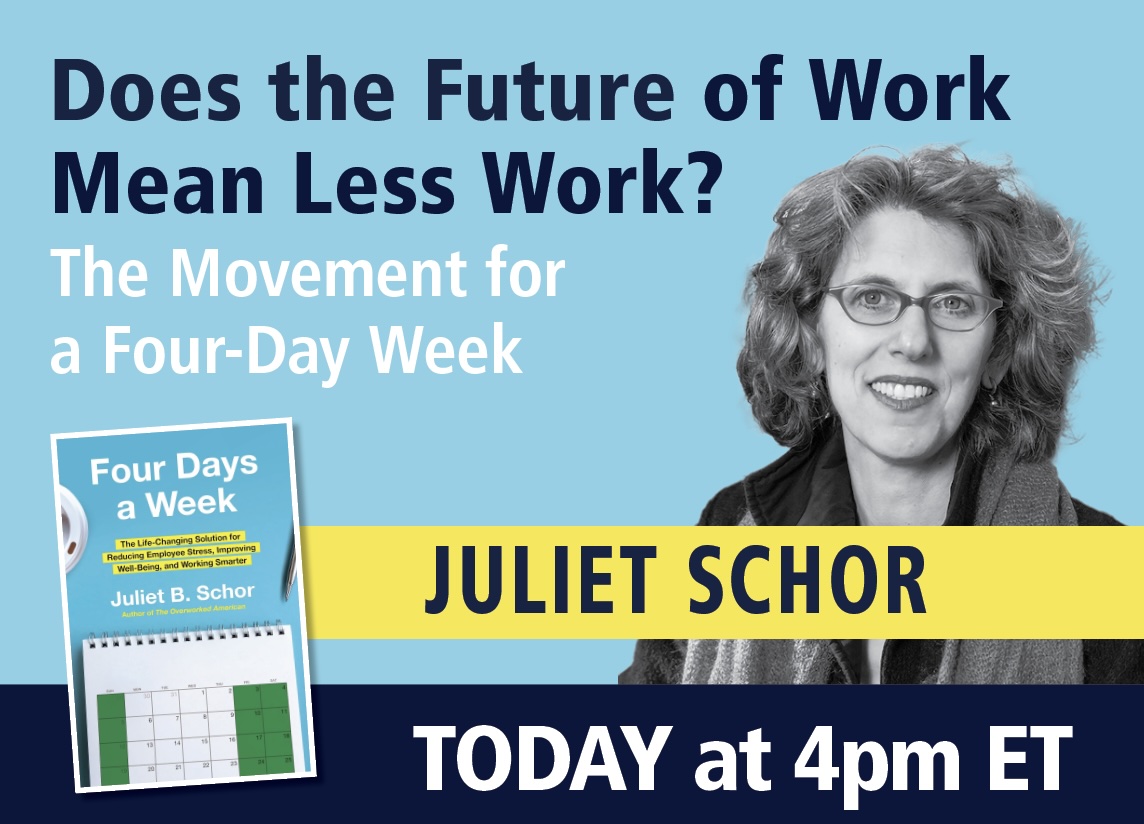
Join us TODAY at 4pm ET (In-person): Juliet Schor on the "Movement for a Four-Day Workweek"
@UMassAmherst, Gordon Hall, 3rd flr conf. rm. Free & open to the public. #letsworkfour #4DayWorkweek #FutureOfWork #JulietSchor #WorkFour
2
142
16 Oct 2025
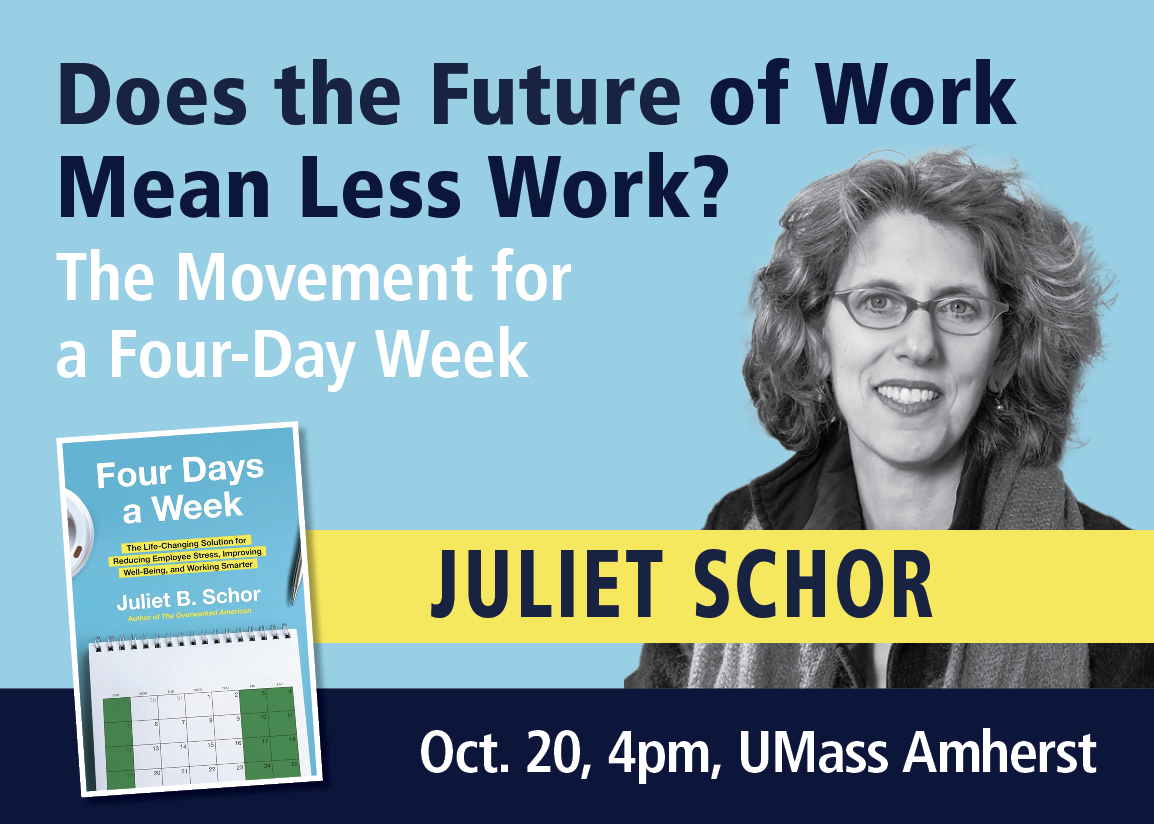
Monday, Oct. 20 at 4pm ET: Juliet Schor presentation on the "Movement for a Four-Day Workweek" Join us @UMassAmherst, Gordon Hall. Free & open to the public.
#letsworkfour #4DayWorkweek #FutureOfWork #JulietSchor #WorkFour
1
2
126
13 Oct 2025
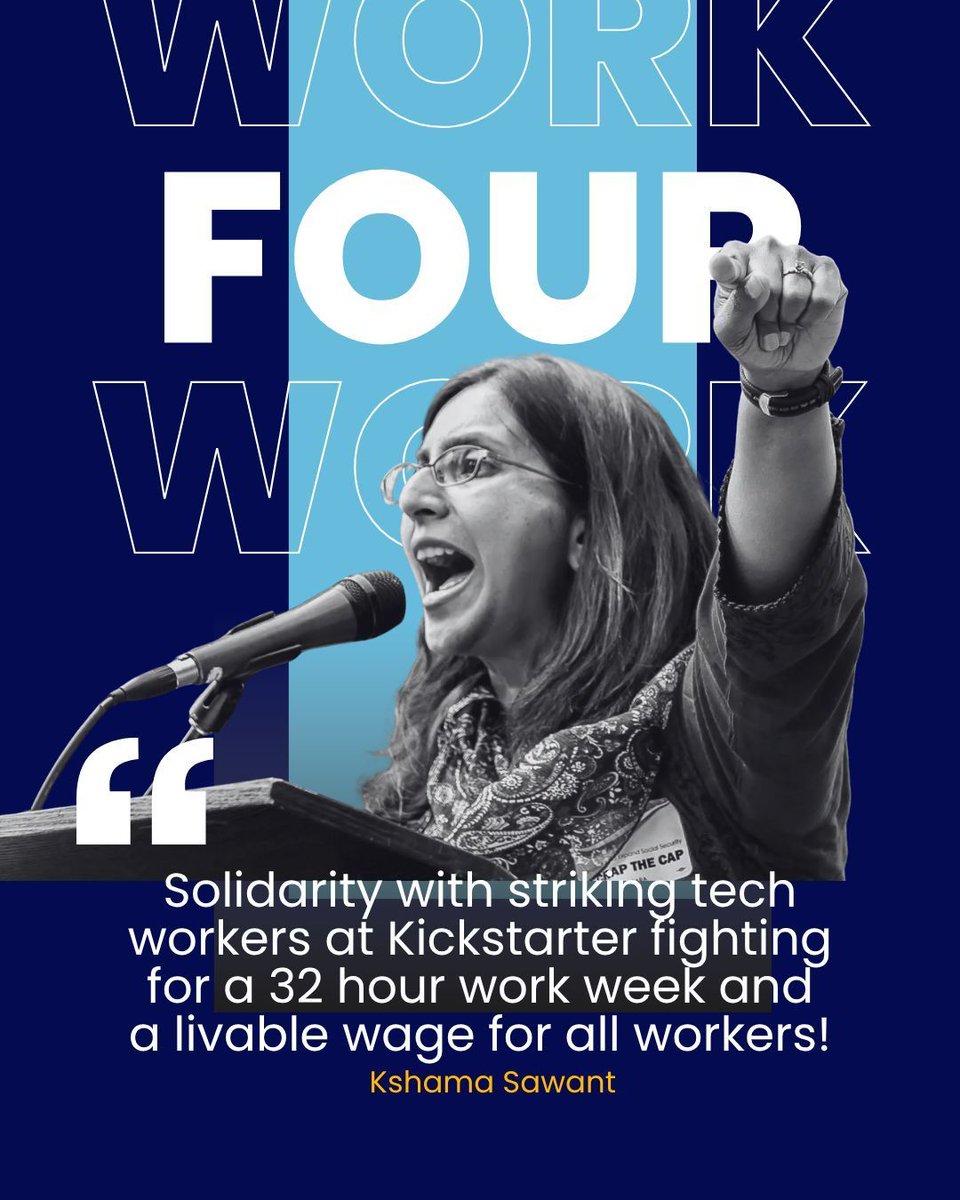
✊ In solidarity with @kickstarter_united, Kshama Sawant, and Workers Strike Back as they rally to defend the 4-day week, fair pay, and the future of work.
#WorkFour #letsworkfour #4DayWorkweek #WorkerSolidarity #Kickstarter #KshamaSawant
3
13
31
1,894
19 Sep 2025
FAQ Friday! Will you make less money with a 32-hour workweek? Nope! ✅ The laws we’re pushing protect your full pay, and the 4-day week companies in our directory already give their employees the same pay benefits they had on a 40-hour week.
#WorkFour #letsworkfour #4DayWeek
2
2
157
17 Sep 2025
Workers at Yosemite & Sequoia said enough is enough. Voting 97% YES to unionize after years of low pay, unsafe housing & short staffing.
At WorkFour, we fight for fairness at work from stronger unions to the 4-day workweek. Everyone deserves dignity, protection & time to thrive.
2
3
73
5 Sep 2025
A 4-day workweek isn’t about squeezing 40 hours into fewer days.
It’s about working less, living more.
✅ 32 hours total
✅ No loss in pay
✅ More time for life outside of work
The goal isn’t compressed time — it’s meaningful time back. 💜
#WorkFour #letsworkfour #4DWW
2
3
148
18 Aug 2025
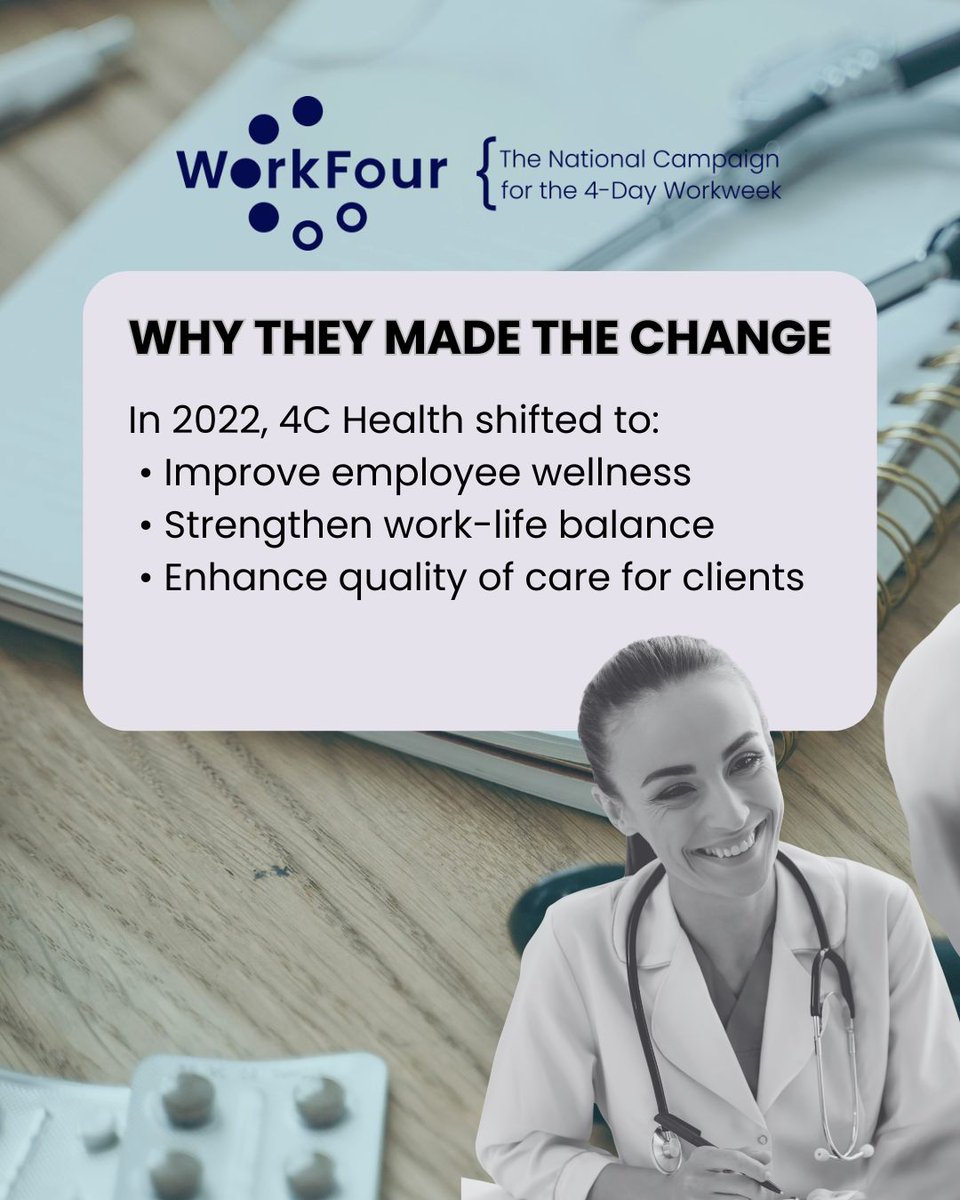
🎉 3 years. Big results.
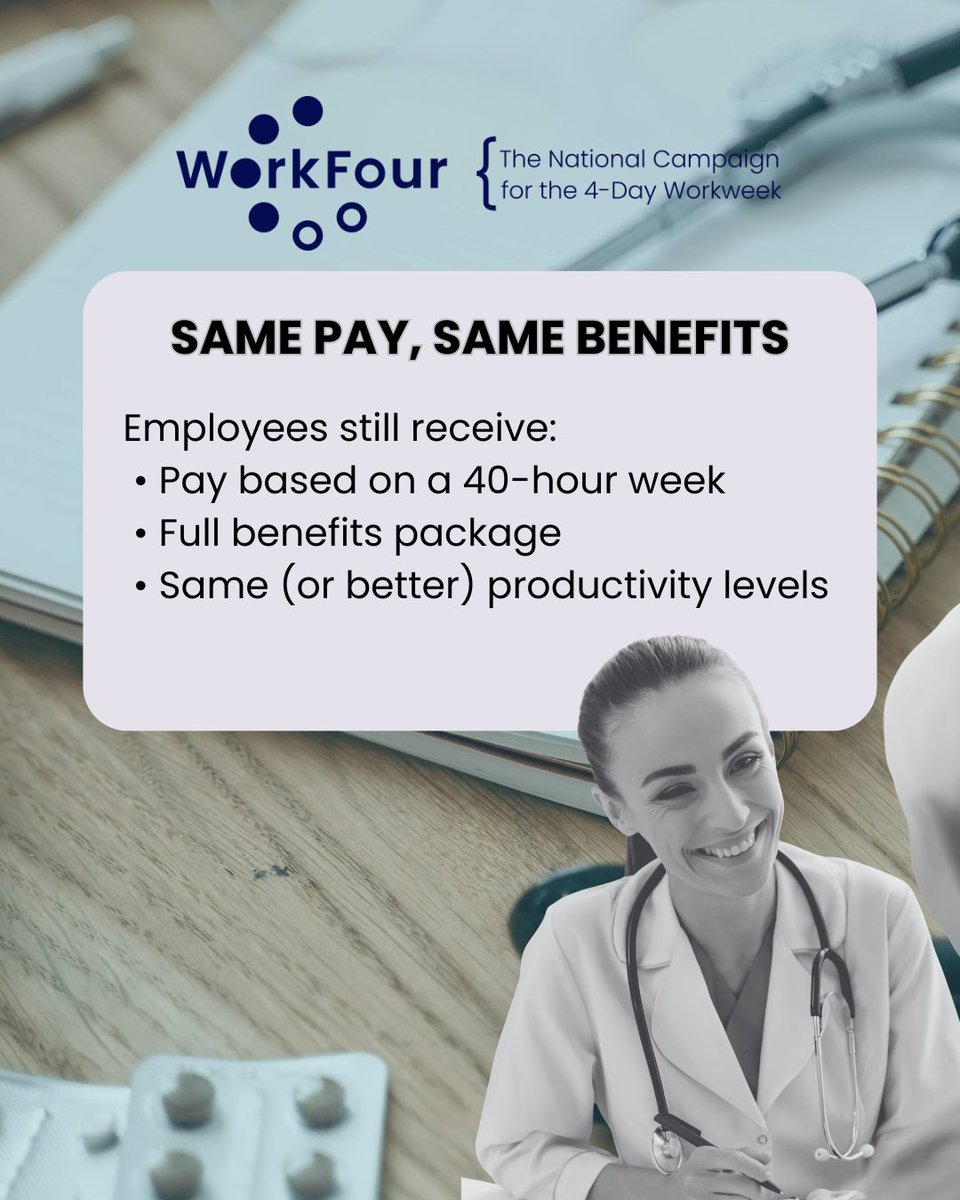
4C Health moved to a 4-day, 32-hour workweek in 2022 — no pay cuts, no lost benefits, no drop in care.
The outcome?
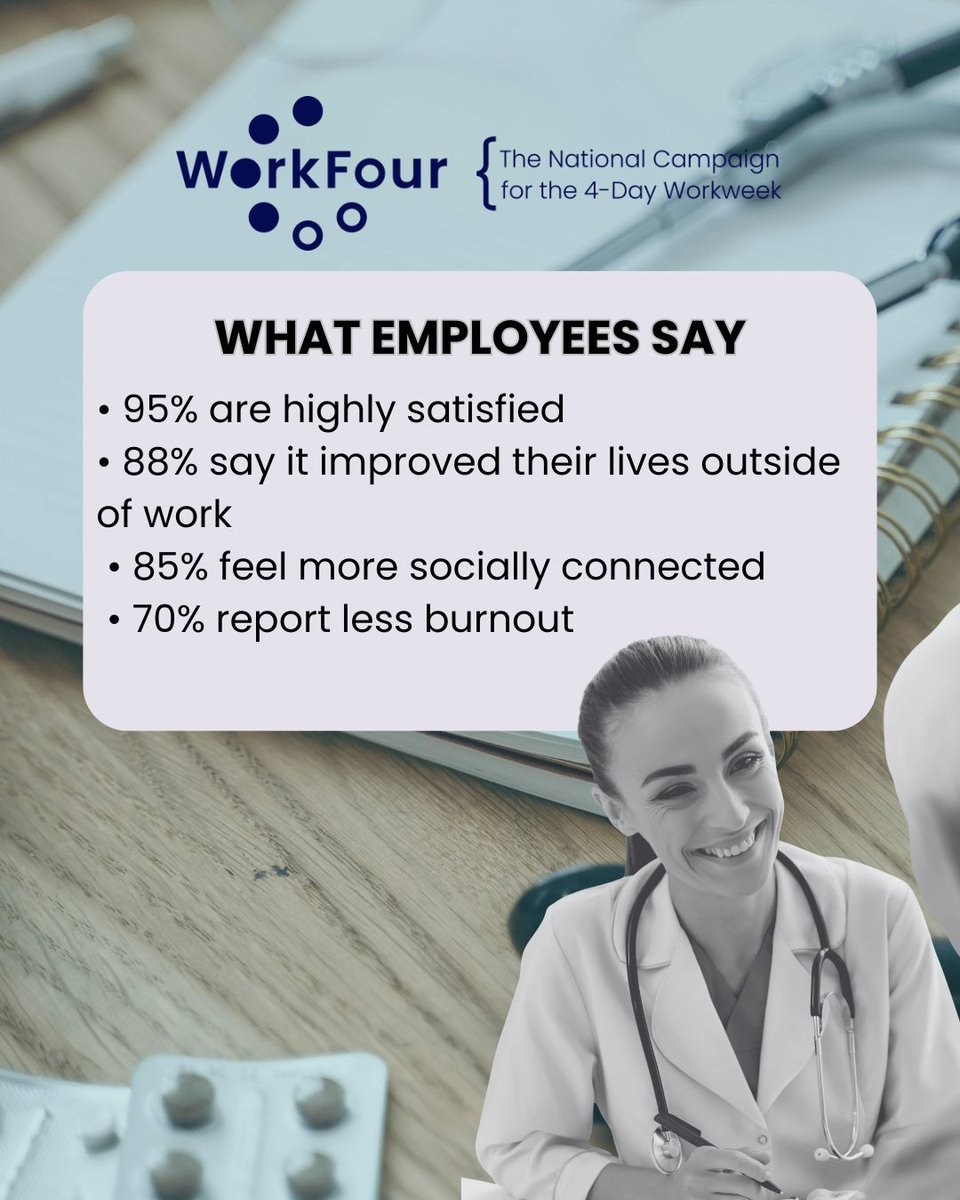
• 95% employee satisfaction
• 88% say life outside work improved
• 86% say client care got better
#4DayWorkWeek #WorkFour #4CHealth

1
1
2
163
30 Jul 2025
Economist Juliet Schor is leading global trials for the 4-day, 32-hour workweek and the results are in: happier employees, growing revenue, and less burnout. This could be the future of work.
#letsworkfour #4DayWorkweek #FutureOfWork #JulietSchor #WorkFour
3
6
185
2 Jul 2025
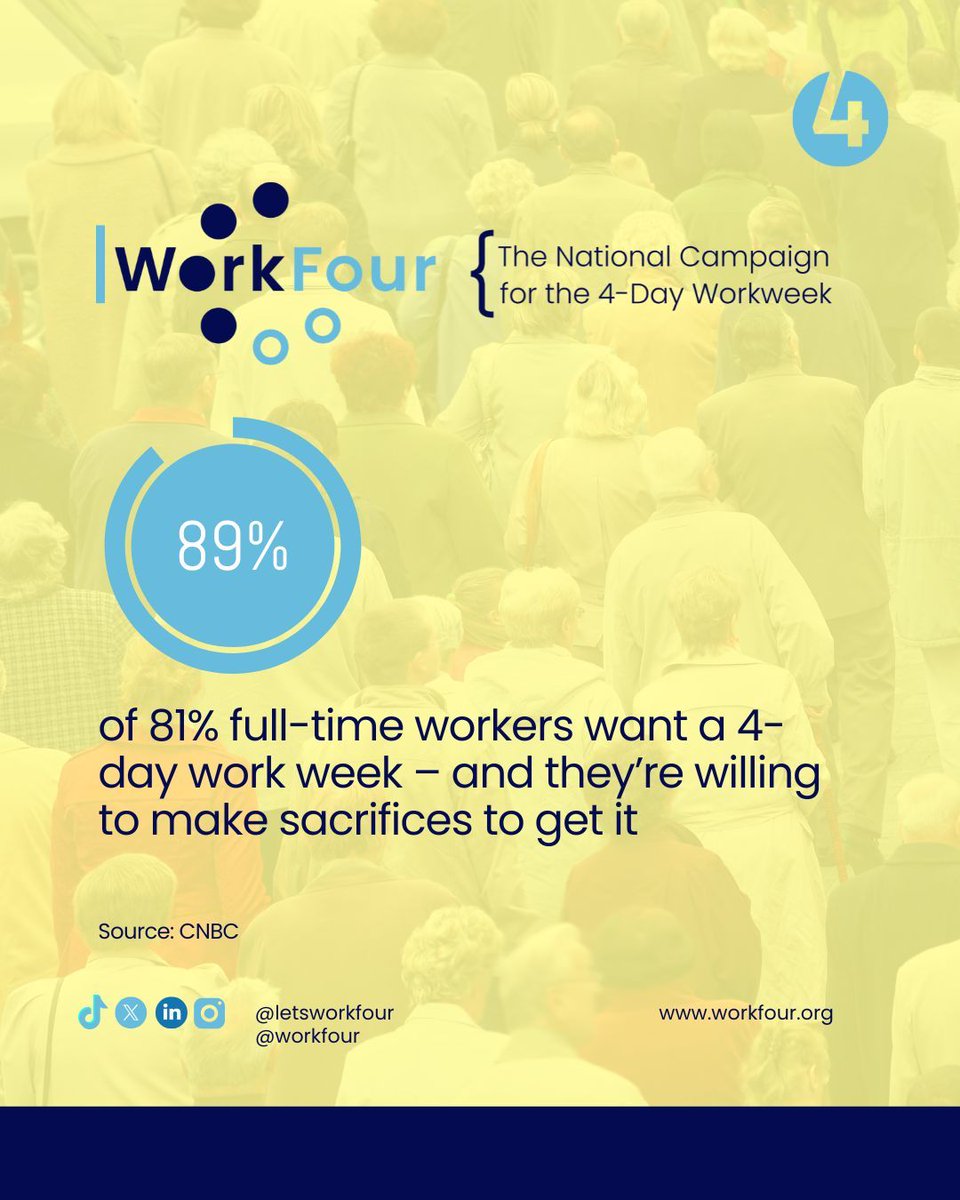
Nearly every full-time worker wants a 4-day workweek. And most are willing to make sacrifices to get it. That tells you everything you need to know. It’s not a trend. It’s a demand.
Comment “YES” if you’re ready for a shorter week and a better life.
#letworkfour #WorkFour
2
2
86
25 Jun 2025
A 4-day workweek isn't just good for us — it's good for our democracy. With more time, we can vote, volunteer, show up for our families, and be there for our communities. Civic life thrives when we’re not running on empty.
#WorkFour #letsworkfour #4DayWeek #CivicPower
1
2
74
23 Jun 2025
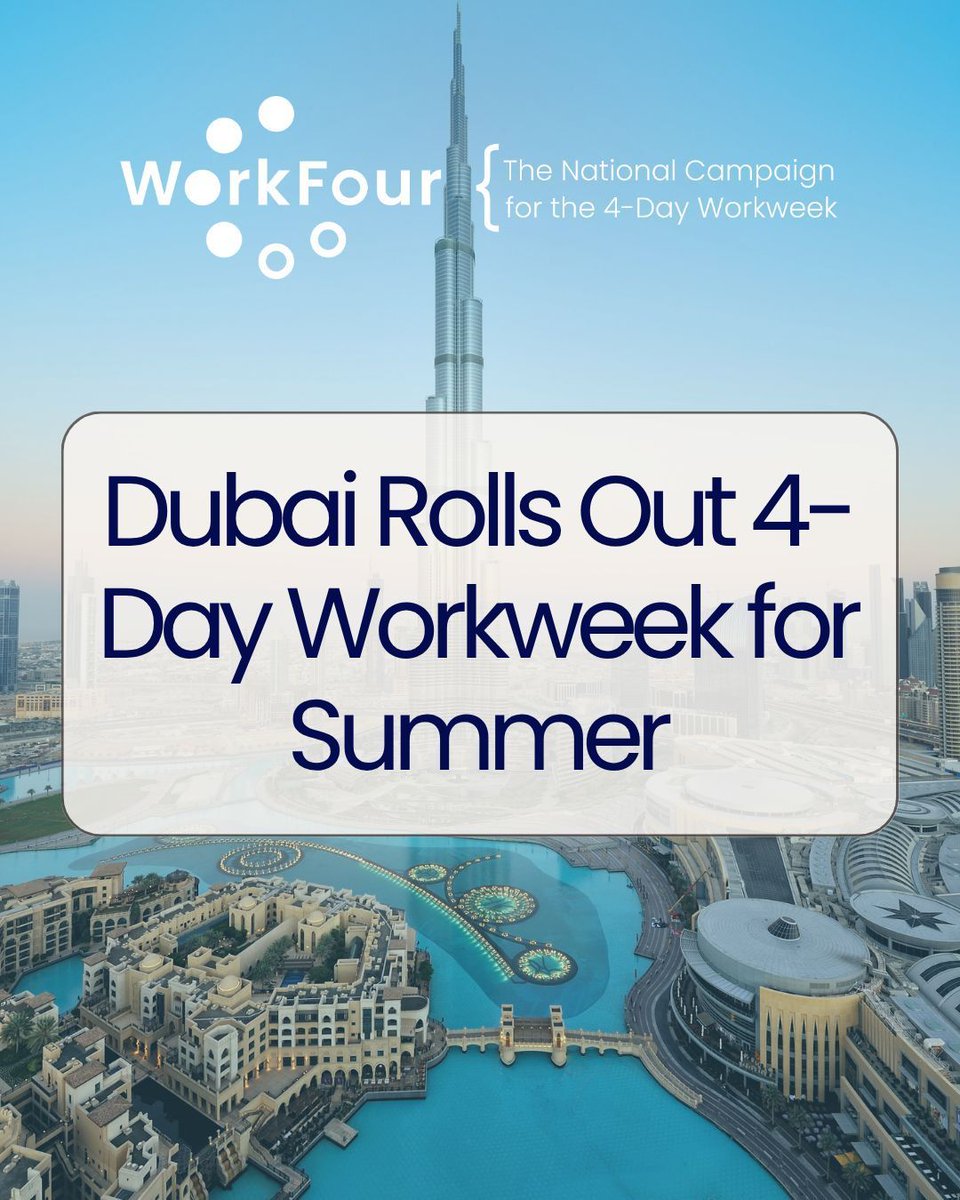
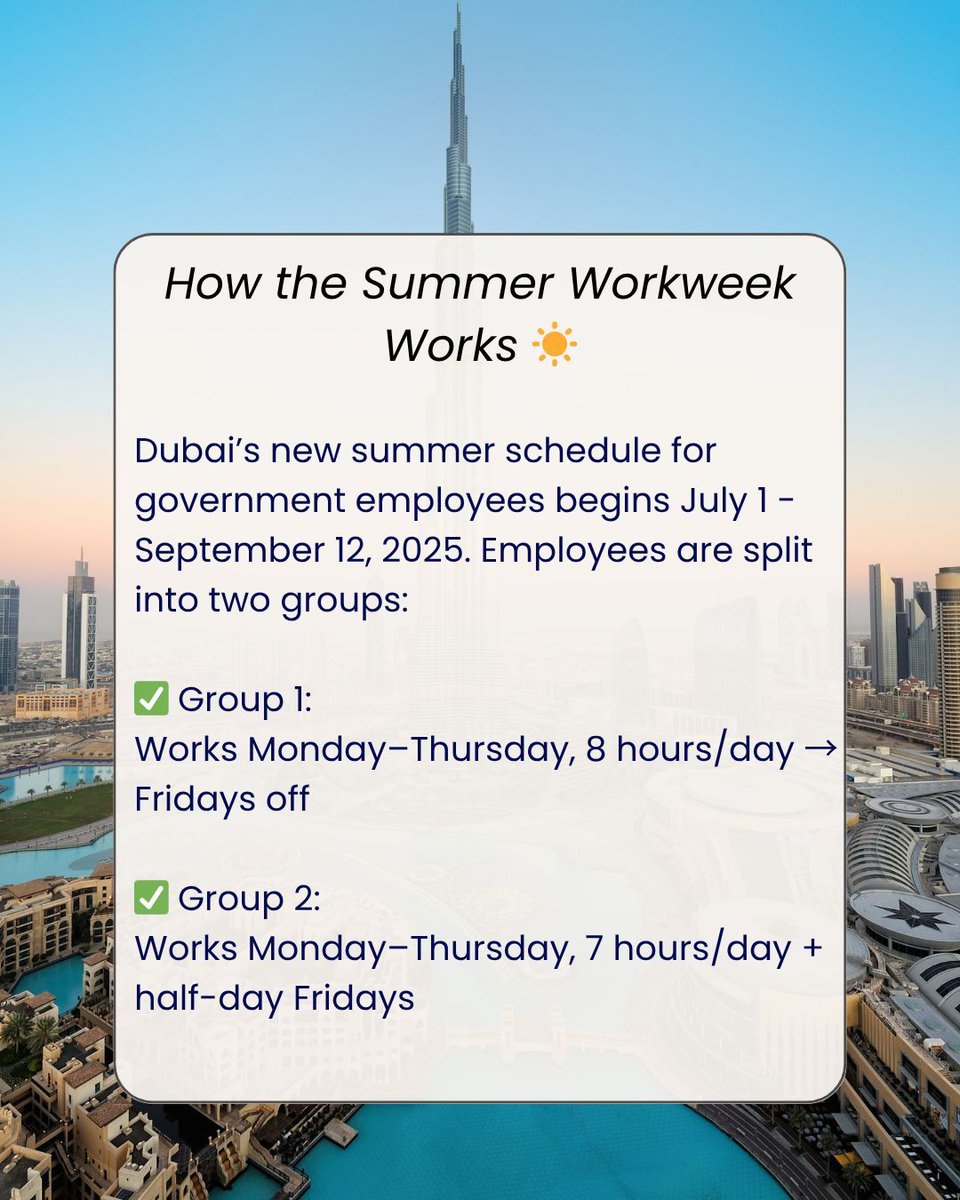
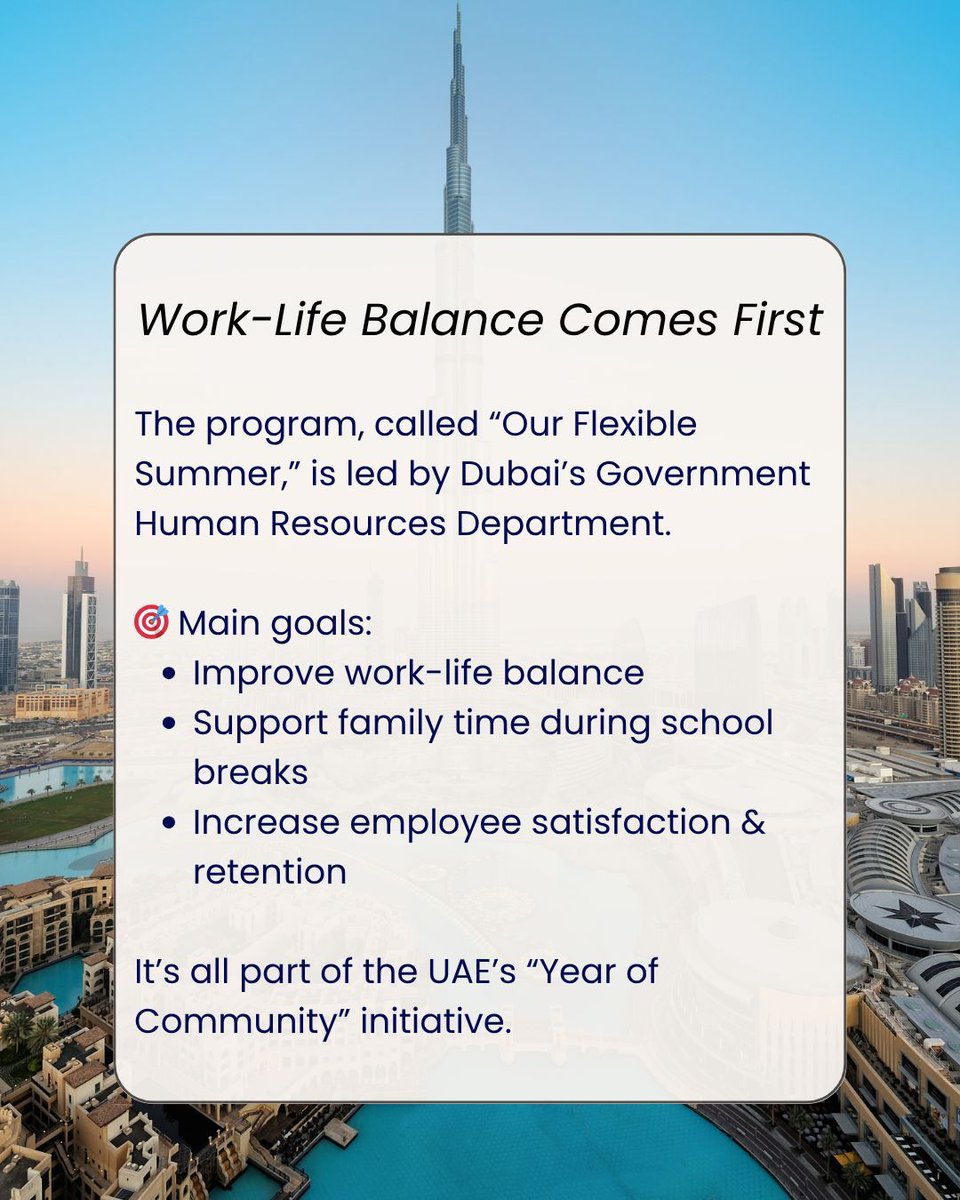
Dubai just made it official: 4-day workweeks for summer. ☀️
Last year’s pilot? A success.
This year? Expanded to even more workers.
It’s not a trend. It’s the future. Who’s next?
#4DayWorkweek #letsworkfour #WorkFour #WorkReform #DubaiNews #FutureOfWork

1
3
160
3 Jun 2025
🚨 Out today: Four Days a Week by economist WorkFour Advisory Council member @JulietSchor!
The first global review of 4-day workweek trials — and a roadmap for how to get to 32 hours without cutting pay or productivity.
This is a big one. 👇
harpercollins.com/products/f…

1
1
131
2 Jun 2025
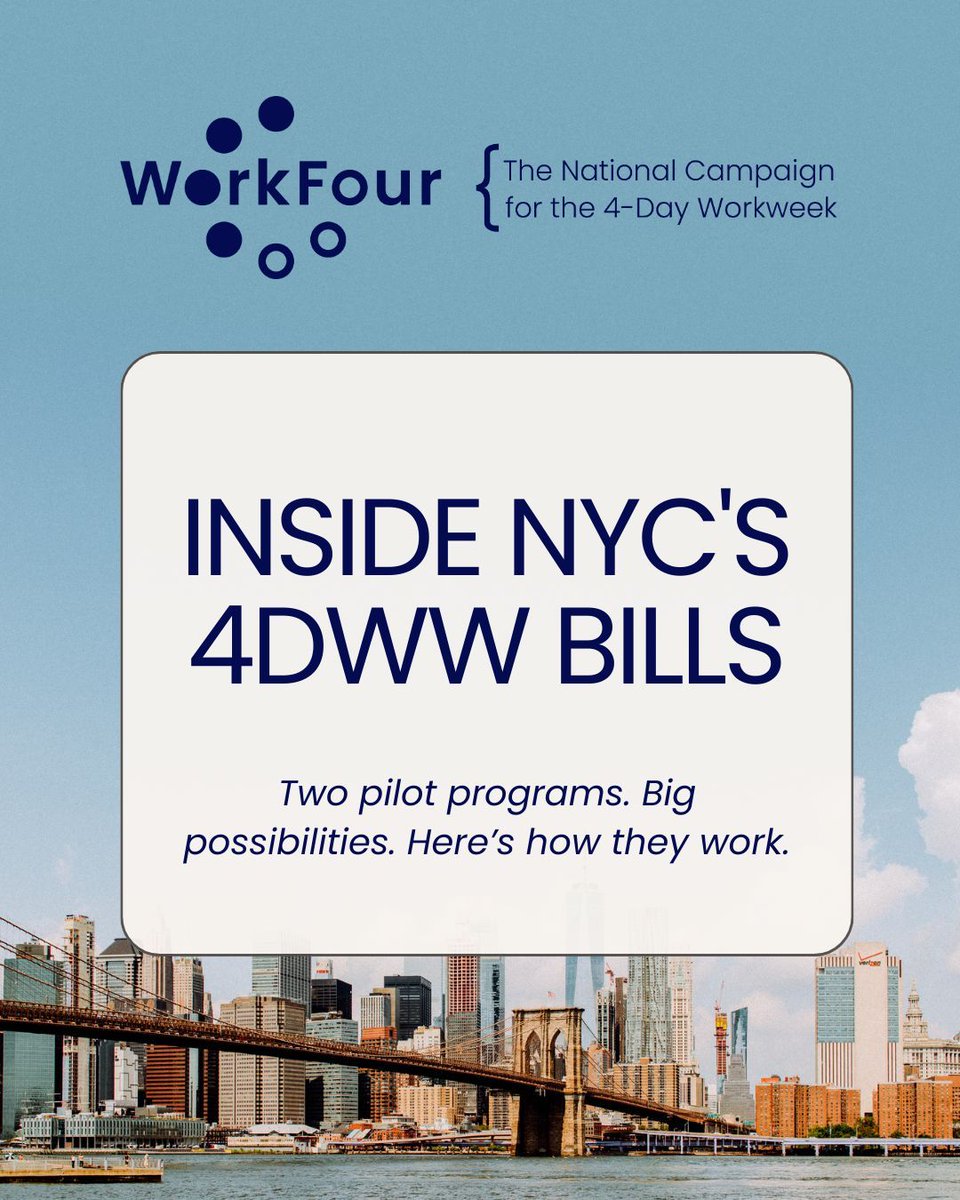
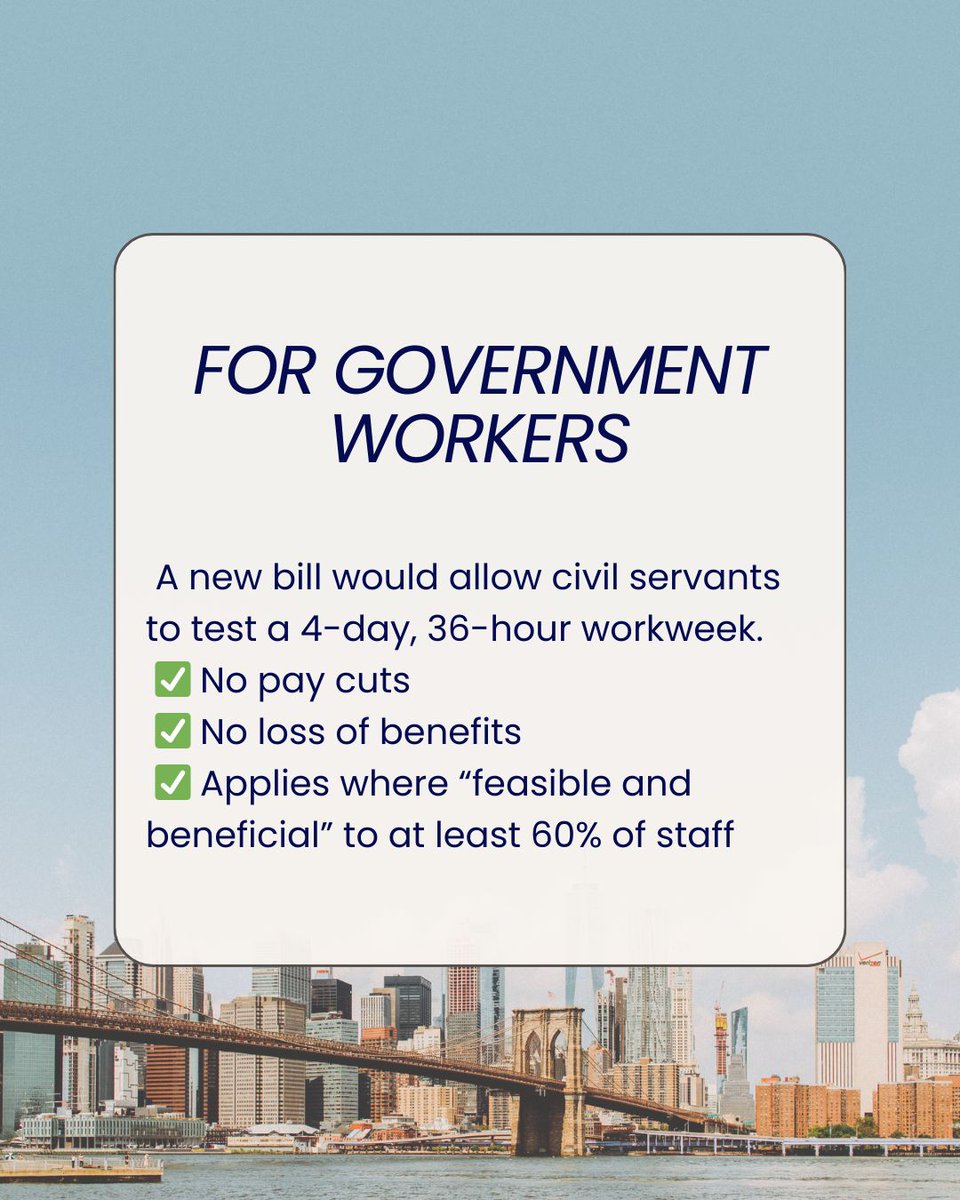
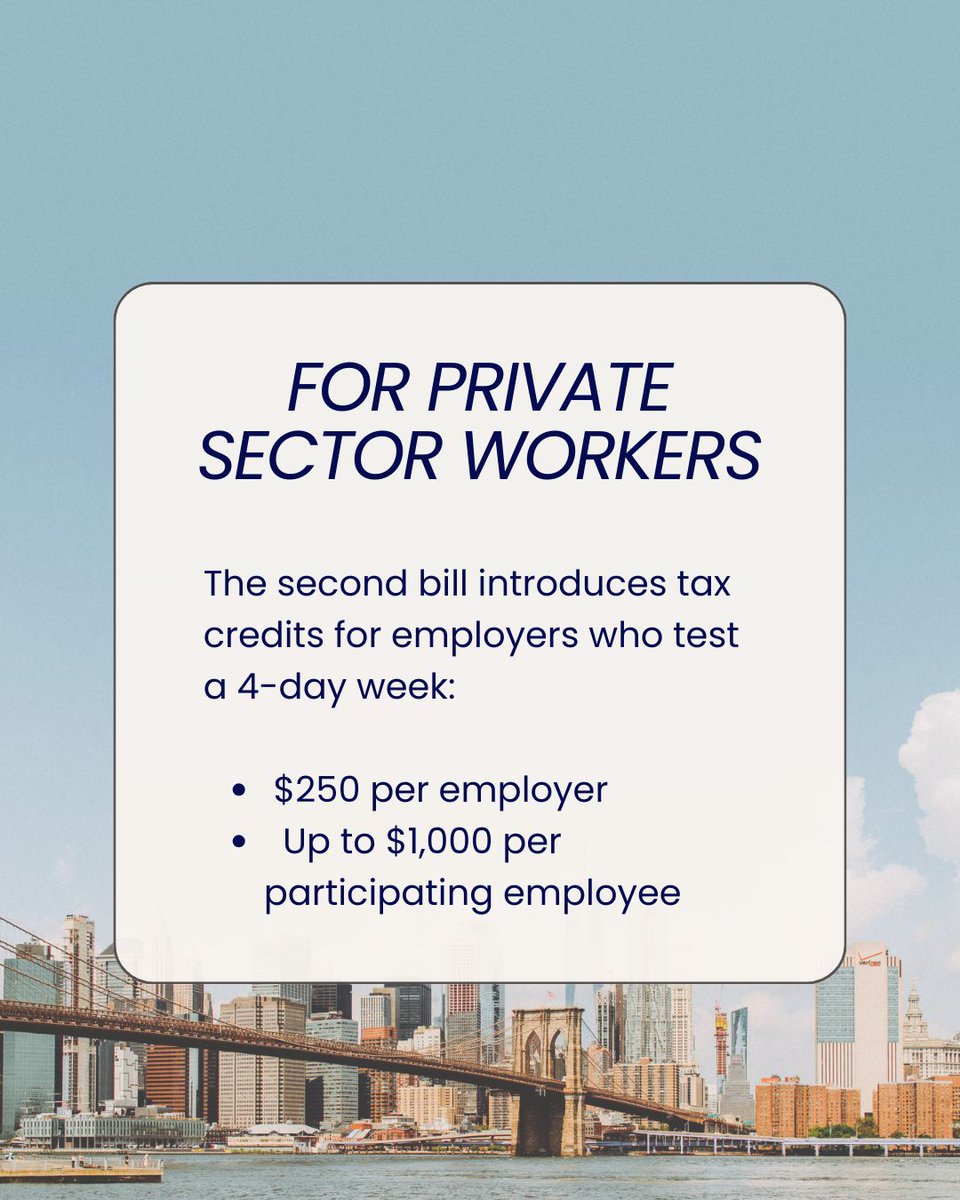
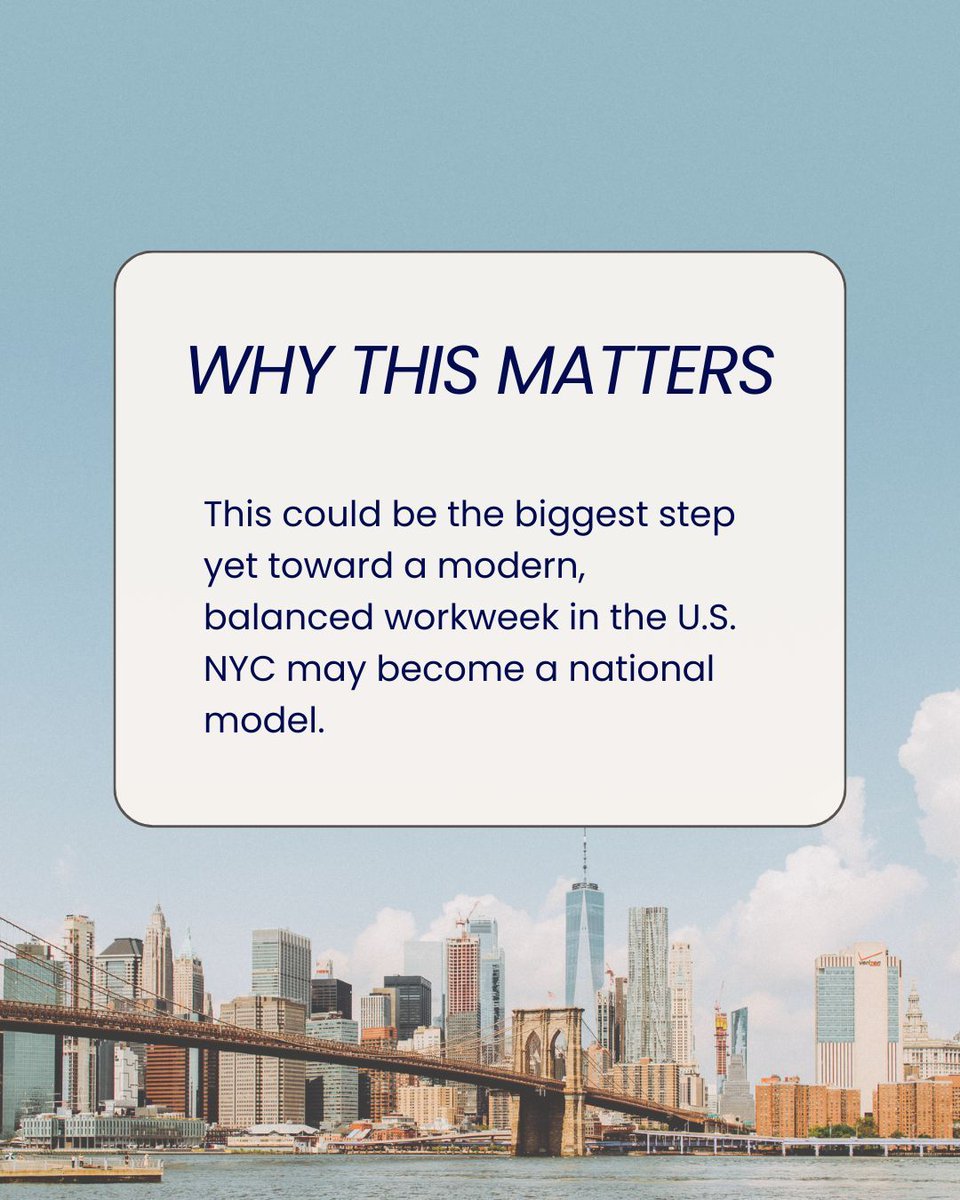
NYC is moving on the 4-day workweek! Two pilot bills—A5423 & A5454—aim to test shorter weeks for civil servants & private workers (with tax perks!). No pay cuts. Big potential. 👏
🖊️ Sign the petition
📣 Tag your boss
#4DayWorkweek #WorkFour #SmartWorkWeek
1
1
5
656

8 May 2025
Though only a fraction of US businesses have adopted a four-day workweek, Vishal Reddy, the executive director of WorkFour, believes we are building toward a tipping point, writes Andrew Berka. “Social change often feels slow until it happens all at once.” bit.ly/42KCYnx
1
6
3,477
5 May 2025
Though only a fraction of US businesses have adopted a four-day workweek, Vishal Reddy, the executive director of WorkFour, believes we are building toward a tipping point, writes Andrew Berka. “Social change often feels slow until it happens all at once.” bit.ly/42KCYnx
2
2,654

Grok:
Let’s dive into the details of the bill mentioned in the X post and related context. The post from LynneP (
@LynneBP_294
) discusses a proposed 32-hour workweek as a new maximum in the U.S. by law, and the web search results provide clarity on the specific legislation being referenced.
Name of the Bill
The bill in question is the Thirty-Two Hour Workweek Act. This legislation has been introduced in both the U.S. House of Representatives and the Senate, with different lawmakers leading the charge in each chamber.
In the House: The bill is officially titled H.R. 1332 - Thirty-Two Hour Workweek Act, introduced by Congressman Mark Takano (CA-39) during the 118th Congress (2023-2024). This is confirmed by the web result from Congress.gov (web ID: 0), which provides a summary of H.R. 1332.
In the Senate: A companion bill was introduced by Senator Bernie Sanders (I-Vt.) on March 14, 2024, as noted in the web result from Sanders’ official site (web ID: 2). While the Senate version isn’t given a specific bill number in the provided results (e.g., S.XXXX), it is described as legislation to establish a 32-hour workweek with no loss in pay.
Key Details of the Thirty-Two Hour Workweek Act
Let’s break down the specifics of the bill based on the web results and contextualize its relevance to the X post:
Legislative Goals
Objective: The Thirty-Two Hour Workweek Act aims to reduce the standard federal workweek from 40 hours to 32 hours. This change would redefine what constitutes a "full-time" workweek under federal labor laws, specifically the Fair Labor Standards Act (FLSA), which currently sets the standard at 40 hours.
No Loss in Pay: A critical component of the bill, emphasized in both Takano’s and Sanders’ versions, is that workers would maintain the same pay they currently receive for a 40-hour workweek. This is explicitly stated in the Senate announcement (web ID: 2) and reinforced in LynneP’s replies on X, such as “Salaries stay the same” (
@mrhuntoon
) and “Yes because it's same pay as 40 hrs” (
@IndianaGPA
).
Implementation Timeline: According to the Congress.gov summary (web ID: 0), the reduction would occur over a three-year phase-in period, gradually lowering the standard workweek from 40 hours to 32 hours to allow businesses and workers to adjust.
Historical Context
The bill builds on historical labor reforms in the U.S. The web result from Sanders’ site (web ID: 2) notes that the Fair Labor Standards Act of 1938, signed by President Franklin D. Roosevelt, established a 44-hour workweek as the first federal standard, which was later reduced to 40 hours. The Thirty-Two Hour Workweek Act is positioned as a modern update to these standards, reflecting changes in productivity, technology, and societal needs.
Sanders highlights that Americans now work more hours than people in most other wealthy nations but earn less per week than they did 50 years ago (adjusted for inflation). This economic disparity is a key justification for the bill.
Endorsements
The bill has garnered support from several labor unions and organizations, as noted in the Sanders announcement (web ID: 2):
AFL-CIO
United Auto Workers (UAW)
Service Employees International Union (SEIU)
Association of Flight Attendants-CWA (AFA-CWA)
United Food and Commercial Workers (UFCW)
International Federation of Professional and Technical Engineers (IFPTE)
4 Day Week Global
WorkFour
National Employment Law Project (NELP)
Dr. Dale Whelehan, CEO of 4 Day Week Global, endorsed the bill, citing research that a four-day workweek (equivalent to 32 hours over four days) benefits workers, companies.
2
965
31 Jan 2025
A 4-day workweek is the only thing that could save us now 🙏
#workfour #4dayworkweek

1
3
131