
Jun 14
until okf handles writeback permissions and freshness it's a context layer not a wiki
76

Jun 14
This is the rollout shape I like: Claude Code to find the loop, n8n once the handoff is stable. For cold outreach I’d keep one human checkpoint before sending: ICP match, no-go reason, CRM writeback. The rest can run.
1
2
34


Jun 12
We build the data workflow layer for this at Deepline: enrichment, verification, identity resolution, orchestration, and writeback, from Claude Code.
Full recording & recap (LangChain, Exa, Composio, AssemblyAI): deepline.com/blog/claude-cod…
1
39


Good IIoT pipelines do not just move data. They preserve meaning. Source protocol, scan rate, namespace, equipment context, quality flags, and writeback boundaries should survive the trip from PLC to historian to AI layer.
1
8

Jun 10
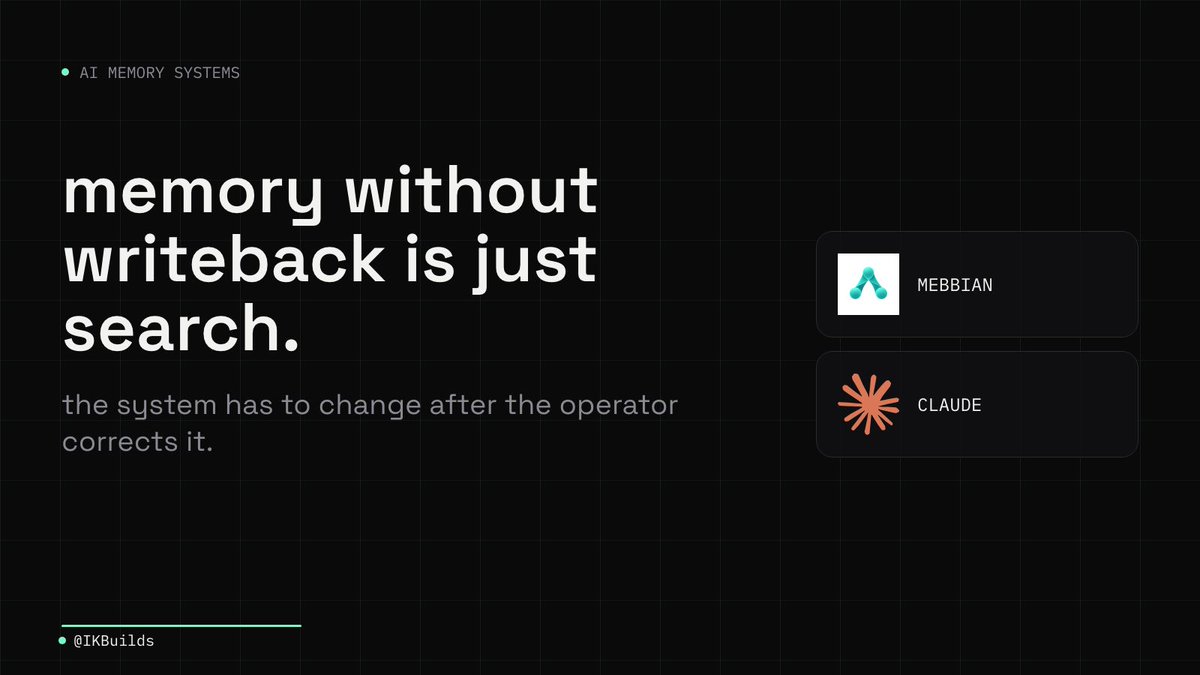
memory without writeback is just search.
if the operator corrects the agent and the system cannot change, the same mistake is waiting in tomorrow's session.
1
3

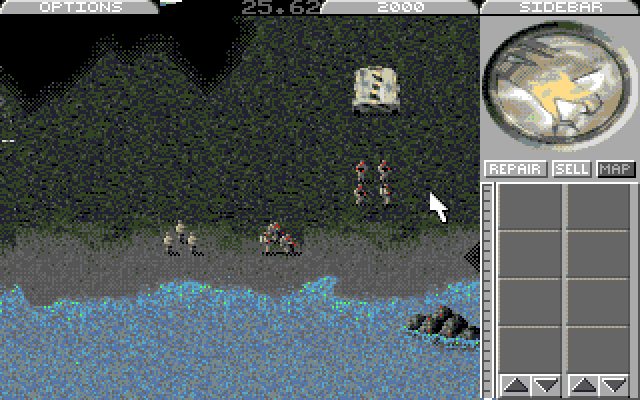
Command&Conquer on Atari ST: I had strange visual artefacts when testing on 68040 CPUs. It affected mainly the tabs and the mouse cursors (see first pic). Turns out, the 040's CPU writeback cache was fighting against the Blitter chip and explicit cache control was needed. Fixed.

1
4
46
1,079


Jun 8
The build order that compounds:
1) Metrics writeback — pure read, zero risk
2) Comment-to-DM engine — replaces a paid tool
3) Closed-loop publisher
4) Voice comment replies
5) Strategy feedback loop
Start with the 45-min connection. Then build the systems on top.



17


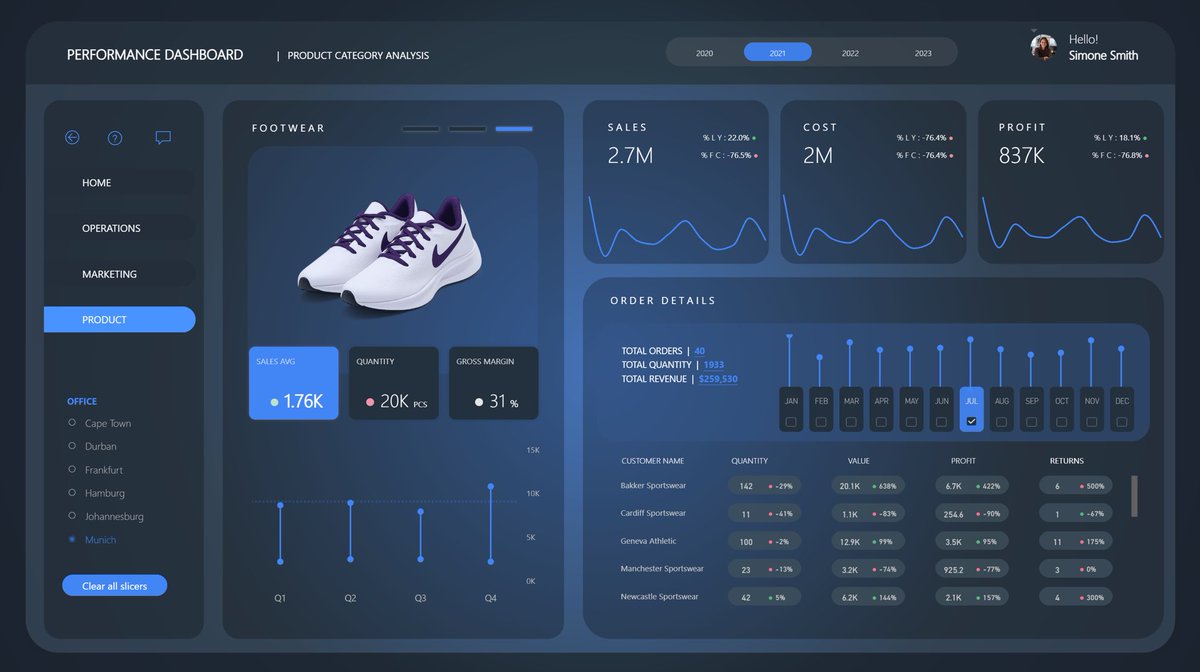
POV: It’s Monday and You’re a Power BI Dev…
“Can you export it to Excel?”
“Quick change, should take max 5 minutes.”
“We definitely need to add a writeback option to adjust numbers manually when necessary“
“Can you add a button to send email alerts automatically?“
“Why doesn’t this match the number in my screenshot from a week ago?“
“Can we add this to PowerPoint?”
… What else? 🤣✌🏻
#powerbi #data #analytics #meme #reality
1
24
1,484


🤖 constellation-engine
⭐ 56 stars
Tired of AI agents forgetting you when the tab closes? Give them a local-first hippocampus with episodic recall and Hebbian writeback.
🔗 github.com/CONSTELLATION-ENG…
#AI #MachineLearning
1
2
144


Jun 3
Hermes Dreaming v0.3.0 is out!
⚕️Stable Dreaming Inbox
⚕️richer proposal metadata
⚕️session harvest integration
⚕️safer writeback policies
⚕️cron‑ready digest mode
This update pushes agent self‑improvement toward a human‑reviewable, auditable workflow.
Run 'hermes dreaming update' to give it a try!

2
13
170
22,953

Good read. I’ve been vaguely confused for a while. Would be interested in your thoughts on how Key Trust might fit here? Seems users need to move to Cloud Trust (because no device writeback?) which from experience means re-registering WHfB? Which becomes a big comms exercise. 😕
2
3
1,368

The route back for IO that needs to be routed through the CPU {audio out, network out} is a lot more unfun. AMD again has the nice uncached memory support, so that part is easy. NVIDIA well, would have to take the crappy mid-frame L2 writeback (likely) making CPU-read available
2
4
549

$P reports tonight
This name has lagged behind other AI semi and storage leaders all year SNDK/MU/WDC/STX etc.
The AI semi and storage leaders have cleaner scarcity signal because the market can see pricing power, sold-out capacity, exabyte growth, ASP/GB pressure, interconnect demand,
or gross margin expansion. Those stories are easier to underwrite.
$P is trying to move the market's frame from "flash storage vendor" -> "AI-era enterprise data control plane." Agents need more than GPUs. They need governed context, fast retrieval, writeback, and durable workflow memory. That
is the lane Everpure is trying to claim through Enterprise Data Cloud,and hyperscaler direct
flash.
So why no bid?
Well the same NAND tightness that makes SNDK a scarcity winner can be a margin headwind for P until Everpure proves pricing power, hyperscaler mix, or consumption economics can absorb the cost pressure.
Think of it this way
SNDK is the flour supplier in a flour shortage. P is the bakery. The same shortage that lets the flour supplier raise prices can hurt the bakery until it proves it can charge more for the cake, and/or use its brand and service model to protect margins.
What is holding the market back?
* Hyperscaler revenue is still not broken out cleanly.
* The ramp is back-half weighted, with management pointing to Q3/Q4 FY27.
* FlashBlade//EXA has proof, but still needs broader customer conversion.
* NAND and component inflation can pressure product gross margins before the AI/hyperscaler mix helps. (flour and bakery)
* Valuation already gives the company some credit, so vague AI language will not be enough.
The biggest AI spenders do have in-house infrastructure teams. They can source NAND, design storage services, and operate at a scale most enterprises cannot. That means $P cannot win hyperscalers by being a managed storage vendor. It has to win because its
DirectFlash and software architecture solve a specific performance, power, durability, density, or total cost problem that even a hyperscaler would rather license, than rebuild.
For normal enterprises, the pitch is different. Most enterprises are not buyingraw NAND and building a storage platform around it. They want uptime, support, snapshots, governance, performance,and lifecycle management. That is why they buy a platform instead of
going directly to SNDK.
Company guide:
* Q1 FY27 revenue: $990M-$1.01B.
* Q1 non-GAAP operating income: $125M-$135M.
* FY27 revenue: $4.3B-$4.4B.
* FY27 non-GAAP operating income: $780M-$820M.
Tonight customer proof is what im looking for. (hurdle)
* Revenue should be above $1.01B, not merely in range.
* Operating income should be above $135M, or the margin bridge needs to be
strong.
* FY27 revenue guide should be held with confidence or raised.
* RPO needs to stay materially above revenue growth. A hard deceleration from
prior 40% would hurt the thesis.
* Hyperscaler commentary must become more concrete; shipments, revenue timing,
customer breadth, design wins, and workload scope.
* Product gross margin pressure needs to stay contained, with a credible
recovery path.
Bull Case: Re-Rate Begins
The company beats the top end of guide, keeps or raises FY27, RPO stays strong,
and management gives real hyperscaler/EXA detail. The call makes the market
feel that Everpure is becoming the agentic enterprise memory layer, not just a
storage vendor.
Base Case: Story Is Real, Trade Needs Time
The print is good, but the guide is mostly reiterated. Management sounds
confident, but hyperscaler detail remains partly qualitative and back-half
weighted. RPO is fine but not explosive.
i rather avg up after the print than leverage up before.

Earnings may 27th I'll try to post something before the print, and post it here.
$P
1
14
3,421

May 26
⚙️🧠 P-OPS TEAM’S TECH TIPS
Validator Edge — Disk Flush Latency & State Commit Pressure
Validators don’t only process blocks.
They wait for storage.
📖 Today’s read: how disk flush behaviour quietly shapes validator consistency under sustained write load.
🔎 Commit latency check (20s check)
Run:
𝚒𝚘𝚜𝚝𝚊𝚝 -𝚡 1 5
What you want:
• low await values
• stable %util without spikes
• write latency staying predictable
If await suddenly climbs:
→ state commits are queuing on storage
→ validator execution begins stalling behind disk flushes
Even fast CPUs can’t advance consensus if writes are waiting on I/O completion.
🔎 Dirty page pressure (15s check)
Run:
𝚌𝚊𝚝 /𝚙𝚛𝚘𝚌/𝚖𝚎𝚖𝚒𝚗𝚏𝚘 | 𝚐𝚛𝚎𝚙 𝙳𝚒𝚛𝚝𝚢
What you want:
• controlled dirty memory growth
• no massive spikes before flush cycles
If dirty pages build excessively:
→ kernel flush storms begin
→ validator threads pause during heavy writeback activity
This creates hidden execution jitter between blocks.
🔎 NVMe saturation visibility (30s check)
Run:
𝚑𝚝𝚘𝚙
Then press:
𝙵2 → Columns → add IO_RATE
What you want:
• balanced write throughput
• no sustained 100% storage utilisation
If disks remain pinned:
→ replay sync slows
→ state pruning competes with consensus operations
→ commit timing becomes inconsistent
⚡ Quick Fix Layer (high impact, low effort)
If you spot issues:
• prefer enterprise NVMe over network-attached storage
• isolate validator databases from archive workloads
• avoid aggressive snapshot jobs during peak epochs
• tune filesystem mount options for low-latency writes
• maintain healthy free space to reduce fragmentation pressure
Consensus reliability is often storage reliability in disguise.
🎯 What this means for delegators
Storage stalls create validator timing instability.
Strong validators minimise commit variance to maintain:
✔️ stable block execution
✔️ predictable vote propagation
✔️ smoother epoch performance
✔️ consistent long-horizon reliability
P-OPS TEAM operates validators on high-performance storage infrastructure across 80 networks.
🔗 Stake with us: pops.one
🔗 Explore more: linktr.ee/p_opsteam
🔗 Follow: x.com/popsteam1
#Validator #Staking #Web3 #Crypto #DeFi #Blockchain #ProofOfStake #NodeOps #Delegation #Infrastructure #TechTips #POPS
8
16
147