The collapse of Ethiopia's Eurobond restructuring talks is not a technicality. It is a confession.
On May 28, 2026, Ethiopia's Ministry of Finance issued a statement so carefully worded, so hedged in the language of sovereign finance, that a casual reader might have missed what it actually said: that a government which has been in default on its international debt since December 2023 has now failed, for the second time in five months, to reach a deal with its creditors, and is preparing to go to war with the bondholders it cannot pay. Strip away the boilerplate, the references to Comparability of Treatment, to Value Recovery Instruments, to the Common Framework, and what remains is a government that borrowed a billion dollars from the world, spent it, cannot account for the returns, and is now negotiating in the wreckage.
The people who built this wreckage have names.
Ahmed Shide, who occupied the finance ministry during the critical years when Ethiopia's fiscal position deteriorated beyond recovery, oversaw a budgetary process that kept funneling resources into overlapping wartime mobilizations while bilateral creditors and multilateral lenders were told reform was on track. What began as the catastrophic fiscal burden of the Tigray war did not end with Pretoria. The militarized structure of the state expanded further as the conflict in the Amhara region deepened into a prolonged war that is now approaching its third year. A country fighting sustained internal wars does not operate under normal fiscal conditions. Fuel consumption rises sharply. Security and intelligence expenditures expand. Troop transportation multiplies. Emergency procurement accelerates. Productive regions become unstable. Internal trade weakens. Agricultural and commercial activity deteriorate. Investor confidence collapses. Yet despite sovereign default, wartime operational capacity continued uninterrupted.
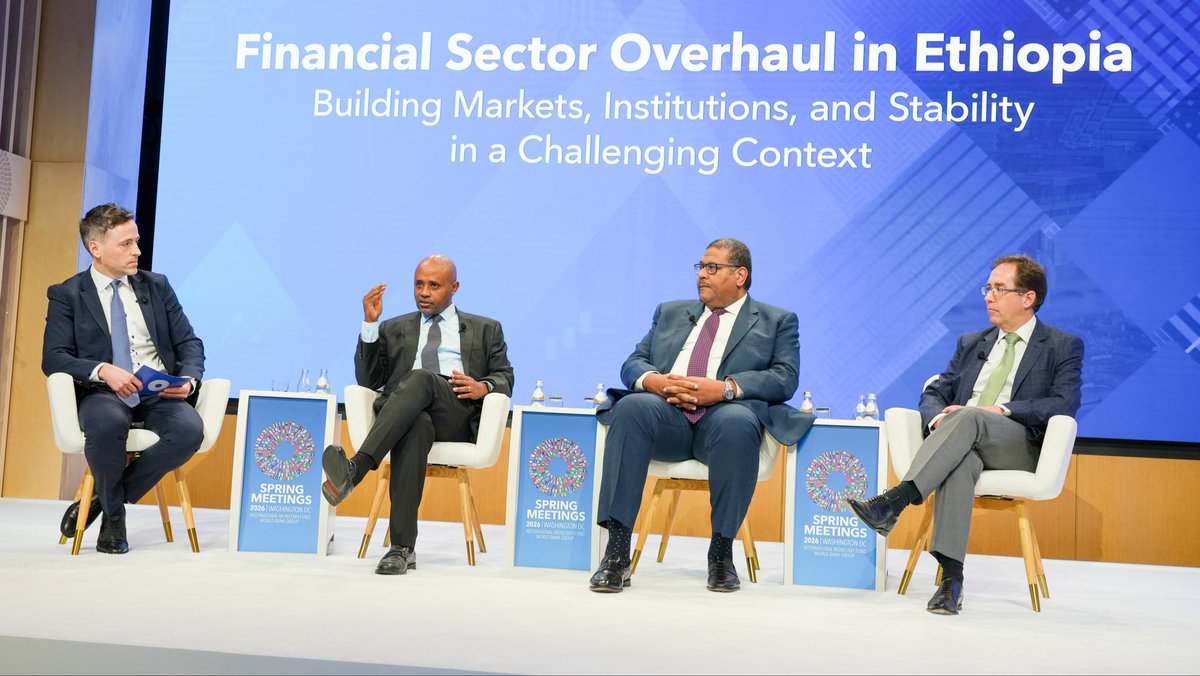
And above all of them, structuring the narrative, validating the numbers, and providing the institutional cover without which none of this would have been possible, sat the International Monetary Fund.
Kristalina Georgieva's IMF did not merely lend to Ethiopia. It performed something closer to a rescue of the regime's reputation, arriving at precisely the moment when the evidence of mismanagement was becoming impossible to ignore, and transforming that evidence into a reform story. The IMF program that Ethiopia secured framed the government's catastrophic mishandling of the exchange rate, the birr had been artificially suppressed for years while black market rates diverged by extraordinary margins, as a bold liberalization and a demonstration of fiscal discipline. What it actually showed was that the government had run out of road. The liberalization was not a strategic choice. It was an exhaustion point dressed in the language of reform.
The numbers tell a different story. Since the IMF program commenced, Ethiopia has experienced inflation that has made basic food items unaffordable for a broad segment of the population, a depreciation of the birr that has devastated purchasing power for anyone whose income is denominated in local currency, and a debt restructuring process so prolonged and dysfunctional that the country has now spent years locked out of international capital markets. The reform stabilized certain headline indicators while the underlying conditions of ordinary life continued to deteriorate.
The January 2026 agreement in principle, briefly celebrated by the government's communications machinery as evidence that the corner had been turned, collapsed because the Official Creditor Committee determined that the proposed Value Recovery Instrument embedded in the deal gave commercial bondholders more favorable treatment than official creditors. Beyond the technical dispute, the rejection exposed something deeper. Nobody around the table truly believes Ethiopia will achieve the macroeconomic trajectory its officials continue to advertise.
The revised proposal Ethiopia brought to bondholders in May offered a new bond of $880 million, a 12 percent haircut on the original billion, maturing in 2029 and paying 6.15 percent interest. On paper, the terms were not unreasonable. The Ad Hoc Committee rejected the proposal anyway. Without any mechanism for capturing upside potential, sophisticated creditors saw little reason to lock in losses on a short duration instrument from a government whose reform narrative has been eroding in slow motion for years.
What happens next remains uncertain. Ethiopia's Ministry of Finance stated that it may consider a potential exchange offer or other market transaction, language widely understood in sovereign debt circles as preparation to bypass organized bondholder negotiations and approach the broader creditor base directly. That path risks litigation, deeper market hostility, and an even tighter dollar shortage in an economy already struggling to secure foreign currency liquidity.
None of this reaches the level of abstraction at which the government prefers to operate. Abiy Ahmed has spent years constructing an aesthetic of national transformation through parks, promenades, resorts, luxury corridors, airports, and ceremonial inaugurations. The logic was always that visible construction would substitute for measurable development. A population seeing cranes, asphalt, fountains, and polished stone would be encouraged to believe it was witnessing national ascent. Yet the contradiction has become impossible to ignore. A state claiming severe fiscal distress somehow continues financing overlapping wartime mobilization, expanding security infrastructure, prestige construction projects, corridor developments, and endless public spectacles of modernization.
The visible expansion of these projects raises unavoidable questions about how a country in sovereign default continues sustaining simultaneous military operations and prestige expenditures while ordinary fiscal conditions deteriorate. The roads are paved. The granaries remain empty.
The question the debt restructuring debacle now makes unavoidable is not primarily about bond mathematics. It is about what the billions borrowed, the billions disbursed by the IMF and the World Bank, the billions extracted through taxation from an already impoverished society, actually purchased. The answer, insofar as it can be reconstructed from the available evidence, is that significant portions financed prolonged internal wars, expanded coercive state structures, and funded the infrastructure of spectacle that the regime uses to perform development for international audiences while humanitarian systems continue flashing warnings in the background.
The IMF's repeated extensions of its program, each one granting the Ethiopian government another layer of international legitimacy alongside liquidity, have made the Fund complicit in this performance. Georgieva's institution is structurally incapable of confronting the political economy of a government simultaneously undertaking IMF approved reforms while sustaining internal wars, suppressing opposition, and presiding over severe humanitarian deterioration. The IMF can demand currency liberalization. It cannot demand political accountability. And so the reform narrative continues while ordinary Ethiopians continue living through declining purchasing power, weakened public services, deteriorating healthcare access, damaged educational systems, and prolonged insecurity.
A government that cannot pay its bondholders is communicating something profound about its own priorities and capacities. Ethiopia's macroeconomic team has produced an inflation crisis, a currency crisis, severe banking sector stress, weak industrial performance despite enormous subsidy, an agricultural sector still dangerously dependent on rainfall, and a sovereign default that remains unresolved deep into its second year. These are not accidents. They are policy outcomes.
The bondholders who rejected Ethiopia's revised proposal on May 27 were, in their own way, rendering a verdict on those outcomes. The IMF, which continues providing the framework through which Ethiopia retains access to the international financial system, has declined to render one. That refusal carries consequences measured not in basis points or restructuring formulas, but in the realities the government's economic managers rarely discuss publicly: worsening food insecurity, collapsing purchasing power, exhausted households, weakened healthcare systems, and families who continue consuming less each year while the state continues inaugurating another corridor, another park, another resort, and another performance of prosperity.
Those numbers belong in the ledger too. Eventually, one way or another, they will also be settled.
mofed.gov.et/blog/update-on-…
@realDonaldTrump @SecRubio @marcorubio @StateDept @StephenM @AsstSecStateAF @US_SrAdvisorAF @USTreasury @CommerceGov @IMFNews @WorldBank @EU_Commission @MorganStanley @GoldmanSachs @Citi @BankofAmerica @WellsFargo @Deloitte @EYnews @LloydBlankfein @SallieKrawcheck @ESXEthiopia
@NeaminZeleke @TeshomeAbebe18 @GTWTW_Now @SemahagnAbebe @HOAAffairs @MesfinMtegenu @dawit_giorgis @berhanenega @Berhanu2006 @mamamesay @AndargachewTse2 @YonasBiru57 @EliasMeseret @MeseretMedia @mamamesay @GeletawZeleke @MAAragaw
@AbiyAhmedAli @PMEthiopia @BilleneSeyoum @MFAEthiopia @TayeAtske @EyobTolina @binalf7 @DanielKibret @Zemedeneh @BMLenjiso
#Ethiopia #WorldBank #IMF #FANO #DebtCrisis #BirrCollapse #Amhara #Tigray #Oromia #Balkanization #BRICS #Geopolitics #Amhara #RedSea #TPLF #Fano #Ethiopia #ESX #ForeignBanks #AbiyAhmed #EconomicCollapse #GenocidalGovernance #StateCapture #AidForAccountability #CapitalMarkets #AmharaGenocide #NoPeaceNoMarket #AfricaFinance #Kleptocracy #FakeReforms #FinancialTheater #DonorComplicity #StopImpunity #RegimeCollapse #FailedState #ExposeTheFacade #WesternBackedLooters #XPostAnalysis #IllegitimateState #NeocolonialCapitalism #AfricanElites #ESXTruth
3
6
371

11 Jul 2025
Ethiopia’s House of Cards
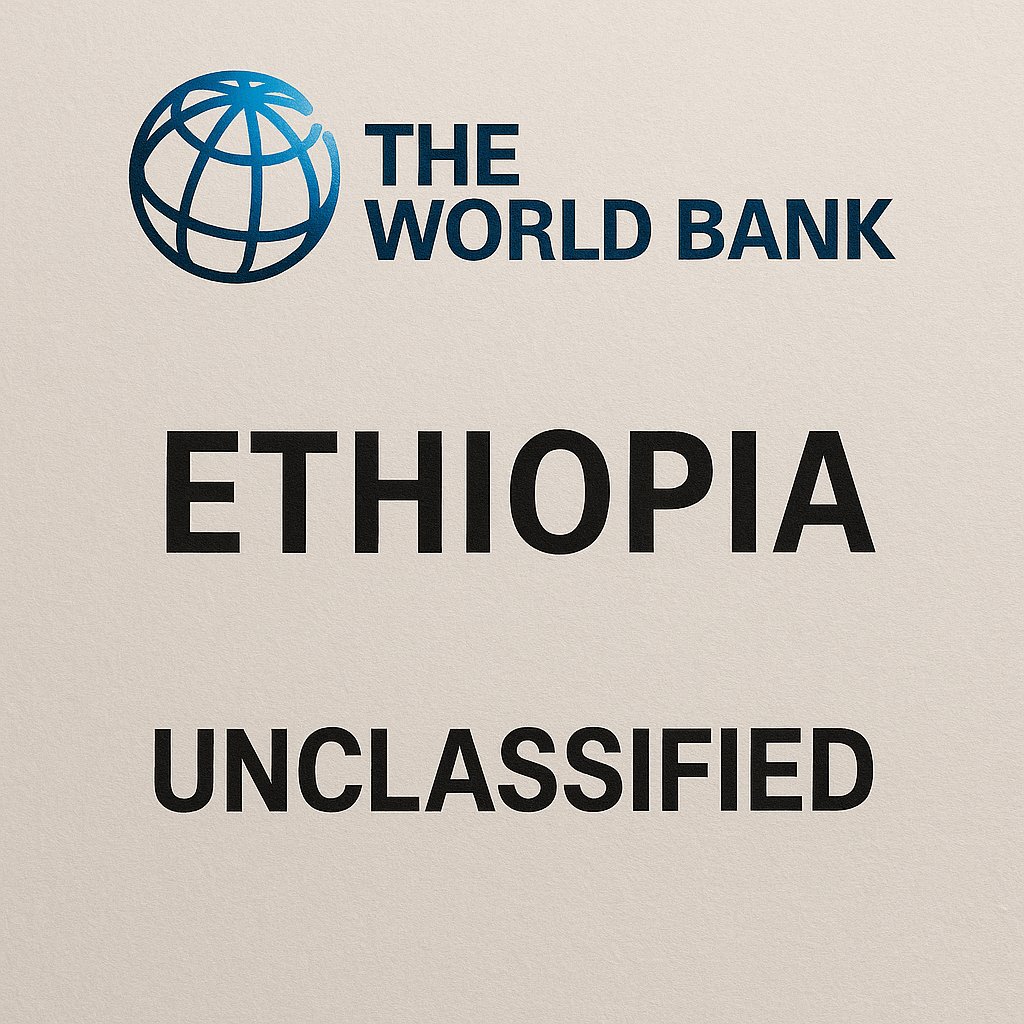
Ethiopia’s “unclassified” World Bank tag is a diplomatic slap, baring its murky data amid war and reform bravado. Economists scorn the shame, yet billions in loans flood in, betting on a shaky giant. Will transparency crumble?
The World Bank cannot even classify Ethiopia’s economy. Yet it still funnels over $1B in budget support to a regime that has lost all fiscal and statistical credibility.
This is not a clerical omission. It is a verdict on failed governance.
The regime promised reform. It delivered lies.
Despite a $3.5B IMF deal and a $1B World Bank disbursement, Ethiopia couldn’t submit credible income data. The central bank and finance ministry—crippled by politicized staffing and internal collapse—have become propaganda arms. They no longer produce real numbers. They manufacture talking points.
Meanwhile, the same regime:
• Is building a $15B palace in Addis
• Imports Turkish, Iranian, and Chinese drones
• Purchases armored vehicles, tanks, and aircraft
• Pours millions into surveillance, propaganda, and elite security
• Launches drone strikes on its own citizens
• Mobilizes military campaigns across Amhara, Tigray, Oromia, and Gambella
Abiy Ahmed is not governing a country. He is securing a fortress.
-This fortress is built on debt, donor delusion, and violence.
-Its currency has collapsed.
-Its GDP estimates are fiction.
-Its war economy bleeds resources.
Its legitimacy is gone.
But Western institutions continue to act as if Ethiopia is too big to fail. They pump in money, ignore human rights, and demand only surface-level reforms while silencing dissent and backing authoritarian consolidation.
Ask yourself: Why reward a government that cannot even meet the minimum threshold of international classification? Why subsidize a warlord economy when resistance forces like FANO are gaining ground and asserting legitimate local control? Why pretend this is a functioning state when regional fragmentation, ethnic militarization, and cross-border hostilities are accelerating?
The truth is simple: Ethiopia has already collapsed. What exists in Addis is a donor-fueled illusion. The World Bank’s “unclassified” label accidentally pulled back the curtain.
And behind it stands a regime with no clothes, no trust, no numbers—and no future.
#Ethiopia #WorldBank #IMF #FANO #DebtCrisis #BirrCollapse #Amhara #Tigray #Oromia #Balkanization #BRICS #Geopolitics #Amhara #RedSea #TPLF #Fano #Ethiopia #ESX #ForeignBanks #AbiyAhmed #EconomicCollapse #GenocidalGovernance #StateCapture #AidForAccountability #CapitalMarkets #AmharaGenocide #NoPeaceNoMarket #AfricaFinance #Kleptocracy #FakeReforms #FinancialTheater #DonorComplicity #StopImpunity #RegimeCollapse #FailedState #ExposeTheFacade #WesternBackedLooters #XPostAnalysis #IllegitimateState #NeocolonialCapitalism #AfricanElites #ESXTruth
@realDonaldTrump @SecRubio @marcorubio @StateDept @StephenM @AsstSecStateAF @US_SrAdvisorAF @USTreasury @CommerceGov @IMFNews @WorldBank @EU_Commission @MorganStanley @GoldmanSachs @Citi @BankofAmerica @WellsFargo @Deloitte @EYnews @LloydBlankfein @SallieKrawcheck @ESXEthiopia
@Zemedeneh @AbiyAhmedAli @BilleneSeyoum
@NeaminZeleke @YonasBiru57 @TeshomeAbebe18 @Ay_Zer1 @berhanenega @GTWTW_Now @SemahagnAbebe @HOAAffairs @mamamesay @MesfinMtegenu @dawit_giorgis @mosaleg @MaedotmEthiopia @messiassefa @DagnachewBetel1 @zutopist @BeZyee @Yonast98 @BelayEtalem @EyobKassa14 @Jbirru @TrueSeal3 @ShebaPushStart @milkessam @Jawar_Mohammed
1
11
11
2,105