
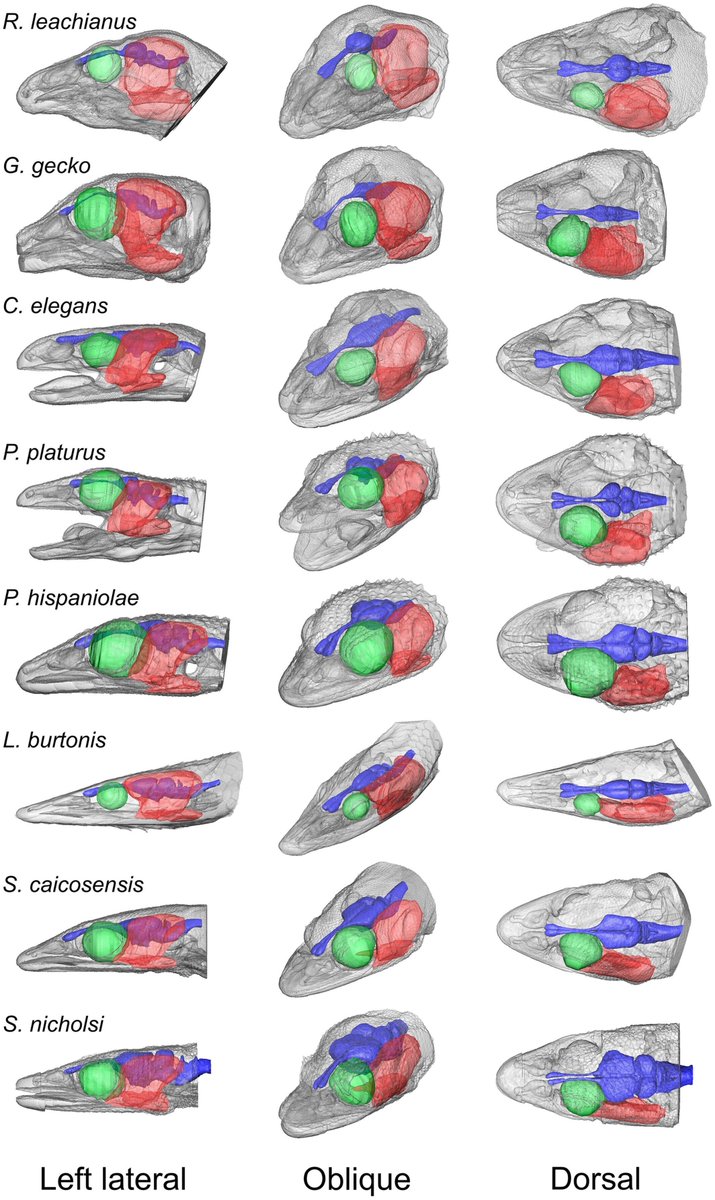
Cranial soft tissues scale non-uniformly in geckos, a group w/extensive body-size variation. DiceCT, μCT & phylogenetic comparative methods revealed negative brain allometry, positive allometry of jaw adductors & variable eye scaling.
Lagorio et al anatomypubs.onlinelibrary.wi…
10
26
438

13h
The physical trauma of high-explosive shells would not kill him, but the energy required to heal such massive cellular damage would instantly drain his caloric reserves. The subsequent forced regression would reduce him to a defenseless human, easily kept in a standard concrete cell.
Arthur was trapped in a perfect physiological cage. He had to dig deeper into the dark, crushing weight of the earth simply to earn the precise number of calories required to keep his body from collapsing in on itself.
He thought about the scholarship application. He thought about the door he had never opened.
Then he turned toward the mountain and began to dig.
---
**II. The Human Mole**
Deep beneath the bedrock, the air was a thick, humid soup of stone dust and sweat. Arthur worked in the absolute dark, his massive hands clawing through granite faces that would have shattered standard steel excavators.
FIRA's economic analysts had realized that Arthur was vastly superior to any mechanical alternative. The pinnacle of modern civil engineering was the Tunnel Boring Machine (TBM), a multi-million-dollar behemoth often referred to as a "mole." But even the largest TBMs, reaching up to 17.6 meters in diameter, were agonizingly slow. In ideal geological conditions, a TBM managed a rate of only 15 to 50 meters of excavation per day. During the construction of the Gotthard Base Tunnel under the Swiss Alps, the absolute record achieved was a meager 56 meters in a 24-hour cycle — a pace equivalent to a snail crawling at 0.0064 m/s. Mechanical TBMs were perpetually bottlenecked by their "Advance Cycle," which demanded constant shutdowns for ground support installation, cutter head maintenance, utility setup, and dewatering.
Arthur had no mechanical downtime. His Rate of Advance was limited solely by his physical stamina and the speed at which his handlers could feed him. He ripped through hundreds of meters of hard rock per shift, his human intelligence allowing him to navigate fault lines and stabilize tunnel roofs with the same instinctive accuracy that had once made him dream of building bridges.
But the cost of his kinetic output was staggering. Every thrust of his arms burned millions of calories, generating a lethal build-up of internal heat.
According to standard mammalian physiology, Arthur should have died of hyperthermia long ago. In 1883, the physiologist Rubner had demonstrated that because biological bodies lose heat passively through their surface area but produce it metabolically throughout their volume, an organism's surface area must scale to the 2/3 power of its mass (M^{2/3}) to avoid burning itself alive.
Arthur's biology circumvented this thermodynamic limit through a hyper-efficient adaptation of Kleiber's Law. Across standard taxa, an organism's basal metabolic rate scales as the 3/4 power of its mass:
B ∝ M^{3/4}
This relationship remains valid from microscopic mitochondria up to the largest mammalian structures. In Arthur, his cellular behavior mirrored the unique allometry of planarian flatworms (Schmidtea mediterranea). His metabolic efficiency did not stem from a decrease in cellular metabolic rate, but from a massive, size-dependent increase in the mass per individual cell. His cells packed hyper-dense lipid and glycogen stores directly into their structure, acting as organic capacitors that stabilized his body temperature.
Yet, the physical labor of digging still forced his body into aggressive diet-induced thermogenesis (DIT). Digestion and muscle contraction combined to create an internal furnace. He lived in a state of continuous, agonizing hyperhidrosis. Sweat poured from his macro-scaled skin in steaming torrents — a phenomenon his handlers jokingly referred to as the industrial-scale "meat sweats."
1
61
P.Khongchiu 🇹🇭 retweeted

【Latest accepted article】
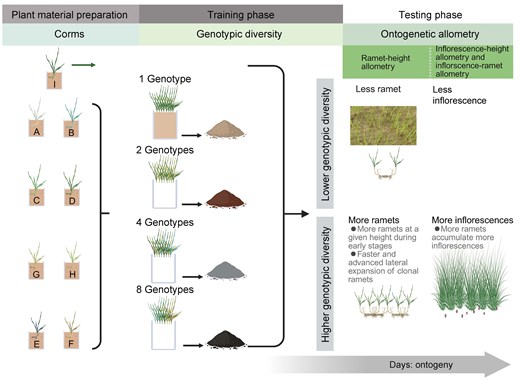
#SoilLegacies of #GenotypicDiversity reshape developmental timing and #Ontogenetic #Allometry
#Ontogeny #Plant_soilInteractions
@iLZU1909 @FudanUniversity @MaximumAcademic
doi.org/10.1093/jpe/rtag127
3
4
83


Jun 11
Remember the propagation of an electromagnetic wave is near speed of light. There is no reason to invoke quantum properties to the thermodynamic discharge of electrical work. Neuron resting/action membrane potentials have honed, via Natural Selection, near optimal values potential difference, current, resistance and capacitance per body mass allometry over billions of years. The signal is (near) instantaneous no matter what, yet the rates of energy transfer (joules and coulomb per second) is what is sent via those (near instant) highways directed by the electric field for chemomechanical transductions.
1
2
511

Jun 10
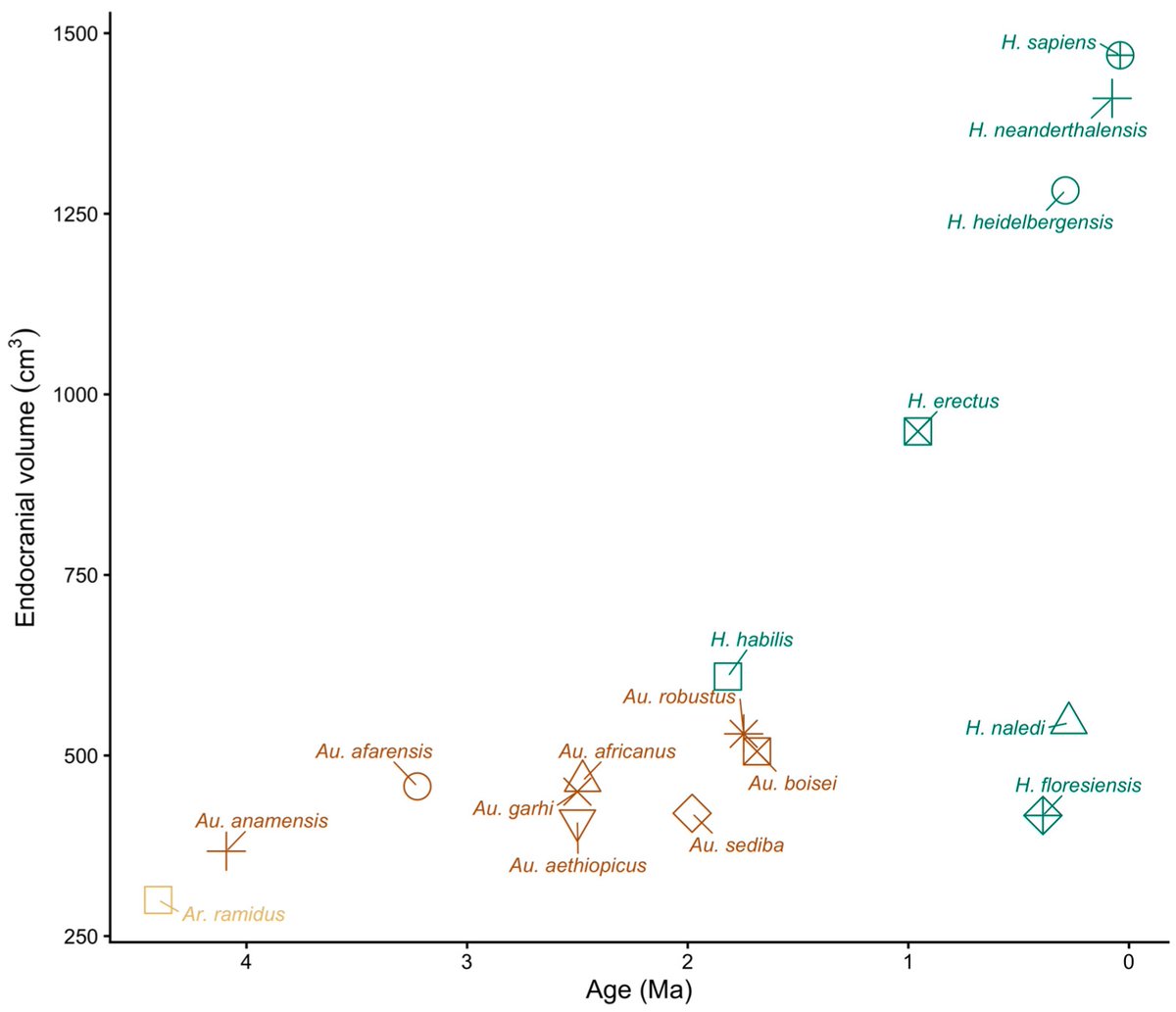
📝The Evolution of Brain and Body Size in Genus Homo
👥by Tesla A. Monson, Andrew P. Weitz and Marianne F. Brasil
#Encephalization; #FossilRecord; #Cognition; #Allometry; #HomoFloresiensis
📖brnw.ch/21x3eED
42

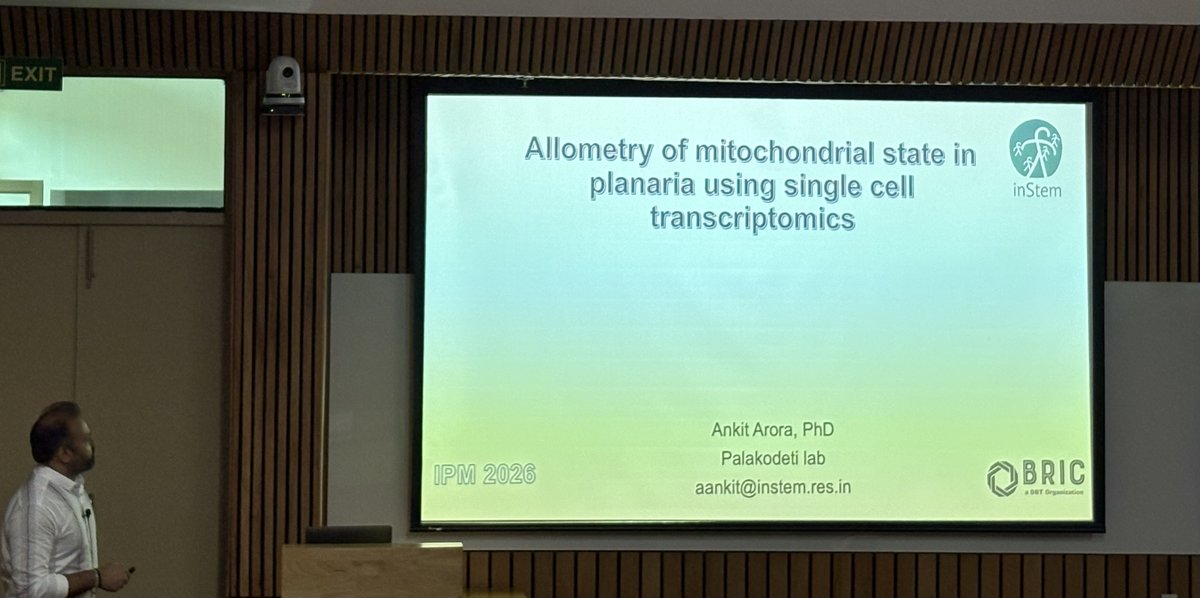
Short Talk at #IPM26: Ankit Arora (inStem) presented “Allometry of Mitochondrial State in Planarians Using Single-Cell Transcriptomics,” exploring how mitochondrial dynamics vary across cell types and biological scales.
1
118

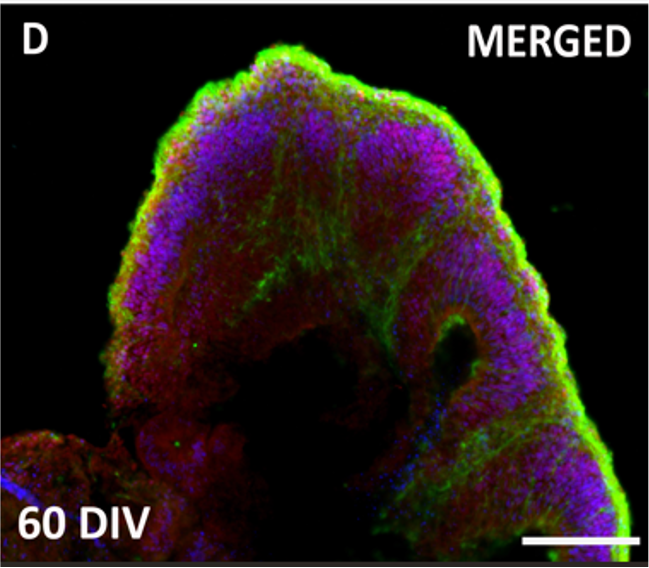
Check out JHC's recent article: "FGF2 Boost for Driving Forebrain Organoid Maturation Under Static Conditions."
Click to read for FREE: journals.sagepub.com/doi/ful…
#allometry #neuralmarkers #immunofluorescence
1
36
/ɹɑb/ 𓅃 retweeted

Jun 8
Evidence from foramina, dental histology, and allometry supports the presence of extraoral tissues in Triassic archosauromorphs, suggesting that lipped jaws may represent the ancestral sauropsid condition.
#dinosaur #lips #triassic @OnHig @uno_chapeco
doi.org/10.1111/pala.70066
3
8
360
It's the glaring allometry for me💚! Each orbital dwarfs proportion to body mass across Cicindellidae. Keen obligate hunters, eyesight over olfaction hones in on prey. An interesting tradeoff was reported recently - neuroprocessing of photons entering the decentralised ventral cord can't keep up with their sudden speed. So they blackout temporarily! Those interested in topology can appreciate the hundreds hexagonal ommatidia forming complex compound eyes. A beautiful creature, and an ancient Coleopteran offshoot, Adephaga. Thanks for sharing mate!
1
4
69
Excellent shot, and shows the allometry of Cicindelid orbitals per body mass is the highest of Coloeptera overall.
1
4
42

May 17
Very happy to share latest publication from #SvenssonLab
which is now out in @Ecology_Letters:
Our phylogenetic comparative study of the macroevolution of steep metabolic allometry in the insect order Odonata (dragonflies and damselflies).
#evolution
onlinelibrary.wiley.com/doi/…
1
8
28
2,428

May 12
How Should Youth Handgrip Strength be Normalized? New Insights Using 3‑D Allometry with “Generalizable” Norm‑Referenced Values Data from NHANES
link.springer.com/article/10…
8
26,822
Apr 29
Cicindelidae have the largest orbital allometry of all Coleoptera, hence their role as obligate predators (Adephaga). Their vision is so good, makes me conjecture a tradeoff between momentary blindness, and optimal speed, precisely because the margin of error is so staggeringly small between initial image vector and path traced in the dark.
1) As compound eyes are so successful from long range 2) the speed at which prey would hardly move in the interim. This blind tradeoff wouldn’t have conferred advantage without long range keen eyesight as prerequisite, combined with optimal speed. Wonder if research into possible short sightedness across Cicindelids overall?
1
1
5
562