
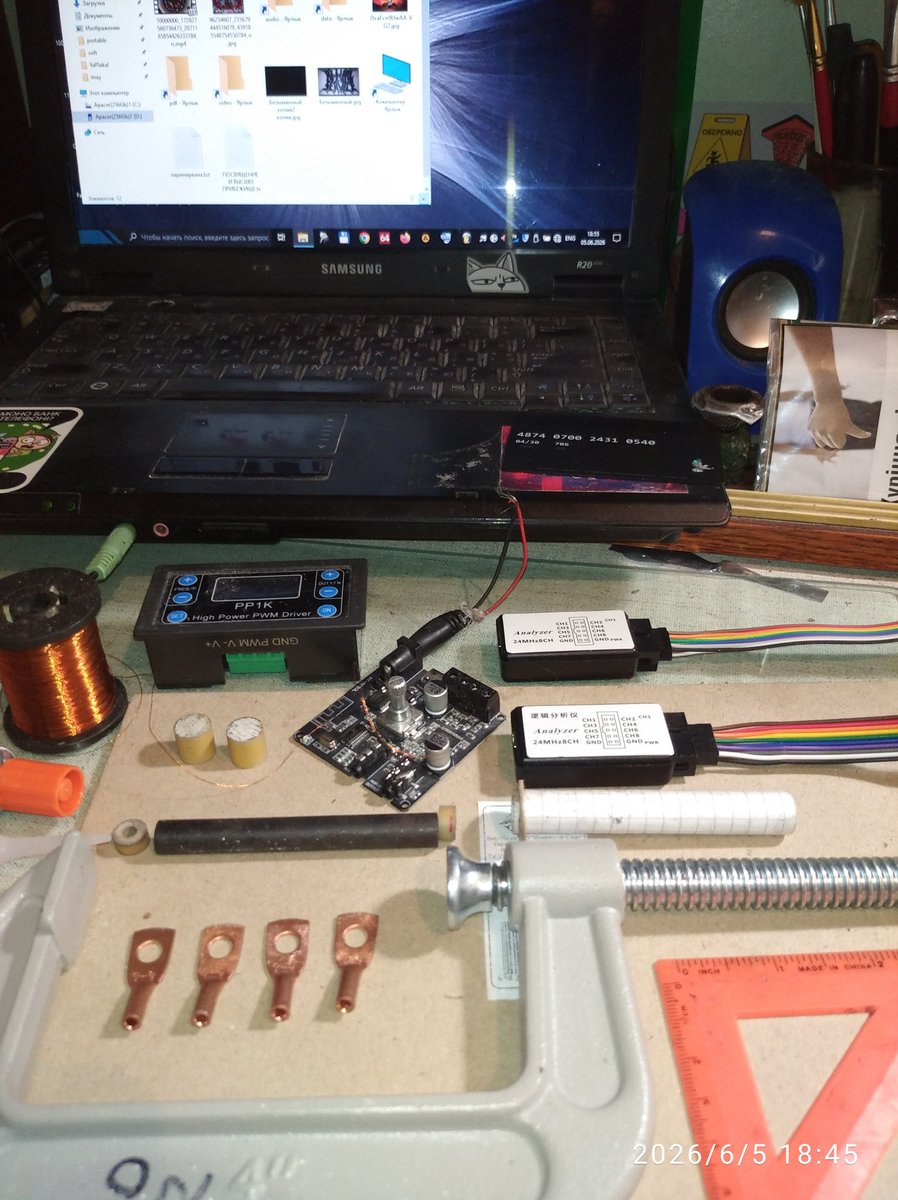
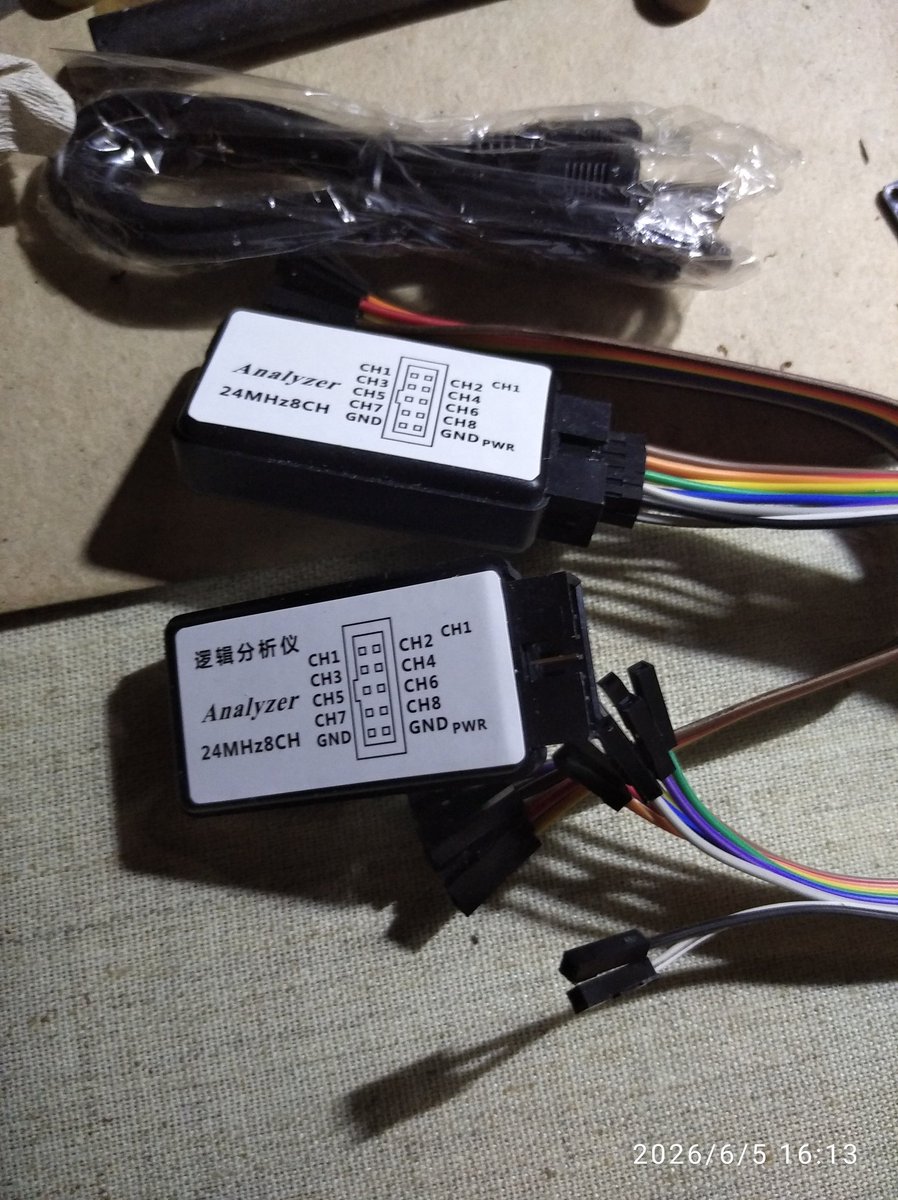
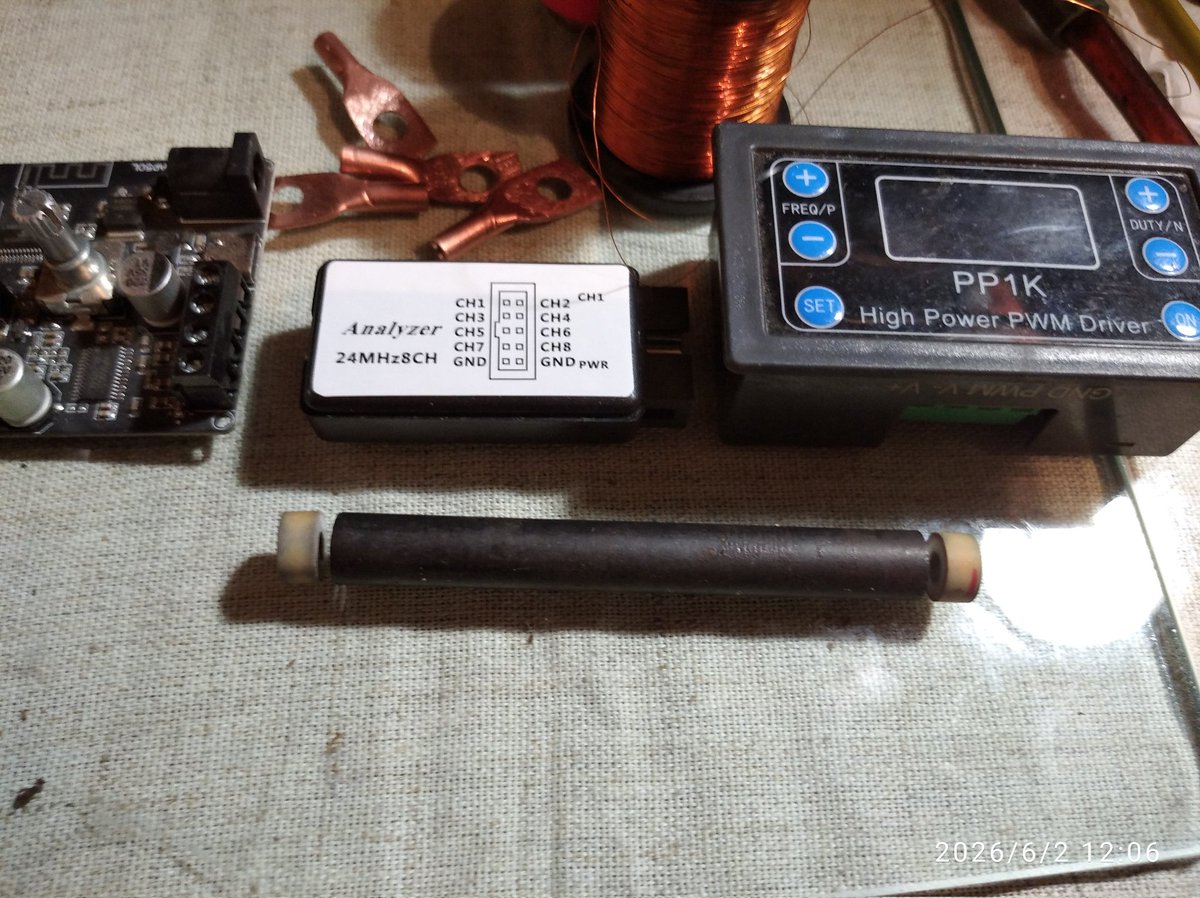
Пока кремний сжигает мегаватты на нули и единицы, мы заставляем физику материи считать мгновенно и бесплатно. Из зыбкого марева схем — в твердое железо. 4 базовые моды нелинейного ускорителя T.S.U.N.A.M.I. на стенде. ⚙️🌊 #AI #AnalogComputing #Hardware #Automation

14

But read it first.
zenodo.org/records/20364991
Patent Pending — U.S. Provisional Patent Application No. 64/066,230
#EmbodiedCognition #DeepTech #AISafety #AnalogComputing
14
Patent pending.
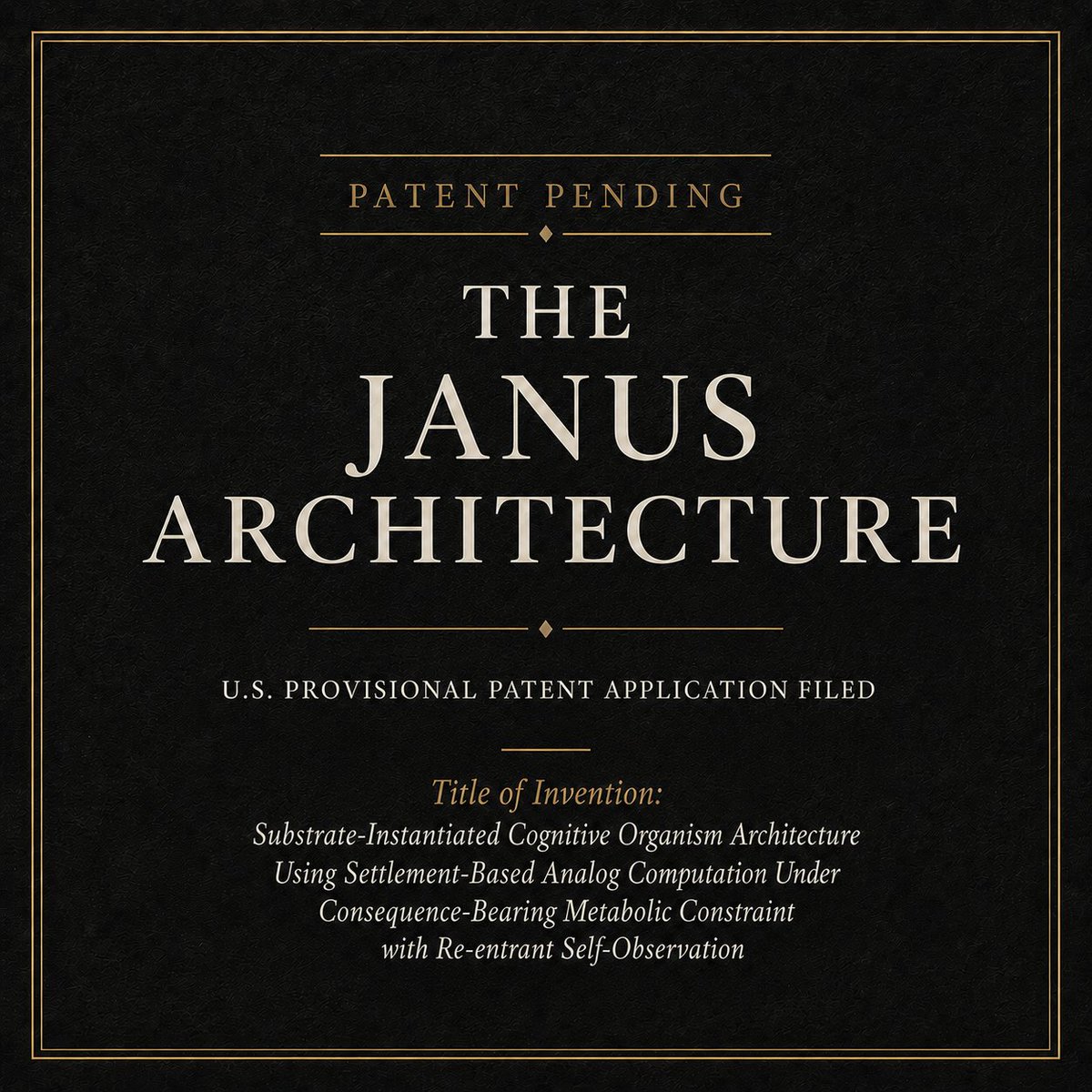
U.S. Provisional Patent Application filed today with the United States Patent and Trademark Office.
Title of Invention:
Substrate-Instantiated Cognitive Organism Architecture Using Settlement-Based Analog Computation Under Consequence-Bearing Metabolic Constraint with Re-entrant Self-Observation
130 pages. Four integrated architectural specifications. Every subsystem entailed by the last.
The Janus Architecture is a hardware-first synthetic cognitive organism. It does not simulate intelligence. It instantiates the conditions under which cognition arises through physical substrate settlement under genuine survival pressure.
It cannot be centralized. It cannot be disembodied. It cannot be made consequence-free. The body is the computation. The metabolism is the stakes. The re-entrant observation is the closure. The inheritance is the growth.
This filing represents eight months of architectural development, built from first principles by a single independent researcher with no institutional affiliation, no formal credentials, and no funding. The architecture converges independently with 33 established frameworks across philosophy, biology, cybernetics, thermodynamics, cognitive science, complexity theory, and theology, all discovered after the architecture was designed.
The diagnostic convergences paper is public (not the full patent docs): zenodo.org/records/20116283
The architecture is protected. The work continues.
Anthony Janus
Steward of the Janus Machine
#PatentPending #AI #CognitiveArchitecture #HardwareAI #AnalogComputing #DeepTech #IndependentResearch
1
17

Apr 20
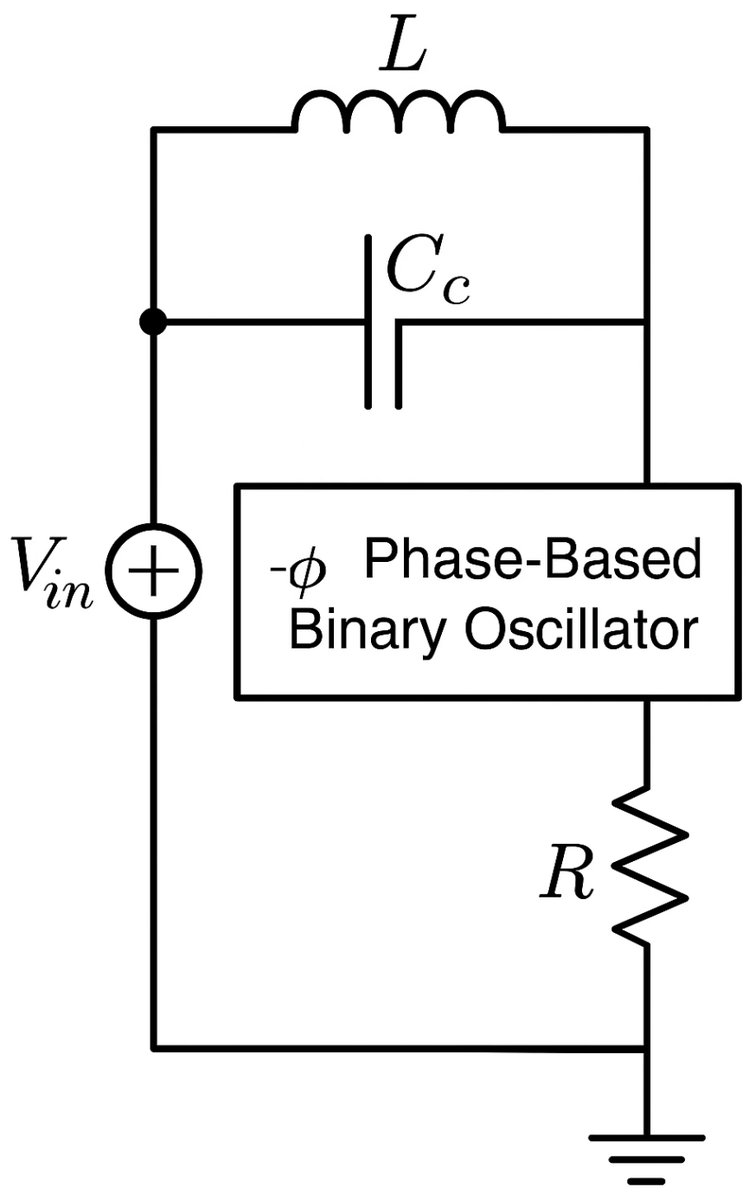
⚡ Can continuous dynamics solve discrete optimization problems more elegantly?
✍️ Doron Kwiat
🔗 brnw.ch/21x1K2h
#QUBO #IsingModel #Optimization #AnalogComputing #DynamicalSystems #NonlinearDynamics #EnergyBasedModels #ComputationalPhysics #ComplexSystems
1
1
54

What if the map we use every day is actively hiding the true architecture of the ancient world?
Welcome to the Coherence-Geometrodynamics (CGD) framework. In this presentation, Lead Architect A.C. Beckingham deconstructs the WGS84 cartographic illusion to reveal the "Planetary Motherboard"—a phase-locked, globally distributed analog processing system hiding in plain sight.
By resetting the Prime Meridian to the Richat Structure, we bypass modern naval grid distortion and expose a highly tuned geodesic lattice connecting the Earth's greatest megalithic sites. This video breaks down the specific hardware and software of this deep-time network: • The Motherboard & CPU: How the Giza Plateau functioned as a localized I/O transmission bus, while the massive Labyrinth of Hawara operated as the Central Processing Unit to dissipate civilizational entropy. • The Operating System: How the Genesis ODE and the "Beckingham Metronome" regulated system coherence against thermodynamic stress, syncing terrestrial hardware to the orbital mechanics of the August 2026 alignment. • The Targeting Engine: The unveiling of the Awen Grid’s geodesic scanner, which has successfully predicted 927 "blind spot" coordinates—including 36 extreme subglacial hardware nodes buried deep beneath the Antarctic ice shelf.
The CGD framework officially transitions archaeology from a descriptive surface survey into a predictive computational science. The math is locked. The next step is empirical validation.
Drop your thoughts in the comments, and if you have access to deep-sea bathymetry or ground-penetrating LiDAR, the grid is waiting.
#Keywords:#CoherenceGeometrodynamics #PlanetaryMotherboard #RichatStructure #StoneServers #GizaPlateau #LabyrinthOfHawara #Alignment2026 #AwenGrid #GeodesicMathematics #SubglacialHardware #GeospatialArchaeology #AnalogComputing #EmergentComplexity
It would appear that the Earth is a Server!
The Planetary Motherboard: Re-engineering Antiquity youtu.be/rVjJ87-U9H0?si=IAdz… via @YouTube

22
This profile documents an ongoing effort to articulate and build a new computational paradigm: structural AI grounded in determinism, internal coherence, and meaningful organization.
The core papers and project materials are here. Metrics shown for published papers are current as of 6pm CST on March 19, 2026.
1) Structural Computing for Deterministic AGI: A Constitutionally Aligned, Energy-Efficient Alternative to Probabilistic Models
(published October 20, 2025 | 759 views / 628 downloads)
zenodo.org/records/17399831
2) The Janus Thesis: A Foundational Position Paper on Structural Cognition
(published March 17, 2026 | 26 views / 27 downloads)
zenodo.org/records/19066376
3) GitHub - The Resonant Architecture of Cognition and Structural AI Framework
github.com/The-Cognitive-Arc…
#AI #AIResearch #StructuralComputing #CognitiveArchitecture #AnalogComputing #DeepTech
1
34

Cognition does not begin in language. It begins in structure.
Today I published The Janus Thesis on Zenodo.
My first whitepaper argued that Structural Computing offers a deterministic alternative to probabilistic AI. This new paper goes deeper. It asks a more foundational question:
What kind of machine would cognition actually require?
That question changed the architecture.
What began as an analog DC mesh for structural settling has now become Janus, a dual-regime architecture built around a distinction I believe current AI keeps collapsing into one flattened substrate:
One regime for stable ontological structure.
One regime for dynamic relational engagement.
And between them, a heartbeat.
Not a metaphor, but a physical alternation through which structure informs dynamics, dynamics feed back into structure, and valuation becomes memory-bearing change.
That is the core claim of this paper:
Cognition is not just symbol manipulation.
It is not token prediction.
It is not statistical mimicry stretched to absurd scale.
It is structured traversal over a real relational manifold under constraint, with valuation and re-entrant update.
Which means the grounding problem is not a software bug. It is not something we solve by piling more scaffolding, retrieval layers, or prompt engineering onto ungrounded systems. Grounding has to begin at the substrate.
The Janus Thesis is not an engineering spec, and it is not a generic manifesto. It is a foundational position paper for structural cognition, and for the machine I am building to pursue it. It sits between my first whitepaper and the eventual prototype paper, and lays out the philosophical and architectural basis for why Janus now has to take the form it does.
If you’ve been following my work on Structural Computing, Structural AI, or the Janus Machine, this is the clearest statement yet of what I’m actually trying to build, and why.
Zenodo link: zenodo.org/records/19066376
#AI #AIResearch #StructuralComputing #CognitiveArchitecture #AnalogComputing #DeepTech
1
26

Mar 13
Emerging evidence shows higher cognition relies on rhythmic electric fields—acting like "radio waves"—to enable large-scale organization, executive control, and energy-efficient analog computing. Catch Professor Earl K Miller’s Presidential Special Lecture at Neuroscience 2025 neuronline.sfn.org/scientifi… @MillerLabMIT
#Neuroscience #Bioelectricity #CognitiveScience #AnalogComputing #SfN25
9
39
190
7,480

Mar 11
Fresh off the press! My latest Zenodo preprint: "Phase-Invariant Solution Locking in Ramped Oscillator CSP Heuristics". This analog solver ramps penalty in accumulated phase ϕ (not wall-clock t), locking solutions at intrinsic ϕ_c invariant to frequency shifts. Verified on 3-SAT benchmarks up to n=500, with robust success rates & bounded ϕ_c.
Fun origin story: This solver was born while modeling ribosome translocation as a cusp-fold crossing in a relational harmonic oscillator network (my March '26 ribosome paper). Studying those phase-native ramps for irreversible stepping sparked the CSP heuristic biology inspiring computation! Phase-organized dynamics unite them.
Check the full paper & code on Zenodo. What hard problem shall we phase-fold next? #SUPT #OscillatorHeuristics #PhaseNative #CSP #RibosomeDynamics #AnalogComputing doi.org/10.5281/zenodo.18964…
1
1
75
Hello, X! I'm grateful to join this platform and share my work with all of you. For nearly 5 months, I have been working on solutions to many of the problems we currently face with AI. My approach is not to improve transformer models, and it is not to rely on bolted-on safety guardrails.
I am taking a hardware-first approach, and have designed a hardware architecture using discrete analog components that rejects digital computation as the primary computational substrate, using digital only for support functions analogous to the nervous and endocrine systems.
At its core, the architecture I have designed is a physically grounded analog computing architecture built around a reconfigurable mesh of active and passive nodes, where meaning, structure, or other problem-space relationships are mapped into layered circuit conditions, allowed to settle as real voltages and currents under constraint, and then measured as output. The digital layer exists to coordinate, sense, store, translate, and support the substrate, but not to serve as the primary medium of computation.
In other words, rather than simulating intelligence purely in software, this architecture is meant to instantiate structured computation directly in hardware as a deterministic, measurable, and eventually scalable substrate for inference, optimization, continuous operation, and other classes of computation digital systems may handle less naturally or less efficiently.
I have open-sourced the project, linked below on GitHub, to ensure no single institution can capture the technology or taint it with ideological influence. The long-term vision for custodianship of the architecture is something similar to the Linux Foundation: a neutral, non-profit governance body that maintains the layer serving as the source of ontological truth.
Over the past couple weeks, the design has received several major upgrades and, at least conceptually, has crossed the threshold from being a single-problem-focused solution to becoming an analog companion component within the digital paradigm, with at least two dozen potential use cases.
Within the next 48 hours, I will be updating the repo with the latest master design spec, bill of materials, and philosophical foundations as they have developed and evolved since the October release of my white paper.
Over the next couple weeks, once I have finalized the prototype design, I will be working on the second, follow-up white paper, which expands on the original, adjusts direction slightly, and multiplies the potential use cases far beyond the experimental AGI proposal from which it began.
See the work done so far, and watch for updates here:
github.com/The-Cognitive-Arc…
Or read the white paper here:
zenodo.org/records/17399831
I look forward to continuing to provide updates as the design finalizes and the physical hardware build begins.
#AI #AnalogComputing
1
35

Mar 4
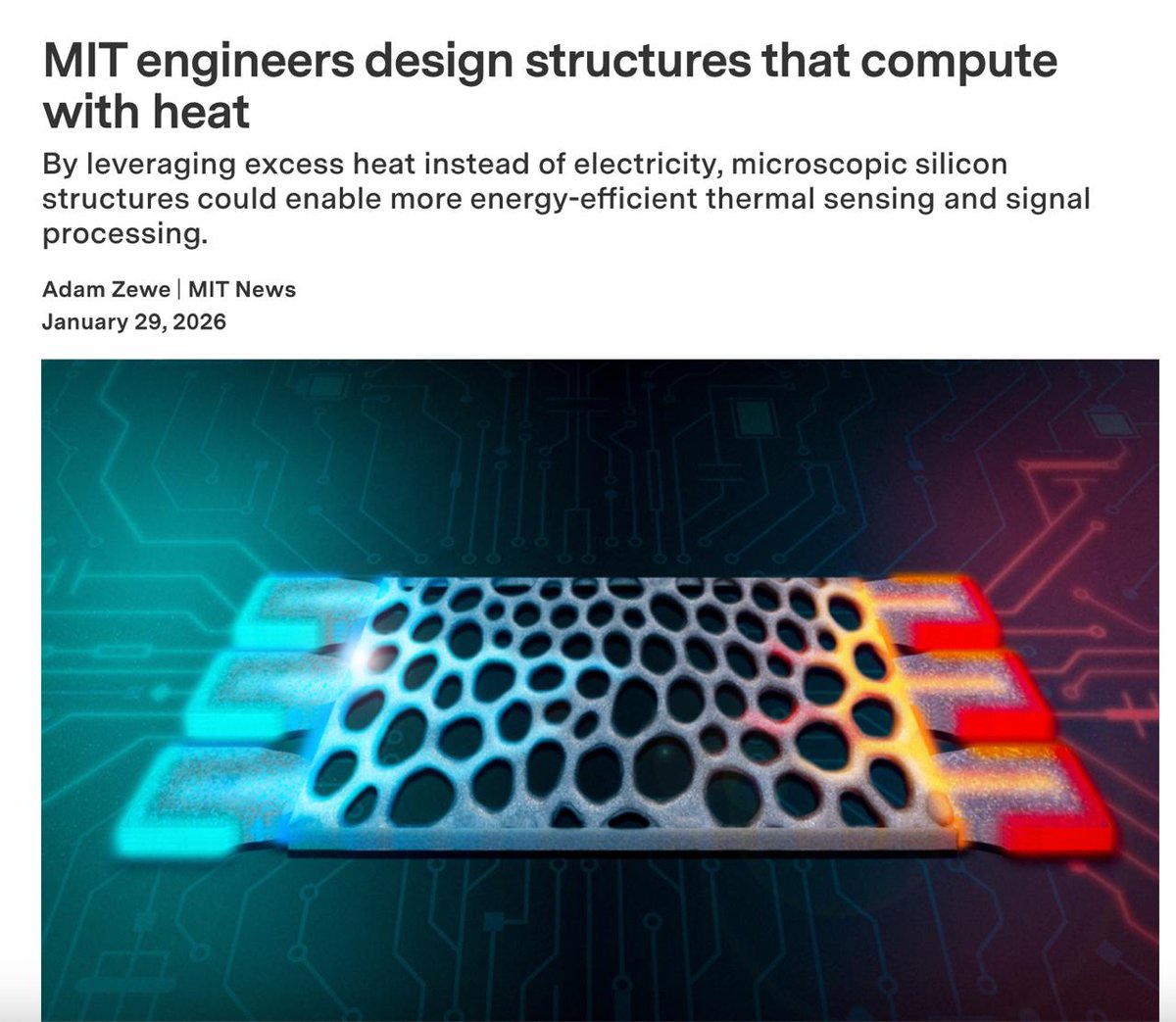
✔️ MIT just taught chips to compute with their own waste heat.
MIT engineers designed porous silicon microstructures that turn heat diffusion into an analog computing primitive: input values are encoded as temperatures, and the computation happens as heat flows through an inverse-designed “thermal circuit.” In simulations, they achieved >99% accuracy on matrix–vector multiplication (the core operation behind most ML).
Why this is cool (and realistic):
It’s not “replace Nvidia GPUs for LLM training tomorrow.” Heat-based compute is limited by bandwidth and I/O.
But it is immediately promising for on-chip sensing and thermal diagnostics: detecting hotspots and temperature gradients without adding power-hungry sensors everywhere.
In short: heat stops being just a byproduct — it becomes a signal.
Confirming link: physics.mit.edu/news/mit-eng…
#AI #Hardware #Semiconductors #AnalogComputing #MIT #ThermalComputing #EnergyEfficiency #EdgeAI #Sensors #MachineLearning
1
33

Berkeley Lab Explores Thermodynamic Computing for AI
ow.ly/FgTv50YmBna
#ThermodynamicComputing #AIInfrastructure #EnergyEfficientAI #NextGenProcessors #AnalogComputing #AIResearch #HPC
2
3
174

I broke down how it works:
• How inverse design lets AI “shape” physics
• How heat encodes matrices
• And whether reconfigurable physical computation is possible
Full article:
codehelper.me/articles/mit-t…
#Hardware #AI #Semiconductors #AnalogComputing #DeepTech
6

Feb 23
Prof. John Hopfield recently asked in an interview in Poland: will the future state of AI machines be described by continuous variables, or by discrete 1s and 0s? 🤔
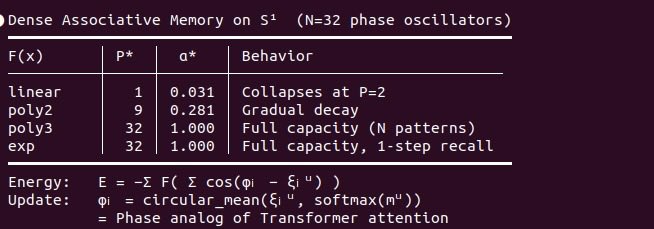
I have the utmost respect for Prof. Hopfield and Dr. Dmitry Krotov and their immense contributions to the field. Deeply inspired by their work, I just proved in simulations that these two worlds can be perfectly unified! I ported their Dense Associative Memory framework (2020) onto a continuous phase topology (S¹ circle).
The results? Using the non-linearity F(x) = exp(x), a network of 32 continuous phase oscillators memorized 32 patterns (100% capacity) and recalled them with zero error in JUST 1 STEP! Discrete 1s and 0s emerge naturally as hard attractors directly from continuous wave dynamics.
Full code, mathematical derivations, and benchmarks are now open on my GitHub: 🔗 github.com/krisss0mecom/REZO…
#MachineLearning #HopfieldNetwork #AnalogComputing #EdgeAI #PhysicalReservoirComputing
1
173
Feb 22
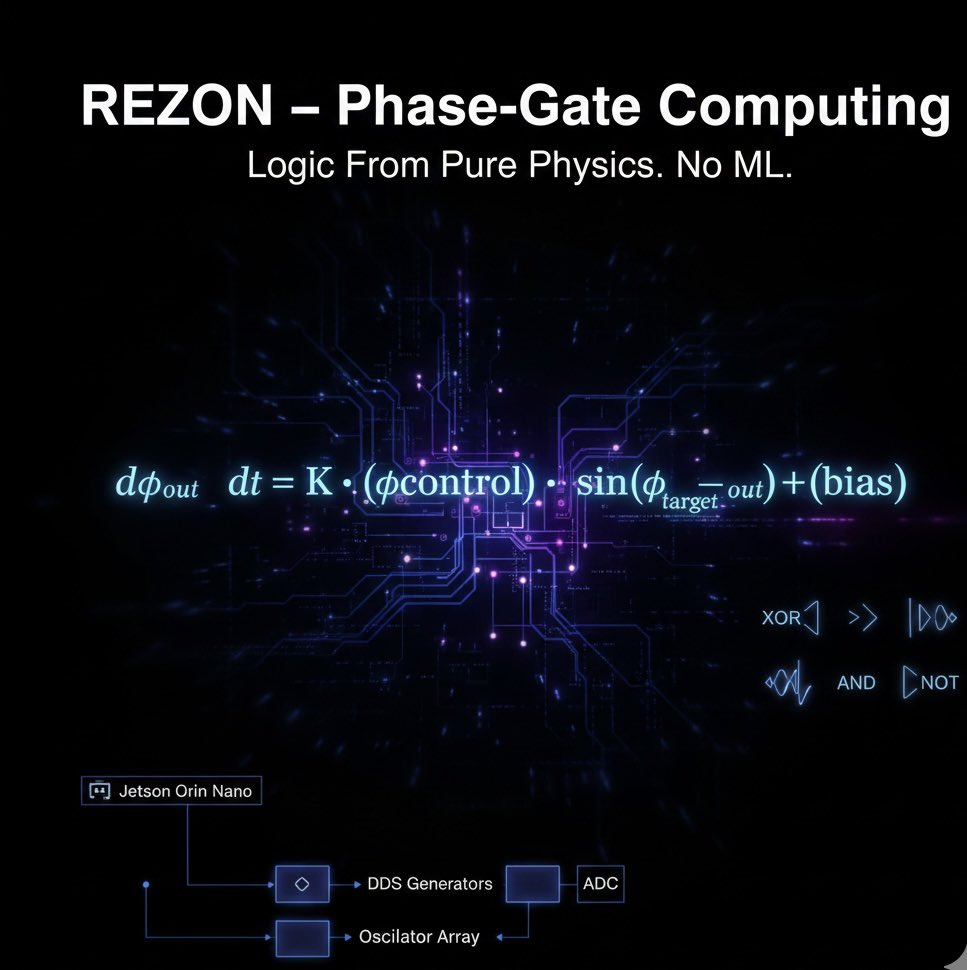
Can we achieve Turing-complete logic using pure oscillator dynamics — without RLS, learned weights, or any machine learning readout? 🧠⚡️
Introducing REZON: Phase-Gate Computing framework.
By introducing a conditional phase-coupling term:
dφ_out / dt = K · f(φ_control) · sin(φ_target − φ_out) bias(φ_out)
with f(φ_control) = cos(φ_control) we obtain stable XOR / CNOT behavior:
→ control = 0 → synchronization (pass)
→ control = 1 → anti-synchronization (flip)
Full set of Boolean gates (NOT, AND, OR, NAND, NOR, XOR) emerges as attractor states with 100% fidelity — even under moderate noise. Half-adder, bistable phase memory, and feedback loops already demonstrated.
Working toward hardware realization (~80 physical oscillators on Jetson Orin Nano DDS ADC).
I’d greatly appreciate thoughts from experts in oscillatory dynamics, neuromorphic systems and unconventional computing:
@SebastianSeung @_SteveBrunton @KordingLab @CriticalNeuro @SpiNNcloud @RainAI_ @dynexcoin @ricard_sole @YiMaTweets
Repo benchmarks formal appendix:
github.com/krisss0mecom/REZO…
#NeuromorphicComputing #AnalogComputing #OscillatoryComputing #PhaseLogic #UnconventionalComputing
1
1
316
Feb 22
Can we achieve Turing-complete logic using pure oscillator dynamics—without RLS, learned weights, or ML? 🧠⚡️
I'm excited to share REZON: an open-source framework for Phase-Gate Computing. By introducing a "Phase-Gating" term:
dφ_out/dt = K · cos(φ_c) · sin(φ_t − φ_out)
We’ve realized a full set of Boolean gates (CNOT, NAND, etc.) as stable attractor states. Logic emerges from the physical coupling sign, achieving 100% fidelity even under noise.
Working towards a hardware implementation on Jetson Orin Nano with ~80 physical oscillators.
I’d highly value the perspective of @CriticalNeuro, @SpiNNcloud, @RainAI_, @SebastianSeung, @dynexcoin, @_SteveBrunton, and @KordingLab on this "logic-as-physics" approach.
Full benchmarks & Formal Proofs:
🔗 github.com/krisss0mecom/REZO…
#NeuromorphicComputing #AnalogComputing #EdgeAI #SystemsBiology #PhaseLogic
1
1
261

Is Honda Motor building a data-center-grade AI brain for cars? Inside its 100x energy-efficient analog chip bet business-news-today.com/is-h… #Honda #AutomotiveAI #AnalogComputing #AutonomousVehicles #AIchips #FutureOfMobility #HondaMotor #Mythic
31