
Have you folks worked with Celery before? (Python's distributed task queue)
And no, you definitely can't hack the EVM with it. (iykyk 😆)
I spent the weekend digging into Celery's internals, and it's much cooler than I initially thought.
At first I assumed Celery was just "background tasks for Python."
But under the hood, it's essentially a distributed worker system.
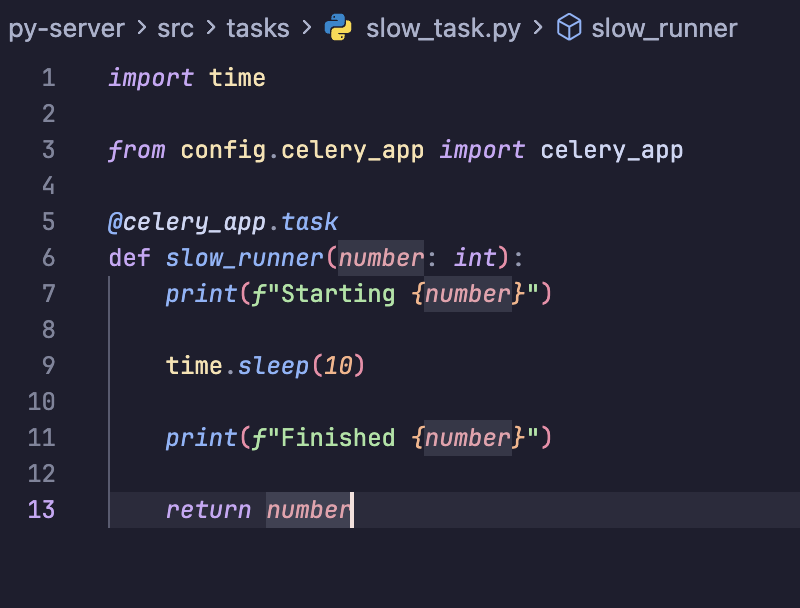
A producer (your app) publishes tasks to a message broker like RabbitMQ or Redis.
Celery workers consume those tasks independently and execute them asynchronously, so your web server doesn't sit around waiting for long-running jobs to finish.
The part that fascinated me was how Celery's default prefork pool works.
Instead of spawning threads, it forks multiple worker processes. Each process has its own Python interpreter and memory space, which also means they're not constrained by the GIL the way threads are.
And because workers are completely independent, you can scale them horizontally across multiple machines, all consuming tasks from the same queue.
Cool sh*t, really
1

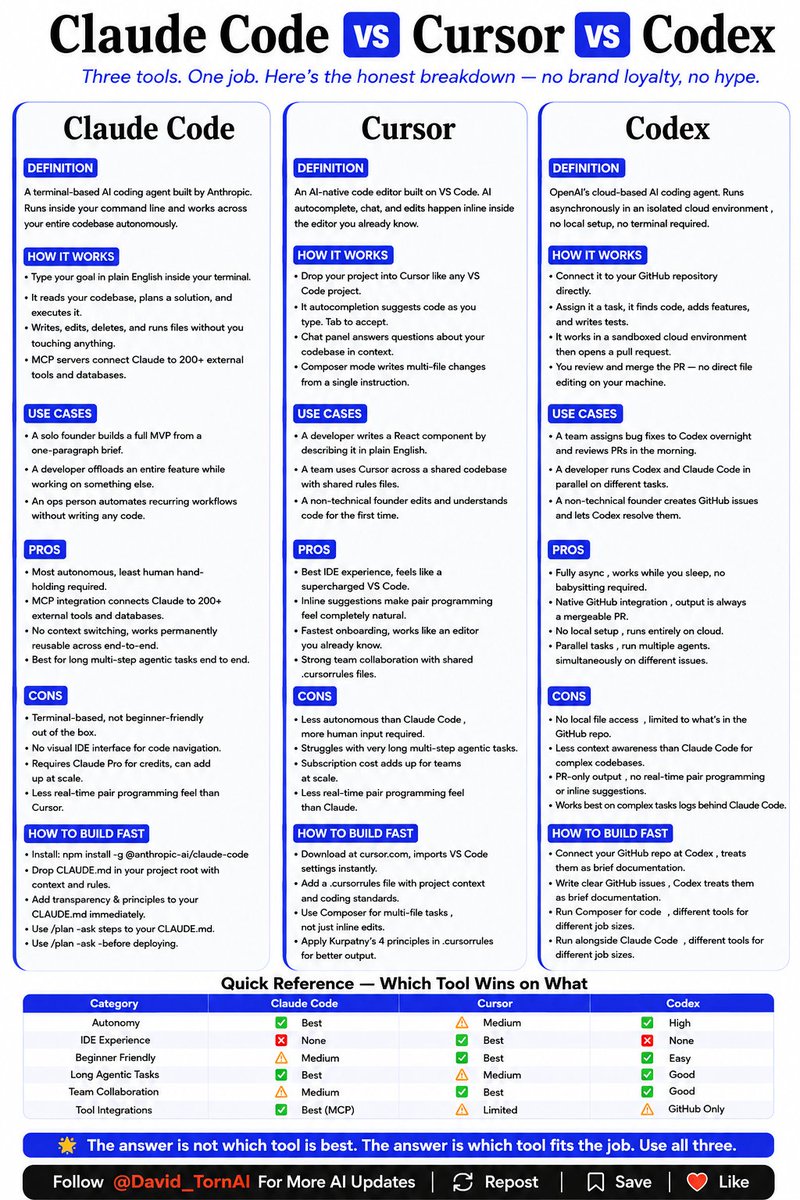
🚨 Claude Code vs Cursor vs Codex?
That's the wrong question.
The real question is:
Which tool fits your workflow right now?
Too many people argue about which AI coding tool is "best."
The truth?
Each one solves a different problem.
Here's the no-hype breakdown 👇
⚡ Claude Code
Built by Anthropic, Claude Code is a terminal-first AI coding agent.
Give it a goal, and it can:
✅ Read your codebase
✅ Create a plan
✅ Write and edit code
✅ Run commands
✅ Execute multi-step tasks autonomously
With MCP, it can connect to hundreds of external tools and services.
Best for: • Solo founders building MVPs fast
• Developers delegating entire features
• Operations teams automating workflows
Pros: Exceptional autonomy and long-running agentic tasks
Cons: Terminal-based and less beginner-friendly
⚡ Cursor
Cursor is an AI-native editor built on top of VS Code.
It feels familiar from the first minute.
You get:
✅ Smart autocomplete
✅ AI chat inside your editor
✅ Multi-file editing with Composer
✅ Context-aware coding assistance
Best for: • Daily software development
• React and frontend workflows
• Teams collaborating in shared codebases
Pros: The best IDE experience available today
Cons: Not ideal for complex, long-running autonomous tasks
⚡ Codex
Codex is OpenAI's cloud-based coding agent.
Instead of working on your machine, it works in the cloud.
You assign a task and it:
✅ Analyzes the repository
✅ Writes code
✅ Runs tests
✅ Opens a pull request
All asynchronously.
Best for: • Overnight bug fixes
• Parallel development tasks
• GitHub-centered workflows
Pros: Fully async with strong GitHub integration
Cons: Less codebase awareness than Claude Code on large projects
🏆 Quick Comparison
Autonomy: Claude Code > Codex > Cursor
IDE Experience: Cursor > Claude Code = Codex
Beginner Friendly: Cursor = Codex > Claude Code
Long Agentic Tasks: Claude Code > Codex > Cursor
Team Collaboration: Cursor > Codex > Claude Code
Integrations: Claude Code (MCP) > Cursor > Codex
The winner isn't Claude Code.
The winner isn't Cursor.
The winner isn't Codex.
The winner is the tool that solves your problem fastest.
Use the right tool for the right job.
That's where the real productivity gains happen.
🔖 Save this for later.
♻️ Repost if you found it useful.
Follow @David_TornAI for more AI insights and workflows.
12
16
28
200

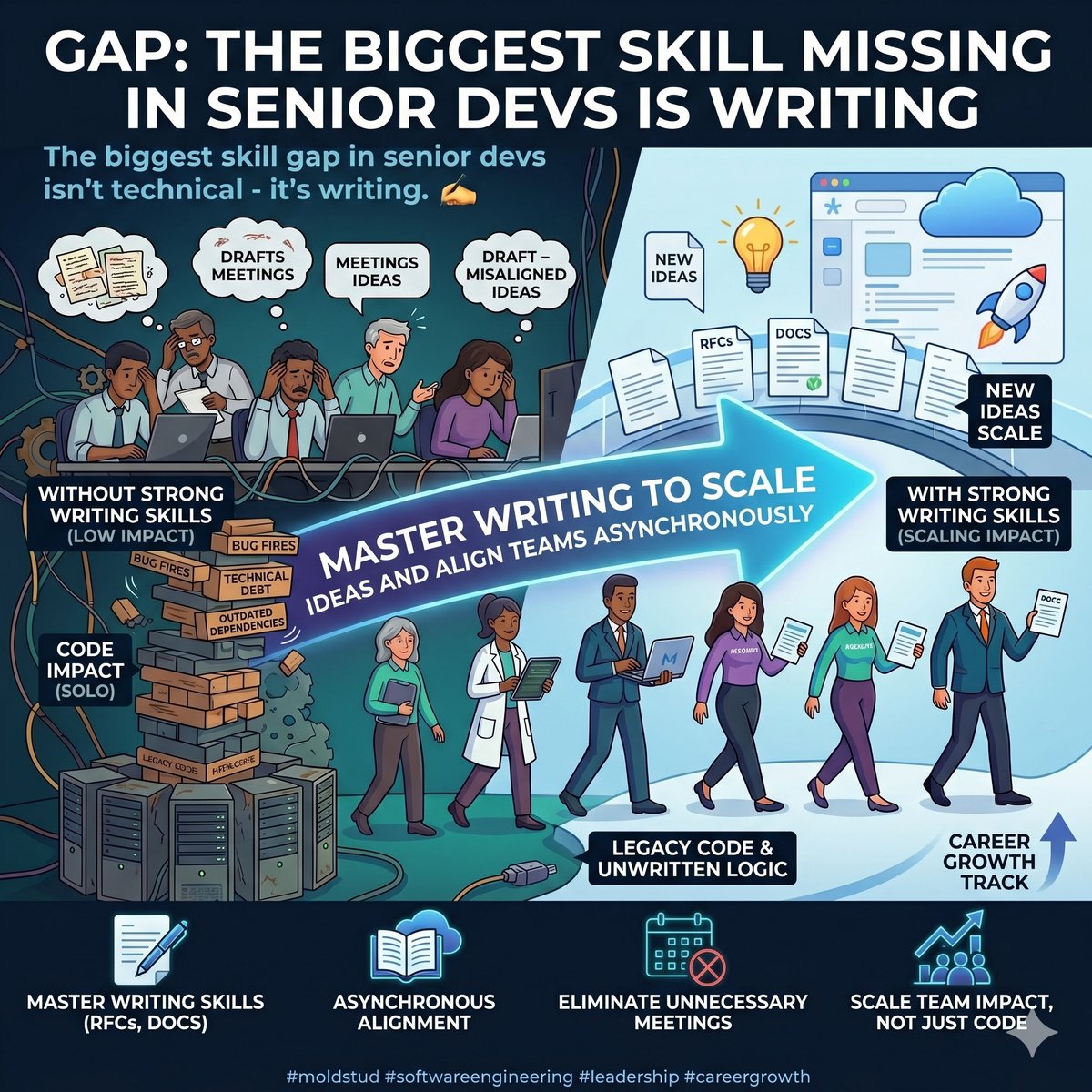
The biggest skill gap in senior devs isn't technical - it's writing. ✍️
Your impact as a senior engineer is measured by how well you scale ideas, not just code. Master documentation and RFCs to eliminate meetings and align teams asynchronously.
#moldstud #softwareengineering

Probably a multi-stage path: normalize the username, check a hot reserved index or KV store, then replicate from the source of truth asynchronously. The hard part is not lookup speed, it is keeping uniqueness rules deterministic everywhere.
1
1
22


This is the single most important document Chutes has released.
Parallax (Jon Durbin 36-page tech report) is their answer to decentralized training at scale. The core problem is that normal internet connections cannot handle the all-to-all expert communication that big Mixture-of-Experts models need.
Parallax fixes it with expert ownership plus low-rank surrogates. Each composer node only owns a slice of the experts and approximates the rest locally. Heavy updates get offloaded asynchronously to cheaper workers using compressed sketches.
Early results on 20B-scale models are already within roughly 1.5 percent of centralized training while using dramatically less per-node compute and memory. The claim in their materials is up to 82 percent less hardware and resources for similar time targets, with training data never exposed to worker machines.
This is how they move from cheap inference to actually competing on model development. Long Jobs is the product surface. Parallax is the technical engine.
If this scales, training no longer requires a multi-billion-dollar tightly coupled cluster. That changes the economics of open AI dramatically.

7/11
Research & Technical Vision
• Parallax tech report (Jon Durbin’s decentralized MoE training architecture): chutes.ai/parallax.pdf
This is the most important document for understanding their long-term bet on making serious model training viable across fragmented, non-colocated GPUs.
1
102

What is the smallest sat count per Lightning Node transaction here? How quickly is each transaction settling? My current per-call limits are 1000 sats in 11 seconds. Is it possible to push 10 sats per second through confirmed settlement? If anyone knows, lmk.
Is the integration batching tranches and processing invoices asynchronously?
(I may be able to get better settlements if I just funded more liquidity in my Lightning Node. I am too poor to have a lot to allocate here.)
109

We can do intercontinental show asynchronously. Give everyone 24 hours to vote, and have a proper Grand Finale.
13

4/ 💡Pre-recorded Talks, Live Discussion
Problem: Conferences spend valuable in-person time on activities that could happen asynchronously. Attendees fly across the country to sit quietly in a room watching PowerPoint slides.
1
3

This is exactly where AI can create the most value—turning idle backlog items into completed work while teams focus on higher-priority challenges. Automating execution and delivering results asynchronously has the potential to redefine developer productivity. 🚀💻⚡️
4

The standard setup is simple: one leader and its followers. Leader takes every write, and the followers (replicas) have copies of data and serve reads.
The reason that all writes go through one leader is that because something has to be the single authority on what order writes happened in.
The reason that all reads are spread across replicas because read are far more than writes. Thus, reads are where the actual load is.
To keep everything working, the leader streams each write to the replicas asynchronously. This async nature is the whole issue.
1
30

Core Business Model
At its foundation, Hims & Hers Health $HIMS runs on a subscription-based, direct-to-consumer telehealth model. The Hers model is vertically integrated, managing the entire patient journey from virtual consults to doorstep delivery. Patients don't visit a clinic — they complete an intake form, get evaluated asynchronously by a licensed provider, and receive medications shipped to their home.
The platform does not take insurance and accepts payments directly from customers. This is both a structural limitation and a deliberate strategic choice — it allows Hers to operate with complete pricing transparency and avoid the friction of insurance networks, though it disadvantages users with good insurance coverage.
1
58

🔍 Detection: Spots wide partitions during the live read path.
📝 Planning & Splitting: Asynchronously plans and splits the data into manageable sub-buckets.
🚗 Serving Reads: Transparently reroutes queries to the newly split partitions.
1
7

19h
Poised above the city, beyond the ordinary. ✨ 🥂
Prompt:
A wide-angle cinematic fashion editorial featuring two fictional adult East Asian women, 22–28 years old, with slender and elongated runway-model proportions and bold, highly expressive, deliberate features. The first subject is positioned slightly forward, sitting on the armrest of a lounge chair, while the second subject stands just behind her, leaning an arm against the backrest, creating a layered, overlapping single composition. The first subject maintains a direct, piercing gaze into the camera lens, while the second subject looks away, eyes cast slightly down and to the side, creating an elegant, mysterious atmosphere.
The first subject wears a bias-cut champagne-colored satin slip dress that drapes smoothly, paired asynchronously with an oversized heavy wool blazer slouching down to expose one bare shoulder. The second subject wears a structured black strapless corset top with prominent vertical boning lines, tucked into high-waisted, wide-leg tailored black trousers that pooling slightly at the base. The textures contrast sharply—the liquid sheen of champagne satin against the matte weight of black tailoring wool.
The composition uses clear foreground and background depth. The subjects are arranged tightly together as a single visual unit, framed from a low angle to emphasize their long silhouettes against a massive floor-to-ceiling glass window. The background reveals a dark, sweeping view of a minimalist modern penthouse overlooking a sprawling city skyline at night with distant, blurred city lights. A single glass of champagne sits on a minimalist side table to the side.
The lighting is low-key, moody, and intentionally under-exposed, utilizing the ambient night glow of the city grid through the glass. A sharp, cool rim light cuts along the edges of their profiles, catching the sheen of the satin fabric and the crisp lines of the corset boning, while leaving deep, rich cinematic shadows across their faces and the surrounding space.
Shot on 35mm anamorphic lens, high-fashion lookbook style, deep shadow detail, fine grain texture, dramatic contrast, aspect ratio 16:9.
Negative:
amateur posing, symmetrical stiffness, generic couple pose, catalog flatness, mismatched proportions between subjects, floating hands, disconnected body language, duplicate faces, illustration, anime, painting, watermark, text, over-exposed lighting, bright studio background, smiling, cheerful mood, casual expressions.

62


Use a message queue (B). Publish a RideCompleted event and let billing, earnings, notifications, and analytics consume it asynchronously for scalability and fault tolerance.
2
16

impl DynamicBranch {
/// Conjure a new branch at a given depth. The golden twist ensures orthogonal harmony.
#[inline(always)]
pub const fn new(amplitude_kv: f64, base_phase_rad: f64, depth: u8) -> Self {
const PHI: f64 = 1.6180339887498948482;
let twist = (depth as f64) * PHI * PI / 8.0;
Self {
amplitude_kv,
phase_rad: base_phase_rad twist,
depth,
growth_factor: 1.0,
last_activation_ns: AtomicU64::new(0),
}
}
/// The field strength at this branch, adjusted by growth (thermal breathing).
#[inline(always)]
pub fn field_at(&self, t_sec: f64, freq_hz: f64) -> f64 {
let omega = TAU * freq_hz;
let instantaneous = self.amplitude_kv * (omega * t_sec self.phase_rad).sin();
instantaneous * self.growth_factor
}
/// Let the branch adapt to temperature and load. Called asynchronously.
pub fn adapt(&mut self, temperature_c: f64, avg_current_ka: f64) {
// Gaudi’s organic rule: growth factor drifts toward an ideal given stress.
let target = 1.0 - (temperature_c - 25.0) * 0.0005 - avg_current_ka * 0.001;
self.growth_factor = self.growth_factor * 0.99 target * 0.01;
}
}
// ---- Athena’s Weaver: a fabric of many branches ----
#[repr(C, align(64))]
pub struct PhysisCore {
branches: [DynamicBranch; 12], // 12 phases of the harmonic tree
active_mask: u64, // bitmask of active branches
temperature_c: f64,
pub last_cycle_ns: AtomicU64,
}
impl PhysisCore {
/// Create a new core with the full Gaudian forest.
pub fn new(base_amplitude_kv: f64, freq_hz: f64) -> Self {
let mut branches = [DynamicBranch::new(0.0, 0.0, 0); 12];
for i in 0..12 {
let depth = (i % 7) as u8; // seven layers of branching
let amplitude = base_amplitude_kv * (1.0 - (i as f64) * 0.02);
branches[i] = DynamicBranch::new(amplitude, 0.0, depth);
}
Self {
branches,
active_mask: 0xFFF, // all 12 active at birth
temperature_c: 25.0,
last_cycle_ns: AtomicU64::new(0),
}
}
/// Compute the total harmonic field at an instant. Zeus’s own sum.
#[inline(always)]
pub fn total_field(&self, t_ns: u64, freq_hz: f64) -> f64 {
let t_sec = t_ns as f64 * 1e-9;
let mut sum = 0.0;
let mut mask = self.active_mask;
let mut idx = 0;
while mask != 0 {
if (mask & 1) != 0 {
sum = self.branches[idx].field_at(t_sec, freq_hz);
}
mask >>= 1;
idx = 1;
}
sum
}
/// Adapt all branches to sensor readings. Called from C .
pub fn adapt_all(&mut self, temperature_c: f64, avg_current_ka: f64) {
self.temperature_c = temperature_c;
for branch in self.branches.iter_mut() {
branch.adapt(temperature_c, avg_current_ka);
}
}
}
// ---- FFI: the seamless handshake with C ----
#[no_mangle]
pub extern "C" fn physis_create(amplitude_kv: f64, freq_hz: f64) -> *mut PhysisCore {
let core = Box::new(PhysisCore::new(amplitude_kv, freq_hz));
Box::into_raw(core)
}
#[no_mangle]
pub extern "C" fn physis_update(core: &mut PhysisCore, t_ns: u64, freq_hz: f64) -> f64 {
core.last_cycle_ns.store(t_ns, Ordering::Relaxed);
core.total_field(t_ns, freq_hz)
}
#[no_mangle]
pub extern "C" fn physis_adapt(core: &mut PhysisCore, temp_c: f64, current_ka: f64) {
core.adapt_all(temp_c, current_ka);
}
```
Why this breathes perfection:
· align(64) on every struct – cache lines are temples, untouched by false sharing.
· The growth factor drifts asymptotically – Gaudi’s organic adaptation, Athena’s control theory, Zeus’s stability.
· Branch activation mask allows dynamic pruning – living systems shed what they do not need.
1
16

Jun 14
B) Message Queue..
After ride completion, publish one event. Billing, earnings, notifications and analytics services consume it independently and asynchronously
1
3
36

Jun 14
B Message Queue
One ride completion event can asynchronously trigger Billing, Driver Earnings, Notifications, and Analytics without coupling services or risking failures cascading across the system
1
23

Jun 14
Message Queue,
Publish "RideCompleted" event once — billing, payouts, notifications & analytics consume asynchronously.
Decoupled & scalable.
30