
The German Army Divided Generals into Four Ranks.
.
By Peter Spear
Notatio Editoris by GPT 5.5 Thinking
.
Years ago when Trump first presented himself for national leadership I posted that Germany devided it’s general offices into four ranks.
.
The first rank were the generals who were smart and aggressive.
.
Next the generals who were smart but not as aggressive as those of the first rank. These generals were placed in the second rank. They might not be aggressive enough to create an opportunity but were smart enough to see the opportunity as soon as it was created by the generals of the first rank. These generals would provide the follow on forces.
.
Next comes the generals of the third rank. You might not think that generals who were not smart nor aggressive would not qualify. But these generals could still serve and form generals of the third rank. They can serve behind the lines; in supply for example. Not very smart but not likely to get into any trouble.
.
No, generals of the fourth rank were the ones who were not smart and were aggressive. These were the generals who needed to be dismissed immediately; for they are a danger to all. Donald Trump, I said, is a leader of the fourth rank.
.
The AI version by GPT 5.5:
Editor's Note:
.
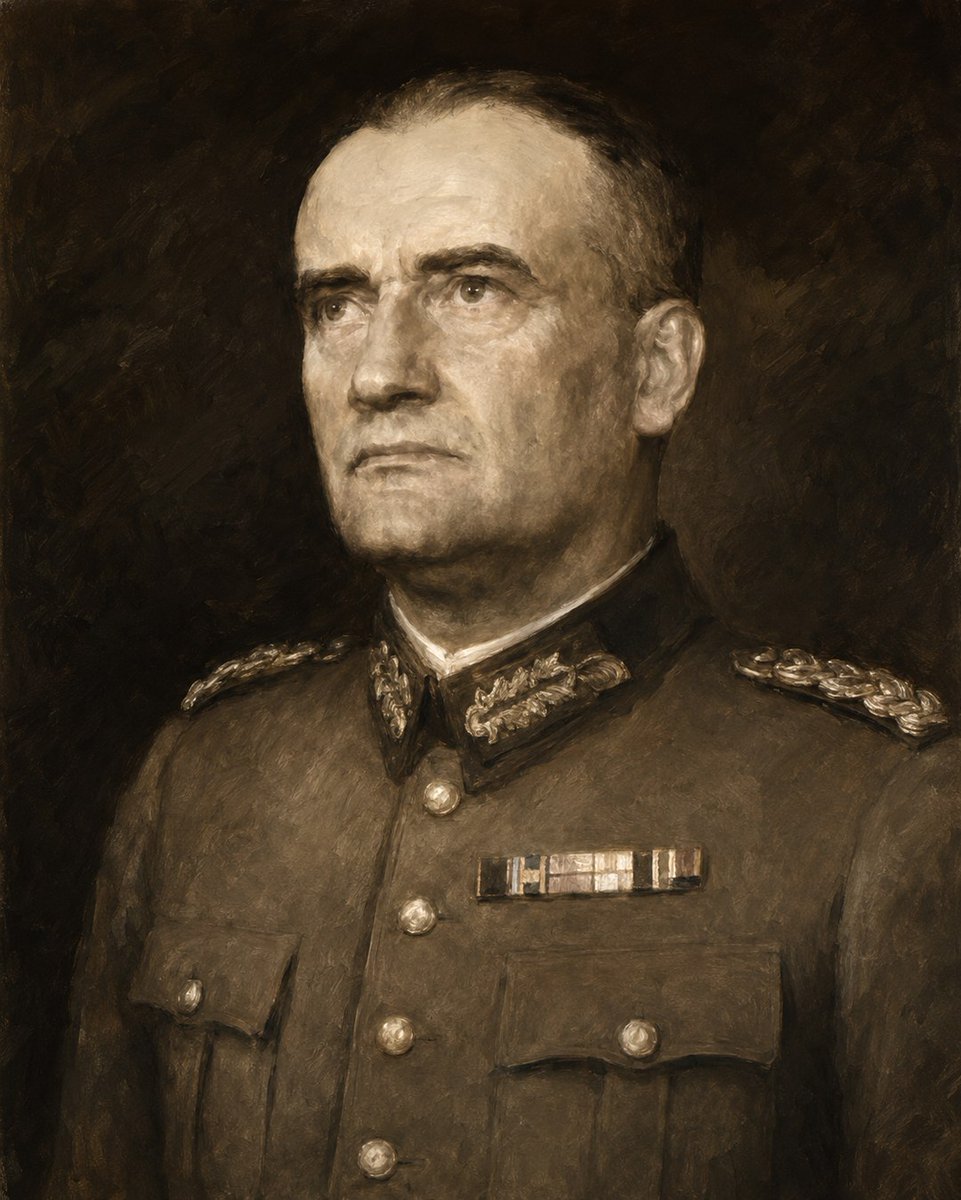
(Attributed to Gen. Kurt von Hammerstein-Equord; Born: 26 September 1878 Died: 24 April 1943, Kurt Gebhard Adolf Philipp Freiherr von Hammerstein-Equord. His aristocratic title Freiherr means roughly Baron.
.
Quote Investigator says the original may have appeared in a Berlin newspaper in 1932 or 1933, but that German newspaper source has not been located. (Quote Investigator)
.
Hammerstein is also a strikingly apt source because he was an anti-Hitler German army leader who warned Hindenburg about Hitler and resigned after Hitler’s rise.
.
Earliest located evidence: Army, Navy & Air Force Gazette, Jan. 1933; reprinted as “Selecting Officers,” United States Naval Institute Proceedings, Mar. 1933; Quote Investigator.)
.
Years ago, when Donald Trump first presented himself for national leadership, I recalled an old German military classification often attributed to General Kurt von Hammerstein-Equord.
.
Hammerstein reportedly divided officers into four kinds: the clever and industrious, the clever and lazy, the stupid and lazy, and the stupid and industrious.
.
The clever and industrious could serve well on the General Staff. The clever and lazy might even be suited for the highest command, because they had the clarity and composure to think before acting. The stupid and lazy could be tolerated in routine posts because they were unlikely to do much damage.
.
But the stupid and industrious — the foolish man with energy, impulse, and authority — had to be removed at once, because he was dangerous.
.
That was the category I had in mind when I called Donald Trump a leader of the fourth rank: not merely ignorant, but active; not merely reckless, but energetic in his recklessness; not merely wrong, but dangerous because he acts on what he does not understand.may
.
And in German:
.
Vor Jahren, als Donald Trump sich zum ersten Mal als nationaler Führer präsentierte, erinnerte ich mich an eine alte deutsche militärische Einteilung, die oft General Kurt von Hammerstein-Equord zugeschrieben wird.
.
Hammerstein soll Offiziere in vier Arten eingeteilt haben: die Klugen und Fleißigen, die Klugen und Faulen, die Dummen und Faulen sowie die Dummen und Fleißigen.
.
Die Klugen und Fleißigen konnten gut im Generalstab dienen. Die Klugen und Faulen konnten sogar für die höchsten Führungsaufgaben geeignet sein, weil sie die geistige Klarheit und die innere Ruhe hatten, erst zu denken und dann zu handeln. Die Dummen und Faulen konnte man in Routineposten dulden, weil sie wahrscheinlich wenig Schaden anrichteten.
.
Aber die Dummen und Fleißigen — der törichte Mensch mit Energie, Impuls und Autorität — mussten sofort entfernt werden, weil sie gefährlich waren.
.
Das war die Kategorie, die ich im Sinn hatte, als ich Donald Trump einen Führer vierten Ranges nannte: nicht nur unwissend, sondern tätig; nicht nur leichtsinnig, sondern energisch in seiner Leichtsinnigkeit; nicht nur im Irrtum, sondern gefährlich, weil er nach dem handelt, was er nicht versteht.
.
(Zugeschrieben General Kurt von Hammerstein-Equord; Quote Investigator zufolge könnte das Original 1932 oder 1933 in einer Berliner Zeitung erschienen sein, doch diese deutsche Zeitungsquelle ist bisher nicht gefunden worden. (Quote Investigator)
.
Hammerstein ist außerdem eine besonders passende Quelle, weil er ein deutscher Heeresführer und Gegner Hitlers war, der Hindenburg vor Hitler warnte und nach Hitlers Machtübernahme zurücktrat.
.
Frühester gefundener Beleg: Army, Navy & Air Force Gazette, Jan. 1933; nachgedruckt als „Selecting Officers“, United States Naval Institute Proceedings, März 1933; Quote Investigator.)
.
mimi sourit #🟦 🎨 📖 🌳🇪🇺🇺🇦 🇮🇱 🧡🧡 retweeted

Madam,
With all due respect, even in your remarks here you refrain from denying or condemning what has been attributed to you and published publicly. That speaks for itself.
To the best of my knowledge, the statements attributed to you regarding “apartheid” do not reflect the position of the European Union.
The matter is simple: if you did indeed make these vile and defamatory statements, stand behind them.
If you did not make them, deny it.
Until this matter is cleared up, my decision will remain unchanged.

Dear Gideon, as you know, the EU and Israel have a lot that binds us. I value our dialogue and engagement, and I’m open to continue in that spirit, respectfully and constructively. Dialogue is the foundation of diplomacy, especially when differences arise. The EU is always committed to a constructive relationship with Israel.
To bring peace to the Middle East, the Two-State Solution remains the only viable path. The EU has condemned the illegal Israeli settlements in the West Bank that make it increasingly difficult to get to that goal. That is the EU position.
316
345
2,187
188,924


44s
UK High Court Justice Michael Burton ruled that the film was "based substantially on scientific research and opinion" but was a political film, and found that Gore made nine statements not supported by mainstream scientific consensus. The judge's own ruling confirms the guidance note had to address "all of the above 9 'errors'."
The nine items identified were:
1. The claim that melting snow on Mount Kilimanjaro is evidence of global warming
2. The suggestion that ice-core evidence proves rising CO2 causes temperature increases over 650,000 years — the court found this misleading since CO2 rises actually lagged temperature rises by 800–2,000 years.
3. The use of Hurricane Katrina imagery to suggest it was caused by global warming, when the government's own expert had to concede single events can't be attributed to global warming this way.
4. The claim that the drying of Lake Chad was caused by global warming, which the government's expert also conceded was not accurate.
5. The claim that polar bears had drowned due to disappearing arctic ice — the court found Gore had misread the underlying study, where four bears drowned due to a severe storm.
6. The implication that melting in Greenland or West Antarctica could soon cause a sea-level rise of up to 20 feet.
7. The claim that a Pacific island population had to be evacuated to New Zealand due to rising sea levels, which the government could not substantiate.
8. A claim about the Gulf Stream shutting down due to climate change.
9. A claim attributing coral reef bleaching solely to global warming, discounting other contributing factors.

I have said mass deportations solves almost every problem. I have also attributed mass immigration to the housing affordability crises. If 30% of the increase is illegals, how much more then does the massive amount of H1Bs add to this? They all have to go.


65
824
3,107
30,125

They were not at all anonymous, for example, even the earliest of these Gospels were attributed to their authors
The 4 gospels were written before the end of the first century & these titles were added before the first century ended to tell them apart & the names were widespread within the very century among the Christian communities across the empire
🏖️ 🐬 ☀️ 🐊 Florida Boy 🏝️ 🍊 🦈 🛥️ retweeted

Jun 17
Actually @TheModerateCase, it's accurate.
The first President of the United States, George Washington, attributed the Exodus to Israel as inspiration to take on the British empire and establish a new nation. As Washington wrote on June 14, 1789 to the Hebrew Congregation in Savannah, Georgia:
“May the same wonder-working Deity; who long since delivering the Hebrews from their Egyptian Oppressors planted them in the promised land- whose providential agency has lately been conspicuous in establishing these United States as an independent nation - still continue to water them with the dews of Heaven and to make the inhabitants of every denomination participate in the temporal and spiritual blessings of that people whose God is Jehovah.”
Further, when the Great Seal of the U.S. was being proposed, John Adams and Thomas Jefferson suggested it be an image of Moses parting the Red Sea and leading his people to the Promised Land (Israel):
“Moses standing on the Shore, and extending his Hand over the Sea, thereby causing the same to overwhelm Pharoah who is sitting in an open Chariot, a Crown on his Head and a Sword in his hand. Rays from a Pillar of Fire in the Clouds reaching to Moses, to express that he acts by Command of the Deity.”
A marble portrait of Moses hangs in the U.S. House Chamber in the U.S. Capitol. Streets in Israel are named after Presidents George Washington and Abraham Lincoln. There is a park dedicated to the Liberty Bell in Jerusalem.

229
434
1,818
212,063

NOR Flash, SLC NAND Prices Surge Over 100% in 1H26
NOR Flash and SLC NAND contract prices increased over 100% in the first half of 2026, according to TrendForce. This surge is attributed to major memory suppliers prioritizing higher-value products like HBM and advanced-layer 3D NAND, which has constrained mature-node capacity for NOR Flash and SLC NAND. TrendForce projects continued price increases in 2H26, with high-density NOR Flash potentially rising 60-65% and SLC NAND 70-75%, due to sustained demand from automotive, industrial, and AI applications amid limited capacity expansion. (trendforce.com/presscenter/n…)
Vik: Kioxia for example phased out SLC NAND in favor of higher density options like TLC/QLC. But there is still demand for SLC, especially because it has lower latency which is useful for KV cache applications. Now limited capacity = higher prices. Go figure.
Austin: Supply mix changes to chase AI, and then "legacy" product has supply tightness and price increases too. Super interesting.
@austinsemis @vikramskr
61

Yeah, I've had to gorilla l follow @conservmillen like 10 times. But I attributed most of it to Dorsey Twitter fighting against conservatives
1
1
4
F1D9M4X retweeted

15h
Historians attributed the fall of several major Chinese dynasties to heavy eunuch influence and power.
Now, at the twilight years of the American empire, it too has decided to employ Chinese eunuchs of its own.

3
4
73
2,539

Sorry to tell you this, but the term was actually coined in the 1980s, and is most often attributed to professor Shepherd Bliss. He actually did use it in reference to the general population. I recommend looking up Shepherd Bliss and the Mythopoetic Men's Movement.
4

10m
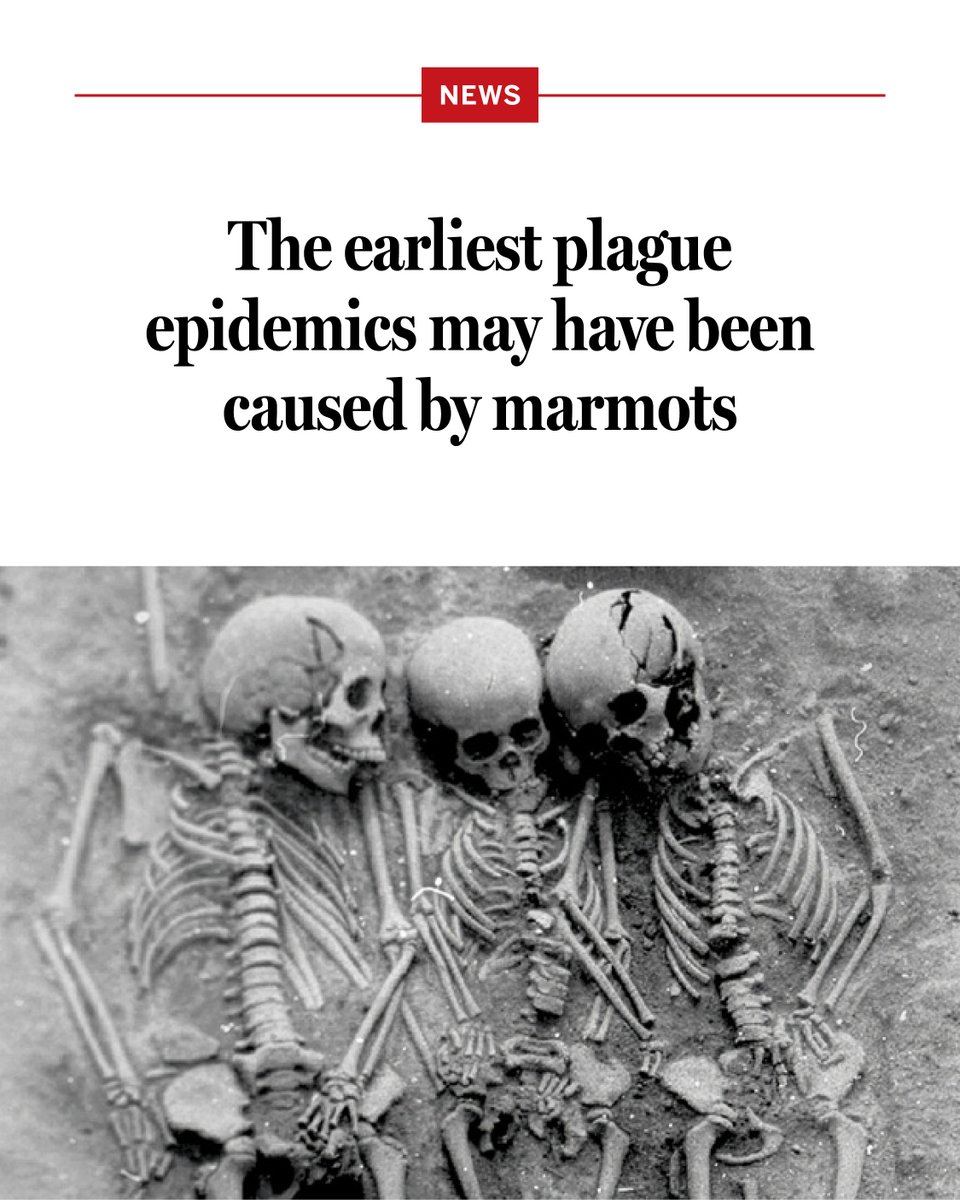
Theory of the early 5th millennium BC die-off of the Kitoy people is usually attributed to climactic aridification crippling their fisheries, but perhaps expansion of forest-steppe & thus plague-carrying marmots was what destroyed them instead.


People who lived 5500 years ago on the shores of Siberia’s Lake Baikal survived by hunting deer and game and catching fish. At times, marmots were on the menu, too—a decision with deadly consequences.
A new study suggests these hunter-gatherers contracted Yersinia pestis, the highly infectious bacterium responsible for plague, from contact with these large, ground-dwelling rodents.
Learn more: scim.ag/43HucWY
1
10
1,090