
Mar 7
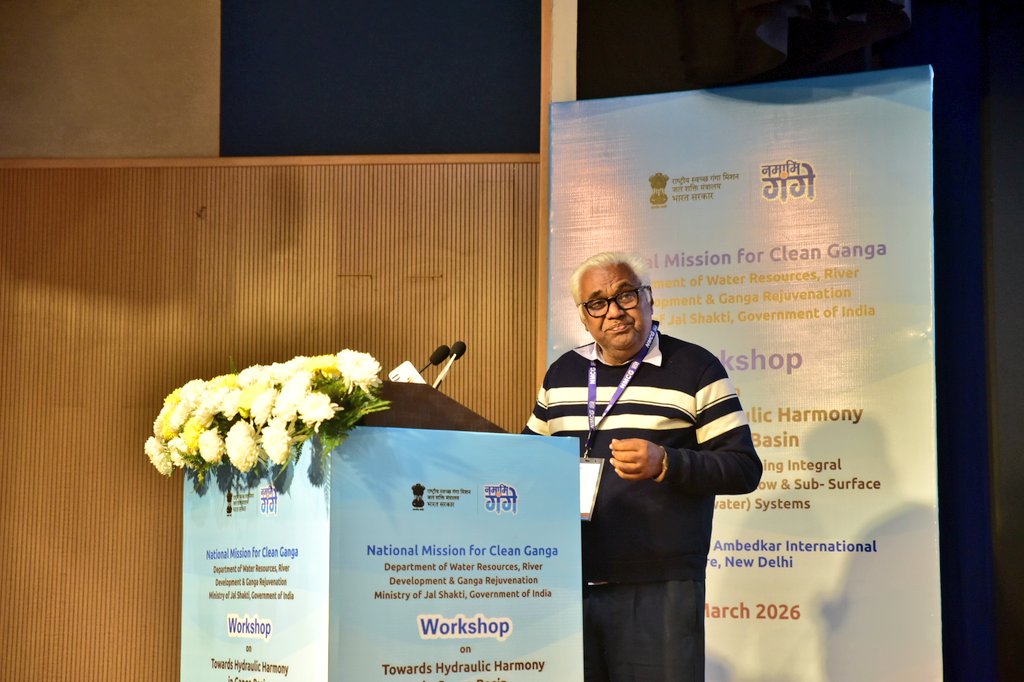
At the Workshop on Restoring and Maintaining the Inter-Relationship of Surface Flow and Sub-Surface (Groundwater) Systems,” experts from leading research institutions and organisations shared scientific insights, case studies and policy perspectives on strengthening surface–groundwater connectivity for sustainable river basin management.
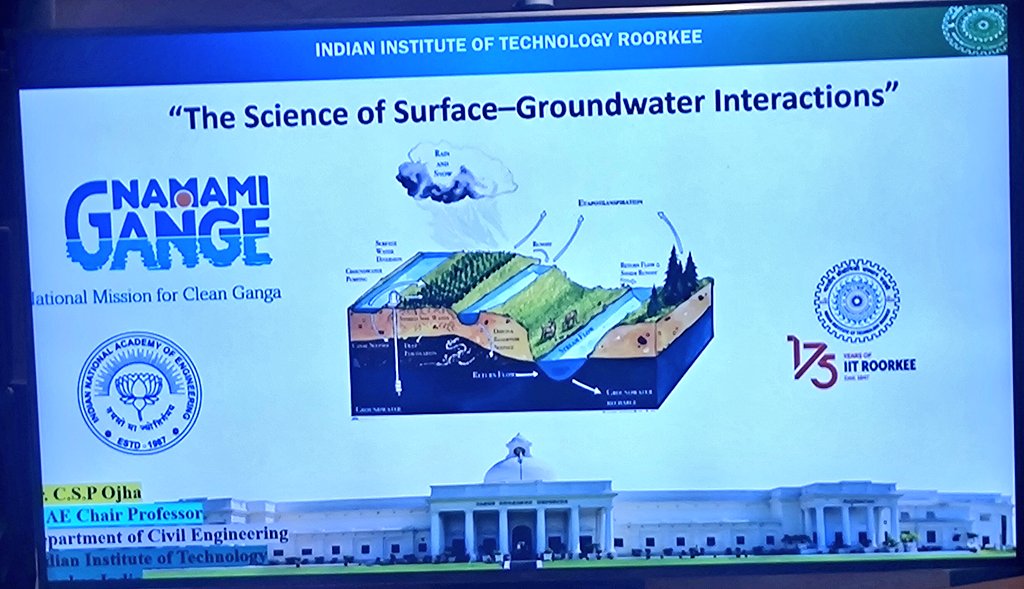
Prof. (Dr.) C. S. P. Ojha, IIT Roorkee, delivered a presentation on “The science of surface–groundwater interactions.”
The session focused on strengthening the scientific understanding of stream–aquifer dynamics, helping policymakers and practitioners better interpret how groundwater sustains river baseflows and how rivers recharge aquifers.
#RiverScience #Groundwater #IntegratedWaterManagement
1
6
15
445
Mar 7
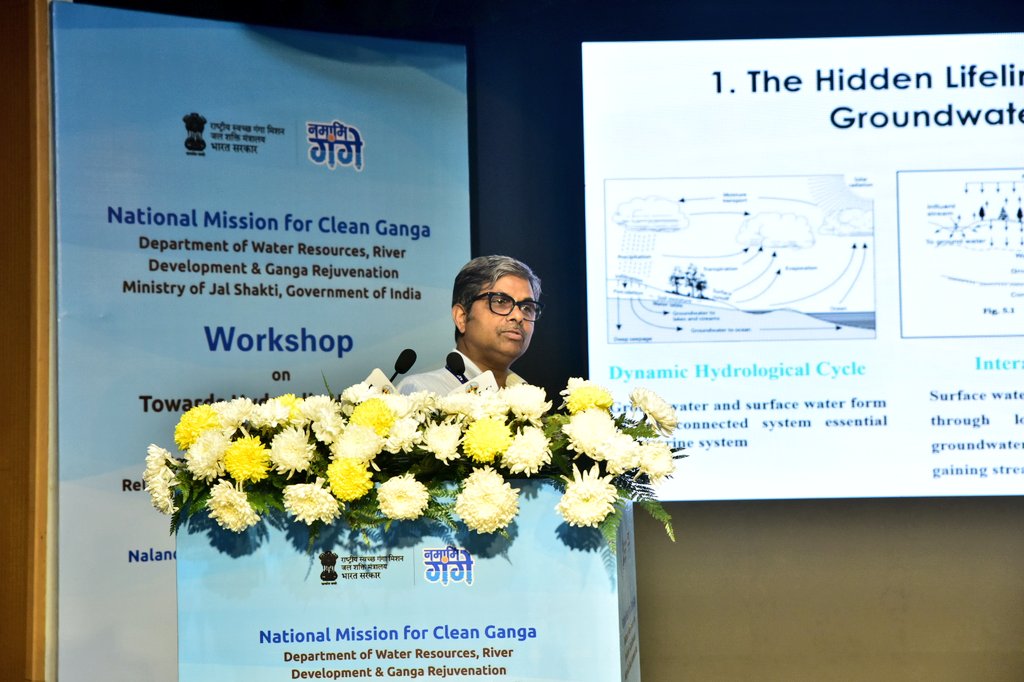
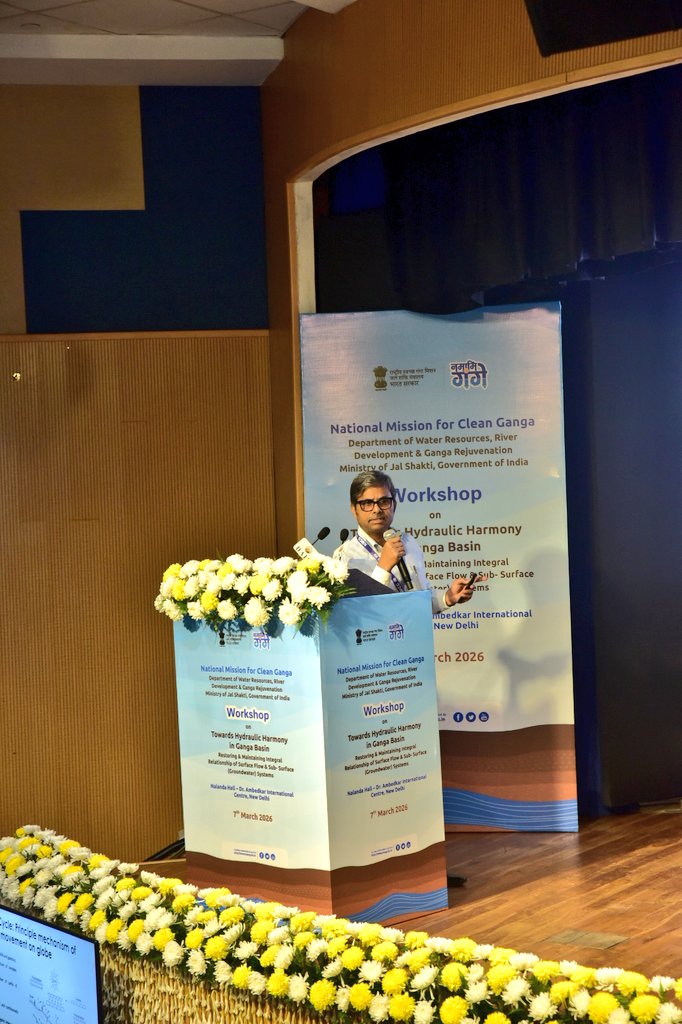
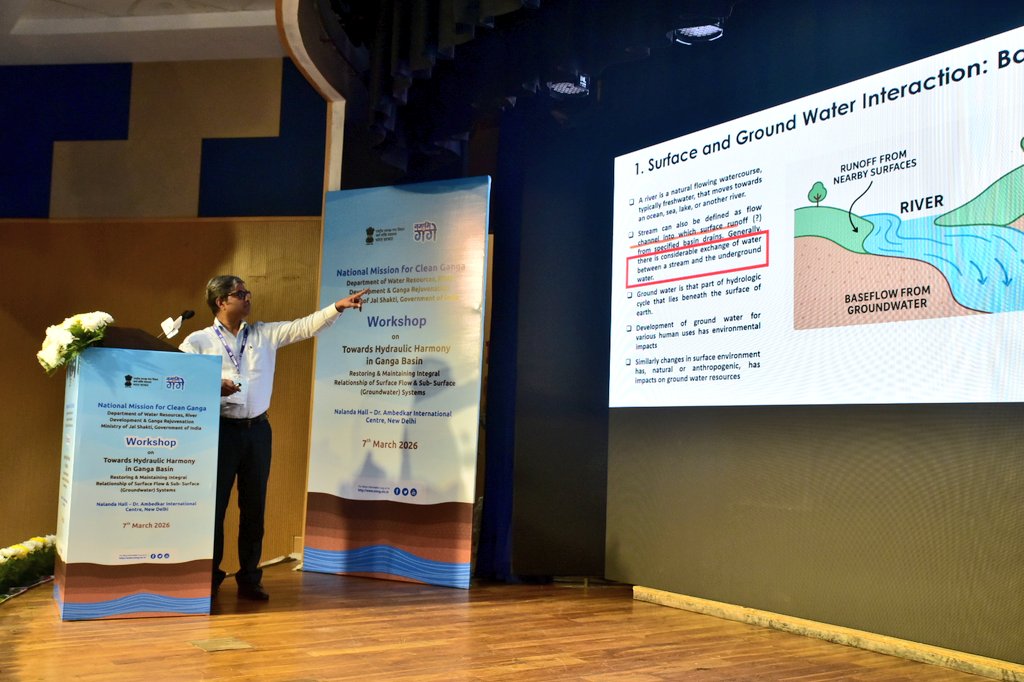
Delivering a presentation on “NMCG provisions enabling surface water–groundwater interactions and recharge” at the Workshop on “Restoring and Maintaining the Inter-Relationship of Surface Flow and Sub-Surface (Groundwater) Systems,” Shri D. P. Mathuria, Chief Engineer, Central Water Commission, highlighted the complex and dynamic nature of the hydrological cycle and the continuous interaction between surface water and groundwater.
He explained that rivers and aquifers are intrinsically connected systems, with constant exchange occurring through gaining and losing streams, governed largely by hydraulic gradients and aquifer characteristics. Excessive groundwater abstraction, however, has increasingly altered these natural interactions, leading to flow reversals and declining river baseflows in several regions.
Shri Mathuria pointed out that over-extraction of groundwater and anthropogenic interventions have significantly impacted the hydrological balance, with studies indicating reduced streamflow contributions in parts of the Ganga and Indus basins due to declining groundwater inputs.
Highlighting pathways for operationalizing the provisions under the NMCG Authority Order, he emphasized measures such as floodplain zoning and protection, environmental flow implementation, recharge-oriented infrastructure, and strengthened data integration between surface and groundwater monitoring networks.
He also stressed the importance of integrating hydrological data from institutions such as CWC and CGWB to build unified datasets, enabling more granular studies of river–aquifer interactions and helping identify critical stretches where targeted interventions may be required.
Through case studies from the Ganga basin, he illustrated how groundwater contributions significantly support river flows during lean seasons and underscored the need for scientifically informed, location-specific strategies to sustain these hydraulic linkages.
#NamamiGange #RiverRejuvenation #Groundwater #WaterScience #IntegratedWaterManagement #GangaBasin
12
18
381
Mar 7
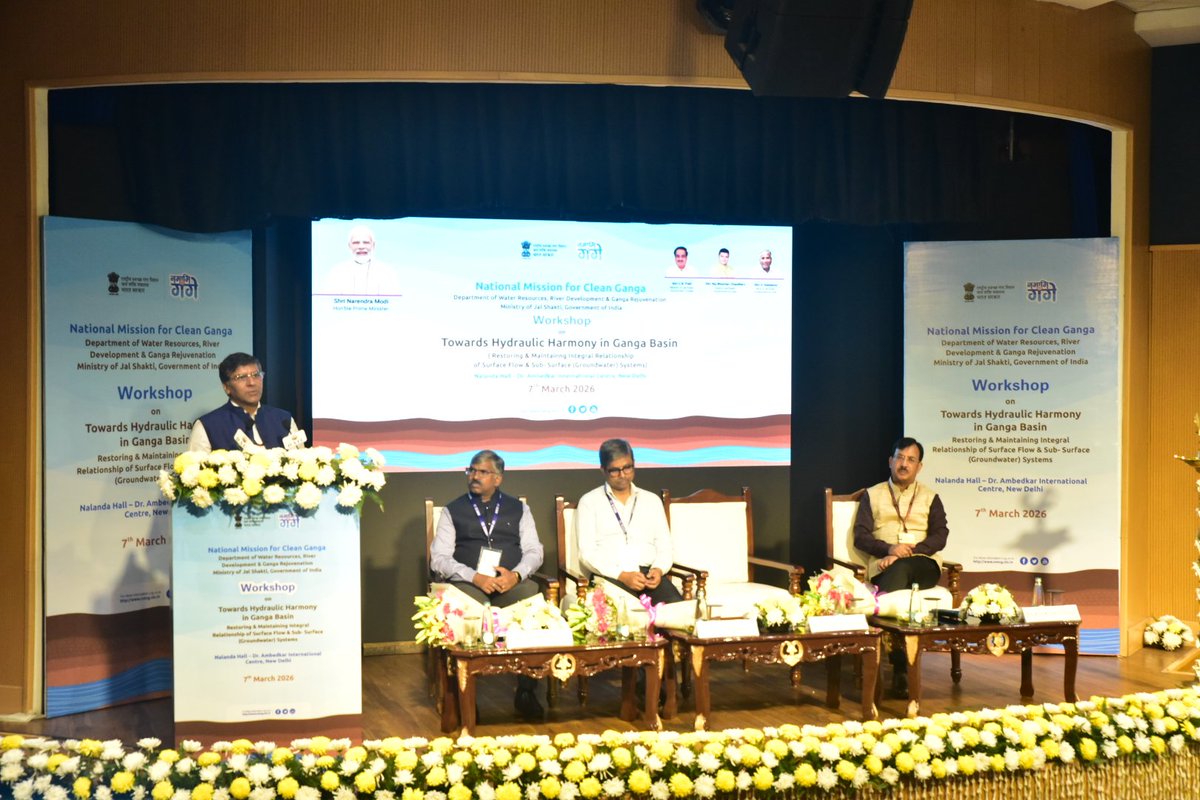
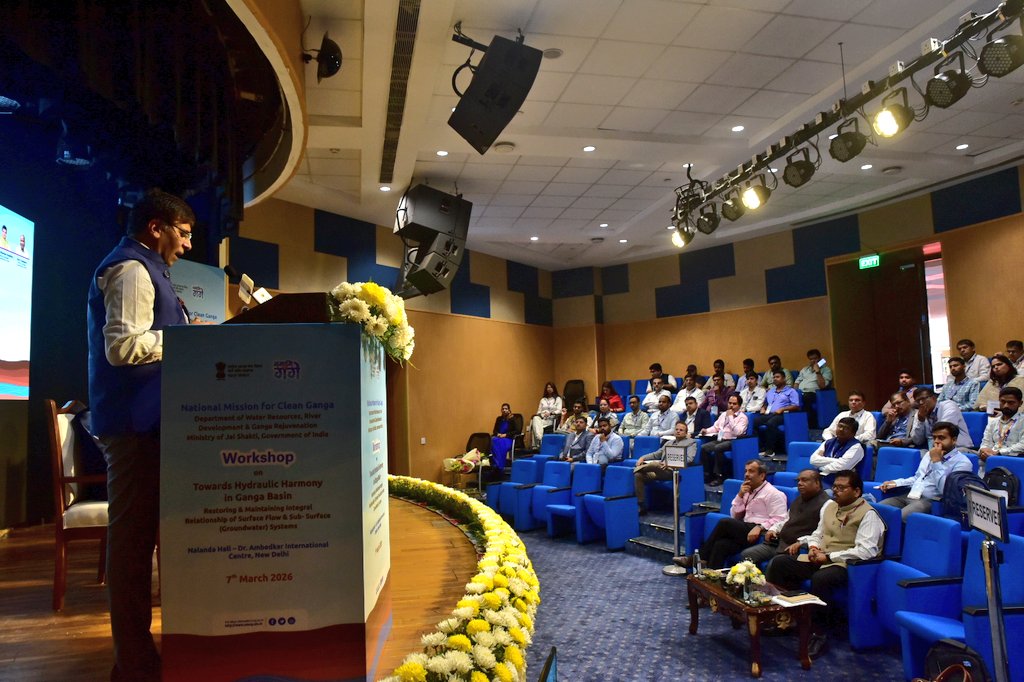
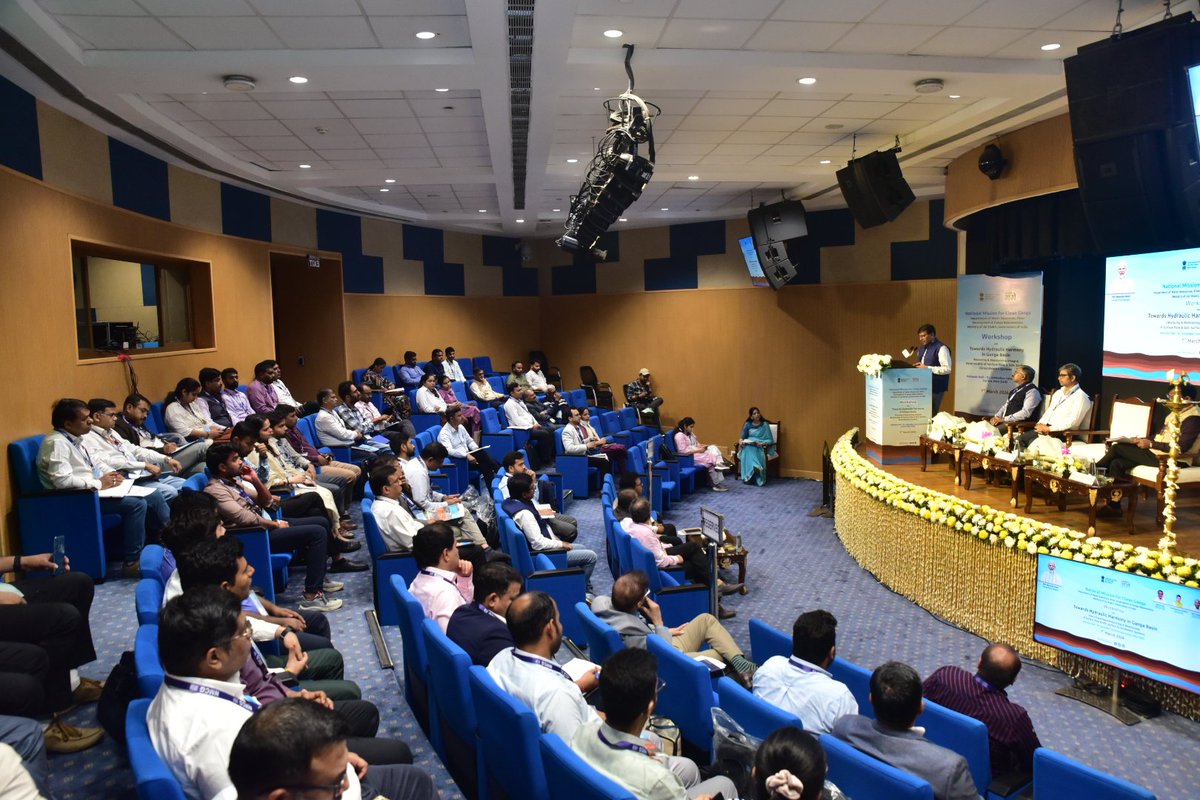
Delivering the Opening Remarks and Keynote Address at the Workshop on “Restoring and Maintaining the Inter-Relationship of Surface Flow and Sub-Surface (Groundwater) Systems,” Shri Rajeev Kumar Mital, Director General, NMCG, highlighted that the relationship between rivers and groundwater is one of the most overlooked dimensions of water resources management.
He observed that historically, surface water and groundwater have been studied and managed as separate domains, often by different institutions and regulatory frameworks. However, hydrology clearly shows that they function as one interconnected system.
Groundwater plays a crucial role in sustaining river baseflows during lean seasons, while rivers also recharge adjoining aquifers. But increasing anthropogenic pressures and climate variability are altering this delicate balance.
Shri Mital emphasized that the objective of the workshop is not merely to reiterate general prescriptions, but to develop more precise scientific understanding and actionable insights, including how to quantify stream–aquifer interactions, identify critical stretches where these interactions are most significant, and integrate groundwater assessments into river basin planning.
He stressed the importance of stronger partnerships between policy institutions and the scientific community, noting that research institutions and universities have a critical role in advancing data, modelling and evidence-based policy.
The deliberations aim to contribute to a clearer pathway for operationalizing Section 4(vi) of the River Ganga (Rejuvenation, Protection and Management) Authority Order, 2016, strengthening integrated river basin management for a more resilient and sustainable water future.
#NamamiGange #RiverRejuvenation #Groundwater #WaterSecurity #IntegratedWaterManagement
9
9
320
Mar 6
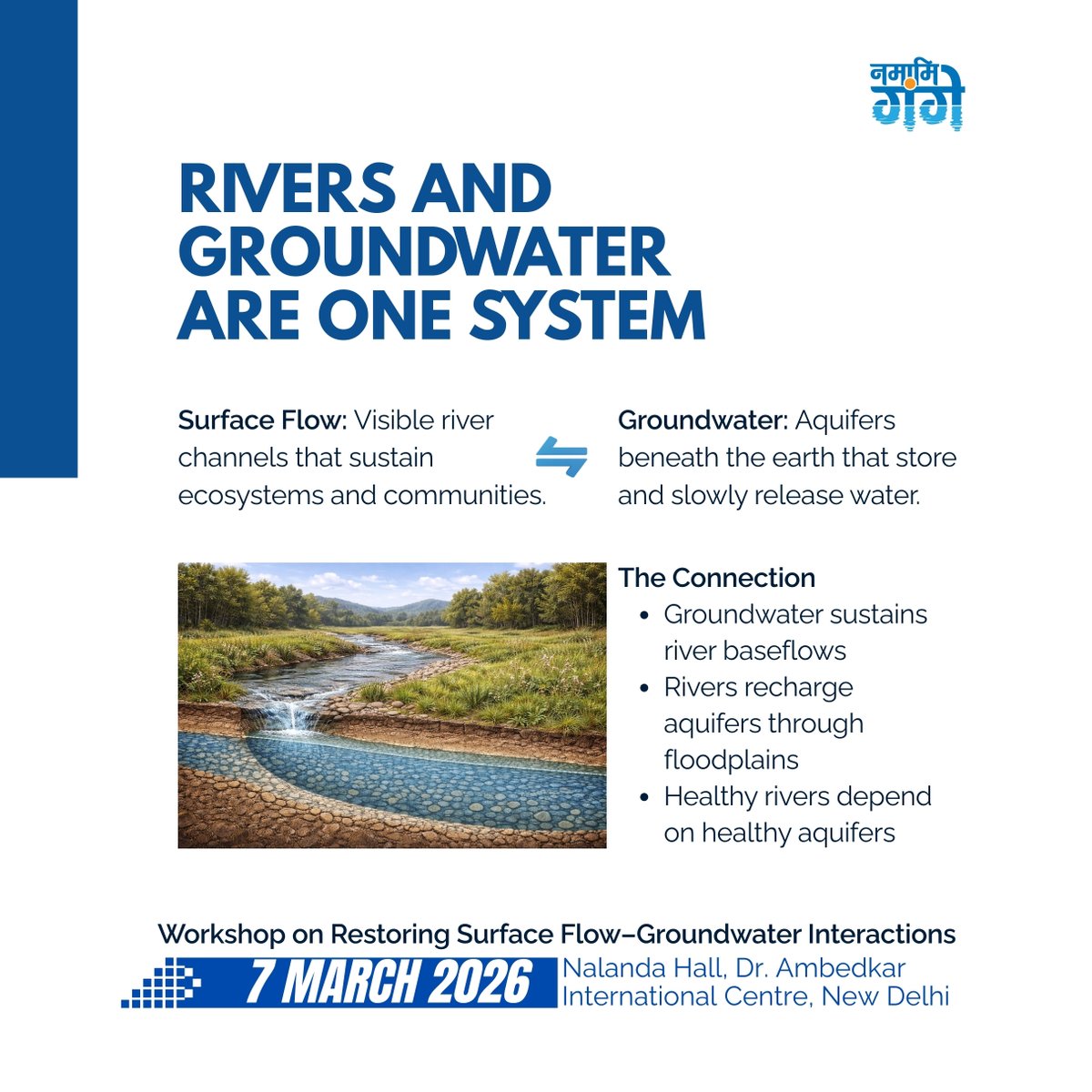
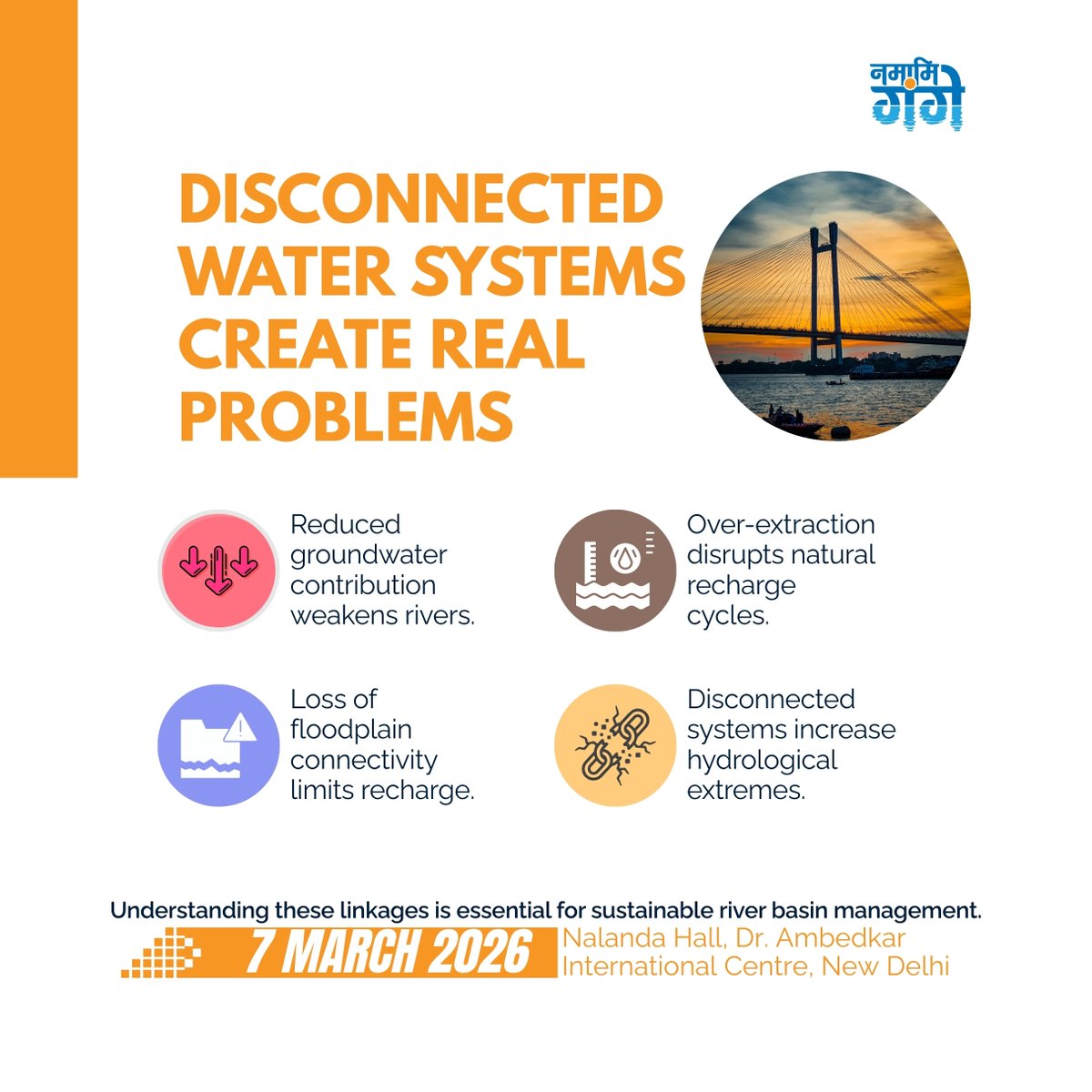
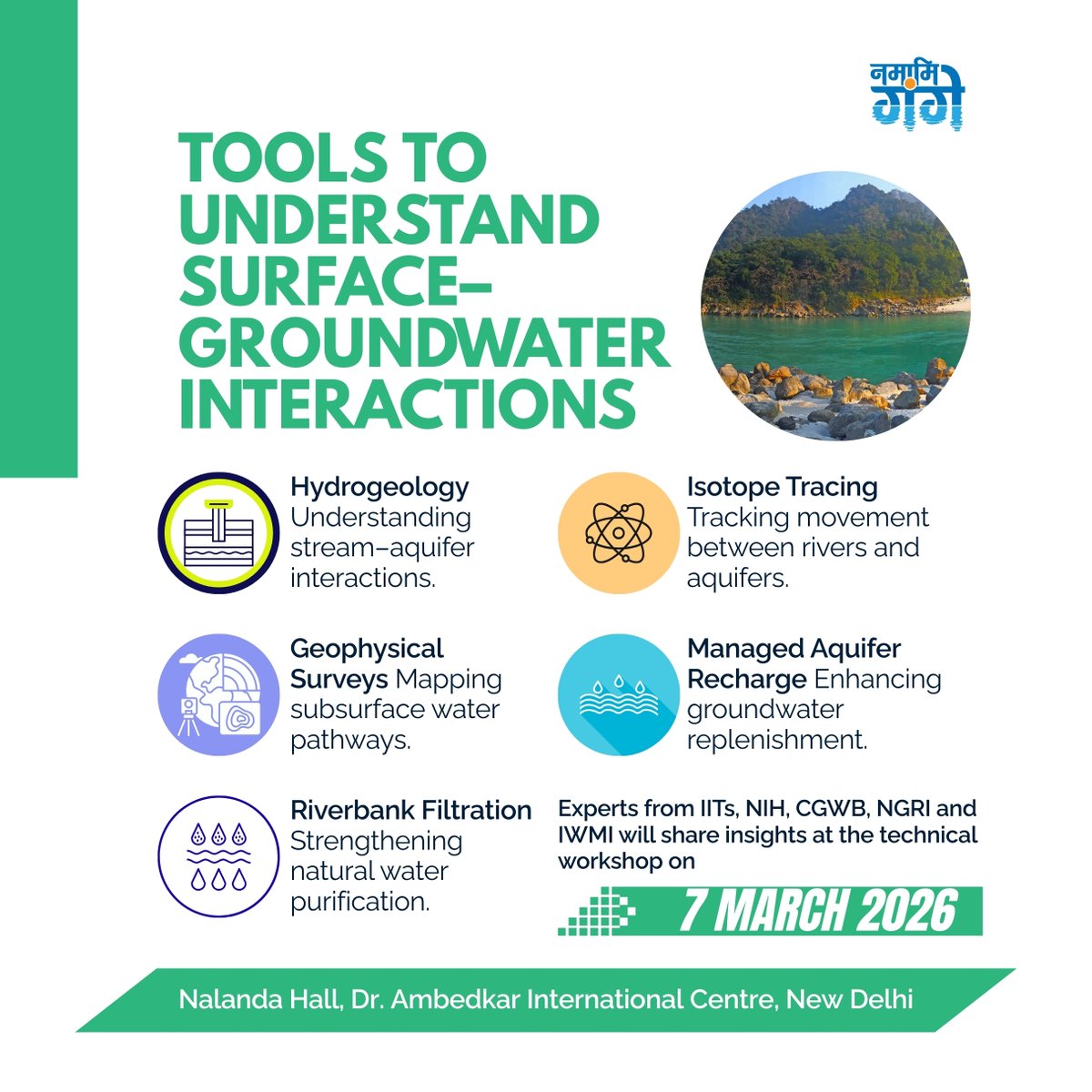
Healthy rivers depend on healthy aquifers.
Groundwater sustains river baseflows, while rivers recharge aquifers through floodplains and subsurface flows. When this natural connection weakens, rivers lose strength, aquifers decline, and hydrological risks increase.
Understanding and restoring these interactions is essential for sustainable river basin management.
Join experts from leading institutions as they explore the science, challenges, and solutions for strengthening surface–groundwater connectivity.
📅 7 March 2026
📍 Nalanda Hall, Dr. Ambedkar International Centre, New Delhi
#NamamiGange #RiverRejuvenation #Groundwater #WaterSecurity #IntegratedWaterManagement
1
18
29
469

If there is a drought should Ethiopia guarantee Egypts water security even if it means Ethiopia’s interest is at stake. Egypt can build dams and prepare for a rainy day! Ethiopia is not Egypt’s water tanker! If there is a drought Ethiopia and Egypt should feel the drought equally! That is equitable! I’m not going to give you all my water until I have nothing just because you are Egypt and I am not! Egypt and Ethiopia or Egypt Ethiopia and Sudan are not the only countries that share the Nile. What is prudent is cooperation to avoid and manage drought.
Dear Egypt, Stop trying to boss countries around! you want to work with Ethiopia on terracing, reforestation, soil and water conservation, you want to work with Sudan on protecting and restoring floodplains and wetlands that can store water and support dry‑season grazing and agriculture, you want to work with South Sudan on Protecting and managing the Sudd wetlands and support climate‑smart pastoralism and agriculture, including dry‑season water points and drought‑resistant crops, you want to work with Uganda on protecting wetlands that regulate low flows, work on reforestation and erosion control. You want to work with Kenya on restoring degraded catchments feeding Lake Victoria. You want to work with Tanzania on Strengthen rainfall and lake‑level monitoring to anticipate regional low‑flow conditions affecting the White Nile headwaters. You want to work with Rwanda on expanding climate‑smart land management in Nile‑draining highland catchments. You want to work with Burundi on implementing watershed rehabilitation and erosion control in Nile‑draining areas to stabilize baseflows into Lake Victoria. You want to work with DR Congo on protecting headwater forests and wetlands that contribute to more stable flows in the White Nile system. And also most importantly work on strengthening national drought planning, including contingency allocations for agriculture, industry, and ecosystems under multi‑year dry scenarios.
One last suggestion to you, Ethiopians don’t have a history of kneeling as you know well from the past. Fighting, threatening, using Trump or who ever, wont take you far. Be the African that you are and talk to your brothers and sisters from a mutual respect stand point. That will serve you well!

4
7
691

Gov is funding “large-scale trials of nature-based solutions by @WaterREast in the Upper Cam: “aimed specifically at creating more resilient baseflows…If we can slow the flow and boost rates of aquifer recharge then we create a win-win for the environment and growth.” 4.
2
2
1,311

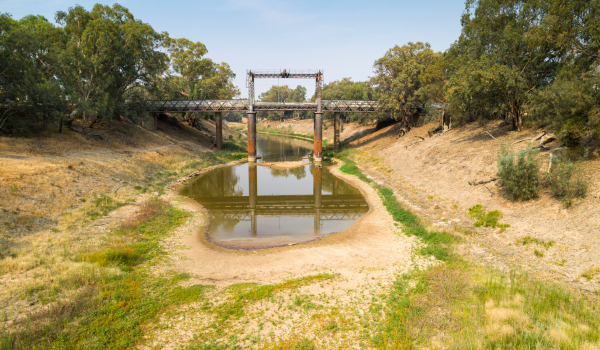
NSW Government has a blueprint for restoring the Darling Baaka - the 'Connectivity Report' - securing baseflows for a livable river. The minimum that is required. Much more needs to done for cultural outcomes. Come to hear next Thursday at Parliament House @RoseBJackson
1
7
19
462

31 Jul 2023
And yet this drought isn't nearly as prolonged. Are the baseflows just a lot lower now?
1
2
77

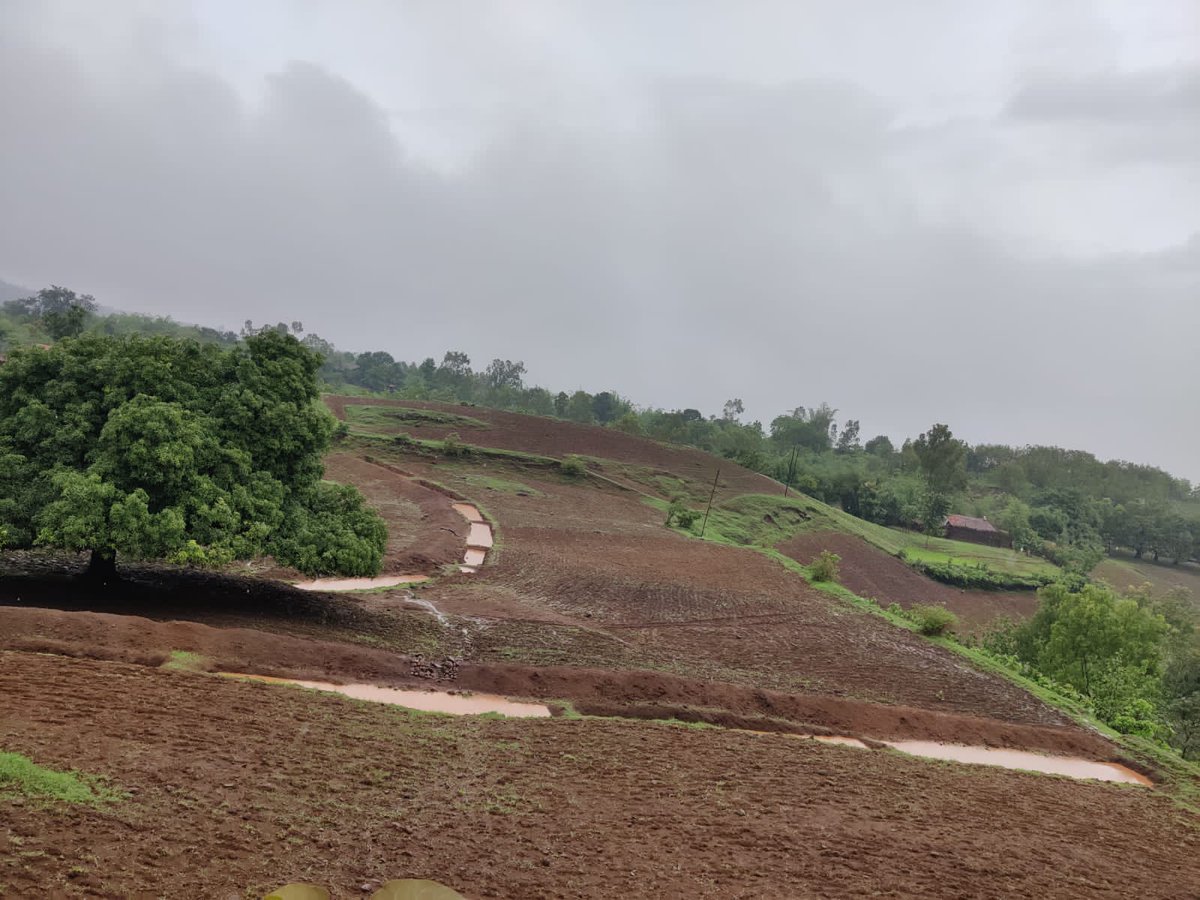
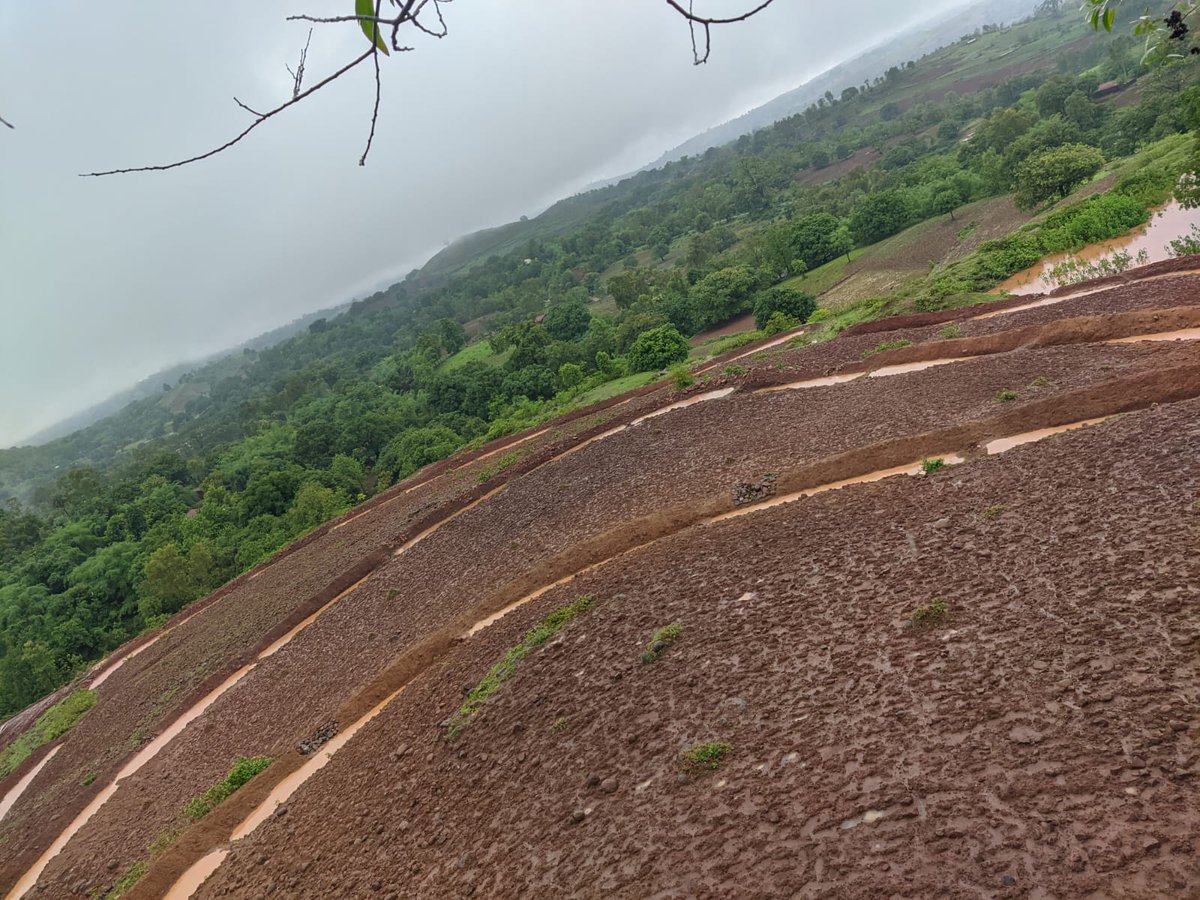
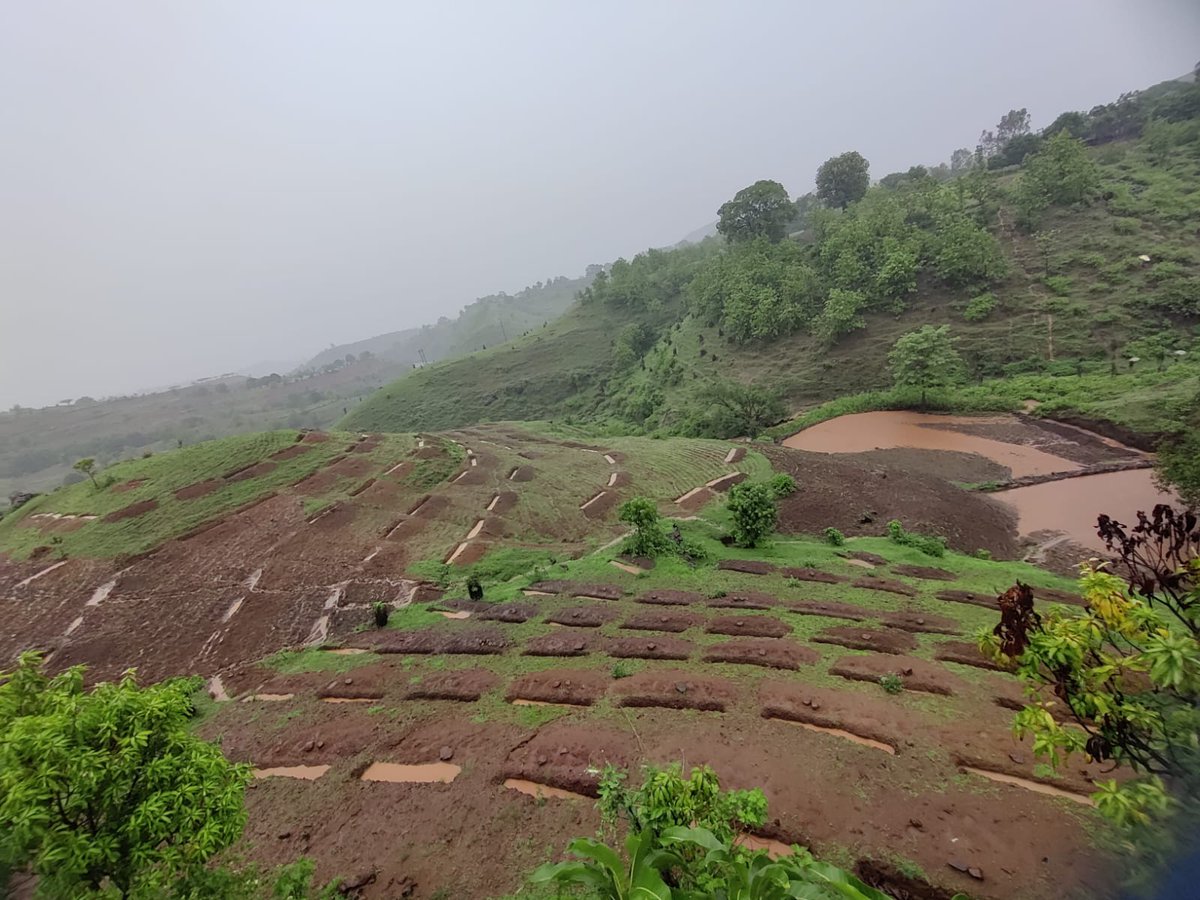
Soil and water conservation works in the hilly clusters of Dhadgaon fill Ed up with the rainwater, the water will slowly percolate through these decentralised small structures and enable soil moisture and baseflows @tata_comm @IKEAFoundation @EnergyAlliance @tatatrusts
4
121

11 Jul 2023
Professor Davis said that “it is evident from this research that conserving freshwater fish biodiversity in these rivers will require protection of the groundwater resources to ensure baseflows and aquatic refuges persist through the most extended of dry seasons.”
1
3
402

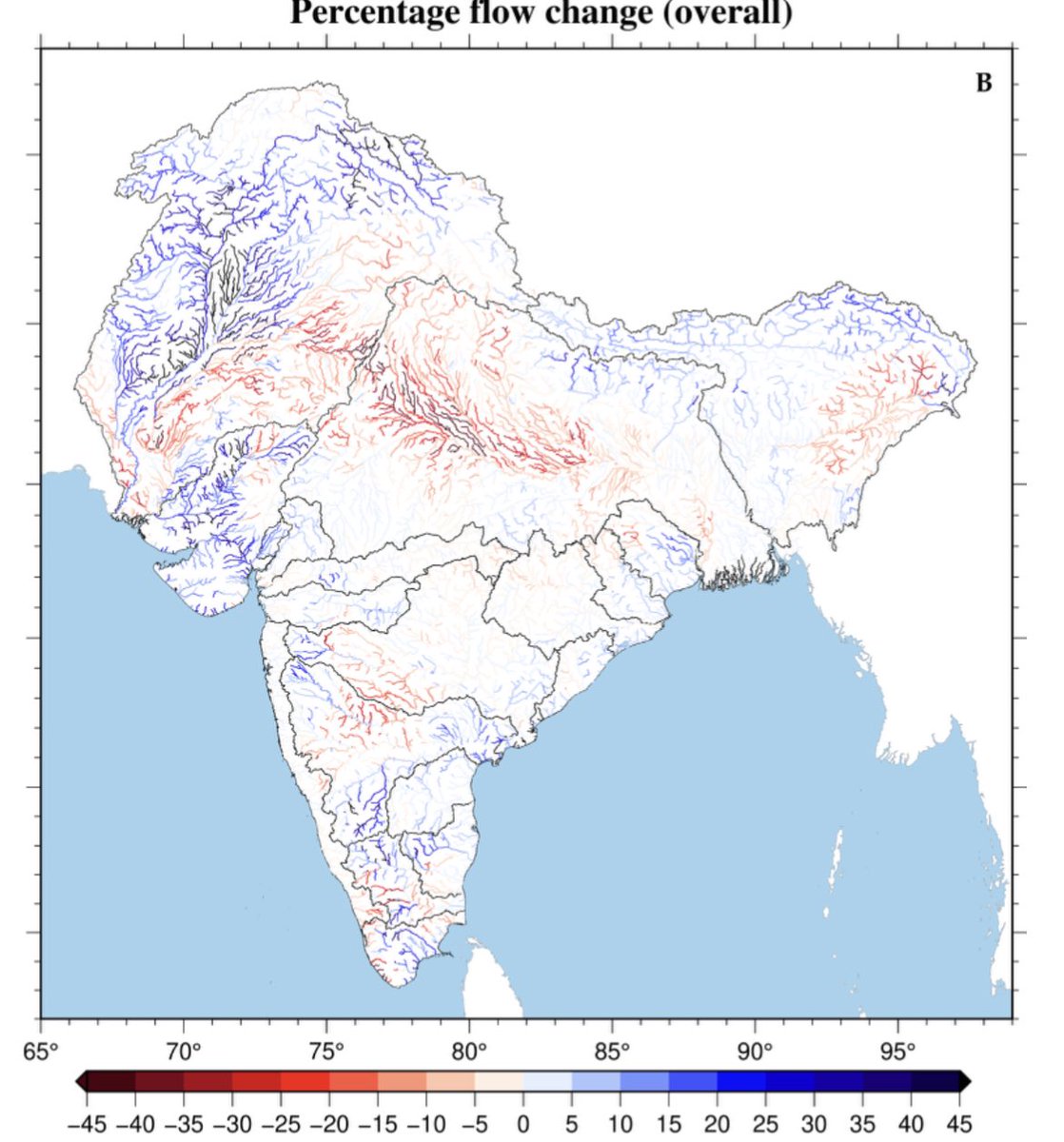
Here's some amazing analysis from the IIT Gandhinagar group.
The decrease in UP's and Marathwada's flows can very much be due to groundwater over-abstraction leading to reduced baseflows.
2 Jun 2023

Ganga basin: where rivers run dry! Long term (1951-2021) changes (%) in streamflow in river basins! Red: decline, blue: increase! Stay tuned for upcoming dataset! @MoJSDoWRRDGR @moesgoi #monsoon #drought
1
2
12
1,166

18 May 2023
However, positive ecological benefits attenuate as you move downstream. This is likely because increased baseflows out of Berryessa Dam, while cold near the dam, warm as they move downstream. Thus downstream habitats remain suitable for warmwater nonnatives like carp & sunfishes.
1
3
261

Actual numbers for extraction must be set & the current situation re NO limits on extractions (cunningly hidden by NSW operations) stopped ASAP so that baseflows are maintained throughout the system to ensure NSW WMAct priorities, & environmental water is delivered on top of them
7 Apr 2023

NSW Natural Resources Commission has released reports (like this one in 2019) calling for urgent change to water management.
Now, it has recommended Long Term Average Annual Extraction Limits be set, clearly, as number.
Previous NSW govt argued LTAAEL NOT a number @RoseBJackson
12
16
1,149

6 Mar 2023
During baseflows only a relatively small part of the wide braided river channel has water. The total width gives you an idea of how big they can get during floods. Love braided rivers, fun to explore and always different on every visit:)
2
1
14

12 Dec 2022
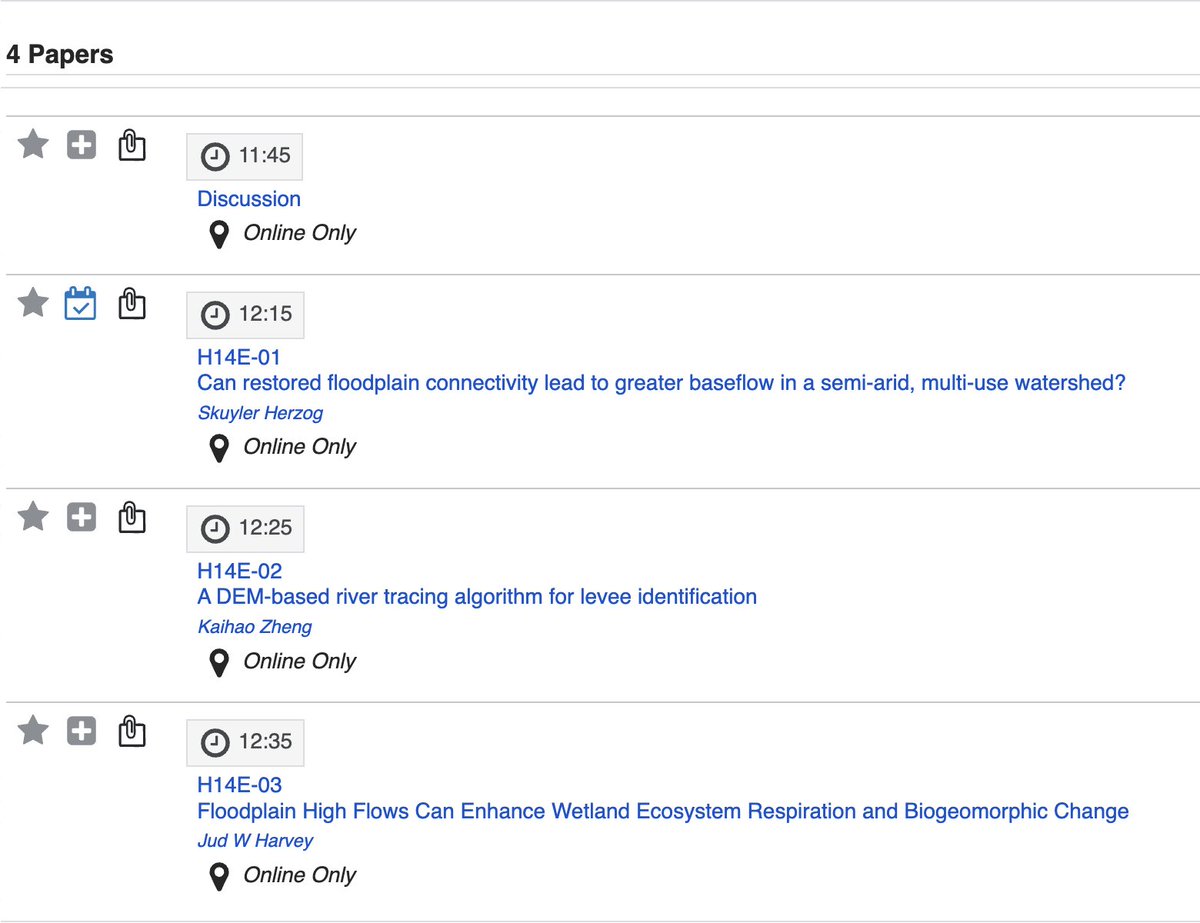
Tune in at 11:45 PT for a quick online session on Floodplains in the Anthropocene.
Can restored floodplain connectivity lead to greater baseflows? I'll be sharing field-scale water balance results from an artificially flooded field in Central Oregon.
#AGU2022 H14E
1
4

7 Dec 2022
Evidence of Baseflows! Groundwater discharged in streams due to which soil and other material is not present in the forest stream? An excellent indicator of #groundwater status of the region and its contribution to various ecosystem services.

The monsoon rains have ended. The forest stream now clear from mud.
2
11

10 Nov 2022
Thi means:
1)They are making use of a very crucial part of the hydrological cycle, soil moisture. Now without soil moisture, the ground is always dry and therefore no baseflows to sustain even the driest of periods.
2
1
2

25 May 2022
Arndt asks why the city isn't taking the mitigation measures (to increase baseflows) already since there's currently a dam on the river. Staff say the reservoir is currently controlled by the irrigation company. The expansion would allow the city to oversee the releases
1
1

29 Apr 2022
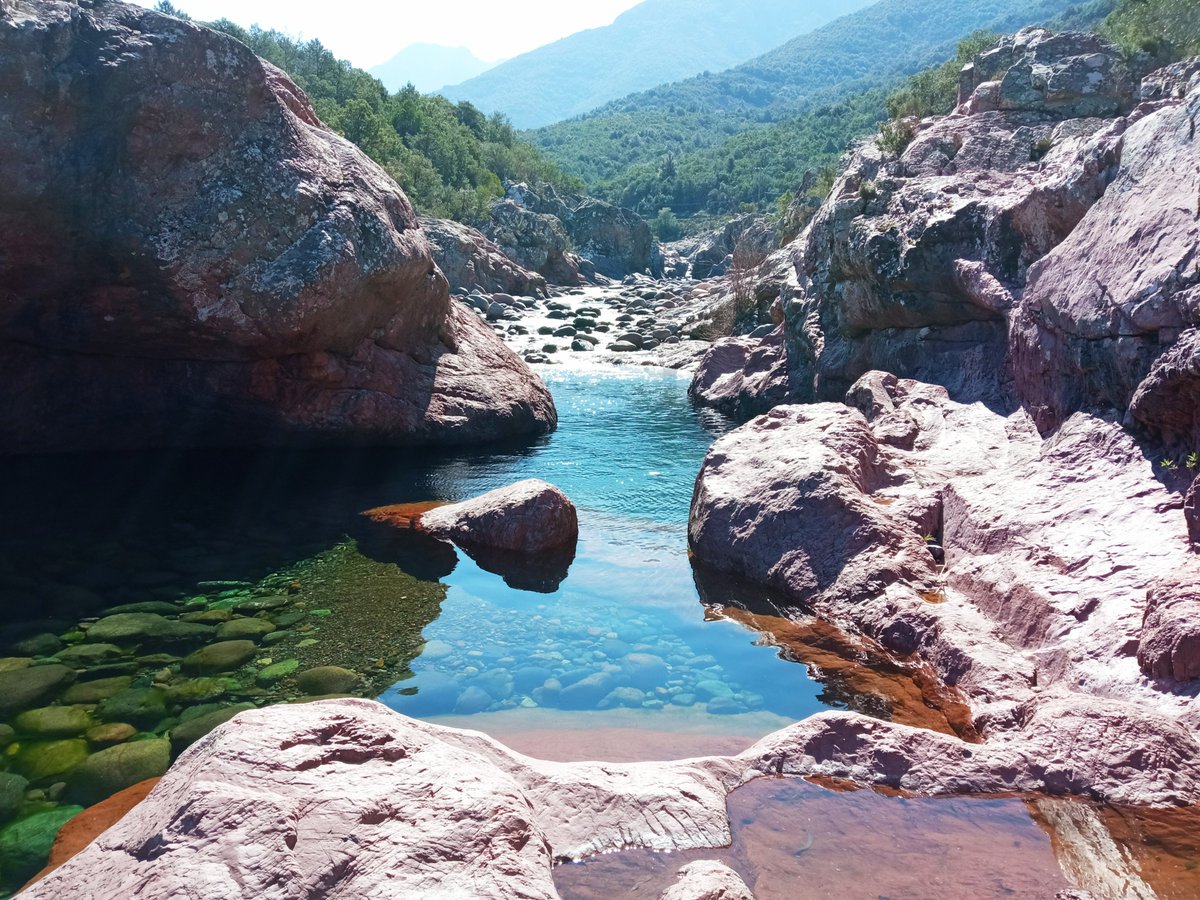
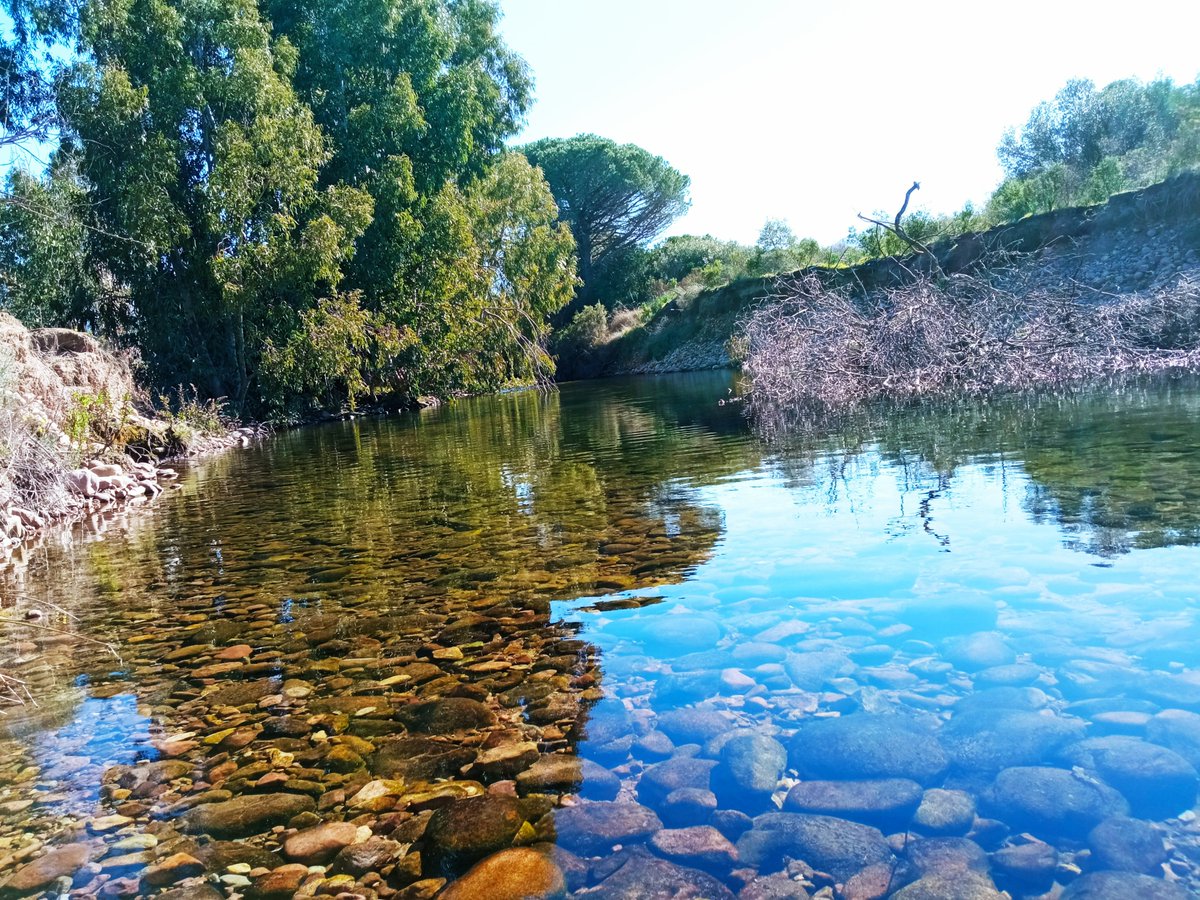
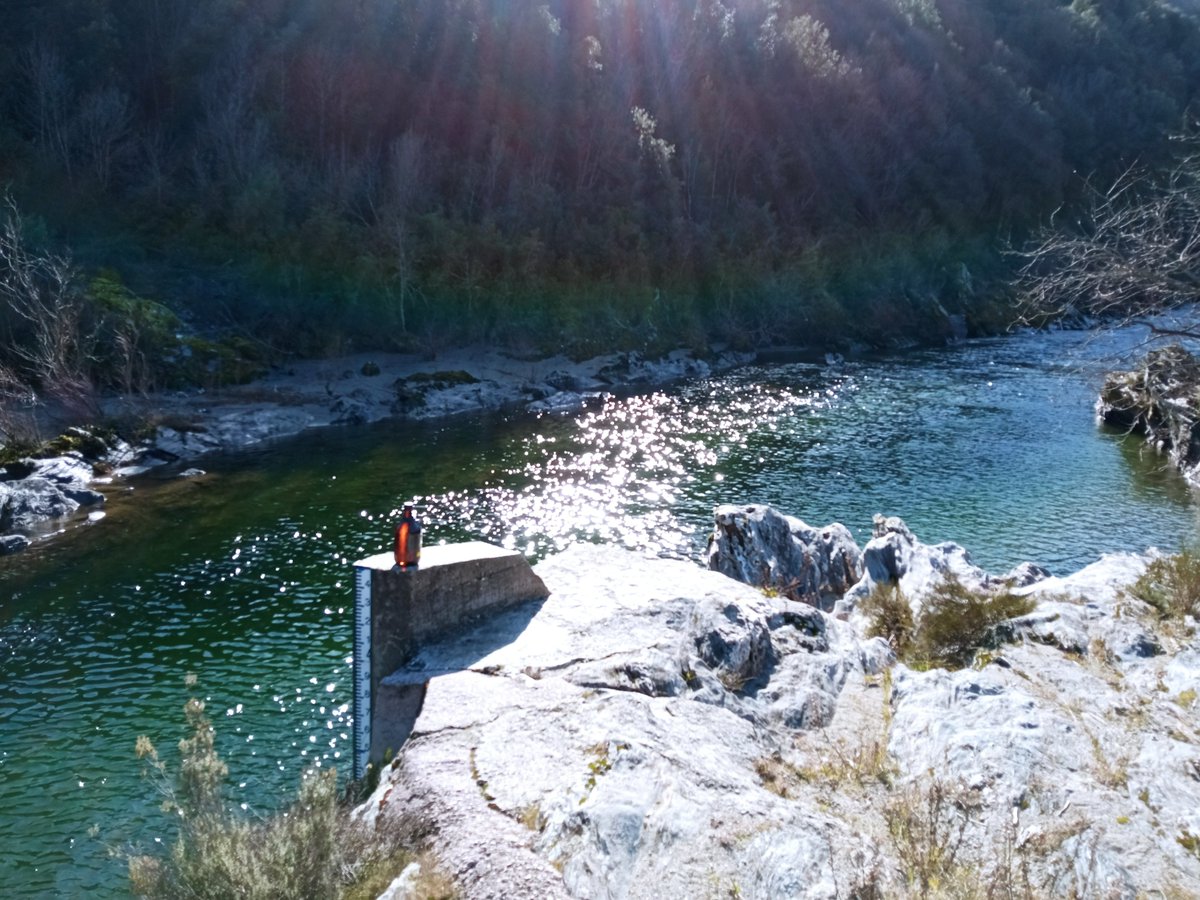
Currently facing exceptional low flows period 💦 around #Corsica. Understanding contributions sustaining baseflows during those periods is essential for better water management. Field campaigns 🏞️ are underway for this purpose ! #isotopes #Gerhyco @Lab_SPE @CNRS_dr12 @UnivCorse
3
5

27 Apr 2022
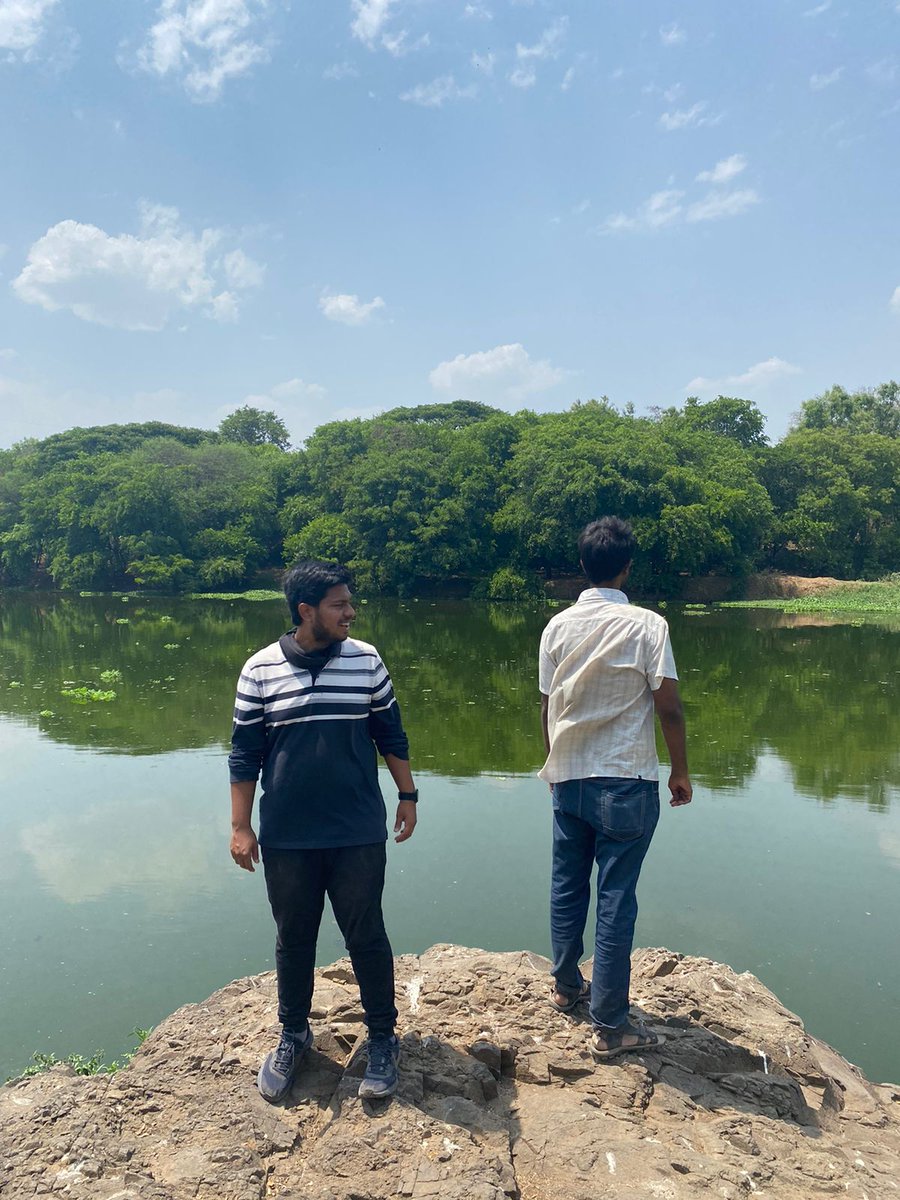
Mula #river and the underlying fractured basalt aquifers have a beautiful relation. While the springs contribute to the river's #baseflows, the river flow also contributes to #aquifer recharge through the fractures. @Sahilregimathew and i for scale
#fieldnotes from #pune
10