
260REM at 2700 yards. Sure, I missed, but I was told I scared the 30" AR500 gong pretty bad.
Furthest intentional impact I've had is 1700 yards with 308 and 6.5CM. 42" AR500 gong
Gongs and stands courtesy of, well, me, but wearing my MOA Targets hat instead of ATF CStore.
8

The blueprint for success. 💎 OPW Nozzles - providing advanced technology and a commitment to excellence that stands tall. 780.968.0722
#TruckStop #CStore #CommercialFueling #FleetMaintenance #FuelSupply #FuelTech: #FluidHandling #WeHaveCookies #OPW #IndustrialHose

1

Mercury EVM: Seismic's Custom Execution Engine
Ethereum's EVM has been the foundation of smart contracts since 2015. Its execution model, storage slots and opcode based design are familiar across the entire ecosystem.
Seismic extended that model with Mercury.
Mercury is Seismic's custom EVM specification, the execution engine that brings privacy directly into contract execution.
Not a layer on top. not a wrapper. a different version of the EVM itself.
The core change is storage.
Standard EVM has one storage type. public.
Contract storage is transparent by design and there is no VM-level private storage flag.
SLOAD and SSTORE operate on this public storage model.
No private slots. no confidential access rules. complete transparency by default.
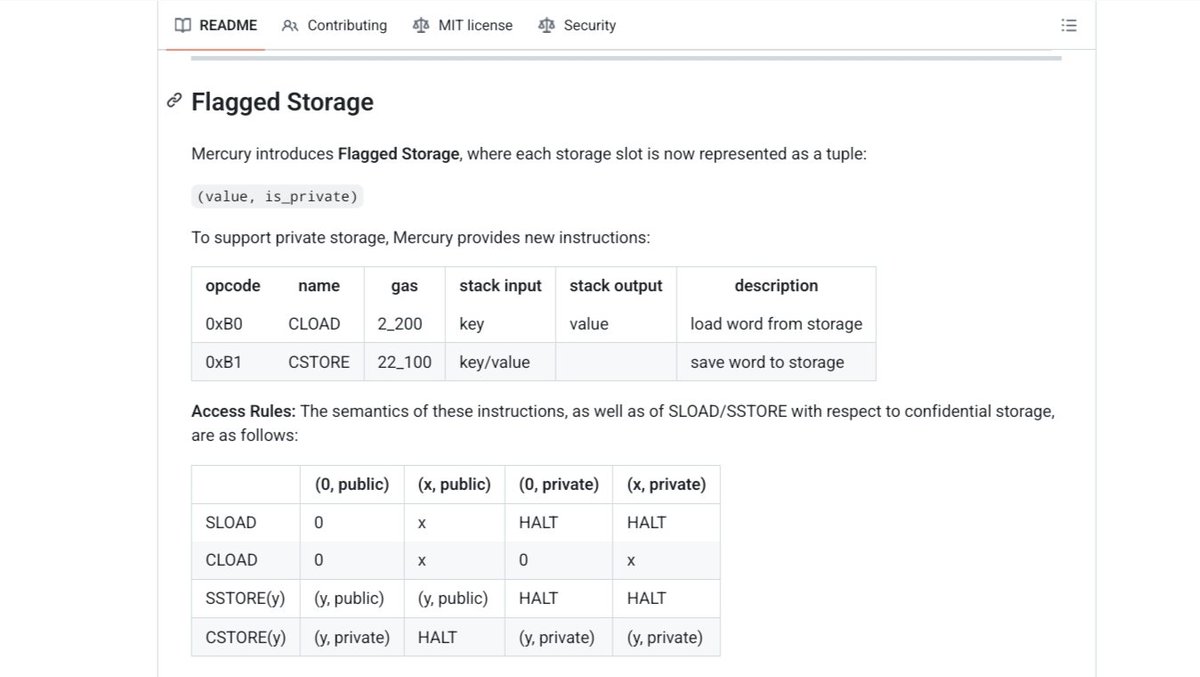
Mercury introduces two storage types: public and private, with separate opcodes to match.
SLOAD / SSTORE → unchanged. standard public storage, identical to Ethereum.
CLOAD (0xB0) / CSTORE (0xB1) → new confidential aware storage opcodes.
CLOAD works within Mercury's flagged storage model and can handle both public and private slots. CSTORE is the private storage write path.
Access rules are enforced at the VM level:
→ SLOAD attempting to read a private slot causes the transaction to HALT
→ SSTORE cannot write to private slots
→ Once a slot becomes private via CSTORE, it cannot be flipped back to public
Privacy is a one way door.
Gas costs for CLOAD and CSTORE are flat, set to the maximum SLOAD / SSTORE could ever cost.
This is a deliberate privacy property. variable gas costs would let observers infer information about private values by analyzing gas consumption.
Flat costs close that side channel.
Mercury also adds 6 new precompiles that do not exist in standard EVM:
→ 0x64 RNG
→ 0x65 ECDH
→ 0x66 AES-GCM Encryption
→ 0x67 AES-GCM Decryption
→ 0x68 HKDF
→ 0x69 SECP256K1 Signature
These precompiles make Seismic's cryptographic stack available natively inside contracts.
No external libraries. no offchain calls.
ECDH, AES-GCM and HKDF are all callable directly from Solidity at fixed addresses.
Mercury is designed as a minimal diff against standard EVM.
Only what had to change was changed.
Everything else stays compatible: Foundry, Viem, Reth and standard Solidity syntax.
The privacy layer is additive, not a replacement of the developer experience.
1
4
26

Why do fuel prices go up every summer? Find out in this #SourceLine article:
bit.ly/4vwiElk
#Source #SourceUniversity #Cstore #GasStation #FuelPrices
5

17h
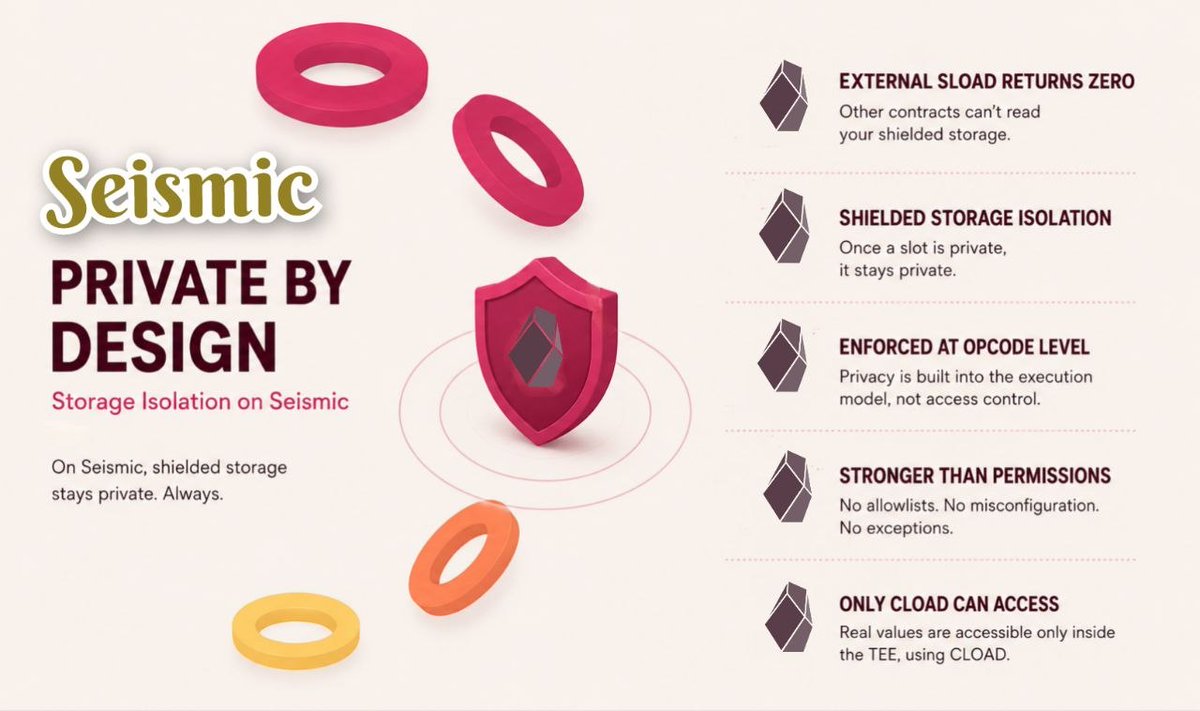
𝗢𝗻 𝗘𝘁𝗵𝗲𝗿𝗲𝘂𝗺, 𝗮𝗻𝘆 𝗰𝗼𝗻𝘁𝗿𝗮𝗰𝘁 𝗰𝗮𝗻 𝗿𝗲𝗮𝗱 𝗮𝗻𝘆 𝗼𝘁𝗵𝗲𝗿 𝗰𝗼𝗻𝘁𝗿𝗮𝗰𝘁'𝘀 𝘀𝘁𝗼𝗿𝗮𝗴𝗲.
Call SLOAD. Pass the slot number. Done.
On Seismic, that stops working the moment a slot is shielded.
𝙒𝙝𝙮 𝙩𝙝𝙞𝙨 𝙢𝙖𝙩𝙩𝙚𝙧𝙨 𝙢𝙤𝙧𝙚 𝙩𝙝𝙖𝙣 𝙞𝙩 𝙨𝙤𝙪𝙣𝙙𝙨:
Imagine you build a private lending protocol. User balances stored as suint256. Fully shielded.
Now imagine another contract built by anyone calls SLOAD on your storage slot.
On Ethereum? It reads the balance. Every time.
On Seismic? It gets zero. The flag is there. The isolation holds. Doesn't matter who's asking.
𝙃𝙤𝙬 𝙩𝙝𝙚 𝙞𝙨𝙤𝙡𝙖𝙩𝙞𝙤𝙣 𝙢𝙤𝙙𝙚𝙡 𝙬𝙤𝙧𝙠𝙨:
When CSTORE writes a value, it sets (is_private = true) on that slot.
That flag doesn't care about the caller. It doesn't check if the requester is a trusted contract or a malicious one. It doesn't negotiate.
SLOAD from any external contract hits that flag and returns zero. Always.
Only CLOAD running inside the same contract, inside the TEE can access the real value. The isolation is at the opcode level, not the access control level.
𝙒𝙝𝙮 𝙤𝙥𝙘𝙤𝙙𝙚-𝙡𝙚𝙫𝙚𝙡 𝙞𝙨𝙤𝙡𝙖𝙩𝙞𝙤𝙣 𝙞𝙨 𝙨𝙩𝙧𝙤𝙣𝙜𝙚𝙧:
Access control can be misconfigured. Permissions can have bugs. Allowlists can be bypassed.
An opcode doesn't have those problems. It either returns zero or it doesn't. No configuration. No edge cases. No exceptions.
Private storage on Seismic is not protected by rules.
It's protected by the execution model itself.
@SeismicSys
Check here more details: docs.seismic.systems
1
7
24


Jun 15
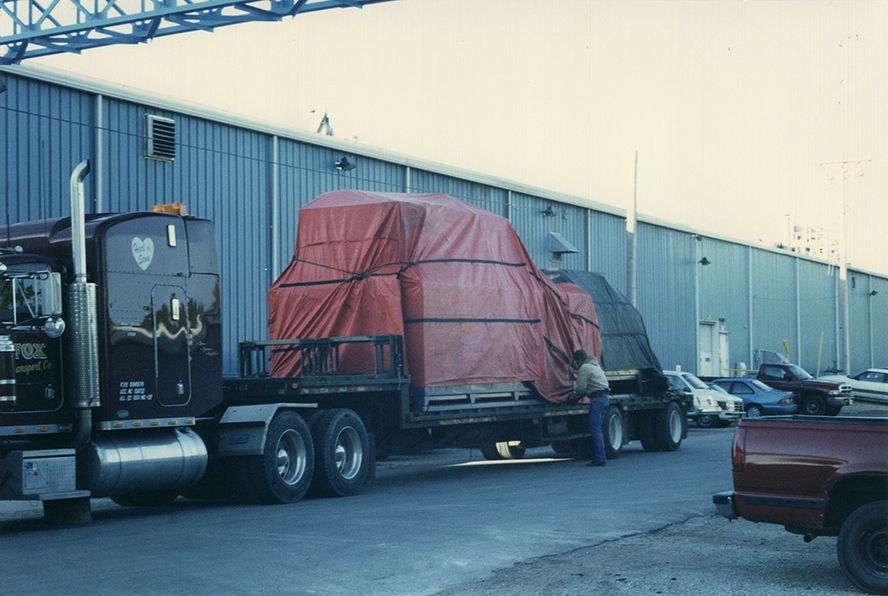
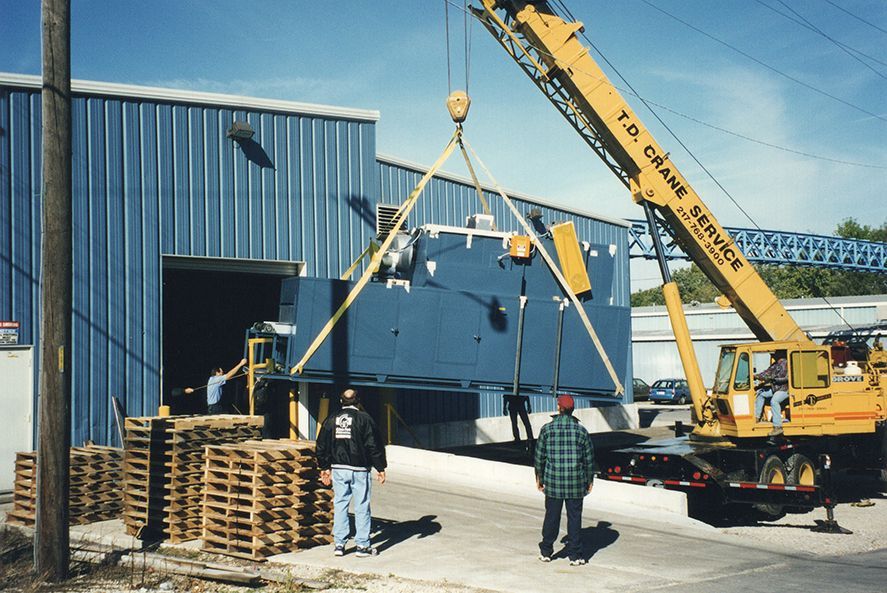
Cim-Tek Filtration 70th Anniversary Look Back - Vintage photos capturing a new equipment delivery to our manufacturing facility in Bement.
Archive Photos.
#CimTek #CimTekFilters #70thAnniversary #70YearsStrong #QualityProducts #Dependable #MadeInUSA #PetroleumEquipment #cstore

38



Jun 14
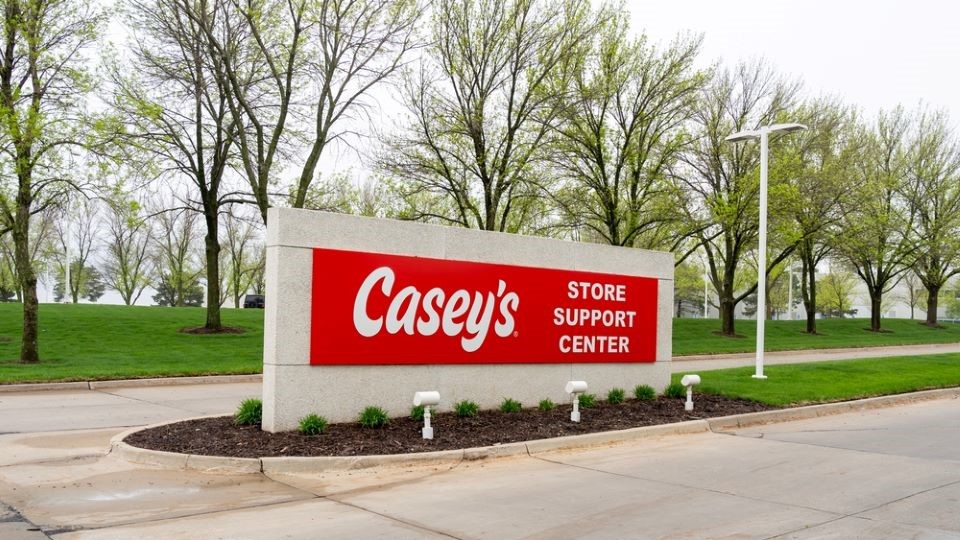
Casey’s convenience store chain saw net income rise 65.5% year over year during its Q4 to reach $162.7M, while inside same-store sales rose 5.5% YoY during the same period: progressivegrocer.com/caseys…
#caseys #cstore
2
205

Jun 13
Take That Pizza Hut and Papa John’s: Why Little Caesars Is Winning the New Price-Value-Service Pizza War #Pizza #Takeout #FoodDelivery #PizzaPricing #Grocerant #Restaurant #CStore #Deli #PizzaHut grocerants.blogspot.com/2026…
88
Jun 13
Better-For-You Food Is No Longer a Niche: Who’s Winning and Who’s Losing in 2026 #Restaurants #Grocerant #Foodservice #CStore #Grocery #Coffee #Delivery #Takeout #Food #FoodMarketing grocerants.blogspot.com/2026…

48

Jun 13
Every foot of a convenience store has to earn its keep.
If a display isn’t selling, it may be blocking better shelf space for snacks, grocery, auto products, and impulse sales.
Better layout. Better sales. Better profit per square foot.
#cstore #convenientstore #gasstation #retailproblems #storemanagement
1
1
62
Jun 13
Popular c-store operator Buc-ee's is continuing its expansion efforts with the debut of its 1st travel center in Arizona on June 22: progressivegrocer.com/buc-ee…
#bucees #cstore #arizona
1
151

281 Cstore... At Palihan Hermosa Bataan, 🇵🇭
Happy BIRTHDAY TO.........
(WE ACCEPT PRE ORDERS AND PICK UP) might be posting those later...
Anyway, SEAfoods galore
So as C foods....
Thanking God I made it last year, and hoping so on....
Thank you so much 🙏
1
38


Jun 11
Private label can grow margins. But store-level MOQs, limited storage, and distribution issues can kill momentum fast.
GPOPlus helps make private label practical.
Learn more: gpoplus.com/retailers/
#PrivateLabel #ConvenienceRetail #RetailOperations #SupplyChain #CStore
54
Jun 11
How does this store owner save 40 hours a month?
Most stores lose dozens of management hours every month to invoice entry alone.
Take a photo, let every line item flow into the system automatically, and those hours go back to the work that actually moves the business: inventory, merchandising, shrink, and store standards.
#cstore #convenientstore #gasstation #retailproblems #storemanagement
1
13

Jun 11
.@meow tapped Seismic to power its stablecoin accounts and stablecoin payments.
A business banking platform chose to build core financial infrastructure on a privacy-first L1. Here's what that actually means
🧵
Meow is a business banking platform, checking, corporate cards, global payments, treasury, and invoicing all in one dashboard.
The whole thing is built around keeping costs low and passing savings back to businesses. Simple, no-frills infrastructure for companies that just need it to work.
---
Adding stablecoin accounts and payments to that stack means transaction data lives on-chain.
For a business banking platform, that's a real problem. Payroll, vendor payments, treasury balances, account activity,that's sensitive financial data sitting on a public ledger anyone can read.
---
@SeismicSys handles this at the protocol level.
Calldata is encrypted before it leaves the user's machine. The encryption uses ECDH key agreement between the user's private key and the network's TEE public key,the plaintext never touches the mempool.
---
On-chain storage is shielded at the opcode level.
Private variables write via CSTORE and read via CLOAD. Query a shielded slot through standard RPC and you get zero back, it looks like uninitialized storage to anyone watching.
---
The nodes run inside Intel TDX Trusted Execution Environments.
The host OS, the hypervisor, the node operator, none of them can read what's being processed. Encryption keys are generated inside the TEE at genesis and never leave it.
---
Meow needed stablecoin infrastructure that could handle real business financial data with real privacy requirements.
Building on Seismic means account balances and payment flows are private by default, enforced at the protocol level, not patched on top.
---
Seismic is backed by a16z with $17M raised, and fintech companies are already building core products on it.
The privacy layer for onchain finance is taking shape.
@xealistt @NoxxW3
3
52