

Merci Didier 🙏 Mon Dieu que j'ai honte ! que j'ai mal pour mon grand père résistant dans le SO, chef de maquis, assassiné par un collabo et pour ma famille maternelle défunte résistante de la 1ere heure ... que j'ai mal 😑
diiegoo retweeted

Jun 13
Kenia Os junto a El Chef en Proceso.
20
481
4,979
40,252

Mar retweeted

Sabra charlotte que MAMA SOL es chef? Unas ganas q se lo diga en la cara y q sol la deje regulando #GranHermano #Solzia

Estaba Charlotte y Cola en otra cámara criticando a Sol por decir que quiere
entrar máster chef, le dicen “merenguita”.
No me esta gustando que le juegue tan falso por la espalda. #granhermano
1
1
6
413
Earl Chamignon 🇫🇷 🇺🇦 🇮🇱 retweeted

C'est aussi, alors que tu es un chef d'entreprise, maîtrisant des techniques complexes et ne comptant pas tes heures qu'il faudrait te faire l'aumône d'un "revenu digne".
↩️

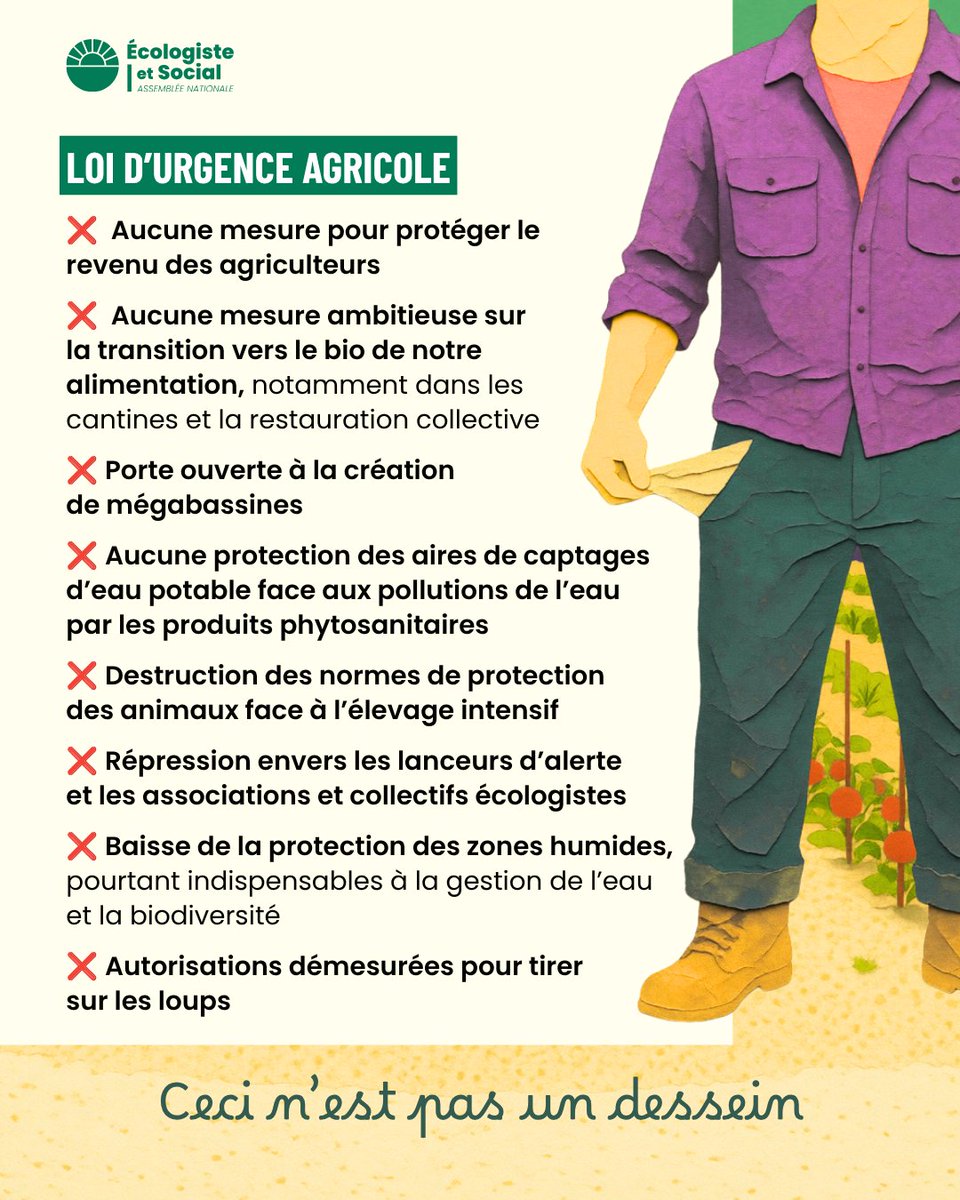
❗️ La loi d'urgence agricole a été adoptée hier à l'Assemblée nationale.
Présenté comme une réponse à la crise agricole, ce texte ne répond pas aux vraies urgences des agriculteurs, à commencer par la garantie d’un revenu digne.
Ceci n'est pas un dessein. Explications ⤵️
1
7
52
1,529
Mar retweeted

Estaba Charlotte y Cola en otra cámara criticando a Sol por decir que quiere
entrar máster chef, le dicen “merenguita”.
No me esta gustando que le juegue tan falso por la espalda. #granhermano
2
12
736
Exclusivemedia retweeted

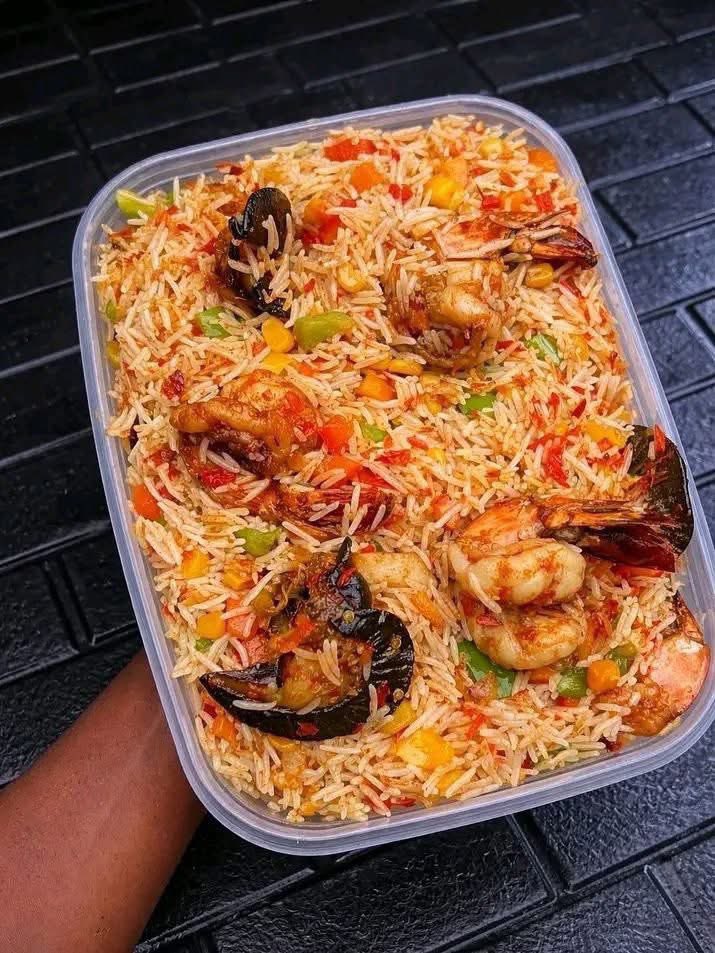
You go like be my private chef ?

1
3
3
23
༺★✨LuLu’s Paradise✨★༻ 🧁 BDAY MAY 14th retweeted

Apr 17
All you can eat buffet 🍽️
Don’t forget to give your compliments to the chef!!
188
820
8,620
128,200

Setidaknya kalo gw jd chef, ga akan tolol bawa2 pisau masuk transportasi umum dengan screening ketat, mending gw sewa mobil sama supir nganter gw ke markas tim inggris,
KALAU SEBEGITU PENTINGNYA PISAU DI MASAKAN INGGRIS 🤣
kalau masakan Cina, Jepang, thailand sih gw paham
5


Indian Recruitment Office
Electrician🔹
Chef
Cock
Aluminium fabricator
Ac Technician
HVAC Technician
Auto electritian💠
Denter
Computer Operator
Tailor
Carpenter.
Drivers
Welder
Plumber
Gypsum.
Labour
Helper💠
(Duration of arrival just 20 days)
wa.me/ 919116207245


⠀
⠀⠀⠀( after hesitating , he reaches to put it in his mouth weakly . but he drops it . the life quickly is fading from his eyes as his blood puddles beneath him. he's soon bathing in a puddle of his own blood. staining his face, chef jacket and blonde hair . )
⠀

“Your arm will be returned.”
1
2

81
191
5,603
VANESSA retweeted

13h
This pet dragon should also cook before eating it’s an official head chef 🧑🍳 😱
Jun 13

Let’s see what your gallery holds for whole week
130
76
268
387,575




MYO@MYOن retweeted

Arras: l’ancien #greffier en chef du tribunal sera jugé pour agressions sexuelles
👉lavoixdunord.fr/art/region/a…
1
5
2
89
Prime Number retweeted

While most people know the delightful baseline story that Mysore Pak was created in the 1930s by the royal chef Kakasura Madappa for Maharaja Krishnaraja Wadiyar IV... the deeper culinary science, the etymology & the ancient textual connections to this legendary sweet run far deeper.
When we strip away the modern commercial adaptations & look at the traditional, porous version (Gulla/hard Mysore Pak), we find a marvel of indigenous food science & a lineage connected to ancient Indian culinary treatises.
Here is the deeper, lesser-known & deeply fascinating history behind the "King of Sweets."
Before diving into its true roots, we must 1st put to rest a bizarre, revisionist claim floating around armchair food circles: the myth that Mysore Pak is somehow a Mughal/Afghan imperial import derived from a sweet called Monsur. This is a classic case of backwards historical gymnastics. While Eastern India does have a look-alike confection, the actual chemistry of flash-frying pulse flours inside high-temperature sugar-fat solutions is a native Sūpa-Śāstra (legume cookery) tech that predates Islamic entry into the subcontinent by centuries.
To attribute a dessert born out of Southern India’s rigorous temple-palace culinary lineage to Delhi’s imperial courts entirely ignores the indigenous thermodynamic evolution of South Indian sweet-making :))
Many assume "Pak" is just a shorthand/a corruption of the word pack (as in a packed block). It is not. The word is deeply rooted in ancient Sanskrit culinary texts:
- In ancient Indian texts like the Nala Pākaśāstra (attributed to King Nala, considered the 1st master chef of Indian lore) & the Kshemakutuhala (a 16th-century culinary text), Pāka means the precise science of cooking, boiling/reduction. Specifically, it refers to the art of creating sugar syrup (Sharkara Pāka).
- Ancient Indian confectioners classified sugar syrup into highly precise structural phases based on its viscosity (similar to modern candy-making stages like soft ball/hard crack). To make a perfect Mysore Pak, the chef had to catch the Pāka at an exacting string consistency. The name is literally a tribute to the ancient Indian science of sugar mastery.
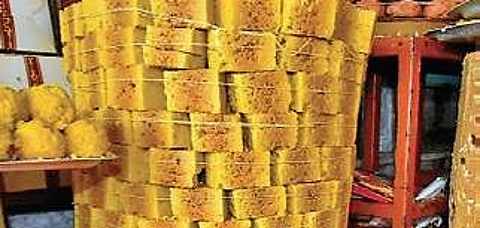
The classic, traditional Mysore Pak is not the smooth, soft, wet-ghee blocks popular today. It is rigid, highly porous, pale on the outside & a deep, caramelized brown at the center. The physics behind those holes is incredible.
When Kakasura Madappa 1st rushed to create this dessert because he lacked a sweet dish for the King's royal platter, he accidentally triggered a violent thermodynamic reaction: He took roasted chickpea flour (Besan) & added it to boiling sugar syrup, then poured ladle after ladle of smoking hot, bubbling ghee into the mixture.
Because the ghee was hotter than the boiling point of the water trapped in the sugar syrup, the moisture instantaneously vaporized into steam. As the steam desperately tried to escape the thickening, cooling gram flour matrix, it carved out micro-tunnels.
As it cooled, these tunnels solidified, creating a light, aerated, honeycomb structure. When we bite into a traditional Mysore Pak, it crumbles effortlessly because we are literally chewing through captured pockets of historical steam.
If we cut open a flawlessly executed, authentic Mysore Pak, it features a distinct dark-brown core wrapped in a golden-yellow outer crust. This is not from using 2 different batters; it is a manifestation of delayed heat retention: When the boiling mixture is poured into a deep wooden/metal tray to set, the outer layers cool down rapidly upon contact with the air & the tray walls, locking in the yellow color of the gram flour. However, the center remains incredibly hot, insulated by the outer crust.
The trapped heat continues to gently bake & caramelize the sugar & proteins (Maillard reaction) at the core long after it has been poured. Achieving this dual-color core w/o burning the sweet is the ultimate test of an expert cook's intuition.
A few people associate Mysore Pak with Tamil Nadu is because of Coimbatore.
The traditional, original Mysore Pak from the Amba Vilas Palace is hard, porous, crumbly & pale yellow-brown with a honeycomb structure inside. It requires heavy biting.
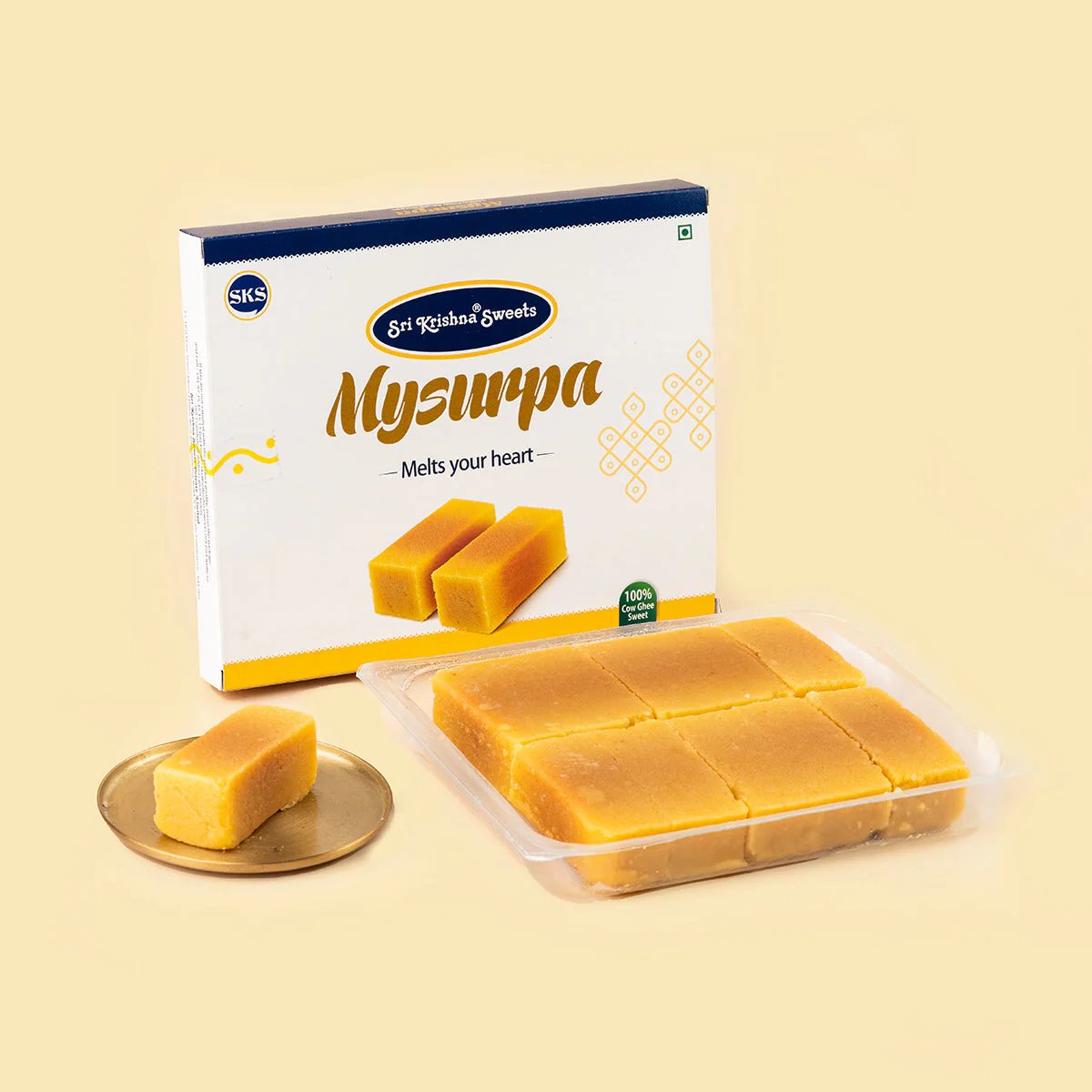
However, in 1948, a sweet-maker named N.K. Mahadeva Iyer in Coimbatore, Tamil Nadu, started a shop called Sri Krishna Sweets. He spent yrs experimenting to alter the thermodynamics of the traditional recipe. He dramatically increased the ratio of ghee, changed the heating timing & essentially invented the ultra-soft, silky, melt in the mouth version that we know today, rebranding it as Mysurpa.
Sri Krishna Sweets marketed this version so brilliantly across the globe that for 2 generations of people (especially outside South India), the silky, smooth, ghee-dripping block became the default definition of the sweet.
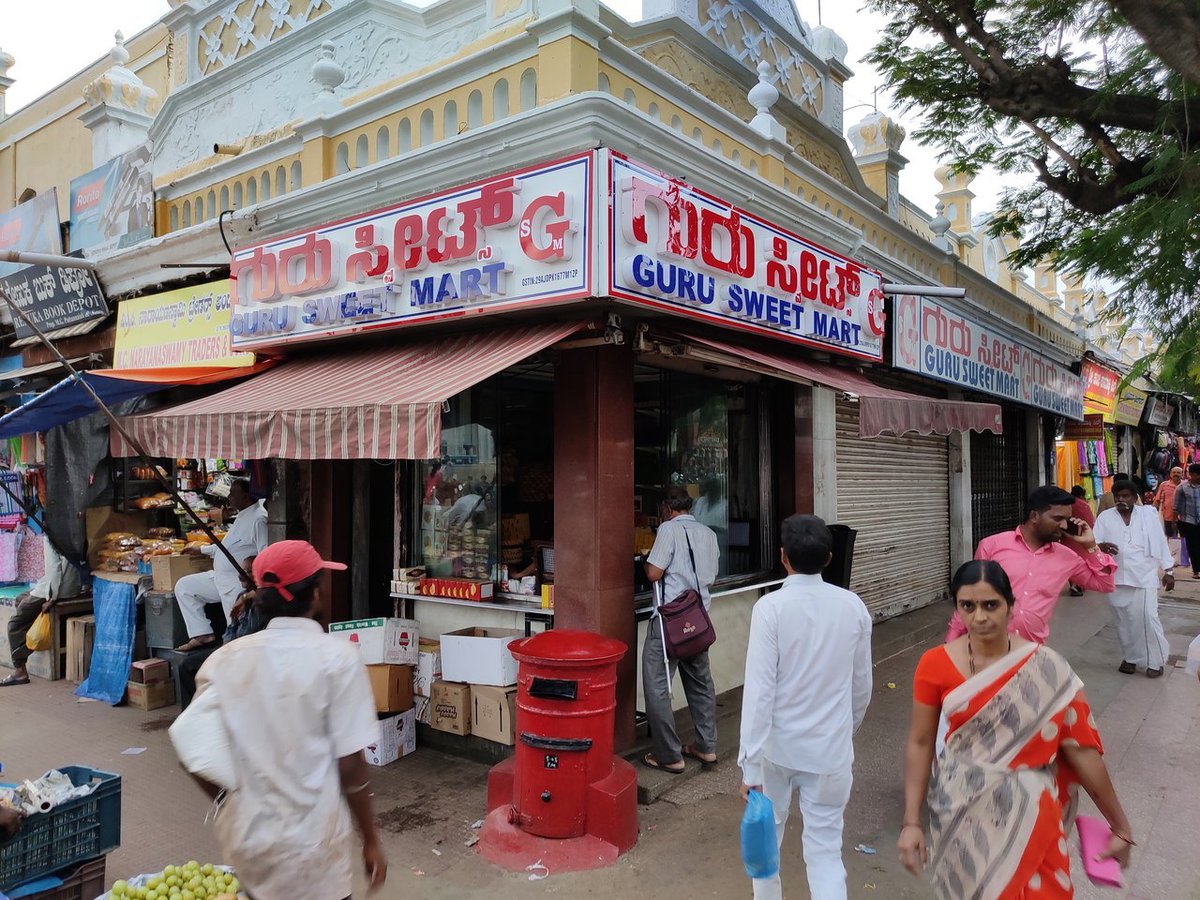
Geographically, historically & legally, the sweet belongs 100% to Mysuru, Karnataka. The descendants of the original palace chef, Kakasura Madappa, still run Guru Sweet Mart on Sayyaji Rao Road in Mysuru, selling the authentic, porous, crumbly king of sweets.
Tamil Nadu did not invent the sweet, but its brilliant culinary entrepreneurs re-engineered the texture & popularized a soft variety that conquered the modern sweet market. It is a classic case of Karnataka inventing the tech & Tamil Nadu shipping a highly successful software update.
21
75
254
5,536
