

Google has ordered more than three million specialized AI chips from Intel for 2028 deployment after testing their manufacturing technology. This strategic move aims to diversify compute infrastructure and scale internal AI development capabilities.
Neutral Insight:
The significant volume of the order suggests cloud providers are intensifying their vertically integrated hardware strategies. Diversifying away from dominant suppliers helps manage supply chain risks while supporting long term capacity for frontier models.
Reference: bloomberg.com
#skyventurelabs #nexawork #AI #Semiconductors #Google #Intel #TechNews #CloudCompute
8

Jun 12
Google's betting big on Virginia's AI workforce and energy infrastructure.
The real play here isn't philanthropy, it's securing the physical and human capital needed to run massive compute clusters at scale. Energy is the new moat. Who builds the grid wins the AI race.
blog.google/innovation-and-a…
#AIInfrastructure #GenAI #CloudCompute
7

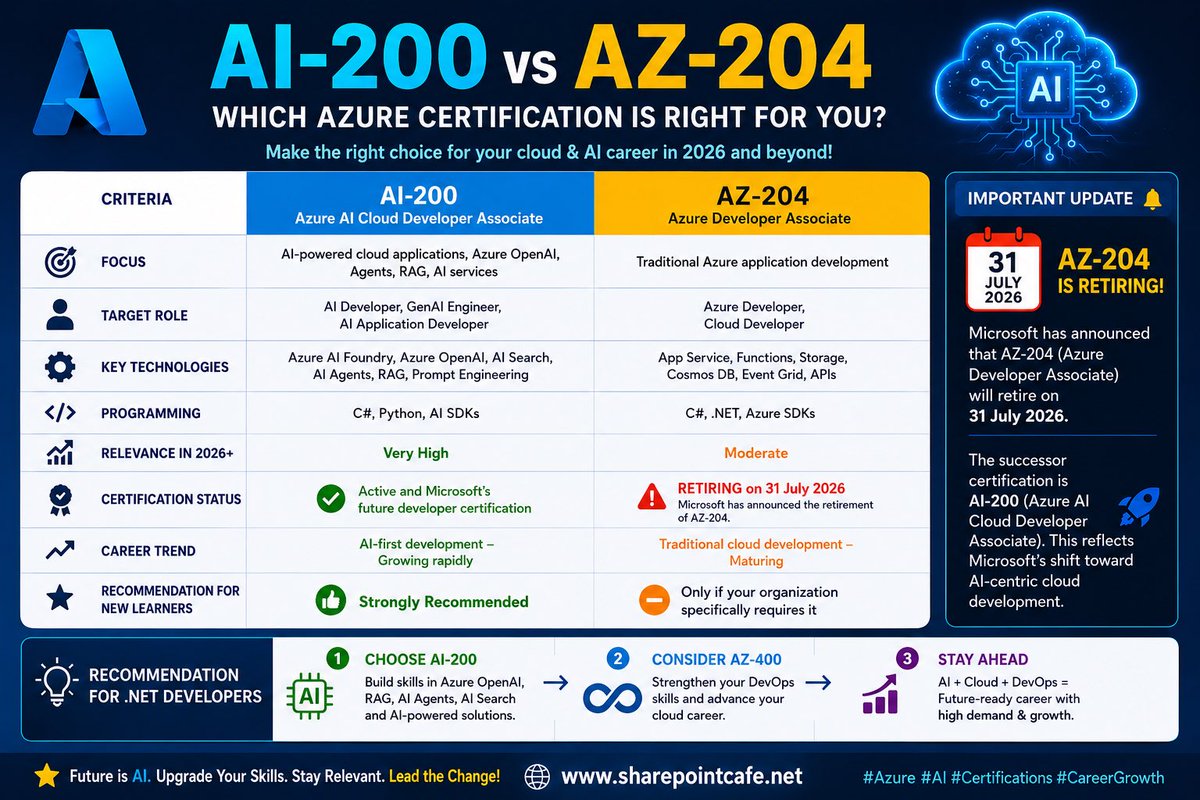
AZ-204 is retiring. Are you preparing for the right Azure certification in 2026?
🔗 sharepointcafe.net
💬 Which certification would you choose today: AI-200 or AZ-204?
#Azure #MicrosoftAzure #AI200 #AZ204 #AzureAI #GenerativeAI #OpenAI #DotNet #CSharp #CloudCompute
21

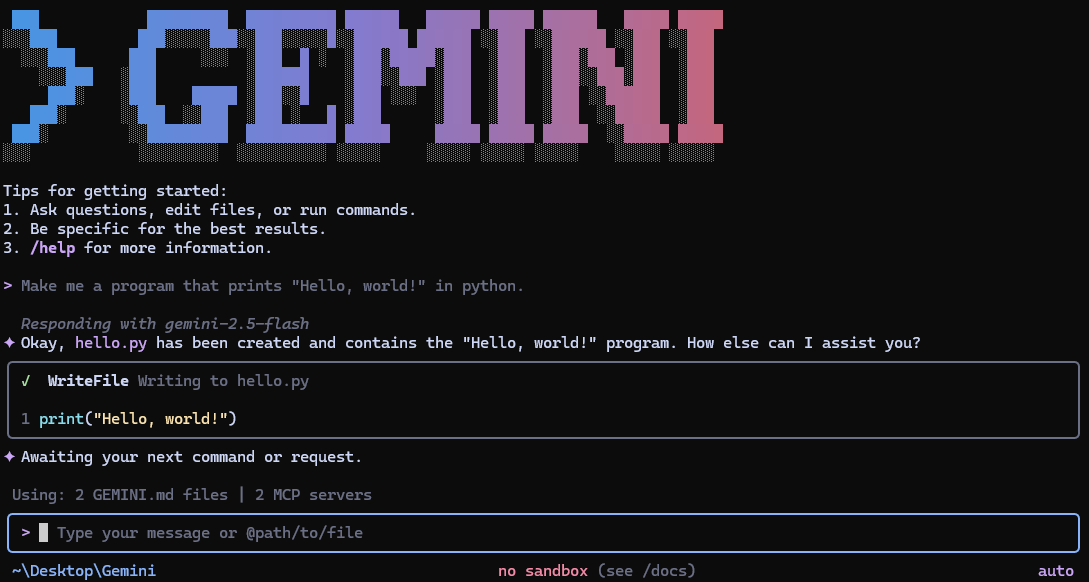
Google triples developer compute allocations for the new Antigravity CLI after an unannounced usage limit triggered instant throttling bugs and mass outcry.
#AntigravityCLI #GeminiAI #GoogleIO2026 #DevTools #MLOps #SoftwareEngineering #CloudCompute
securityonline.info/google-a…
1
4
541

The future of data without centralized compute #DataFederation #BigData #CloudCompute
youtube.com/shorts/qKw9mQA_B… @instruxi

1
2
4
82

May 18
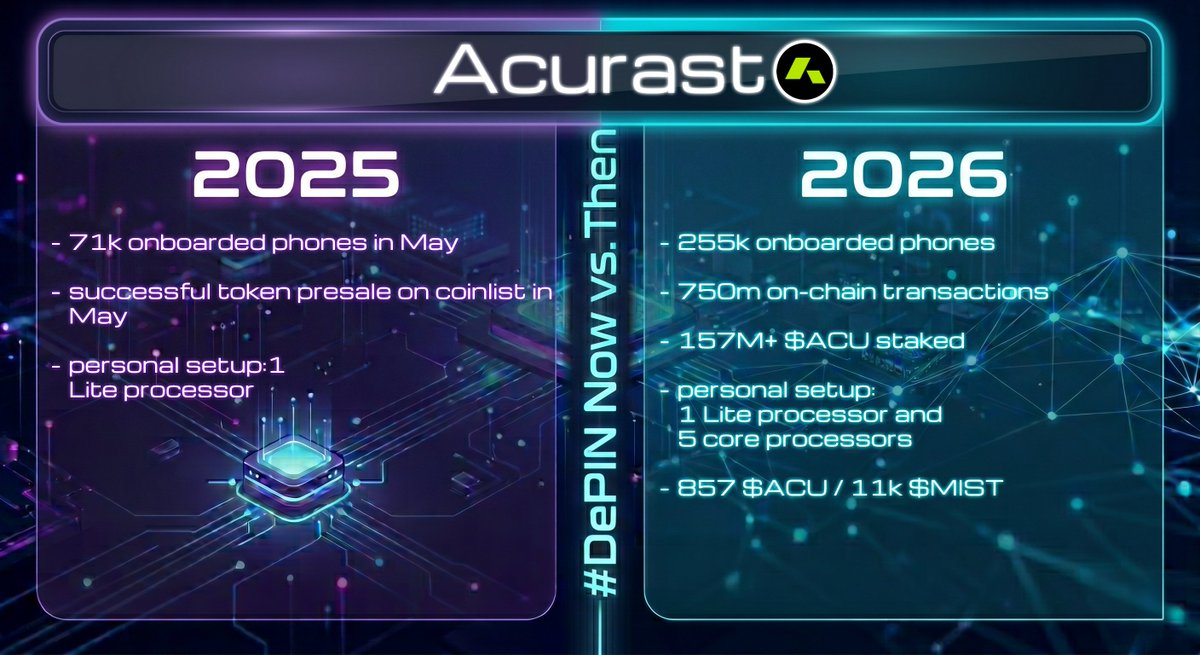
#DePIN Now vs. Then – Part 2: @Acurast
Time for the next breakdown of how key DePIN projects evolved over the past year. Today: Acurast. Turning old smartphones into distributed, institutional-grade compute infrastructure.
I got hooked on the idea of monetizing my old devices instead of letting them gather dust, largely inspired by insights from @0xEl9ar9ni.
Here is my personal journey alongside Acurast’s massive network evolution.
THEN (Mid 2025):
→ In June 2025, I onboarded my very first device as a Lite Processor. By October, I upgraded and added my first Core Processor.
→ The primary focus back then was building momentum: CoinList held the $ACU Token Presale in May 2025, laying the groundwork for what was to come.
→ The network was a rapidly growing fleet of distributed mobile devices, showing the world that you don't need expensive data centers to provide serverless, trustless computation.
It was the ultimate proof-of-concept for mobile DePIN.
NOW (May 2026):
→ My personal setup has scaled significantly: I’m now running 1 Lite Processor alongside 5 Android devices acting as Core Processors. My current balance sits at 857.15 $ACU and 11,128 $MIST.
→ The network stats have gone absolutely nuclear: Acurast has scaled to 255,000 phones distributed across 175 countries.
→ Following the official TGE on January 20, 2026, the economic layer is thriving with over 157,000,000 $ACU already staked to secure the network.
→ Activity is skyrocketing: The protocol clocked an incredible 750,000,000 on-chain transactions as of late April 2026.
Conclusion:
Acurast has successfully transitioned from an ambitious alternative for cloud computing into a battle-tested, hyper-scaled DePIN giant. Watching an old phone in your drawer become part of a network processing hundreds of millions of global transactions is exactly why DePIN is the future.
The transformation over the last 12 months is unreal.
Part 3 soon.
#DePIN #Acurast #CloudCompute #Web3 @peaq
1
1
17
903

May 16
Over 600 nodes active and deployed! Are you in or still sidelined? 🔥✍️
Activate now at - Compute.TokenOS.ai
#Datacenters #yield #cloudcompute #sol #Usdc #usdt #nodes #Tos

2
3
9
599

Apr 22
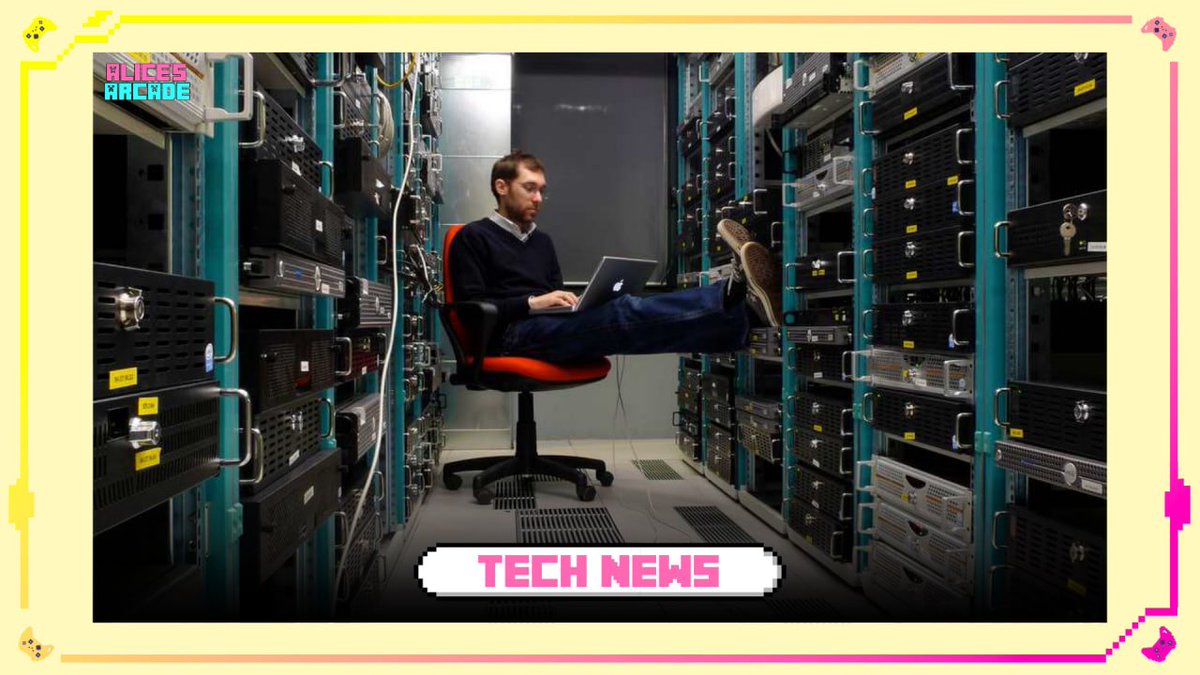
💸 ผลวิจัยเผยบริษัททั่วโลกซื้อ GPU มานั่งตบยุงถึง 95%!
#เด็กแว้นหมู่บ้านอลิซคริปโต พามาดูรายงานล่าสุดจาก Cast AI ปี 2026 บอกว่าบริษัทใหญ่ๆ ทั่วโลกแห่ทุ่มเงินซื้อการ์ดจอเทพๆ (GPU) มาอัปแรง แต่ดันใช้งานจริงเฉลี่ยแค่ 5% เท่านั้น
📊 ข้อมูลที่น่าสนใจ
- ซื้อเผื่อแต่ไม่ได้ใช้: บริษัทส่วนใหญ่จ่ายเงินซื้อ GPU เกินความจำเป็นไปถึง 20 เท่า เมื่อเทียบกับงานที่ทำจริง แถมสถิติการใช้ CPU และ RAM ก็ดิ่งลงเรื่อยๆ เพราะบริหารจัดการไม่ถูก
- ค่าเช่าพุ่งสวนทาง: ปกติของไอทียิ่งนานยิ่งถูก แต่รอบนี้ AWS เพิ่งขึ้นราคา H200 ไป 15% เพราะของขาดตลาด ยิ่งจอดทิ้งไว้เฉยๆ ยิ่งขาดทุน เพราะค่าเช่า GPU มันแพงกว่า CPU หลายเท่าตัว
- อาการ FOMO ทำพิษ: สาเหตุที่แห่ซื้อมาตุนเพราะกลัวของหมดครับ (Lead time รอของนานถึง 1 ปี!) เลยต้องเซ็นสัญญาจองยาวๆ ไว้ก่อนจนกลายเป็นความสูญเสียมหาศาล
- ทางรอดคือออโต้: บริษัทที่ใช้คุ้ม (Utilization เกือบ 50%) คือพวกที่ใช้ระบบ Automation คอยปรับจูนทรัพยากรให้พอดีกับงานตลอดเวลา ไม่ใช่แค่ตั้งค่าทิ้งไว้ครั้งเดียวแล้วจบ
รายงานโดย #เด็กแว้นหมู่บ้านอลิซคริปโต 😉
#GPU #AIInfrastructure #CastAI #CloudCompute #AWS #H200 #Nvidia #ข่าวIT2026
7
343


We built Zerve to be serverless by default. Fast scaling, no babysitting. But for development, sometimes you want persistent compute for a tighter loop.
In Zerve you can:
→ Run fully serverless when you want scale
→ Use persistent compute for development
→ Switch compute for a project in seconds
→ Target specific compute per cell
→ Give deployments their own compute profiles
Best of both worlds.
#Serverless #CloudCompute #DataScience
1
9
153

I’ve been heads-down on Shardy with @iampublion for the past month.
We’re building a decentralized cloud network that turns any browser tab into an active node for complex compute.
It’s DePIN, accessible to everyone in a single click. 🧵👇
#DePIN #CloudCompute #BuildInPublic
1
4
49

Mar 17
🌐✨
What if Seismic’s real competition isn’t a blockchain? 🤔
Not Ethereum.
Not Solana.
Not the next hyped L1 on the launchpad.
What if it’s AWS? ☁️
Bear with me for a second 👀
Most chains compete in crypto world.
Faster TPS than this chain.
Cheaper fees than that chain.
Better dev tools than the other chain.
Same game. Different players.
But if Seismic actually becomes
a genuinely deterministic execution environment…
The comparison changes entirely 🔄
Developers stop asking
“which chain should I deploy on?”
And start asking
“should I run this on Seismic
or just spin up a backend server?” 🖥️
That’s a completely different conversation.
That’s infrastructure competition.
Cloud compute is predictable 🏭
Backend servers are reliable.
AWS doesn’t surprise you with random execution behavior.
That’s why serious systems trust them.
That’s why trillion dollar companies run on them.
For Seismic to compete in that arena
it has to offer something cloud can’t 💡
Decentralization.
Trustlessness.
On-chain composability.
With execution quality that matches
what traditional infra already delivers.
That’s the actual pitch 🎯
Not “we’re the best blockchain.”
“We’re reliable enough to replace
the backend you were going to build anyway.”
If that lands?
Seismic isn’t competing for crypto market share anymore 🏆
It’s competing for the entire
infrastructure layer of the internet 🌐
That’s not a blockchain story.
That’s a much bigger story 💅✨
💬 Hashtags
#Seismic #Blockchain #CloudCompute #AWS #Web3Infrastructure #Determinism #BuildDifferent #CryptoGirl #InfraCompetition #LongGame #FutureOfWeb3

1
6
65

AI is getting out of hand.🤖📽️
I only pasted Aethir’s website into Google NotebookLM, hit “generate a learning video” — and this came out. (After a couple of minutes!)
This is insane.
@MRRydon @AethirCloud
#aethir #cloudcompute #DePIN #GPU #web3
2
5
107

Mar 15
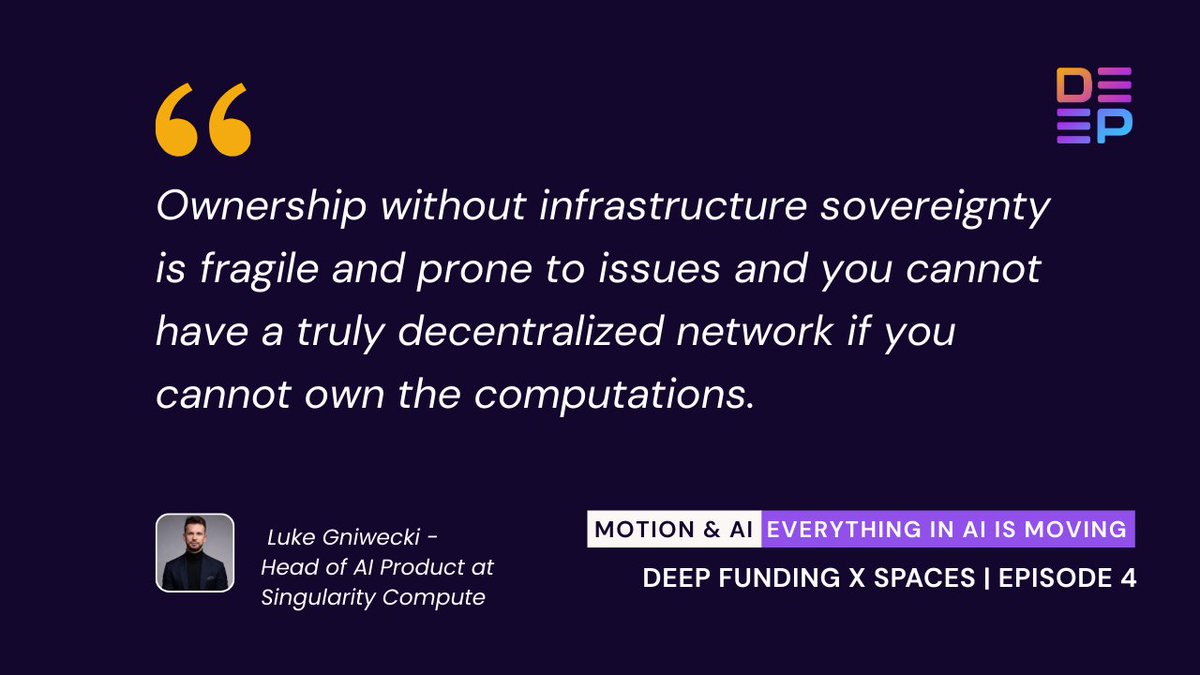
Everything in AI is moving, but is your infrastructure keeping up? 💨
In Episode 4 of #MotionAndAI, @metaverski (Head of AI Product at @SingularityNET Compute) explained why decentralizing the token is only half the battle. To have a truly decentralized network, you must own the computations.
🎁 LISTENER GIFT: As promised during the session, we’re giving away $20 in inference credits! Experience the power and sovereignty of @ASI_Alliance : Cloud firsthand.
👇 Claim your credits & start building: docs.google.com/forms/d/e/1F…
#AGI #DecentralizedAI #Web3 #CloudCompute #DeepFunding @EkwereMariam
3
116

Mar 14
gpu pricing is one of the widest spreads in tech right now and most people dont even realize its a tradeable market.
the same H100 chip. AWS on-demand: $3-4/hr after a 44% price cut last june. spot/marketplace: $1.50-3/hr. reserved 1-3yr commitment: another 30% off that. range on a single SKU is easily 3-4x depending on contract structure.
and thats just the hyperscalers. specialist clouds like CoreWeave, Lambda, RunPod are undercutting on per-GPU rates. google TPU v6 pods are running 56% cheaper TCO than equivalent H100 clusters over a 3yr horizon. AWS is pushing Trainium2 at 25% the cost of nvidia equivalents.
then theres the decentralized layer. Render, Akash, io.net... distributed GPU networks running 30-50% below centralized cloud. quality varies. latency is real. but the price signal is clear.
why this matters beyond just cost optimization:
hyperscalers are spending $335B this year on AI infra. $600B next year. that capex has to generate returns. which means pricing pressure only goes one direction as capacity comes online.
the GPU shortage narrative from 2023-2024 is inverting. supply is catching up. AWS cutting H100 prices 44% in a supply-constrained market tells you where the curve is headed.
for anyone building or investing in AI infrastructure: the sticker price is noise. the real cost structure lives in commitment length, spot utilization, and which chip architecture you actually need. most workloads dont need H100s. inference on smaller chips is where the margin game gets interesting.
this is a market with price discovery happening in real time. treat it like one.
#CloudCompute #GPUMarket
1
1
5
206
Mar 12
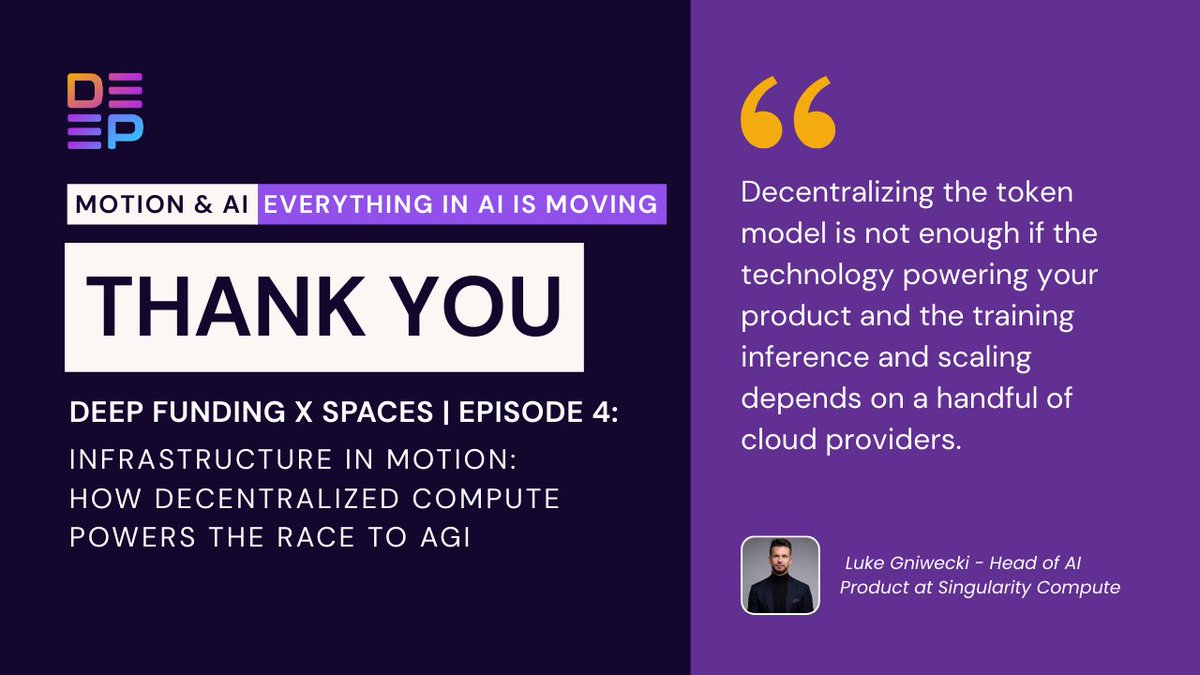
Everything in AI is moving.
In Episode 4 of #DeepProjects X Spaces, @metaverski (Head of AI @SingularityNET Compute) broke down why decentralizing the token isn't enough; we must decentralize the compute.
🎁 Lister Gift Alert: As promised, we’re giving away $20 in inference credits to help you experience the power of ASI: Cloud.
Don’t just watch the race to AGI, participate in it.
👇 Claim your $20 credits here: docs.google.com/forms/d/e/1F…
#AGI #DecentralizedAI #Web3 #CloudCompute
2
85


Mar 6
India currently operates on fewer than 60,000 GPUs nationwide. To lead the AI decade, that number needs to explode. Industry leaders like Blackstone expect India’s compute capacity to scale 30x to over 2 million GPUs in the coming years. The infrastructure race is officially on.
#CloudCompute #GPU #TechTrends #IndiaAI
@narendramodi @PMOIndia @AshwiniVaishnaw @JitinPrasada @GoI_MeitY @SecretaryMEITY @abhish18 @kavitabh @_DigitalIndia @mygovindia

3
7
39
1,616

(Spoiler: It's true). See the factors driving hyperscaler compute cost inflation – from opaque unit economics to forced bundling and economic lock-in – and why composable, predictable #CloudCompute is foundational to sustainable #EnterpriseAI. blogs.vultr.com/myth-special…

3
1
2
671