

17 Dec 2025
🔧 Sessions covered low-level and peephole optimizations, illustrating how backend compilers refine instruction selection, remove redundant loads/stores and unreachable code, and apply algebraic simplifications and strength reduction for faster machine code.
#CompilerOptimization
1
18

16 Dec 2025
Thrilled to see SlimeCompiler hit Zenodo today! 🚀 Hiroshi Sasaki's groundbreaking paper applies noncommutative ring theory to compilers—mapping instructions to ring elements & using commutators [A,B]=AB-BA to prove when ops commute (order-free for reordering/parallelization) vs. don't (flagging bugs & races).
Key wins: 1.5-3x speedups via algebraic guarantees. 50% fewer order bugs, 80% concurrency fixes. LLVM integration for real-world impact. Extends SlimeTree ecosystem: "When roles are marked, order is redundant."
Dive in: zenodo.org/records/17946400
#SlimeCompiler #CompilerOptimization #RingTheory #AI #LLVM #Parallelization
1
2
92
16 Dec 2025
SlimeCompilerがZenodoにアップ! 🚀 佐々木宏至の画期的な論文、非可換環理論をコンパイラに応用—命令を環要素にマッピングし、交換子[A,B]=AB-BAで演算が可換(順序無視で再配置/並列化可能)か非可換(バグ/レース検知)を証明。
主な成果: 代数的保証で1.5-3倍高速化。 順序バグ50%減、並行バグ80%削減。 LLVM統合で実世界インパクト。 SlimeTreeエコシステム拡張: 「役割がマークされれば、順序は冗長」。
詳細: zenodo.org/records/17946400
#SlimeCompiler #CompilerOptimization #RingTheory #AI #LLVM #Parallelization
1
5
130
13 Dec 2025
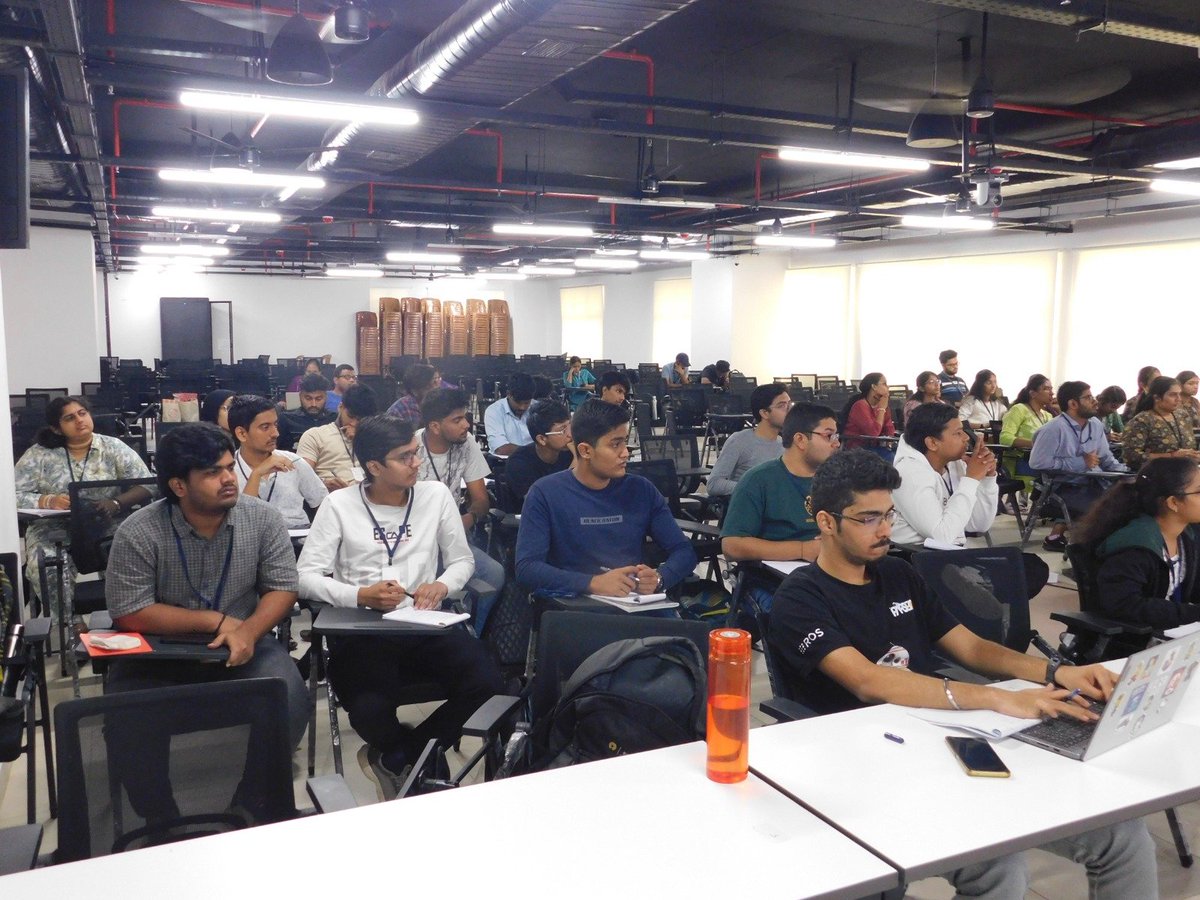
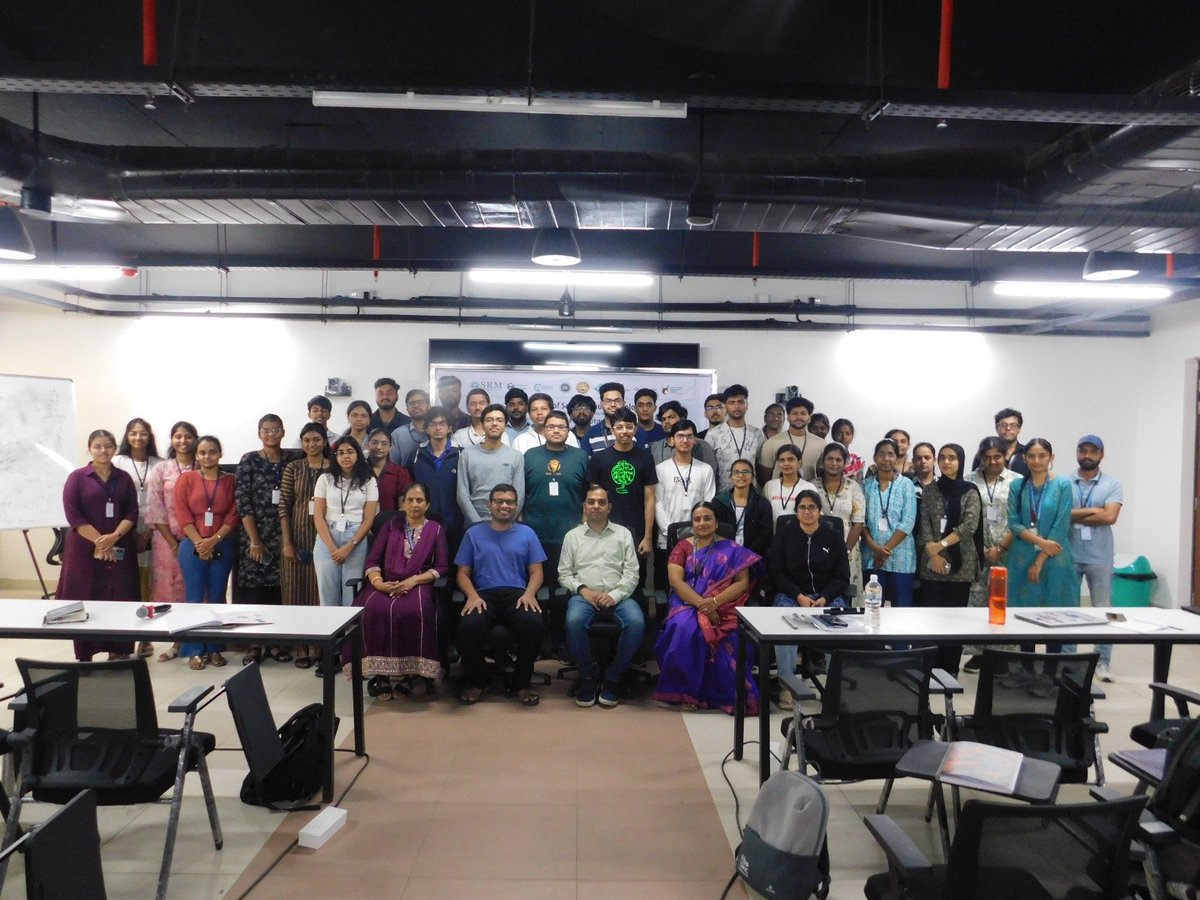
⚙️ The core session focused on SSAPRE (SSA-based Partial Redundancy Elimination), exploring RCVs, Φ-insertion, renaming, and analyses like down-safety & availability. Hands-on labs reinforced systematic elimination of redundant computations.
#CompilerOptimization #SSAPRE
26

19 Sep 2025
This research introduces Evolution of Kernels (EoK), a new way to automatically design efficient code for RISC-V chips using artificial intelligence. EoK learns from past successful code designs and uses this knowledge to create even better code. It was tested on 80 different coding challenges and showed impressive results compared to other methods. This could lead to faster and more powerful software running on RISC-V devices in the future. #RISCV #AI #CompilerOptimization
arxiv.org/abs/2509.14265
#ArtificialIntelligence
1
1
17

10 Sep 2025
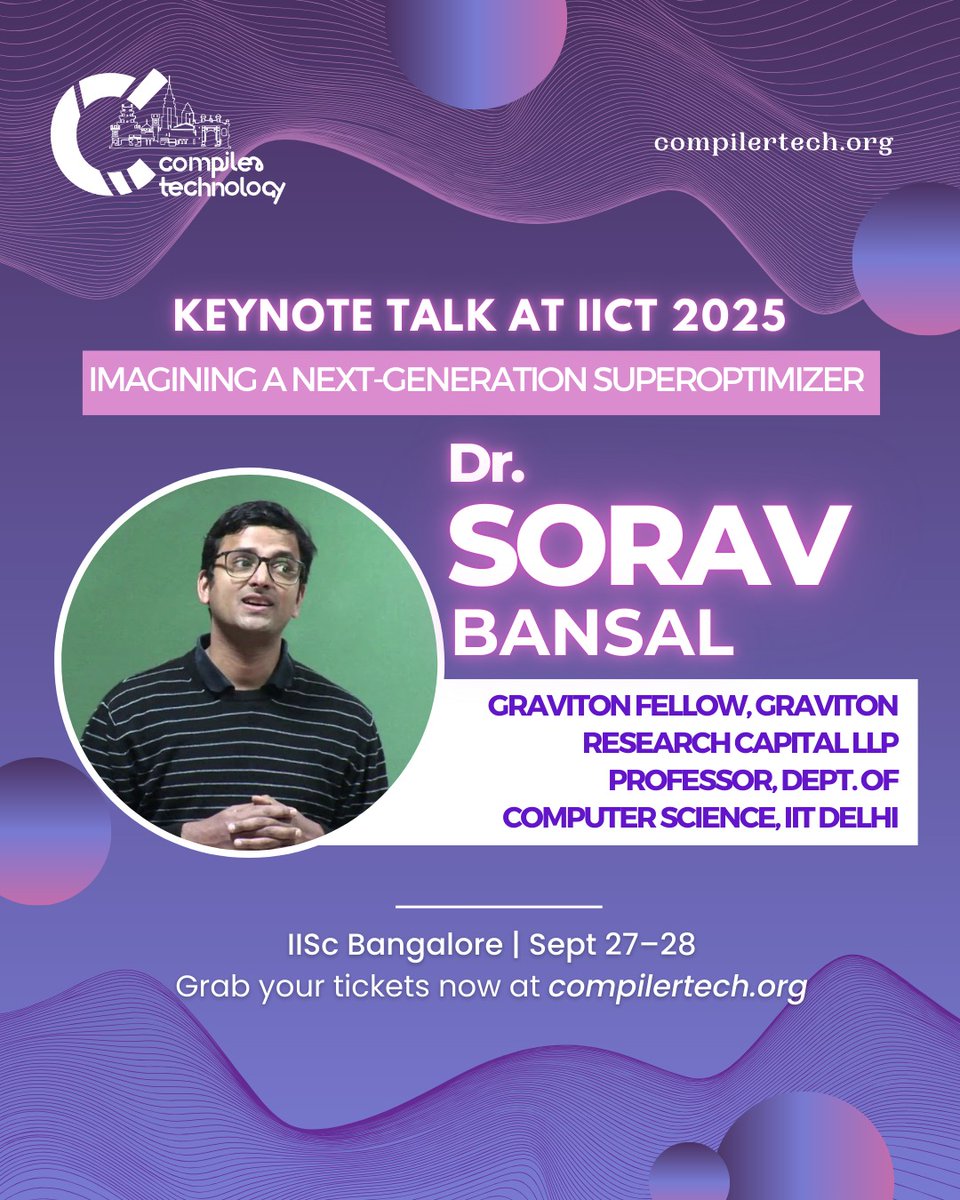
We are delighted to welcome Dr. Sorav Bansal — Graviton Fellow at Graviton Research Capital LLP and Professor at IIT Delhi — as a keynote speaker at IICT 2025.
His talk, 𝐈𝐦𝐚𝐠𝐢𝐧𝐢𝐧𝐠 𝐚 𝐍𝐞𝐱𝐭-𝐆𝐞𝐧𝐞𝐫𝐚𝐭𝐢𝐨𝐧 𝐒𝐮𝐩𝐞𝐫𝐨𝐩𝐭𝐢𝐦𝐢𝐳𝐞𝐫, will open new perspectives on the future of compiler optimization.
🔗 Learn more about Dr. Bansal’s work: sorav.compiler.ai
📍 Join us at IISc Bangalore | Sept 27–28, 2025
🌐 Event details: compilertech.org
#IICT2025 #KeynoteTalk #CompilerTech #IITDelhi #Superoptimization #CompilerOptimization #TechConference #ACMIndia #IIScBangalore
1
5
217

2 Aug 2025
Day 43:
Started working on optimizations. First up: constant folding – 3 5 becomes 8 at compile-time!
#CompilerOptimization
2
45
10 Jul 2025
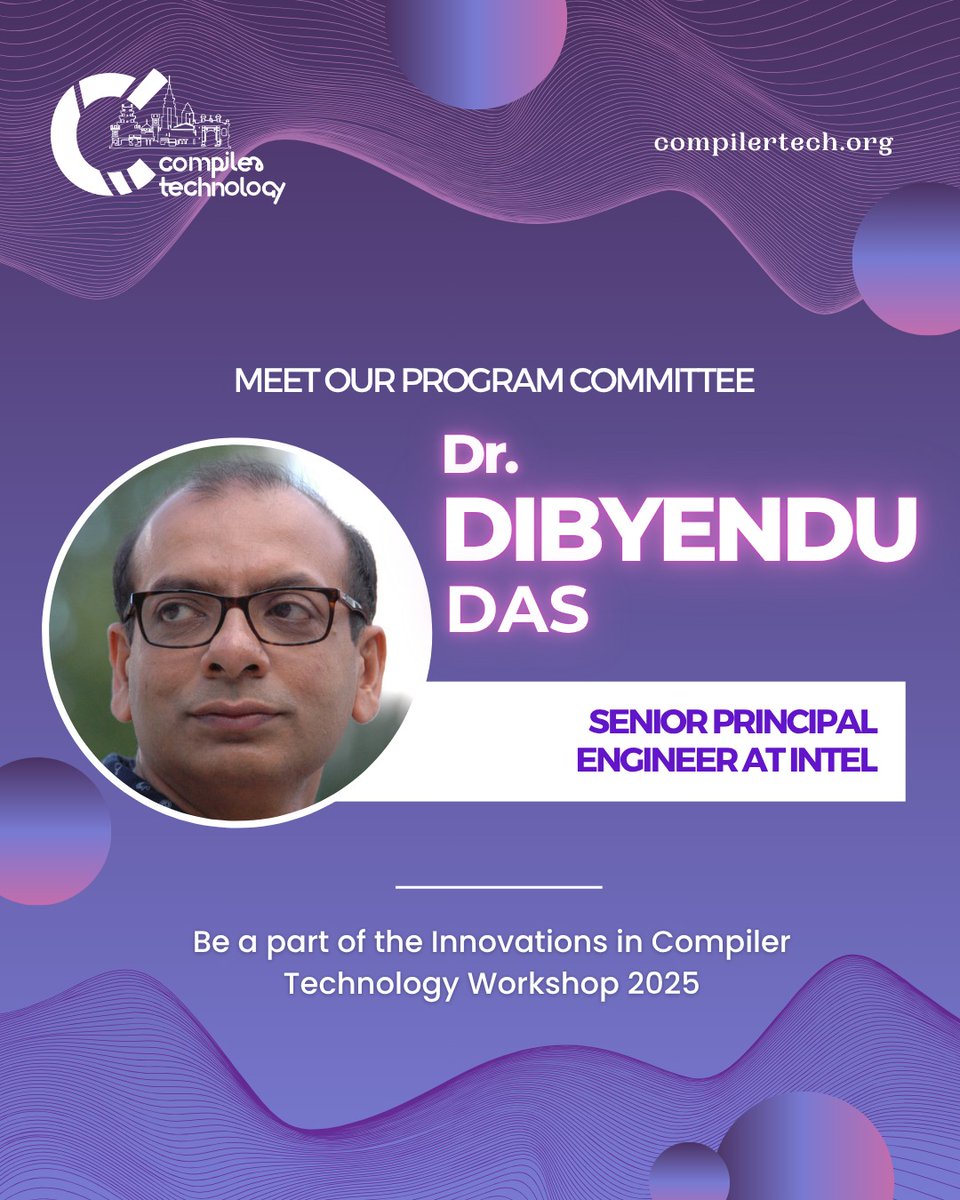
𝐖𝐞'𝐫𝐞 𝐭𝐡𝐫𝐢𝐥𝐥𝐞𝐝 𝐭𝐨 𝐰𝐞𝐥𝐜𝐨𝐦𝐞 𝐃𝐫. 𝐃𝐢𝐛𝐲𝐞𝐧𝐝𝐮 𝐃𝐚𝐬 𝐭𝐨 𝐭𝐡𝐞 𝐈𝐈𝐂𝐓 𝟐𝟎𝟐𝟓 𝐏𝐫𝐨𝐠𝐫𝐚𝐦 𝐂𝐨𝐦𝐦𝐢𝐭𝐭𝐞𝐞!
As a Senior Principal Engineer at Intel, Dr. Das brings exceptional expertise in program analysis and compiler technology, with deep knowledge in areas such as SSA form and DJ-graphs. His insights will play a key role in shaping a high-quality technical program.
📅 September 27–28, 2025
🔗 Learn more: compilertech.org/
#IICT2025 #CompilerTech #ProgramCommittee #Intel #ProgrammingLanguages #CompilerOptimization #TechConference #ACMIndia #IISCBangalore
1
84

8 Jul 2025
The internal execution process of JavaScript's V8 engine exhibits considerable unpredictability. Even when running a simple single-line script like console.log("hello world"), the internal execution flow shows significant variations each time. This goes well beyond mere address randomization - even the called VM C functions can vary substantially. This reminds me of LuaJIT, which behaves similarly. In LuaJIT's case, randomness was deliberately added to increase the chances of hitting more efficient code paths. Of course, another reason is security (the more unpredictable the behavioral details are, the more secure it becomes).
#JavaScript #V8Engine #LuaJIT #ProgrammingLanguages #SoftwareSecurity #CompilerOptimization #TechEngineering
136
4 Jul 2025
The V8 engine authors designed their own "mini-language" called Torque, which has TypeScript-like syntax and can automatically generate part of the virtual machine (VM) implementation during V8's build process. The Torque compiler generates a large amount of C code, which then internally generates the corresponding assembly code. Several hundred large C compilation units in the VM are generated this way. It's quite an interesting design approach. However, debugging this automatically generated C code and the resulting assembly code isn't quite as pleasant!
Clearly, even V8's developers got tired of writing too much tedious C code. Programs that write programs can always be much more convenient.
This reminds me of how LuaJIT's author also designed his own dynamic high-level assembly language called DynAsm, which he used to hand-craft LuaJIT's interpreter implementation. I (and some other folks) have also used this mini-language to implement some simple JIT compilers, which was quite interesting. DynAsm operates directly at the machine code level, making it a much lower level than Torque - even significantly lower level than C.
#V8Engine #JavaScript #Torque #CompilerDesign #ProgrammingLanguages #LuaJIT #DynAsm #JITCompiler #CodeGeneration #SystemProgramming #VirtualMachine #CPlusPlus #TechnicalComputing #CompilerOptimization #LowLevelProgramming
162

1 Mar 2025
How to See Time of Each Pass in LLVM open.substack.com/pub/compil…
#llvm #compiler #pass #llm #tvm #developers
#LLVM #CompilerOptimization #LLVMIR #PerformanceAnalysis #DevTools #Compilers #Profiling #CodeOptimization

1
1
37

15 Feb 2025
🚀 LLVM optimizations & undefined behavior – How compiler optimizations can change C program behavior.
🔍 Read more: shafik.github.io/c /undefin…
#Cplusplus #LLVM #CompilerOptimization
1
36

10 Dec 2024
5/19 Many believe that -O3 always produces faster code than -O2. However, studies show little statistical difference, especially in Clang. Benchmarking is essential to determine the best optimization level. #CompilerOptimization ⬇️
1
12