
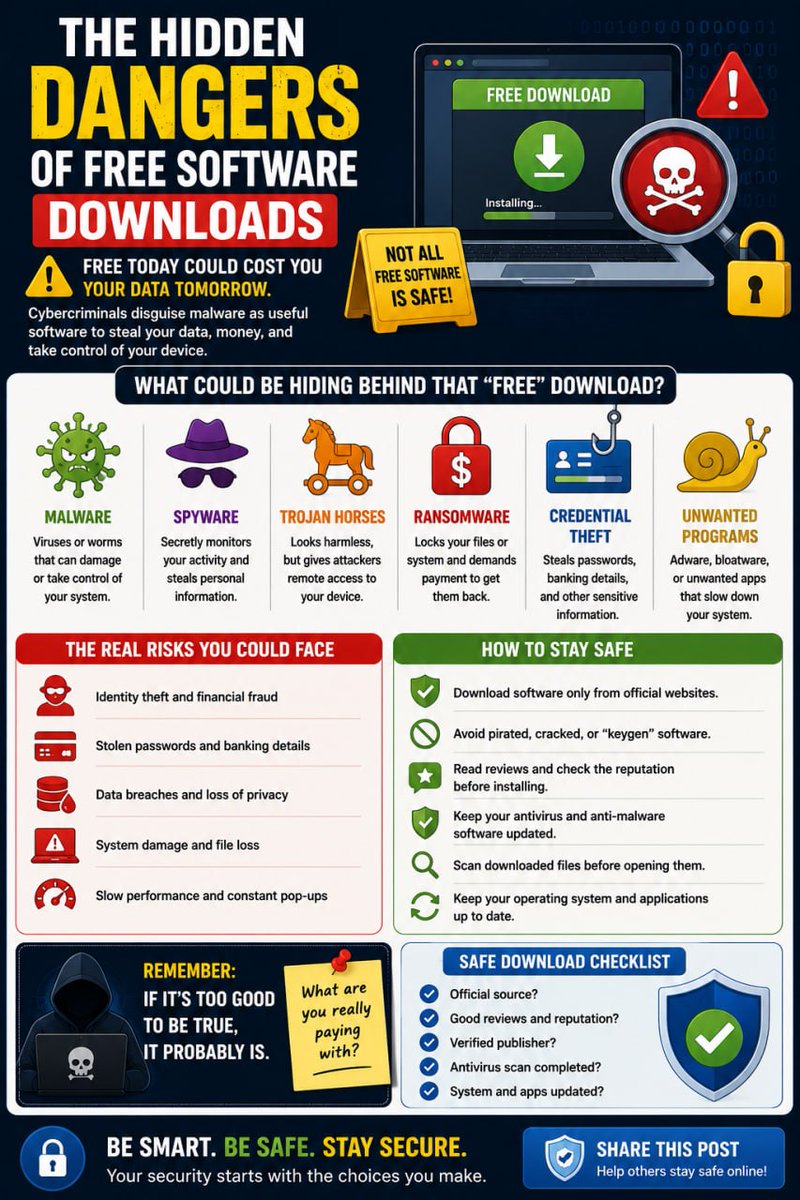
Free software isn't always free.
Hidden risks include:
1. Malware
2. Spyware
3. Trojans
4. Ransomware
5. Stolen passwords
Stay safe:
1. Download from official sites
2. Avoid cracked software
3. Scan files before opening
#CyberSecurity #Malware #SoftwareSecurity #InfoSec
13


Veracode CEO Brian Roche explores the next challenge created by AI-driven development: software trust.
Governance, visibility, and continuous evidence that software is safe to deploy are becoming essential.
#AI #AppSec #SoftwareSecurity sprou.tt/15QU8YtQq9L
1
2
59
Application risk assessments built around annual reviews and point-in-time scans are falling behind modern software delivery.
The goal should be clear: continuous evidence that software is safe to ship.
#AppSec #CyberRisk #SoftwareSecurity sprou.tt/1M7bB1mUuzb
1
31

Jun 11
🛡️ 𝐆𝐞𝐭 𝐓𝐡𝐞 𝐃𝐨𝐖 𝐂𝐲𝐛𝐞𝐫𝐬𝐞𝐜𝐮𝐫𝐢𝐭𝐲 𝐏𝐨𝐥𝐢𝐜𝐲 𝐂𝐡𝐚𝐫𝐭 𝐓𝐨𝐝𝐚𝐲!
The chart features over 200 polices and is updated regularly to bring you the most current information.
Click here: buff.ly/3LOEyMa
#cybersecurity #softwaresecurity #datasecurity #DoW
39

Jun 11
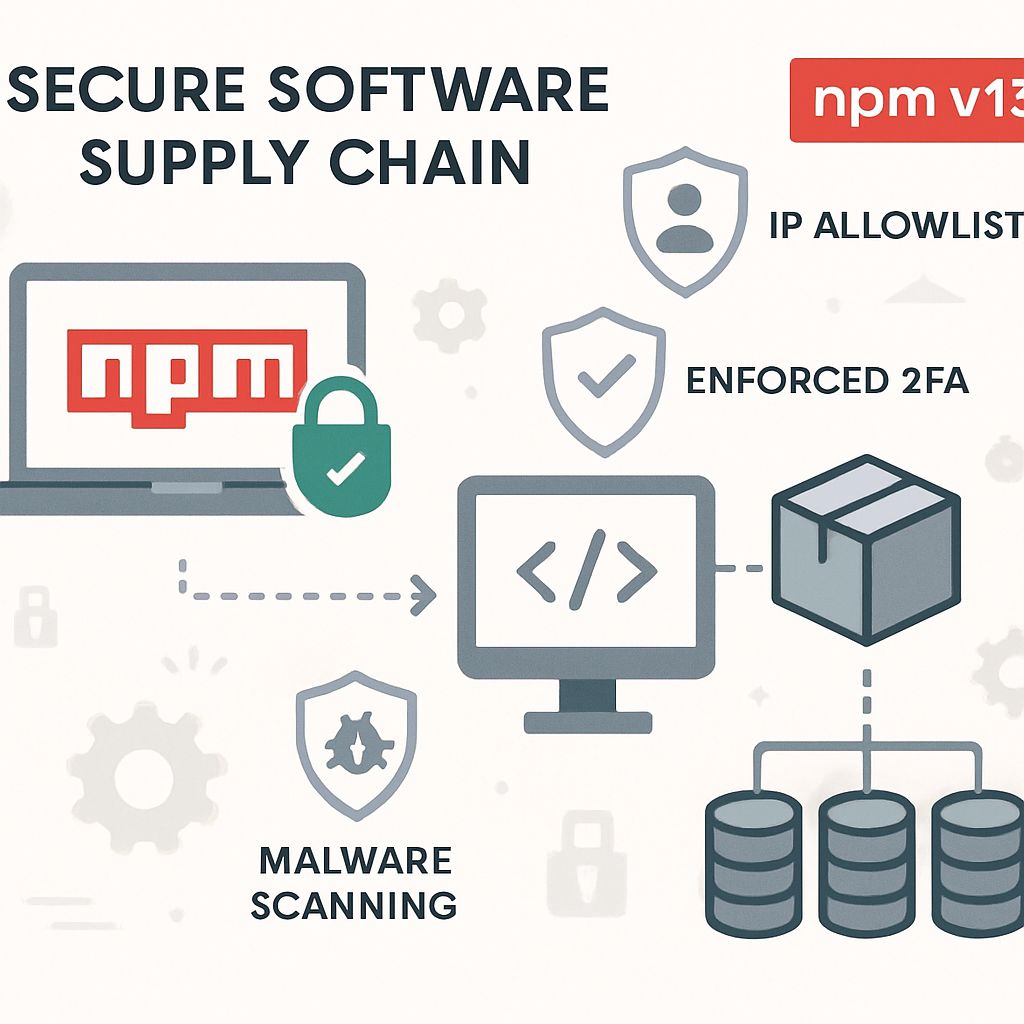
GitHub's npm v12 update, set for July 2026, will disable automatic execution of installation scripts by default. This move aims to mitigate software supply chain attacks by requiring developers to explicitly approve scripts, enhancing security in the npm ecosystem.
#GitHub #npm #SupplyChainSecurity #SoftwareSecurity #CyberSecurity #DevOps
thedailytechfeed.com/github-…
11

Threat Modeling Belongs Inside the SDLC, Not Beside It
Security is most effective when it is built into how software is planned, designed, developed, tested, and released.
At VerSprite, we view threat modeling as more than a security exercise. It is a practical way to help teams understand how real adversaries may abuse application logic, architecture, data flows, and dependencies before risk becomes harder to correct.
When embedded into the SDLC, threat modeling helps teams:
• Identify security requirements earlier
• Prioritize risk based on business impact
• Turn abuse cases into security stories and test cases
• Align engineering, product, and security around informed release decisions
This is the value of a risk centric approach like PASTA threat modeling. It helps organizations design resilience from the start without slowing delivery.
Secure software is not created by testing more at the end. It is created by understanding threats earlier and making better design decisions throughout the lifecycle.
Read more from VerSprite:
hubs.la/Q04j2k7b0
#ApplicationSecurity #ThreatModeling #SecureSDLC #DevSecOps #CybersecurityLeadership #RiskManagement #SoftwareSecurity #PASTAThreatModeling #VerSprite
2
3
43

Read the full discussion:
technadu.com/finding-more-vu…
What’s your take? Are AppSec teams facing a vulnerability problem—or a prioritization problem?
#AppSec #AISecurity #DevSecOps #VulnerabilityManagement #ThreatDetection #SoftwareSecurity #SecureByDesign #RiskManagement #SecOps #RuntimeSecurity #CyberDefense
50

Retaliator.io/cybersecurity-… Aikido - Fix Code Vulnerabilities Before They Reach Production.
#RetaliatorNation
#AlwaysWinning
#CyberSecurity
#AppSec
#ApplicationSecurity
#DevSecOps
#CloudSecurity
#CNAPP
#CodeSecurity
#ShiftLeftSecurity
#AISecurity
#SoftwareSecurity
#SecureDevelopment

ALT cyber-retaliator-solutions-crs-retaliatornation-aikido-ai-powered-application-security-platform-identifying-code-vulnerabilities-supply-chain-risks-and-cloud-security-weaknesses-in-real-time
1
5
Jun 11
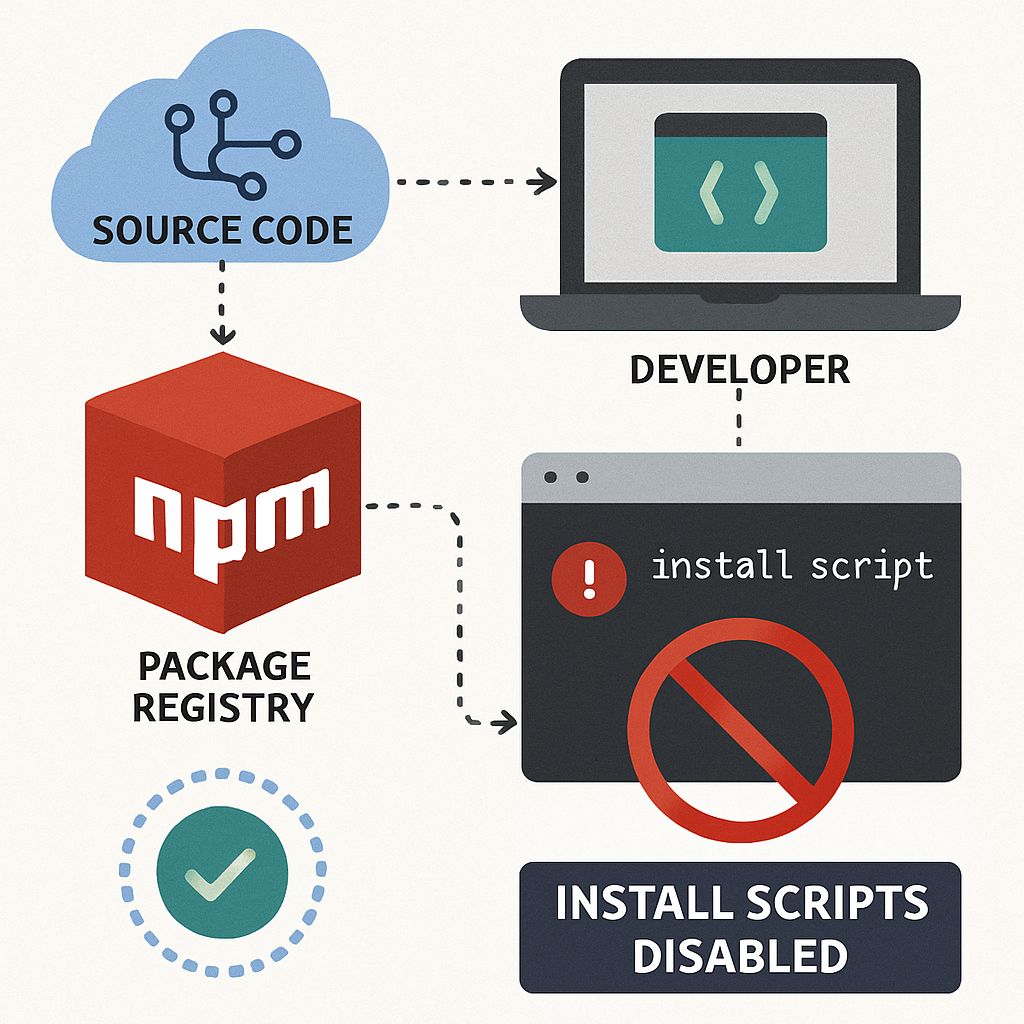
GitHub's npm version 12 will disable install scripts by default, enhancing software supply chain security. Developers must now explicitly approve code execution during 'npm install'.
#GitHub #npm #SoftwareSecurity #SupplyChain #DevSecOps #NodeJS
thedailytechfeed.com/github-…
22
The “vulnpocalypse” is about time compression: #AI can surface years of latent security debt in months.
Veracode’s recent blog post explains why teams need continuous testing, risk-based prioritization, and software trust.
#AppSec #SoftwareSecurity sprou.tt/165mcthWKiU
1
36

Jun 9


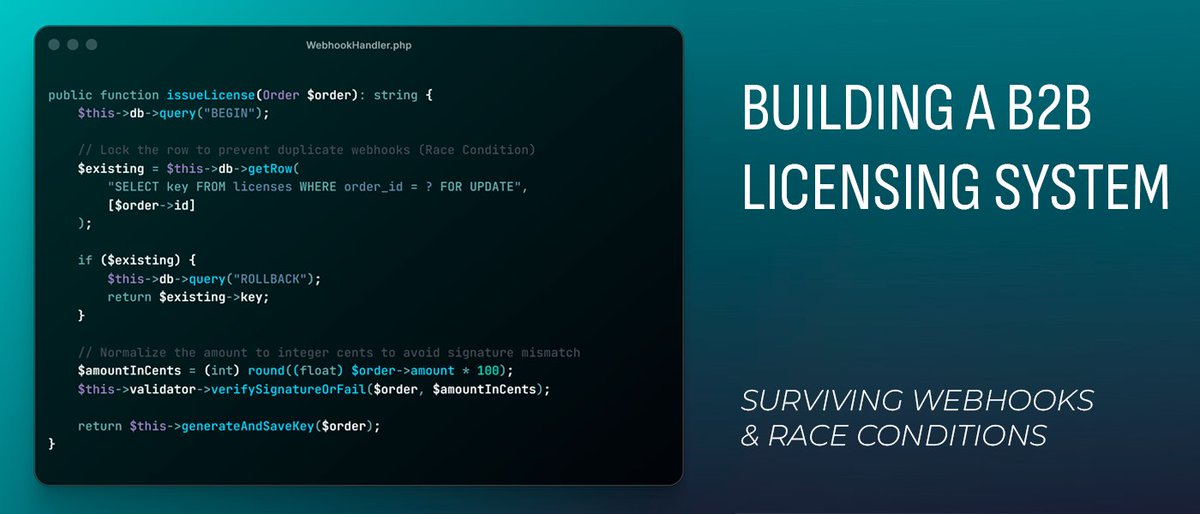
Learn how we built a secure B2B software licensing system. Discover how we solved HWID tracking, offline RSA validation, and payment webhook race conditions.
#softwarearchitecture #softwaresecurity...Show more
1
1
3
371

Jun 9
How can connected medical devices remain secure over years of operation, even as cryptographic standards, cyber threats, and regulatory expectations continue to evolve?
With the successful completion of 𝗦𝗲𝗰𝟰𝗜𝗼𝗠𝗧 - 𝗦𝗲𝗰𝘂𝗿𝗶𝘁𝘆 𝗳𝗼𝗿 𝘁𝗵𝗲 𝗜𝗻𝘁𝗲𝗿𝗻𝗲𝘁 𝗼𝗳 𝗠𝗲𝗱𝗶𝗰𝗮𝗹 𝗧𝗵𝗶𝗻𝗴𝘀, important groundwork has been laid for long-term cybersecurity in connected medical environments.
As part of the project, Wibu-Systems contributed security architectures for crypto-agile update and certificate processes within IoMT device clusters. The work focused on secure management of keys, certificates, and licenses, mechanisms for security retrofitting, secure software and cryptographic upgrades, and the exemplary extension of CodeMeter infrastructure toward post-quantum cryptography.
The result: practical concepts and prototype implementations that support trustworthy update infrastructures for medical devices and device clusters, helping them remain secure, interoperable, and reliable throughout long product lifecycles.
buff.ly/cmIaeRB
#IoMT #Cybersecurity #MedicalTechnology #PostQuantumCryptography #SoftwareSecurity #CodeMeter #DigitalTrust
21

#TrendAI tritt #Anthropic Project #Glasswing bei. Ziel: Mit KI Software-Schwachstellen schneller erkennen, Risiken reduzieren & Sicherheit kritischer Systeme verbessern.
#Cybersecurity #AI #AppSec #TrendMicro #SoftwareSecurity #VulnerabilityManagement
👉shorturl.at/LGyzC

ALT Copyright: TrendAI Rachel Jin
13
#Checkmarx-Studie: 95 % der #CISO stehen unter Druck, Compliance-relevante Sicherheitsprobleme zugunsten von Deadlines zurückzustellen.
#AppSec #Cybersecurity #DevSecOps #AI #SoftwareSecurity #ApplicationSecurity
👉 shorturl.at/YCYOM

ALT Foto: Checkmarx Sandeep Johri, CEO von Checkmarx
17

Jun 8
Maintainer Burnout and the Human Weakness in Open Source
One of the most dangerous myths in software security is that supply chain risk is mainly a code problem. Sometimes it is a human fatigue problem first. In Twenty Twenty-Four, the xz Utils backdoor attempt showed that clearly: a deeply embedded compression library, a long-trusted project, and a maintainer, Lasse Collin, who had been carrying too much of the load for too long. The exploit itself was sophisticated. The opening was more ordinary. A critical project had too little slack, too little support, and too much trust concentrated in too few hands.
For more information, see the first comment below!
This pattern did not begin with xz. In Twenty Eighteen, the npm package event-stream was handed to a new maintainer and later used to smuggle malicious code aimed at users of the Copay cryptocurrency wallet. In Twenty Twenty-Two, the maintainer behind colors.js and faker.js sabotaged his own packages after years of frustration over unpaid dependency labor. These were different stories with different motives, but they pointed at the same structural weakness: modern software depends on small components maintained by people who are often exhausted, isolated, or treated like invisible infrastructure.
That is what leaders still miss. Open source risk is not only about whether a package has a vulnerability. It is also about whether the people behind it have enough time, backup, funding, review support, and institutional respect to keep making good decisions. An overworked maintainer may not need to turn malicious to become part of the risk story. They only need to be tired enough to miss the wrong commit, accept the wrong helper, or walk away at the wrong moment.
The supply chain runs on code, but it is governed by human attention. If a dependency is critical to your business, but its future still depends on one burned-out maintainer working nights and weekends, is that really someone else’s risk?
#Cybersecurity #OpenSource #SupplyChainSecurity #AppSec #SoftwareSecurity #DevSecOps #RiskManagement #InfoSec #OSS #CyberRisk

1
20

Jun 8
Your SBOM scanner gives you a report.
Reports expire the moment you close the tab.
cbomcompliance.com gives you something different:
✦ A cryptographically signed receipt — RS256, Merkle-committed, immutable
✦ Live CVE intelligence at signing — OSV, NVD, GHSA, EPSS scored
✦ Re-evaluate any old receipt against today's threat data
✦ Compare two receipts — see exactly what changed, what was added, what got riskier
✦ Zero data retention. No account needed.
CMMC Level 2 enforcement starts November 10, 2026.
Auditors don't want your scanner output.
They want proof that can be independently verified years later.
Trust is not declared. It is computed.
cbomcompliance.com
#CMMC #SBOM #CycloneDX #SPDX #SupplyChainSecurity #DevSecOps #CyberSecurity #AppSec #PKI #SoftwareSecurity #InfoSec #VulnerabilityManagement #OpenSourceSecurity #DoD #NIST #EO14028 @Ransom_DB @Chilcano
49

The landscape of enterprise software security is shifting massively, driven by advances in AI foundation models that can find and exploit vulnerabilities faster than humans can address… dlvr.it/TSxGsK #CyberSecurity #AI #SoftwareSecurity #OpenSource #PatchManagement
11

TrendAI tritt Anthropics Project Glasswing bei
aktuellenews.ch/trendai-trit…
@TrendMicroHome
#TrendMicro #Claude #Informationssicherheit #SoftwareSecurity #Softwaresicherheit #Schwachstellen #Aktuellenews #Helpmedia
21