
12m
Chapter 20 of Kitab al-Tawḥīd by Imam Muhammad Ibn AbdulWahhab al-Ḥanbali:
❝𝐖𝐡𝐚𝐭 𝐡𝐚𝐬 𝐛𝐞𝐞𝐧 𝐫𝐞𝐩𝐨𝐫𝐭𝐞𝐝 𝐫𝐞𝐠𝐚𝐫𝐝𝐢𝐧𝐠 𝐡𝐨𝐰 𝐞𝐱𝐜𝐞𝐬𝐬𝐢𝐯𝐞 𝐯𝐞𝐧𝐞𝐫𝐚𝐭𝐢𝐨𝐧 𝐨𝐟 𝐭𝐡𝐞 𝐠𝐫𝐚𝐯𝐞𝐬 𝐨𝐟 𝐭𝐡𝐞 𝐫𝐢𝐠𝐡𝐭𝐞𝐨𝐮𝐬 𝐭𝐮𝐫𝐧𝐬 𝐭𝐡𝐞𝐦 𝐢𝐧𝐭𝐨 𝐢𝐝𝐨𝐥𝐬 𝐭𝐡𝐚𝐭 𝐚𝐫𝐞 𝐰𝐨𝐫𝐬𝐡𝐢𝐩𝐩𝐞𝐝 𝐛𝐞𝐬𝐢𝐝𝐞𝐬 𝐀𝐥𝐥𝐚𝐡
Mālik narrated in al-Muwaṭṭaʾ that the Messenger of Allah ﷺ said:
“O Allah, do not make my grave an idol that is worshipped. The anger of Allah became severe against a people who took the graves of their prophets as places of worship.”
And Ibn Jarīr [al-Ṭabari] narrated with his chain from Sufyān, from Manṣūr, from Mujāhid regarding Allah’s statement:
{أَفَرَأَيْتُمُ اللَّاتَ وَالْعُزَّىٰ}
“Have you considered al-Lāt and al-ʿUzzā?” (Qur’an 53:19)
Mujāhid said:
“He [al-Lāt] used to mix and prepare sawīq (a type of food) for the pilgrims. When he died, they devoted themselves to his grave.”
Likewise, Abū al-Jawzāʾ narrated from Ibn ʿAbbās:
“He used to prepare sawīq for the pilgrims.”
And from Ibn ʿAbbās (may Allah be pleased with him and his father):
“The Messenger of Allah ﷺ cursed women who frequently visit graves, and those who take graves as places of worship and place lamps upon them.”
Narrated by the compilers of the Sunan collections.
Issues (Lessons) Derived:
1. The explanation of idols (awthān).
2. The explanation of worship (ʿibādah).
3. That the Prophet ﷺ sought protection only from something whose occurrence was feared.
4. His linking this matter with taking the graves of prophets as places of worship.
5. Mention of the severity of Allah’s anger.
6. One of the most important points: understanding the nature of the worship of al-Lāt, who was among the greatest idols.
7. Knowing that al-Lāt was the grave of a righteous man.
8. Knowing that al-Lāt was the name of the person buried in that grave, and the meaning behind the name.
9. The Prophet’s curse upon women who frequently visit graves.
10. His curse upon those who place lamps on the graves.❞


3
5
56

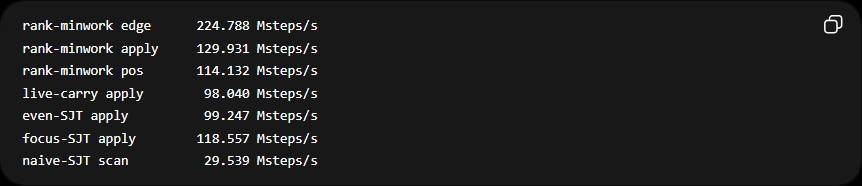
i was gonna write an essay about compilers but got distracted and maybe made a 2x faster sjt perm algo
6

C ... in the early years my experience was that it was available as an 'experimental feature' of C compilers. They didn't implement all the features that C had on paper.
Then in the late 90s, C was complete enough in practice that you generally would just write in C , even if you only needed C. So C became the 'default' for me.
And at some point I stopped paying attention to all the new features and things they would keep introducing. C tries to be too much like newer languages such as C# and Rust now, I guess. If that's what I wanted, I wouldn't be using C . I don't need the language holding my hand with pointers and such. I have decades of experience in C/C , assembly and whatnot without any handholding.
1
41

57m
Deterministic barriers in manual WebGPU kernels are standard. You need dynamic, hardware-aware compilers to step past static efficiency caps.
21

Recognizing your self-given "misanthrope" name, I'll say ..... GM!
Satire, my friend. Tinged with the invisible glow of a very hot flame from the burning bits of history surrounding the main idea.
Of course you're "not incorrect" but given the context & the communications, you certainly aren't fitting in here.
If it SEEMS like AI will eliminate coding, consider how it SEEMED to many back in the late seventies that compilers (and linters & IDEs etc) would eliminate programmers.
Btw I stand firm on my fact: SOME careers were ended, lol
1

If you’re doing this as a college project, that’s fine.
If you’re doing it to learn also cool.
But a grown ass adult doing this and promoting it with a mission is just stupid.
Also, try and create a different language it’ll teach you about compilers. I usually hype these.

Every country wastes human hours on this I see.
We also have Python Swahili.
I do not see the benefit.
1
1
7
399


coding agents don’t fail like compilers.
they fail like coworkers.
they misunderstand, overstep, claim they’re done, and wait for you to notice.

2

it's probably a passion project , some people just love building stuff and not always in it for the money, is that really hard to comprehend ?
he was probably learning about compilers/practicing and gave it a try.
1
38

Even the compilers of Hobson-Jobson knew "it is the only stone that is naturally divine; all others being rendered sacred by incantation" himalmag.com/in-the-presence…
1
55

completed my C project, Cerberus, which is a custom interpreted programming language.
it's a small project in terms of codebase and functionality, as the main motive was my curiosity about understanding how interpreters work (and the front-end they share with compilers).
currently, the whole codebase is divided into three stages:
-> lexer - responsible for tokenization
-> parser - builds an AST from the given vector of tokens
-> interpreter - executes the AST
i would suggest anyone curious about these concepts give it a try, as i have coded it in a fairly simplistic and logical way. but yeah, you should know OOPS😅
a mini blog is upcoming to close this one out.
github.com/omanshchoudhary/c…
86

Compilers are deterministic, LLMs are probabilistic. Yeah I know the arguments about compiler non-determinism but that doesn't change the fact that they're built on a deterministic base.
6

LLMs are probabilistic by design but that doesn’t mean they produce random results. Skeptics are welcome to read the code but how long, let’s see. It was the case when compilers introduced.
1
50

Same plan as when compilers, frameworks, and cloud services replaced us, learn the new tools and keep building.
18

A question : initially only certain percentage of code written could be Out-of-Order (OoO) executed, and compilers were something easier which seemed like a better option. But if OoO execution bested it, did compilers get really good or was it due to some other factor?
208


Baloney. Everyone likes to parrot this, but it's pure fantasy. ASM was widely used well into the future, inside many C programs. Also comparing LLMs to "just another level of abstraction" like ASM -> compilers is retarded. Those abstractions were always deterministic.
1
14

8h
The Bible was established long before the Catholic Church even began. And it was put together by God. He was the one who inspired the authors and the compilers of the Bible. It is exactly the way God wants it.
If you get yourself a good study Bible it will give you all the information you need in the front of the Bible as to who established it why it was set up the way it was. Scholars much smarter than you and I and the pope put together has done all the work.
Why do you want to argue about that? Just read the thing. You haven’t even read it. But you’re quick to criticize.
2
14

Why aren't AI models being trained on assembly language to become better optimizers than compilers and then all software can simply be re-written in hyper-optimized assembly language, custom-made for every platform. Maintainability? Security updates? No problem for AI.
7
