
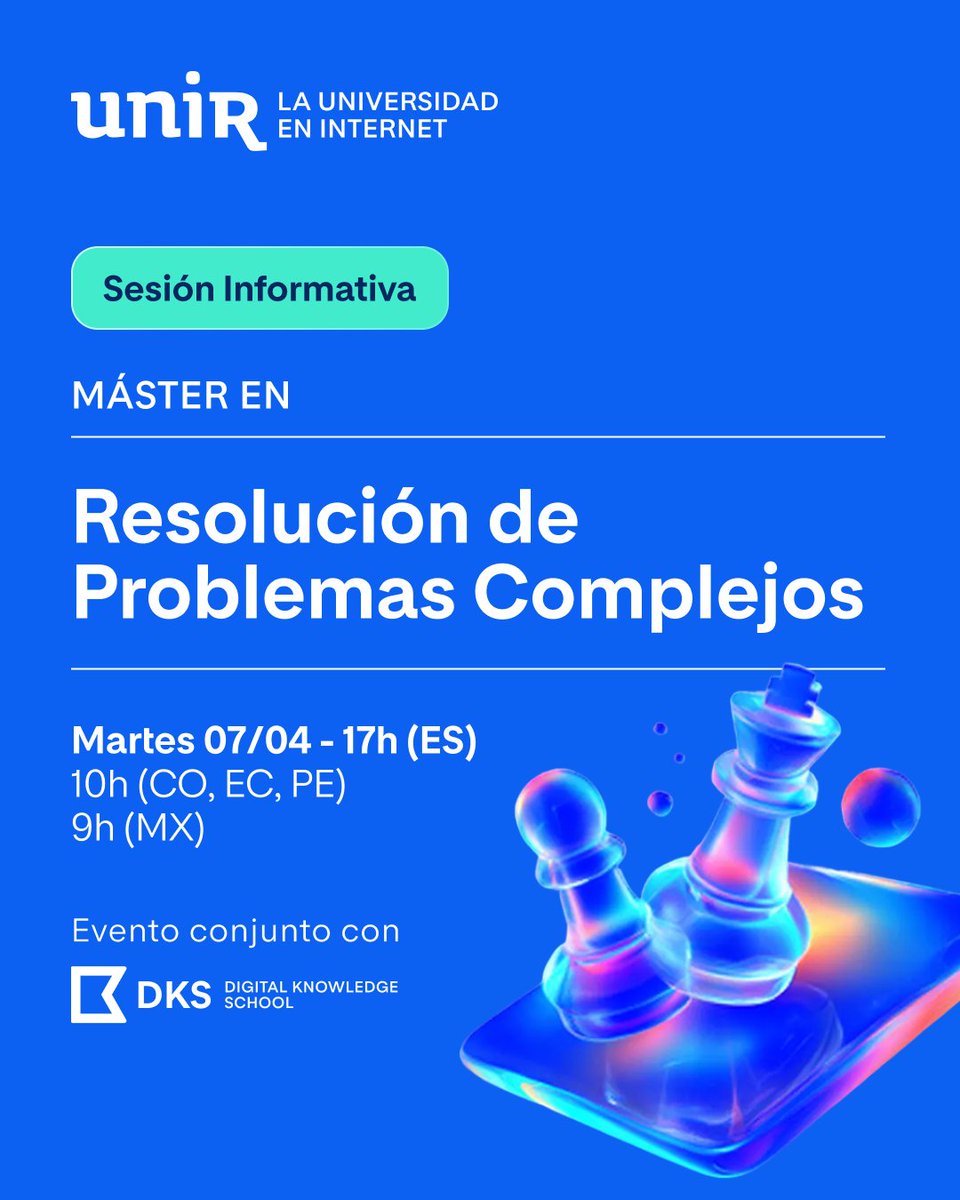
🧩🧠 Domina la resolución de problemas complejos para diferenciarte profesionalmente. Javier G. @Recuenco, Dir. Académico del Máster en #ProblemSolving de UNIR y @dksdigital, te explicará hoy los detalles de esta titulación.
👁️ ¡Apúntate! 👉 ow.ly/IwBg50YAMht
📅 Martes 7 de abril
⌚ 17h España (peninsular), 10h 🇨🇴🇪🇨🇵🇪, 09h 🇲🇽, 12h 🇦🇷
🚀 Resolver problemas complejos no es improvisar: implica comprender, descomponer y diseñar soluciones precisas y creativas ante retos que no tienen una respuesta evidente. Por eso se ha convertido en una de las habilidades más valoradas por empresas tecnológicas, consultoras y sectores en transformación.
📘 Recuenco, pionero en Complex Problem Solving, CSO y fundador de @SingularSolving y @SingularTarget, estará acompañado por @PauMugarra, también profesor del Máster, una oportunidad única para conocer en profundidad esta titulación y resolver todas tus dudas directamente.
#UNIR #PensamientoCrítico #ResoluciónDeProblemasComplejos #ComplexProblemSolving #ProblemasComplejos
1
2
880
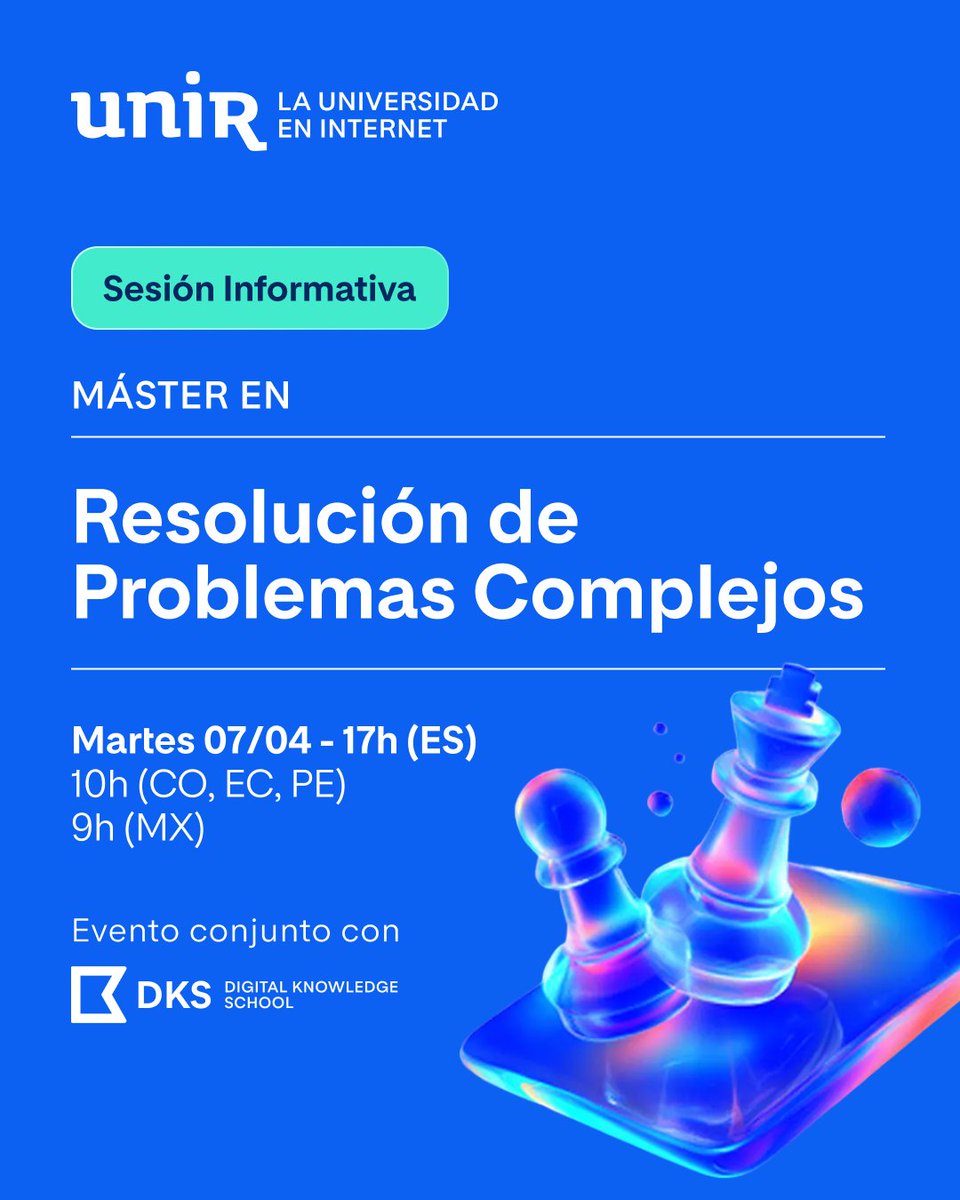
🧩🧠 Domina la resolución de problemas complejos para diferenciarte profesionalmente. Javier G. @Recuenco, Dir. Académico del Máster en #ProblemSolving de UNIR y @dksdigital, te explicará mañana los detalles de esta titulación.
👁️ ¡Apúntate! 👉 ow.ly/IwBg50YAMht
📅 Martes 7 de abril
⌚ 17h España (peninsular), 10h 🇨🇴🇪🇨🇵🇪, 09h 🇲🇽, 12h 🇦🇷
🚀 Resolver problemas complejos no es improvisar: implica comprender, descomponer y diseñar soluciones precisas y creativas ante retos que no tienen una respuesta evidente. Por eso se ha convertido en una de las habilidades más valoradas por empresas tecnológicas, consultoras y sectores en transformación.
📘 Recuenco, pionero en Complex Problem Solving, CSO y fundador de @SingularSolving y @SingularTarget, estará acompañado por @PauMugarra, también profesor del Máster, una oportunidad única para conocer en profundidad esta titulación y resolver todas tus dudas directamente.
#UNIR #PensamientoCrítico #ResoluciónDeProblemasComplejos #ComplexProblemSolving #ProblemasComplejos
2
3
1,152
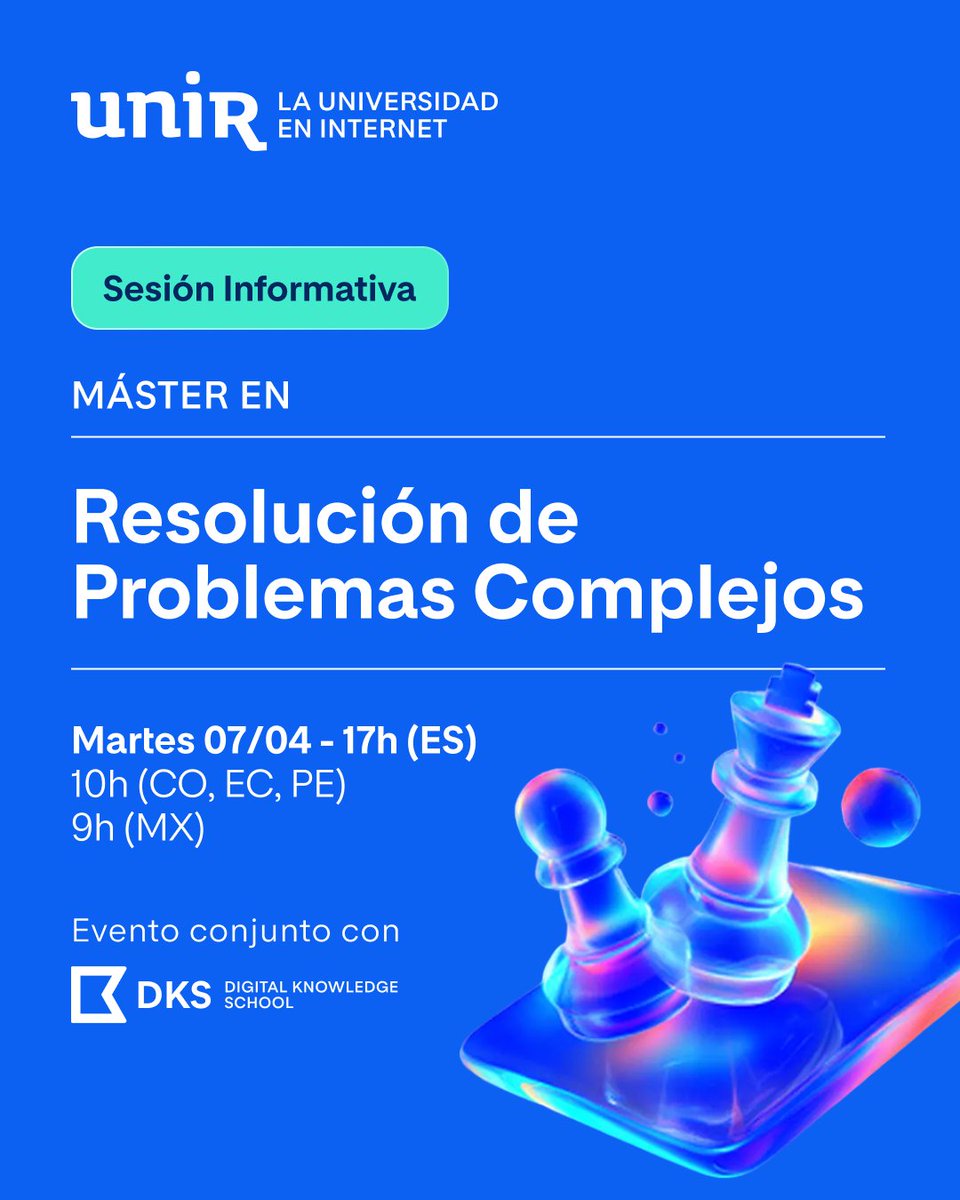
🧠🧩 Domina la resolución de problemas complejos para diferenciarte profesionalmente. Javier G. @Recuenco, Dir. Académico del Máster en #ProblemSolving de UNIR y @dksdigital, te explicará el 7/04 los detalles de esta titulación.
👁️ ¡Apúntate! 👉 ow.ly/IwBg50YAMht
📅 Martes 7 de abril
⌚ 17h España (peninsular), 10h 🇨🇴🇪🇨🇵🇪, 09h 🇲🇽, 12h 🇦🇷
🚀 Resolver problemas complejos no es improvisar: implica comprender, descomponer y diseñar soluciones precisas y creativas ante retos que no tienen una respuesta evidente. Por eso se ha convertido en una de las habilidades más valoradas por empresas tecnológicas, consultoras y sectores en transformación.
📘 Recuenco, pionero en Complex Problem Solving, CSO y fundador de @SingularSolving y @SingularTarget, estará acompañado por @PauMugarra, también profesor del Máster, una oportunidad única para conocer en profundidad esta titulación y resolver todas tus dudas directamente.
#UNIR #PensamientoCrítico #ResoluciónDeProblemasComplejos #ComplexProblemSolving #ProblemasComplejos
2
4
1,381

Apr 1
Acudí hace unos días al #CPSLive2026 como converso tardío y salía de allí con un proyecto. No piensen que me he metido en una suerte de secta, aunque la broma contiene una parte de realidad. @Recuenco lleva años construyendo un cuerpo de pensamiento y acción (pensar no es lo mismo que hacer) sobre Resolución de Problemas Complejos (CPS), que ya quisieran para sí muchos de los que se sientan en un Consejo de Administración o uno de Ministros (¿acaso son tan diferentes?).
Y a su alrededor ha crecido una comunidad —@PauMugarra , Guillermo López-Dóriga Suárez, @cesarastudillo , @ToniDorta , @DavidAlayon , @Mertxe , @alexsanzvicente, @Godivaciones...no quiero dejarme a ninguna persona sin citar, pero son muchos más— que no habla de complejidad como excusa, sino como método. Eso, en los círculos donde me he movido en las últimas dos décadas, es una rareza que vale la pena destacar.
He sido profesor e investigador universitario, he asesorado y dirigido gabinetes de altos cargos en el sector público, y ahora soy consultor de asuntos públicos para empresas tech y startups: siempre trabajando en esa frontera entre lo público y lo privado, donde las flechas vuelan de uno a otro lado. Sé desde dentro de lo público cómo se cuecen las cosas, pero también conozco cómo funciona una empresa o una organización privada. Aunque algo he ido intuyendo con el tiempo, nada ni nadie me enseñó nunca a distinguir lo complicado de lo complejo. El paradigma del #CPS sí lo hace. Con rigor, con cultura y —lo que más me sorprendió— sin vender certezas que no existen. Y también, por qué decirlo, de manera divertida.
Mi apuesta ahora es llevar esa forma de pensar a donde más falta hace y donde más miedo da: a la consultoría de asuntos públicos y a la gestión pública. No tengo el manual. Pero sí tengo claro que seguir aplicando recetas viejas a problemas que no las admiten ya no me sirve.
#CPS #ComplexProblemSolving #GestiónPública #AsuntosPúblicos #LaPolisMecánica
elespanol.com/invertia/disru…
1
7
18
1,226
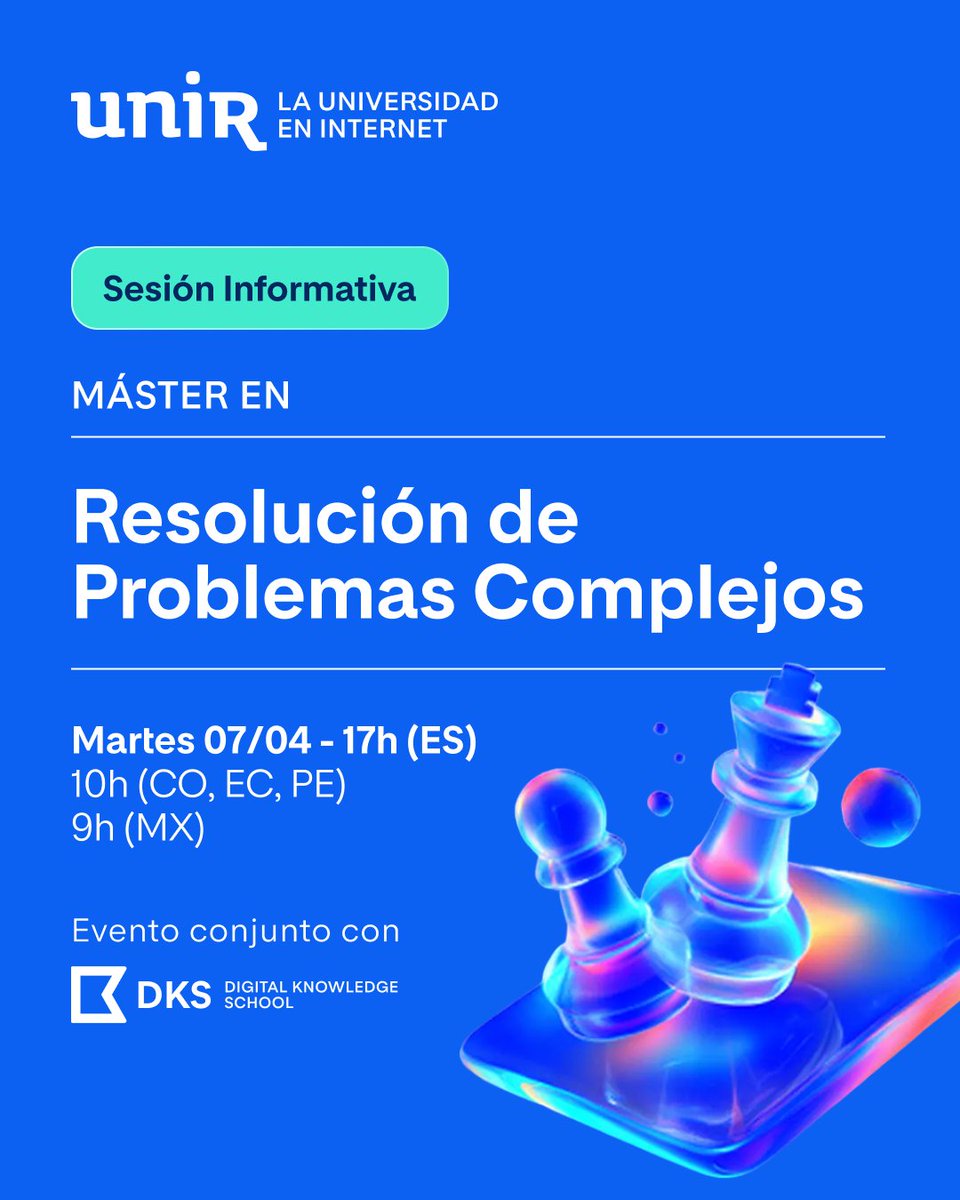
🧩🧠 ¿Quieres dominar la resolución de problemas complejos para diferenciarte profesionalmente? Javier G. @Recuenco, Dir. Académico del Máster en #ProblemSolving de UNIR y @dksdigital, te explicará cómo en esta sesión informativa.
👁️ ¡Apúntate! 👉 ow.ly/IwBg50YAMht
📅 Martes 7 de abril
⌚ 17h España (peninsular), 10h 🇨🇴🇪🇨🇵🇪, 09h 🇲🇽, 12h 🇦🇷
🚀 Resolver problemas complejos no es improvisar: implica comprender, descomponer y diseñar soluciones precisas y creativas ante retos que no tienen una respuesta evidente. Por eso se ha convertido en una de las habilidades más valoradas por empresas tecnológicas, consultoras y sectores en transformación.
📘 Recuenco, pionero en Complex Problem Solving, CSO y fundador de @SingularSolving y @SingularTarget, estará acompañado por @PauMugarra, también profesor del Máster, una oportunidad única para conocer en profundidad esta titulación y resolver todas tus dudas directamente.
#UNIR #PensamientoCrítico #ResoluciónDeProblemasComplejos #ComplexProblemSolving #ProblemasComplejos
2
3
1,123
💡🧠 ¡Hoy, descubre cómo abordar la complejidad del sistema de las pensiones en España y explorar las soluciones viables para su futuro, junto a expertos en #ProblemSolving en esta openclass de UNIR y @kschoolcom!
👁️ ¡Apúntate! 👉 ow.ly/Ur4150Y17UP
📅 Miércoles 28 de enero
⌚ 18h España (peninsular), 12h 🇪🇨🇨🇴🇵🇪, 11h 🇲🇽
🤔 @PauMugarra, Enterprise Agile Coach & Complex Problem Analyst en @SingularSolving; Javier G. @Recuenco, CSO & Founder #SingularSolving, y José Ignacio @conderuiz, Deputy Director en la Fundación de Estudios de Economía Aplicada (@socialfedea), nos ayudaran a entender las causas profundas de este desafío, desde el punto de vista del 𝘱𝘳𝘰𝘣𝘭𝘦𝘮 𝘴𝘰𝘭𝘷𝘪𝘯𝘨.
🔎 Aprende de profesionales destacados en el ámbito de la resolución de #ProblemasComplejos. Además, podrás interactuar con los ponentes, creando una experiencia enriquecedora de aprendizaje y 𝘯𝘦𝘵𝘸𝘰𝘳𝘬𝘪𝘯𝘨.
🤝 Invita: 𝘔𝘢́𝘴𝘵𝘦𝘳 𝘥𝘦 𝘍𝘰𝘳𝘮𝘢𝘤𝘪𝘰́𝘯 𝘗𝘦𝘳𝘮𝘢𝘯𝘦𝘯𝘵𝘦 𝘦𝘯 𝘗𝘳𝘰𝘣𝘭𝘦𝘮𝘢𝘴 𝘊𝘰𝘮𝘱𝘭𝘦𝘫𝘰𝘴 de #UNIR.
✅ ¡No faltes!
#ResoluciónDeProblemasComplejos #ComplexProblemSolving

1
3
827
💡🧠 ¡Mañana, descubre cómo abordar la complejidad del sistema de las pensiones en España y explorar las soluciones viables para su futuro, junto a expertos en #ProblemSolving en esta openclass de UNIR y @kschoolcom!
👁️ ¡Apúntate! 👉 ow.ly/Ur4150Y17UP
📅 Miércoles 28 de enero
⌚ 18h España (peninsular), 12h 🇪🇨🇨🇴🇵🇪, 11h 🇲🇽
🤔 @PauMugarra, Enterprise Agile Coach & Complex Problem Analyst en @SingularSolving; Javier G. @Recuenco, CSO & Founder #SingularSolving, y José Ignacio @conderuiz, Deputy Director en la Fundación de Estudios de Economía Aplicada (@socialfedea), nos ayudaran a entender las causas profundas de este desafío, desde el punto de vista del 𝘱𝘳𝘰𝘣𝘭𝘦𝘮 𝘴𝘰𝘭𝘷𝘪𝘯𝘨.
🔎 Aprende de profesionales destacados en el ámbito de la resolución de #ProblemasComplejos. Además, podrás interactuar con los ponentes, creando una experiencia enriquecedora de aprendizaje y 𝘯𝘦𝘵𝘸𝘰𝘳𝘬𝘪𝘯𝘨.
🤝 Invita: 𝘔𝘢́𝘴𝘵𝘦𝘳 𝘥𝘦 𝘍𝘰𝘳𝘮𝘢𝘤𝘪𝘰́𝘯 𝘗𝘦𝘳𝘮𝘢𝘯𝘦𝘯𝘵𝘦 𝘦𝘯 𝘗𝘳𝘰𝘣𝘭𝘦𝘮𝘢𝘴 𝘊𝘰𝘮𝘱𝘭𝘦𝘫𝘰𝘴 de #UNIR.
✅ ¡No faltes!
#ResoluciónDeProblemasComplejos #ComplexProblemSolving

1
2
853
💡🧠 Este miércoles 28 de enero, descubre cómo abordar la complejidad del sistema de las pensiones en España y explorar las soluciones viables para su futuro, junto a expertos en #ProblemSolving en esta openclass de UNIR y @kschoolcom.
👁️ Apúntate 👉 ow.ly/Ur4150Y17UP
⌚ 18h España (peninsular), 12h 🇪🇨🇨🇴🇵🇪, 11h 🇲🇽
🤔 @PauMugarra, Enterprise Agile Coach & Complex Problem Analyst en @SingularSolving; Javier G. @Recuenco, CSO & Founder #SingularSolving, y José Ignacio @conderuiz, Deputy Director en la Fundación de Estudios de Economía Aplicada (@socialfedea), nos ayudaran a entender las causas profundas de este desafío, desde el punto de vista del 𝘱𝘳𝘰𝘣𝘭𝘦𝘮 𝘴𝘰𝘭𝘷𝘪𝘯𝘨.
🔎 Aprende de profesionales destacados en el ámbito de la resolución de #ProblemasComplejos. Además, podrás interactuar con los ponentes, creando una experiencia enriquecedora de aprendizaje y 𝘯𝘦𝘵𝘸𝘰𝘳𝘬𝘪𝘯𝘨.
🤝 Invita: 𝘔𝘢́𝘴𝘵𝘦𝘳 𝘥𝘦 𝘍𝘰𝘳𝘮𝘢𝘤𝘪𝘰́𝘯 𝘗𝘦𝘳𝘮𝘢𝘯𝘦𝘯𝘵𝘦 𝘦𝘯 𝘗𝘳𝘰𝘣𝘭𝘦𝘮𝘢𝘴 𝘊𝘰𝘮𝘱𝘭𝘦𝘫𝘰𝘴 de #UNIR.
✅ ¡No faltes!
#ResoluciónDeProblemasComplejos #ComplexProblemSolving

4
4
2,878
🧩🧠 ¡El 28/01, descubre cómo abordar la complejidad del sistema de las pensiones en España y explorar las soluciones viables para su futuro, junto a expertos en #ProblemSolving en esta openclass de UNIR y @kschoolcom!
👁️ ¡Apúntate! 👉 ow.ly/Ur4150Y17UP
⌚ 18h España (peninsular), 12h 🇪🇨🇨🇴🇵🇪, 11h 🇲🇽
🤔 @PauMugarra, Enterprise Agile Coach & Complex Problem Analyst en @SingularSolving; Javier G. @Recuenco, CSO & Founder #SingularSolving, y José Ignacio @conderuiz, Deputy Director en la Fundación de Estudios de Economía Aplicada (@socialfedea), nos ayudaran a entender las causas profundas de este desafío, desde el punto de vista del 𝘱𝘳𝘰𝘣𝘭𝘦𝘮 𝘴𝘰𝘭𝘷𝘪𝘯𝘨.
🔎 Aprende de profesionales destacados en el ámbito de la resolución de #ProblemasComplejos. Además, podrás interactuar con los ponentes, creando una experiencia enriquecedora de aprendizaje y 𝘯𝘦𝘵𝘸𝘰𝘳𝘬𝘪𝘯𝘨.
🤝 Invita: 𝘔𝘢́𝘴𝘵𝘦𝘳 𝘥𝘦 𝘍𝘰𝘳𝘮𝘢𝘤𝘪𝘰́𝘯 𝘗𝘦𝘳𝘮𝘢𝘯𝘦𝘯𝘵𝘦 𝘦𝘯 𝘗𝘳𝘰𝘣𝘭𝘦𝘮𝘢𝘴 𝘊𝘰𝘮𝘱𝘭𝘦𝘫𝘰𝘴 de #UNIR.
✅ ¡No faltes!
#ResoluciónDeProblemasComplejos #ComplexProblemSolving

2
3
1,035
💡🧠 ¡El 28/01, descubre cómo abordar la complejidad del sistema de las pensiones en España y explorar las soluciones viables para su futuro, junto a expertos en #ProblemSolving en esta openclass de UNIR y @kschoolcom!
👁️ ¡Apúntate! 👉 ow.ly/Ur4150Y17UP
📅 Miércoles 28 de enero
⌚ 18h España (peninsular), 12h 🇪🇨🇨🇴🇵🇪, 11h 🇲🇽
🤔 @PauMugarra, Enterprise Agile Coach & Complex Problem Analyst en @SingularSolving; Javier G. @Recuenco, CSO & Founder #SingularSolving, y José Ignacio @conderuiz, Deputy Director en la Fundación de Estudios de Economía Aplicada (@socialfedea), nos ayudaran a entender las causas profundas de este desafío, desde el punto de vista del 𝘱𝘳𝘰𝘣𝘭𝘦𝘮 𝘴𝘰𝘭𝘷𝘪𝘯𝘨.
🔎 Aprende de profesionales destacados en el ámbito de la resolución de #ProblemasComplejos. Además, podrás interactuar con los ponentes, creando una experiencia enriquecedora de aprendizaje y 𝘯𝘦𝘵𝘸𝘰𝘳𝘬𝘪𝘯𝘨.
🤝 Invita: 𝘔𝘢́𝘴𝘵𝘦𝘳 𝘥𝘦 𝘍𝘰𝘳𝘮𝘢𝘤𝘪𝘰́𝘯 𝘗𝘦𝘳𝘮𝘢𝘯𝘦𝘯𝘵𝘦 𝘦𝘯 𝘗𝘳𝘰𝘣𝘭𝘦𝘮𝘢𝘴 𝘊𝘰𝘮𝘱𝘭𝘦𝘫𝘰𝘴 de #UNIR.
✅ ¡No faltes!
#ResoluciónDeProblemasComplejos #ComplexProblemSolving

2
3
1,333
💡🧠 Descubre cómo abordar la complejidad del sistema de las pensiones en España y explorar las soluciones viables para su futuro, junto a expertos en #ProblemSolving en esta openclass de UNIR y @kschoolcom.
👁️ ¡Apúntate! 👉 ow.ly/Ur4150Y17UP
📅 Miércoles 28 de enero
⌚ 18h España (peninsular), 12h 🇪🇨🇨🇴🇵🇪, 11h 🇲🇽
🤔 @PauMugarra, Enterprise Agile Coach & Complex Problem Analyst en @SingularSolving; Javier G. @Recuenco, CSO & Founder #SingularSolving, y José Ignacio @conderuiz, Deputy Director en la Fundación de Estudios de Economía Aplicada (@socialfedea), nos ayudaran a entender las causas profundas de este desafío, desde el punto de vista del 𝘱𝘳𝘰𝘣𝘭𝘦𝘮 𝘴𝘰𝘭𝘷𝘪𝘯𝘨.
🔎 Aprende de profesionales destacados en el ámbito de la resolución de #ProblemasComplejos. Además, podrás interactuar con los ponentes, creando una experiencia enriquecedora de aprendizaje y 𝘯𝘦𝘵𝘸𝘰𝘳𝘬𝘪𝘯𝘨.
🤝 Invita: 𝘔𝘢́𝘴𝘵𝘦𝘳 𝘥𝘦 𝘍𝘰𝘳𝘮𝘢𝘤𝘪𝘰́𝘯 𝘗𝘦𝘳𝘮𝘢𝘯𝘦𝘯𝘵𝘦 𝘦𝘯 𝘗𝘳𝘰𝘣𝘭𝘦𝘮𝘢𝘴 𝘊𝘰𝘮𝘱𝘭𝘦𝘫𝘰𝘴 de #UNIR.
✅ ¡No faltes!
#ResoluciónDeProblemasComplejos #ComplexProblemSolving

5
8
1,288

20 Dec 2025
0/22
La situación del @realvalladolid no es un problema simple ni meramente complicado. Es un problema complejo, y como tal debe abordarse desde el enfoque del Complex Problem Solving (CPS). Ya es hora de este hilo. #RealValladolid #Pucela #CPS #ComplexProblemSolving
1
1
4
2,677

17 Dec 2025
Complexity is not a sign of intelligence. It is a sign of confusion.
I see so many leaders trying to build complex plans for complex problems.
They think a 50-page strategy document proves they are smart.
In reality, it just proves they don't understand the problem well enough to explain it simply.
The mark of a true expert is the ability to take the most complex topic and create a **SIMPLE** plan to solve it.
Simplicity scales. Complexity fails.
**🎯 Ready to simplify your strategy?**
Book me for your next leadership event. Link in bio.
#Simplicity #StrategicPlanning #LeadershipSkills #BusinessStrategy #ComplexProblemSolving #KeynoteSpeaker #GordonTredgold #SimplifiedSuccess

1
79

⬛️ Over 80 percent of managers surveyed in recent studies state that Innovation is one of their top three priorities.
➡️ These questions repeatedly come up in workshops, professional discussions, and managers dialogues: How is innovation defined? Why do we need innovation to drive a transformation forward? What is change and how is it different from innovation? Is every innovation a game changer? And what is more innovative and has more impact: Doing things right or doing the right things?
I would like to look at this in a somewhat more detailed way and help to sort things out, as terms are often casually mixed up:
🔶 Innovation refers to the process of translating an idea or invention into a good or service that creates value or for which customers will pay. It can involve creating something new or significantly improving existing products, (social / tech / digital) processes, or services.
Innovation can take many forms
🔶 Product Innovation: Creating a new product or improving an existing one.
🔶 Process Innovation: Finding new or more efficient ways to produce goods or deliver services.
🔶 Technological Innovation: Advances in (digital / AI) technology that can lead to new solutions or ways of doing things.
🔶 Business Model Innovation: Changing how business is done, like shifting to subscription models from one-time sales.
🔶 Social Innovation: refers to the development and implementation of new ideas that aim to meet social needs and create positive change for people.
Why Innovation is necessary for transformation
🔶 Solving Problems: Innovation addresses new challenges or inefficiencies in current systems.
🔶 Competitive Advantage: Companies that innovate can often lead their markets, staying ahead of competitors.
🔶 Adaptation to Change: As external conditions (like economic, social, or technological environments) change, innovation helps entities adapt to these new realities.
🔶 Economic Growth: On a macro level, innovation drives economic growth by introducing new industries and improving productivity.
🔶 Enhancing Quality of Life: From medicine to entertainment, innovation can improve quality of life by offering new solutions to old problems.
Change vs. Innovation
🔷 Change is a broader term indicating any alteration in the state or course of events. Change can be reactive or planned but doesn't necessarily involve creativity or the introduction of something new. It can be minor or major, positive or negative.
🔷 Innovation, on the other hand, is specifically about introducing something new or different that adds value. All innovation is change, but not all change is innovation. Change can be incremental, whereas innovation often implies a significant leap or a novel approach.
Is every Innovation a Game Changer?
No, not every innovation is a game changer. While some innovations fundamentally alter industries, markets, or societal norms (e.g., the internet, electricity, smartphones), many innovations are incremental, improving existing systems without radically changing the landscape. However, even small innovations can accumulate to drive significant change over time.
Doing Things Right vs. Doing the Right Things
🔷 Doing Things Right focuses on efficiency, quality, and optimization of existing processes or products. It's about executing tasks well within the boundaries of current knowledge or technology. This approach can lead to operational excellence and cost savings but might not challenge the status quo or lead to breakthroughs.
🔷 Doing the Right Things involves vision, strategy, and potentially transformative decisions about what should be done. This approach often involves identifying new markets, needs, or creating new technologies or methods. While potentially less efficient in the short term, doing the right things can have a broader, more significant impact by altering how or what society values or consumes.
Impact and Innovation
🔷 Doing the Right Things generally has more potential to be innovative with a larger impact because it often involves creating new paradigms or markets. However, if not executed well, the impact might be negligible or negative.
🔷 Doing Things Right can still be innovative in terms of process or efficiency improvements, but its impact might be more contained to operational levels unless it leads to significant cost reductions or quality improvements that disrupt markets.
➡️ In summary, innovation is crucial for transformation because it introduces new value, but whether doing things right or doing the right things is more innovative depends on the context. Often, the most profound innovations come from doing the right things, but doing things right can also contribute significantly to innovation when it leads to substantial improvements or when it's applied to new, visionary ideas 💎
@HelenBevan @mikeflache @TamaraMcCleary @AkwyZ @MaryRich78 @Khulood_Almani @pierrecappelli @jenstirrup @GlenGilmore @mikeflache @DG_Collective @pierrecappelli @tinapchopra @PhilippKnauer2 @DrHolzwarth @sijlalhussain @subare @JimHarris @SusanneMadsen @timo_vi @kerstingAIML @sallyeaves @CynthiaLIVE @pilotspeaker @enilev @mcgrathmag @HaroldSinnott @Scobleizer @AndrewYNg @YuHelenYu @Eli_Krumova @ipfconline1 @jblefevre60 @ahier @karine_grows @RagusoSergio @SabineVdL @kalydeoo @Der_BDI @digital_T_CH @drsharwood @Nicochan33 @AngelaNoonUK @JoanBajorek @mitsmr @wef @havardbiz @IDEOU ✨
#Innovation #DigitalTransformation #People #Customer #Processes #Finance #BSC #Leadership #AI #Collaboration #Strategy #CultureChange #ChangeManagement #Infrastructure #Skills #Trust #People #FutureOfWork #Empowerment #DT #DesignThinking #ComplexProblemsolving #Creativity #FutureIntelligence
➡️Learn more: tinyurl.com/bdy94v6h | What is innovation? | tinyurl.com/4atfvf7h | How top performers use innovation to grow within and beyond the core @McKinsey
➡️Image: "The Colors of Innovation" by @thomas_dettling | #GPT4O

3
14
15
646
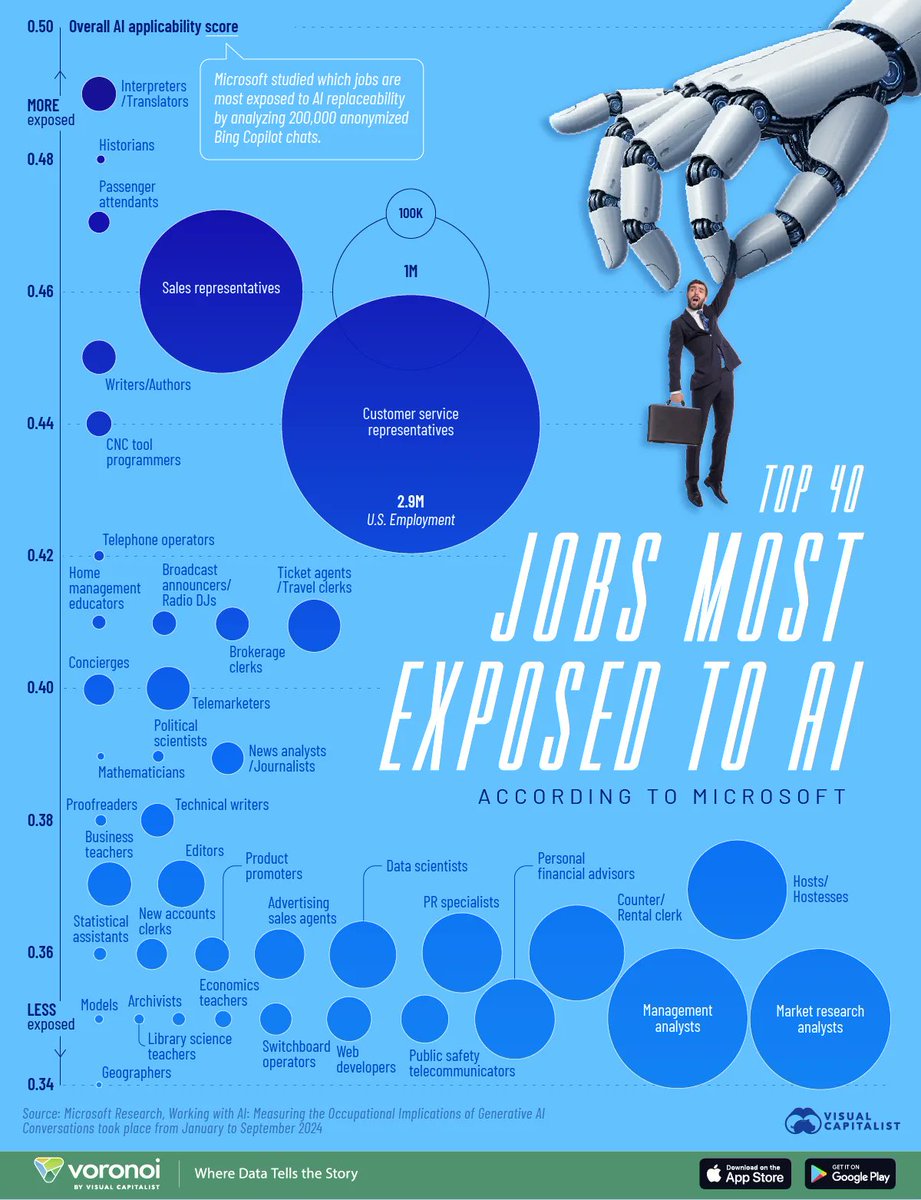
⬛️Visualizing the Top 40 Jobs at Risk From AI
🔷 The adoption of AI is growing rapidly worldwide, with machines increasingly capable of taking on work tasks that overlap with a variety of professions. It is unclear how AI will ultimately impact the workplace.
🔷 Will it become our assistant for everything or completely eliminate jobs? This graphic is based on data from Microsoft Research tinyurl.com/mbnd7cxc , which analyzed how people use AI and how closely these tasks align with professional activities ✨
@Khulood_Almani @AkwyZ @TamaraMcCleary @jenstirrup @GlenGilmore @mikeflache @pierrecappelli @MaryRich78 @tinapchopra @PhilippKnauer2 @DrHolzwarth @Female_Shift @sijlalhussain @subare @JimHarris @SusanneMadsen @timo_vi @DG_Collective @kerstingAIML @sallyeaves @CynthiaLIVE @pilotspeaker @enilev @mcgrathmag @HaroldSinnott @Scobleizer @antgrasso @SugShan @AndrewYNg @YuHelenYu @Eli_Krumova @ipfconline1 @jblefevre60 @ahier @karine_grows @RagusoSergio @labordeolivier @SabineVdL @kalydeoo @Der_BDI @digital_T_CH @drsharwood @Nicochan33 @AngelaNoonUK @JoanBajorek @mitsmr @wef @havardbiz @ideo 💫
#AI #GenAI #FutureOfWork #FutureOfJobs #People #Culture #Information #Creativity #Education #Interaction #Communication #Leadership #ComplexProblemsolving #FutureIntelligence #Competitiveness 💡
1
16
22
1,020
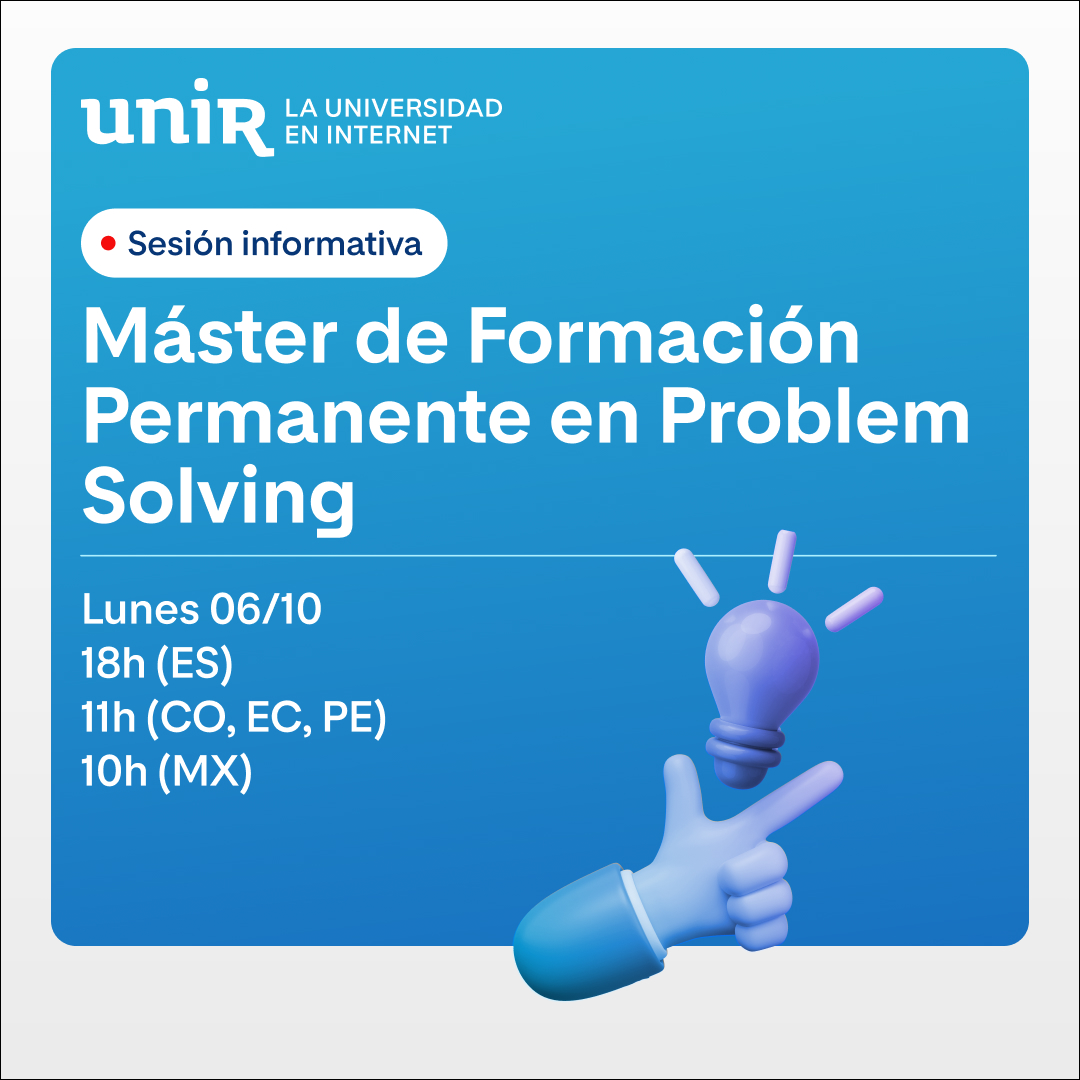
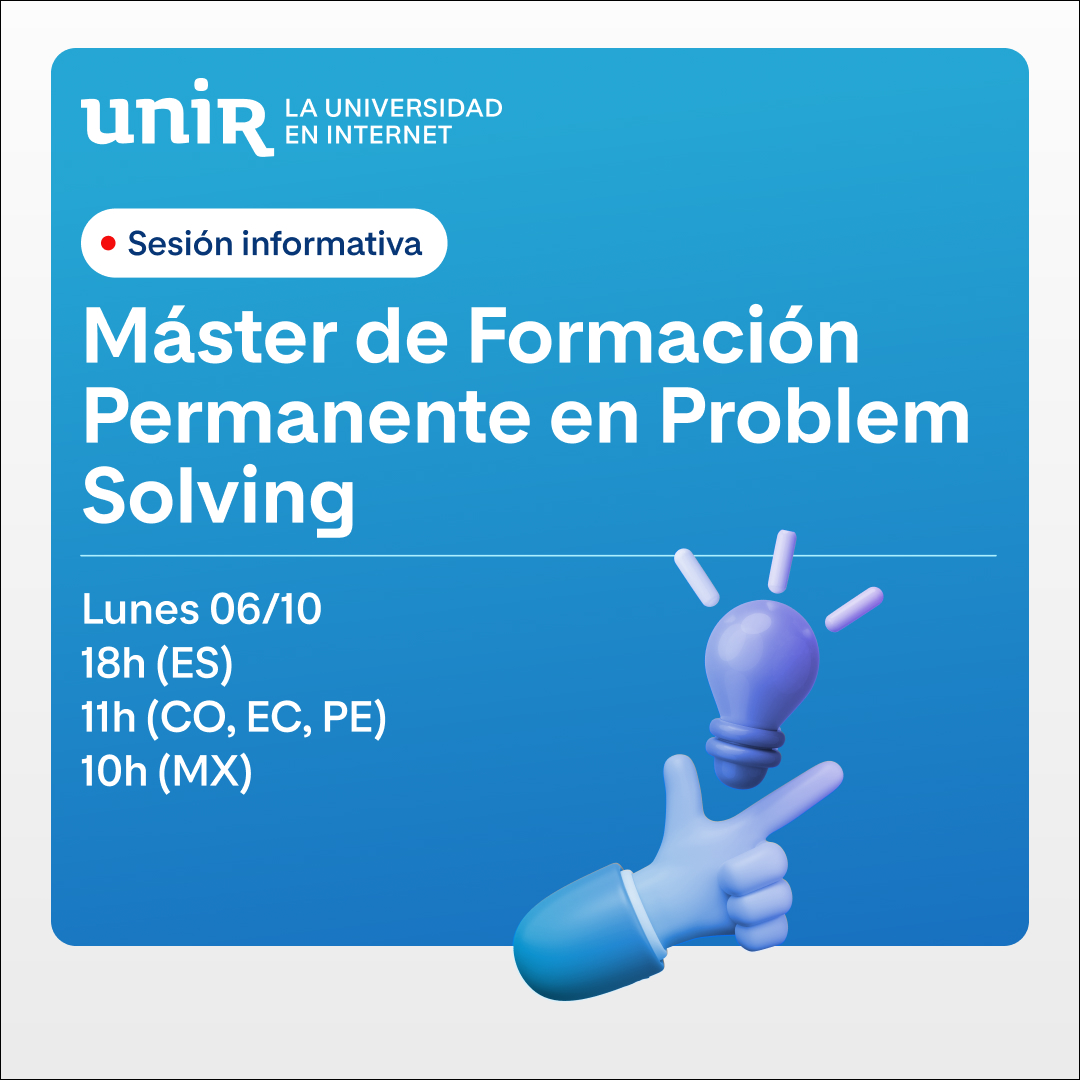
🔜 Hoy lunes, conoce cómo con el Máster en #ProblemSolving de UNIR, y junto a @Recuenco, aprenderás las técnicas y metodologías para resolver problemas complejos en cualquier sector.
📣 Apúntate y resuelve tus dudas en directo, ¡o recibe el vídeo!:
👉 f.mtr.cool/yezqkmrdlp
🎙️ No te pierdas la sesión informativa con Javier G. @Recuenco, experto en Complex Problem Solving y director académico de la titulación.
#problemsolving #resolucionproblemas #problemascomplejos #complexproblemsolving #formacion #unir
2
2
2,283
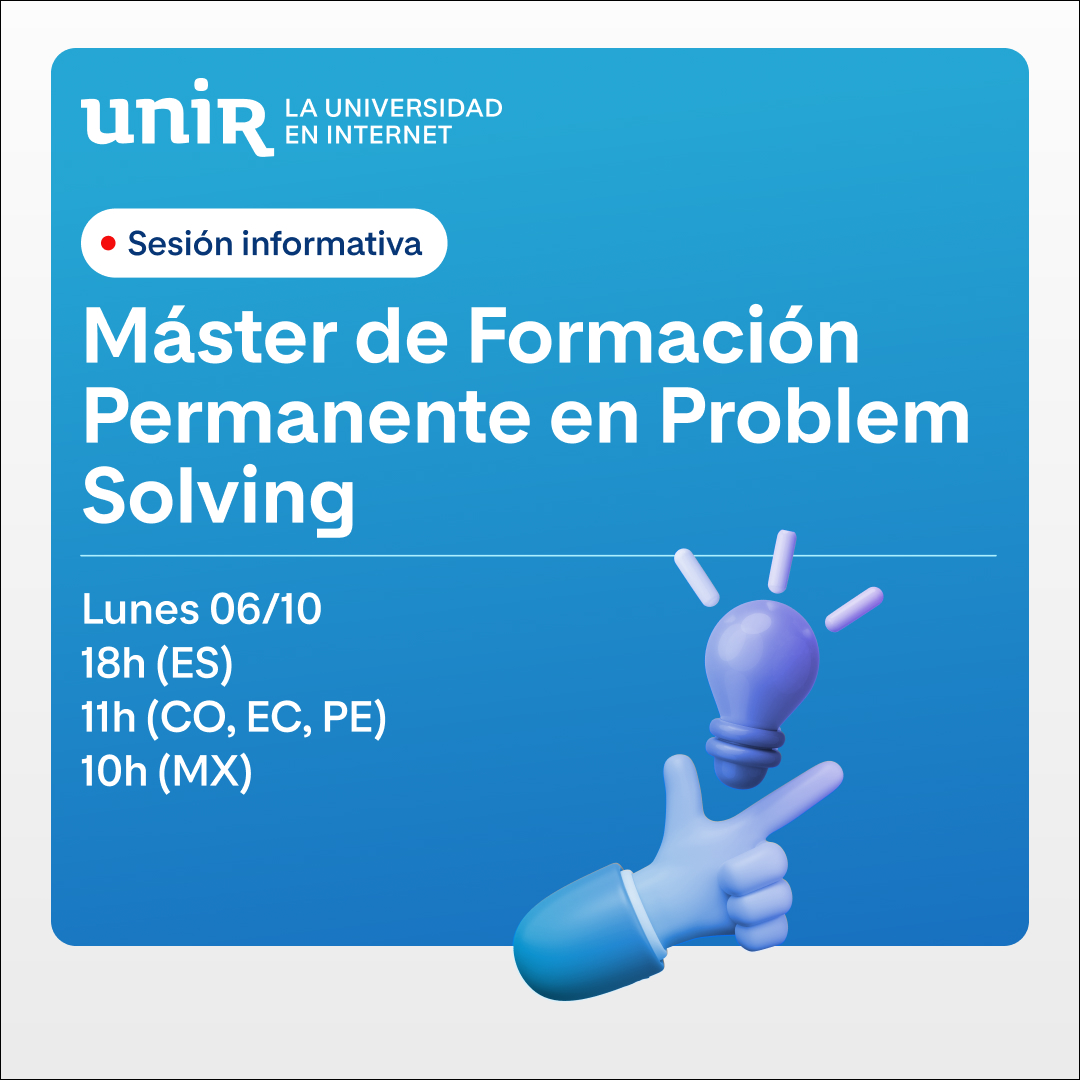
🔜 Conoce cómo con el Máster en #ProblemSolving de UNIR, y junto a @Recuenco, aprenderás las técnicas y metodologías para resolver problemas complejos en cualquier sector.
📣 Apúntate y resuelve tus dudas en directo, ¡o recibe el vídeo de la sesión!:
👉 f.mtr.cool/aflarnluha
🎙️ No te pierdas la sesión informativa con Javier G. @Recuenco, experto en Complex Problem Solving y director académico de la titulación.
#problemsolving #resolucionproblemas #problemascomplejos #complexproblemsolving #formacion #unir
1
1
3
1,364
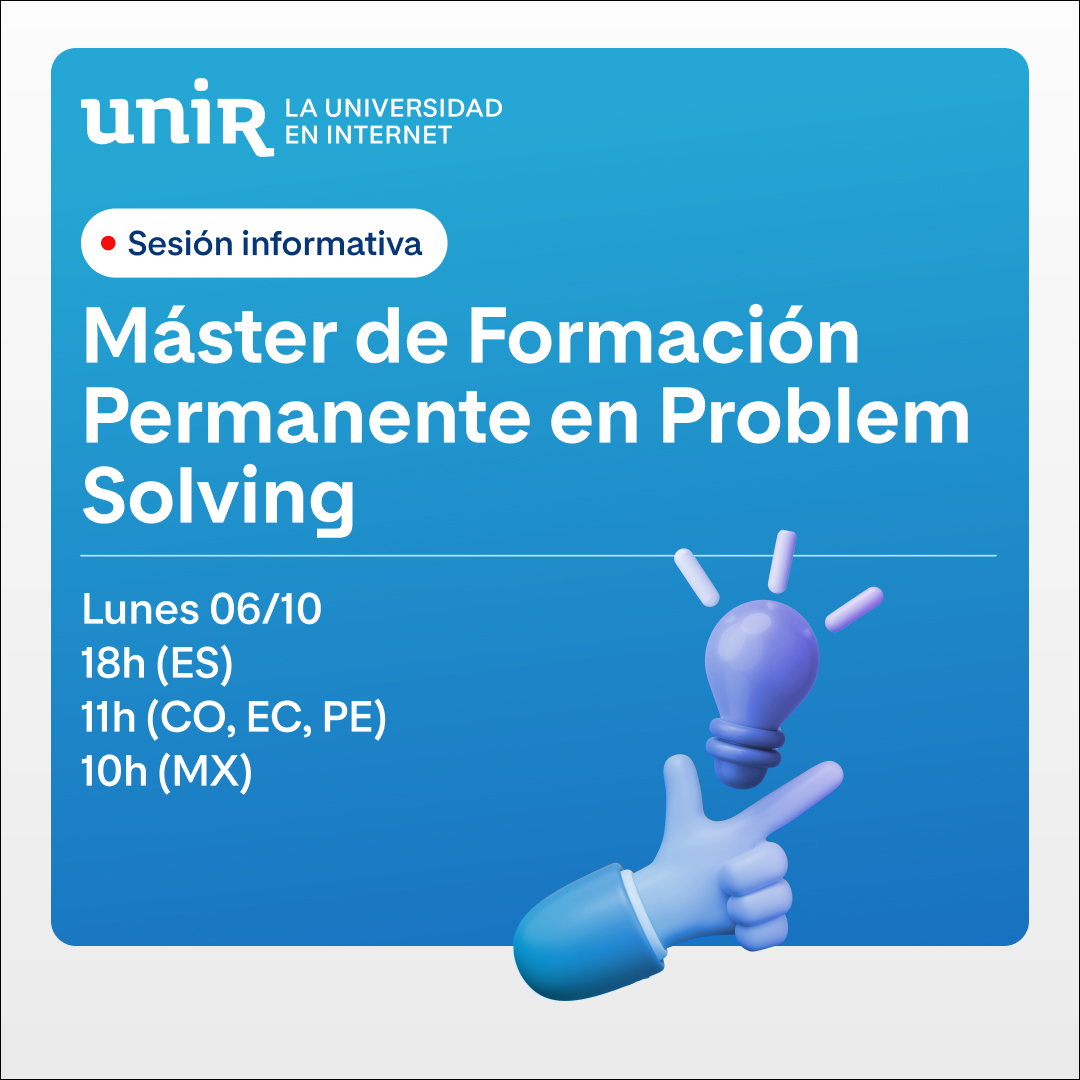
🔜 Conoce cómo con el Máster en #ProblemSolving de UNIR, y junto a @Recuenco, aprenderás las técnicas y metodologías para resolver problemas complejos en cualquier sector.
📣 Apúntate y resuelve tus dudas en directo, ¡o recibe el vídeo de la sesión!:
👉 f.mtr.cool/veewnjdhtc
🎙️ No te pierdas la sesión informativa con Javier G. @Recuenco, experto en Complex Problem Solving y director académico de la titulación.
#problemsolving #resolucionproblemas #problemascomplejos #complexproblemsolving #formacion #unir
2
5
1,841
🔜 Conoce cómo con el Máster en #ProblemSolving de UNIR, y junto a @Recuenco, aprenderás las técnicas y metodologías para resolver problemas complejos en cualquier sector.
📣 Apúntate y resuelve tus dudas en directo, ¡o recibe el vídeo de la sesión!:
👉 f.mtr.cool/lxdeumngoh
🎙️ No te pierdas la sesión informativa con Javier G. @Recuenco, experto en Complex Problem Solving y director académico de la titulación.
#problemsolving #resolucionproblemas #problemascomplejos #complexproblemsolving #formacion #unir
1
2
1,587
⬛ The #future belongs to #girls and #women: Why?
🔸️Men have ‘isolated talents’. Women are universal problem solvers🔸️
Happy International @womensday 🌍🌐
#IWD2025
#ff
@DrHolzwarth
@MMarilacr
@DrJessicaRitter
@esinekalos
@enilev
@Khulood_Almani
@Halpern_G
@SDGS4GOOD
@drfeifei
@Ricarda_Lang
@rike_tweet
@EP_President
@astro_insa
@ABaerbock
@baerbelbas
@beyond_ideology
@jenstirrup
@sgenner
@Digi_Polis
@UNWomen_Germany
@DG_Collective ...
#Politics #Management #Negotiation #Leadership #Science #Physics #AI #Math #ComputerScience #Education #STEM #Health #PeopleDevelopment #Space #Energy #Technology #Engineering #IXTransformation #ClimateAction ... #Complexproblemsolving 💫

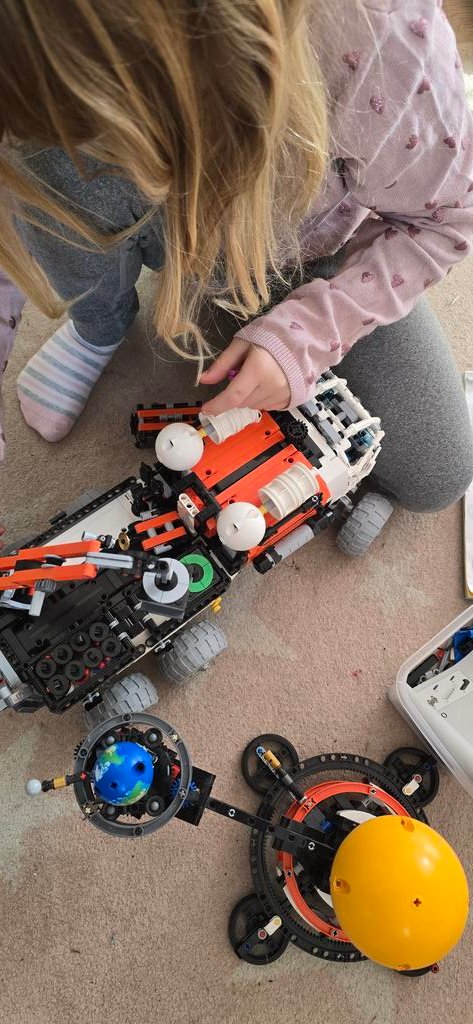
⬛️ It's crucial to introduce young girls to #technology early, e.g., with Lego Technic. This breaks down gender stereotypes, boosts STEM skills, and opens doors for #GenAlpha: More opportunities in #STEM careers, breaking barriers, and a more diverse tech future. Even small 'projects' promote not only technical skills, but also persevere, #creativity and self-confidence.
@TheRealBuzz @astro_insa @DLR @AkwyZ @Khulood_Almani @TamaraMcCleary @rwang0 @mikeflache @DG_Collective @jenstirrup @sallyeaves @CynthiaLIVE @Female_Shift @DrHolzwarth @sgenner @enilev @mcgrathmag @timo_vi @womensday @PhilippKnauer2 @Hessian_AI @kerstingAIML @HaroldSinnott @pierrecappelli @Scobleizer @AndrewYNg @YuHelenYu @tsedal @JimHarris @Eli_Krumova @ipfconline1 @jblefevre60 @tmberlin @ahier @karine_grows @RagusoSergio @antgrasso @SabineVdL @natascha_zeljko @kalydeoo @drsharwood @Nicochan33 @thomas_hubauer @PeterMWald @AngelaNoonUK @beyond_ideology @FraunhoferIMWL @SwissCognitive @SPRIND @wef
#STEM4Girls #TechForAll #Female_shift #Innovation #FutureOfWork #Transformation #FutureIntelligence
Here is my daughter Anna-Sophie with the "Mars Crew Exploration Rover" and planetary system she built ☀️🌐🌔
3
8
14
895