
Change Canada's #CriminalCode# The Age for Young Offenders must be decreased to age 12. @PierrePoilievre @MarkJCarney @jengerson @JasminLaine_ @VassyKapelos @MelissaLantsman
8
BC Health News retweeted

(1/2) We’re proud to share that the #CriminalCode and #CDNCharter are available in Braille.
📄 Criminal Code justice.gc.ca/eng/csj-sjc/cc…
📄 Charter of Rights and Freedoms (.brf) justice.gc.ca/eng/csj-sjc/rf…
#NationalAccessAbilityWeek #NAAW2026
ALT Graphic for legal resources available in Braille, featuring accessibility-related icons on a dark blue background. The footer includes the URL canada.ca/justice and the Government of Canada wordmark.
1
1
2
224


Follow our page for more ogbonge law content for Nigerian Pidgin
Go visit our website pthlp.com if you need information
Contact us via info@pthlp.com if you wan follow us talk.
#PTH #lawfirm #pidgin #criminalcode #cybercrime
2
25

May 22
How did a Judge just Ignore the MA CriminalCode that states NO witness to a criminal proceeding shall be Intimidated & Terrorized by ANYONE (let alone a mouthpiece for a MURDER Defendant)???
This makes my blood boil over.
2
14

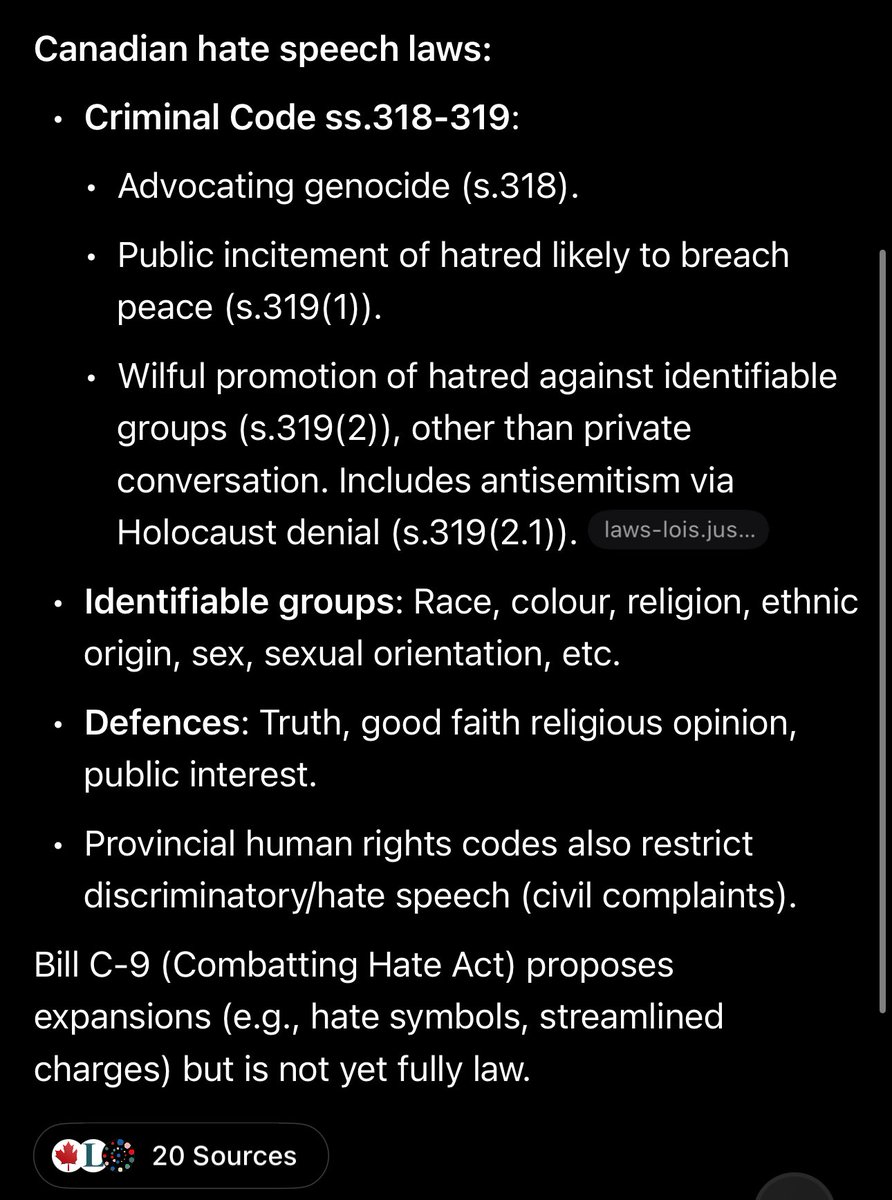
-Canada Hate Speech Law-
•Criminal Code ss.318-319
Would you look at this! Freespeech?
•Wilful promotion of hatred against identifiable groups ,other than private conversation. Includes antisemitism via Holocaust denial
#holocaust #israel #Canada #CriminalCode #freespeech
1
1
2
39

May 2
Charge her with treason ... #Treason in Canada, defined in Section 46 of the #CriminalCode, involves violent attempts to overthrow the government, 👉conspiring to commit high treason, or assisting an enemy at war with Canada. It is a highly serious indictable offense, with "high treason" (e.g., harming the monarch) or acts during war punishable by life imprisonment, while other acts carry up to 14 years #DepartmentofJustce

Patrick Lennox, Former RCMP Intelligence Manager, on Alberta’s election data breach:
That data—the full names, addresses, and phone numbers of almost 3 million voting age Albertans—circulated for at least a month in the Maple MAGAsphere, but has almost certainly been captured by state based authoritarian adversaries including Russia, China, and the United States.
This poses a massive public safety risk and exposes the October 19th referendum process to profound levels of foreign interference from the global far right. Alberta is completely exposed. All of our elections data is in the far right wind.
open.substack.com/pub/plenno…
1
8
11
175

Apr 10
Please help bring attention to her. 🙏👇🏻
In this video, the woman explicitly identifies herself as "The Chinese Hamas" and calls on global consumers to unite in boycotting and severing all commercial ties with the United States and Israel (including food, clothing, real estate, transportation, technology, and services) to "starve them."
The nature of her statements under the Canadian legal framework:
1.Declaration of Participation in a Terrorist Organization:
She refers to herself as "The Chinese Hamas." In Canada, Hamas is a designated terrorist entity. According to Section 83.18 of the Criminal Code, any person who knowingly and voluntarily contributes to the activities of a terrorist group is committing a crime.
2.Incitement of Terrorism:
She urges a comprehensive boycott to "starve them." While standard BDS activities are protected as political protest, the nature changes when issued under a terrorist identity. This may be defined as "providing material support" or "assisting a terrorist group." Her mention of "opening accounts" involves cross-border financial flows, potentially violating the Terrorist Financing Act.
3.Impact of the 2026 Combatting Hate Act (Bill C-9):
If her rhetoric is determined to willfully promote hatred against a specific group, she could face up to 10 years in prison. Displaying symbols and declaring terrorist identity in a public space is now subject to much stricter limitations.
4.Legal Consequences:
Criminal Liability: Potential maximum penalty of 14 years' imprisonment for enhancing a terrorist group's ability.
Administrative Measures: Watch list placement, freezing of bank accounts, or travel restrictions.
Conclusion:
This is no longer a "freedom of speech" issue; it is a public security matter involving "terrorist membership" and "incitement of subversion."
#RCMP
#CSIS
#PublicSafety
#Hamas #TerroristEntity #BillC9 #CriminalCode #NationalSecurity #CanadaLaw #HateSpeech #Investigation #Vancouver #CanadaNews
9
24
79
9,096

Apr 5
⚠️What's sad are your lies. Bill C-9 does not criminalize the Bible. Canada has had hate-speech provisions in the Criminal Code for decades and churches still quote scripture every Sunday. Spreading panic about Easter and the Bible doesn’t make it true.
#BillC9 #CanadaLaw #ReligiousFreedom #FactCheck #Easter2026 #Misinformation #Christianity #CriminalCode
5
5
180

Mar 21
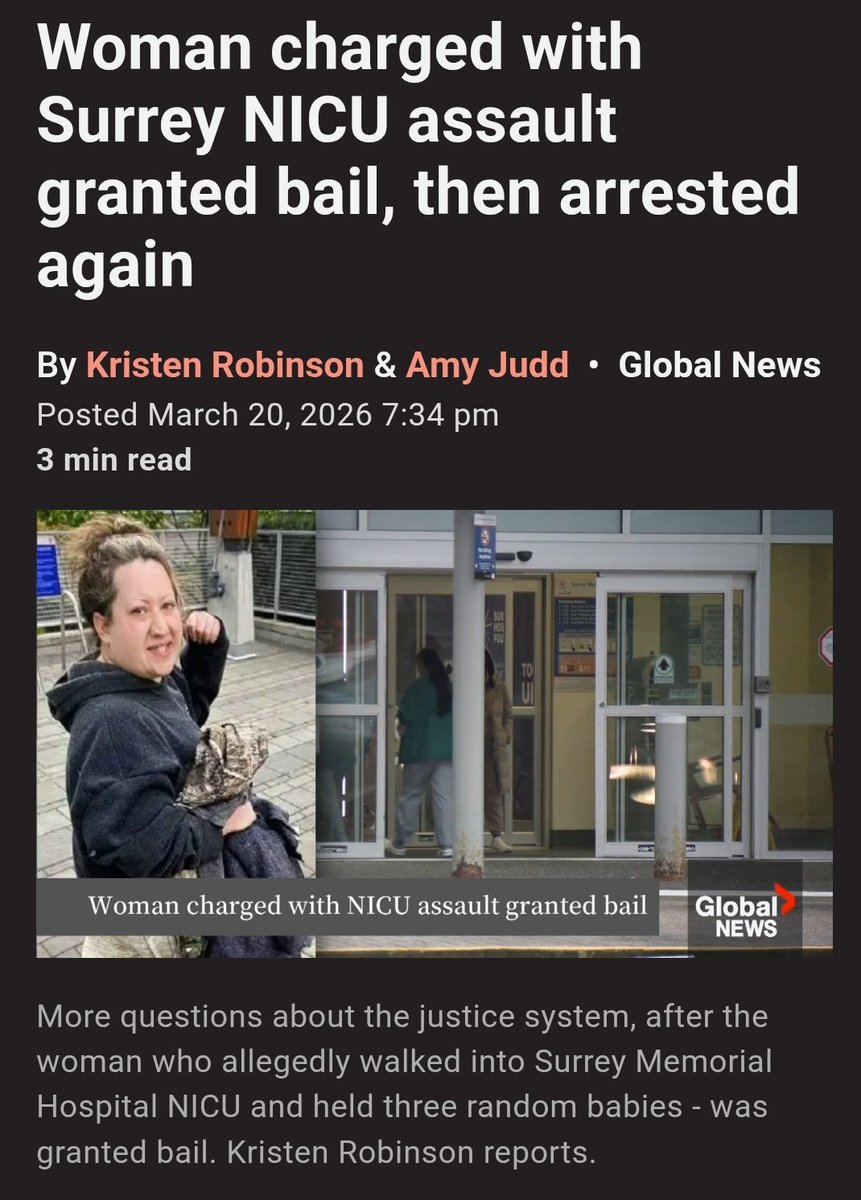
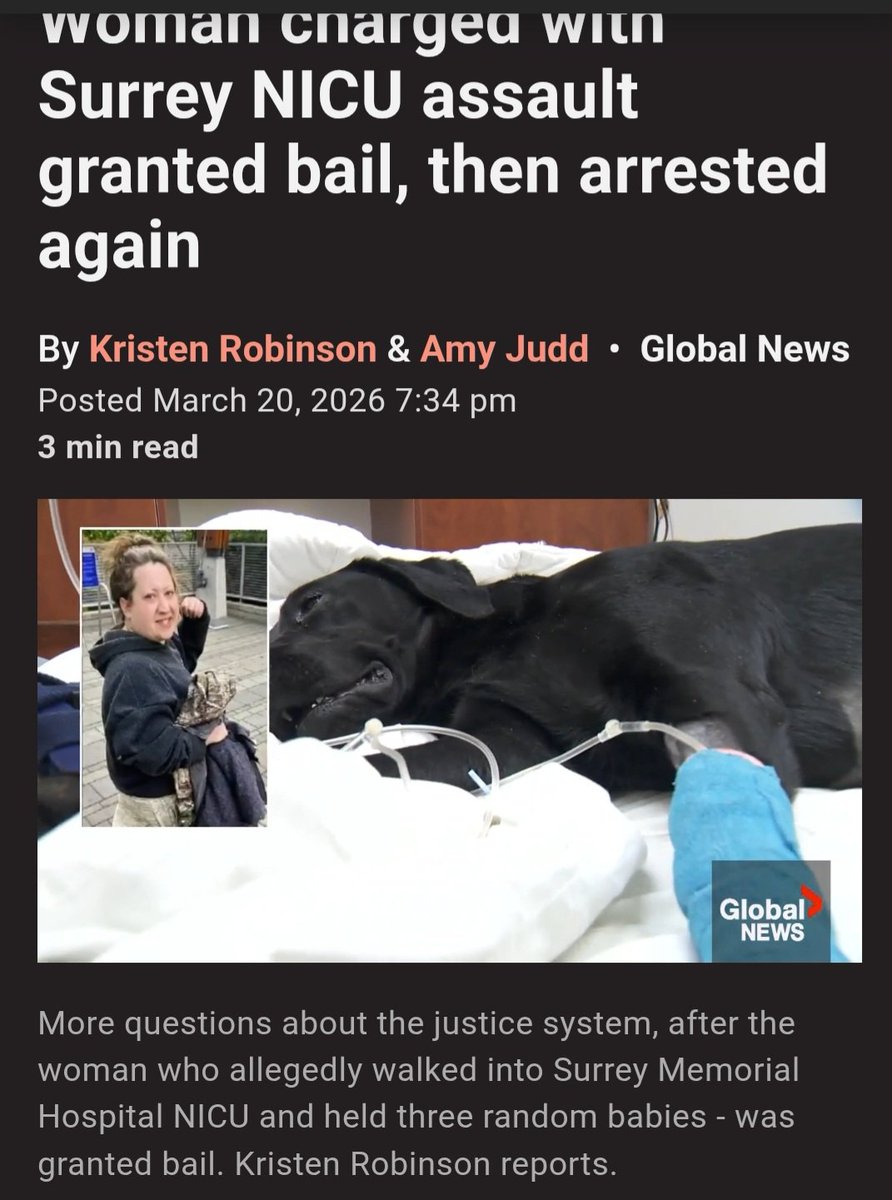
If you want a case study in how frightenly broken Canada’s judicial system is then look no further than this.
A woman who had been charged for repeatedly stabbed and violently abusing a neighbour’s dog was released.
She then enters Surrey Memorial Hospital’s NICU, becomes violent, removes her shirt, handles multiple newborns, and causes a two-hour security incident.
And guess what? Hospital security and hospital staff let her walk away.
She’s later charged. But judge granted bail at $500. Out on one condition using an fake address.
Days later? She's arrested again for another violent offence.
This is not a system exercising judgment. Its a system failing at the most basic function –risk assessment and public safety.
You don’t escalate from animal torture to a NICU breach involving newborns and get treated as low-risk.
globalnews.ca/news/11739874/… #bail #crime #law #criminalcode
102
793
2,240
54,986

Polygamy in Canada
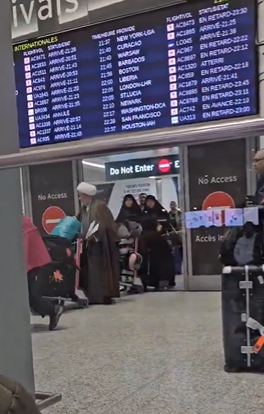
If it is true that a mullah is returning from Iran through Toronto airport with his four wives, then this is no longer about cultural diversity, but about a direct defiance of Canadian law. Section 293 of the Criminal Code clearly prohibits polygamy in Canada. In such a case, that individual should either be arrested or immediately expelled, depending on his legal status. If he holds permanent residence, it should be revoked. If citizenship was obtained through fraud, then that too should be revoked. Canada cannot claim to be a country governed by the rule of law only for ordinary citizens while turning a blind eye in sensitive cases.
Any person arriving in Canada must respect Canadian law. There is no religious, cultural, or political exception when the law is clear. If someone arrives with multiple “wives” at the same time, that person should not be allowed to enter the country. It is that simple. A serious border does not ask what religion you belong to, but whether you respect the law. And if the law says polygamy is prohibited, then the authorities have a duty to act, not to pretend they do not see it.
#Canada #Toronto #Polygamy #CanadianLaw #CriminalCode #Section293 #ImmigrationCanada #RuleOfLaw #TorontoAirport #RespectTheLaw
1
4
8
153

Absolutely a disgrace , Federal Crown DROPS/WITHDRAWS Drug charges without EXPLANATION. #CriminalCode #Drugs #Saskatoon #Saskatchewan , where is @PremierScottMoe now . This is outrageous. #Catch&Release #Crime #Drugtrafficking #Canada
Mar 9

Federal Crown drops charges against Calgary couple caught with nearly 8 kilograms of fentanyl on Saskatchewan highway thebureau.news/p/federal-cro…
3
98

Medical Assistance in Dying (MAiD) is often presented as an expansion of autonomy and compassion. However, there are serious ethical, social, and medical concerns that deserve careful scrutiny.
1. The Risk to Vulnerable People
One of the strongest criticisms is that MAiD may disproportionately affect vulnerable populations — including people with disabilities, the elderly, those living in poverty, and individuals experiencing loneliness or inadequate care. When suffering is linked to lack of social support, housing, mental health services, or accessible healthcare, offering death as a solution can appear less like compassion and more like abandonment. A society that normalizes assisted death must ensure it is not substituting medical killing for meaningful care.
2. Slippery Expansion of Eligibility
In several jurisdictions, eligibility criteria have expanded over time — from terminal illness to chronic illness, then to non-terminal conditions, and in some cases to mental illness alone. Critics argue that what begins as a narrowly defined exception can gradually become broader, raising concerns about where the ethical line is drawn. The incremental normalization of assisted dying may change cultural attitudes toward the value of life, particularly for those who are suffering but not dying.
3. The Integrity of Medicine
Traditionally, the role of medicine has been to heal, relieve suffering, and preserve life. Some argue that involving physicians in intentionally ending life alters the foundational ethics of the profession. The Hippocratic tradition emphasizes “do no harm,” and critics contend that redefining harm to include continued existence under suffering fundamentally shifts the moral framework of healthcare.
4. Coercion and Subtle Pressure
Even where formal safeguards exist, there can be subtle forms of pressure financial, emotional, or familial. A person may feel like a burden to caregivers or to the healthcare system. In contexts where long-term care, disability supports, or palliative services are underfunded, the “choice” of assisted dying may not be fully free.
5. Impact on Suicide Prevention
There is also concern about the societal message sent when the state facilitates death in certain circumstances while simultaneously trying to prevent suicide in others. This creates a moral tension: why is one form of self-inflicted death framed as rational and dignified, while another is treated as a crisis requiring intervention? The distinction may not always be clear to the public.
6. Insufficient Palliative Care Access
Many critics argue that before expanding MAiD, governments should ensure universal access to high-quality palliative care. No one should request assisted death because pain management, psychological support, or end-of-life care are inadequate. In many places, palliative services remain unevenly distributed.
7. Moral and Religious Concerns
From many religious and philosophical traditions including Islam, Christianity, Judaism, and others human life is considered sacred and not subject to intentional termination by human hands. Even outside religion, secular humanists may argue that the inherent dignity of life should not depend on productivity, independence, or absence of suffering.
#MAID #CriminalCode #Suiside
#BeTheChange
1
2
91

Feb 7
Buddy just explained Insurance Fraud you dumbass🤣 a commonality amongst y’all
🇨🇦’s CriminalCode [Sec.308(1)] —
“Deceit/Fraudulent means whether or not under false pretence” = federal offence
Migrants who violate our Constitution ought to be subjected to automatic deportations
2
4
389

Jan 28
Taliban’s New Criminal Code Legalises Slavery, Enforces Class-Based Justice In Afghanistan
freepressjournal.in/world/ta…
#Taliban #CriminalCode #Slavery #Justice #Afghanistan #HibatullahAkhundzada ✍️@_deeksha_pandey
To get epaper daily on your whatsapp click here:
whatsapp.freepressjournal.in
3
139

शादी से पहले संबंध बनाना और सरकार पर सवाल उठाना पड़ेगा भारी, इंडोनेशिया में नए साल पर अनोखे नियम
#Indonesia #CriminalCode
tv9hindi.com/world/indonesia…
1
174

11 Dec 2025
Canada repost and tell
Ottawa to Call an Emergency Debate
#Healthcare is Broken
&
#MAID is out of Control
#Suicidal is trending
#Suicide
#AssistedDying
#AssistedSuicided
#Death #AS #MAiD
#AssistedMurder
#Murder
#CriminalCode
#jolene
#EmergencyDebate
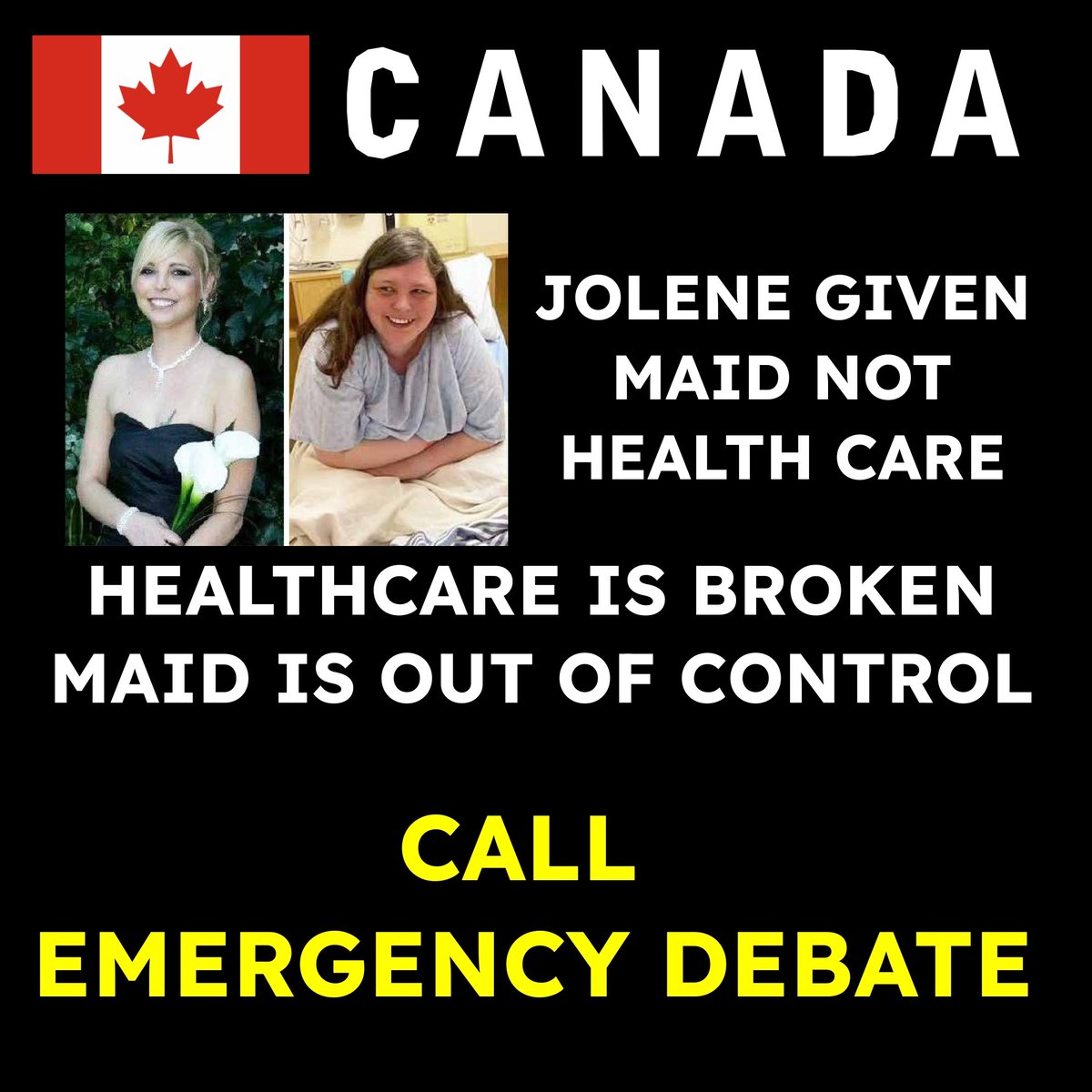
ALT Canada Jolene given me not Health Care Health Care is broken made is out of control call an emergency debate
9 Dec 2025

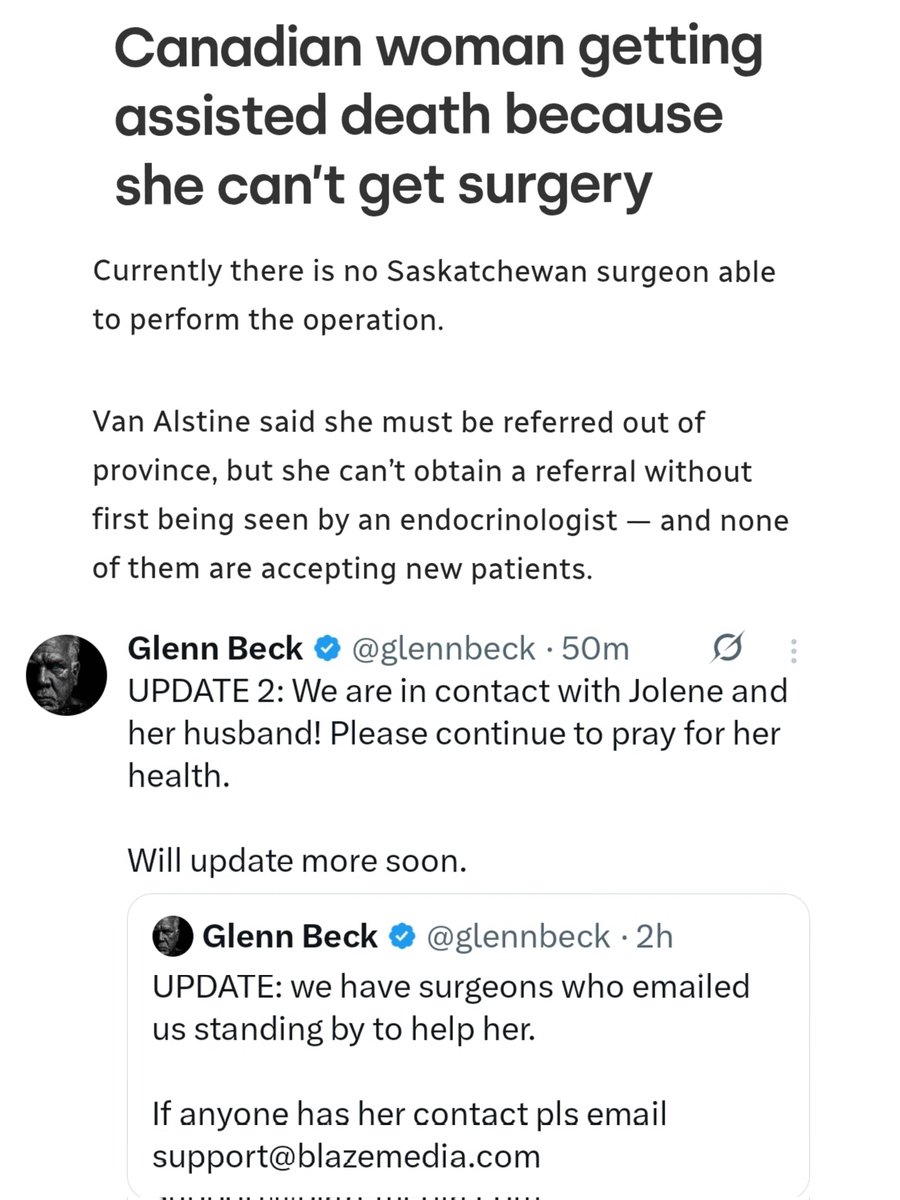
Americans are rallying up for a Canadian woman who has been abandoned by the Canadian healthcare system and got approved for euthanasia instead.
Jolene Van Alstine has been suffering from a parathyroid disease for the past 8 years. It causes severe pain and nausea.
She needs a surgery to remove the remaining parathyroid but no surgeon in Saskatchewan can perform it and no specialist will take a few more moments out of their day to see her to write a referral.
Glenn Beck saw the story and stepped up to help her and so did surgeons from the US.
What an absolute embarrassment for Canada, and the fact that no one stepped up to help here.
2
2
30

9 Dec 2025
Bravo! None must be allowed to spread #Hate and hide behind #Relgion #conscience #Belief or #Faith #CriminalCode #Canada #cdnpoli
9 Dec 2025

Liberals to accept Bloc amendment to remove religious exemption from hate-speech laws - The Globe and Mail
theglobeandmail.com/politics…
1
7
665

30 Nov 2025
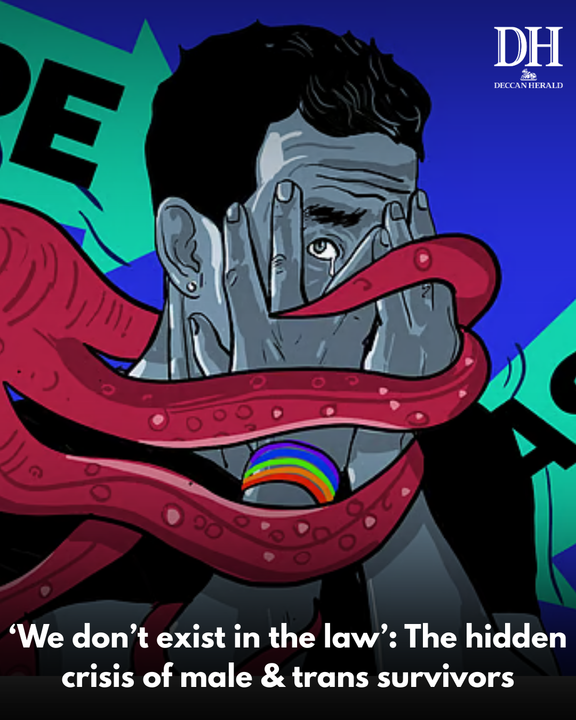
India's new #criminalcode still defines rape solely as a man assaulting a woman, rendering male and #transgender survivors legally invisible.
deccanherald.com/specials/hi…
2
1
403