

This Al bubble and stock market bubble will crash and make the 2008 crisis and the dotcom bubble look like pea nuts
I mean even SpaceX is already filling to be an AI company. They filled as 7370 , in computer programming and data processing. So it’s filling as an AI and data centre co. Everyone /company loves AI exposure but this systematic exposure will trigger the cascade of the next bubble. Time will tell.
1
5

21m
Permanently? Go away? You are at the beginning of the new age, the new dotcom bubble, the striking of oil and you think this will go away? 😂😂
Wake up, kid. You just stepped into the beginning of cyberpunk 2077, blade runner, the new sci fi future. They just shut down mythos/fable 5 for being a national security risk and you think it’s gonna pop? There are endless bridges available to you right now and I’ve got the contracts for you to sign. Learn agentic Ai today or get left behind. Unless we all die in nuclear Armageddon or Christ comes back to war against evil, Ai is here to stay and the wealth redistribution is now. Quit being a retarded socialist bitch and find a way to get paid. It’s happening now and you might let it slip by.
4
dapachebre retweeted

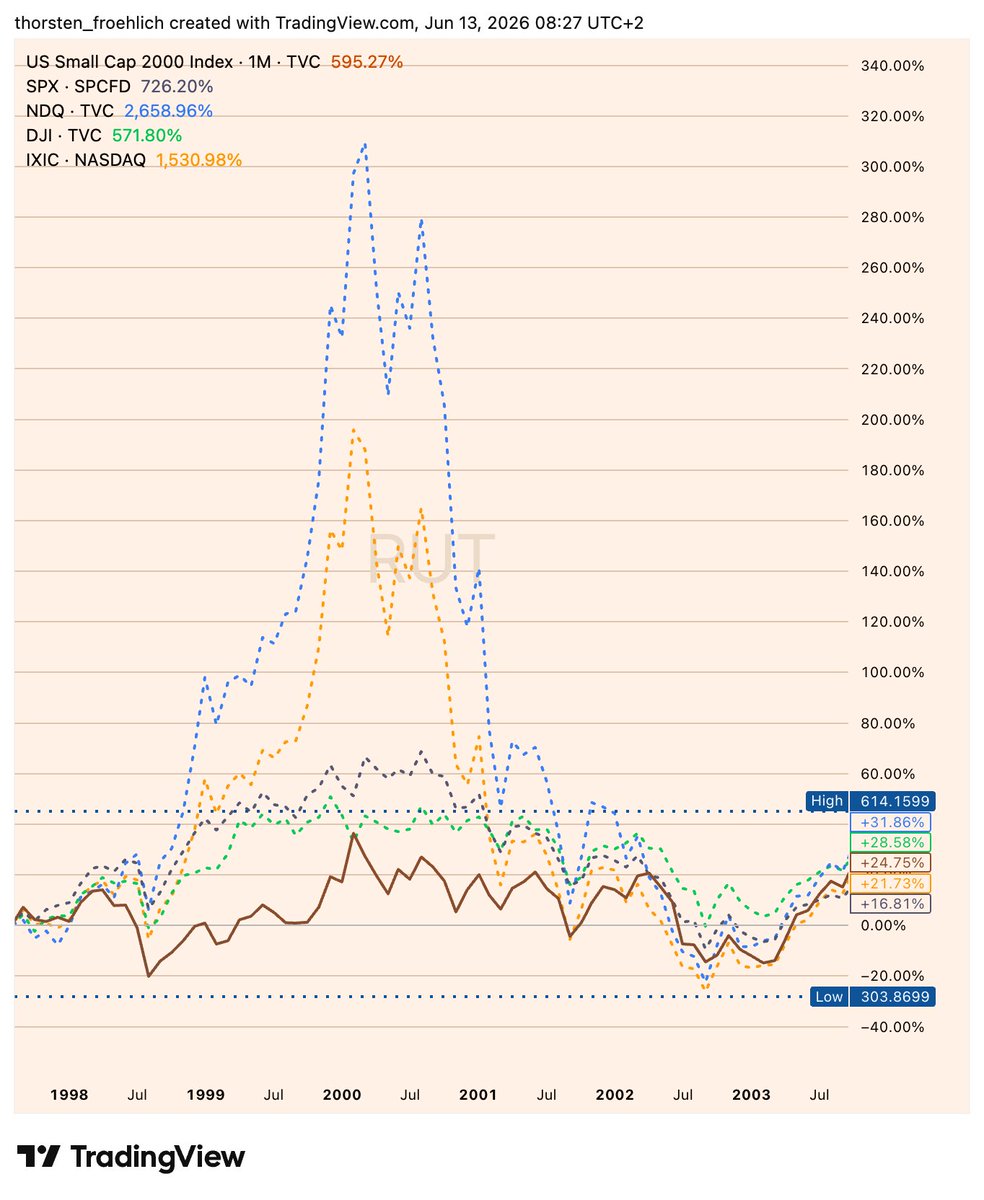
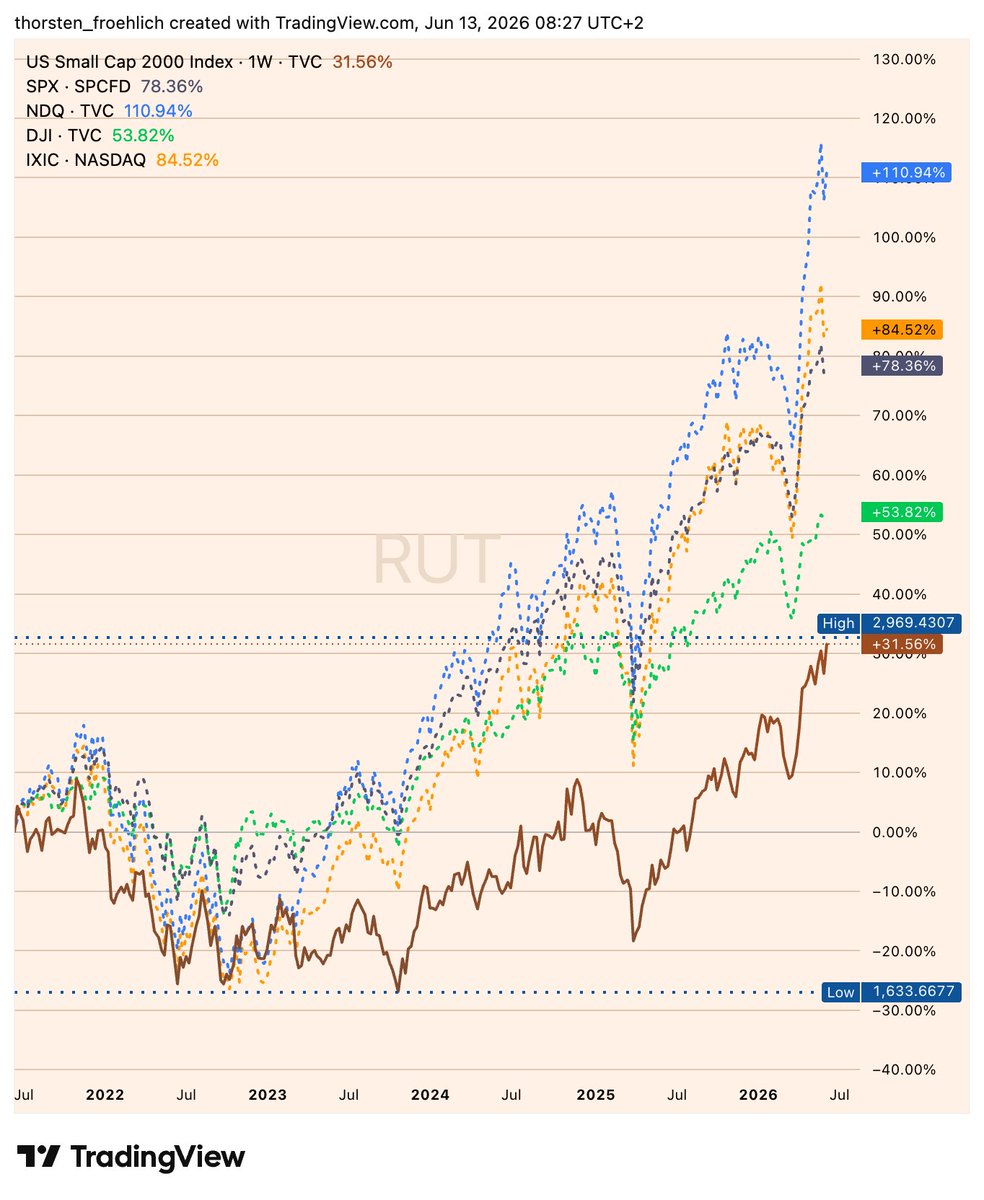
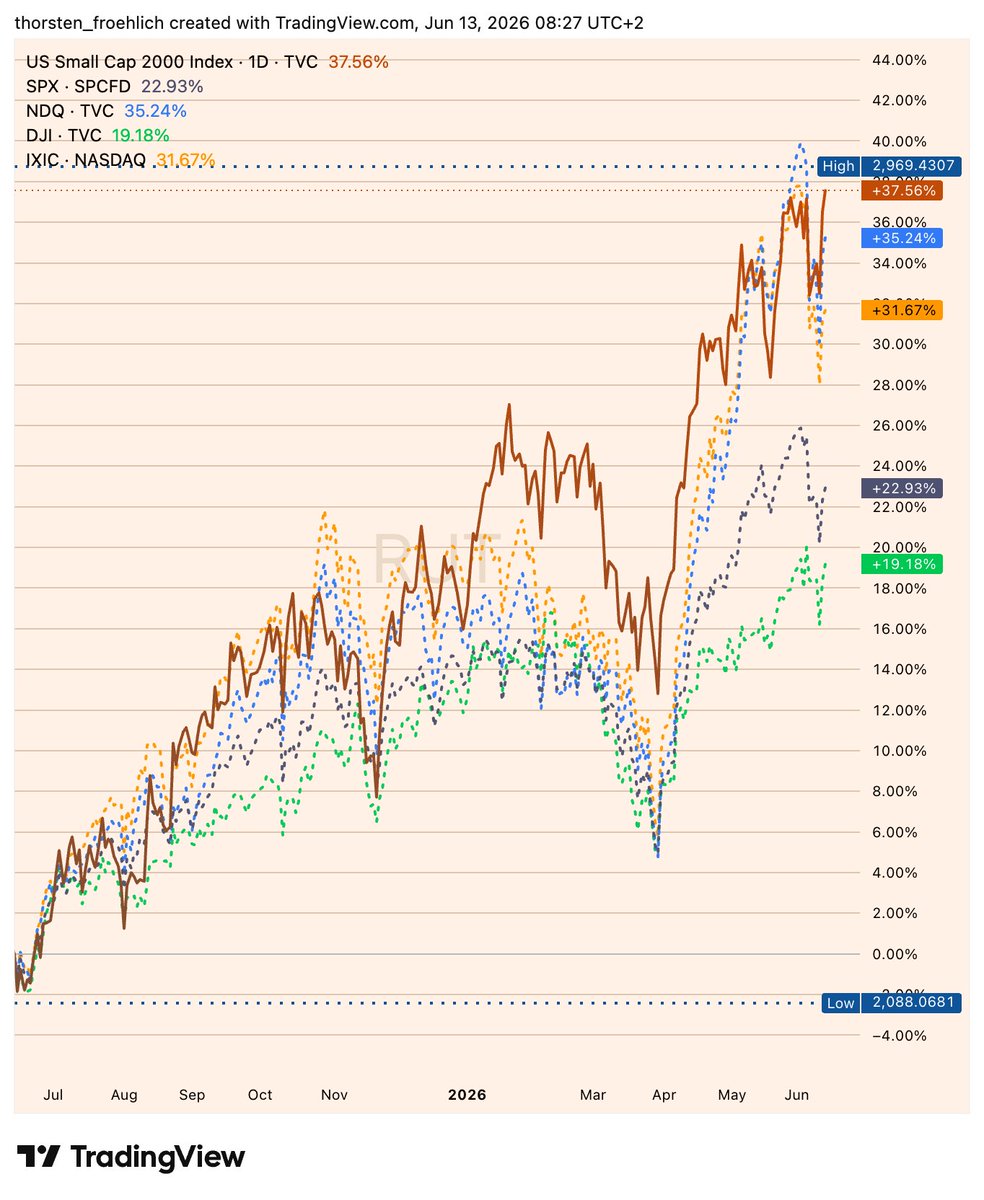
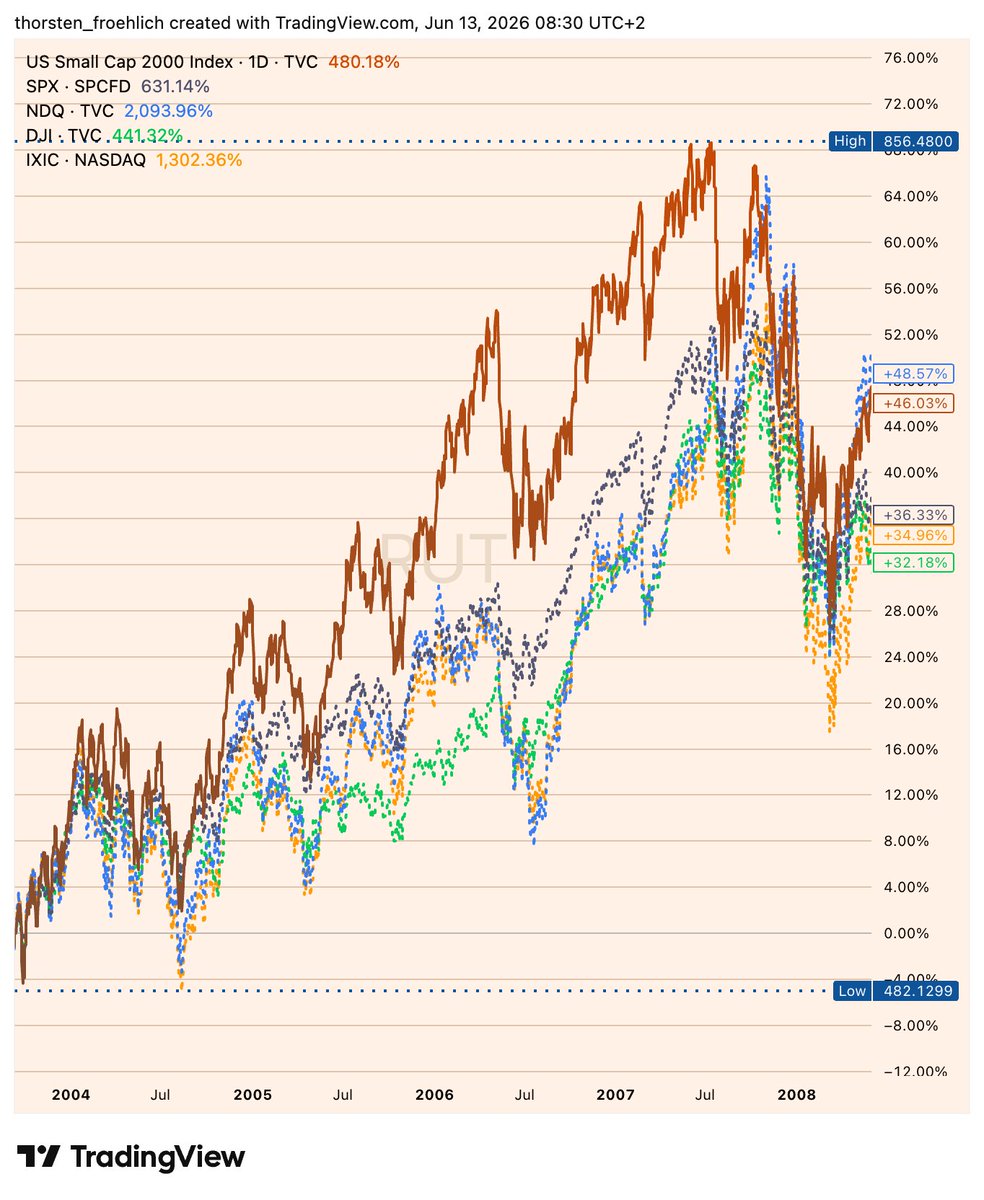
This is not #DotCom, this is the mother of all bubbles - broad extreme valuations across the board.
Observe Russell 2000's catch up - the RUT oupterformed the Nasdaq 100 over a 1y time horizon and started its masssive rally in November 2025.
Similar behaviour could be observed into the GFC, but now coupled with obsene valuations in the tech space.
8
5
44
2,983
Minimaal bedrag om ook maar iets in te mogen brengen bij een aandeelhoudersvergadering van SpaceX kost nu al meer dan 10 miljard dollar.
Meer dan dubbele waarde Saudi Aramco en die produceren 10% van de wereldwijde vraag naar olie.
Dotcom Bubble moment, bye bye money! 🥳

The world just paid $2 trillion for a rocket company that lost $4.9 billion last year. And the rockets are not why it lost the money. They are the only part making any.
SpaceX went public Friday, the largest IPO in history. Up 19%, a $2 trillion valuation, Elon Musk the first trillionaire. Then you open the filing.
Three businesses sit inside it. Starlink, the satellites, brought in $11.4 billion, 61% of all revenue, and $4.4 billion in profit. It is the only piece that earns a dollar. The rockets that land themselves run a small loss reinvesting in Starship. And the AI arm, Grok plus the app once called Twitter, folded in this February, lost $6.4 billion in a single year on $12.7 billion of spending.
Read that again. The satellites pay for everything. The AI loses more than the satellites make. And the AI is the part the market fell in love with.
It gets bolder. The prospectus claims a total market of $28.5 trillion, the largest any company has ever put in a filing. Larger than the GDP of the United States. That is the number underwriting a $2 trillion price tag built on a division bleeding $6 billion a year.
Now the structure. About 4% of the company trades. That sliver sets the price for all of it. Musk is locked up for 366 days and holds roughly 80% of the votes. The public bought a company they cannot steer, priced on the one segment losing the most.
This is the whole year in one ticker. The profit is satellites. The story is AI. The market bought the story.
The rockets were never the risk. The risk is a $2 trillion price resting on the one bet that has yet to make a cent.
8

1h
"My father was an alcoholic. He broke my mother's bones. He's the reason I've never drank any alcohol."
"My mom tried to find ways to get me my first computer. Once I had my computer, school was a waste of time. I want to learn about computers. I want to learn about the future."
Kim Dotcom: Caught in the Web. Now streaming on CiVL.
18


India can perhaps reprise its role from the Dotcom era by becoming centres for data synthesis and processing. We'll also see how far Sarvam goes and it's a start at least.
2
94

Very good point! I also experienced DotCom bubble inside of it, as software engineer. Anthropic just got killing regulations regarding their most advanced and promising models. With rising awareness of subsidized AI can be the case.
13

2h
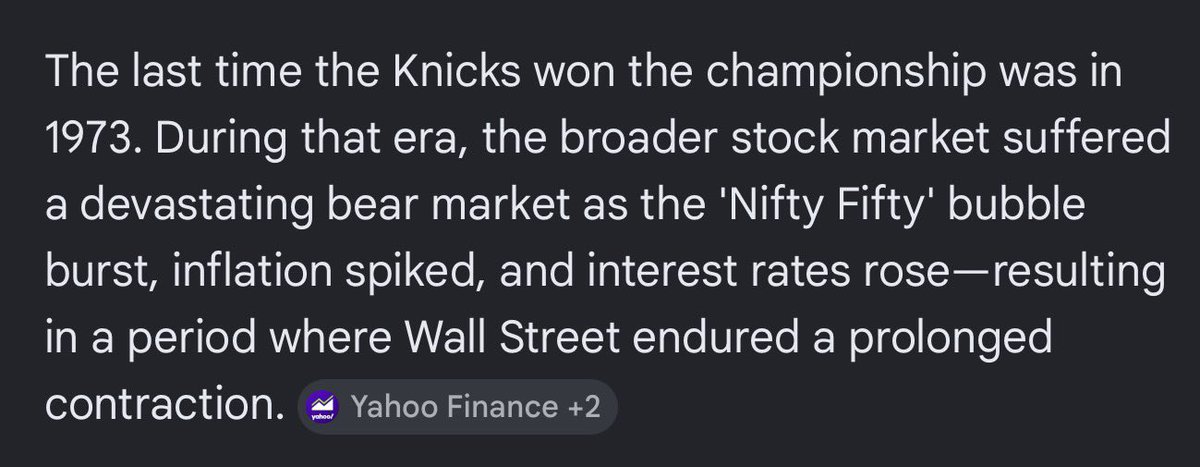
Also the last time the Knicks made it to the finals was right before the dotcom crash

1
4
539

I agree, that jacket is holding the dotcom bubble to Ai bubble. The last time he took off the jacket in 2007 the economy crashed
1
120
۫ retweeted

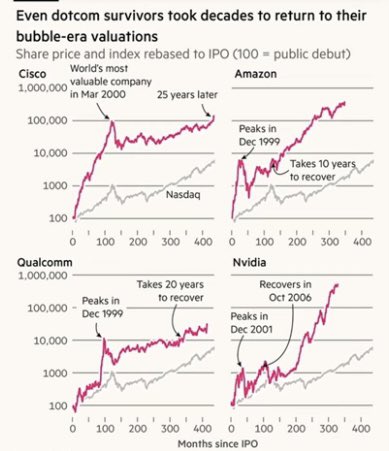
THE MOST HYPED IPO OF THE DOTCOM ERA DIDN'T CAUSE THE CRASH. IT MARKED THE TOP.
SPACEX SHOULD MAKE YOU THINK.
🇺🇸 March 2000:
Palm went public in the most hyped listing of its time.
It opened at $150, then fell more than 50% within the same month.
Days later, the Nasdaq peaked. Then fell 78% over the next two years.
Palm didn't break the market. It was the symbol of a euphoria that had run out of road.
Now SpaceX lists at over $1,750,000,000,000, the largest IPO in history, while the S&P's tech weighting is heading past 54%.
In 2000 it topped near 35%.
I'm not calling a crash.
I'm waiting six months before I touch it.
29
17
307
71,050

XXXagenic.com — Premium AI Domain for Sale
“Agentic” is the defining word of the AI era. XXXagenic.com is a coined, brandable .com built around it — memorable, distinctive, and completely ownable.
Reads as a company that generates agents, builds agentic systems, or operates at the frontier of autonomous AI. The kind of name that looks at home on a YC pitch deck, a Series A announcement, or a developer platform landing page.
Short. Pronounceable. Zero hyphens. Global .com. Available now.
Ideal for AI agent platforms, agentic workflow tools, multi-agent orchestration startups, or any AI infrastructure company that wants a name with real energy and instant category clarity.
Make an offer → [XXXagenic.com]
#DomainForSale #PremiumDomain #DomainInvesting #DomainSale #DomainsForSale #AgenticAI #AIAgents #AIStartup #ArtificialIntelligence #GenerativeAI #AIFounders #StartupName #BrandableDomain #TechStartup #AIInfrastructure #MultiAgentAI #LLM #AgentAI #StartupBranding #FounderLife #VentureCapital #YCombinator #TechFounder #AITools #FutureOfWork #Automation #StartupLife #NamingStrategy #DomainName #dotcom
23


I went live on my 0F earlier today and tried several of these in. L!no to my 0F is in my bio ⬆️ or ElainaVerified (dotcom) under “Exclusive Content”
2
5
173
6,493

Tim Travis retweeted

20. Warren Buffett is one of the greatest investors of all-time.
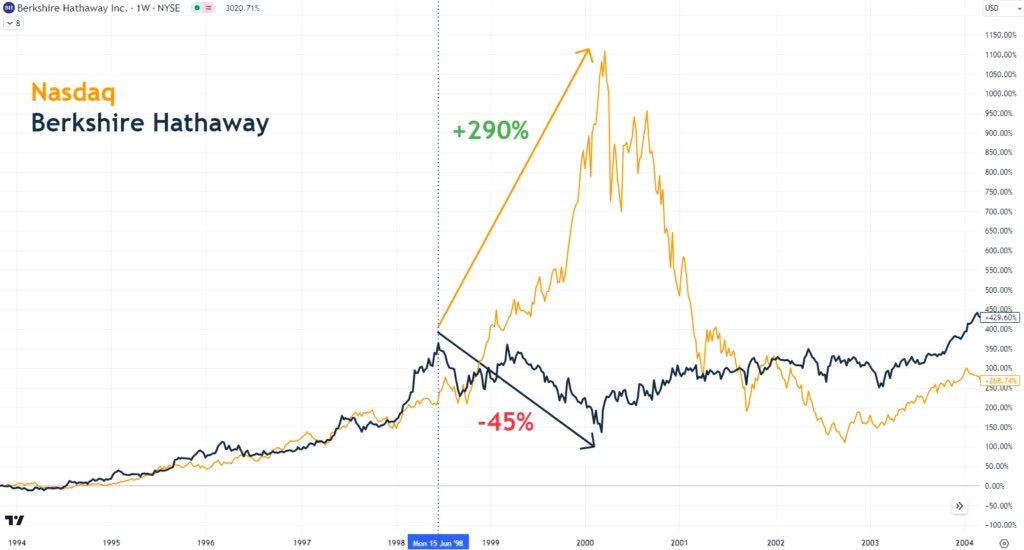
In the 20 months leading up to the Dotcom peak, Berkshire Hathaway lost 45% of its value. The NASDAQ 100 gained 290% over the same time.
No pain, no premium.
Chart 5: Berkshire Hathaway vs Nasdaq during Dotcom

The 20 craziest investing facts ever.
"Anything is possible on the stock market. Even the opposite." – André Kostolany
1. Since 1916, the Dow has made new all-time highs on less than 5% of all days. Over that same span it's up almost 300,000%, dividends included. You are underwater 95% of the time.
The less you look, the better off you are.
2. The Dow has compounded at less than 4 basis points a day since 1970. That tiny daily drip became a 30,000% gain. $1,000 turned into $300,000.
Compounding is magic.
3. The Dow has been positive on just 52% of all days. The average up day is 0.73%. The average down day is -0.76%.
A coin flip, tilted barely in your favor.
4. The Dow has spent more time 40% or more below its highs than within 2% of them. 20.6% of days versus 18.4%.
No pain, no gain.
5. The Dow gained 38 points in the entire decade of the 1970s.
Ten years. Thirty-eight points.
6. The Dow and the S&P 500 have a rolling one-year correlation of 0.95 since 1970.
They're the same thing. Stop arguing about it.
7. At the 2009 low, US stocks were back to where they stood in 1996.
Stocks for the long run. The very long run.
8. At the 2009 low, Japanese stocks were back to where they stood in 1980.
A 29-year round trip to nowhere.
9. US one-month Treasury bills went 68 years with a negative real return.
What feels safe in the short run can be the real risk over a lifetime.
10. At the 2009 bottom, long-term US government bonds had outperformed stocks over the previous 40 years.
Stocks usually beat bonds. Usually is not always.
11. Gold and the Dow were both at 800 in 1980. Today gold is around $4,200 an ounce. The Dow is near 48,000.
Cash flows beat commodities.
12. And yet, since the dot-com peak, gold is up 1,400% and stocks are up 500%.
You can support almost any argument by changing the start and end dates.
13. If you were born in 1970, the S&P rose nearly tenfold by the time you grew up. If you were born in 1950, the market went nowhere.
We build our entire worldview on the luck of our birth year.
14. Managed-futures funds gained 14% in 2008 while stocks lost 37%. Since 2009, they're up 29% while stocks are up 520%.
Non-correlation cuts both ways.
15. Invest from 1960 to 1980 and beat the market by 5% a year, and you'd have made less than someone who invested from 1980 to 2000 and underperformed by 5% a year.
When you were born matters more than how good you are.
16. The Dow fell 17% in 1929, 34% in 1930, 53% in 1931, and 23% in 1932. Four straight years.
Be grateful for the one you're living in.
17. Only 47.7% of stocks have ever produced a lifetime return that beat one-month Treasury bills.
Most funds miss the market because most stocks do.
18. In 1908, Dow earnings were cut in half. The index rose 46% that year.
The stock market is not the economy.
19. In 1949, the market traded at 6.8x earnings with a 7.5% dividend yield. Fifty years later it hit 30x earnings with a 1% yield.
You can model everything and still never predict how investors will feel.
20. Warren Buffett is one of the greatest investors who ever lived. In the 20 months into the dot-com peak, Berkshire lost 45% while the Nasdaq 100 gained 290%.
No pain, no premium.
5
5
31
3,478

Yes usually bubble in consumer staples precedes the larger bubble— look at staples during dotcom era
14

🚀 Glantal.com — A strong, modern, and globally brandable .COM domain ready for startups, tech ventures, and ambitious businesses. 🌍✨
#Glantal #PremiumDomain #DomainForSale #StartupBrand #BrandableDomain #DotCom

1
フェアラート❖Atomos retweeted

13h
Rindou Dotcom 日記「【二天から・進行度応相談】絶竜詩固定@ST・H2・D3募集【集まり次第スタート】」 | FINAL FANTASY XIV, The Lodestone jp.finalfantasyxiv.com/lodes…
1
3
194