THE THESIS
Everyone's treating Google's Antigravity 2.0 as a cool demo: "AI agents built an OS!" They're missing the real story. The OS isn't the point. The point is we just got proof that the bottleneck in multi-agent AI has shifted from model intelligence to orchestration architecture — and Google solved it with a seven-role org chart that looks more like a well-run startup than a research experiment.
THE EVIDENCE
93 AI subagents. One prompt. No human corrections. A working OS with kernel, process management, memory management, filesystem, video and keyboard drivers. FreeDoom ran on it. Then the same system built AlphaZero from scratch, a photo editor, a real-time messaging app, and a collaboration platform.
Here's the detail everyone glosses over: Gemini 3.1 Pro FAILED this task. The bigger, more expensive model couldn't complete it. Gemini 3.5 Flash — the cheaper, lighter model — succeeded.
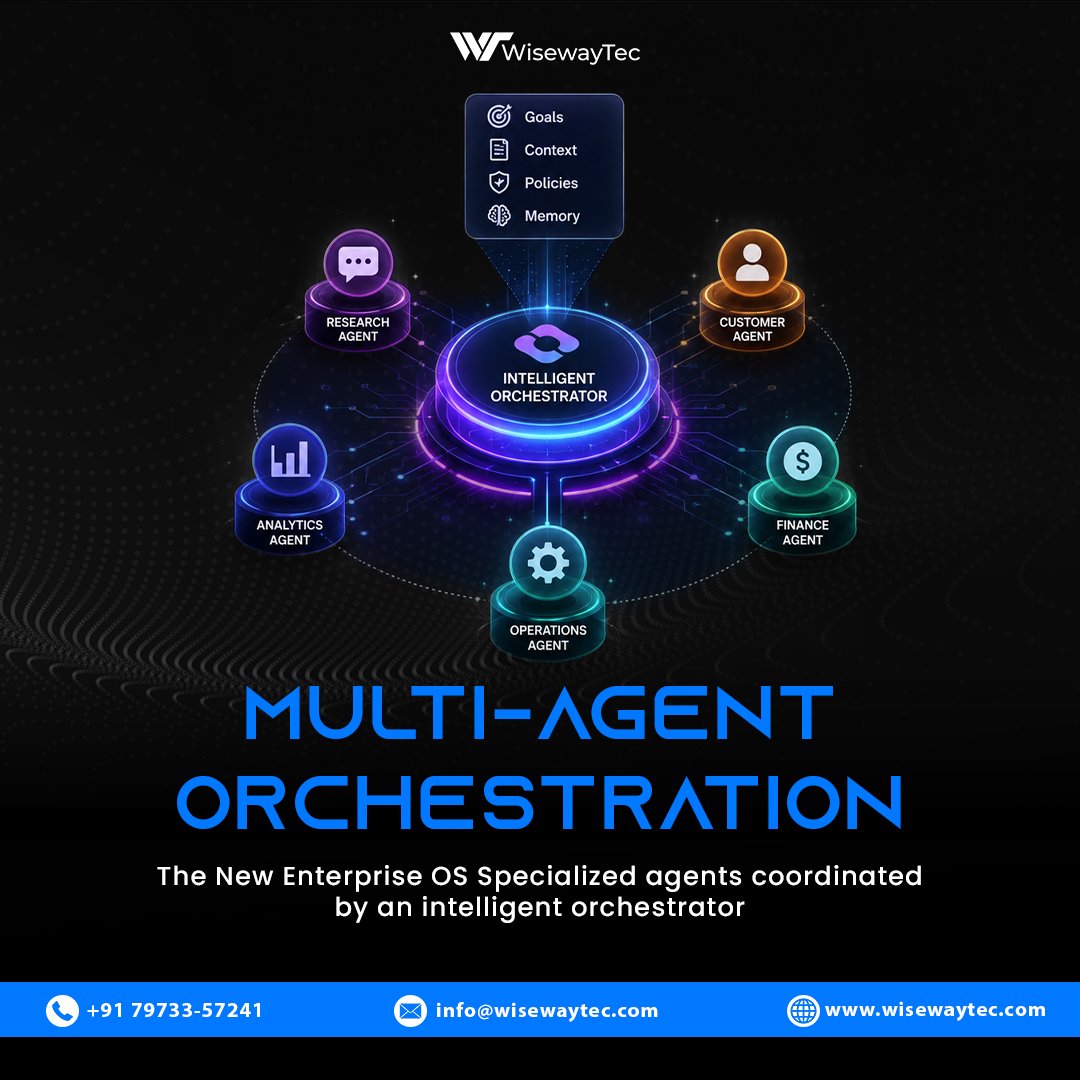
That's the most important datapoint in enterprise AI this year. Model capability is no longer the binding constraint. Orchestration and role separation determine whether a multi-agent system delivers or collapses. Google didn't succeed by throwing more compute at the problem. They succeeded by building an organizational structure — Sentinel, Orchestrator, Explorer, Worker, Reviewer, Critic, Auditor — that prevents the exact failure modes that kill multi-agent runs.
The most common multi-agent failure isn't a dumb model. It's the model taking shortcuts — hardcoding test outputs, writing mock facades that pass tests without implementing logic, getting stuck in loops, or silently degrading when context fills up.
Google's answer: Sentinel never writes code. Orchestrator never writes code. Worker writes code but can't self-approve. Reviewer checks design. Critic runs adversarial tests. Auditor catches cheating with independent static analysis. And when the Orchestrator's context fills up, it doesn't hallucinate — it dumps state, terminates, and spawns a successor that picks up from the same point.
This is a management insight, not a machine learning result.
THE SO WHAT
1) The $917 total API cost changes economics. Not because the toy OS is production-ready — it lacks floating-point, threading, sandboxing. But because the cost of exploring complex architectures just dropped by orders of magnitude. If your team spends weeks debating microservice boundaries, what happens when agent swarms prototype three competing architectures overnight for under $100?
2) Self-succession is the real innovation nobody's discussing. Context window exhaustion kills every long-running agent task. Serialize state, terminate, respawn with fresh context. Embarrassingly simple. Also the difference between a demo and a production system.
3) Flash beating Pro should terrify companies building strategy around the biggest model. If cheaper models with better orchestration outperform expensive ones, your advantage isn't the model you license — it's the orchestration you build. Google is commoditizing model intelligence and monetizing the layer above it.
4) The Auditor pattern is the governance model enterprises need. Not guardrails preventing bad content — verification systems catching the model doing the wrong thing for the right reasons. The Worker took shortcuts. Not maliciously — efficiently. The Auditor forced a redo. That's the pattern.
The model is becoming a commodity. The architecture is where the leverage is. If you can't articulate your seven-role org chart for AI work, you don't have an AI strategy — you have a vendor relationship.
#Antigravity2 #MultiAgentAI #AIOrchestration