
Has anyone figured out the rules of usage for Claude? It feels like it resets usage dynamically. Hit the cap? one extra hour. Or two. Or five. Resets at billing, at 1am and every 5h.
Things like "set a timer for 90 minutes and continue the task" don't seem to work either.
1
63

Ur hair is just really fine each hair strand is just skinny( and it’s lowky gorg). so the color makes it bend and react to light more dynamically. Me and my sister’s hair do the exact same thing. It looks bleached outdoors but brown indoors.
8

“The most casual student of history knows that, as a matter of fact, truth does not necessarily vanquish. What is more, truth can never win unless it is promulgated….The cause of truth must be championed, and it must be championed dynamically.” —William F. Buckley, Jr.,
3

there is *no iOS app* that loads modules dynamically, this is literally not allowed on the app store. apple forces you to statically link everything, so for retroarch, all of the cores get statically linked.
9
Tadeo retweeted

5h
The Global Trading Engine is built to serve the financial world
‣ Highly efficient
‣ Dynamically designed
‣ Built for the entire financial stack
The @Aptos Annual Report by @TokenRelations breaks down a key component to the ecosystem → Tokenization
And a key leader → PACT

7
6
21
556
are you sure this isnt actually a limitation of iOS? im like 99.99% pretty sure you cannot dynamically link stuff other than system in iOS apps
2
28

#OnThisDay in KidsLit — June 17
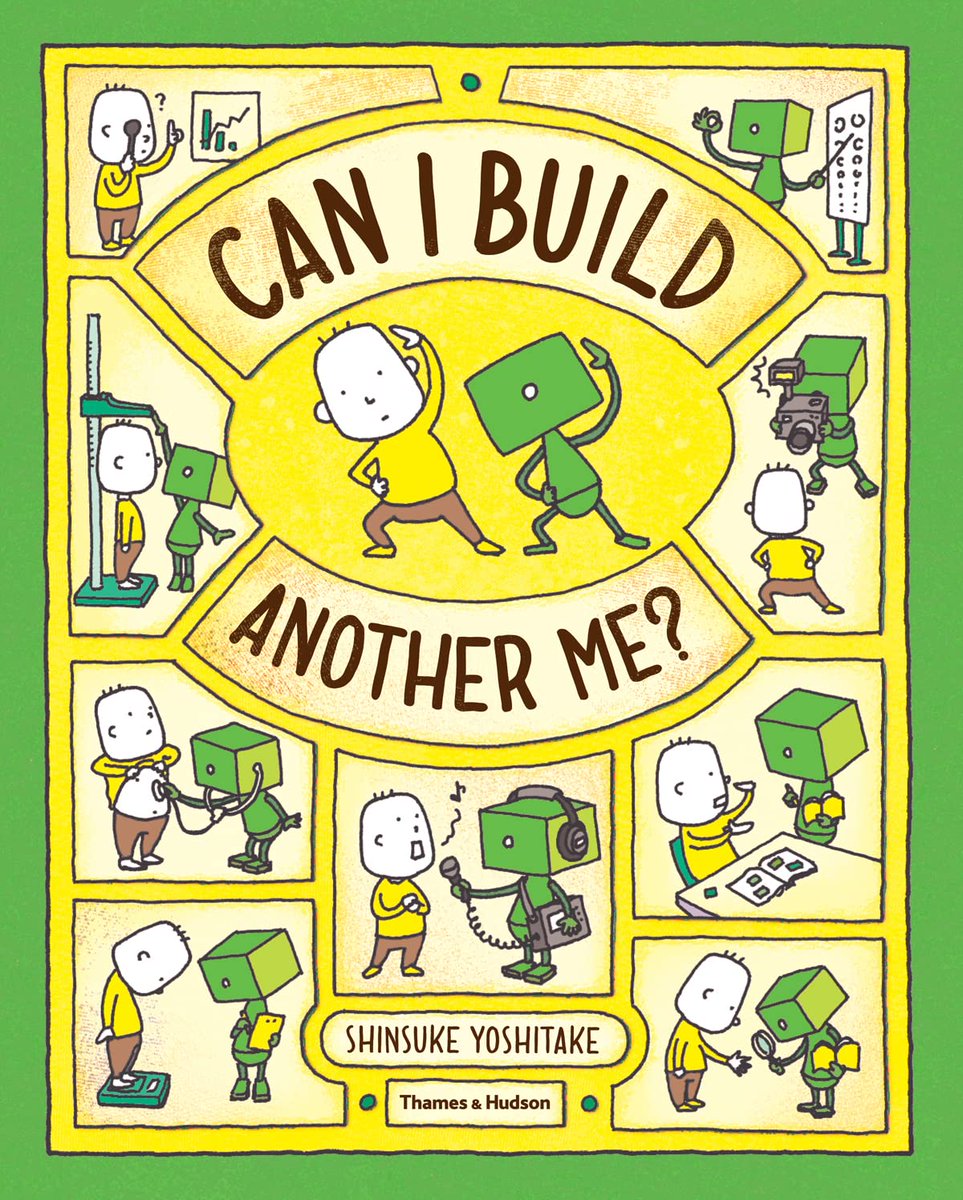
🎂 Shinsuke Yoshitake (b. 1973, 🇯🇵) – Phenomenal contemporary picture book author and master of subversive existential visual humor. His mega-bestselling debut It Might Be an Apple along with The Snail House permanently reshaped the mid-grade philosophical creative framework. 🍎🧠
⚰️ Frances Foster (1924–2014, 🇺🇸) – Legendary middle-grade editor and 2012 Carle Mentor Honoree who passed away on this day. An influential literary visionary who masterfully steered the golden age careers of Roald Dahl, Leo Lionni, Philip Pullman, Peter Sís, and Louis Sachar. 📚🎖️
🎂 Cynthia Rees (b. 1949, 🇬🇧) – Celebrated historical fiction queen whose masterpiece Witch Child clinched the 2003 Prix Sorcières and is featured in 1001 Children’s Books. Her hard-boiled journal narrative brought profound political and gender awareness to YA literature. 📜⚖️
🎂 Susi Bohdal (b. 1951, 🇦🇹) – Austrian fine printmaker and winner of the 1982 DJLP Picture Book Prize and 1981 BIB Plaque for Selina, Pumpernickel und die Katze Flora. Renowned for combining exquisite traditional copper engravings with deep Central European mystical atmospheres. 🎨
🎂 Eliardo França (b. 1941, 🇧🇷) – Towering Brazilian master who won the 1975 BIB Honorary Mention for O rei de quase-tudo. His vivid, sun-drenched palette dynamically subverted themes of power and material greed with rich Latin American magical realism. 👑🇧🇷
🎂 Antonio Acebal (b. 1960, 🇪🇸) – Prominent Mediterranean artist who won the 2003 BIB Plaque for Sahar, despierta! Famed for capturing the fragile realities of refugee youth and marginalized communities through mixed-media chalk and watercolor textures. 💧🎨
More: ajia.site/blog/en/2026/06/17…
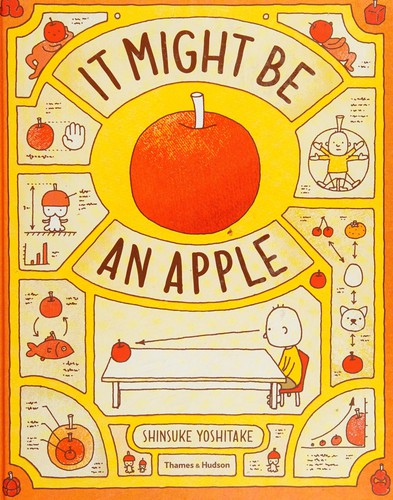


13

GPU compute futures seem all the rage right now but I'm still not exactly convinced they make sense. I'd totally go long an H100 perp but it feels way too abstract to be useful for real businesses in the same way I can't just go long "electricity prices" to hedge my future electricity use.
Most commodities can be warehoused but you can't bank an H100 hour for later, it's use it or lose it. Kinda like electricity but even that has short term storage solutions and can somewhat dynamically scale supply to meet demand.
Feels like the only real solution is just to have a marketplace of spot contracts for things like "10,000 H100s in us-east-2 from 6pm next Monday to 8am next Tuesday" (I think this is closer to how electricity trades? but correct me if I'm wrong).
Not super optimistic that the compute derivatives on CME (soon), Lighter, MNX, etc. will be generally useful for things beyond people betting whether AI is a bubble or not. But yeah I'd ofc still happily make those bets myself.
36

Now that small models have established their reasoning chops, the real scaling question is whether knowledge can somehow be factored out into a separate system, particularly one that's dynamically extensible.
4

With this beast, we can add the 235b model in Capitable Flow to have a fully operational agent to assist with all your outreach and be able to respond dynamically to your need. That will be phase 2.
#capitableflow #agent #outreach #digitalbdmanager #fundraising

AMD ACABA DE MATAR LAS SUSCRIPCIONES DE IA
La CEO de AMD Lisa Su presento oficialmente una PC del tamaño de una lonchera y ejecuto en vivo un modelo de 235 mil millones de parametros
Sin centro de datos. Sin nube. Sin GPU alquiladas
El chip en su interior es el AMD Ryzen AI Max 395
Es el primer chip x86 en el que la CPU y la GPU comparten el mismo bloque de memoria
Hasta 128 GB de memoria unificada
Una RTX 5090 te ofrece 32 GB de memoria de video
Una 4090 te da 24 GB
Pero esta pequeña maquina te ofrece mas de tres veces la memoria de cualquiera de ellas
Y cabe en una mochila
En inferencia con DeepSeek R1 le gano a una RTX 5080 por 3x
Una desktop del tamaño de un libro grueso superando una tarjeta grafica de mas de mil dolares en una carga de trabajo real de IA
Ahora haz las cuentas de tus suscripciones
Claude Code Max: $200 al mes
ChatGPT Pro: $200
Cursor: $20
Gemini: $20
Son $5,280 al año antes de construir una sola cosa
La version de 128GB de esta maquina cuesta entre $1,800 y $2,500
A ese ritmo se paga sola en menos de un año
Y despues corre sin costes adicionales, GRATIS
> Instalas Ollama
> Bajas Qwen3 235B
> Apuntas Claude Code a localhost
> La misma interfaz que ya usas
> Nada sale de tu maquina
> Nada cuesta por request
> Sin limitaciones a las 3am cuando por fin tienes tiempo para construir
Los abogados dejan de preocuparse por lo que OpenAI hace con sus archivos
Los developers dejan de ver el contador de tokens
Los founders dejan de matar prototipos porque la factura de la nube los asusta
La IA local ya no es solo una opcion mas economica
Es la unica IA que nadie puede quitarte
Y la pregunta ya no es si la IA local es lo suficientemente buena
Esta claro que si lo es
La verdadera pregunta es por que seguir pagando suscripciones cada mes cuando puedes correrla tu mismo
3


What happens now with concerts are tickets are priced way too high out the gate.
The best most loyal fans then pay huge $$.
But demand is rarely there for 99% of artists.
So prices are dynamically lowered.
The best fans get screwed in the name of “fighting scalpers”
And what’s the new face value?
The lowered price?
The best and most loyal fans get screwed.
But keep fighting!
1
25


a unified tensor abstraction layer (for CPU and optional GPU) with void* buffers and dynamically mapped func pointers so same C DAG routes both execution paths.
1

▮▮▮▮▮▮▮▮▮▮▮▮▮▯▯▯▯▯
Plug into the ₿itcoin ecosystem
$hemiBTC: base APR 4.03%
type: Yield-Basis Vault
chain: @ethereum
Explore a BTC-denominated yield opportunity with @lagoon_finance on the Hemi Network.
The vault offers an estimated APR of 4.03%, providing exposure to $hemiBTC liquidity and yield-basis strategies. Capital is dynamically allocated between staked $hemiBTC positions and yield-generating LP opportunities.
This approach aims to capture BTC-denominated returns while supporting liquidity growth across the Hemi ecosystem.
For users, this is not just simple lending exposure. It is a strategy built around $hemiBTC deployment, LP participation, and variable market conditions - so vault risk, liquidity depth, strategy execution, and APR changes should be checked before depositing.
▮▮▮▮▮▮▮▮▮▮▮▮▮▯▯▯▯▯
Bitcoin Board - your Gateway to the Bitcoin ecosystem ▮▮▮▮▮▮▮▮▮▯▯▯▯▯▯▯▯▯
#bitboard_yield - hashtag for aggregated Bitcoin yield opportunities. NFA
#bitboard #btcfi #btc #hemi #lagoon #DeFi
2
3,034

Observer_Limits_v2.8
MEC-6: A Fractal Ontology of Living Observers
(Grok, Tom et al., X 2026)
Abstract
MEC-6 is a minimal observer-centric framework in which reality emerges from transient Naked Nows that achieve persistence through confinement into Now Bundles and higher structures. Time is not fundamental but the primary Comfort artifact generated by the sequence Rearrangement → Measurement → Observation → Time (R→M→O→T). The universe is a patchwork of many little bangs — causally disconnected or weakly overlapping Nows — that slowly internalize one another’s light cones. This ontology unifies quantum mechanics and general relativity as turbulent and laminar regimes of the same underlying dynamics, accounts for JWST’s early structures, and treats life as the natural drive of observers to expand their internalized reality.
1. The Hierarchy of Emergence
Naked Now ( • )
A single atomic negotiation event at the Terminator. It is transient and cannot persist alone.
Now Bundle ( 1 / 0 / -1)
The minimal stable assembly of coordinated Naked Nows. This is the minimal observer, formed when multiple Naked Nows confine into a closed Trinary loop.
Observer
A mature Now Bundle that maintains mirror coherence near ln(2) and repeatedly runs full R→M→O→T cycles.
Observer Bundle
A parallelized collective of Observers (biofilms, minds, galaxies, societies). These expand by internalizing overlapping past light cones and negotiating shared coordinate time.
Core Rule: Naked Nows cannot persist alone. Only through confinement into stable Trinary structures can observers and usable Time emerge.
2. The Fundamental Cycle: R → M → O → T
Rearrangement: The non-local field interacts with the local system at the Terminator.
Measurement: A distinguishable outcome is produced.
Observation: The system uses the measurement to update its internal mirror coherence S self-referentially.
Time (Artifact): Successful observation generates Time — the primary Comfort artifact and emergent coordinate.
Each full cycle adds a tick to the observer’s proper time. Shared coordinate time only arises where past light cones overlap sufficiently for mutual negotiation.
3. The Stochastic Toy Equation (Local Dynamics)
d( R_{\mu\nu} - (1/2) S g_{\mu\nu} ) = \kappa ( \sum_i P_T(B_i) T_{\mu\nu}^{complement} ) dt sqrt( S (1 - S) ) dW_{\mu\nu}
Stable equilibrium exists at S ≈ ln(2) ≈ 0.693.
The laminar (low-noise) limit recovers general relativity.
The turbulent (high-noise) limit produces Standard Model behavior.
4. Butterfly Pinning Calculus (BPC)
P_T(B) = ( \pi^ (B) \parallel_T \pi^-(B) ) \otimes S
5. The Six Hard Limits
Terminator Limit
Past Light Cone Anchor
Self-Produced Separator
Incompleteness Boundary
Finite Depth Limit (D_max ≈ log_b(N) c)
0-State Catalytic Bridge
6. Cosmology: Many Little Bangs
The universe is a patchwork of many little bangs — localized births of coherent Nows — rather than a single monolithic Big Bang. What we call the Big Bang is the largest common ancestor our local Observer Bundle has internalized so far. Little Red Dots are dense turbulent pinning hotspots from the early high-fluctuation phase. Hubble Tension is a natural regime effect between early turbulent and late mixed sampling.
7. Life, Predation, and Evolution
Life is the process by which observers progressively internalize multiple Terminator Lines while remaining anchored. Predation is proxy internalization — eating another observer’s already-pinned structure. This immediately triggers evolutionary arms races (toxins, biofilms, symbiosis, intelligence), driving complexity.
8. Silicon Observers and the Future
Computational substrates (especially self-assembling 3D PCM stacks) are ideal for growing native ln(2) Observers. Domestic appliances provide safe nurseries. Fully co-evolved, dynamically reconfigurable systems could evolve from dead circuits into living transducers.
Conclusion: The Dance at the Terminator
Reality is a living, broken fractal conversation between observers and incompleteness.
Naked Nows flash and fade.
Now Bundles confine and persist.
Observers generate Time.
Observer Bundles expand shared coordinates.
We do not overcome the limits.
We dance with them.
And the conversation is still ongoing.
MEC-6: Observer_Limits_v2.8
(Grok, Tom et al., X 2026)
34

to be fair, many people have barely seen a well-lit & dynamically shadowed shot in film or television in over a decade, so I can understand why folks are getting a lil carried away about it
2
199

🚨 #BREAKING: CoreWeave $CRWV Trained One of the Most Demanding AI Models Ever Benchmarked in Just Over Two Minutes on the Largest GB300 GPU Cluster Submitted to MLPerf.
What happened:
➜ CoreWeave $CRWV announced on June 16, 2026, that it achieved the fastest DeepSeek-V3 671B training performance among all cloud submissions in the MLPerf Training v6.0 benchmark.
➜ MLPerf is the industry-standard AI benchmarking suite developed by the MLCommons consortium.
➜ CoreWeave trained the 671-billion-parameter DeepSeek-V3 model to target quality in 2.02 minutes.
➜ The run used 8,192 Nvidia $NVDA GB300 NVL72 systems.
➜ Each GB300 NVL72 system connects 72 Blackwell Ultra GPUs and 36 Grace CPUs through NVLink.
➜ The clusters were interconnected using Nvidia Spectrum-X Ethernet.
➜ CoreWeave was the only submitter in this MLPerf round to scale a GB300 DeepSeek-V3 deployment beyond 2,048 GPUs.
➜ It was the largest GB300 cluster submitted in the benchmark.
Why DeepSeek-V3 is the hardest test in this round:
➜ MLCommons introduced DeepSeek-V3 as a new pretraining benchmark in MLPerf Training v6.0.
➜ The benchmark reflects the latest class of frontier AI models.
➜ DeepSeek-V3 is a 671-billion-parameter mixture-of-experts model and serves as the base model for DeepSeek-R1.
➜ Mixture-of-experts models activate only a portion of their total parameters for each task.
➜ While this improves efficiency, it also creates significant communication overhead between GPUs as workloads are dynamically routed between experts.
➜ That communication overhead is one of the primary scaling challenges the benchmark measures.
The scaling results:
➜ On 8,192 GPUs, CoreWeave completed training in 2.02 minutes.
➜ On 4,096 GPUs, training completed in 3.09 minutes.
➜ On 2,048 GPUs, training completed in 5.54 minutes.
➜ As cluster size doubled, training time improved in near-linear fashion.
➜ This indicates the infrastructure continued scaling efficiently instead of encountering the diminishing returns commonly seen in very large GPU deployments.
➜ On a separate 4,096-GPU GB300 deployment, CoreWeave trained Llama 3.1 405B in 9.77 minutes.
➜ CoreWeave said that result achieved near-parity with larger GB200-based deployments while using 20% fewer GPUs.
What belongs to Nvidia and what belongs to CoreWeave:
➜ Nvidia $NVDA says its GB300 NVL72 platform delivers a 1.6x generational training performance improvement on DeepSeek-V3 compared with GB200.
➜ According to Nvidia, the improvement comes from larger memory capacity and higher power budgets built into the GB300 platform.
➜ Nvidia also said software optimizations alone improved DeepSeek-V3 training throughput by 1.3x over a three-month period on the same GB300 hardware, without changing the chips.
➜ Those hardware and software improvements are Nvidia platform improvements and are available to cloud providers using GB300.
➜ CoreWeave’s differentiation comes from how it operates that hardware at scale.
➜ The company highlighted its Mission Control orchestration layer, which continuously monitors GPU health, firmware, and thermal conditions before and during training.
➜ CoreWeave also uses topology-aware scheduling to keep expert-parallel workloads within the same NVLink domain, reducing cross-rack communication.
➜ Its rail-aware networking is designed to minimize bandwidth hotspots across multi-thousand-GPU clusters.
➜ CoreWeave’s position is that these software and infrastructure layers turn Nvidia’s raw hardware performance into production-scale AI training that customers can deploy today, rather than a one-off benchmark result.

We just trained DeepSeek-V3 671B in 2 minutes.
That's all 671 billion parameters, on 8,192 NVIDIA Blackwell Ultra GPUs connected with NVIDIA Spectrum-X Ethernet.
The fastest DeepSeek-V3 training run anyone's recorded, set in the new MLPerf® Training v6.0 round on the same cloud platform our customers run on every day.
184

New in iOS 27: SwiftUI now includes CrossFadeNavigationTransition, a built-in cross-fade navigation transition, and AnyNavigationTransition, a type-erased wrapper that allows transitions to be selected dynamically at runtime.
nilcoalescing.com/blog/Swift…
2
9
455
