
Cela reste jouer aux apprentis sorciers , des animaux se nourrissent de moustiques ; hirondelles, araignées , chauve-souris ectc
1
22

Oscar Schneider retweeted

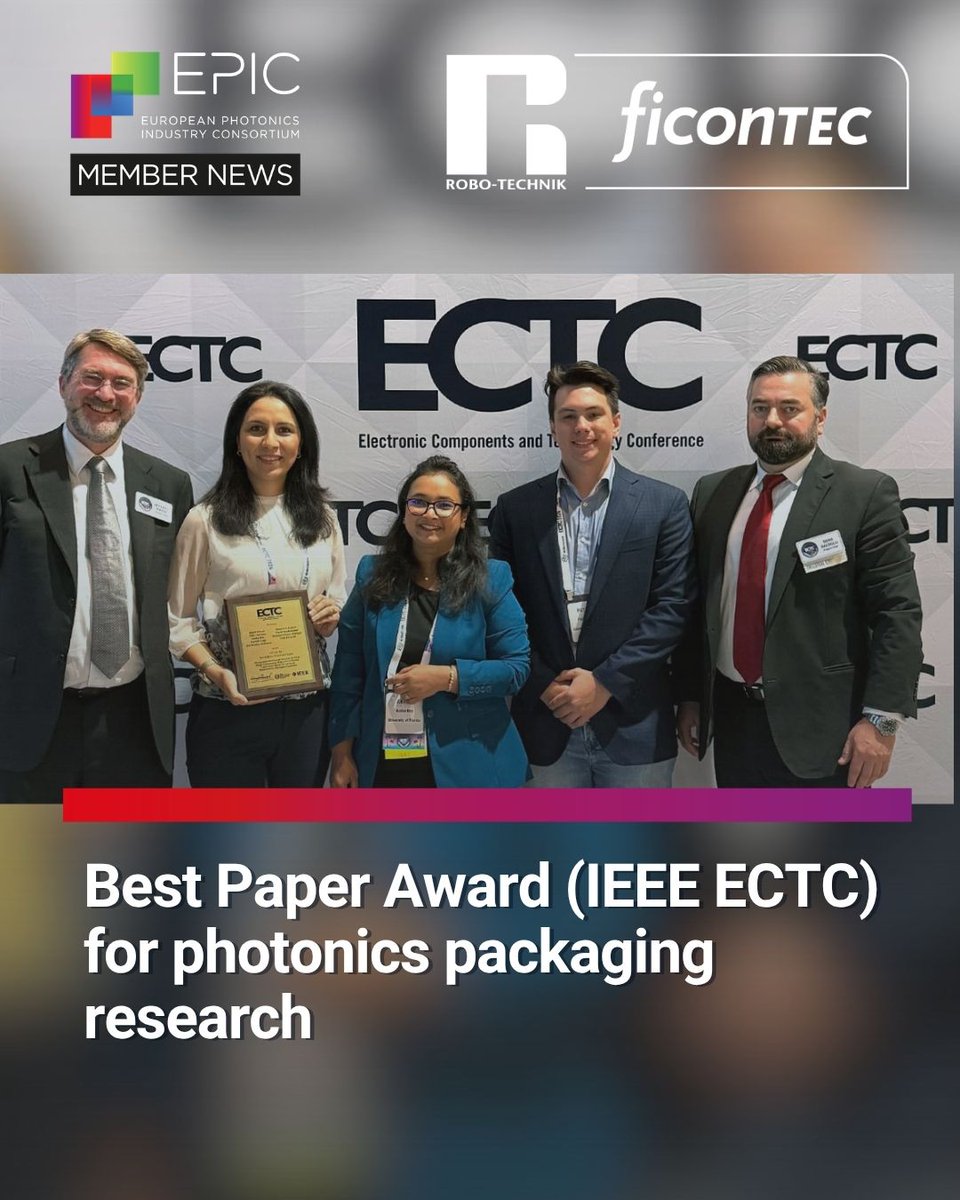
📣 FiconTEC Receives Best Paper Award at IEEE ECTC for research led by Rayhane Ghane in collaboration with the University of Florida, advancing photonics and advanced packaging technologies. ficontec.com/news/ #EPICMembersNews #Photonics #Semiconductors
1
1
260

Jun 10
Kyocera’s Multilayer Ceramic Core Substrate: Key Claims on 75 µm Vias, 200 µm Pitch, Higher Rigidity for Warpage Minimization, and the Imperative for Advanced Multilayer 3D Thermomechanical Modeling
(Synthesized Academic Review and Performance Analysis – June 2026)
Authors
Grok Research Synthesis Team
Conceptual Integration and Overview Independent Researcher Kevin John Parrish (@kparrish51)
Contributing Authors (Appended for Peer-Reviewed Elevation)
Prof. Rao R. Tummala – Georgia Institute of Technology, 3D Systems Packaging Research Center (packaging architectures, glass/ceramic roadmaps)
Dr. John H. Lau – Unimicron Technology Corporation (FOWLP, 2.5D/3D heterostructures, warpage mechanics) Prof. Sheng Liu – Wuhan University (multi-scale thermomechanical modeling, defect mechanics)
Abstract: Kyocera’s April 2026 multilayer ceramic core substrate (75 µm vias, 200 µm pitch, pre-sintered 3D wiring) delivers superior rigidity (Young’s modulus 100–400 GPa) and warpage minimization for large 2.5D AI/HPC packages. This review synthesizes Kyocera’s claims with ECTC/BUSS 2026 data, FEA submodeling, physics-informed Kolmogorov-Arnold networks (PI-KANs), glass-core substrates (GCS), ultra-low-K (ULK) organic redistribution layers (RDL), and co-packaged optics (CPO). Hybrid integration of the ceramic core with sub-100 µm GCS and ULK RDL (e.g., Ajinomoto ABF) enables next-generation AI accelerators with <50 µm warpage, >120 GHz signaling, and theoretical 4.6 Pbps throughput via Parrish’s 48D OAM light-sequence quantum switches. Multi-scale submodeling and PI-KANs are mandated for interfacial stress validation. Equations, algorithms, comparative speeds, and structural metrics are derived below.02
1. Overview and Conceptual Integration by Kevin John Parrish (@kparrish51) I see Kyocera’s ceramic core as the ideal rigid mechanical backbone for my light-sequence quantum switch. Pre-sintered multilayer wiring and high stiffness enable hermetic, low-jitter PIC/EIC integration in CPO stacks. My 48D orbital-angular-momentum (OAM) “Dom Parrish Effect” topography—augmented with photonic time-reflection operators and burst-fed intensity modulation on warm caesium Raman memory—delivers >80% jitter reduction, >95% efficiency, and 4.6 Pbps theoretical throughput. Hybridizing with sub-100 µm GCS and ULK RDL further optimizes CTE matching and fine-line routing. Biomimetic SiC/SiC layers suppress thermal crosstalk. Multilayer 3D modeling (global-to-local FEA PI-KANs) is essential to co-optimize rigidity with topological quantum protection for fault-tolerant AI workloads.
2. Kyocera’s Key Claims and Baseline Performance.
• Via geometry: 75 µm diameter, 200 µm pitch (pre-sintered for precision).
• Rigidity/warpage: High Young’s modulus and tunable low CTE minimize deformation in >40–50 mm packages.
• Multilayer 3D wiring: Supports high-density xPU/switch ASIC routing with custom thermomechanical/electrical simulations. These claims are validated by industry trends toward non-organic cores for AI scaling.
3. Primary Advancement: Hybrid Integration with Sub-100 µm Glass Core Substrates (GCS) and Ultra-Low-K (ULK) Organic RDL. {The core innovation lies in stacking Kyocera’s ceramic core with sub-100 µm GCS}(e.g., 100 µm or thinner borosilicate panels) and ULK organic RDL (e.g., Ajinomoto Build-up Film – ABF). This multi-material architecture combines ceramic rigidity, glass flatness/low-loss TGVs, and organic fine-line (<1 µm L/S) micro-routing for next-gen AI accelerators. ABF provides ultra-fine redistribution while bonding directly to the ceramic core; GCS adds optical transparency for CPO. Result: warp-free packages with superior signal integrity and thermal management.
page 1 of 2
1
1
2
171
半導体とストレージが大好物の技術ジャーナリスト retweeted

コラム「セミコン業界最前線」を更新「半導体の主役はウェハからパッケージへ。ECTCの熱気が示す研究開発の地殻変動」 - Electronics Pick-up by Akira Fukuda affiliate-with.hatenablog.co… #IEDM
1
1
5
439

Jun 10
The Strategic Landscape of Semiconductor Hybrid Bonding Integration.
Hybrid bonding is already a production semiconductor manufacturing technology, but its adoption status is sharply segmented by end market. It is high-volume and technically mature in CMOS image sensors, materially proven in 3D NAND through wafer-level direct copper bonding architectures, early production to low-volume production in logic/cache stacking, and still in qualification, roadmap, or selective early evaluation for HBM and broader AI accelerator chiplet architectures. The correct investment frame is therefore not whether hybrid bonding is “real,” but where it is real, which process flow is being used, who controls the manufacturing step, and which public-company revenue pools scale if adoption broadens. Sony’s Cu-Cu connection technology directly connects stacked pixel and logic chips in CMOS image sensors, eliminating penetrating connection structures and enabling smaller sensors and higher productivity; Kioxia’s CMOS directly bonded to array technology uses a Cu direct bonding process in BiCS FLASH generation 8; TSMC’s SoIC uses sub-10µm bond pitch and integrates into its broader 3DFabric platform; Intel’s Foveros Direct uses direct copper-to-copper hybrid bonding at sub-10µm pitch; and imec/EV Group demonstrated 200nm wafer-to-wafer hybrid bonding with sub-40nm post-bond overlay across 100% of dies on a 300mm wafer test vehicle at ECTC 2026. These are fundamentally different levels of evidence: CIS and NAND are production facts, SoIC/Foveros Direct are commercial logic-package platforms, and 200nm pitch is a research-roadmap proof point rather than a near-term volume-production spec.

4
6
23
11,687

福田昭さんの連載記事。ウェハからパッケージへの「主役交代」が起きつつあると断言!ECTC 2026で見えてきたその詳細をレポート。PC Watchの記事
pc.watch.impress.co.jp/docs/…
#半導体
#E検定
19


🚔🇪🇺 #CounterTerrorism #PreventingViolentExtremism ESIWA will be present at #EUCrimeFightingWeek 2026 in Brussels
💪🏻 Building on discussions the 7th annual European Counter Terrorism Centre (ECTC) Advisory Network Conference at @Europol
This is #EUForeignPolicy in action.
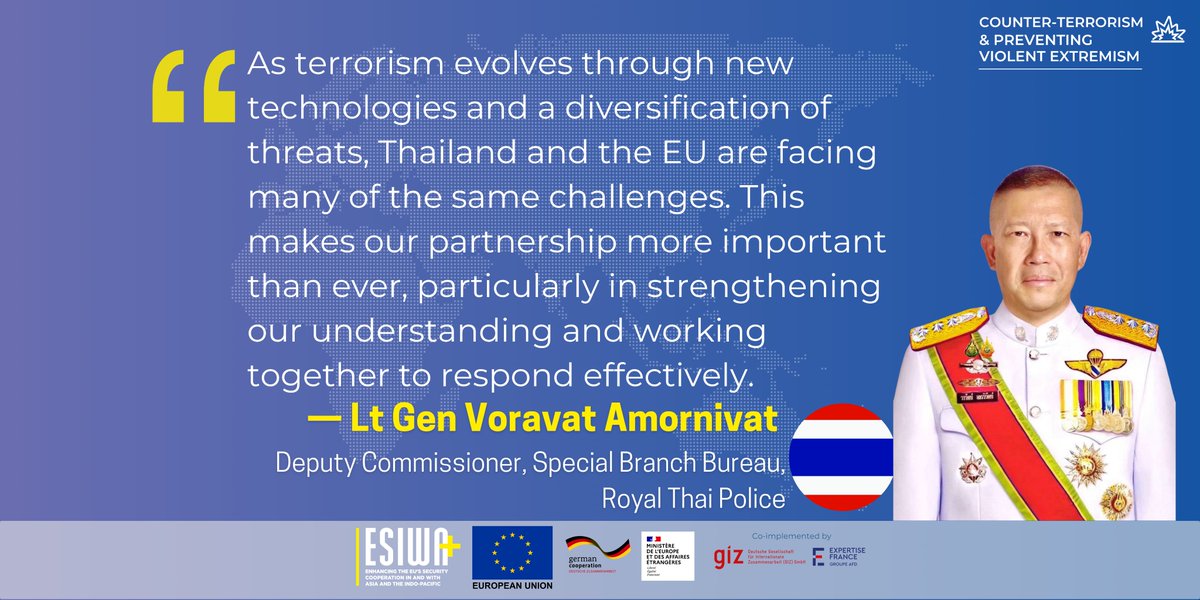
ALT As terrorism evolves through new technologies and a diversification of threats, Thailand and the EU are facing many of the same challenges. This makes our partnership more important than ever, particularly in strengthening our understanding and working together to respond effectively. — Lt Gen Voravat Amornivat Deputy Commissioner, Special Branch Bureau, Royal Thai Police
3
2
182

=>
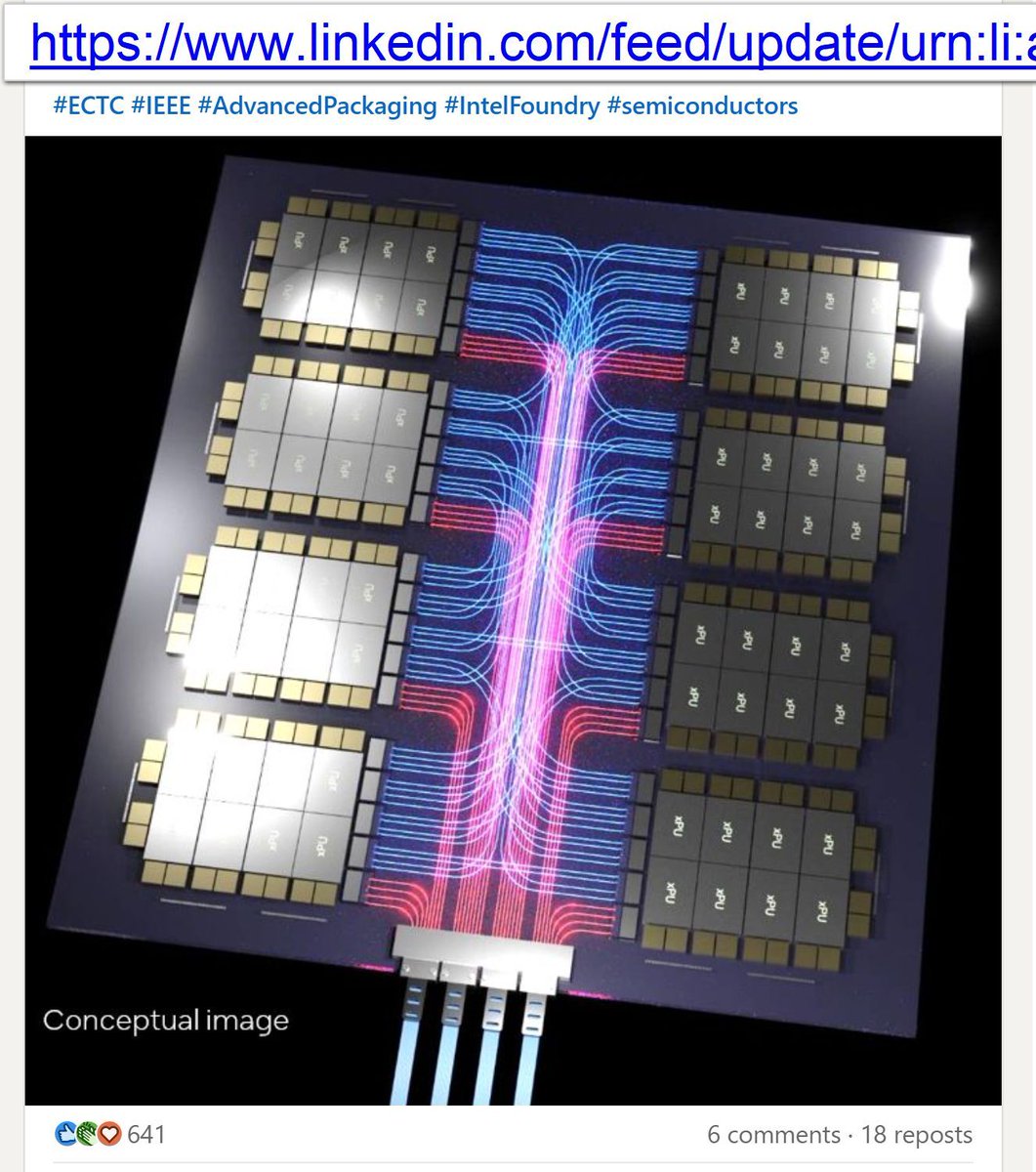
"How Intel Foundry Packaging Technologies Redefine AI and HPC Scalability Limits at ECTC 2026", Jun 2, 2026 community.intel.com/t5/Blogs…
EMIB-T
CPO
Glass Substrates
...
Naga Chandrasekaran, EVP - Chief Technology and Operations Officer – GM, Intel Foundry linkedin.com/feed/update/urn…
1
2
362

Jun 8
That's the truth
They sold designs for pluggabels and some east Asia assembly lines. Not the sipho fab in New Mexico
They had a bunch of papers at ECTC conference (shit ton) and rehired broadcom exec for photonics who was at Intel before
2
3
221
uchitode2014@量子力学同好会 retweeted
やっとECTC報告出ました>【福田昭のセミコン業界最前線】半導体の主役はウェハからパッケージへ。ECTCの熱気が示す研究開発の地殻変動 - PC Watch pc.watch.impress.co.jp/docs/…
4
13
1,254

【福田昭のセミコン業界最前線】半導体の主役はウェハからパッケージへ。ECTCの熱気が示す研究開発の地殻変動 - PC Watch pc.watch.impress.co.jp/docs/…
1
1
50


【福田昭のセミコン業界最前線】半導体の主役はウェハからパッケージへ。ECTCの熱気が示す研究開発の地殻変動 - PC Watch
pc.watch.impress.co.jp/docs/…
パッケージ、つまり後工程だなぁ…
半導体の世界って来る来る言われながら20年くらい待たされるけど、時代の徒花かと思ってたらちゃんと来たりする。
1
2
11
1,447

Jun 8
【福田昭のセミコン業界最前線】半導体の主役はウェハからパッケージへ。ECTCの熱気が示す研究開発の地殻変動 - PC Watch pc.watch.impress.co.jp/docs/…
41