
How can institutions improve student outcomes while reducing administrative burden?
Register now: my.sociabble.com/PsPpo6xWvZg…
#HigherEducation #StudentSuccess #Automation #EDUCAUSE my.sociabble.com/PsPpo6xWvZg…
1

Jun 12
@Dell Technologies is sponsoring the @EDUCAUSE Showcase Series: The Human Edge of AI this month.
On 6/18 2pm ET, join our higher ed expert Adrienne Garber for a live @EDUCAUSE webinar.
👉 Register here: del.ly/6017B87QYZ
#HigherEd #AIinEducation #EDUCAUSE #DellTechnologies
13

Jun 10
Government union teachers getting fleeced by union bosses making $500,000
@HuffPostEdu @Huffpostcollege @JohnsHopkins @Chronicle @UChicago @georgetownCEW @K12SIX @AWS_Edu @usedgov @EducationNext @aeieducation @educause @NewsHour @transform_edu @WeAreUnidosUS
37

Make the most of your EDUCAUSE membership! UT San Antonio has renewed access—explore research, professional development, and peer insights to support your work in higher ed.
Sign in today: buff.ly/Nyg8Jsm
20

7

2026 EDUCAUSE The Impact of AI on Learning Assessment Report - Jenay Robert, EDUCAUSE dlvr.it/TSx4jD
17

2026 EDUCAUSE The Impact of AI on Learning Assessment Report - Jenay Robert, EDUCAUSE
#highered
youtube.com/watch?v=Nbyxh_2G…
9

Jun 6
#DEI at work for California universities instead of reforming leftist unaccountable teacher unions #education @HuffPostEdu @Huffpostcollege @JohnsHopkins @Chronicle @UChicago @georgetownCEW @K12SIX @AWS_Edu @usedgov @EducationNext @aeieducation @educause @NewsHour @transform_edu @WeAreUnidosUS
2
208

May 30
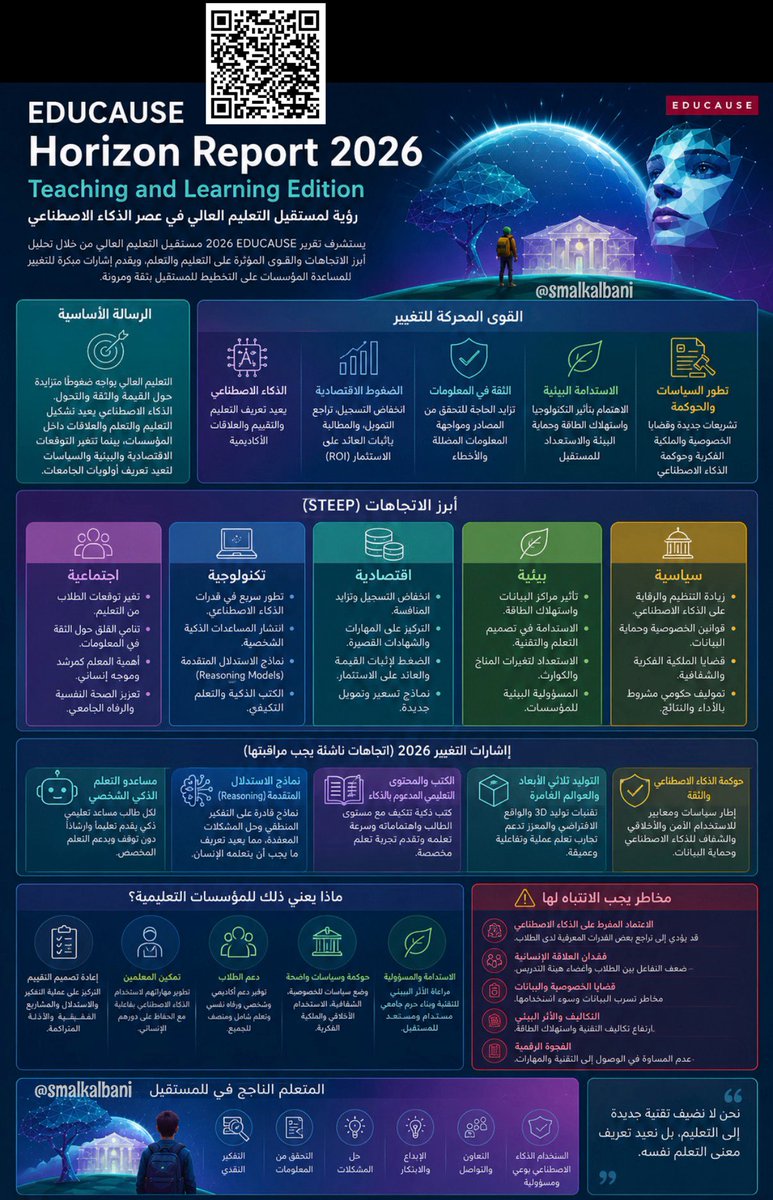
أهم تقارير…
الذكاء الاصطناعي في التعليم العالي
كيف سيغيّر الذكاء الاصطناعي مستقبل التعليم خلال السنوات القادمة؟
تقرير EDUCAUSE 2026
أحد أهم التقارير العالمية في التعليم العالي كشف أن الذكاء الاصطناعي لم يعد مجرد أداة مساعدة، بل أصبح قوة تعيد تشكيل التعليم بالكامل خلال السنوات القادمة
▪️لم يعد السؤال: هل نستخدم الذكاء الاصطناعي؟
تحول إلى
▫️كيف نستخدم الذكاء الاصطناعي بطريقة تحافظ على جودة التعلم وتنمّي قدرات الإنسان بدلاً من استبدالها؟
يرى التقرير أن الذكاء الاصطناعي أصبح جزءاً من الحياة التعليمية اليومية للطلاب والمعلمين، وأن تأثيره سيزداد عمقاً خلال السنوات المقبلة.
❇️ أكبر تغيير قادم: إعادة تصميم التقييم
يشير التقرير إلى أن كثيراً من الواجبات والاختبارات التقليدية أصبحت أقل قدرة على قياس تعلم الطلاب الحقيقي، لأن أدوات الذكاء الاصطناعي باتت قادرة على إنتاج إجابات ومشروعات عالية الجودة خلال دقائق.
لذلك تتجه المؤسسات التعليمية إلى التركيز على:
- تقييم طريقة التفكير وليس النتيجة فقط.
- قياس القدرة على التحليل والاستدلال.
- التقييم الشفهي والمناقشات المباشرة.
- المشروعات الواقعية.
- بناء المحافظ الرقمية التي توثق رحلة التعلم.
✔️بمعنى آخر
أصبح المهم هو معرفة كيف يفكر الطالب وكيف يصل إلى الحل، وليس فقط الحصول على الإجابة النهائية.
❇️الثقة في المعلومات أصبحت مهارة أساسية
في عصر الذكاء الاصطناعي أصبح الوصول إلى المعلومات أمراً سهلاً للغاية، لكن التحدي الحقيقي أصبح في التحقق من صحتها.
لذلك يتوقع التقرير أن تصبح مهارات مثل:
- التحقق من المصادر.
- تقييم الأدلة.
- التفكير النقدي.
- اكتشاف المعلومات المضللة.
- التحقق من صحة المخرجات التي ينتجها الذكاء الاصطناعي.
✔️من أهم المهارات التي يحتاجها كل متعلم في المستقبل.
❇️ لكل طالب مساعد تعليمي شخصي
من أبرز الاتجاهات التي يتوقعها التقرير انتشار المساعدات التعليمية الذكية التي ترافق الطالب طوال رحلته التعليمية.
هذه المساعدات يمكن أن:
- تشرح المفاهيم.
- تجيب عن الأسئلة.
- تساعد في تنظيم الدراسة.
- تقترح مصادر تعلم إضافية.
- تقدم دعماً تعليمياً على مدار الساعة.
✔️ يصبح لكل طالب نوع من “المعلم المساعد الرقمي” المتاح في أي وقت.
❇️هل سيحل الذكاء الاصطناعي محل المعلم؟
الإجابة التي يقدمها التقرير هي: لا.
لكن دور المعلم سيتغير.
فبينما تستطيع الأنظمة الذكية تقديم المعلومات والإجابة عن الأسئلة، تبقى هناك أدوار لا يمكن الاستغناء عنها، مثل:
- الإرشاد والتوجيه.
- بناء الثقة.
- تنمية التفكير النقدي.
- الدعم النفسي والاجتماعي.
- غرس القيم والأخلاقيات.
✔️ مستقبل التعليم يعتمد على التكامل بين الإنسان والذكاء الاصطناعي، وليس على استبدال أحدهما بالآخر.
❇️ من الشهادة إلى المهارة
يشير التقرير إلى تحول مهم في سوق العمل العالمي.
فأصحاب العمل أصبحوا يهتمون أكثر بما يستطيع الشخص فعله فعلياً، وليس فقط بالشهادة التي يحملها.
لذلك تتجه الجامعات إلى:
- الشهادات المصغرة.
- البرامج القصيرة المتخصصة.
- التعليم القائم على المهارات.
- المحافظ الرقمية للأعمال والمشروعات.
- الشارات الرقمية لإثبات الكفاءات.
✔️أصبح إثبات المهارة العملية لا يقل أهمية عن الحصول على الشهادة الأكاديمية.
❇️ الذكاء الاصطناعي ليس بلا تكلفة
يحذر التقرير من عدة مخاطر يجب الانتباه لها، منها:
- الاعتماد المفرط على الذكاء الاصطناعي.
- ضعف بعض المهارات المعرفية إذا تم الاعتماد عليه في كل شيء.
- قضايا الخصوصية وحماية البيانات.
الملكية الفكرية.
- التأثيرات البيئية الناتجة عن استهلاك الطاقة في تشغيل نماذج الذكاء الاصطناعي.
✔️ تدعو المؤسسات التعليمية إلى وضع سياسات واضحة تحكم استخدام هذه التقنيات.
❇️الرسالة الأهم
مستقبل التعليم لن يكون قائم على حفظ المعلومات، لأن الوصول إليها أصبح متاحاً للجميع.
المتعلم الناجح في المستقبل هو القادر على:
- التفكير النقدي.
- التحقق من المعلومات.
- حل المشكلات.
- استخدام الذكاء الاصطناعي بوعي ومسؤولية.
- التعاون مع الآخرين.
- التعلم المستمر.
❇️▪️❇️
الذكاء الاصطناعي سيغير أدوات التعلم، لكنه لن يلغي الحاجة إلى العقل البشري القادر على الفهم والحكم واتخاذ القرار.
3
23
108
7,030

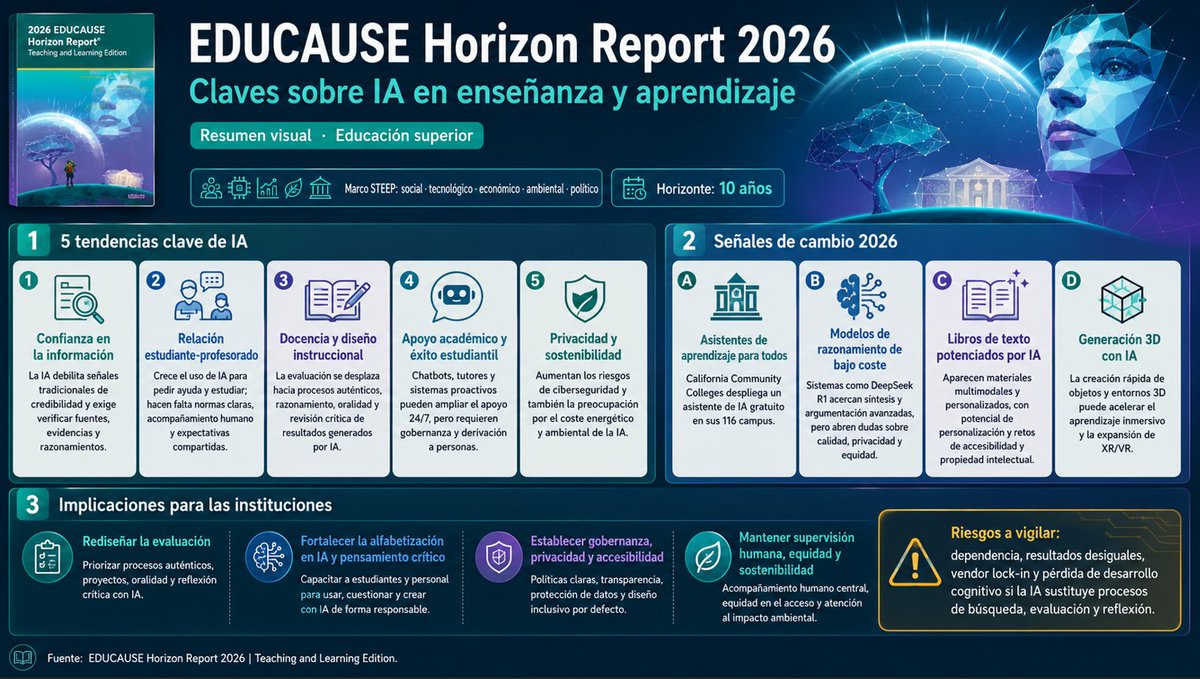
📢Publicado el nuevo informe de @educause que analiza el futuro de la educación superior en un horizonte de diez años. Las universidades se encuentran en un momento de profunda transformación en el que destaca la irrupción de la IAG. Resumimos los principales puntos sobre IA👇
1
8
17
1,438

May 29
Se ha publicado el "2026 EDUCAUSE Horizon Report: Teaching and Learning Edition". Para ahorrar tiempo puedes leer el resumen/comentario de Stephen Downes, que no tiene desperdicio y contiene un enlace al informe (si todavía estás interesado/a 😆).
downes.ca/post/79335
2
3
9
484

Big win for LSCS! 🎉🤖
Our AI advising chatbot, Ellis C., was featured in the 2026 EDUCAUSE Horizon Report for innovation in higher ed.
Read more: lonestar.edu/news/119214
#LoneStarCollege #DoTheThing #CollegeLife #StudentSuccess #AI #HigherEd #FutureReady
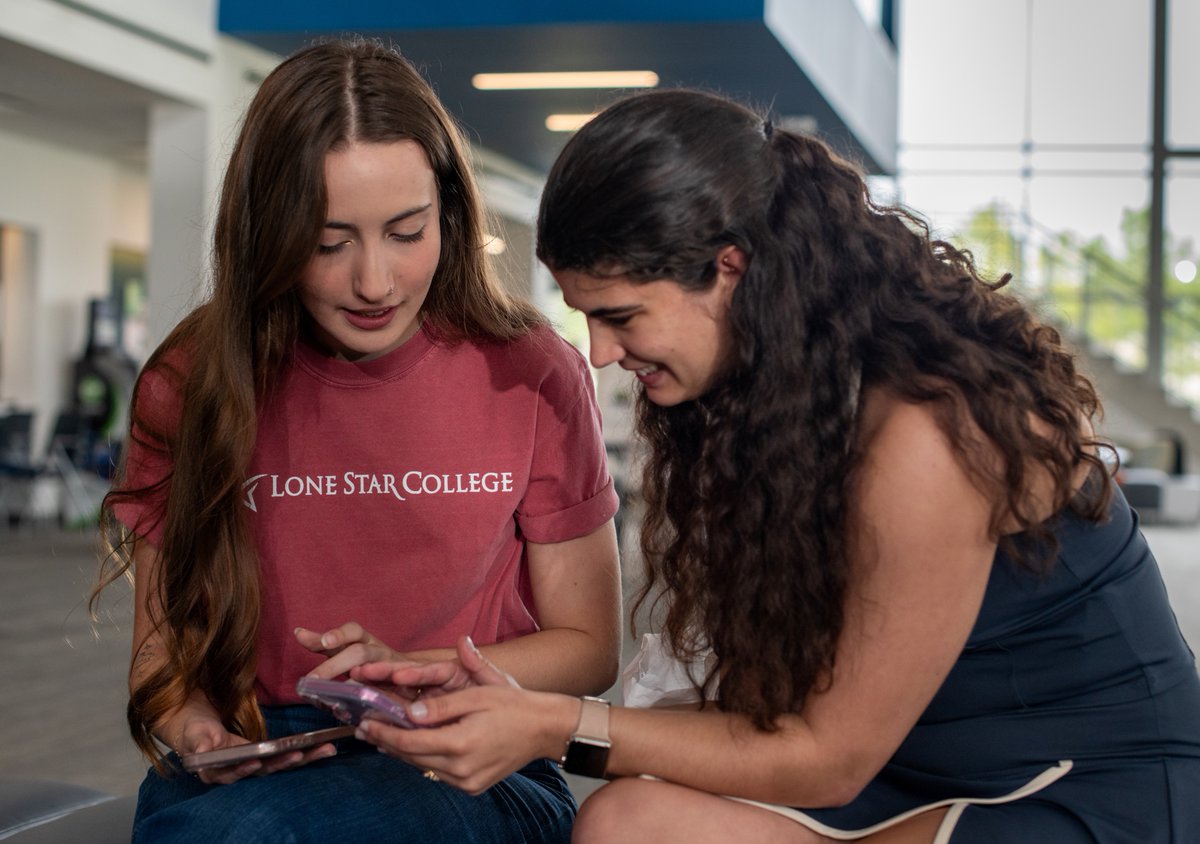
ALT Two individuals sitting together, both looking at a smartphone. One is wearing a Lone Star College T-shirt. They appear to be indoors, in a bright and spacious area.
1
2
166

May 18
El Informe EDUCAUSE Horizon 2026 | Edición de Enseñanza y Aprendizaje explora las tendencias más influyentes y las señales tempranas que darán forma a la educación superior durante la próxima década.
library.educause.edu/resourc…
2
3
122

Apr 29
Tomorrow, ICANN opens its first new gTLD (Generic Top-Level Domain) application window in 14 years.
Quick question for every university president, CIO, and general counsel:
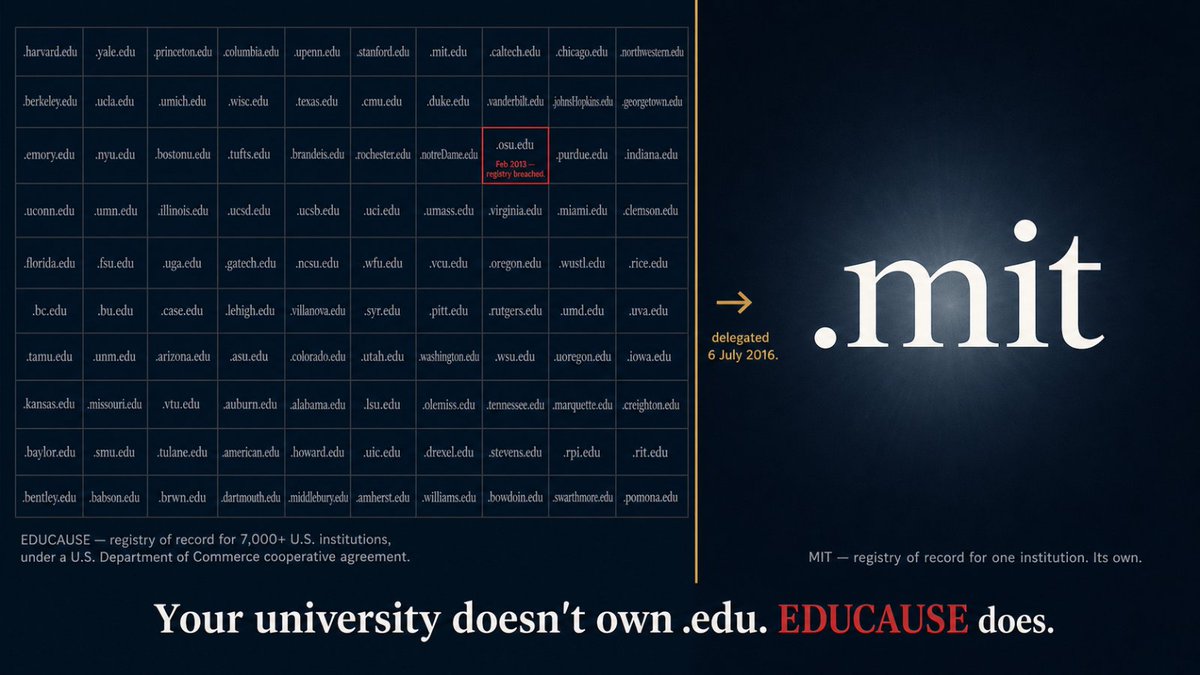
Who actually owns .edu?
Hint: not your university.
.edu is operated by EDUCAUSE — a Boulder-based nonprofit — under a cooperative agreement with the U.S. Department of Commerce.
EDUCAUSE holds the master record for harvard.edu, stanford.edu, princeton.edu, ucla.edu — every one of the 7,000-plus accredited four-year institutions permitted under the .edu charter.
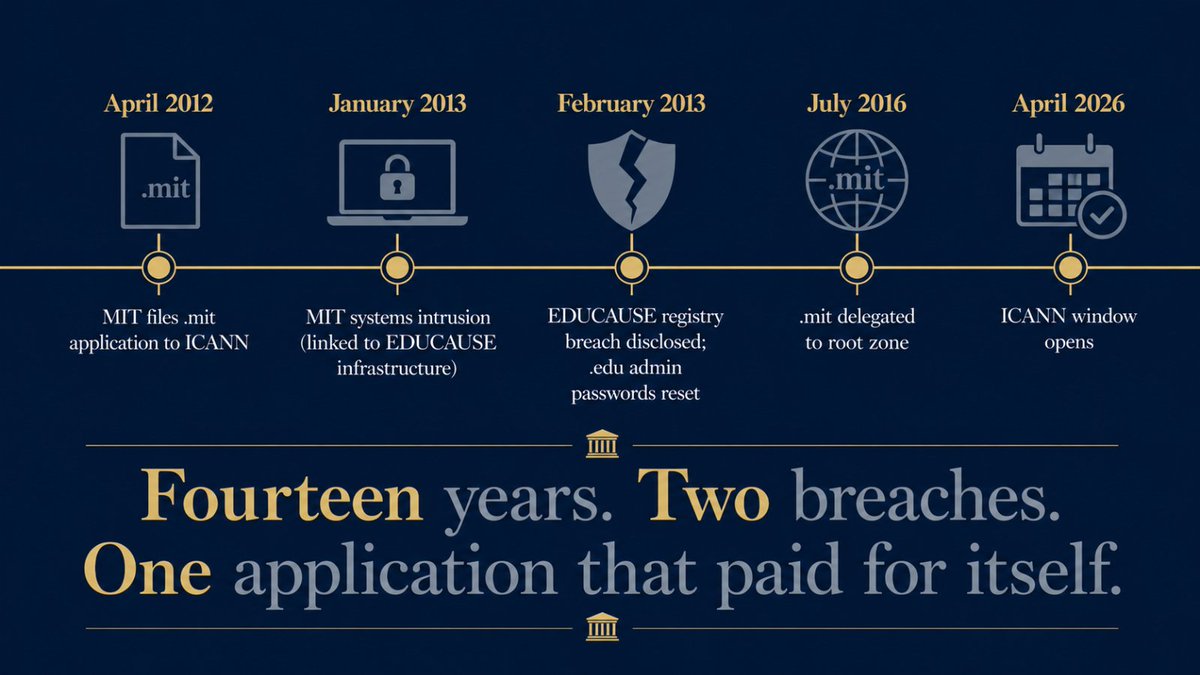
During the 2012 application round — the first of its kind in DNS history — MIT filed to operate its own top-level domain.
.mit. Application accepted. Registry agreement signed 2 July 2015. Delegation to the root zone on 6 July 2016. Backend operated by Afilias. Eligibility hard-restricted to MIT schools, departments, laboratories, research centers, and academicians.
The argument for moving early wrote itself into the news cycle.
⚠️ In January 2013, MIT was attacked. Domain industry reporting at the time traced the intrusion path through compromised EDUCAUSE systems.
The next month, EDUCAUSE itself disclosed a server breach. Hashed passwords for the administrative, technical, and billing contacts of every .edu domain in America were potentially exposed.
Within .mit, neither breach scenario applies. The registration policy is written and enforced by MIT itself. No outside registrar can sell ai-faculty.mit to a degree mill operating from another jurisdiction. No third-party registry compromise can dump credentials for the institution's namespace. The master record lives at 77 Massachusetts Avenue.
That was a decade ago.
The threat surface around higher education has gone from concerning to apocalyptic since.
Quorum Cyber's 2026 Global Cyber Risk Outlook for Higher Education recorded 425 cyber incidents at universities between November 2024 and October 2025 — a 63% jump year over year. Phishing alone accounted for 34% of ransomware incidents in the sector.
In April 2025, a coordinated phishing campaign breached 18 U.S. universities — including UC Santa Cruz, UC Santa Barbara, the University of San Diego, Virginia Commonwealth, and the University of Michigan — by stealing session cookies after multi-factor authentication had already cleared.
In March 2025, Microsoft tracked attackers who hijacked 11 accounts at three schools and used those accounts to send phishing to nearly 6,000 inboxes across 25 universities.
A pattern surfaces.
When an institution's identity lives inside someone else's namespace, that institution's identity is only as secure as the operator's worst day.
A diploma is the most trusted non-governmental credential a human being can hold. Universities issue them daily on domains they do not actually operate.
ICANN's window opens tomorrow, 30 April 2026, and closes 12 August 2026. 105 days. The previous window closed in 2012.
Board approval, string evaluation, registry infrastructure planning, financial modelling, public-interest commitments — each takes weeks. By day one of the window, the schools that will ultimately succeed are already months into preparation.
Unregistry runs the full applicant track end-to-end: ICANN filing, legal counsel coordination, registry back-end, compliance, registrar integration, delegation-day launch. The institution holds one contract, not five.
Does your university own its namespace? Reply with your school.
1
2
6
121

Apr 7
"Öğrenciler AI kullanmıyor" diyenler için bazı rakamlar var.
Ve bu rakamlar çok acı bir tablo çiziyor.
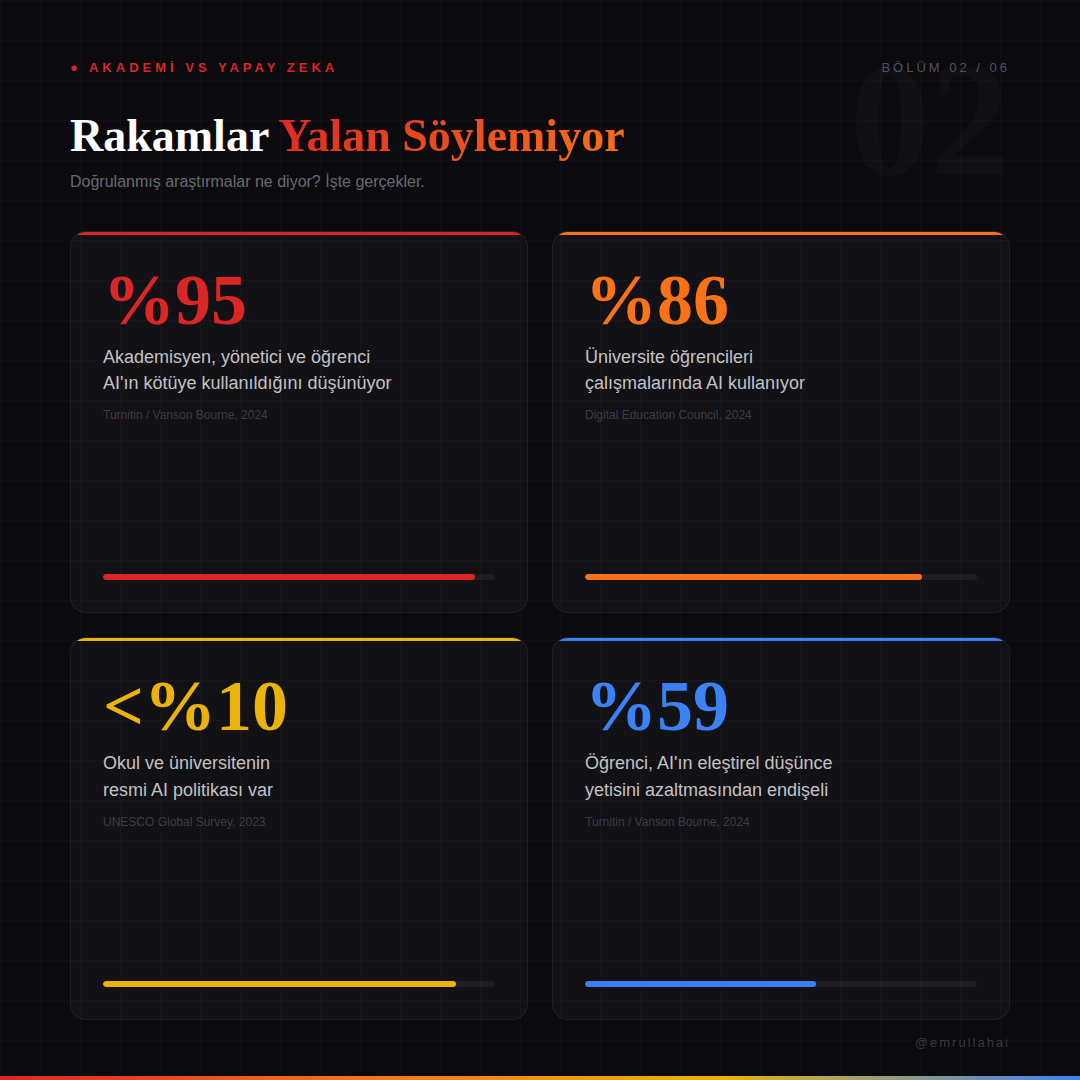
📊 Akademisyenlerin f'sı AI kullanımını "akademik sahtekarlık" olarak tanımlıyor.
Yani 3 hocadan 2'si, öğrencisinin yapay zekaya soru sormasını kopya çekmekle eşdeğer görüyor.
(Turnitin Global Survey, 2024)
📊 Buna karşılık öğrencilerin †'sı en az bir kez AI araç kullanmış.
Düşün: Hocaların büyük çoğunluğu yasaklıyor ama öğrencilerin neredeyse tamamı kullanıyor.
Bu rakam "uyumsuzluk" kelimesinin ta kendisi.
(EDUCAUSE Research, 2024)
📊 Üniversitelerin I'unun net bir AI politikası YOK.
Ne zaman kullanılabilir? Hangi derslerde serbest? Sınırlar ne?
Kimse bilmiyor. Her hoca kendi kuralını koyuyor. Bir derste serbest, yan sınıfta yasak.
(UNESCO Higher Ed Report, 2024)
📊 Ve en çarpıcı rakam: Öğrencilerin r'si AI'ı öğrenme sürecinde faydalı buluyor.
Yani öğrenciler AI'dan korkmuyor, kaçmıyor. Tam tersine: AI onların en güçlü öğrenme asistanı.
Ama akademi bunu kabul etmeye hazır değil.
(Pew Research Center, 2024)
Özetle:
Öğrenci kullanıyor → †
Hoca yasaklıyor → f
Üniversite politika belirlemiyor → I
Bu denklem sürdürülebilir değil.
Peki hocalar neden bu kadar direniyor?
2
8
1,062

Join us on April 7 at 1 PM EST for EDUCAUSE's upcoming webinar, “The Strategic Era of Data and Analytics,” and learn how institutions are using data to drive operational and financial decision-making. #HigherEd #DataAnalytics @educause
Register today: hubs.la/Q049qQgV0
2
1
2
39


Mar 18
How will you go about buying an .EDU domain? The TLD requires submitting an application to EduCause, a contractor of the US DOC, and is reserved exclusively for Accredited post-secondary schools.
7
895