
* Agreed. & it's cut well - mindfully feminine - respectfully... But not cheap & sort of 'Man Trap'; this is designed for a grown woman with an identity... Not trying on new ones... It isn't dependent on externalities. 🪞
1
4

The South Carolina Ports Authority Board is a disgraceful example of unaccountable political cronyism that has repeatedly failed the people of Charleston. For most of 2025, this nine-member board, hand-picked by Governor Henry McMaster and rubber-stamped by the Senate, operated with zero Charleston-area members for the first time in decades.
All the terminals, all the traffic nightmares, all the air and noise pollution, and the overwhelming majority of the real-world impacts land squarely on Charleston, North Charleston, and Mount Pleasant. Yet these Columbia insiders and out-of-towners decided they didn’t need anyone from the affected communities at the table.
Bipartisan lawmakers called it out plainly, Sen. Ed Sutton (D-Charleston) labeled it “unacceptable” and “mind-boggling,” while Sen. Chip Campsen (R-Isle of Palms) highlighted the daily negative externalities locals endure. The board’s tone-deaf response? Business as usual from their Columbia bubble.
At the top of this mess sit:
💩Chairman Bill H. Stern (Columbia, on the board since 2002 and dominating as chair or vice chair for two decades) and
💩Vice Chair Pamela P. Lackey (Columbia, appointed way back in 2010 by Gov. Nikki Haley).
Waterfront insiders have said it bluntly, these two “have way overstayed” and have driven the agency into the ground through abject incompetence.
Under their watch, container volumes have lagged far behind Savannah while major projects ballooned in cost and delay.
Then came the cowardly August 21, 2025, closed-door session that:
💩forced out CEO Barbara Melvin after just three years. The official story was the usual “personal and professional reasons” and “pursue other opportunities,” with Stern himself praising her on the way out.
The reality, per multiple sources, a forced ouster amid poor results. And what did this board do?
💩They handed CEO Barbara Melvin a nearly $823,000 severance package, an extra $100,000 dumped into the state retirement system, and paid her $350 per hour as a consultant through the end of 2025. plus she kept the state-issued devices.
💩That’s nearly a million dollars in rewards for underwhelming leadership while Charleston residents deal with the consequences of the board’s decisions.
This is the same politically appointed board model that critics have slammed for years.
💩long tenures with no real term limits, zero requirement for local expertise or accountability, and a statewide focus that ignores the concentrated pain inflicted on one region. Appointing Thomas A. Limehouse Jr. in 2026 as a Charleston member was too little, too late, a token gesture after the damage was done.
💩The SC Ports Authority Board under Bill Stern and Pamela Lackey, enabled by Governor McMaster’s appointments, has shown nothing but contempt for transparency, local input, and basic competence.
💩They treat one of South Carolina’s most important economic engines like a private club for political insiders.
Charleston deserves far better than this insulated, self-perpetuating group of failures. It’s long past time for real reform or better yet, serious consideration of taking port management out of the hands of these political appointees altogether.
The board’s record of governance failures speaks for itself.
1
2
21


Now have it include indirect subsidies, tax breaks, and unpaid negative externalities like healthcare and environmental impacts. If fossil fuels had to pay their fair share, gas would be well over $10 a gallon, maybe $15 or so
1
5

Is your vision so myopic that you cannot see all the other things that have happened during the Iran War? Like China being starved of oil and suffering economically or America becoming one of the world’s top net exporter of oil? You know you must look at externalities.
32

This whole discourse does kind of expose that settling is something that can have externalities people are not mature enough to deal with.
1
1
22

What are you smoking?
Wealthy elites are all neoliberal, they don’t want to pay taxes, they don't want to be constrained by government regulation, but they want the rest of us to carry the cost of all of their negative externalities.
6

Which kills local and smaller competition. There are externalities too like the USSR being a large enough rival that we felt we needed to out pace industrially that we lost, Reagan deregulation and tax cuts, and things like glass-steagall
1
14

Yep, and what about the positive externalities of EVs on carbon????????
1
1,205
Taib Muffak retweeted

20 Sep 2025
It is simple: @JohnHCochrane believes the political externalities of a Zucman-style wealth tax would be negative. @ojblanchard1, by contrast, believes that they would be positive.
The Cochrane-type position follows from basic libertarian principles. By eroding the principle of
19 Sep 2025

I think actually we have a pretty good handle on institutions that promote long-run growth, and a little bit on the stability of democratic institutions. Large scale and somewhat arbitrary government confiscation of hard-earned wealth, to satisfy the passions of envious masses, and sky high marginal tax rates, are not among them. Property rights, rule of law, reasonable taxation of investment returns, impartial justice, opportunity, and all the boring things we've known about for 250 years.
7
51
240
111,053

my hope is that AGI will somehow come up with a way that landowners can resolve the effects of new externalities amongst themselves without needing some government employee to write a plan first
1
6

This is of course because politically, this war is a turkey, and Trump himself has correctly calculated that the sooner he ends it, the better for him. Externalities of geopolitics are a distant second, if considered at all.
And Kush, Witkoff and JD do what they’re told.

Ratcliffe isn't the only skeptic in Trump's top team. Secretary of State Rubio and Secretary of Defense Hegseth have both expressed concerns and raised questions about the deal in internal discussions, while VP Vance and U.S. envoys Steve Witkoff and Jared Kushner advocated for it
4
474

Consumerism is good because a culture of consumerism makes consumption cheaper. The European aversion to capitalisms positive externalities drives me crazy
4

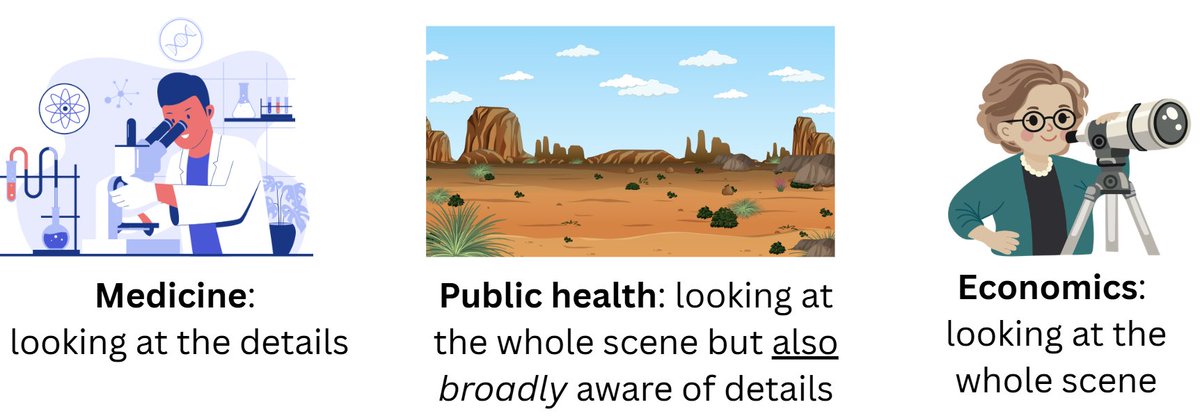
Here's a schematic chart for the first chapter - to show the DIFFERENCE IN PERSPECTIVE between medicine and economics, and why public health requires mainly a Big Picture perspective while also being broadly (at a high level) aware of the details.
Clearly, not all economists are fit to lead PH. People like Stiglitz (Nobel!) are TOTALLY UNFIT.
Only those with training and deep life-long interest in biology and a careful empirical approach (not those who hand-wave "externalities" and "free riding" to justify totalitarianism).
This greatly restricts the field of potential economists to lead PH. Nevertheless, the main training needed for PH is still economics, not medicine. The first step is to create a Centre for Scientific Public Health led by an economist who qualifies (strong awareness of wellbeing, strong interest in biology).
1
28

I used to be fairly supportive of Airbnb, but living in a popular city and in a downtown high-rise has made me more sympathetic to the criticisms.
In many apartment buildings, short-term stays can be more of a drag on residents’ quality of life than a net positive. Much of the compliance burden is pushed onto hosts, while platform enforcement often feels reactive rather than proactive.
In some cities, there are council or strata restrictions on where short-term stays are permitted within apartment buildings. Hosts can ignore those rules because enforcement is often slow and bureaucratic. It can take months before any meaningful action is taken, during which time the property continues generating income. Meanwhile, any negative externalities, including potential impacts on building insurance or shared facilities, are borne by the wider community of owners and residents.
There is also a broader housing question. In cities with strong tourism demand and housing shortages, short-term rentals can reduce the amount of housing available for long-term renters and owner-occupiers, putting additional pressure on the market.
Like most things, there is nuance. Airbnb is genuinely useful in many situations and has created real value. But when the benefits are concentrated with hosts while many of the costs are borne by everyone else, it is not hard to see why residents and apartment buildings have become increasingly skeptical of the model.

Our stock price went up 5x in the run up to the IPO. This is not an excuse for the last 5 years, but we’ve rebuilt the company from the ground up in that time, and we anticipate better times ahead. The story isn’t over.
1
1
112

On homelessness and crime:
First, conservatives are rarely voted into office in large cities. When they are, such as Giuliani and Bloomberg in NYC, they clean up the mess left by Democrats, by strictly enforcing laws.
Second, social problems such as crime and homelessness are downstream from dysfunctional culture and encouraged by tolerance. Lock criminals up and force the homeless into shelters and mandatory drug treatment and they won’t be incentivized to commit crimes and live on the streets, respectively.
Third, and where I, as an antinatalist, part ways with almost everyone, sterilization for post-puberty teenagers and twenty-somethings should be incentivized with free sterilization and cash payments up to $5,000. Sterilizations and payments would go on record. Reversals would require the patient to pay for reversal and require repayment of the $5K plus interest.
Fourth, assisted suicide should be legalized for all competent adults with up to a 60-day waiting period and adequate evidence of dependent care, if applicable. This would allow people who messed up their lives to exit, regardless of their socioeconomic status or background.
Those four points are my solutions. As long as we’re not implementing them, homelessness and crime are other people’s problems, not mine. 🤷🏼♂️
On entrepreneurship:
As for entrepreneurship, it’s the engine of innovation and prosperity. If there are negative externalities, tax them to fully compensate for them and they’ll either go away or be paid for.
In general:
I’m a big proponent of personal responsibility and individualism as opposed to blaming others or blaming systems and collectivism. Unless we’re seriously disabled, we’re victims of three things: our own ignorance, our own laziness, and our own poor choices. Strictly enforcing laws against crime, public drug use, and vagrancy can incentivize people to take responsibility for their lives or opt out via assisted suicide.
1
13
the ban pushes enough people off the platform to kill off the network externalities for young people?
3. Will advertisers lobby hard against the enforcement of the ban?
136

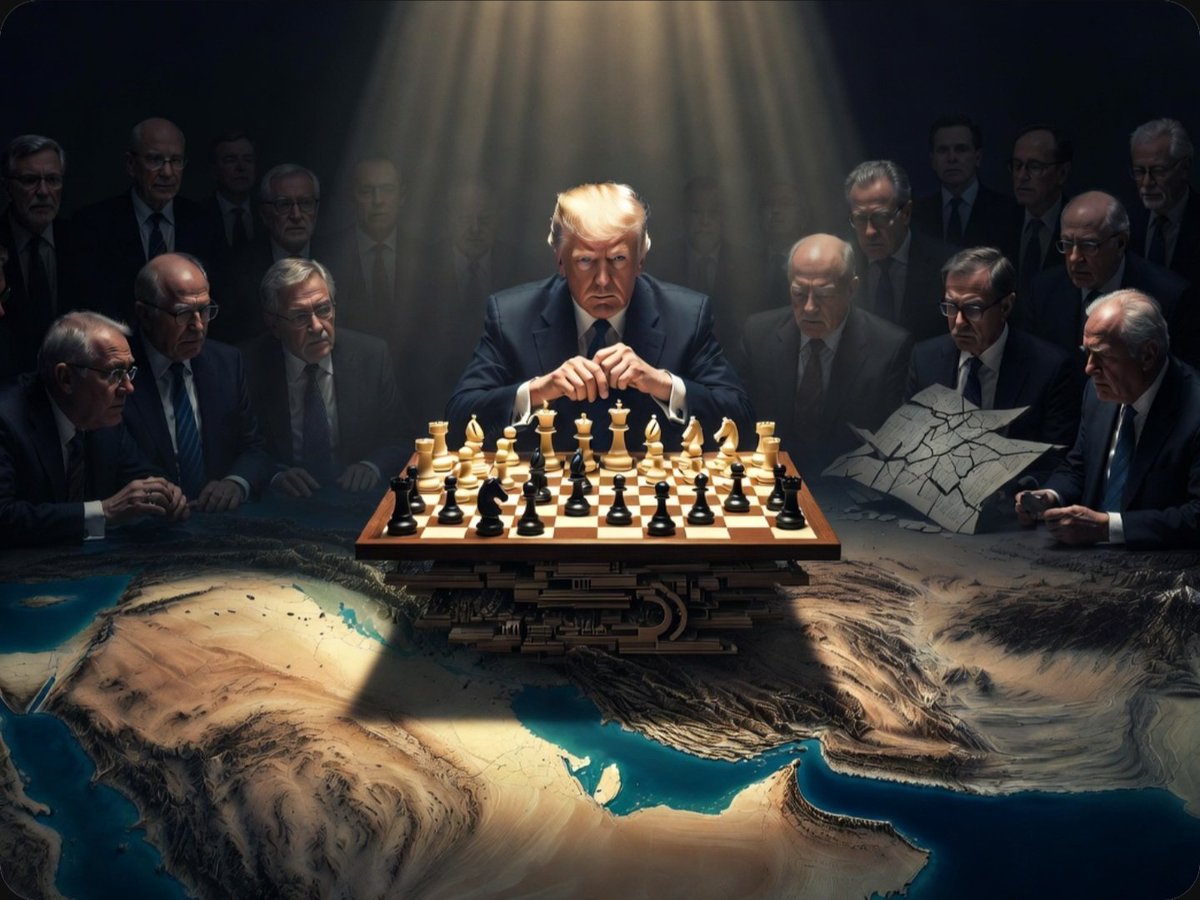
While the liberal commentariat and their credentialed echo chamber of strategic illiterates continue deploying the heuristic of “Trumpian irrationality” to rationalize their own catastrophic failure of deterrence modeling . .
For the benefit of the cognitively impaired and the morally hazard-prone, here is the
Iran War/Peace Deal technical autopsy:
1. The Obama-era JCPOA was a textbook demonstration of time-inconsistent bargaining under incomplete information: massive upfront rent transfers to a revisionist theocracy, coupled with sunset clauses that structurally incentivized future nuclear breakout. The current framework inverts this by first imposing negative externalities through sustained sanctions and targeted degradation of critical infrastructure, then conditioning any relief on observable, monitorable restraint; thereby solving the commitment problem these fucking naifs never even modeled.
2. Kinetic and maritime pressure operations were not “escalation” in the simplistic liberal ontology; they were a calibrated application of compellence that shifted the payoff matrix, raising the cost of continued defiance while lowering the perceived probability of successful nuclear latency. Result: the adversary arrives at the table with degraded capabilities and eroded proxy bandwidth, rather than the enriched breakout posture enabled by prior appeasement equilibria.
3. Securing toll-free maritime access through the Hormuz chokepoint under U.S.-dictated terms is not concession; it is extraction of the single highest-value asymmetric leverage point Iran possessed. Global energy price stabilization and the denial of Iranian rent-seeking constitute direct negative externalities imposed on the revisionist actor while generating positive externalities for the liberal international order these same critics claim to defend.
4. This was never “Trump’s war.” It was the predictable equilibrium outcome of the previous administration’s signaling of restraint and accommodation, which lowered the expected costs of proxy aggression and nuclear hedging across the Axis of Resistance. The current operator inherited a deteriorated deterrence posture and restored it through demonstrated willingness to absorb short-term audience costs for long-term strategic gain.
5. Sanctions relief is now structured as a repeated game with observable actions and verifiable milestones, not the one-shot transfer of fungible resources that characterized the prior deal. Nuclear enrichment ceilings, stockpile disposition, and inspection regimes are to be negotiated from a position where the adversary’s outside option has already been materially worsened; classic leverage maximization that the goddamn sunset-clause architects never contemplated.
6. The regional realignment effect operates through updated beliefs: Gulf actors, having observed credible U.S. willingness to degrade Iranian power projection, rationally update their alignment strategies toward the stronger node in the network. This further isolates the revisionist actor in a manner that pure diplomatic engagement under information asymmetry could never achieve.
7. The liberal preference for “dialogue” absent credible threats is a classic moral hazard problem: it subsidizes continued revisionism by signaling that the costs of defiance will remain low. The current approach prices defiance correctly by maintaining the shadow of future kinetic action, thereby inducing concession without requiring perpetual occupation or nation-building externalities.
8. Termination of active hostilities on terms that restore global public goods (energy transit) while avoiding open-ended commitment of ground forces represents efficient termination of conflict rather than the open-ended quagmire equilibria favored by both neoconservative overreach and progressive restraint signaling. The technical term is “victory with minimal sunk costs.”
(Next Post 👇)
1
1
1
51

Yeah the positive externalities of degree holding seem to be high ind of degree. And we shouldn't presume to know how productive STEM is without humanities (what classes did Jobs take?). A good Burkean ought not touch a successful institution ;)
1
4
50

But being able for me to subtract a car/related expenses amongst other expenses incurred due to low density/suburban externalities from that numerator would help me greatly, especially when having to compete against others who have no morality regarding their duties to laborers
1
2
23