

Jun 9
FounderStack was supposed to be a single-month campaign, but it's now been up for 1 year. Still selling well, unit economics still very healthy on my end. Win win.
founderstack.pro
1
3
1,423
Jun 9
Absolutely! This is why FounderStack is still selling so well.
Jun 9

my saas observation:
ppl are getting frustarted with SUBSCRIPTIONS for software that seems like it could be a one time payment, and they're vibe coding alternatives
it's not financially viable to vibe code an alternative to a one-time payment app. both time and token wise.
1
22
4,184
Apr 24
It's not just AI slop... it's a dead space. Literally the dead internet theory on a single platform.
I crushed LinkedIn in beginning of 2025. Posts drove $3000-$5000 in FounderStack sales per DAY.
Then around mid-2025 something happened, and I barely noticed to begin with. Cause my posts still got plenty of engagement and reactions, but traffic to my website dropped hard!
Then I realized 90% the comments were AI, and figured probably 90% of likes/reactions were automated too (or people mass-clicking/commenting without paying attention).
Seems like real people left. It's now just a social media platform full of bots.
Other platforms have been declining too, but I've never seen it happen that fast.
LinkedIn is a zombie now.
Apr 24

Why is there no competitor to LinkedIn?
- It's slow
- It's full of AI slop
- It actively encourages people to write AI slop
- It's slow
- The timeline is awful
- It's slow
There is clearly a market for a professional social network. I would jump in a second.
38
1
101
26,728
Apr 22
I did this aggressively on LinkedIn and YouTube in 2025. And I smashed sales on FounderStack, it was my record revenue year. So it does work really well!
But it also tires the audience. Which is why, in 2026, I've reverted back to mainly running ads.
5
1,065
Apr 9
"Just use Hootsuite."
"Just use Intercom."
"Just use Bitly."
Or just get FounderStack for a single one-time purchase? Pay once, own the tools forever.
No subscriptions, no limitations, no upsells 👇
simonl.ink/founderstack
1
27
10,241
Mar 8
I think vibe coding own solution becomes especially compelling when you can remove a monthly, ongoing cost.
I think many would still pay a one-time fee to skip the time vibe coding a full solution.
That's why my FounderStack deal sells so well.
132
Mar 8
As a founder, there's an obvious position you can take (But most founders think it's too uncomfortable).
If software is becoming a commodity - treat it (and sell it) like a commodity.
That's why I do.
On FounderStack, you can get access to my entire portfolio of SaaS tools for a one-time purchase.
We still have subscriptions as an option too, but honestly - I don't wanna force you to pay monthly if you think you could vibe code my tools yourself (you probably could, honestly).
Instead, you can save yourself the time and just pay once, use it forever.
simonl.ink/founderstack
6
16
6,095
Feb 27
Want to self-host your own social media management tool? You can very soon!
Go to FounderStack and pick up a FeedHive LTD. Then stay tuned 🔥
simonl.ink/founderstack
5
1,478

Feb 17
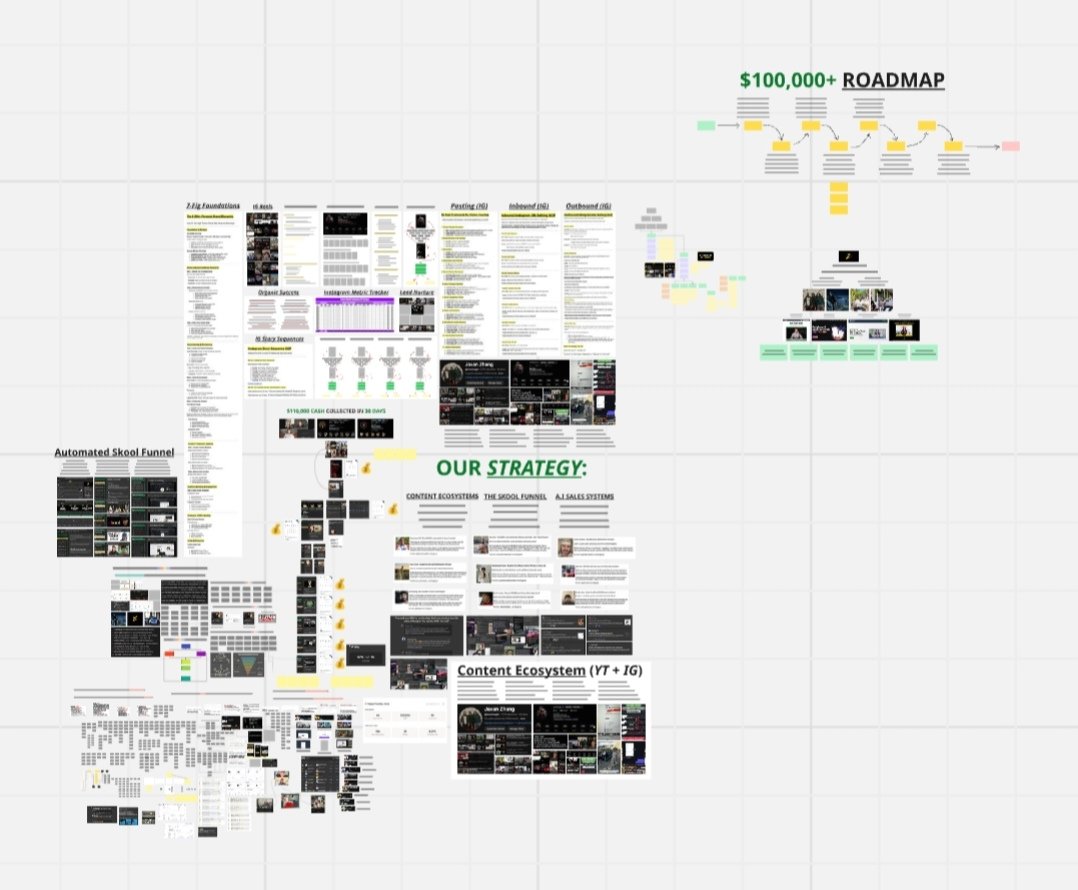
Stop trying to manage your 7-figure business in a Notes app. 🧠✨
If your brain feels like 50 open tabs, you need a Miro Board. I turn your messy ideas, YouTube scripts, and e-commerce funnels into a visual roadmap that actually makes sense.
Founders & Creators: I build the blueprint, you build the empire. 🚀
DM me "MAP" to clear the mental fog. 📩
#Miro #FounderStack #Productivity #Systems
2
2
109
Jan 31
Using a chain of tools isn't in itself a problem.
But you need to set yourself up properly and stay organized.
ℹ️ Did you know? FounderStack is an ecosystem of tools that integrates seamlessly.
You get:
- Social media management
- AI support
- Link tracking
- Graphics design
- Fake account prevention
One bundle, in multiplayer mode, for a single one-time purchase.
simonl.ink/founderstack
1
473

Holy sheet!
How am i just discovering that Simon is the founder of Founderstack!!
Been following his youtube since 2023!
Jan 27

Running a business is a ticking time bomb.
Sooner or later, something will blow up.
And it will happen again and again.
In most cases, it's out of your control.
It's not a matter of if.
It's a matter of when.
Some of the fun I had in just the past 5 years:
- When Elon Musk took over Twitter and raised API prices to $42K/month.
- When Sam Altman got kicked out of OpenAI, and I thought the company was done just before launching Aidbase.
- When Facebook suspended our app, so 75% of our posts failed for 3 weeks.
- When I was almost sued by a company I worked with previously for open-sourcing a library I had created.
Good times 😅
I stayed sane - because I used a simply, but effective rule I learned from my days back in sales.
Let me explain 👇
2
1
6
1,395
Jan 12
Imagine if you'd spend just 1-2 hours/week promoting FounderStack as a key partner and add another $10K/m in diversified income? How crazy would that be! 😏
3
6
1,388
22 Dec 2025
Been running FounderStack for a year now. It's been a massive win!
1
7
20 Dec 2025
That makes it 9 income streams in 2025.
Nicely diversified portfolio.
🔵 Subscriptions (MRR)
- FeedHive
- Aidbase
- LinkDrip
🟠 One-time sales (LTD)
- FounderStack
- TinyKiwi
🟡 Investments
- Stock portfolio
- Angle investments
🟣 Ad share
- YouTube
- Twitter/X
20 Dec 2025
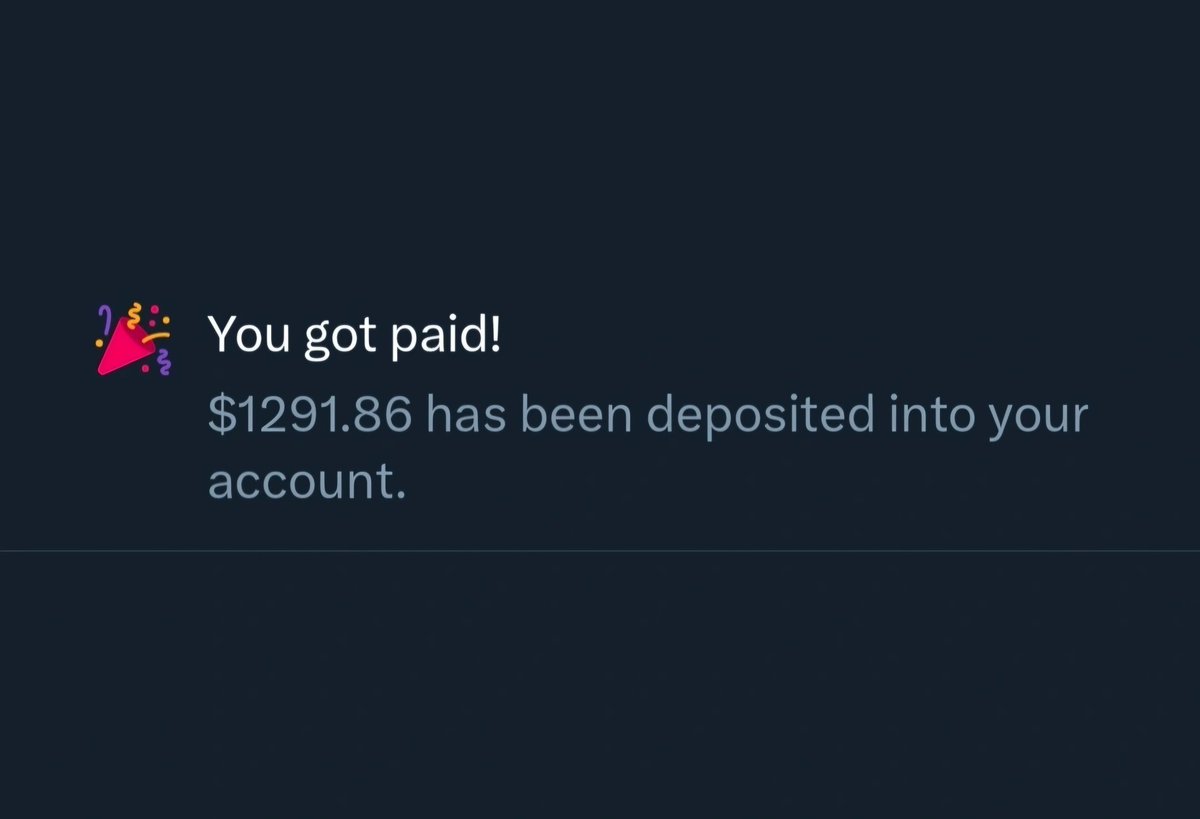
Added a new income stream this month 🎉
Thanks, X.
I'm actually surprised.
More than 2x what YouTube pays these days. Sad and kinda cool at the same time.
I guess I'll be yappin' more.
13
1
38
7,732
20 Dec 2025
If you want access on a lifetime deal, SignupGate is a part of FounderStack.
simonl.ink/founderstack
2
2
1,656
4 Dec 2025
And of course - the hidden benefits.
- Owning your operation makes you an OUTSTANDING operator.
- Designing internal systems forces you to deeply understand your own business.
- Solving your own problems makes you see new opportunities.
Exactly 100% of the SaaS tools I offer with FounderStack started as internal tools to run my own ops.
4 Dec 2025
- Customized internal tools
- Proprietary workflows (competitive moat)
- Keep your data in your own house
- Eliminating vendor risks
- And of course: Cost savings
(...just to give a few reasons)
Claiming that "it just doesn't make sense" is simply naively incorrect (or in this case, super biased).
And respectfully, I also don't think it's true when @dharmesh says that they have "exactly zero" internal tools.
I'm sure, if you look closer, they do have custom scripts, Zapier/Make workflows, and other "DIY" in place for things where there exist perfectly well-suited commercial SaaS - but they stick with it for any or all of the reasons above.
Obviously you cannot replace all the tools you're using to run your business (nor should you) - but you *can* replace quite a lot.
E.g. I run a small business. I'd need about 1% of all the features that are stuffed into Hubspot - so picking up a Hubspot subscription "just doesn't make sense". Instead, I'd vibe that 1% I need and not get distracted by the other 99%.
I personally couldn't imagine locking my business into vendor dependencies with over 100 third parties for all kinds of small things. What a terrible mess that would be.
So... if you're not aspiring to run a business at "some scale" like Hubspot - but instead want to run a bootstrapped, sovereign, super-lean, and highly-efficient business - you gotta get resourceful and trim the fat.
5
22
3,876

Post 16 — Come for the ease, stay for the creative audacity
Most tools sell you efficiency. Fewer sell you permission. What I like most about @chatandbuild is the second one the quiet voice that says, “Try it. Build it. Even if you think it’s premature.”
No-code AI platforms like this create space for a type of builder the internet overlooked for too long: people who speak problems fluently but never learned to speak code. Here, ideas aren’t filtered through syntax or dependency charts. They flow through language Indonesian to Portuguese, Arabic to Yoruba, Spanish to French, wherever the idea is born.
@chatandbuild turns describing into building, building into experimenting and experimenting into confidence. And when confidence compounds at scale, you end up with students prototyping agents smarter than their textbooks, founders launching dashboards the exact shape of their strategy, writers giving machines narrative intuition, researchers turning papers into proactive collaborators and communities bonding with AI agents that evolve like digital citizens, not disposable chat sessions.
The platform’s magic isn’t perfection it’s momentum. It’s the ability to iterate without shame, ship without fear, and build without borders. The future will reward the curious, the persistent and the imaginative and the tools that empower them.
If you can explain it, you can build it. Now imagine doing that 16 times, 160 times, 1,600 times… that’s the inflection point.
#ChatAndBuild #NoCodeAI #AIAgents #Web3MeetsAI #BuildInAnyLanguage #DeFiDashboards #AIForStudents #FounderStack #ShipFastLearnFast
29
1
50
7,588