Fin 💙💜 retweeted

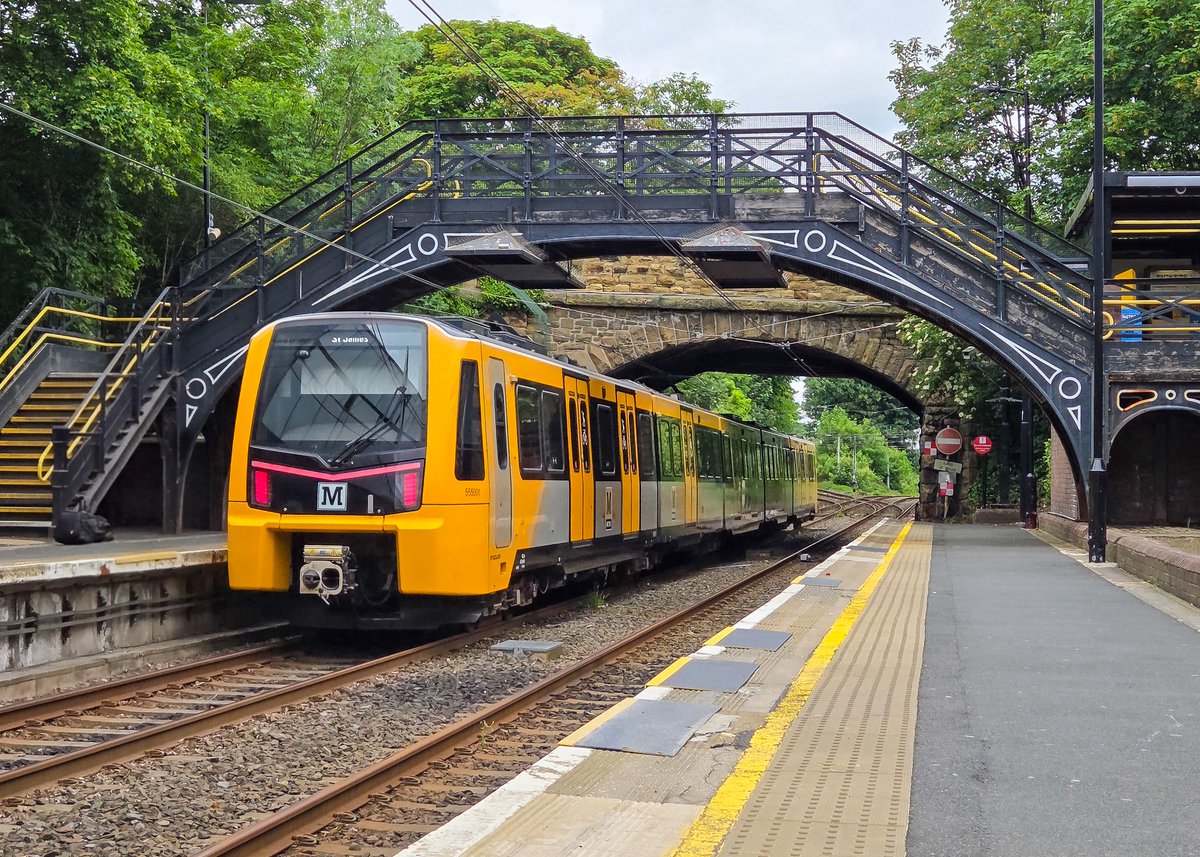
South Gosforth [SGH] ✅️
A very well preserved footbridge. The black is definitely something different and it works well.
Would be a nicer photo with a Metrocar under it though 😌
4
3
25
632

There is still time on a medics salary . I started as a houseman on £26 a week with a wife and baby in a Garrett room in Jesmond. We never thought we would ever have one of those detached houses in Fenham or Gosforth occupied by the consultants …..

I wish !
8
7
12,352

@x @facebook @cheshirepolice @PoliceChester @Twitch @YouTube @YouTubeCreators
Paul Tobin is at
4 Gosforth Place
Hoole
Chester
CH2 3JH
Sean O'Halloran is living with or is Paul Tobin.
He's on the run, go get em'
21

Jun 13
@My_Metro good morning. Is the first service from Monkseaton towards south Gosforth running to timetable this morning?
1
86

Jun 13
1868. London, England.
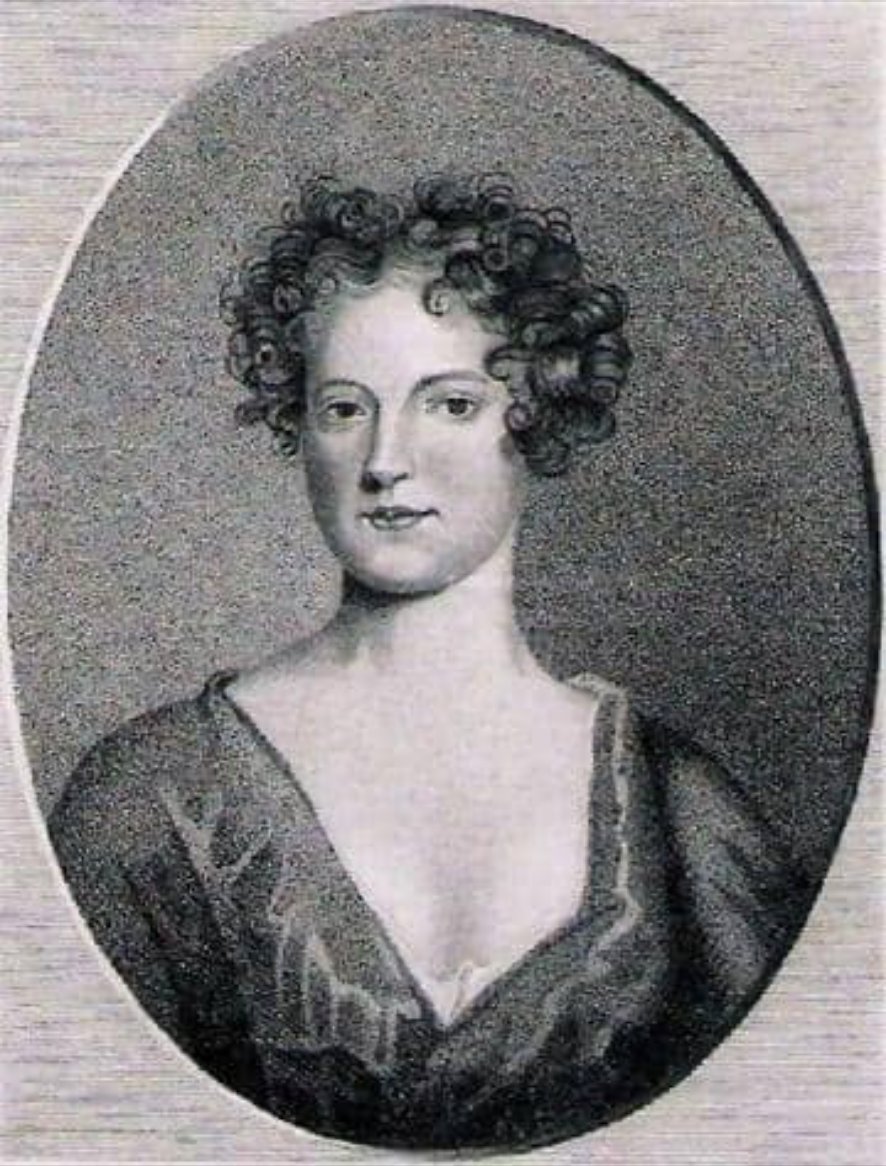
Henrietta Vansittart was a Victorian naval engineer who designed an improved screw propeller for steamships at a time when women were not expected to enter engineering at all. Her blades helped ships move faster, burn less fuel, and shake less in the water. She was known in her own lifetime, then nearly removed from the story afterward.
She was born Henrietta Lowe in Ewell, Surrey, in 1833. Her father, James Lowe, was a blacksmith, machinist, and inventor who had patented a screw propeller design in 1838. His work brought technical attention but little security. Patent disputes and business losses left the family with more claims than money.
The workshop was her school.
In 1855, Henrietta married Frederick Vansittart, a lieutenant in the 14th Regiment of Light Dragoons, at the British Embassy in Paris. Two years later, she was aboard HMS Bullfinch when one of her father's propellers was tested. She watched the sea take the force of the screw. She watched the engine turn motion into proof.
Her father died in 1866 after being struck by a wagon on Blackfriars Road in London.
After his death, Vansittart continued the experiments. She did not have a university, a shipyard position, or formal engineering training. What she had was her father's work, her own models, and a command of the problem. The propeller had to grip water, reduce slip, reverse well, and avoid shaking the ship apart.
On September 18, 1868, she was granted British Patent No 2877.
Her design became known as the Lowe Vansittart propeller. It used curved blades shaped to improve thrust and reduce vibration. She also received United States Patent No 89,712 on May 4, 1869, for an improved method of constructing screw propellers. The work belonged to mechanics: blade, shaft, water, drag, pressure, rotation.
In 1869, the Admiralty trialled her propeller on HMS Druid.
The trial was successful. Reports described better speed, less vibration, and reduced fuel use compared with other propellers. Later accounts say the design was fitted to many naval vessels and some merchant ships, including SS Scandinavian. The machine moved through water with her name attached to it, for a while.
She carried models, papers, and evidence into rooms built for men.
In 1871, her propeller won a first class diploma at the Kensington Exhibition. More awards followed at exhibitions in Dublin, Paris, Belgium, Sydney, Melbourne, and Adelaide. In 1876, she presented a paper on screw propellers to the Association of Foremen Engineers and Draughtsmen, using her own diagrams and technical explanations.
She had to prove the machine and the right to speak about it.
In 1882, she published a pamphlet on the history of the Lowe Vansittart propeller and her father's work. The front image showed her holding a small propeller model beside a model ship. It was a controlled portrait, careful and public. Her hand held the invention, but the title still leaned toward the father whose name made her acceptable.
In September 1882, she travelled to Tynemouth for the North East Coast Exhibition of Naval Architecture and Marine Engineering.
There, she was found in a confused state and committed to Tyne City Asylum at Coxlodge, Gosforth. She died on February 8, 1883. Her patent protection had ended when required fees were not paid. She was forty nine or fifty, depending on the record used.
A wooden model of her propeller remains in the Science Museum collection.
The Lowe Vansittart propeller became part of nineteenth century naval engineering and was recognised in trials, exhibitions, and ships at sea.
She made the screw bite water cleanly, and history let the wake close over her name.
36

Jun 12
Yeah, I can picture it. Beatdown is now where that Pet Sounds used to be. When Pet Sounds moved to South Gosforth (I live in Longbenton) I pretty much bankrupted myself there.
1
1
25

@bt_uk if I had some feedback about some extremely dangerous behaviour of your staff at the BT Newcastle Call Centre (Gosforth Park Rd), would it be possible to give me the best method to share this with you please? Video footage can just be shared here if easier.
1
60


ALT Yap.
16

Jun 12
South Gosforth Depot prepares to bid farewell to iconic Tyne and Wear Metro trains railadvent.co.uk/2026/06/sou…
176

Jun 12
I was born in Gosforth you melt. Nice try though. Your account is in Australia. Weird argument but ok 😂
16

Jun 12
Hi @SANRAL_za, please remove the Gosforth Plaza toll if you can't take it seriously. There's always traffic in this toll, no matter the time of the day!
7

Jun 12
The earlier disruption between South Gosforth and Regent Centre has now cleared and services have resumed. Please check the Pop App for your next train. Trains are running to all stations but may not be to the usual timetable on the Green line. Thank you for your patience.

1
1,417
Jun 12
We have a service suspension on the Green Line between South Gosforth and Regent Centre in both directions due to signalling problems.
All Arriva bus services will accept Metro Pop cards and tickets between Haymarket and Regent Centre.

1
1,455

Hope all well mate. Hopefully catch up for chinwag soon..Hoping to be at Gosforth Cup Mtg in few weeks time. 👍
2
2
22

Thank you to everyone who has expressed their condolences and shared kind words about Gary.
Gary's family wishes to share that his funeral will take place on Thursday 18 June, with a private service in Newcastle.
They have asked that anyone wishing to send cards or flowers by way of tribute can do so using the contact details below. These should please arrive before 9am on Thursday 18 June.
Alternatively, they have suggested a donation to the @IJF_official, whose work Gary greatly admired.
c/o Jerry Young
W.S. Harrison Funeral Directors
155-159 Salters Road
Gosforth
Newcastle Upon Tyne
Tyne & Weir
NE3 4HJ
Thank you.

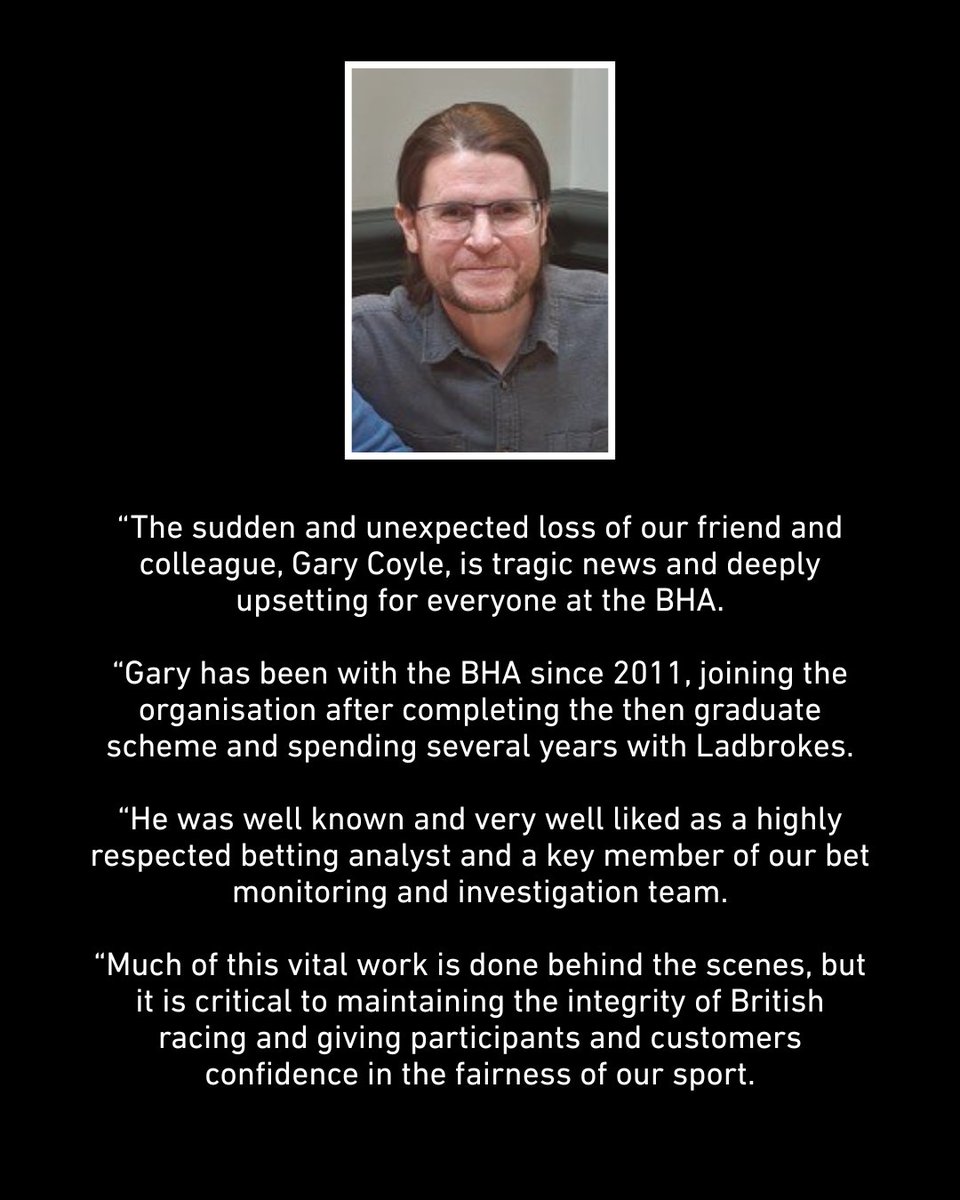
We are devastated to announce the sudden loss of our colleague, Gary Coyle.
Gary has been a pivotal member of our bet monitoring and investigation function, in his role as the BHA’s designated Betting Analyst, for more than 15 years.
He dedicated his working life to racing – the sport he was passionate about – and we will miss him immensely.
This has been very difficult news to process. Our focus is on providing the necessary support for Gary’s family, friends and colleagues.
1
7
33
9,664

Jun 11
Have look on Gosforth High street Newcastle.
Exactly the same, two lanes made into one. Cars rammed every day and about 10 cyclists use it.
Waste of money.
1
1
168

Jun 11
You been on Gosforth High Street lately, Mark. Pedestrian lights that I don’t like the look of.
16