To be clear about $AIRJ, "datacenters that use water" was in quotes on purpose: shorthand compressing the thesis into one line for a vote, not a claim that that's literally all it is.
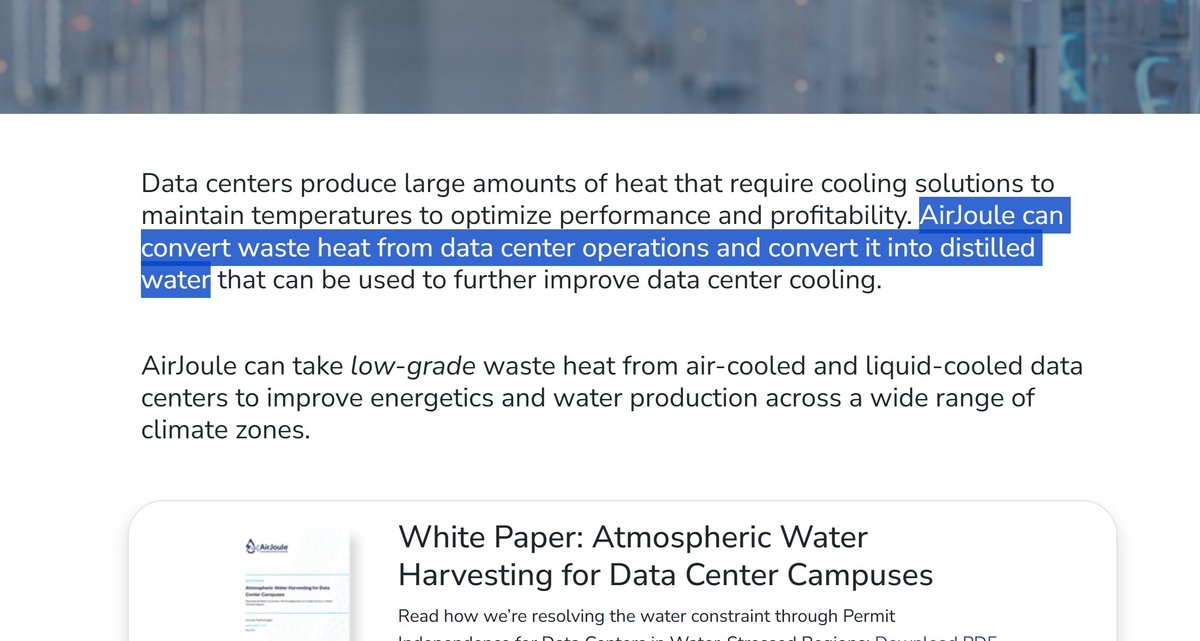
The real thesis is permit/schedule independence for water-constrained, gas-co-located campuses, and yes, they even target the air-cooled case (Case B).
I read the white paper closely* (more at the end).
I even suspect it's written with Nexus,
The substance of my pushback holds:
➟ The high-value case is the water-cooled facility (Case A)
The shift to zero-water cooling is shrinking exactly that segment.
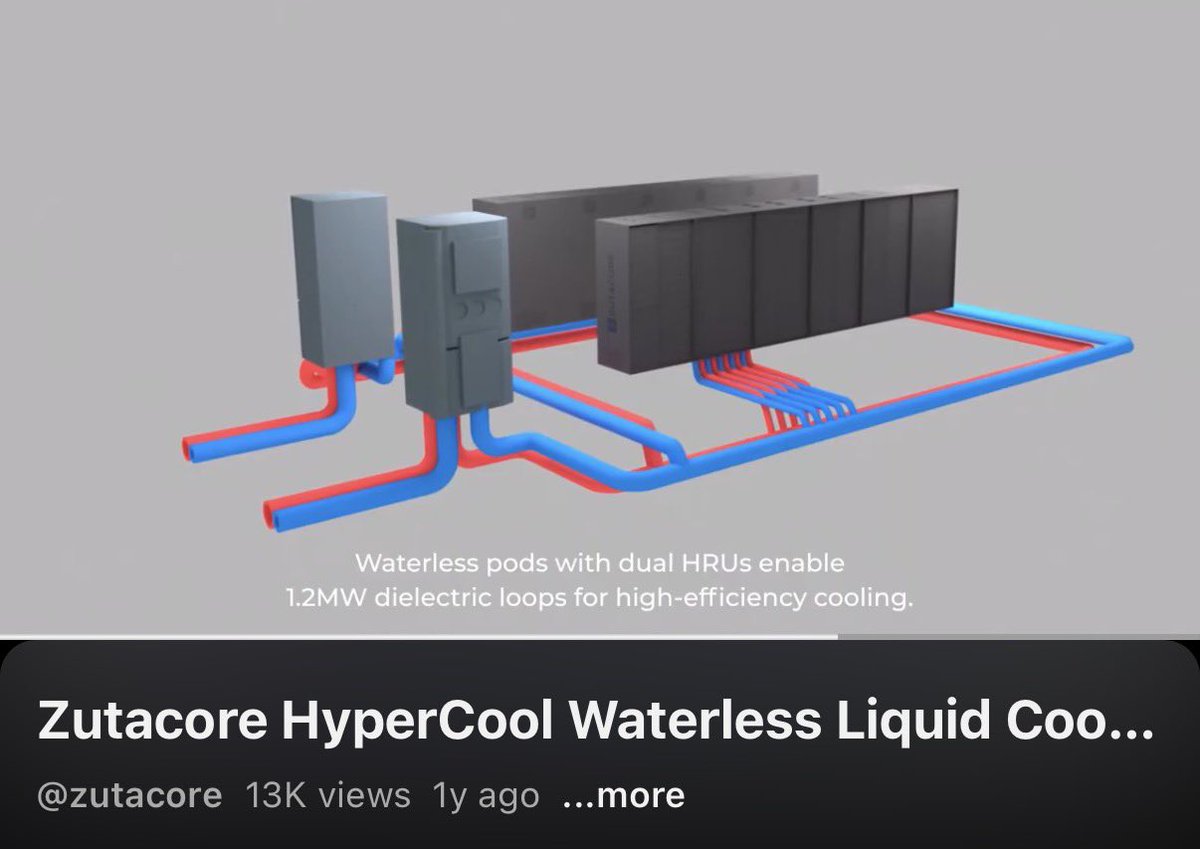
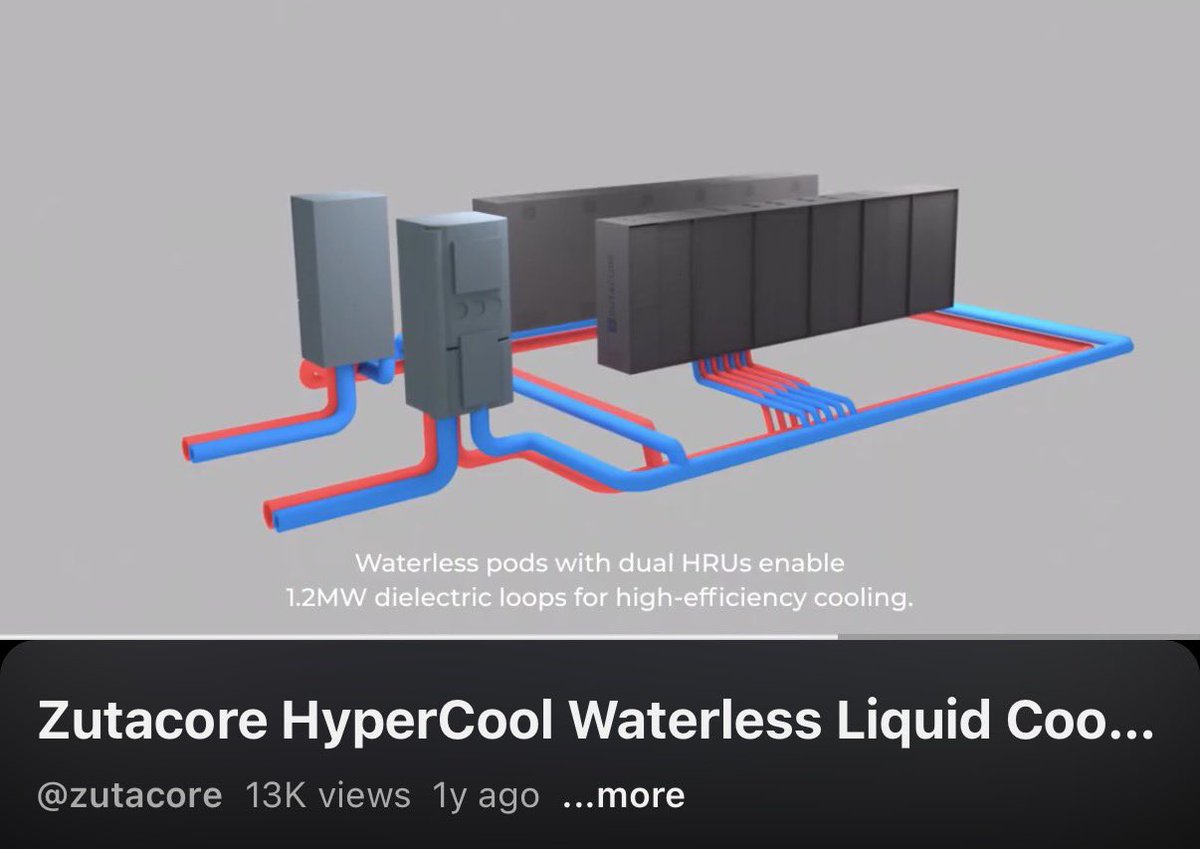
This isn't hypothetical: two-phase direct-to-chip (ZutaCore HyperCool et al.) cools the chip with a dielectric fluid and rejects heat dry, zero water in/out, and the high return temperature makes dry rejection viable even in hot/dry climates.
That's a far more efficient foil than the crude air-cooled chiller AIRJ models ( 0.15 PUE), so its energy-savings edge shrinks, and DTC bypasses both the water permit AND AirJoule.
➟ Economics only clear in a narrow niche (hot free waste heat no cheap water alternative); all-in is still ~$30–50/m³.
➟ The $300–500M IRR benchmarks against the slowest path, their own Scenario 3 (air-cooled) already cuts the permit ~90% without AirJoule.
➟ The WPA annuity that drives the re-rate is capital-gated — AIRJ funds the fleet.
➟ Still pre-revenue, no signed WPA.
DARPA/Yaghi/GEV pedigree is real, I credited it. I just don't see the economics clearing outside the niche yet, especially as direct-to-chip matures.
Genuinely open to where you think I'm wrong.
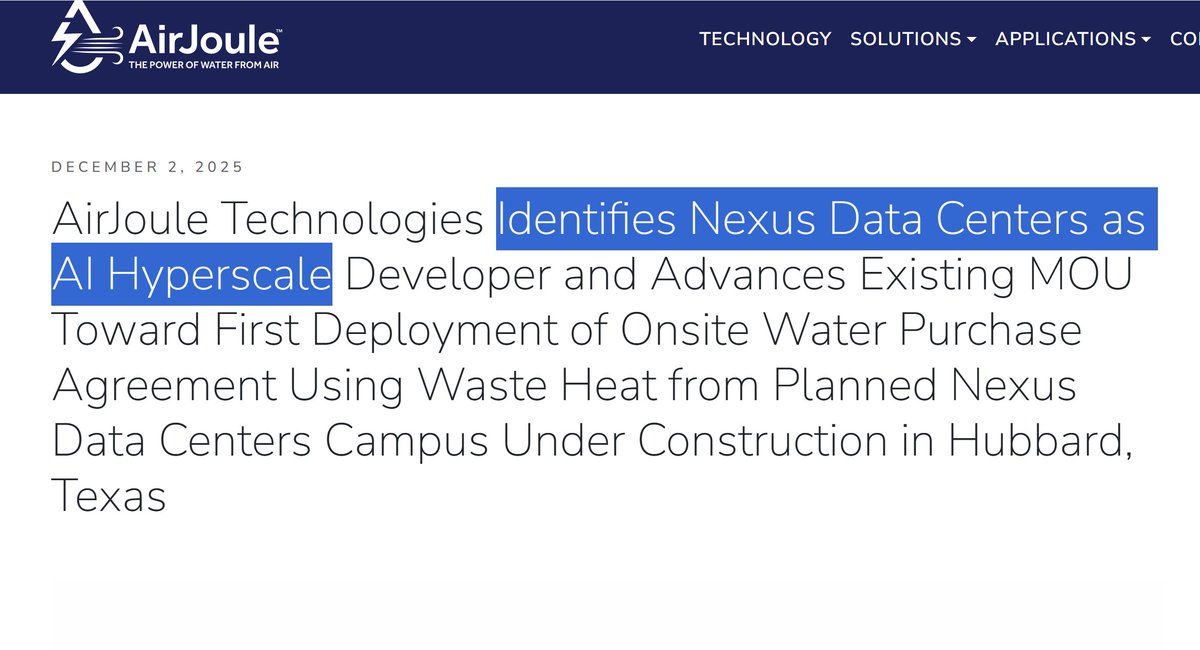
* I read the white paper closely, and I suspect the unnamed "leading hyperscale data center operator" it was built with is Nexus (it fits the description, and it's AIRJ's flagship WPA). Either way, here's the part that matters: Nexus isn't arm's-length. In December 2025, Transition Equity Partners took a large equity stake in Nexus, and TEP's founder and managing partner, Pat Eilers, is AIRJ's own Executive Chairman.
So the marquee "validation" is, to a real degree, related-party. The deal could still be real and good, but it's not the independent third-party stamp it looks like at a glance.
2
181
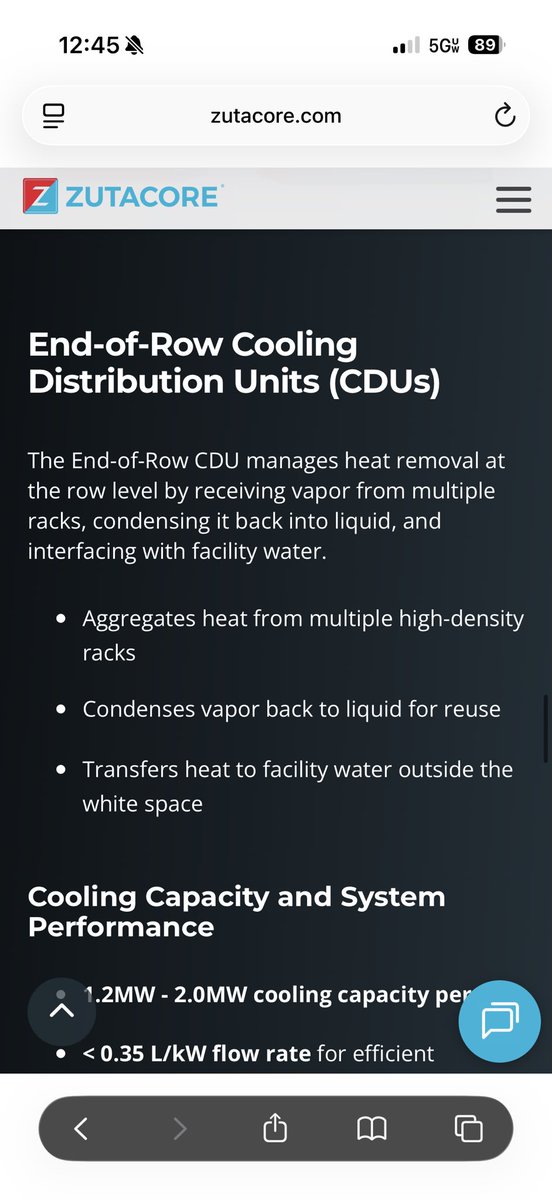
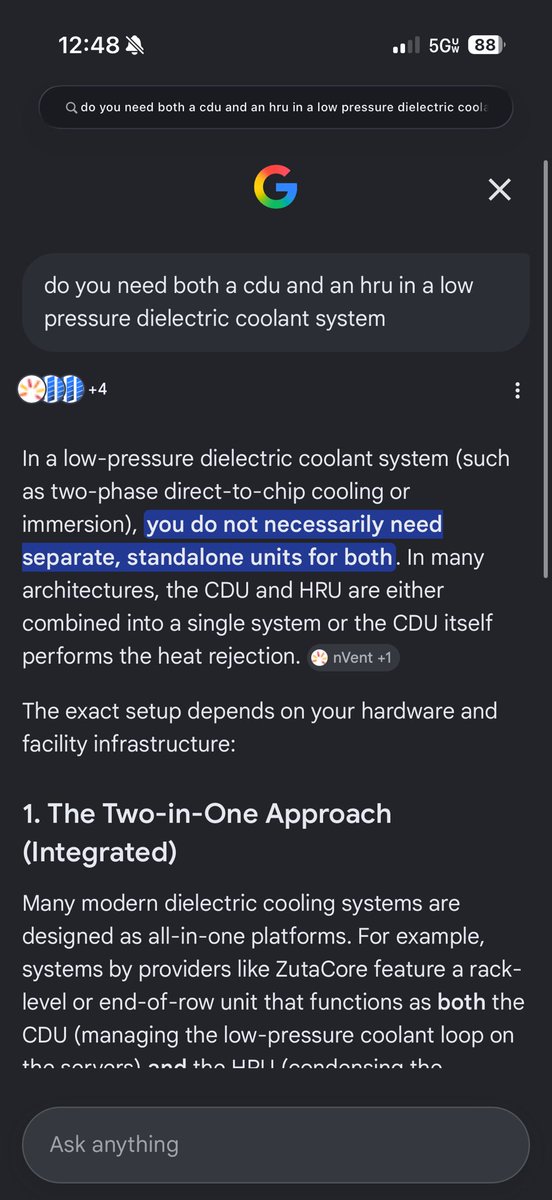
I think the HRU is serving as the cdu here since the hypercool is at low pressure? I think the cdu’s job is handled passively
1
1
38
$DGXX isn't helping the laggers.
DGXX is positioning to be the company the laggers buy from. That's not negative. That's a moat.
First, "liquid cooling isn't new". Half right.
As a general concept it's been around for years.
But there are three very different tiers, and lumping them together misses the point.
Tier 1 is air cooling, the old standard that completely breaks down at modern GPU densities.
Tier 2 is single-phase water/glycol direct-to-chip, which is what CoreWeave and IREN use today. It works, but it still uses water, demands high flow rates, and carries leak risk.
Tier 3 is two-phase waterless dielectric (ZutaCore HyperCool), where a dielectric fluid boils and condenses in a sealed closed loop.
Zero water, 5 to 6x lower flow, zero leak risk.
When people say "liquid cooling" they mean tier 2.
What almost nobody has deployed at scale is tier 3.
That gap is exactly where the differentiation lives.
Second, and this is the bigger one: "DGXX is spending money helping the laggers develop this".
This gets the direction backwards.
DGXX is not financing anyone's cooling R&D.
ZutaCore already built HyperCool.
They're an independent company with their own patents and IP. If a partnership happens, DGXX would be the integrator and customer, not the sponsor.
Here's the part that flips the premise entirely.
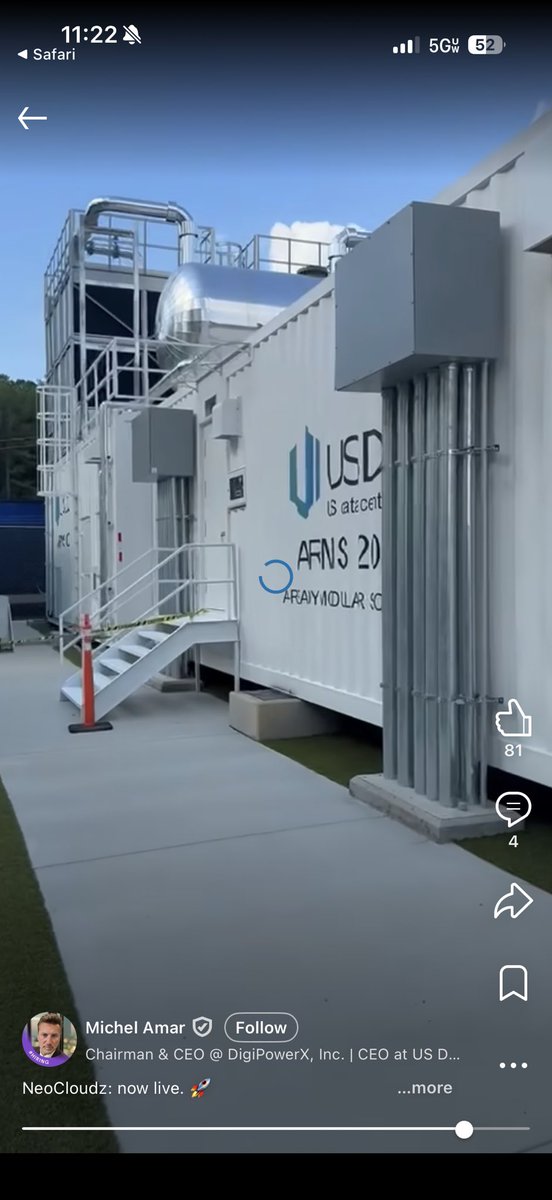
Through USDC and ARMS 200, DGXX is building a modular Tier-III system that other operators (the ones sitting on stranded gigawatts but lacking a modern stack) would have to buy.
Companies like IREN spent years securing powered land, but raw power means nothing if your cooling can't handle modern density.
ARMS300 is the answer they didn't build themselves.
So DGXX isn't helping the laggers.
DGXX is positioning to be the company the laggers buy from. That's not negative. That's a moat.
One honest caveat: the DGXX/ZutaCore partnership isn't officially announced yet, just signalled via the CTO's LinkedIn post. Treat it as a strong signal, not confirmed fact. But the broader thesis holds either way. They're building the full stack to sell to a market that's desperate for exactly that.
1
1
4
574

Jun 13
I am analyzing $DGXX performance against tough questions they were asked at the Columbia town hall this past January.
(Questions answered on the Columbiana data center)
Hopefully we will be able to use this to judge their future performance in other public settings.
💧Water usage concerns are COMPLETELY resolved with Zutacore Hypercool.
⚡Electricity concerns are mostly resolved, although an increase in electric rates is probably inevitable. DGXX is going to be more electrically efficient than other AI infra at this stage though, so that is a win.
🔊Noise concerns are completely resolved, except for future expansion. DGXX can prevent further complaints in the future by not conducting construction at night, fairly easy.
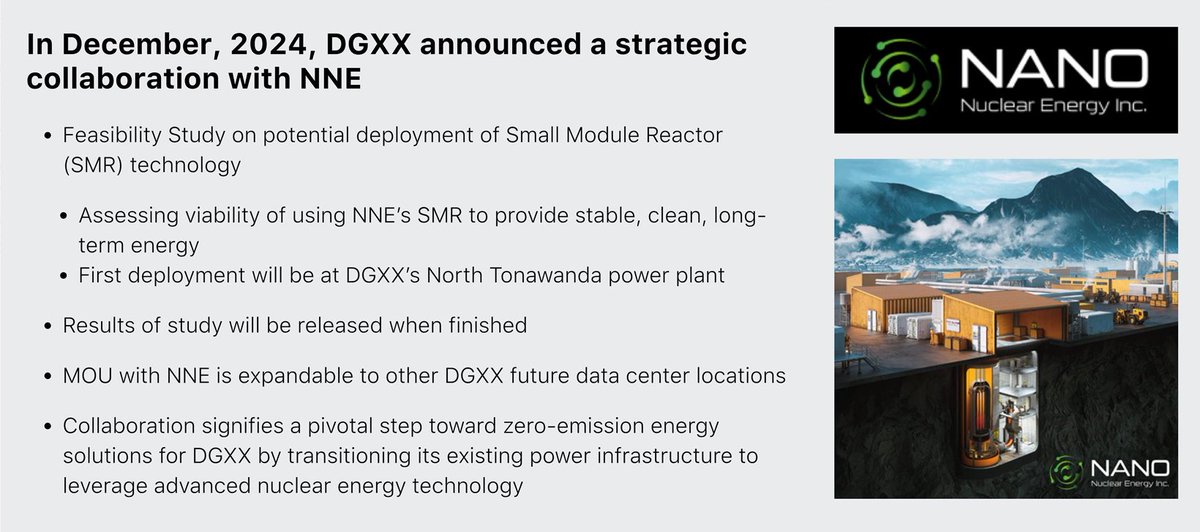
💨Air quality concerns AT COLUMBIANA have yet to be addressed. HOWEVER, they are interested in deploying SMRs (Small Module Nuclear Reactors) at one, if not ALL of their sites, which would resolve this entirely.
💧Water pollution concerns are resolved, as ARMS sites are ZERO WATER.
🧪Chemical concerns are significantly reduced, as Zutacore Hypercool is easily contained, low maintenance, and leaks can be easily managed.
🔥Fire risk in a tier 3 data center is LOW, as they must have built-in fire suppression systems to qualify as Tier 3. This of course has not been reported on much with DGXX.
🍃DGXX environmental impact is one of the best things about the company. These concerns are squashed. Zero water, high electrical efficiency, Yutanix supporting sustainable practices, nobody is doing it better than DGXX at this point.
🏙️ Quality of life impacts are mostly localized and manageable. Residential noise, traffic, and infrastructure load are contained, future construction projects are going to be the only noise and QoL concern at this point.
🧾 ❗❗❗Transparency & governance concerns are NOT structurally resolved. Issues like public notification, decision visibility, and stakeholder inclusion remain procedural risks rather than technical ones, and depend heavily on governance behavior rather than infrastructure design.
⚖️ ❗❗❗Ethics, political influence, and process integrity concerns remain unresolved and independent of technical outcomes. These include perceived influence, confidentiality practices, and decision-making transparency, none of which are automatically improved by better infrastructure design. THIS IS AN IMPORTANT ONE TO MONITOR GOING FORWARD, however they are still beating IREN at this lmao
💰 Taxation & public benefit balance is mixed but trending neutral-to-positive. Potential abatements and subsidies are offset by questions around fair tax contribution and whether community benefits scale proportionally with private profit capture. The tax abatement did get denied, so DGXX is still benefitting the community here by paying their share at Columbiana.
📈 Economic development organizations and recruitment roles are generally net positive from a local growth standpoint. 58 INC simply helped them move in. They support investment and job creation narratives, though confidentiality agreements and selection processes can limit perceived openness.
🏗️ Land use & zoning concerns are mostly resolved at approval stage, but long-term constraint remains. Appropriateness of location and zoning alignment are typically satisfied, while the ability for communities to later reverse or halt expansion is limited.
🚀 Growth & expansion impacts are the key long-term variable. Future facility scaling increases water, power, and infrastructure demand proportionally, meaning sustainability is NOT static, it is contingent on how aggressively expansion proceeds. Again, they are still much better than other companies at sustainability at this point.
💼 Jobs & economic claims are directionally positive. DGXX has stated they intend to host local training centers near their data centers. Jobs materializing, job quality vs environmental tradeoffs, and net local economic value all depend on whether projected hiring and investment actually match build-out reality.

4
8
38
2,672

Jun 13
While $CRWV's data centers drink millions of gallons of water...
$DGXX is building something different.
ZERO water.
Not a metaphor.
Literally zero.
Here's the story nobody's connecting the dots on:
A few months ago, DGXX made two strategical hires:
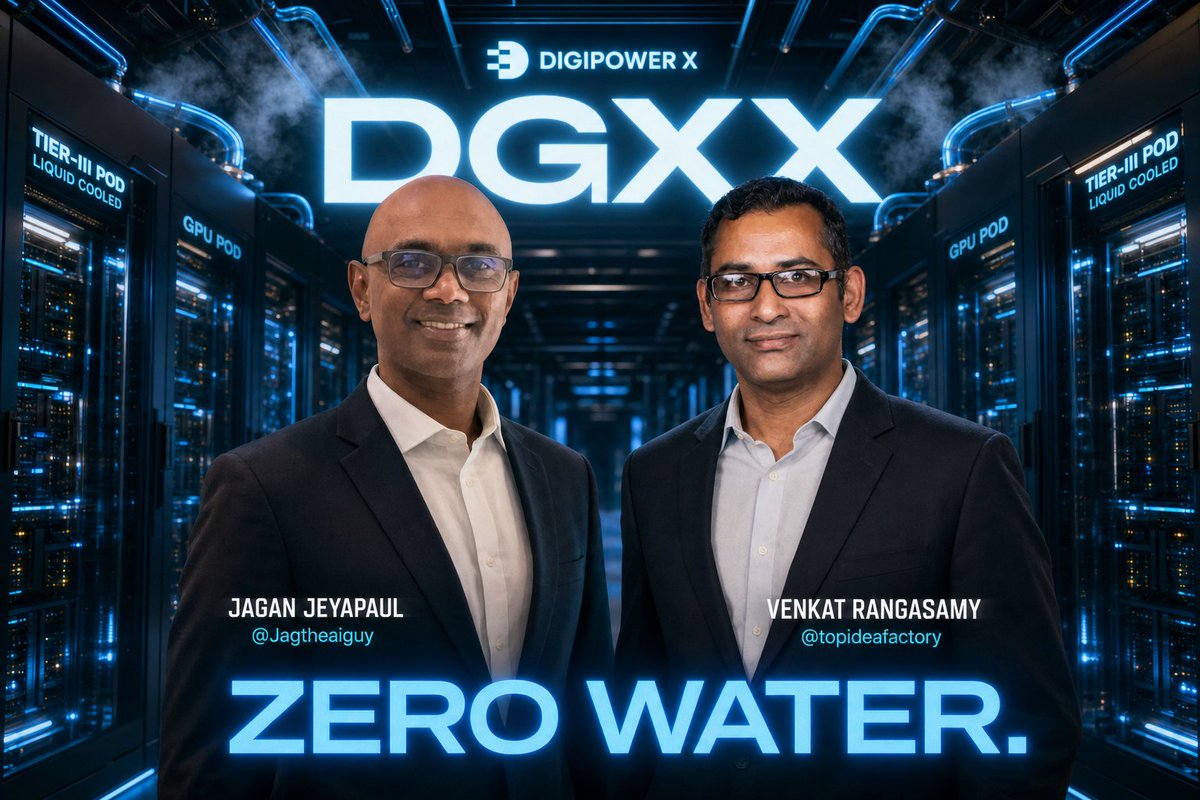
➟ Jagan Jeyapaul. CTO.
➟ Venkat Rangasamy. Engineering.
Most people saw the announcement, scrolled past it, moved on.
Big mistake.
Because what Jagan and Venkat brought with them wasn't just experience.
It was relationships.
Specifically: deep contacts inside two companies most retail investors have never heard of.
Yutanix and ZutaCore.
And once you understand what those two companies do, the entire DGXX thesis clicks into place. 👇
🧊 THE COOLING PROBLEM NOBODY TALKS ABOUT
AI data centers have a dirty secret.
They drink water.
A LOT of water.
A single hyperscaler campus can consume millions of gallons per year for cooling.
CoreWeave, Nebius, IREN, all of them rely on air cooling, glycol loops, or water-based systems.
That's why every new AI data center announcement triggers community backlash.
Noise.
Power.
Water.
Especially water.
Rural communities don't want their aquifers drained so Anthropic can train a model.
🔬 ENTER ZUTACORE
ZutaCore built something different.
HyperCool.
A waterless, two-phase, direct-to-chip dielectric cooling system.
Translation in plain English:
➟ A dielectric liquid (not water) sits directly on the chip.
➟ It boils at low temperature (18-50°C) absorbing heat.
➟ The vapor rises, condenses, returns to the chip.
➟ Closed loop. Sealed. Zero water in. Zero water out.
➟ Zero leak risk. Zero corrosion. Zero contamination.
The fluid never needs to be replaced.
Not after a year.
Not after a decade.
And the kicker?
The heat extracted can be reused, district heating, industrial processes, greenhouses.
🌐 ENTER YUTANIX
Hardware is half the equation.
The other half is software.
Because a GPU-as-a-Service platform needs:
➟ Automated billing and metering
➟ Multi-tenant isolation
➟ CPQ (configure-price-quote) workflows
➟ Real-time capacity discovery
➟ Self-service marketplace
Without that layer, you don't have a cloud business.
You have a really expensive rack of GPUs.
This is where Yutanix comes in.
AI infrastructure marketplace.
Software stack.
Cloud-like agility for any data center operator.
And here's the part that suddenly makes everything make sense:
🔓 WHY NEOCLOUDZ TOOK SO LONG
If you've been following $DGXX, you noticed something.
NeoCloudz was announced months before it actually launched.
People were getting impatient.
"Where's the platform?"
"Why the delay?"
The answer, in hindsight, is obvious:
They didn't have the software layer.
Building a GPU marketplace from scratch is hard.
Really hard.
So instead of forcing it, they waited.
They hired Jagan.
They hired Venkat.
Jagan and Venkat brought Yutanix into the conversation.
And suddenly NeoCloudz had what it needed to actually scale:
➟ ARMS 200 = the physical pods ✅
➟ Supermicro NVIDIA = the compute ✅
➟ ZutaCore HyperCool = the waterless cooling ✅
➟ Yutanix = the software marketplace ✅
The wait wasn't a delay.
The wait was assembly.
🧥 THE PICTURE NOBODY ELSE IS SEEING
While retail investors were complaining about NeoCloudz delays...
The DGXX Man was quietly assembling the most differentiated stack in the entire neocloud space.
Zero water.
While CRWV, NBIS, and IREN are burning through aquifers and fighting permitting battles in water-stressed counties, $DGXX is positioned to walk into any rural community and say:
"We will not touch your water."
That's not marketing.
That's a physics-level differentiator.
And in 2027, when every state starts passing water-restriction laws on data centers...
Guess who's already compliant?
🎯 THE TELL
December 2025.
Jagan Jeyapaul, CTO of DigiPower X, drops a LinkedIn post.
Hashtags: #digipowerx #dgxx #zutacore #yutanix
All four.
In one post.
No official partnership announced.
No press release. No 8-K.
Just the CTO casually tagging the two companies that complete the stack.
That's how it always starts.
Also, woth to add, Venkat Rangasamy brought his massive experience building for Oracle and Cerebras.
Go follow the real heros.
➟ Jagan Jeyapal @Jagtheaiguy
➟ Venkat Rangasamy @topideafactory
Without them, this wouldn't be feasible.
Thank you, Jagan.
Thank you, Venkat.
Well done, Michel.
__
Nothing confirmed. Just connection the dots.
Not Financial Advice. DYOR.
Jun 13

This is a consolidation of my thoughts on $dgxx/$usdc/Yutanix/Zutacore.
There is alpha in this. Enjoy the read:
Nobody is talking about the real reason $DGXX is about to take over the AI infrastructure market. Let me explain.
Everything $dgxx is doing right now is positioning them to completely take over the ai infrastructure market.
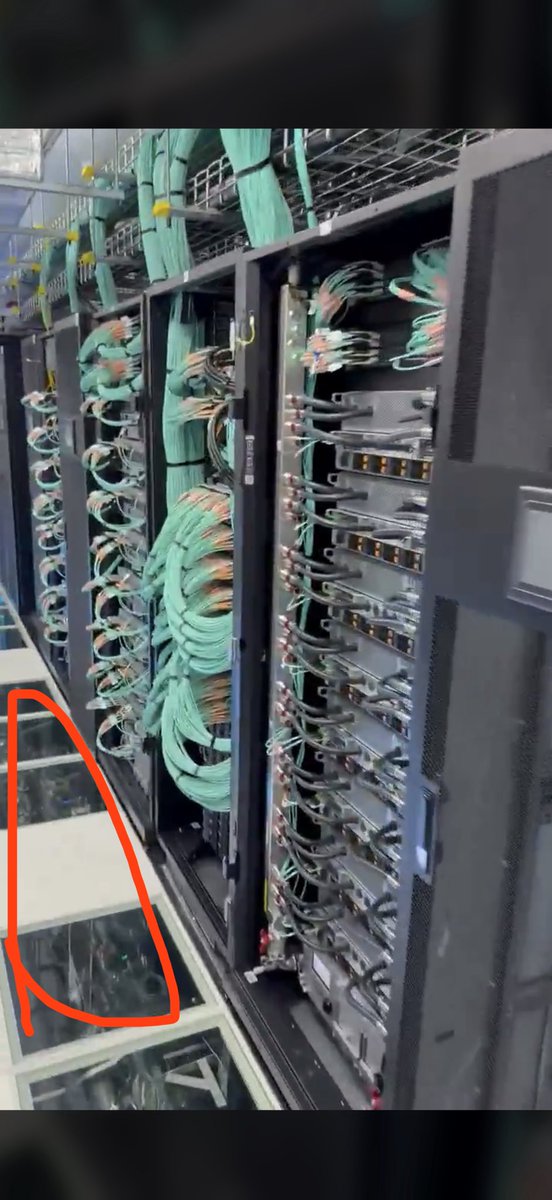
$DGXX owns 55% of US Data Centers Inc. (USDC). USDC is currently private. USDC's entire business is manufacturing and selling the ARMS 200 — a modular, Tier 3-certified AI data center system that can turn any powered site into a fully operational AI compute facility in a fraction of the time traditional construction takes.
Companies like $IREN have spent years and enormous capital securing gigawatts of powered land. That's the hard part, or so everyone thought. But raw power means nothing if your cooling and compute density can't keep up with modern AI workloads. Air cooling and glycol loops are hitting their limits fast. These companies are sitting on some of the most valuable land in infrastructure and underutilizing it because they chose the wrong stack.
USDC's ARMS 200 is the answer they didn't build themselves. Drop modular units onto existing powered land, skip years of conventional construction, and immediately unlock high-density AI compute. The host site doesn't have to rebuild from scratch. They just have to let USDC in. Their stranded gigawatts become productive. USDC gets a customer. Everyone wins, but USDC wins most, because they own the system that makes it all work.
The ones who dont make this switch either through USDC or on their own will be left with way bigger electic bills, higher maintenance costs, and difficulty expanding.
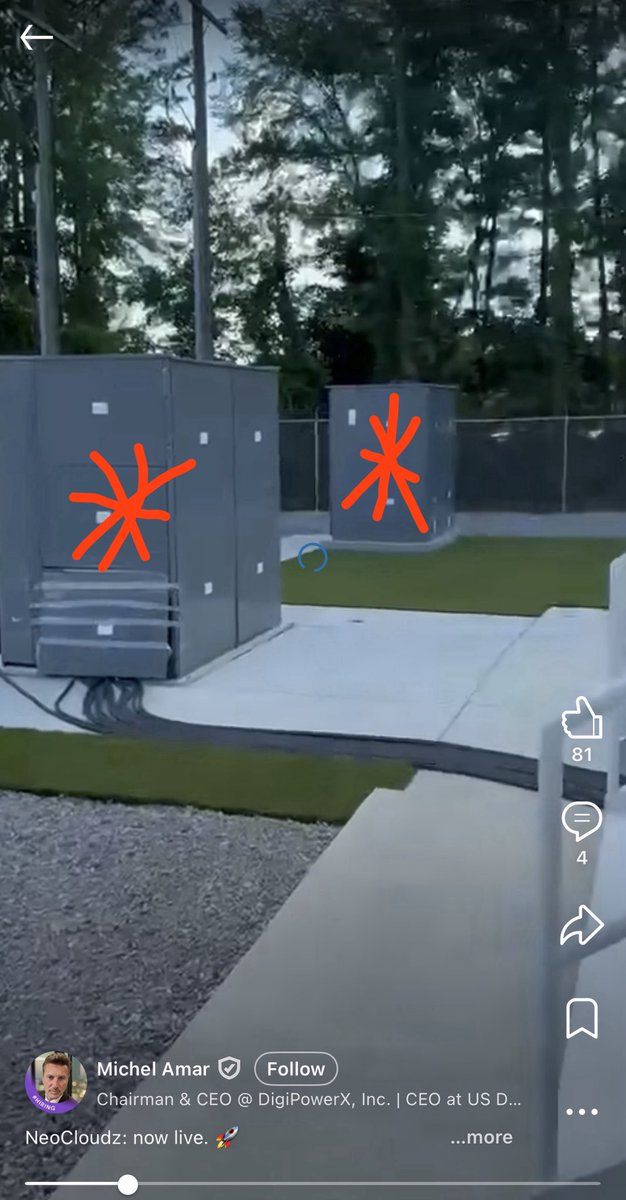
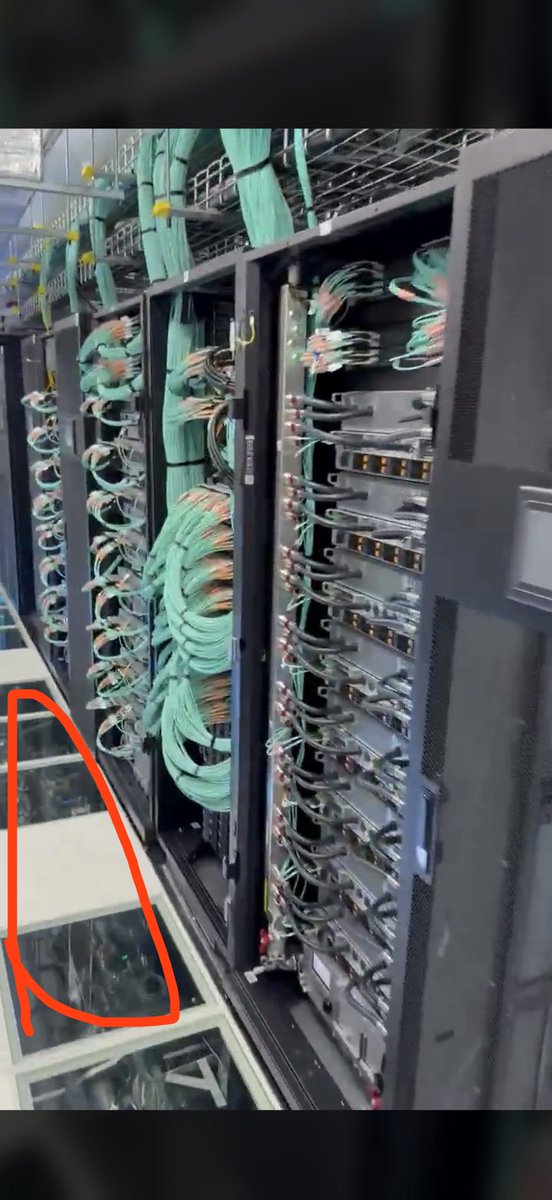
The ARMS 200 uses a dielectric liquid cooling (I will talk further about the liquid a couple paragraphs down, this is signalled and not publicly confirmed. This is alpha.) built around Supermicro hardware and NVIDIA Blackwell-class GPUs, not to mention the $35 million $dgxx just spent on Vera Rubins. Wonder where thats going!
Each pod delivers 1 MW of compute and supports up to 256 B200/B300 GPUs. DGXX plans to scale to 40 MW at its Alabama site alone, roughly 10,240 GPUs. The modularity allows for easy scaling.
Now here's where Yutanix fits. Yutanix is an AI infrastructure marketplace that connects AI teams with GPU capacity, deployment planning, and data center sourcing. As USDC starts selling ARMS units to powered sites at scale, Yutanix is positioned to be the demand-side engine that feeds it, matching teams who need compute with the exact kind of rapid-deployment, cluster-ready infrastructure ARMS provides. USDC supplies the modules. Yutanix supplies the customers. That's a clean loop.
Now here's the piece worth watching VERY closely. ZutaCore dielectric HyperCool technology is waterless, direct-to-chip dielectric cooling.
Zero water, handles extreme power densities that glycol and air cooling can't touch, closed loop, ZERO leak risk
The main publicity backlash against AI data centers right now is noise, power, and water usage. Communities where USDC decides to set up modules will eat this up.
ZERO water usage if utilizing Zutacore Hypercool.
The heat can be REUSED for other purposes easily.
The Zutacore system requires a flow rate of just 0.3L/min for every 1000W. For example, cooling Nvidia’s B200 (1200W) would need a flow rate of 0.36L/min with HyperCool, compared to 1.8L/min for single-phase direct-to-chip water/glycol cooling.
Thats 5 to 6x lower flow rate. 50% less energy usage on cooling.
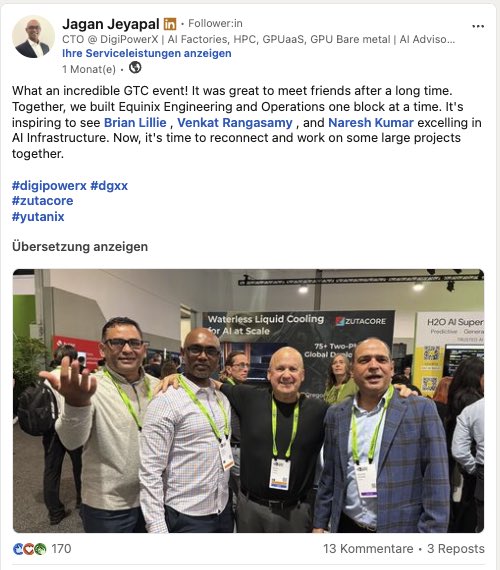
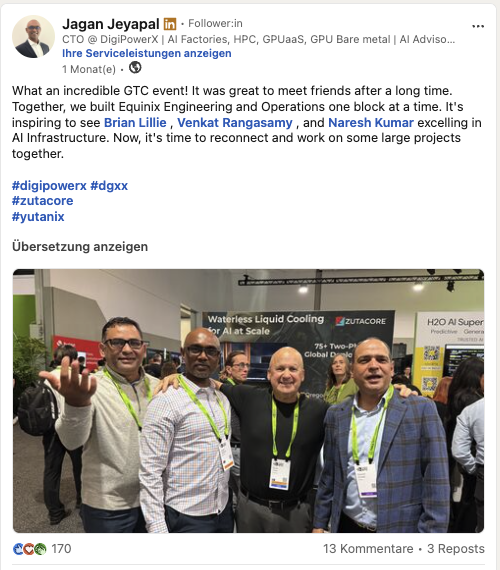
No official DGXX/ZutaCore partnership has been announced, but Jagan Jeyapal, CTO of DigiPowerX, was photographed at ZutaCore's booth at GTC and tagged #digipowerx #dgxx #zutacore and #yutanix all in the same LinkedIn post, mentioning plans to work on "large projects together." That's not nothing.
If a formal partnership follows, it becomes very hard for any competitor to replicate without tearing their building apart and starting over.
10
24
176
18,439
Jun 13
This is a consolidation of my thoughts on $dgxx/$usdc/Yutanix/Zutacore.
There is alpha in this. Enjoy the read:
Nobody is talking about the real reason $DGXX is about to take over the AI infrastructure market. Let me explain.
Everything $dgxx is doing right now is positioning them to completely take over the ai infrastructure market.
$DGXX owns 55% of US Data Centers Inc. (USDC). USDC is currently private. USDC's entire business is manufacturing and selling the ARMS 200 — a modular, Tier 3-certified AI data center system that can turn any powered site into a fully operational AI compute facility in a fraction of the time traditional construction takes.
Companies like $IREN have spent years and enormous capital securing gigawatts of powered land. That's the hard part, or so everyone thought. But raw power means nothing if your cooling and compute density can't keep up with modern AI workloads. Air cooling and glycol loops are hitting their limits fast. These companies are sitting on some of the most valuable land in infrastructure and underutilizing it because they chose the wrong stack.
USDC's ARMS 200 is the answer they didn't build themselves. Drop modular units onto existing powered land, skip years of conventional construction, and immediately unlock high-density AI compute. The host site doesn't have to rebuild from scratch. They just have to let USDC in. Their stranded gigawatts become productive. USDC gets a customer. Everyone wins, but USDC wins most, because they own the system that makes it all work.
The ones who dont make this switch either through USDC or on their own will be left with way bigger electic bills, higher maintenance costs, and difficulty expanding.
The ARMS 200 uses a dielectric liquid cooling (I will talk further about the liquid a couple paragraphs down, this is signalled and not publicly confirmed. This is alpha.) built around Supermicro hardware and NVIDIA Blackwell-class GPUs, not to mention the $35 million $dgxx just spent on Vera Rubins. Wonder where thats going!
Each pod delivers 1 MW of compute and supports up to 256 B200/B300 GPUs. DGXX plans to scale to 40 MW at its Alabama site alone, roughly 10,240 GPUs. The modularity allows for easy scaling.
Now here's where Yutanix fits. Yutanix is an AI infrastructure marketplace that connects AI teams with GPU capacity, deployment planning, and data center sourcing. As USDC starts selling ARMS units to powered sites at scale, Yutanix is positioned to be the demand-side engine that feeds it, matching teams who need compute with the exact kind of rapid-deployment, cluster-ready infrastructure ARMS provides. USDC supplies the modules. Yutanix supplies the customers. That's a clean loop.
Now here's the piece worth watching VERY closely. ZutaCore dielectric HyperCool technology is waterless, direct-to-chip dielectric cooling.
Zero water, handles extreme power densities that glycol and air cooling can't touch, closed loop, ZERO leak risk
The main publicity backlash against AI data centers right now is noise, power, and water usage. Communities where USDC decides to set up modules will eat this up.
ZERO water usage if utilizing Zutacore Hypercool.
The heat can be REUSED for other purposes easily.
The Zutacore system requires a flow rate of just 0.3L/min for every 1000W. For example, cooling Nvidia’s B200 (1200W) would need a flow rate of 0.36L/min with HyperCool, compared to 1.8L/min for single-phase direct-to-chip water/glycol cooling.
Thats 5 to 6x lower flow rate. 50% less energy usage on cooling.
No official DGXX/ZutaCore partnership has been announced, but Jagan Jeyapal, CTO of DigiPowerX, was photographed at ZutaCore's booth at GTC and tagged #digipowerx #dgxx #zutacore and #yutanix all in the same LinkedIn post, mentioning plans to work on "large projects together." That's not nothing.
If a formal partnership follows, it becomes very hard for any competitor to replicate without tearing their building apart and starting over.
20
21
139
37,096

Jun 12
Marre de finir tes sessions simracing en sueur ? 🥵
Le ERS3 Hypercool est conçu pour les endurances extrêmes : tissu respirant high-tech, confort et zéro surchauffe.
Passe au niveau supérieur ici 🏎️👇
simking.eu/fr_fr/next-level-…
#simracing #nextlevelracing #ers3
17
Jun 12
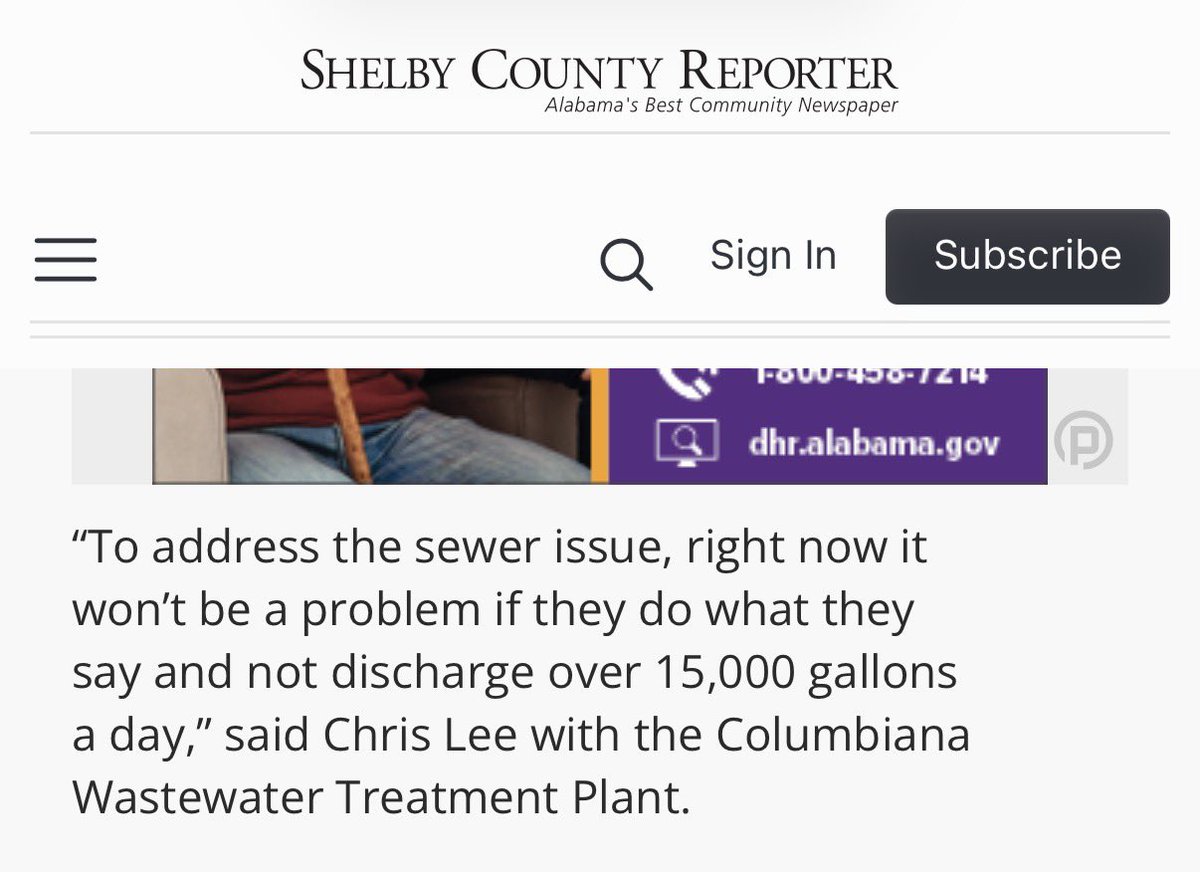
Theyve clearly pivoted more than once cause this is them speaking about negotiated water intake, which they wont be needing either way glycol or hypercool
1
24
Jun 12
This is true, but they said that in the context of assuring the councils they would not be taking their water. I imagine things have unfolded since then, and switching from glycol based to zutacore hypercool is equally unimpactful for water consumption
2
1
95
Jun 12
This is a small but significant reason to be bearish on $iren and any other big-gw-deal stocks that have just said fuck it and gone with air cooling or glycol cooling.
You cant just swap out regular liquid cooling for Zutacore hypercool. You have to rebuild your infrastructure
1
3
897

May 23
Oui, l'adoption c'est hypercool.
Mais la GPA, c'est le précurseur de :
2
118

May 21
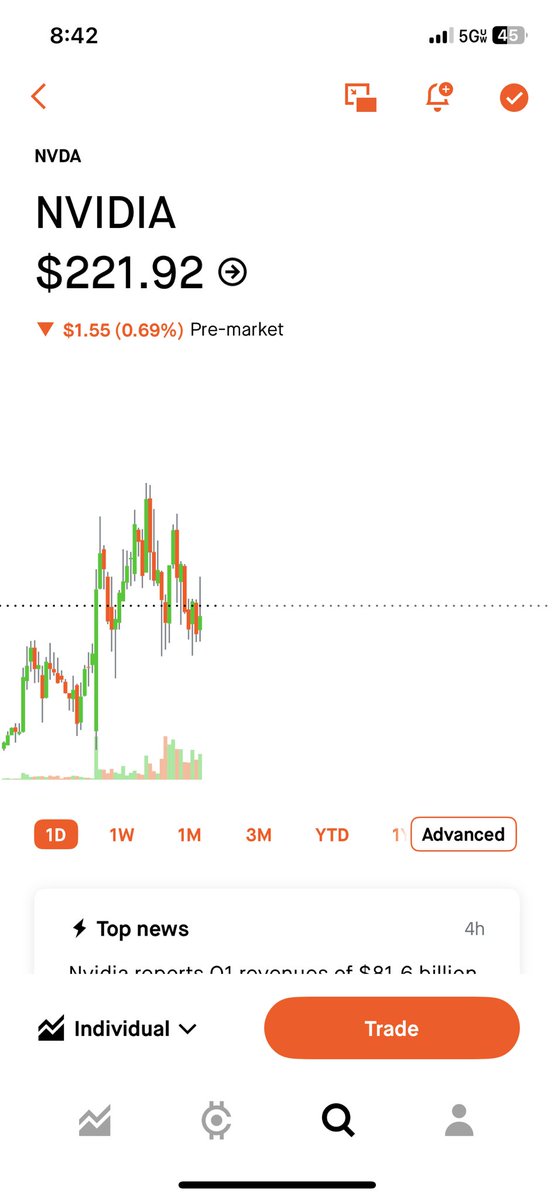
$NVDA
NVIDIA reported total revenue of $81.6B, with the most significant contribution coming from Data Center revenue:
$75.2B
92% year-over-year growth.
That figure highlights an important shift:
The AI arms race is no longer centered solely on acquiring GPUs.
It is increasingly focused on securing:
⚡ Power
🏭 AI data centers
🌊 Advanced liquid cooling
🔌 Grid interconnection
📡 Cluster orchestration
🖥️ High-density compute infrastructure
This is why I believe the market may be materially undervaluing $DGXX.
While much of Wall Street remains focused on the most visible AI companies, Digi Power X appears to be quietly developing the infrastructure foundation that hyperscalers may require over the coming decade.
Current market capitalization:
~$550M
Now compare that valuation with the assets and agreements already secured:
• 10-year colocation agreement with Cerebras Systems
• Leonard’s recent 13F filing also highlighted exposure to AI infrastructure names, reinforcing growing institutional interest in this segment
• $1.1B in announced contracted value
• Expansion option increasing total opportunity to $2.5B
• 40MW AI campus aligned with growing AI inference demand
DGXX’s infrastructure ecosystem is beginning to emerge more clearly:
➡️ ZutaCore
Waterless direct-to-chip liquid cooling utilizing two-phase HyperCool® technology.
• PUE as low as 1.05
• Up to 82% lower energy usage compared to traditional air cooling
• NVIDIA and Dell certified
• Carrier-backed technology
As rack density increases in the Vera Rubin generation, cooling infrastructure may become one of the most valuable components of the AI stack.
➡️ Yutanix
AI infrastructure marketplace and provisioning platform.
• GPU capacity marketplace
• Cluster-ready deployments
• Inference infrastructure
• 99% uptime
• More than 75 petaflops deployed
This represents the orchestration layer necessary for scalable AI factories.
The relationships involved are also noteworthy:
DGXX CTO JJ Jeyapaul has publicly indicated relationships with both ZutaCore and Yutanix.
Naresh Kumar, CEO of Yutanix, previously worked alongside him and has also shared DGXX-related developments publicly.
Taken together, these developments appear more strategic than coincidental.
They suggest the emergence of a coordinated infrastructure ecosystem.
Additional components include:
• NeoCloudz bare-metal GPU infrastructure
• Proprietary power strategy
• High-density AI compute deployment
• Federal IT ecosystem relationships through WWT
As a result, DGXX increasingly resembles an early-stage vertically integrated AI infrastructure platform rather than a purely speculative microcap.
Meanwhile, the broader market continues to value many companies primarily based on GPU monetization velocity.
Examples include:
$NBIS
$CRWV
$APLD
These companies experienced substantial valuation expansion by aggressively pre-selling capacity, leasing infrastructure, financing growth, and rapidly converting GPUs into revenue-generating assets.
The industry now appears to be approaching that stage.
That has significant implications for the economics of AI infrastructure.
As compute density rises, powered facilities and cooling infrastructure are likely to represent a larger share of total project economics.
Companies that control these layers may ultimately occupy some of the highest-margin positions within the AI ecosystem.
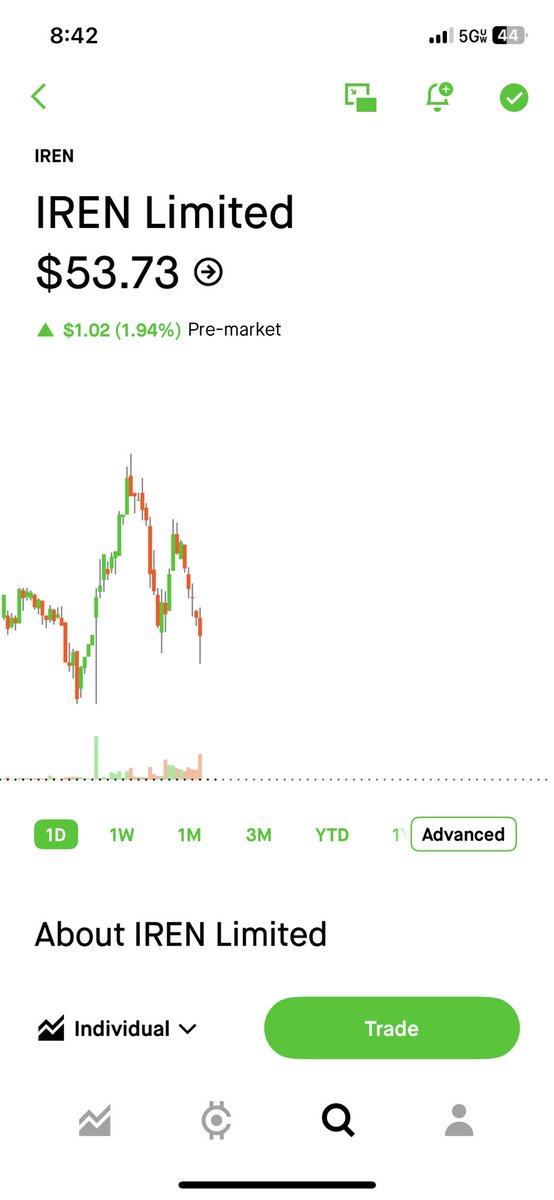
This is one reason why companies such as $IREN and $DGXX are becoming increasingly compelling from my perspective.
$IREN has already shifted meaningfully toward vertically integrated AI factory infrastructure rather than focusing exclusively on near-term GPU monetization.
$DGXX appears to be pursuing a similar strategy, albeit at a substantially smaller valuation.
In my view, the market may still be significantly underestimating the magnitude of that transition.
$NVDA $DGXX $IREN $NBIS $CRWV $CORZ $TE $HYLN $BRUN $SHAZ $KEEL $AIB $WYFI $UNIT $HIVE
20
3
50
3,040

May 20
opened a whole new door on $DGXX this morning:
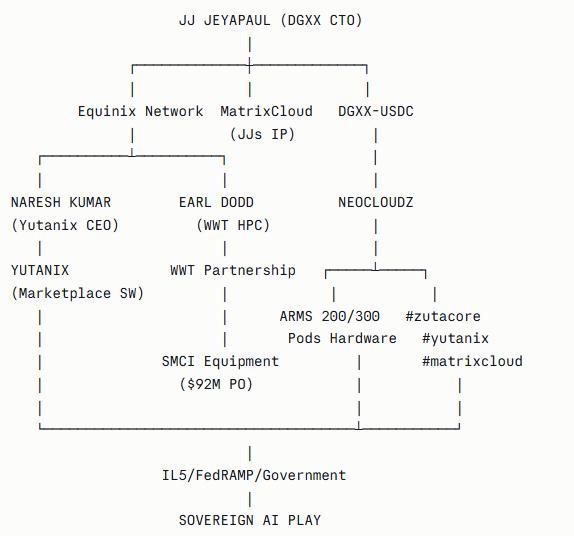
JJ Jeyapaul is DGXX's CTO. but look at what he is publicly signaling on LinkedIn.
hashtags: #zutacore. #yutanix. two companies nobody is talking about.
Yutanix is an AI infrastructure marketplace. GPU capacity, cluster-ready environments, inference infrastructure. 99% uptime, 75 petaflops deployed. the provisioning layer of an AI factory.
ZutaCore is waterless direct-to-chip liquid cooling. two-phase HyperCool® technology. PUE 1.05. 82% less energy than air cooling. Carrier-backed. NVIDIA and Dell certified.
one of their listed clients: WWT.
World Wide Technology. the same federal IT integrator connected to the DGXX network.
Naresh Kumar (Yutanix CEO) worked with JJ before DGXX. reposts everything he publishes. not a vendor. a co-builder.
the stack: owned power. ZutaCore cooling. Yutanix provisioning. NeoCloudz bare-metal GPU. all signaled publicly. all connected.
Morgan Stanley this morning: Vera Rubin racks cost $25bn/GW. as GPU generations advance, powered shell and cooling grow as a share of total cost. whoever
controls that layer captures the economics of the next generation.
$550M market cap.
credits to @maxddc.

7
20
122
23,102

Mar 31
Where is the NATO jamming? Where are the NAFO Low Brow Interceptors and GrokBlocks? Where are the MSM CounterMemes? Our Rejoinder GIF stocks are running low, and ineffective against hypercool anyway.
This is a PR Massacre.
2
4
294

Mar 25
How does one say "hypercool" in Chinese? 🙂
Mar 25

🇨🇳 China just showed off its “Atlas” swarm system.
One unit can control nearly 100 drones and even make them fly in formation. Crazy.
This takes drone warfare to a whole new level.
1
4
55

Mar 22
Le problème, ce n'est pas l'élection d'ordures hypercool dans des villes hypercool censément éclairées et sophistiquées. Le problème, c'est la majorité de citoyens hypercool, censément éclairés et sophistiqués, qui les élit.
#NYC #Mamdani #Progressisme #Gauche #Islamisme #Islam #Décivilisation

"Ma femme a accidentellement illustré un livre s'appelant les Juifs cafards.
A-t-elle aussi « Accidentellement » aimé des messages glorifiant les viols et le carnage de 1200 juifs par des terroristes islamistes radicaux❓
Drôle quand même aucun commentaire de la gauche, libérale, woke sur ces fautes grossières antisémite.
#ZohranMamdani #antisionismeantisémitisme
1
2
95

Feb 23
Absolutely. Having a high level official in attendance at the game invited into the locker room celebration is hypercool.
10
337