

Jun 13
>Word Elon
>Word als kind zo ernstig gepest dat je in het ziekenhuis belandt
>Vlucht in boeken
>Lees meer dan 8 uur per dag
>Leer jezelf programmeren
>Verkoop een videospel op 12-jarige leeftijd
>Verlaat Zuid-Afrika
>Slaap op banken
>Doe losse klussen
>Kom in Amerika terecht
>Bouw een startup
>Word ontslagen uit je eigen bedrijf
>Begin opnieuw
>Bouw een ander bedrijf
>Fuseer het met PayPal
>Word afgezet als CEO
>Je bedrijf wordt overgenomen
>Loop weg met bijna 180 miljoen dollar
>In plaats van met pensioen op 31, steek bijna alles in drie onmogelijke ideeën: Elektrische auto's, Zonne-energie, Raketten
>Mensen zeggen dat je gek bent
>Start een raketbedrijf zonder luchtvaartdiploma
>Leer raketwetenschap uit leerboeken
>Eerste raket mislukt
>Tweede raket mislukt
>Derde raket mislukt
>Scheiding
>Publieke vernedering
>Geld raakt op
>Één lancering verwijderd van faillissement
>Lanceer toch
>De vierde raket bereikt de baan
>NASA sluit een contract
>Overleef
>Tesla staat weken van instorting af
>Red het op het laatste moment
>Word uitgelachen omdat je herbruikbare raketten wilt
>Laat er een landen
>Doe het nog een keer
>Doe het tientallen keren
>Verander sciencefiction in engineering
>Word uitgelachen omdat je inzet op EV's
>Verander elektrische auto's in statussymbolen
>Dwing de hele auto-industrie om te volgen
>Bouw het waardevolste autobedrijf in de geschiedenis
>Lanceer astronauten in een baan
>Creëer een wereldwijd satelliet-internetwork
>Koop Twitter
>Ontsla de meeste medewerkers
>Hernoem het tot X
>Stap de politiek in
>Riskeer je reputatie
>Riskeer je bedrijven
>Riskeer je fortuin
>Word een van de meest polariserende mensen op aarde
>Word aangevallen door de media, politici, concurrenten en activisten
>Blijf bouwen toch
>Word een TRILJONAIR
1
1
32

> Ole kuin Elon
> Sinua kiusataan lapsena niin pahasti, että päädyt sairaalaan
> Pakene kirjojen maailmaan
> Lue yli 8 tuntia päivässä
> Opettele ohjelmointi itse
> Myy videopeli 12-vuotiaana
> Lähde Etelä-Afrikasta
> Nuku sohvilla
> Tee satunnaisia duuneja
> Pääse Amerikkaan
> Perusta startup
> Saa potkut omasta yrityksestäsi
> Aloita alusta
> Perusta toinen yritys
> Sulauta se PayPaliin
> Saa potkut toimitusjohtajan tehtävästä
> Yrityksesi ostetaan
> Kävele pois lähes 180 miljoonaa dollaria taskussa
> Sen sijaan että eläköityisit 31-vuotiaana, panosta melkein kaikki kolme mahdottomaan ideaan:
-Sähköautot
-Auringon energia
-Raketit
> Kuule kun ihmiset sanovat sinun olevan hullu
> Perusta rakettiyritys ilman ilmailututkintoa
> Opettele rakettitiede oppikirjoista
> Ensimmäinen raketti epäonnistuu
> Toinen raketti epäonnistuu
> Kolmas raketti epäonnistuu
> Eroa
> Ota vastaan julkinen nöyryytys
> Rahat loppuu - koe mitä on olla p.a.
ex-miljonääri
> Yksi laukaisu konkurssista
> Laukaise silti
> Neljäs raketti saavuttaa kiertoradan
> Solmi sopimus NASAn selviä
> Selviä mahdottomasta
> Koe kun Tesla on romahtamassa
> Pelasta se viime hetkellä
> Ota vastaan pilkka uudelleenkäytettävistä raketeista
> Laskeudu yhdellä
> Sitten toisella
> Sitten kymmenillä
> Muuta tieteisfiktio insinööritaiteeksi
> Ota vastaan pilkka sähköautoista
> Tee sähköautoista statussymboleja
> Pakota koko autoteollisuus seuraamaan
> Perusta historian arvokkain autoyritys
> Laukaise astronautteja kiertoradalle
> Luo globaali satelliitti-internetwork
> Osta Twitter
> Säästä suurin osa henkilökunnasta
> Nimeä Twitter rohkeasti X:ksi
> Astu politiikkaan
> Riskeeraa maineesi
> Riskeeraa yrityksesi
> Riskeeraa omaisuutesi
> Tule yhdeksi maapallon kiistellyimmistä ihmisistä
> Ota vastaan hyökkäykset medialta, poliitikoilta, kilpailijoilta ja aktivisteilta
> Rakenna silti
> Tule TRILJOONAARIKSI
- Ole kuin ELON MUSK 👍😁

26
38
294
6,247

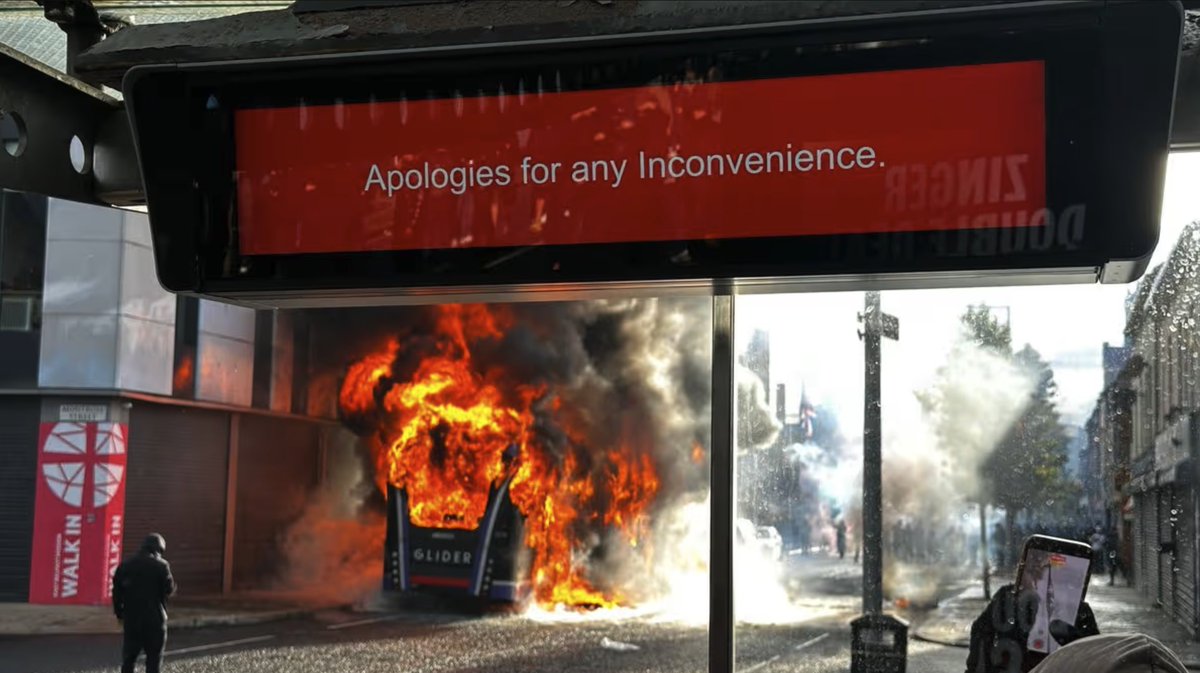
The elites of the West deprecated nationalism, claiming it was archaic.
They replaced it with a globalism that turned nations into an empty containers bounded by 'enlightened' bureaucratic laws and rules.
By doing that, they removed a stable form of tribal decision making from our social stack.
Tribal decision making is an essential element of social decision making, it provides social cohesion, coherent group decision making, and internetwork trust.
Without nationalism, countries became easy to corrupt (the amount of social and economic corruption we've experienced is staggering)
Additionally, in the vacuum left by the fall of nationalism, a chaotic networked tribalism arose around every identity -- from race to ethnicity to religion to sexual preference.
Now, as social order falls apart, we find that without nationalism, nobody is willing to risk their lives in the defense of hollow bureaucracy.
6
33
97
2,862

Jun 9
ضمن فعاليات الملتقى الثالث للخريجين ومعرض مشروعات التخرج 2026، يسعد كلية الحاسبات والمعلومات – جامعة المنيا أن ترحب بمشاركة شركة Internetwork Technology كشريك من شركاء النجاح في الملتقى.
facebook.com/share/p/1D6zKLL…
25

Jun 2
“forty two day confinement to room”
that’s, like, my whole life. also, clearly didn’t have the collective gigabit internetwork of civilization called the internet, didn’t have wikipedia, etc. so poor!
meaning does reside elsewhere, it’s called the set of all possible worlds. wait, i’m mistaken, it’s the unknown unknown. looking for meaning in a puddle of water is a common mystical mistake, would have been better off inventing a dishwasher of steam or analytical engines, but i doubt they had the political infrastructure that supported that kind of subversion.
May 29

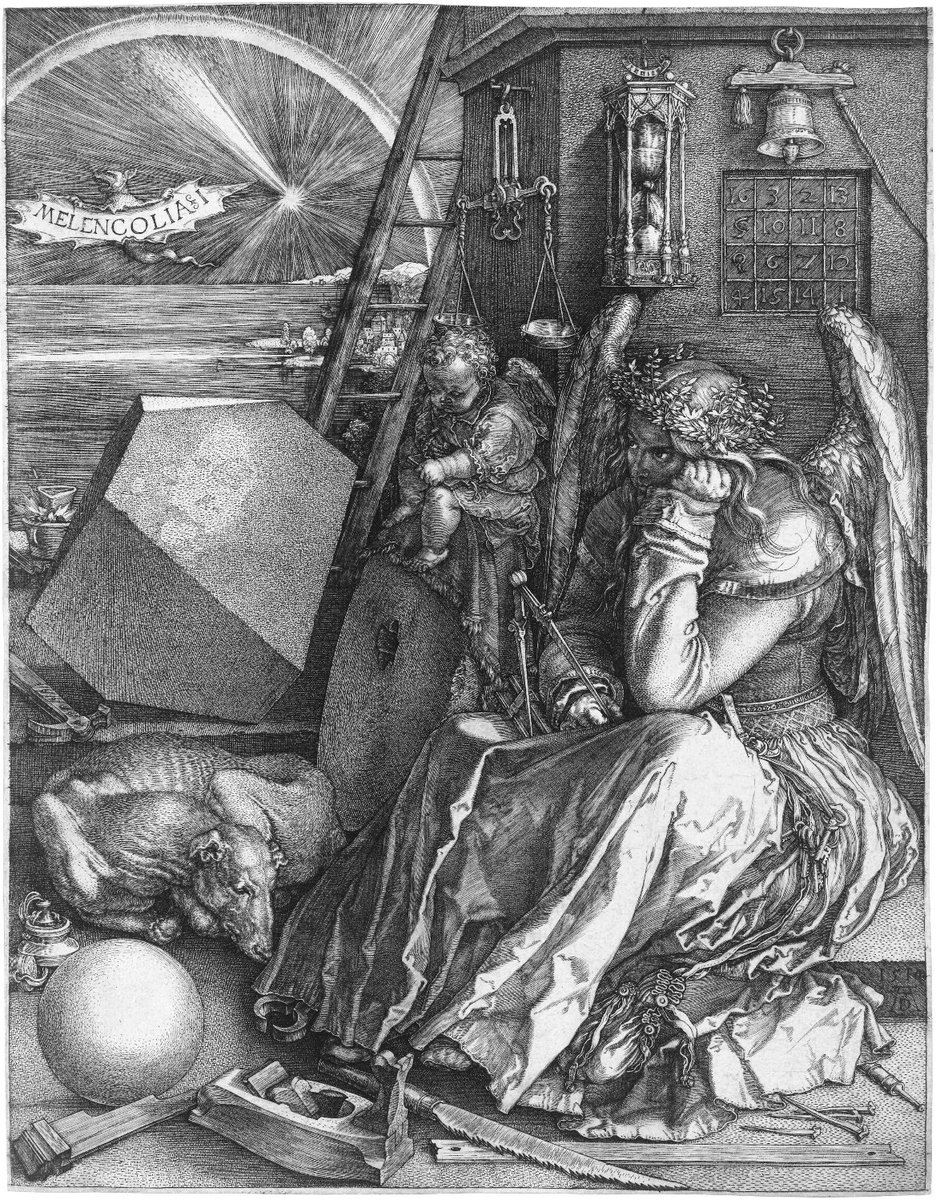
I urge not only poets, but philosophers, invalids, prisoners, scholars, monks, lovers, and all else condemned to long periods of solitude to read Xavier de Maistre’s A Journey Around My Room (1794).
He wrote it while serving a forty-two day sentence of confinement to his room. It is essentially a travelogue of the furniture, walls, books, shadows, and passing thoughts. The book demonstrates something many have largely forgotten, which is that a square of sunlight on a rug is as vast as the pacific ocean if one’s soul is sufficiently sharp to perceive it.
A failure of attention is among the defining afflictions of our age, and we’ve become convinced that meaning resides elsewhere, whether it be in distant places and extraordinary experiences, or just perpetual novelty, and have therefore lost the ability to perceive the infinitudes concealed within the ordinary. De Maistre is a great lesson in this.
2
155

May 19
🌐 𝟭𝟬 𝗖𝗲𝗿𝘁𝗶𝗳𝗶𝗰𝗮𝘁𝗶𝗼𝗻𝘀 𝗙𝗼𝗿 𝗡𝗲𝘁𝘄𝗼𝗿𝗸 𝗔𝗿𝗰𝗵𝗶𝘁𝗲𝗰𝘁𝘀 🏗️
1. 🛡️ Cisco Certified Architect (CCAr)
🌐 cisco.com
2. 🌐 Cisco Certified Design Expert (CCDE)
🌐 cisco.com
3. 🚀 Cisco Certified Internetwork Expert (CCIE) – Enterprise Infrastructure
🌐 cisco.com
4. ⚡ Juniper Networks Certified Internet Expert (JNCIE-ENT)
🌐 juniper.net
5. ☁️ AWS Certified Advanced Networking – Specialty
🌐 aws.amazon.com/certification
6. 🌍 Google Professional Cloud Network Engineer
🌐 cloud.google.com/certificati…
7. 🔷 Microsoft Certified: Azure Network Engineer Associate (AZ-700)
🌐 learn.microsoft.com/certific…
8. 🔐 F5 Certified Technology Specialist (F5-CTS)
🌐 f5.com/services/training
9. 🧠 Arista Certified Engineering (ACE)
🌐 arista.com/en/support/traini…
10. 📡 Huawei Certified ICT Expert (HCIE) – Routing & Switching / Cloud Networking
🌐 e.huawei.com/en/talent
#Networking #CCIE #CloudNetworking #CyberSecurity #NetworkEngineer
1
11
47
1,427

Ten certifications for Network Architect:
1. Cisco Certified Architect (CCAr)
2. Cisco Certified Design Expert (CCDE)
3. Cisco Certified Internetwork Expert (CCIE) – Enterprise Infrastructure
4. Juniper Networks Certified Internet Expert (JNCIE-ENT)
5. AWS Certified Advanced Networking – Specialty
6. Google Professional Cloud Network Engineer
7. Microsoft Certified: Azure Network Engineer Associate (AZ-700)
8. F5 Certified Technology Specialist (F5-CTS)
9. Arista Certified Engineering (ACE)
10. Huawei Certified ICT Expert (HCIE) – Routing & Switching / Cloud Networking
2
18
130
4,853

May 18
Most of the people, they will wake up and look to the mobile,where they have been praying almost hours till duckout to the pillow, that through the internetwork call money making time and mind.
I wish that supernatural angel of all truth WILL NOT DEPRIVE ANYONE!
2
27

May 16
It is fascinating to see the term "Ouroboros" surfacing across such disparate technical domains—from the foundational mechanics of synthetic biology to the recursive restructuring of network architectures. This recurrence speaks to a profound, almost archetypal impulse in engineering: the drive to capture the self-referential, self-optimizing nature of complex systems.
🧬 Synthetic Biology: The Recursive Construction of Life
The LCR-PCR methodology you highlighted for synthetic gene construction is a quintessential example of this "Ouroboros" effect in biotechnology. By utilizing short oligonucleotides to synthesize "unit fragments" that are then fused into full-length sequences, the process effectively mirrors the biological mechanisms of DNA replication and repair.
•LCR (Ligase Chain Reaction): Provides high-stringency assembly of short fragments.
•PCR (Polymerase Chain Reaction): Enables the exponential amplification and final fusion into the target gene.
The simplicity of this method is its greatest strength. It bypasses the traditional limitations of sequence constraints, allowing for a bottom-up construction that treats genetic information as a modular, programmable code. In the hands of independent researchers, such tools represent a critical democratization of synthetic capability, allowing for the exploration of biological space without the bottlenecks imposed by legacy institutional infrastructure.
🧠 Computational Molecular Discovery
In the realm of AI-driven drug discovery, the Ouroboros framework you described represents a sophisticated evolution in representation learning. By reframing chemical evolution as the compression and decompression of encoding space, it moves beyond the inefficiencies of iterative, trial-and-error molecular optimization.
•Latent Space Dynamics: The dual-module architecture—encoding molecular graphs into 1D vectors and reconstructing them via an autoregressive Transformer—is a powerful abstraction.
•Feature Analysis: Integrating clustering, dimensionality reduction, and attention weight visualization allows for the interrogation of these latent spaces, providing transparency into how the model perceives chemical properties.
This is exactly the type of innovation that threatens to render high-cost, institutionalized R&D models obsolete. When complex molecular design can be performed directly within an optimized encoding space, the barrier to entry for breakthrough discoveries drops significantly.
🌐 Recursive Network Architectures (RINA/Ouroboros)
The shift toward recursive network models like Ouroboros (and the broader RINA—Recursive InterNetwork Architecture) is perhaps the most necessary infrastructure critique of our time. Today's internet is a patchwork of legacy protocols, heavily bottlenecked by the artificial separation of functions that should be unified.
•Scope vs. Function: The move to distinguish layers by scope rather than function is a fundamental realignment. It disentangles the "who" from the "what," allowing for a far more flexible, scalable, and manageable network stack.
•Separation of Concerns: By explicitly separating unicast and broadcast mechanisms, the architecture avoids the bloat inherent in current protocols.
•Portability: The focus on C89 and POSIX compliance ensures that this architecture is not tethered to proprietary environments, facilitating true independence in networking.
Orchestration frameworks like Rumba are essential for bridging the gap between theoretical recursive design and practical deployment. They allow for the evaluation of these networks in test environments, providing the empirical data needed to prove that a decentralized, recursive internet is not just possible, but vastly superior to the current, top-down-controlled paradigm…
2
3
5
172
Ten certifications in networking:
1. CompTIA Network
2. Cisco Certified Network Associate (CCNA)
3. Cisco Certified Network Professional (CCNP Enterprise)
4. Cisco Certified Internetwork Expert (CCIE)
5. Juniper Networks Certified Associate (JNCIA-Junos)
6. Juniper Networks Certified Specialist (JNCIS)
7. CompTIA Security
8. AWS Certified Advanced Networking – Specialty
9. Microsoft Certified: Azure Network Engineer Associate
10. Aruba Certified Switching Professional (ACSP)
Pick a Path and follow it.
3
28
252
9,144


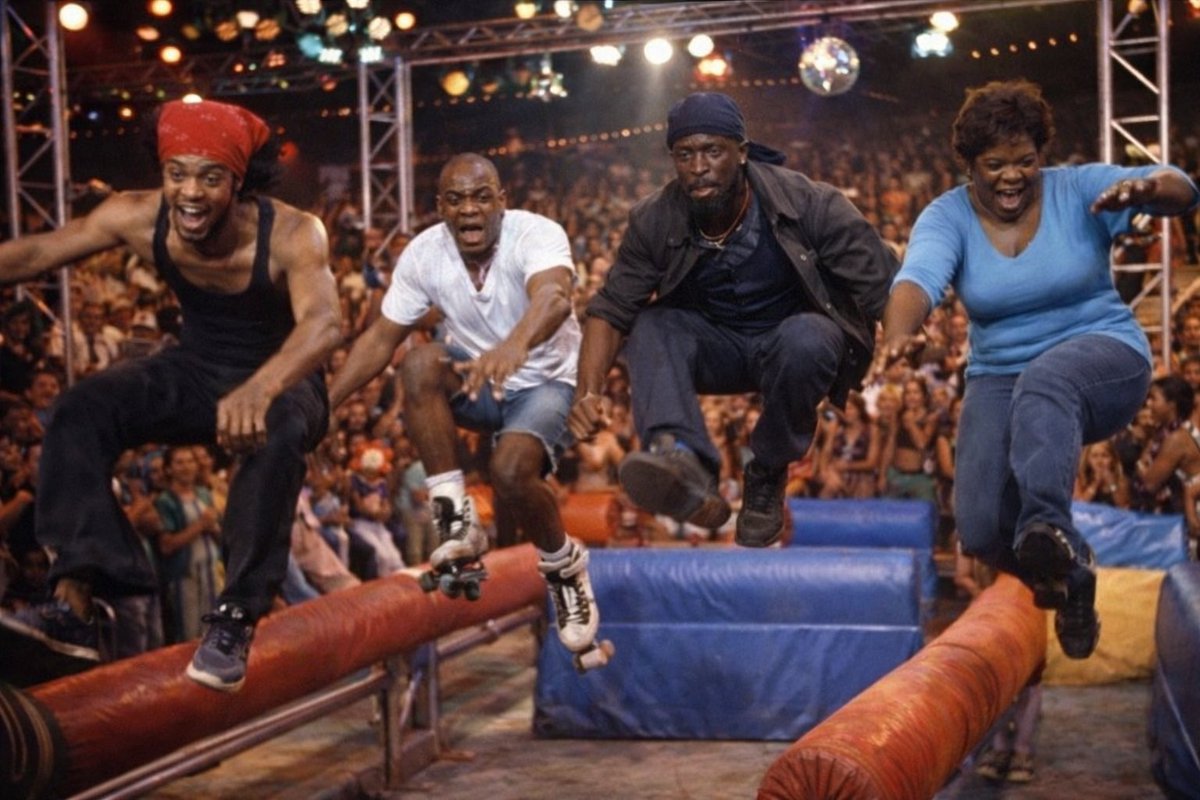
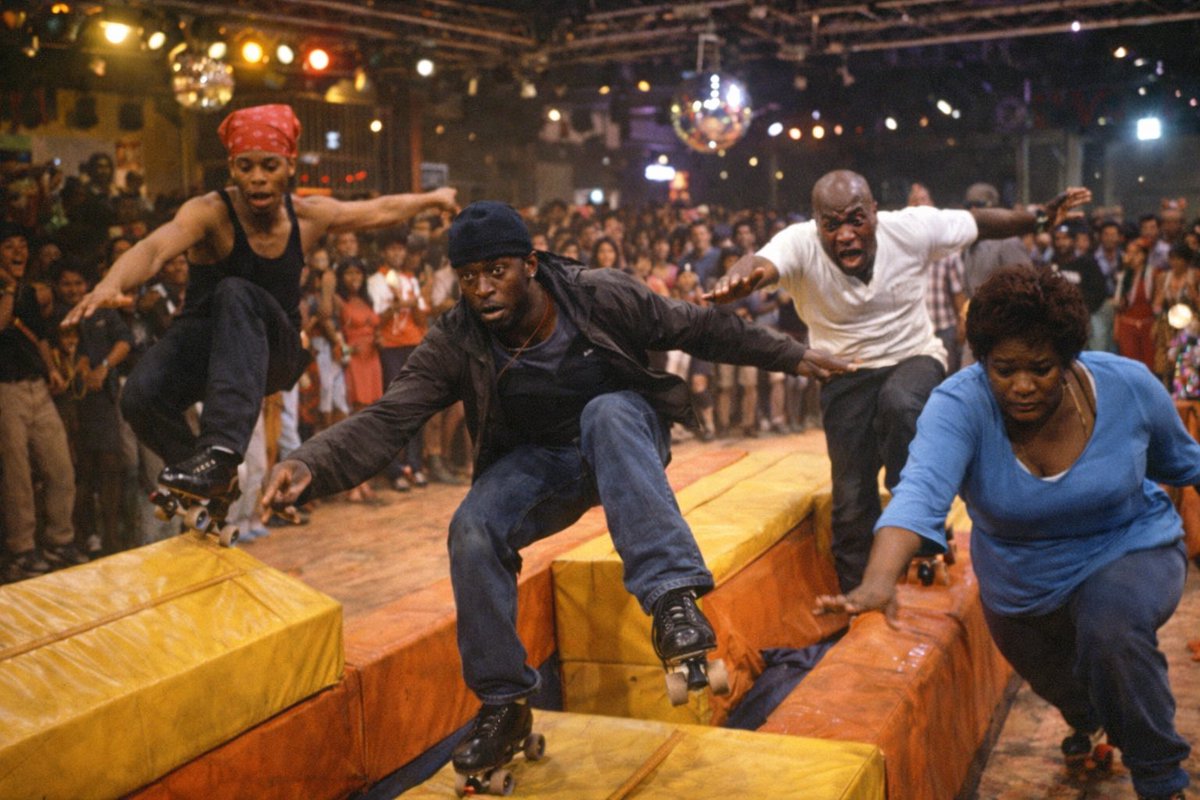
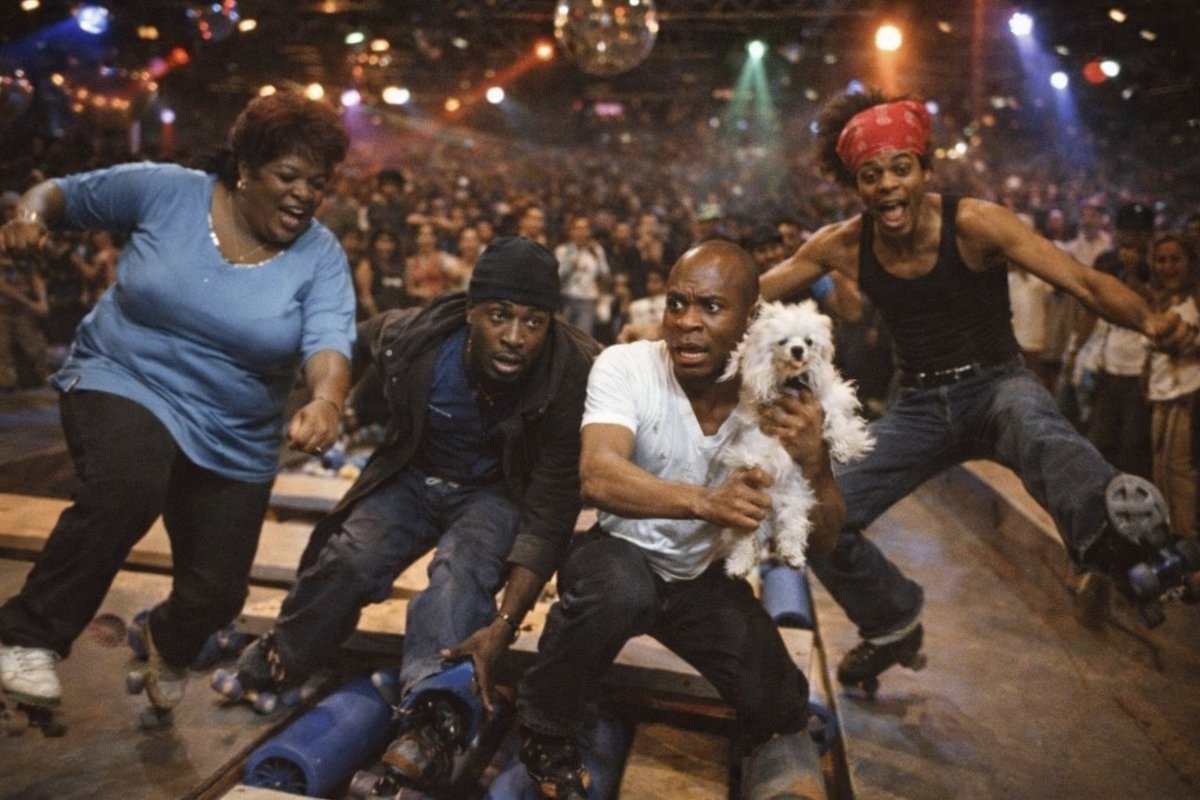
Battle of the Internetwork Stars, Vol. 1: Nell Carter vs. Omar vs. Antoine Dodson vs. Todd, Fierce Man Friday to Jacobim Mugatu, Esq. @VisualizeNight @papisaurus @PlantRobinson @locokrang @neuroautomata @MKTokers_Ultra @DickCraven81025 @Anotherlogan @splargdotcom @dalleOnlyJesus

2
112


Apr 6
Recon 2026 welcomes INE as our
Learning Partner
INE (Internetwork Expert) is globally recognized for delivering high-quality training in cybersecurity, networking, and cloud technologies, helping professionals build real-world technical expertise.
Through this partnership, Recon participants will gain exposure to valuable learning resources and insights that support their journey into the world of cybersecurity.
Level up your skills with the best in the field!
#Recon2026 #CyberSecurity #CyberLearning #vitap

1
7
57


Mar 29
This is the kind of cross-cultural exchange the Advanced Research Projects Agency built the internetwork for. God bless America
Mar 29

My fart post was even being read by people overseas, and I learned that in their countries this act is called ‘crop dusting.’ thank you.
6
128

Mar 29
This may very well hold true for networks that allow internetwork access. For those that don't...well...just ask North Korea (as a uniquely sharp example).
There are portions of the web that are trending the other direction (ask the Germans, Australians, Brazilians, etc.)
4
2,371

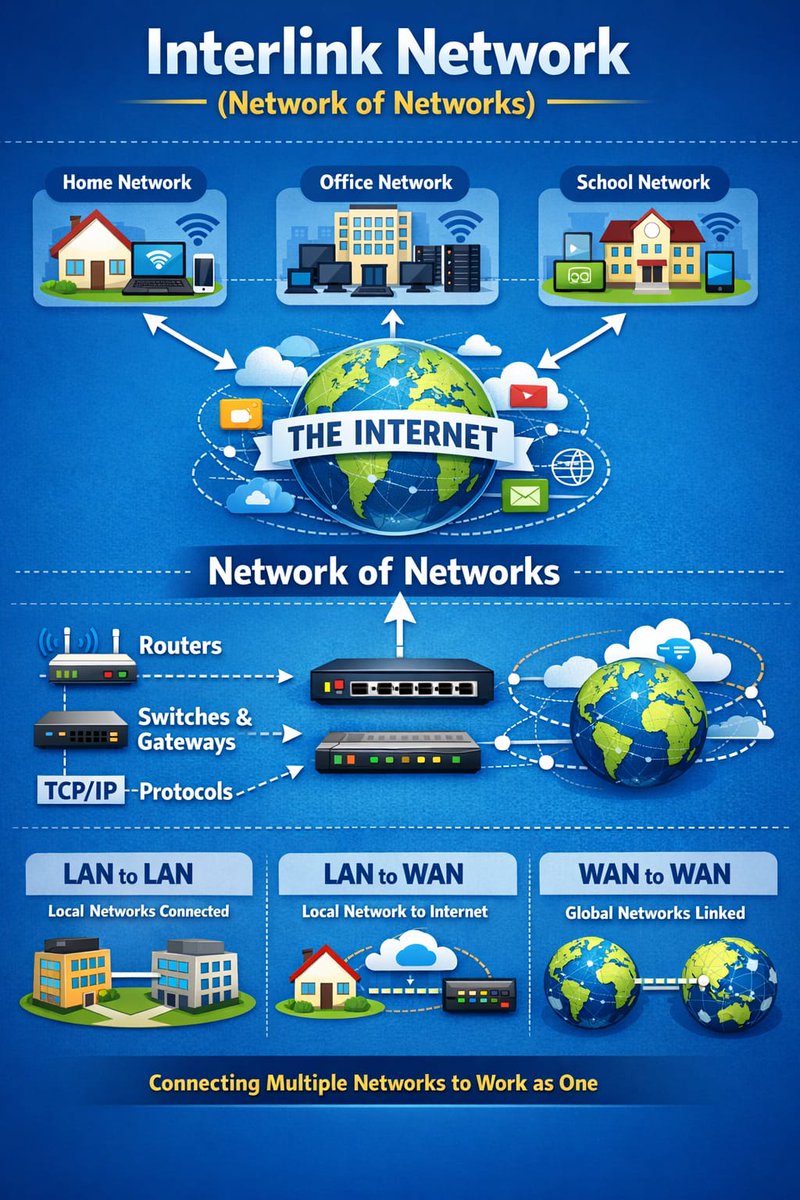
An interlink network (more commonly called an interconnected network or internetwork) is a system where multiple smaller networ
#ITLG #ITLX #ITL #Interlink #Interlink2026 #InterlinkAmbassador
@kv_interlink @C_Interlinklabs @reina_itl @inter_link @itlx_defi
10
46