


May 16
実際には、Raspberry Pi 400のGPIOをC言語から制御してLEDをLチカしただけです!
でも、
Cプログラム(アプリケーション、ユーザ空間)
→ libgpiod(ライブラリ、ユーザ空間)
→ Linuxカーネル(カーネル空間)
→ GPIOドライバ(カーネル空間)
→ LED(ハードウェア)
の流れでLinuxからハードウェアを動かしてる感があって楽しいし、勉強なった📚
1
6
359

ちょっと python3-libgpiod の使い方に手間取った。。。これ、誰も使ってないん? Chat GPT とか AI に聞いてもまったく的外れな回答しか返してこんし、結局 github.com/brgl/libgpiod/tre… を参考にしました。

今年最初の投稿>『KV260 で PS側の GPIO コントローラーを EMIO 経由で Pmod コネクタに接続する』 qiita.com/ikwzm/items/6eb31f… #Qiita @ikwzmより
2
274

28 Dec 2025
How far can you get building embedded hardware with zero electrical engineering knowledge and an AI coding assistant? I spent the past few days finding out.
I wanted to see if I could compile Silicon Labs multiprotocol firmware (Zigbee, Thread, Bluetooth) using Claude Code after Simplicity Studio did my head in. Sounded straightforward enough until I realised how many features and pin configurations there are to pick from.
My approach started with getting as much context into Claude Code as possible. I got it to write a Python script to crawl every page under the SiLabs multiprotocol docs. I added polite sleeps between requests because I'm not a monster.
I extracted the HTML to markdown, stripped out the navigation rubbish, then did the same with every PDF for my chip.
I found some example repos with similar approaches and pulled them down with repomix.
I asked Claude to organise all these resources however it thought made sense. Proper vibe-code territory now. I still hadn't written a single line myself.
I set up an MCP to ingest everything. I had Claude benchmark MCP retrieval vs grepping the markdown directly. Grep won for precise searches, MCP won for exploration. I stuck a hybrid search instruction in CLAUDE.md.
Then I wrote a PRD. Might be completely naive but here's what I asked for:
* Central config for all firmware features, split by chip family
* Prod build with encryption, dev build with loads of logging
* Makefile for everything because I'm not remembering long commands
* All tooling in Python with uv, TDD, functional style, static typing. I actually asked Claude what practices would make it easier for it to reason about the code later.
* Everything in Docker. Dev containers would probably be smarter but I know Docker inside out.
* A release script that publishes to GitHub with proper changelogs and interactive prompts for version bumps
I had Claude review the PRD for gaps and issues. About 10 iterations until I stopped fiddling.
I broke it into beads (thanks @steveyegge and @doodlestein). 179 beads later: working firmware builds for prod and dev, all via CLI.
Probably nothing special for proper embedded devs. But for someone who's learnt this purely through reading and being stubborn, I'm pretty pleased with the result.
Why stop here?
I'm planning to simulate the PCB fully in software before ordering anything. Renode for chip simulation. PySpice for power distribution. libgpiod to mirror real hardware. KiCad CLI for DRC and generating PCB files.
Open to any suggestions on other tools or improvements I could make.
3
8
511

26 Dec 2025
I finally managed to try Pinout by @danjohnsonxyz! Thanks to my folks for getting me a bunch of the needed equipment!
I had to patch the libgpiod library so Pinout would work with the latest version, but it now works! 😍 Yes the wiring is messy 😂
Time to look at other drivers!
3
442

25 Aug 2025
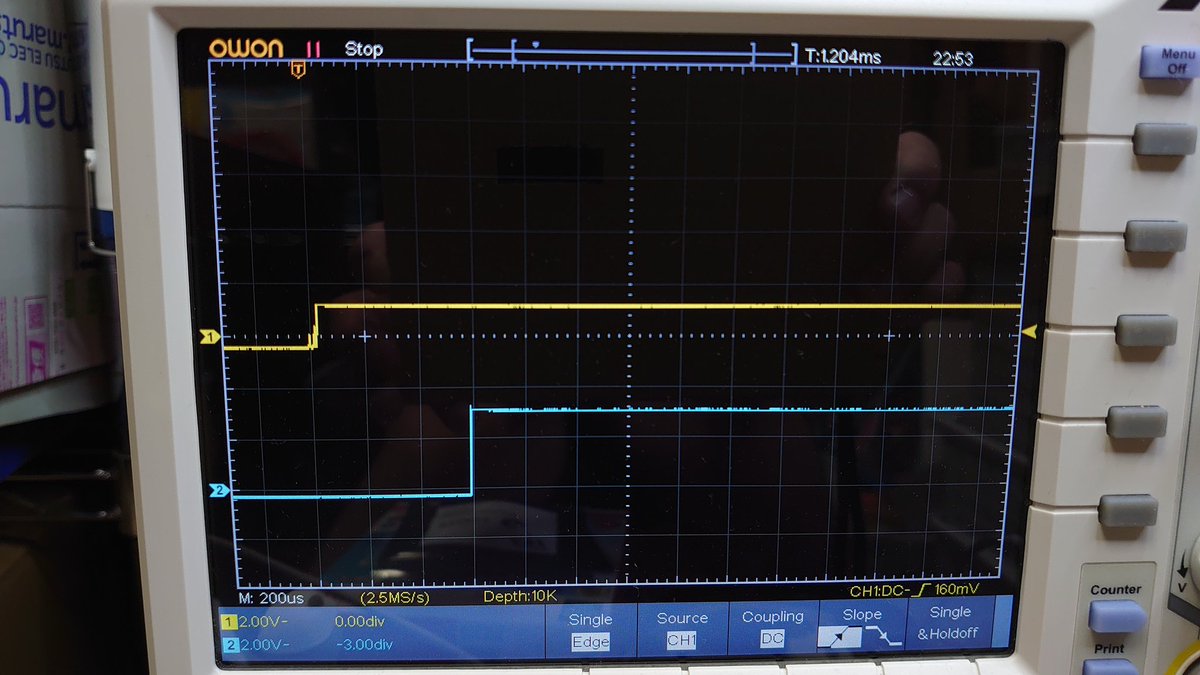
Beagle bone blackで遊んでいます。
libgpiodの割り込み機能を試してみました。P9_17に立ち上がりエッジが入ると割り込みが発生してP9_ 23をHにします。
なんと遅延は600usec.
これはだいぶ遅いです。libgpiodは書き込みは3usecとまあまあ速いですが、割り込みはポーリングなので遅いとのこと。
1
3
167
24 Aug 2025
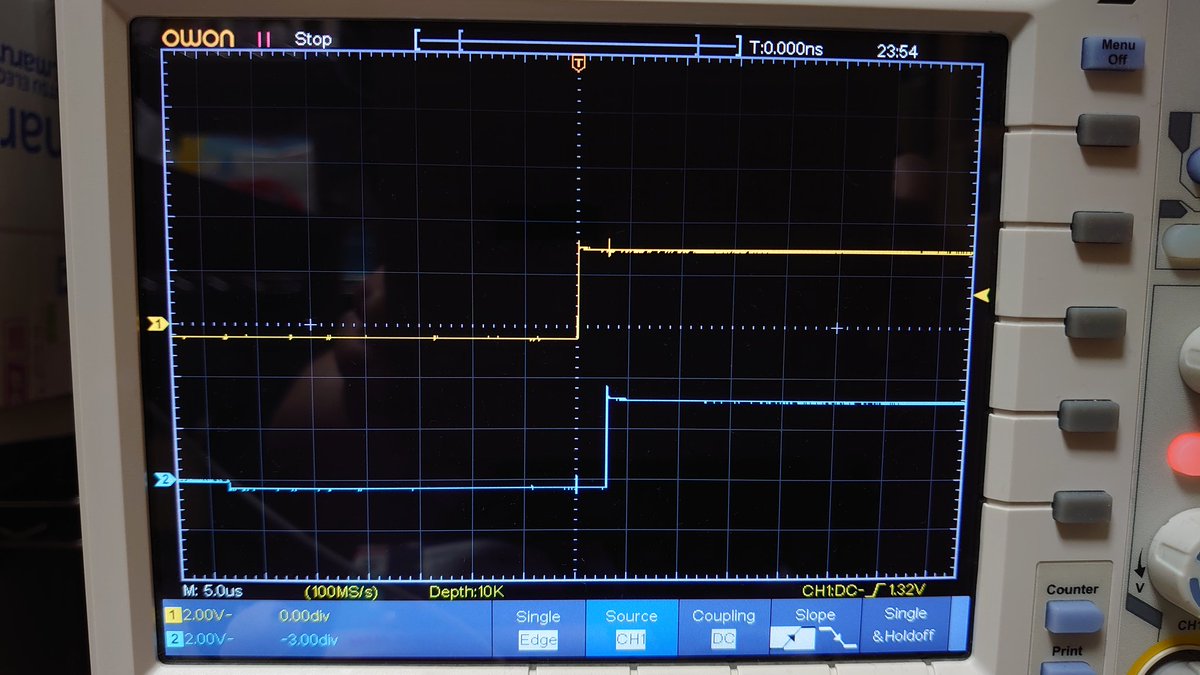
Beagle bone blackで遊んでいます。
libgpiodを使って以下のようにやると遅延は3usecでした。
gpiod_line_set_value(line27, 1);
gpiod_line_set_value(line65, 1);
古典的なデバイスファイルのread() , write()でやるよりも高速。同時設定もできるらしいので、まあ普通はこれを使えと。
6
121

14 Jun 2025
苦節数ヶ月、ようやくラズパイ5でnode.jsからGPIOでLチカとボタン入力検出ができた…
node.jsでGPIOを使う方法、node-libgpiodが一番確実っぽいが、情報が少なすぎる…
ラズパイ5でなんか色々変わってGPIOのライブラリがうまく動かなくなっていたりして情報が錯綜している…
AIに調べてもらったりしてたが、ラズパイ公式フォーラムの情報が古かったりで騙されまくった。
ラズパイ4とかでやったほうがまだ早くできたかもしれない…。
6
459

16 Apr 2025
Slowly moving away from that. Most of the gpio bits got replaced by gpiod, I don't think it's possible to toggle individual GPIOs via sysfs in newer kernels without using libgpiod.
Same with display subsystem, /dev/fb0 is being phased out in support for drm kms.
1
3
62

21 Mar 2025
It's pretty fast right now- if you're in the right field for it. Say Coding, for example.
The main worrying thing that it acts and puffs up being an expert and it fails people badly. It got LOST until tonight with some right prompts on helping with libgpiod on Linux... It kept munging the four forms of the API (1.x C and C and 2.x C and C ) It's only saving grace is that it has shite to work with on this. It's atrociously documented and the implementers seem to think that someone cares about all the GPIOs on the chip per single application and that's NOT how it's used in the Industry in the large.
1
5
1,278

12 Mar 2025
Это буквально моя работа лол. Ищу в конфигах, какую опцию ядра не впихнул в образ, почему не запускается ебучий драйвер realtek, почему network manager творит чухню, почему libgpiod дергает не тот gpio, почему systemd запускает свои сервисы частично и ещё много почему
2
5
107
ユーザーアプリケーションが gpiod を使う際のライブラリ libgpiod もあります。
github.com/brgl/libgpiod
1
2
122

3 Mar 2025
カーネルのいくつかの項目を有効にしてビルドすれば /dev/gpiochip* は生やせます
自分が ZynqMPの Linux で GPIO さわるときはだいたいこれ使っています
ライブラリ・ツールの libgpiod は PetaLinux で有効にできたかは不確かですが、最悪自分でルール書けば…
2
95

いつもの記事はニッチすぎて需要少ないと思うけど、今回の記事はlibgpiodの件に関してだけは結構みんな役にたつと思う
メジャーアップデートの件全然誰も触れてないのは多分まだみんなver1.6.3使ってるからなんだろうなあ

スキャナカメラのフルスクラッチ【9:polarfire編③】 broad-deep.com/camera/making…
4
318


14 Dec 2024
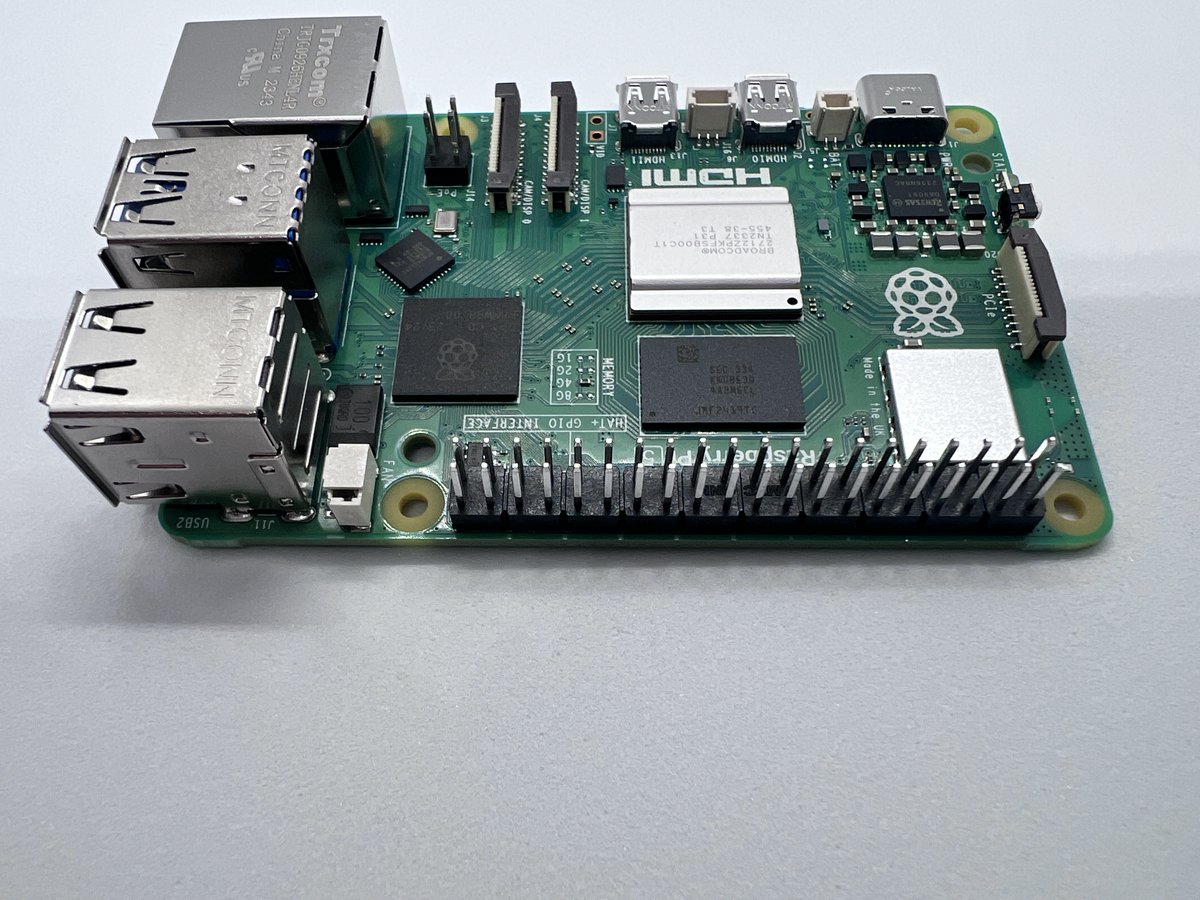
Raspberry Pi 5ではGPIOの仕様が大幅に変更され、従来の「BCM2835ライブラリ」に依存する方法から、Linux標準のGPIO制御ライブラリであるlibgpiodが推奨されています。これにより、GPIO制御がよりモダンで柔軟な方法に移行しました。
ポイントとしては、従来の/sys/class/gpioベースの古い方式が非推奨となり、代わりに**/dev/gpiochip0**などの新しいデバイスファイルを使ってGPIOを制御する形になります。これにより、効率的かつ安全なGPIO操作が可能になりました。
例えば、PythonでGPIOを操作する場合、gpiozeroやRPi.GPIOではなく、gpiodを活用する方法を検討するのがベストです。Raspberry Piの進化に対応するため、既存コードの移行も検討してみましょう。
#RaspberryPi #GPIO #libgpiod #Python #IoT
3
222
910
68,865

4 Jun 2024
私はpigpio使えなくなったのでlibgpiod使ってます > ラズパイ5のlibgpiodでGPIO制御(Lチカ)する|karaage0703 zenn.dev/karaage0703/article… #zenn
2
5
1,502
21 Apr 2024
ラズパイのGPIO制御、公式ドキュメントはgpiozeroなんですね。自分はlibgpiodでうごかしている人が周りに多かったのでlibgpiodで動かしていました > ラズパイ5のlibgpiodでGPIO制御(Lチカ)する|karaage0703 zenn.dev/karaage0703/article… #zenn
1
6
1,685
