


May 13
投票するだけで豪華賞品が当たる!
「2025-2026 SURF&SNOW SKI RESORT ランキング」
\ 中間ランキング公開中!/
締切は5月31日(日)まで!
豪華賞品
・FLUX
・dice
・LIBTECH
・他多数!
好きなスキー場に投票して、豪華ギアをGET!
▼ 投票&賞品詳細はこちら
link.surfsnow.jp/ranking_051…




3
1,277

May 9
In their report, LibTech – a consortium of engineers, social workers and social scientists – concluded that “the number of households completing 100 days dropped substantially from 0.37 crore to 0.22 crore in FY 2025-26; a 40.5% drop.”
thewire.in/labour/mgnregs-wi…
4
4
2,094

May 9
え!スノスケってそんなに高いの!?!?
25-26 2026 LIBTECH リブテック SNOWSKATE 48” A…
[楽天] item.rakuten.co.jp/moresnow/… #Rakutenichiba
2
139

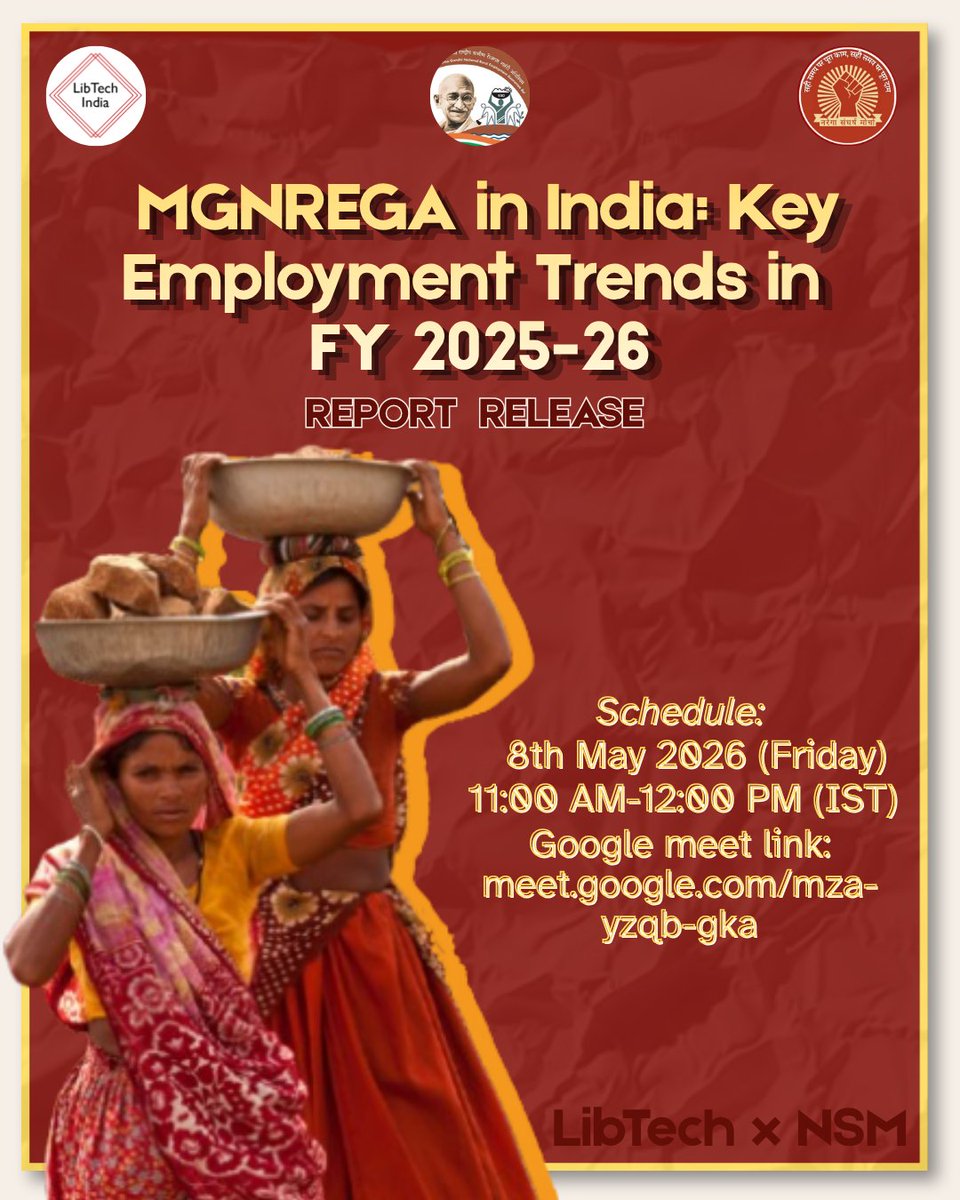
MGNREGA in India: Key Employment Trends in FY 2025-26. Attend the online report release by LibTech and NREGA Sangharsh Morcha to know more on the key trends of MGNREGA in India.
Date: 8th May, 2026 (Friday)
Time: 11:00 AM - 12:00 PM (IST)
Google meet link: meet.google.com/mza-yzqb-gka
1
3
277

Apr 30
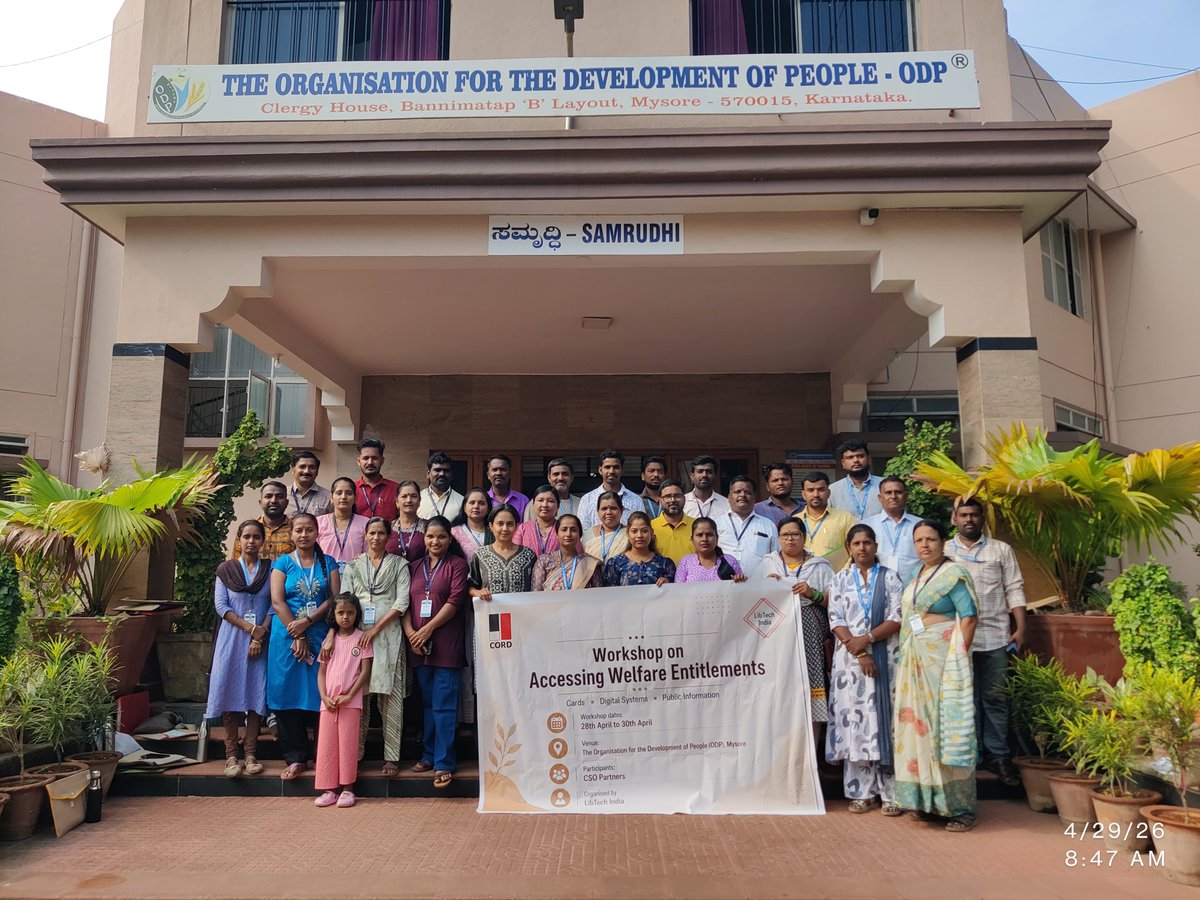
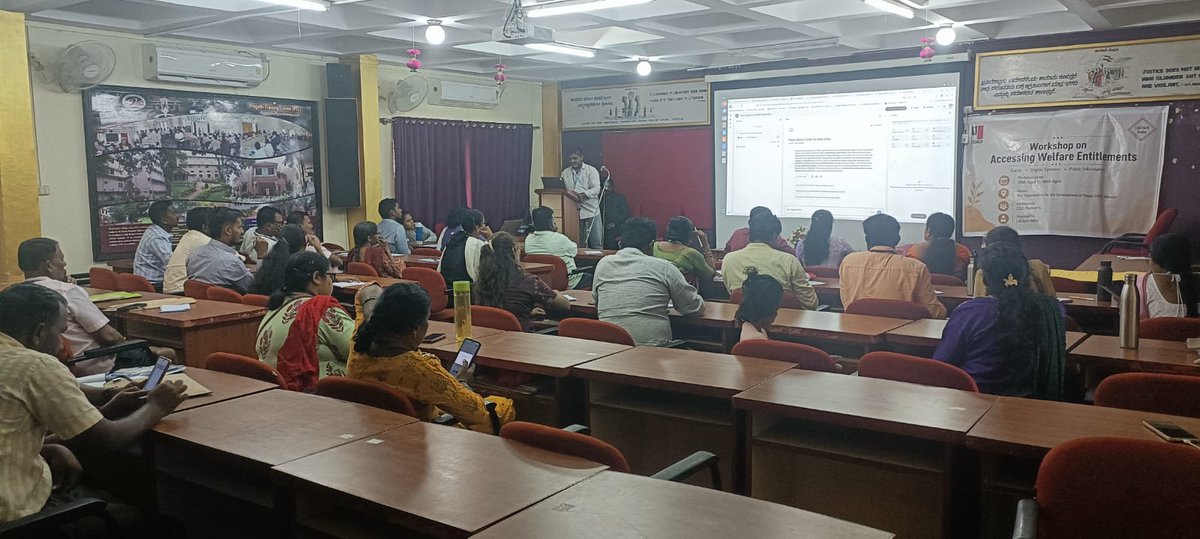
LibTech India conducted a 3-day workshop (Apr 28–30, Mysore) with 30 CSO partners from across Karnataka on accessing social welfare entitlements. Training and strengthening CSOs is a core part of our work. The workshop covered ABHA, PDS ration cards, BOCW, and eShram, combining system understanding with hands-on support for registration and accessing information online.
#SocialWelfare #Karnataka
2
13
313
Apr 24
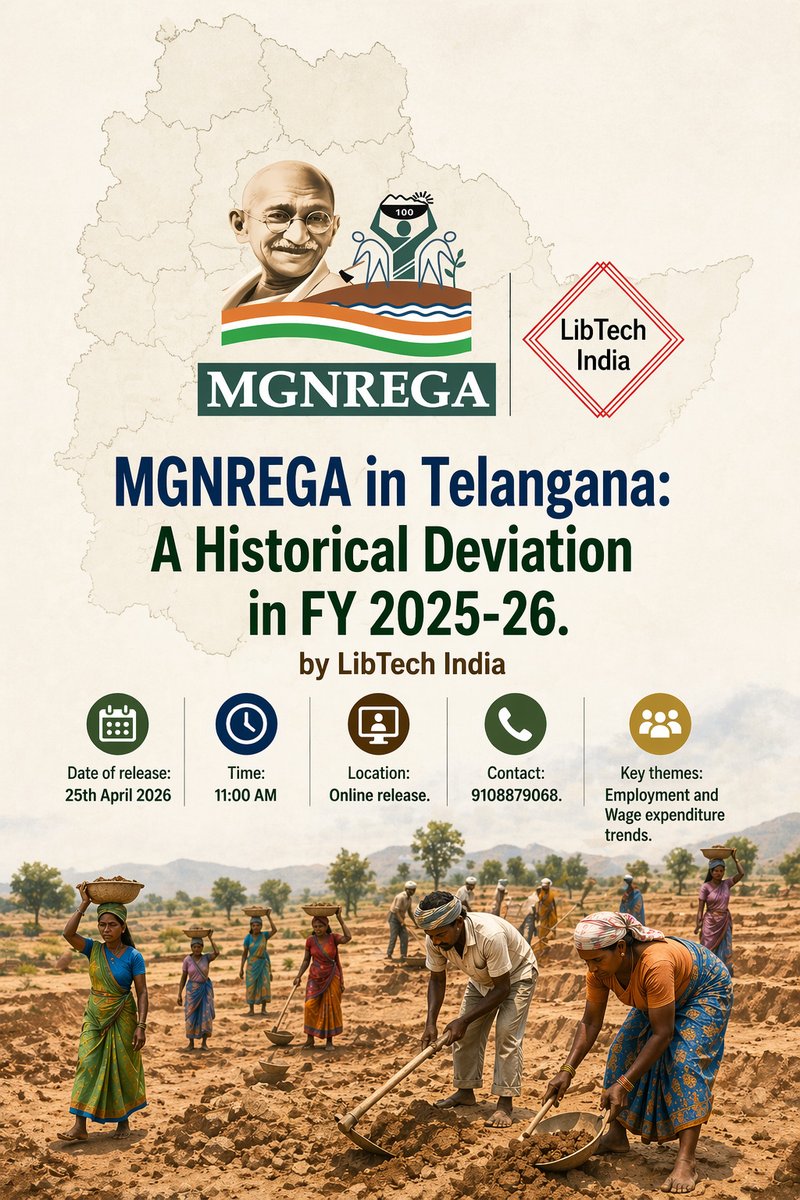
🚨 REPORT LAUNCH ANNOUNCEMENT 🚨
With our continued focus on MGNREGA, documenting trends on the ground remains crucial.
Tomorrow, LibTech India will release the MGNREGA Annual Report for Telangana (FY-2025–26). 📊
We are bringing together key trends that shape rural employment in the state:
✅ Employment generation patterns
✅ Wage and income trends
✅ Updates on deletions & additions
✅ SC & ST participation
✅ District-wise dynamics
🗓️ Releasing Tomorrow, 25th April 2026
⏰ 11:00 AM IST
@MoRD_GoI @TelanganaCMO @revanth_anumula @DeputyCMO_TG @Bhatti_Mallu @seethakkaMLA @the_hindu @thenewsminute @thewire_in @PTI_News @DeccanHerald @DeccanChronicle @ThePrintIndia @timesofindia @TimesNow @NREGA_Sangharsh @IndianExpress @htTweets @TelanganaCS @KTRBRS @KTRoffice @rajendran_naray @samalochana
#MGNREGA #WorkersRights #Telangana #LibTech #PublicPolicy #RuralDevelopment
2
5
185

Apr 21
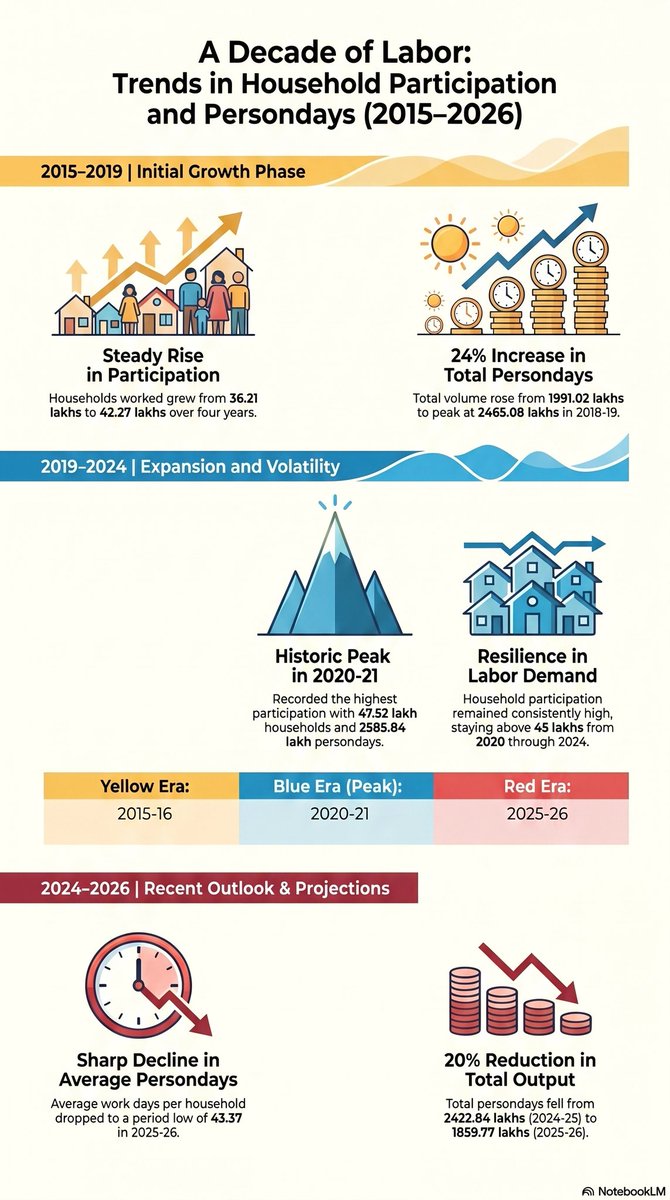
Sources:
LibTech India Public Policy Research Organization.
Hindu news article 19.04.2026
thehindu.com/news/national/a…
1
13
721

Apr 16
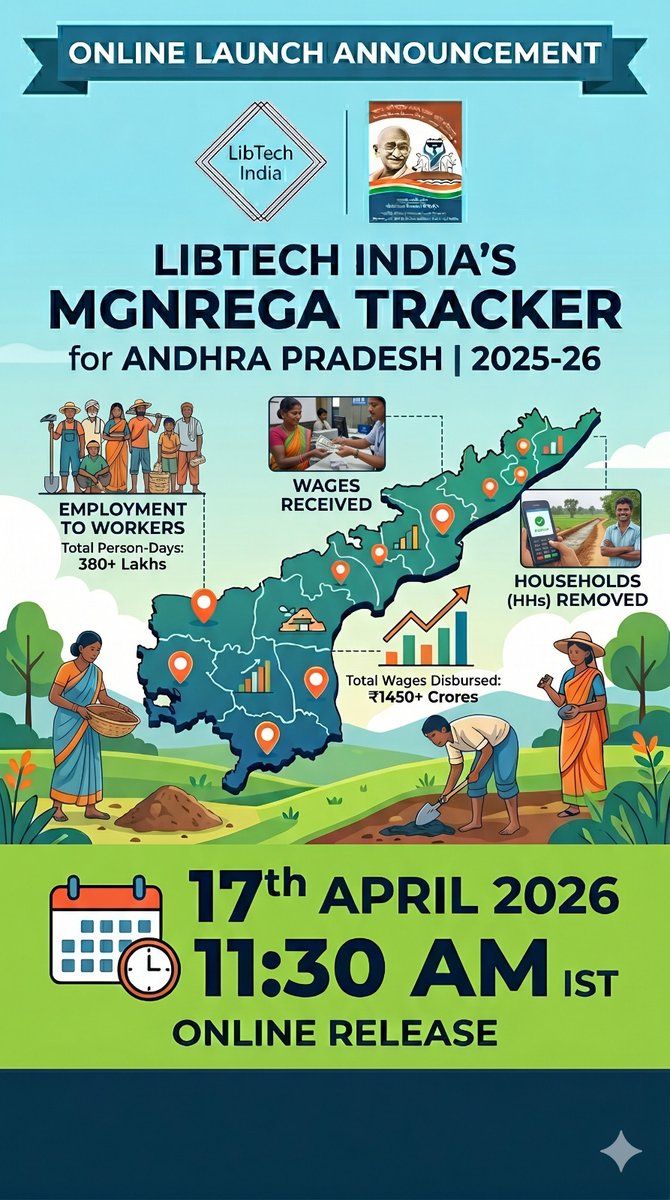
🚨 REPORT LAUNCH ANNOUNCEMENT 🚨
With the recent repeal of MGNREGA, documenting the reality on the ground is an incredibly important story. Tomorrow, LibTech India will release the MGNREGA Tracker for Andhra Pradesh (2025-26). 📊
We are publishing vital trends that defined rural employment in the state:
✅ Overall employment generated
✅ Total wage disbursement trends
✅ Crucial updates on wage receipts & Household (HH) removals
🗓️ Dropping Tomorrow, 17th April 2026
⏰ 11:30 AM IST
@AndhraPradeshCM @APDeputyCMO @MoRD_GoI @ChouhanShivraj @PawanKalyan @ncbn @the_hindu @thenewsminute @PTI_News @DeccanHerald @DeccanChronicle @IndianExpress @ThePrintIndia @htTweets @thewire_in @NREGA_Sangharsh @timesofindia @TimesNow @samalochana @rajendran_naray @SameetPanda
#MGNREGA #AndhraPradesh #LibTechIndia #DataTransparency #RuralDevelopment #WorkerRights
2
4
276
Apr 14
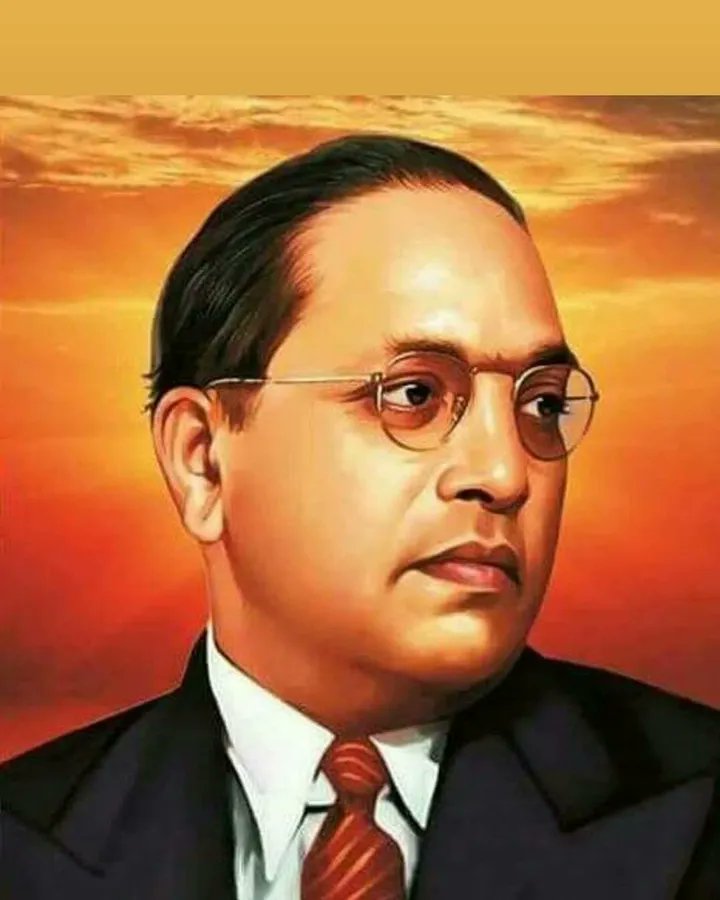
On Ambedkar Jayanti, we remember Dr. B.R. Ambedkar’s vision of a Constitution that guarantees dignity, equality, and justice for all.
As governance becomes increasingly digital, the question before us is not just efficiency but whether these systems uphold constitutional rights, especially for the most marginalized.
At LibTech India, our work continues to focus on ensuring that technology strengthens, not weakens, access to rights and entitlements.
#AmbedkarJayanti #ConstitutionalValues #DigitalRights #SocialJustice
2
4
532
Apr 14
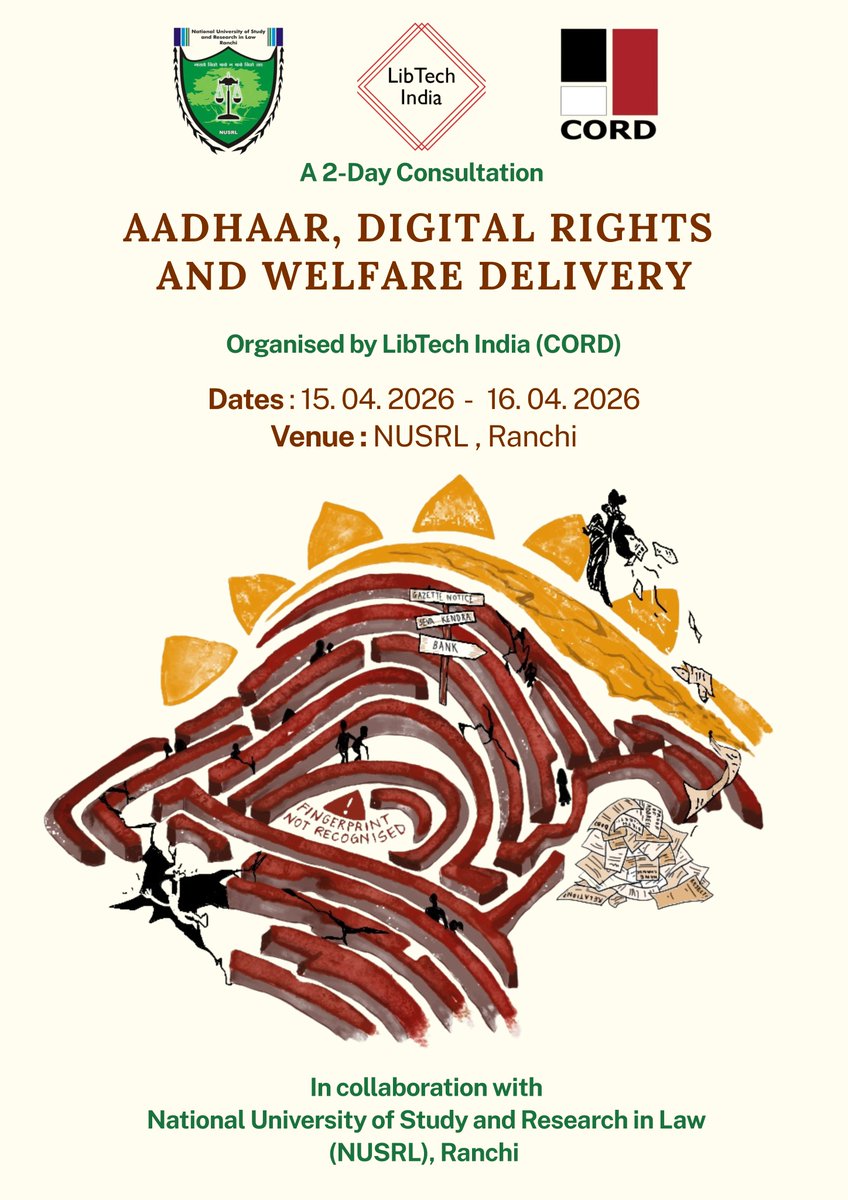
We are pleased to share that LibTech India is conducting a two-day consultation in Ranchi on 15–16 April 2026 in collaboration with the National University of Study and Research in Law (NUSRL), Ranchi.
The consultation will bring together community-based organisations, researchers, technologists, and digital governance practitioners to share grounded evidence and field experiences, reflect on what is working and what is not, and collaboratively explore practical solutions for making Aadhaar-enabled welfare systems more inclusive and accountable.
This consultation aims to shift the conversation from diagnosis to solution-building, grounded in field realities and collaborative expertise. By bridging grassroots insights with technical and policy perspectives, the consultation will also open space for reflecting on Aadhaar's broader role in India's digital governance landscape.
@no2uid @roadscholarz @rajendran_naray @NUSRL_Ranchi @laavanyatamang @samalochana @SarkarDevahuti @SameetPanda @bdskishore
3
7
511

Libtech、Doughboy Shredder(198cm)とかBanana Hammock(逆サイドカットのパウダー専用板)とか尖った製品を出していたこともあって古き良きスノーボード精神を維持し続けていたんだけどなぁ。
Apr 13

Lib TechとGNUなどを手掛けるアメリカのスキースノーボードメーカー「マービン」が投資会社に買収
また1つ工場を持つ独立系の会社が投資会社の傘下となりました。
これにより親会社(投資会社)がいない最後の砦はBURTONとCAPiTAになるかと思います。
shop-eat-surf-outdoor.com/ne…
3
815

Lib Techの母体Mervinが買収。
ただの売却ではない。
“雪が降らない時代”に向けた
長期資本の導入という選択。
業界は次のフェーズへ。
👉 dmksnowboard.com/mervin-acqu…
#スノーボード #snowboarding #LibTech #GNU #業界ニュース #気候変動 #暖冬 #アクションスポーツ #DMK #スノーボード業界
1
2
160

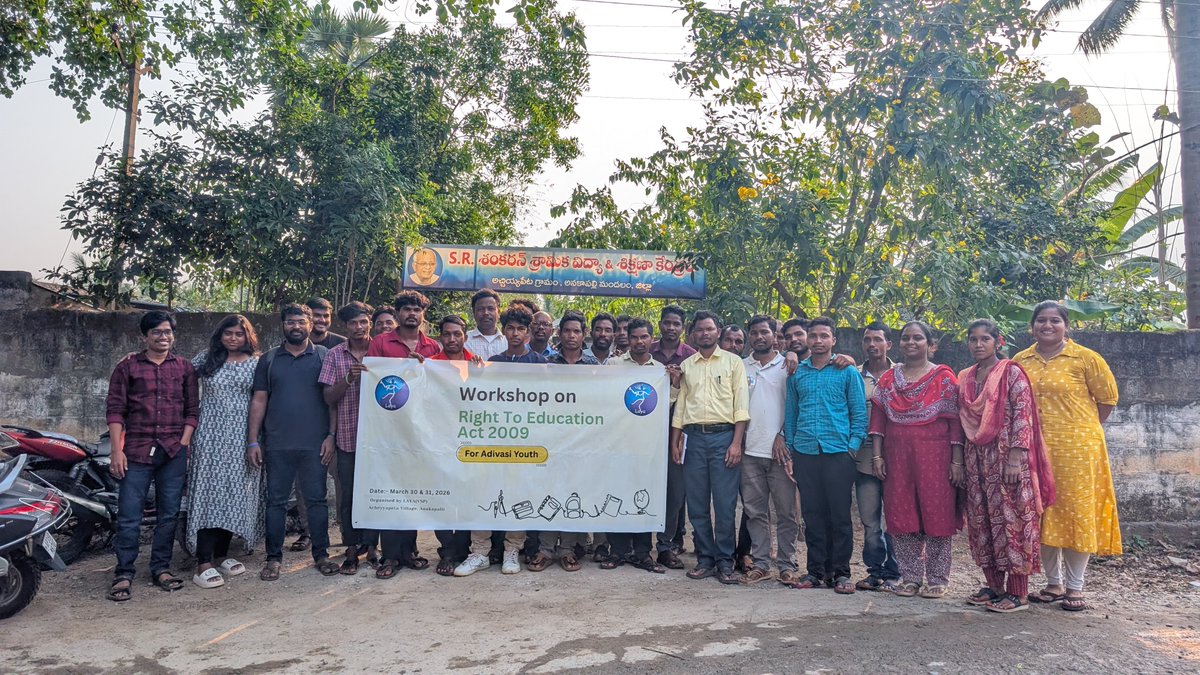
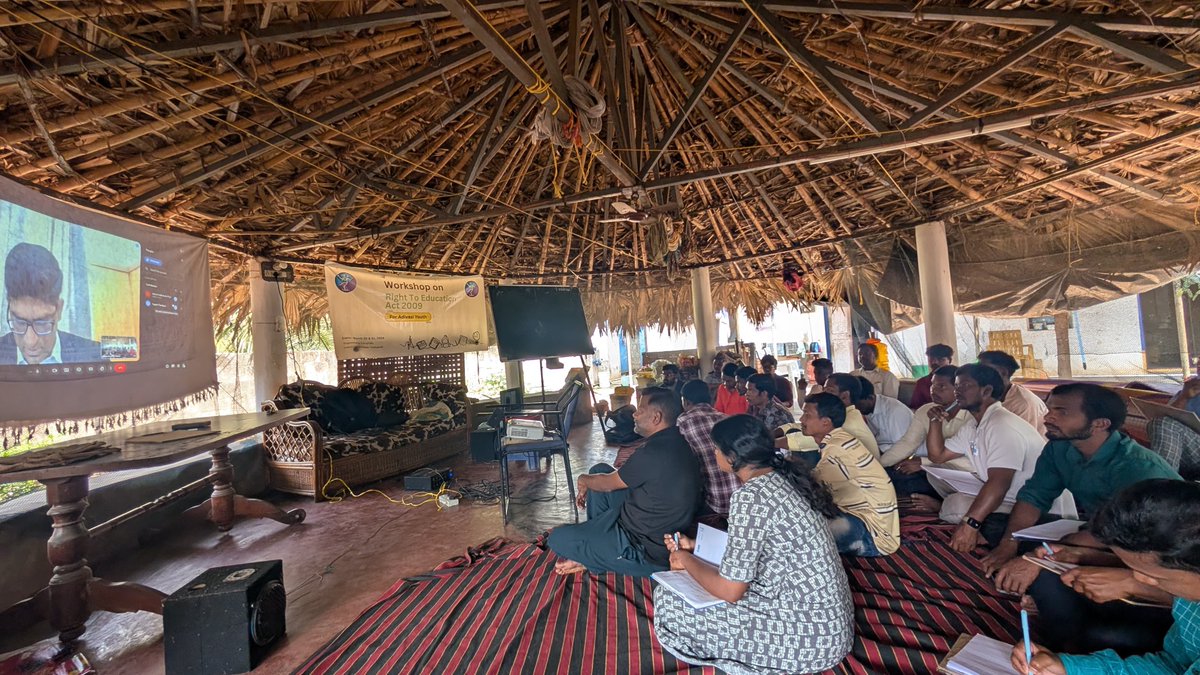
Apr 3
What do constitutional rights mean for Adivasi communities in practice?
The LibTech team joined as facilitators in a workshop in Andhra Pradesh, organized by the Laya organization—engaging in discussions on constitutional provisions, entitlements, and the ground-level challenges faced by Adivasi communities.
#AdivasiRights #ConstitutionalRights
2
3
135

Apr 2
Skierの方はARMADA、k2、LIBTECH、seasonがあります!先シーズンは話題のsimplyもありましたね
♪( ´θ`)ノ
1
5
406
Mar 31
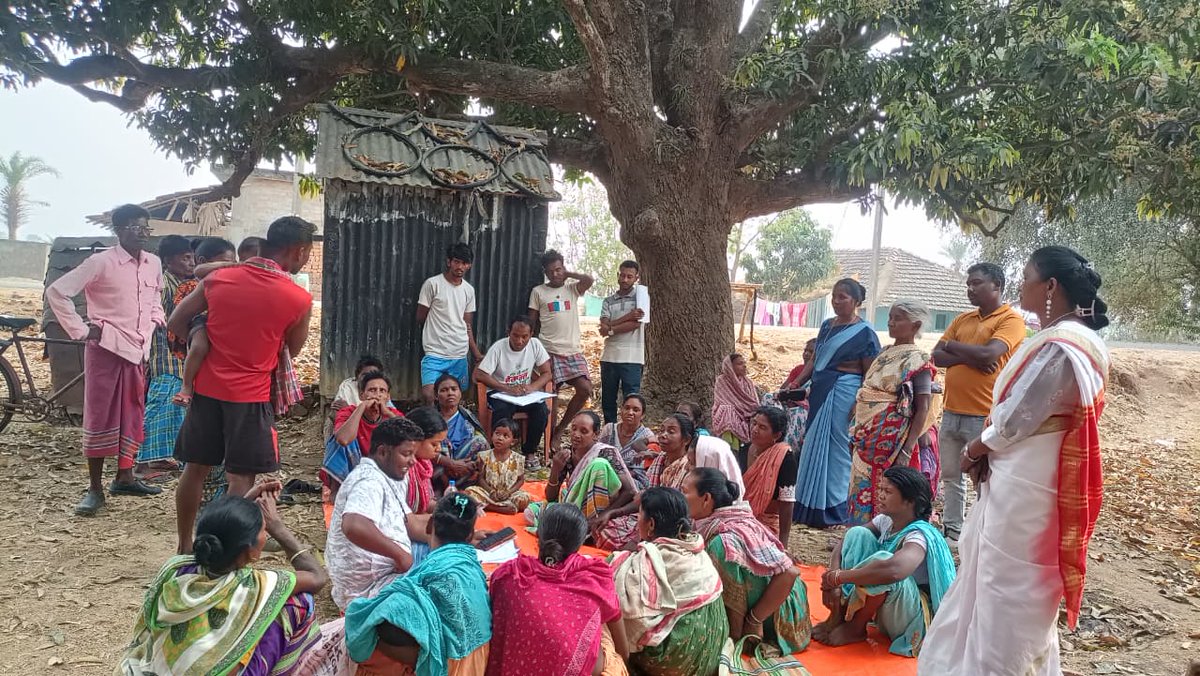
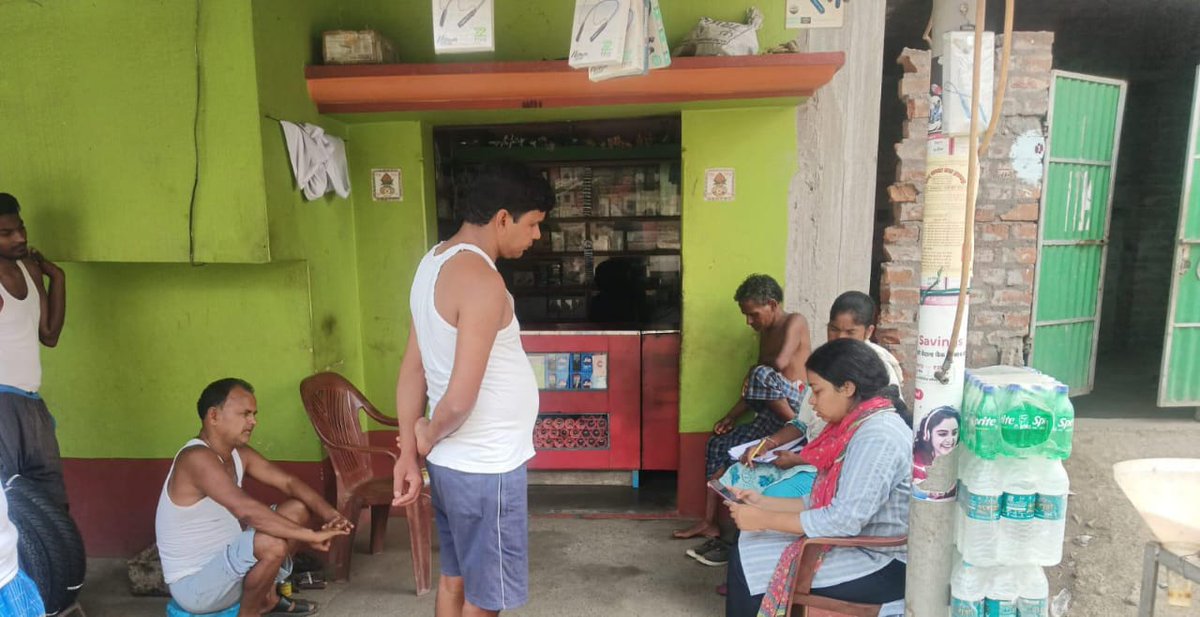
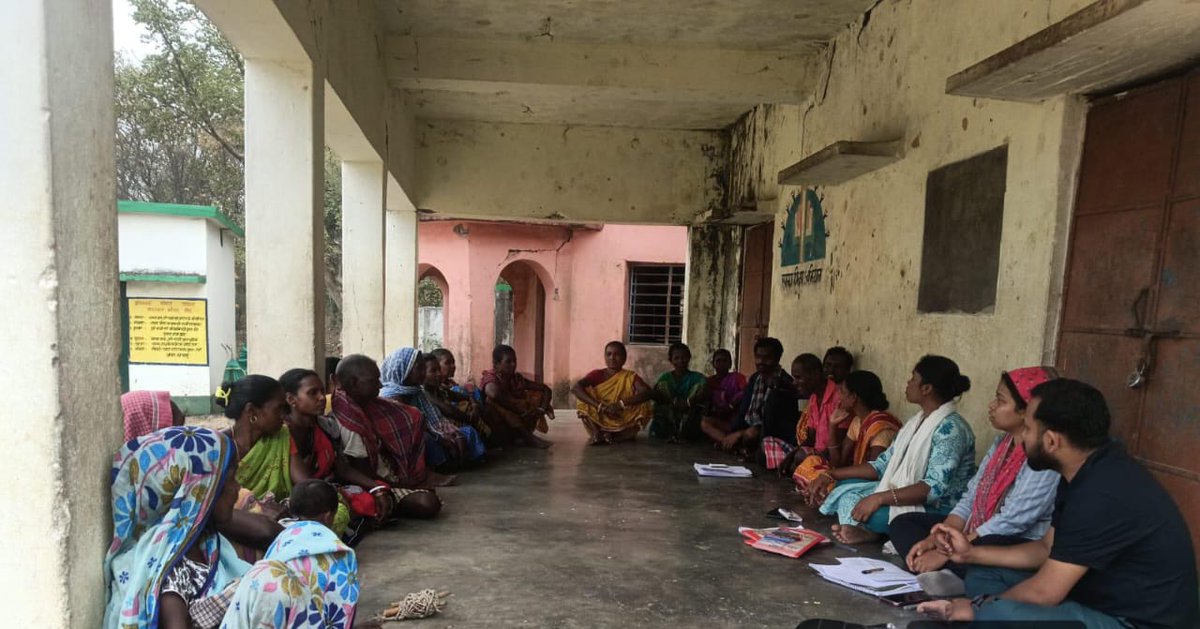
In light of the Union government’s push for ration card deletions in the #PDS, our team visited Kejurdangal and Basetkundi panchayats in Pakuria block to understand how deletions are being carried out on the ground.
A core part of LibTech India’s work is to consistently verify what official digital systems and public data show against ground realities. This field visit is part of that ongoing effort.
What emerges is not just a question of deletions, but of due process.
At the village level, sabhas were conducted using publicly available data to verify deleted members and ration cards. We met affected households to understand whether they had received any prior information and cross-checked these findings with official records. Interactions with PDS dealers helped unpack how verification and deletion decisions are being implemented locally.
When access to food #entitlements under the PDS is made contingent on processes that are uneven, opaque, or poorly communicated, the risk is not just administrative error but exclusion of rightful rightsholders.
#Jharkhand #NFSA #Welfare
1
94

Mar 30
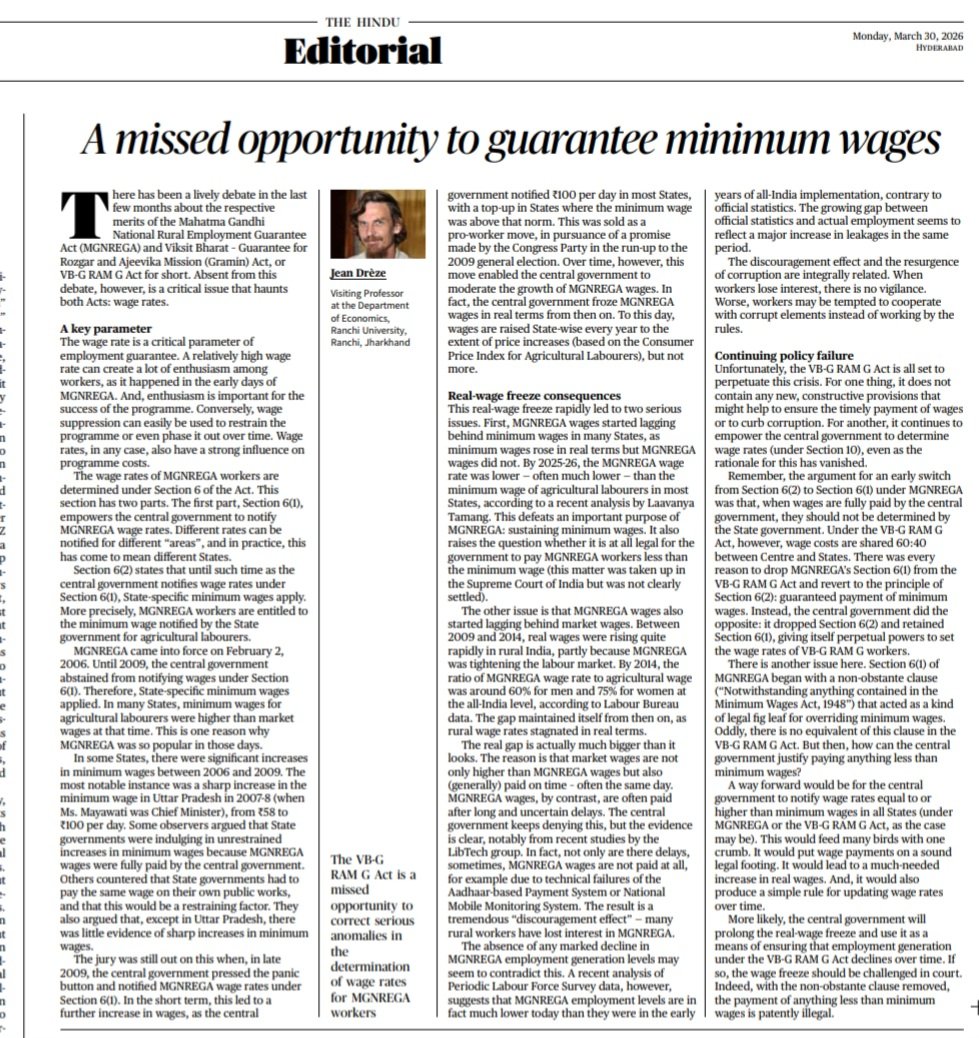
🚩A missed opportunity to guarantee minimum wages
(Thought provoking Article in The Hindu by Jean Drèze,key architect of MNREGA Scheme in 2005 & Visiting Professor at the Department of Economics, Ranchi University, Ranchi, Jharkhand.He writes that the VB-G RAM G Act is a missed opportunity to correct serious anomalies in the determination of wage rates for MGNREGA workers.More likely, the central government will prolong the real-wage freeze and use it as a means of ensuring that employment generation under the VB-G RAM G Act declines over time. A way forward would be for the central government to notify wage rates equal to or higher than minimum wages in all States (under MGNREGA or the VB-G RAM G Act, as the case may be). This would feed many birds with one crumb. It would put wage payments on a sound legal footing as the payment of anything less than minimum wages is patently illegal )
There has been a lively debate in the last few months about the respective merits of the Mahatma Gandhi National Rural Employment Guarantee Act (MGNREGA) and Viksit Bharat Guarantee for Rozgar and Ajeevika Mission (Gramin) Act, or VB-G RAM G Act for short. Absent from this debate, however, is a critical issue that haunts both Acts: wage rates.
A key parameter
The wage rate is a critical parameter of employment guarantee. A relatively high wage rate can create a lot of enthusiasm among workers, as it happened in the early days of MGNREGA. And, enthusiasm is important for the success of the programme. Conversely, wage suppression can easily be used to restrain the programme or even phase it out over time. Wage rates, in any case, also have a strong influence on programme costs.
The wage rates of MGNREGA workers are determined under Section 6 of the Act. This section has two parts. The first part, Section 6(1), empowers the central government to notify MGNREGA wage rates. Different rates can be notified for different "areas", and in practice, this has come to mean different States.
Section 6(2) states that until such time as the central government notifies wage rates under Section 6(1), State-specific minimum wages apply. More precisely, MGNREGA workers are entitled to the minimum wage notified by the State government for agricultural labourers.
MGNREGA came into force on February 2, 2006. Until 2009, the central government abstained from notifying wages under Section 6(1). Therefore, State specific minimum wages applied. In many States, minimum wages for agricultural labourers were higher than market wages at that time. This is one reason why MGNREGA was so popular in those days.
In some States, there were significant increases in minimum wages between 2006 and 2009. The most notable instance was a sharp increase in the minimum wage in Uttar Pradesh in 2007-8 (when Ms. Mayawati was Chief Minister), from 158 to 100 per day. Some observers argued that State governments were indulging in unrestrained increases in minimum wages because MGNREGA wages were fully paid by the central government. Others countered that State governments had to pay the same wage on their own public works, and that this would be a restraining factor. They also argued that, except in Uttar Pradesh, there was little evidence of sharp increases in minimum
The jury was still out on this when, in late 2009, the central government pressed the panic button and notified MGNREGA wage rates under Section 60). In the short term, this led to a further increase in wages, as the central
Real-wage freeze consequences
This real-wage freeze rapidly led to two serious issues. First, MGNREGA wages started lagging behind minimum wages in many States, as minimum wages rose in real terms but MGNREGA wages did not. By 2025-26, the MGNREGA wage rate was lower often much lower than the minimum wage of agricultural labourers in most States, according to a recent analysis by Laavanya Tamang. This defeats an important purpose of MGNREGA: sustaining minimum wages. It also raises the question whether it is at all legal for the government to pay MGNREGA workers less than the minimum wage (this matter was taken up in the Supreme Court of India but was not clearly settled).
The other issue is that MGNREGA wages also started lagging behind market wages. Between 2009 and 2014, real wages were rising quite rapidly in rural India, partly because MGNREGA was tightening the labour market. By 2014, the ratio of MGNREGA wage rate to agricultural wage was around 60% for men and 75% for women at the all-India level, according to Labour Bureau data. The gap maintained itself from then on, as rural wage rates stagnated in real terms.
The real gap is actually much bigger than it looks. The reason is that market wages are not only higher than MGNREGA wages but also (generally) paid on time often the same day. MGNREGA wages, by contrast, are often paid after long and uncertain delays. The central government keeps denying this, but the evidence is clear, notably from recent studies by the LibTech group. In fact, not only are there delays, sometimes, MGNREGA wages are not paid at all, for example due to technical failures of the Aadhaar-based Payment System or National Mobile Monitoring System. The result is a tremendous "discouragement effect" - many
rural workers have lost interest in MGNREGA
The VB-G RAM G Act is a missed opportunity to correct serious anomalies in the determination of wage rates for MGNREGA workers.government notified 2100 per day in most States, with a top-up in States where the minimum wage was above that norm. This was sold as a pro-worker move, in pursuance of a promise made by the Congress Party in the run-up to the 2009 general election. Over time, however, this move enabled the central government to moderate the growth of MGNREGA wages. In fact, the central government froze MGNREGA wages in real terms from then on. To this day, wages are raised State-wise every year to the extent of price increases (based on the Consumer Price Index for Agricultural Labourers), but not more.
The absence of any marked decline in MGNREGA employment generation levels may seem to contradict this. A recent analysis of Periodic Labour Force Survey data, however, suggests that MGNREGA employment levels are in fact much lower today than they were in the early years of all-India implementation, contrary to official statistics. The growing gap between official statistics and actual employment seems to reflect a major increase in leakages in the same period.
The discouragement effect and the resurgence of corruption are integrally related. When workers lose interest, there is no vigilance. Worse, workers may be tempted to cooperate with corrupt elements instead of working by the rules.
Continuing policy failure
Unfortunately, the VB-G RAM G Act is all set to perpetuate this crisis. For one thing, it does not contain any new, constructive provisions that might help to ensure the timely payment of wages or to curb corruption. For another, it continues to empower the central government to determine wage rates (under Section 10), even as the rationale for this has vanished.
Remember, the argument for an early switch from Section 6(2) to Section 6(D under MGNREGA was that, when wages are fully paid by the central government, they should not be determined by the State government. Under the VB-G RAM G Act, however, wage costs are shared 60:40 between Centre and States. There was every reason to drop MGNREGA's Section 6(1) from the VB-G RAM G Act and revert to the principle of Section 6(2): guaranteed payment of minimum wages. Instead, the central government did the opposite: it dropped Section 6(2) and retained Section 60), giving itself perpetual powers to set the wage rates of VB-G RAM G workers.
There is another issue here. Section 6(1) of MGNREGA began with a non-obstante clause ("Notwithstanding anything contained in the Minimum Wages Act, 1948") that acted as a kind of legal fig leaf for overriding minimum wages. Oddly, there is no equivalent of this clause in the VB-G RAM G Act. But then, how can the central government justify paying anything less than minimum wages?
A way forward would be for the central government to notify wage rates equal to or higher than minimum wages in all States (under MGNREGA or the VB-G RAM G Act, as the case may be). This would feed many birds with one crumb. It would put wage payments on a sound legal footing. It would lead to a much-needed increase in real wages. And, it would also produce a simple rule for updating wage rates over time.
More likely, the central government will prolong the real-wage freeze and use it as a means of ensuring that employment generation under the VB-G RAM G Act declines over time. If so, the wage freeze should be challenged in court. Indeed, with the non-obstante clause removed, the payment of anything less than minimum wages is patently illegal.
1
5
120