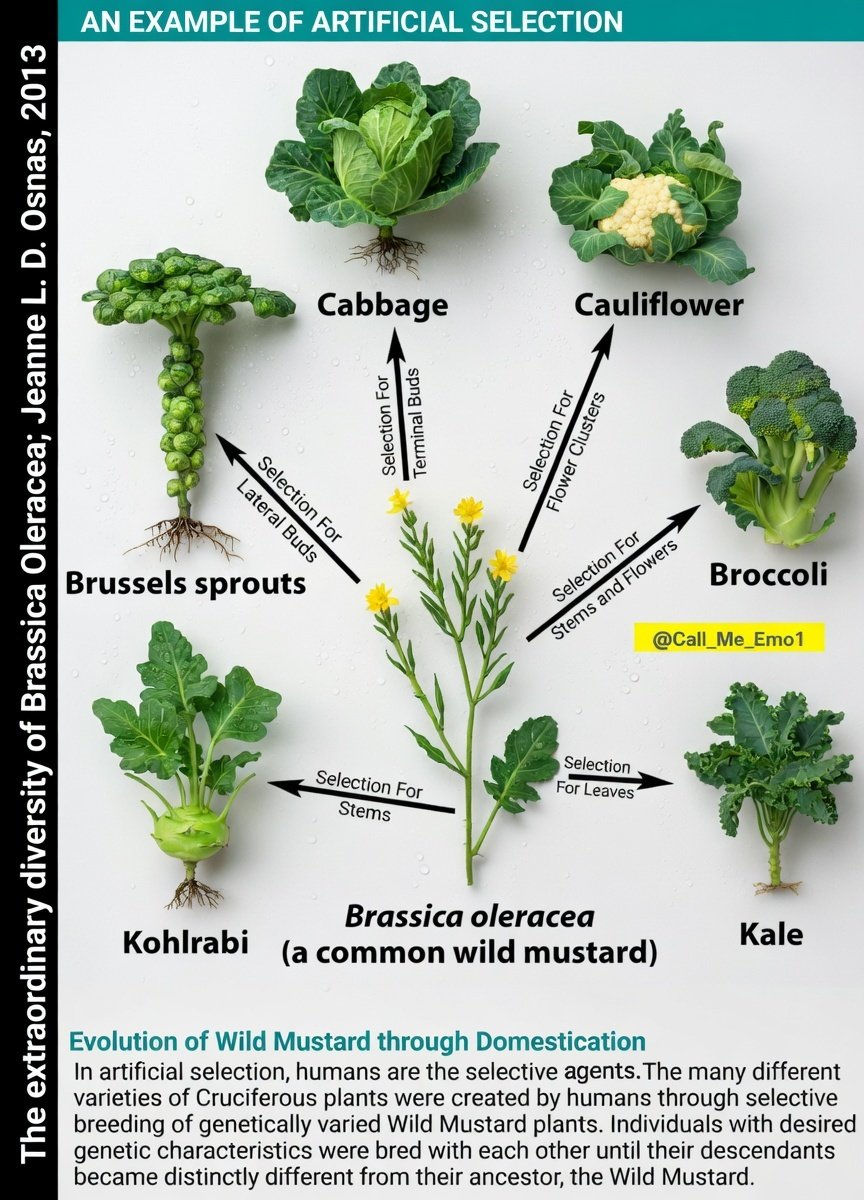
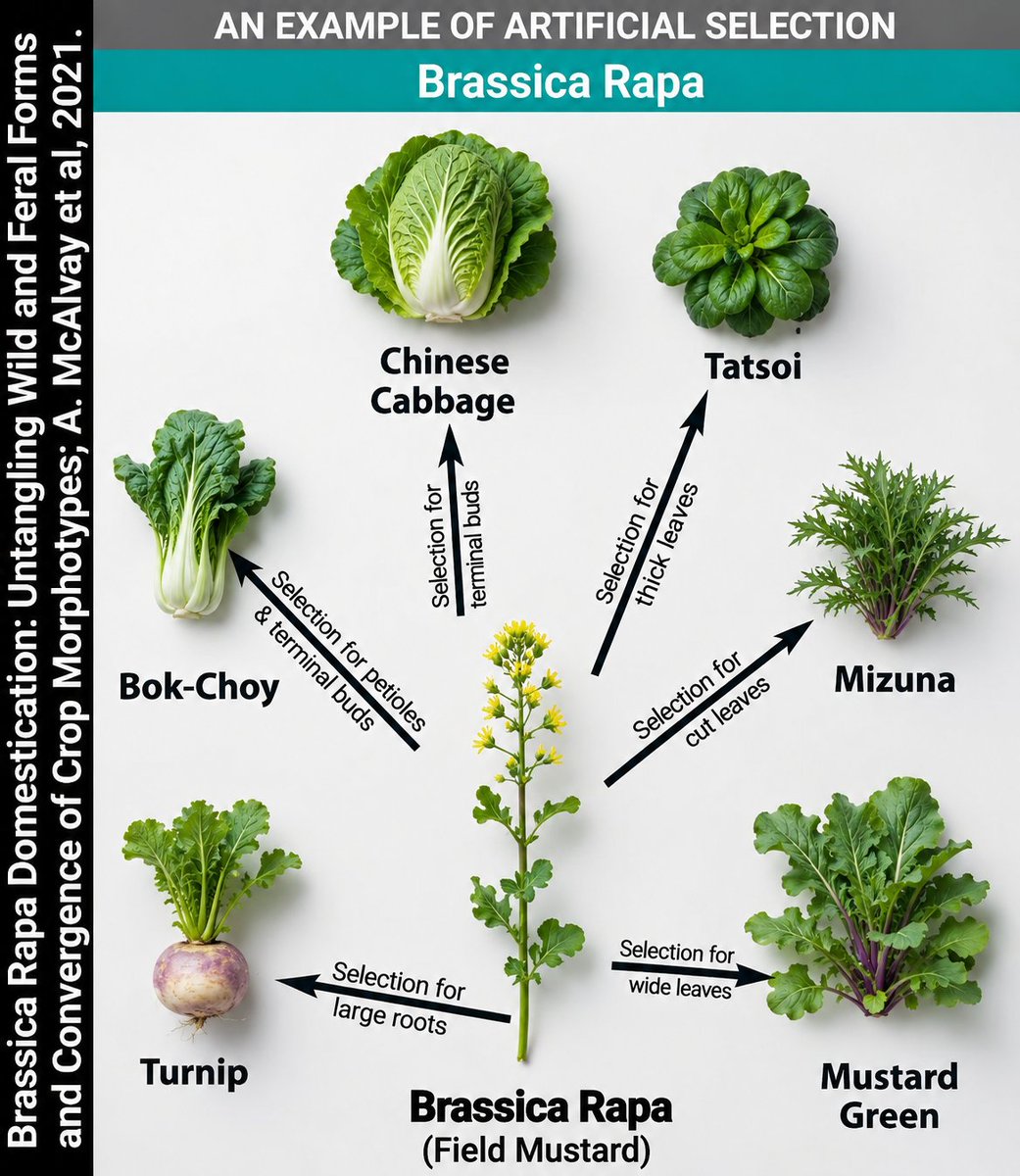
Macroevolution is too much extrapolation from not enough data. God made different kinds of life forms, and microevolution was the process by which they expanded to what we know today.
2
Macroevolution is heretical. Microevolution is irrefutable fact.
1
67

Neither of those things debunks macroevolution. Your info is laughably incorrect. Common descent is overwhelmingly proven with genetics.
1
11

I believe in microevolution, change within a species, but NOT macroevolution, change between species. The single cell evolution from non-life chemicals is not possible, abiogenesis is wishful thinking.
1
23

"macroevolution" is just micro evolution compounded over millions of years and is supported via transitional fossils.
Abiogenesis proposals are currently considered hypotheses and not proven theories. They're the most seriously considered hypotheses but not considered fact.
6


Macroevolution is a lie from the pit of hell. Microevolution is observable.
1
3
27

They concluded "No new genetic information (novel gene function) evolved" and that the LTEE result wasn't uniquely special or a "speciation event."
Lenski and Blount's response (on their blog): The experiments are interesting and confirm the genetic mechanism, but the conditions differ fundamentally. The LTEE wasn't trying to evolve Cit quickly, it was studying long-term adaptation under its specific regime.
The 2016 work shows Cit is accessible under strong selection, which doesn't contradict the LTEE's demonstration of rarity, historical contingency (the trait depended on prior mutations in that specific lineage), and the role of weak vs. strong selection. "New information" claims are a semantic red herring, that evolution routinely works by modifying and repurposing existing genetic material (as François Jacob noted decades ago: evolution is a tinkerer).
telliamedrevisited.wordpress…
The paper does not refute that evolutionary processes produced a new, selectable trait. It refines how and under what conditions it happens.
Why This Counts as Evolutionary Novelty.
The bacteria gained a new ecological capability they did not have: using abundant citrate aerobically.
It increased fitness and changed population dynamics/ecology in the experiment.
It arose via mutation selection, was heritable, and required specific genetic steps (not trivial or pre-programmed "switch-flipping" independent of mutation)..
"Novel" in biology means a new trait/function in context, not necessarily a gene invented from non-coding DNA. Regulatory evolution and gene duplication are core mechanisms of innovation.
The post's insistence that "everything was already there" and "no new information" is the standard intelligent design/creationist framing. It redefines terms to exclude ordinary evolutionary mechanisms while ignoring that those mechanisms demonstrably produced functional change here.Bottom LineLenski's LTEE is one of the best-documented cases of evolution in the lab. It shows:Mutation generates variation.
Natural selection acts on it.
Historical contingency and genetic context matter.
New functions can evolve through well-understood processes like duplication and regulatory change.
It is not "proof" of the origin of life or every aspect of macroevolution, but it is clear, direct evidence that mindless evolutionary processes can generate biological novelty and adaptation. The alternative framing ("designed adaptability") is a philosophical/religious interpretation, not a scientific explanation supported by the data.The LTEE continues (now >80,000 generations), and the Cit lineage has been studied further, including its long-term consequences. The science stands on the detailed genomic and experimental record, not on hype or mischaracterization.
Telliamed Revisited
Evolutionary science: past, present, and future
telliamedrevisited.wordpress.com 2
1
73

22h
Macroevolution is demonstrably false. Look up dGRN and Orfan Genes to start. Then we can talk about garbage like endosymbiosis. Macroevolution is patently absurd.
11

"Idiotic misunderstanding of evolution"
Meaning of "evolution"?
Jesper Hoffmeyer, "Semiotic freedom: an emergent force" in
_Information and the Nature of Reality: From Physics to Metaphysics_ (2010), 382pp., 185-204, on 185
amazon.com/Information-Natur…
archive.org/details/informat…
archive.org/details/informat…
Page 185 — In textbooks, newspapers, and even scientific papers, the meanings of the terms “evolution” and “information” are generally supposed to be well known, and they are rarely explained.
And yet, there is no general consensus in science, or even in biology, about what they really mean.
For instance, the preferred exemplar (in the Kuhnian sense) of evolution by natural selection is that of industrial melanism.
In woodlands, where industrial pollution has killed the lichens and exposed the dark brown tree trunks, dark forms of the peppered moth — melanics — are supposedly better camouflaged against predation from birds than are the light gray forms that predominated before the Industrial Revolution.
The observation by 1950 that darker forms had largely displaced lighter forms was thus taken as evidence for natural selection in action.
This exemplar does indeed illustrate the effect of natural selection, but whether it shows evolution depends on your idea of evolution.
Thus, if by the term “evolution” is meant something like “the origin of species,” then it is remarkable that no speciation has actually taken place here, and it is not obvious that any speciation would indeed occur in a case like this.
So, populations do indeed change as a result of natural selection, but is this mechanism also behind speciation and evolution at large?
The majority of biologists certainly feel assured that macroevolution — that is, evolution above the level of species — is in fact the tardy result of an infinitely ongoing microevolution (adaptation in populations), but there remains serious disagreement on this (Depew and Weber, 1995; Gould, 2002)
1
18

Cute.
The Copilot summary you posted is a textbook example of equivocation.
It repeatedly conflates raw sequence variation with net gain of specified functional information capable of building new complex systems, and that is the exact distinction the thread has been about.
1. Duplication adds raw DNA sequence.
In terms of specified functional information, it does not reliably produce net new functional information for new complex body plans or systems.
One copy usually retains the original function while the other is free to mutate, and most often degrades into a pseudogene or remains redundant.
Documented cases of neofunctionalization are rare, usually minor tweaks to existing functions, and do not demonstrate the large-scale innovation the grand evolutionary story requires.
2. “Duplicates do not usually degrade”|
In reality, the majority of duplicates are lost or become pseudogenes.
Retention often occurs through dosage effects or subfunctionalization (splitting existing functions), not the de novo creation of new complex functions.
Pseudogenes acquiring regulatory roles is interesting but does not solve the information problem for macroevolution.
3. The examples given (metabolic enzymes, sensory receptors, NOTCH2NL, etc.) are real but represent fine-tuning or co-option of existing genetic material within already-designed systems.
They do not demonstrate the origin of new body plans or the crossing of kind boundaries.
These are still micro-level changes within existing kinds.
4. “Mutations are not mostly deleterious”
The overwhelming majority of mutations are neutral or deleterious.
Beneficial mutations are rare and typically optimize or slightly modify existing functions, they do not build new specified functional information from scratch.
Long-term experiments (e.g., Lenski) still show bacteria remaining bacteria after tens of thousands of generations.
5. “Selection creates new specified functional information”
Selection is a filter.
It non-randomly preserves existing functional variants; it does not create new specified functional information.
6. “Evolution is directly observed”
What is directly observed is microevolution, changes in allele frequencies and limited adaptation within created kinds (bacteria stay bacteria, finches stay finches).
This is fully compatible with baraminology.
The grand claim of universal common descent with unlimited accumulation of new specified information across kind boundaries remains historical inference, not direct observation.
The Copilot summary is just more blurring of the critical distinction between raw genetic variation and net new specified functional information.
2
31

Jun 13
Scientists have used intelligent design to predict how biology works, in fact. For example, the discovery of how the circulatory system was discovered by a plumber, via assuming that the circulatory system was analogous to human design. Same with at least one discovery in astrophysics.
Conversely, not a single scientific advancement has been made based on the assumption that all life came from mere random mutations and natural selection. Not one. Never happened. Darwinism is the _central dogma_ of biology. It's not used for predicting anything.
Microevolution is real. It's been useful. Macroevolution? No.
2
9

Jun 13
“Brief evidence for macroevolution (new species & body plans):
• Fossil transitions: Tiktaalik (fish→tetrapod), Archaeopteryx (dino→bird), legged whale ancestors
• Homologous structures: Same limb bones in hands, wings, flippers from common ancestor
1/2
2
1
31

Jun 13
"Macroevolution," actually called "speciation," is a natiral byproduct of evolution, if you understand how taxonomy works.
20


Jun 13
macroevolution is a term made up by christians so that they can justify not believing in evolution while believing in evolution at the same time
8
Jun 13
see "macroevolution" is christians moving the goalpost by saying an animal hasn't evolved into a different "Kind" (another term they made up)
7

Jun 13
A transcendent designer is the explanation. That makes far more sense to me than any naturalistic explanation.
Any unguided macroevolution cultivating consciousness and building a fine-tuned world utterly defies the law of entropy.
17

Jun 13
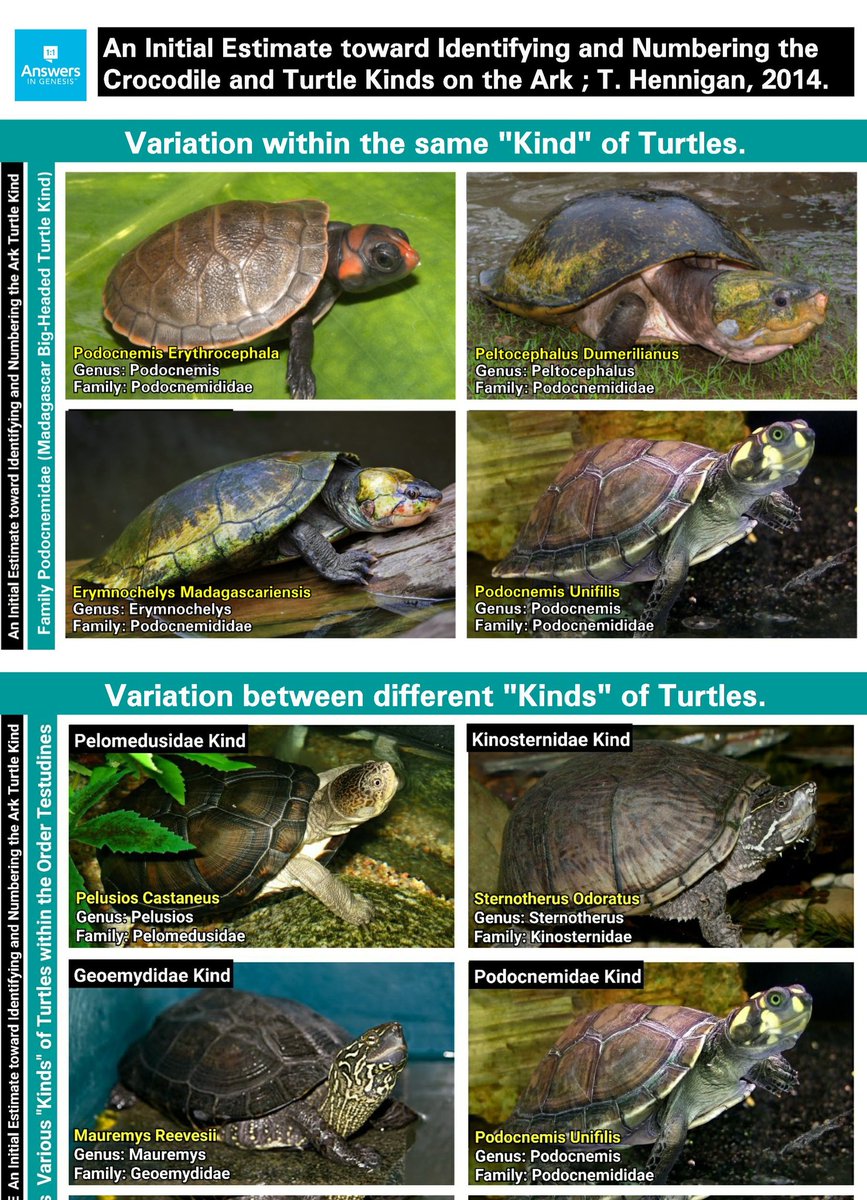
By "Macroevolution" Creationists are referring to change in "Kinds".
A "change in Kind" would be no different from the variation Creationists already accept within "Kinds".... Here's how similar different "Kinds" can be.
2
1
21